

He was absolutely right …
It’s been a week of emails and rewrites.
Back and forth.
It’s not normally like this.
The editor of a magazine received my latest submission. It was different from my usual work; this time there were 2,500 words of creative writing.
Thankfully, he liked it.
Then came the revisions.
Lose the opening paragraphs. Move a sentence. Remove the relationship angle. Tone down my favourite character. Rewrite the ending.
He was starting to annoy me.
A typical comment read:
“Your writing has become noticeably more restrained… Readers tend to trust narrators who don’t feel the need to interpret everything for them.”
All I wanted to do was submit the piece and see a payment appear in my bank account.
But we got there in the end.
Before sending the final draft, I read it one last time and realised something rather irritating.
He was absolutely right.
*****

A lesson in speaking Dutch …
Signora Scala lives in the building next door, but spends more time in Signora Bruschi’s kitchen than in her own. It is not unusual to find her sitting at the table chopping vegetables or helping to make bread. All the while she will be engaged in animated conversation, sharing the latest gossip with Signora Bruschi, who appears to tolerate these daily intrusions.
Though she does occasionally test her patience.
“Is there not a week that passes without her mentioning that she is related to the Della Scala family?”
The Della Scala family was the influential medieval dynasty that once ruled Verona. Signora Scala is not technically related to them; she acquired the surname through marriage. Nor does she seem aware that there are thousands of modern-day Scalas living in circumstances every bit as modest as her own.
Signora Scala speaks no English, which makes my presence a constant source of frustration for her, but a welcome distraction for Signora Bruschi and Cola whenever I wander into the kitchen.
“She’s talking bullshit,” Cola might announce loudly, while Signora Scala smiles and nods in complete agreement.
I am something else she struggles to understand.
She cannot comprehend why Signora Bruschi refuses to charge me rent for the apartment.
“He is family,” Signora Bruschi replies.
“But you could live comfortably if you made him pay.”
The truth is that Signora Bruschi is far from poor, and she seems genuinely offended whenever I suggest contributing financially.
Cola insists that his mother fears I might not be able to afford it, and would simply leave.
Signora Scala will tut loudly, make the sign of the cross, and declare, “Ed è anche omosessuale.”
As though I hadn’t understood a word, Cola inevitably provides a translation.
“She says you like to take it up the arse.”
This week, perhaps determined to prove a point, Signora Scala announced that she was taking in a lodger for a month. He was a young Dutch dancer performing with a contemporary dance company at the Teatro Romano. For this, she informed us, she would be paid €150 a week.
Signora Bruschi, quietly folding the ironing, rolled her eyes.
“And what is this Dutch boy called?” she asked politely.
“Jort,” Signora Scala replied.
Except she had decided there was a proper Dutch pronunciation, producing something closer to “Joooorrrrrt.”
Cola pounced immediately.
“Joooorrrrrt,” he bellowed in an impossibly deep voice.
“Sì, Joooorrrrrt,” she confirmed.
“Joooorrrrrt!” he shouted even louder.
“Joooorrrrrt!” she echoed.
“Joooorrrrrt!”
“Joooorrrrrt!”
By now they were practically competing to see who could produce the most theatrical rendition of the poor boy’s name.
It was the finest Joooorrrrrting I had ever witnessed.
“Oddio,” sighed Signora Bruschi.
*****
On explaining a one night stand to Cola …
You just know, don’t you?
It is always the timid one, sitting quietly in the corner with the girls who want to protect him.
Halfway decent-looking, too.
Johnny from Tunbridge Wells.
He’ll ask if I want to play Spider-Man 2 and snort lines of coke from his psychology notes. He rarely has the coke, but it sounds impressive.
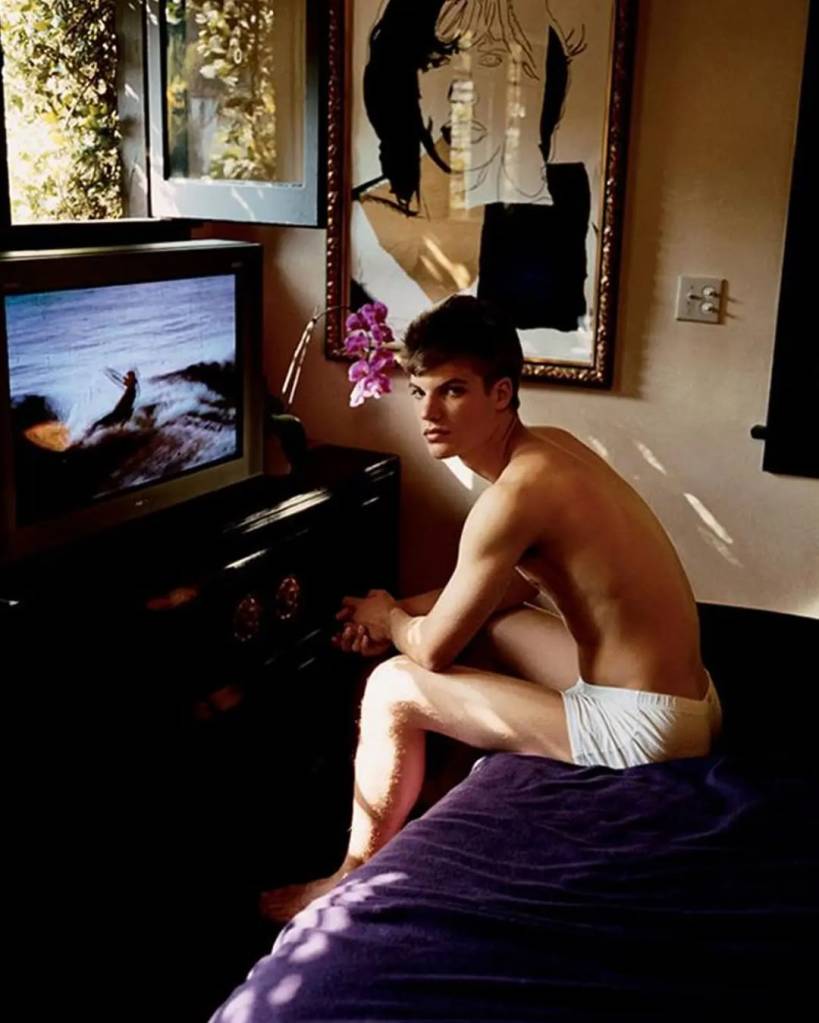
I ask whether his mother still buys his underwear. He blushes. He says no, but we both know he is lying.
He freezes like a rabbit caught in a trap, yet he has no real desire to escape.
The next few minutes will make or break him. At least, that’s how it will feel.
Eventually, he drops his jeans, revealing the underwear his mother chose for him.
Now what?
You tell him to take off the underwear. When he does, his embarrassment is written all over him.
*****
My favourite newspaper quote …
“Oh dear. Such a shame to see the US lose at football after their insanely embarrassing president cheated for them. Still, it really brought the world together. The last time this many people cheered on a Belgian resistance, it was 1914 and the Germans had just crossed the Meuse.”
Marina Hyde, writing in The Guardian, UK.
*****
On cargo shorts and crop tops …
Imagine that one hundred years from now someone discovers a single photograph of you. Your music has vanished. No recordings survive. No interviews. No reviews.
What would you want that photograph to say about you?
“Cunt-serving twink.”
Severin introduced me to a rising German Gen-Z singer called Siovo. He played him incessantly in Taormina and, now that I’m back in Verona, I find myself doing much the same.
Siovo is one of the few openly gay artists working in the German pop scene, writing songs that explore queer identity, unrequited love, modern relationships and isolation.
At least, that’s what Severin tells me.
My complete ignorance of the German language means Siovo could just as easily be singing about bin collections or discounted washing powder.
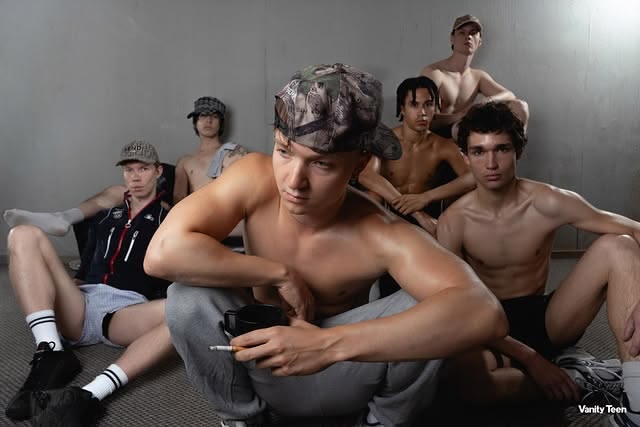
He has also cultivated a distinct visual identity, usually appearing in an unlikely combination of oversized cargo shorts and cropped tops.
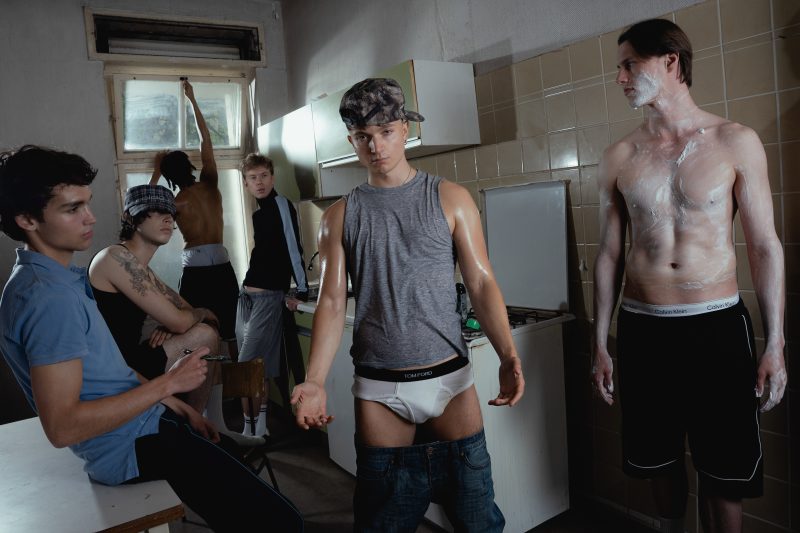
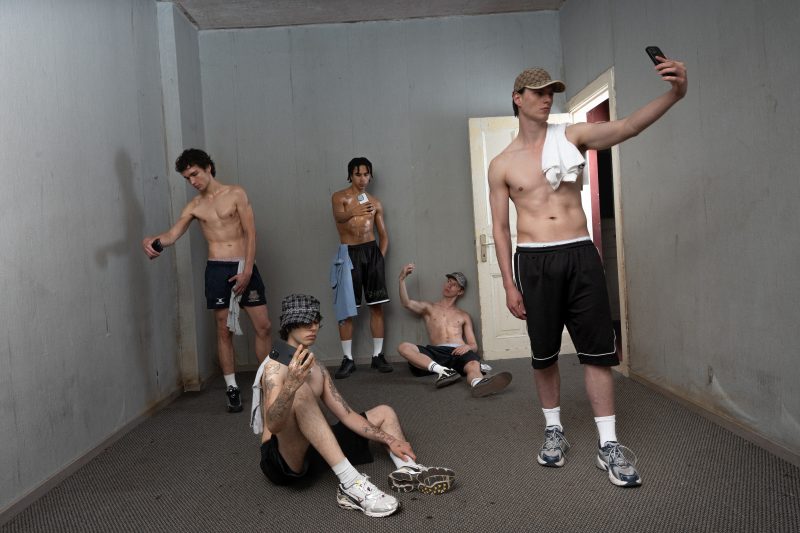
Naturally, I was delighted to discover that he had recently collaborated with photographer Nikolai Voelcker, whose work has a particular talent for capturing chavvy young men in various states of undress.
Lampoon magazine describes his photography rather more elegantly than I ever could:
“Photographer Nikolai Voelcker focuses on male dynamics. Friends joke, stretch limbs, shift postures, and press next to each other. Shoulders bump. Arms connect. These gestures do not carry disclaimers. They occur as part of casual time together. The camera records moments that raise questions about erotic currents in shared male space.
*****
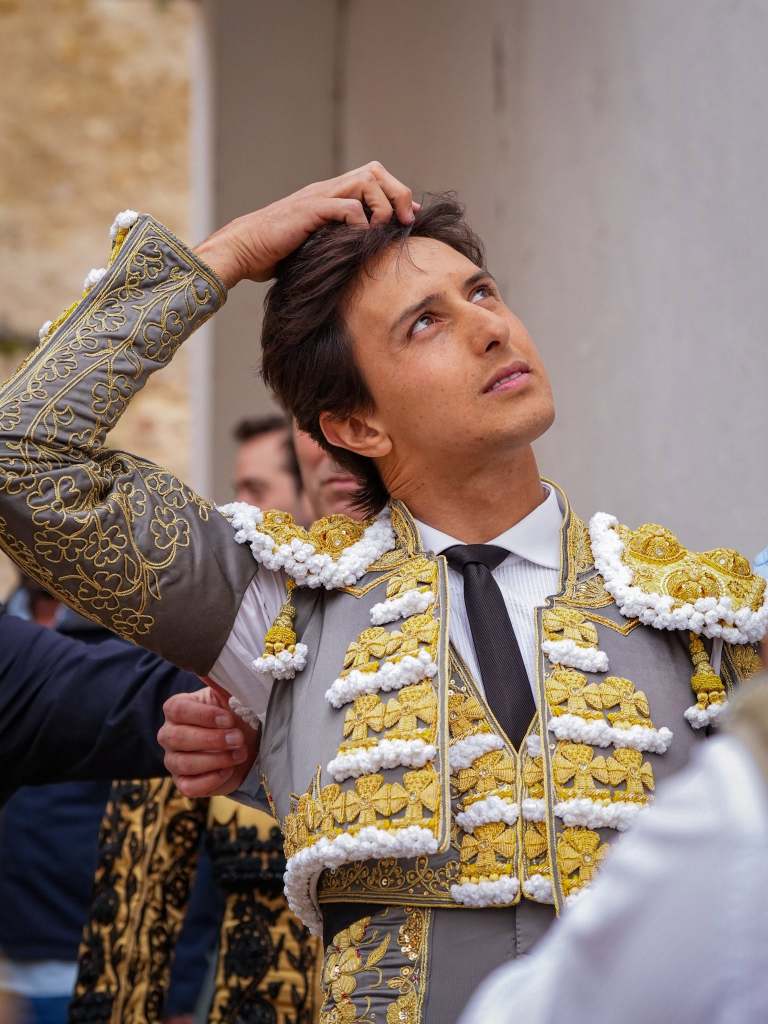
The Silence of Roca Rey …
The last person I saw fervently stroking and kissing rosary beads was Nico, my ex-boyfriend, who went through this disconcerting ritual every time we had sex.
I thought about Nico while watching Albert Serra’s riveting documentary Afternoons of Solitude, about the Peruvian matador Andrés Roca Rey, who appears to share the same devout Catholicism.
Cola watched the documentary on Mubi Italia. It was in Spanish with Italian subtitles, and the only things I understood with any certainty were the bulls.
“Uomo coraggioso,” Cola murmured.
“Uomo bellissimo,” was my reply.
I watched it again later, this time with English subtitles.
Roca Rey is a strikingly handsome twenty-nine-year-old: a man of countless facial expressions and very few words, capable of selling out bullrings across Spain, France and Latin America.
The global controversy surrounding bullfighting rests on a direct clash between animal welfare and cultural preservation.
It is utterly riveting, but an extremely difficult watch.
There is blood. Lots of it. The bulls, after all, never come out on top.
Supporters defend bullfighting as a deeply rooted art form and historical tradition: an epic celebration of human skill, courage and intellect overcoming the raw power of nature.
Phil Hoad, writing in The Guardian, observed:
“Filming Rey in transit in a people carrier, getting apparelled in his hyper-camp getup, rehearsing his mannerisms in a lift, Serra is fundamentally interested in questions of performance and style. In the arena, he documents the finesse and attitude with which the matador confronts, corrals and quells the raw force of nature. In the ring, Rey has an extraordinary repertoire of gestures: preening head tosses straight from a Whitesnake gig; a glowering demon kill-mask out of kabuki theatre.”
Roca Rey spends much of the documentary sitting silently in a people carrier while an entourage of yes-men shower him with endless praise. You were magnificent. So brave. Nobody does it like you. Hoad captures it perfectly: “There’s something almost insecure about the nonstop stream of compliments Rey’s entourage lavish on him.”
Roca Rey rarely responds. More than once I found myself willing him to turn around and shout, “Shut the fuck up!” But he never does. He remains almost unnervingly silent, and those cherubically handsome, boyish looks only make him more fascinating to watch.
*****
On attempting to pick someone up …
I woke him from his slumber. He had been staring without realising it. When I moved, he was startled. That was the moment you knew. You were in complete control; he wasn’t. Sometimes it made me think I hadn’t lost it after all.
I asked why he had been staring. He denied it.
“Well, I was staring at you,” I replied.
That was usually the point where they folded. The bolder ones called your bluff, and when they did, I made a tactical retreat, giving them just enough space to realise they had missed their chance.
They always came back. By then, they wanted what they had pretended not to.
*****
On the cute and willing…