Tag Archives: italy

My Week, For What It Was Worth

On chilling out in a Southern Italian town…

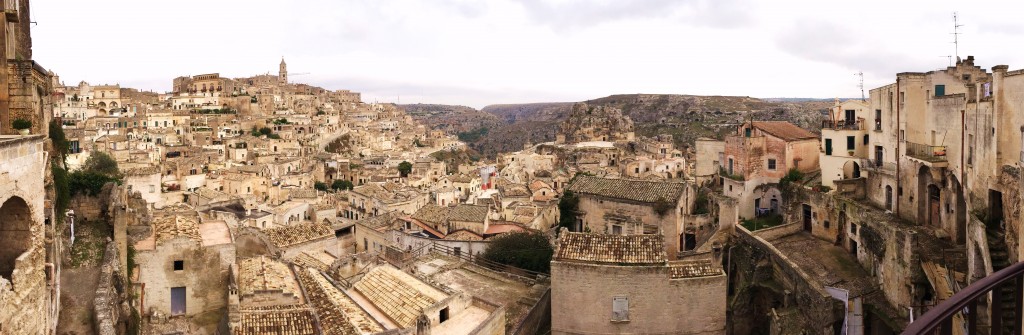
Montescaglioso is where a story ends. But I picked a week when the Italian weather was unwelcoming: fine by day, but extremely foggy by night. It is to be expected, because Montescaglioso sits high on a hill.

And then the winds came—strong Sciricco and Maestrale winds that brought heavy rain and quickly sent it away again. For this reason, the locals were happier to stay indoors until conditions improved.

Montescaglioso is where the heart beats a little slower.

Where there are people, I watch them… observing their character and capturing their mannerisms. Most are unaware that this old town was once inhabited by Greeks and Romans.

Some of them will end up in a story.

There is the young boy who is inconspicuous in the corner of a café; he drinks Coke with lemon and reads a paperback copy of Black Run by Antonio Manzini. Every few pages he stops and scrolls through his iPhone. He appears to have friends, but at that moment is bored with his own company.

Then there is the handsome boy, whom I watch with curiosity until it becomes something closer to obsession. He eats pasta with one hand, while the other rests inside his underwear, absent-mindedly playing with himself. He stops when he realises I am watching, and I am immediately disappointed. I want to tell him it is none of my business what he does, but that feels like a perverse thing to say.

The teenagers who congregate beneath the tall statue of San Rocco, the patron saint of Montescaglioso, in Piazza Roma. They are immaculately dressed in smart jeans, designer puffer jackets, and new trainers, because the nights are chilly. They talk for hours because there is nothing else for them to do. I do not understand what they are saying—they speak too fast—but they seem friendly.

The man who pulls up in a Grande Panda and sees me sitting on a bench outside an old building, its yellow paint faded with time. He speaks remarkably good English and educates me on the history of the town: the stories of local people who left at the beginning of the last century and moved to New York and Toronto. He tells me that Francis Ford Coppola is a second-generation Italian-American, born to parents of southern Italian descent. His paternal grandparents emigrated from Bernalda, which is only a few miles away, and the director now owns a hotel there.

The old man who walks his dog every evening and stops to talk. He points to the Chiesa di San Rocco and tells me it was badly damaged in an earthquake that struck Montescaglioso in 1827, and was later restored with the construction of stone vaults and a new façade. He tells me that ancient Greek tombs were once discovered beneath the piazza, and that the church once stood outside the town—there is the possibility of undiscovered graves beneath the surrounding houses.

I decide that there is much history to be found, but I am only interested in the present, where the young people appear permanently sun-tanned, animated, and possessed of an easy, unstudied allure that feels particular to this part of the world—especially to someone from northern Europe.

On lusting over Benjamin Voisin in The Stranger…

I know somebody who claims to have met French actor Benjamin Voisin. It may or may not be true because that person has a tendency to tell lies. But the story he tells is a good one because he said that Voisin smoked a lot, wasn’t completely fluent in English, but came across as a nice chap. And he was convinced that he was gay, but that bit has yet to be confirmed.

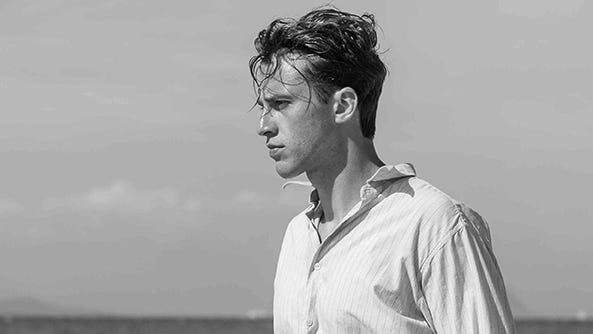
I first saw Voisin in François Ozon’s Summer of 85 (Été 85), and at the time I thought the director might have chosen a better-looking boy. But then came the trailer for Ozon’s The Stranger (L’Étranger), along with the publicity stills, and I kept finding myself asking, “Who is that good-looking guy?”

It has felt like an age waiting for The Stranger to arrive. Based on Albert Camus’ novella, it was originally shot in colour, though Ozon ultimately chose to release it in black and white—a decision that feels entirely right.

There is a scene in which Meursault (Voisin) kills an Arab boy. He studies the body on the ground—first the armpits, then the lips—before firing… several times. It’s one of Ozon’s familiar devices, turning something ostensibly straightforward into something quietly, disconcertingly homoerotic.

“I wanted to make everything erotic,” Ozon says. “The girls are erotic. The boys are erotic. The nature is erotic. Everything has to be erotic and sensual. That’s what I wanted. And the choice of the black-and-white [cinematography]was a way to show this sensuality in the world.”

If that wasn’t enough we see Voisin’s naked body a few times, a pretty bum that requires squeezing, and even get a glimpse of his manhood.

On coming upon an unwelcome adversary…

The boyfriend of the love of your life stands before you. What are you supposed to do? Granted, he’s good-looking. But he lays claim to someone who should be mine. For that reason, I can’t ignore everything that’s wrong with him. I want lightning to strike him dead. There is a solution to this jealousy—but it’s not one I dare to consider.

On reading an anecdote from Rufus Wainwright…
“What’s the best thing a cabbie has said to you?”

“Well, my handle on Uber is just the letter R, and I went into a cab once and the driver said, “R, what’s that stand for?” And I said, “Rufus.” And he said, “Oh, like Rufus Wainwright? I wonder what happened to him?” I just went along with it…”

As flies to wanton boys are we to the gods…

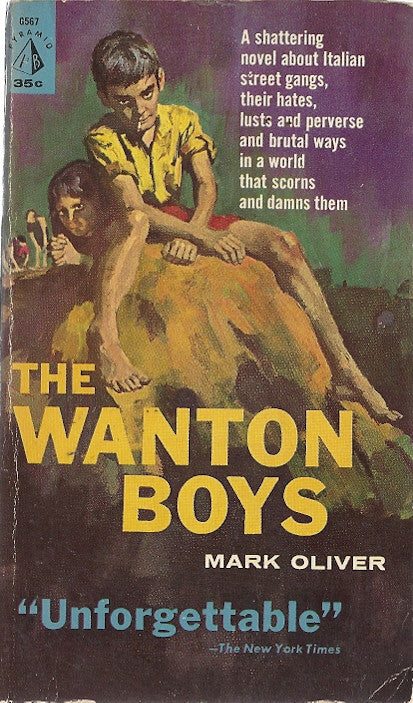
The Wanton Boys, Mark Oliver, 1959.

He was a thin, brown-eyed, sad-looking boy, one of ten children of a poor Italian fisherman who had been drowned at sea. Sometimes he begged a little, and sometimes he stole, but hunger grew in him every day. There was no more salt in the home, only garlic to help the long loaves down. Garlic or one of the half-rotten tomatoes that the wasteful spaghetti-makers threw away, and it was a race in the mornings to get to the garbage cans before the dogs and the other starving scavengers.”

I found a parcel on the doorstep. Tearing it open, I uncover a battered copy of The Wanton Boys. I am beside myself with excitement. It’s an early birthday present from a friend too impatient to wait for the day itself. This ragged mass-market copy, improbably, is worth a small fortune.

The blurb is enticing:

“A shattering novel about Italian street gangs, their hates, lusts and perverse and brutal ways in a world that scorns and damns them.”

I love a book about lust – and perverse and brutal ways.

On the cute and willing…

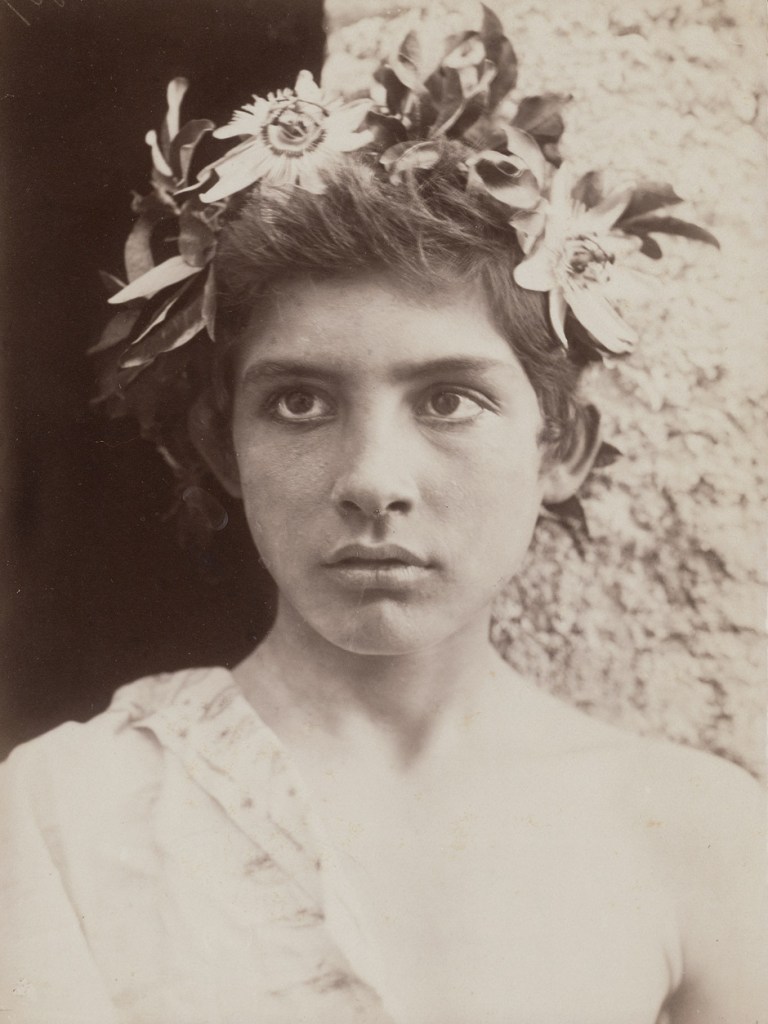
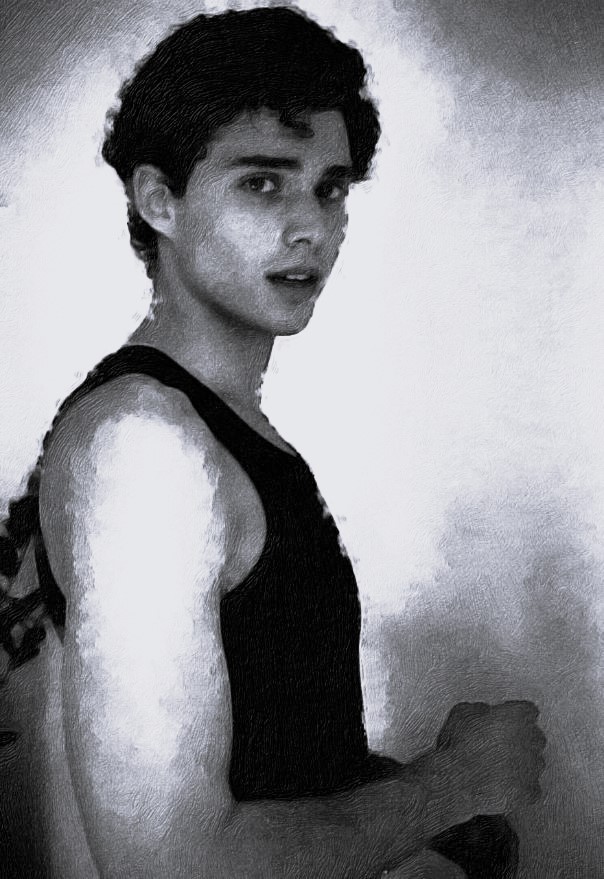
Vimzrut. Photo by Ruslan Pukshyn, 2026

Stolen Words: Pasolini – The Projects

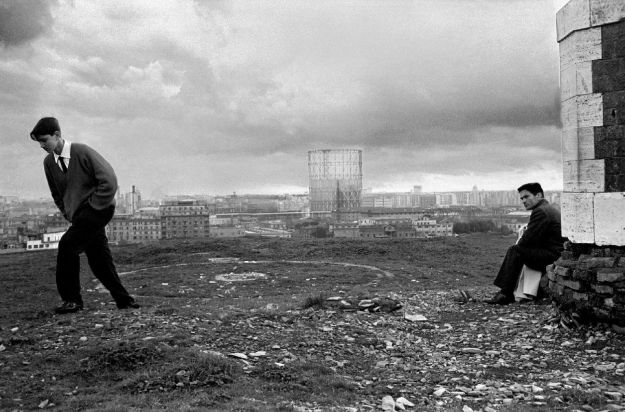
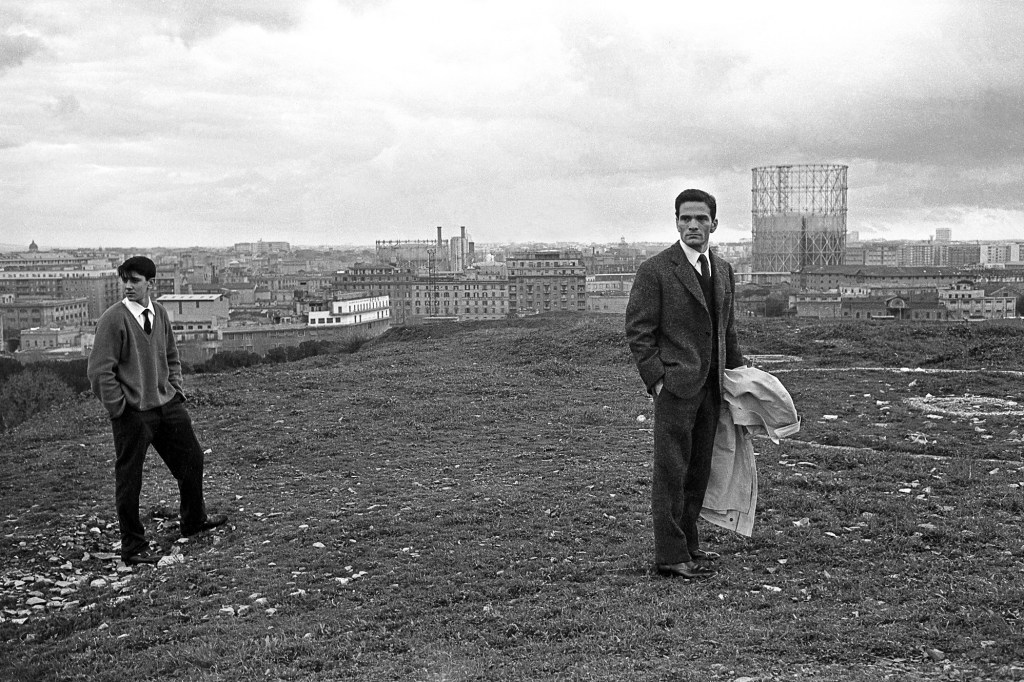
This iconic photograph captures the Italian film director and poet Pier Paolo Pasolini at the Monte dei Cocci (also known as Monte Testaccio) in Rome, 1960.

It was there that I had met, or in fact only seen, another youth, Nino, who was reduced almost completely to his pure image. It was a sunny day, and everything shimmered, the garbage and weeds, tall buildings and shacks. He was standing in the sun in a purple shirt, his deep blue eyes filled with a strange, almost cruel innocence. He was a boy like so many others, with a job, or perhaps in search of a job. I saw him some time later, grown up and somewhat thickened, on the train to Ostia, with his father and mother, and probably some younger brothers and sisters. His gaze was somewhat cloudy, but it was still pure and innocent. He joyfully introduced me to his parents. His father was robust, still young, and seemed like an honest factory worker, and his mother, who also seemed young, showed the brusque tenderness typical of Roman mothers just slightly softened and mitigated by the fact that her son already had the bearing of a young man. A year or two later, I’m not sure, I crossed paths with a friend of Nino’s called Bruno and asked about the boy. Bruno thought for a moment, comically knitting his brow. Then he came to a decision and raised his hand in front of his face, with the fingers apart. He meant that Nino was in jail, at Regina Coeli.

From: Chronicles of Rome, Pier Paolo Pasolini, 1961.

The Distance Between Us Was Never Truly Death

“Paolo went to your country to die, and now, Harry, you have come to his country, where you will also die.” Harry arrives at the small Italian town of Montescaglioso, where it is time to make peace with the person he once loved. The final part of an unlikely story.  (Parts 1 to 24 are available to read in the menu)

Perfectly Hard and Glamorous – Part 25

April 2026

The clock struck twelve at the Chiesa di San Rocco in Piazza Roma. The warmth from the Easter sun was unfamiliar, but as shadows crept from the old buildings and advanced towards the monument, the coolness of the spring afternoon would follow, and remind us that where we came from didn’t matter. One place could be much the same as another.

Piazza Roma was mostly deserted except for a handful of pedestrians who emerged from between these crumbling buildings and went about their business. The peace was only shattered by the noise of a scooter which entered from Corsa della Repubblica. On it, a ragazzo, wearing short sleeves and crash helmet, noticed me standing alone, revved its engine, and circled several times around me. All the time he watched, as there would be other people watching too. 

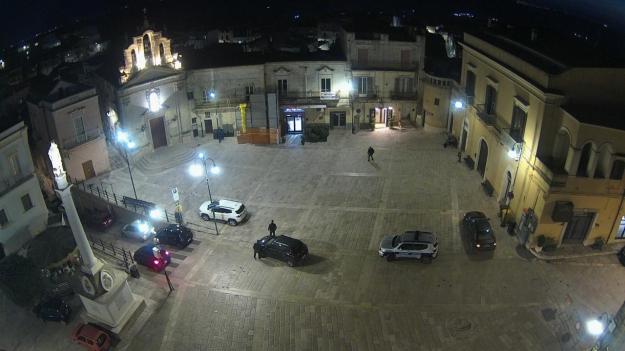
High above the square, on top of an unlikely building, was a webcam; its five cameras pointing in different directions. Somebody in a cramped New York apartment or a hotel room in Bali, was able to see what was happening in sleepy Montescaglioso. The views were familiar. I looked at them every day, and now, I was also one of the strangers on the screen.

The ragazzo eventually pulled up beside me and cut the engine. He removed his crash helmet and revealed himself to be in his late teens, with black curly hair and neat stubble on his chin. “Sei inglese?” he asked. “Sì, io sono,” I replied. “Then you must be Harry,” he said with broken English. 

He introduced himself as Tino and retrieved a second crash helmet from the sottosella. “Put this on,” he advised, “and get on the back.” I did as I was told and placed my arms around his waist. The engine kicked into life, and he sped off down Via Cavour; through cobblestone lanes that twisted and turned, both sides lined with old houses painted in shades of pink and yellow that the southern sun had slowly faded.

The farther we rode out of town, the wider the roads became, and the houses grew larger and newer. When we reached the petrol station at Strada Provinciale, Tino swung right and came to a stop beneath huge Italian cypresses leading to the gates. We dismounted, and I took in the panoramic views of the surrounding Basilicata. I noticed that the area below the cemetery had been used as a dumping ground for builders’ waste from the construction sites we had passed. Tino opened the sottosella, deposited both helmets, and retrieved a plastic bag. 

“Paolo went to your country to die,” said Tino. “And now, Harry, you have come to his country, where you will also die.” An exchange of the dead. I was the lad from the working classes who had sunk to the bottom before being gifted a chance to rise again. I was about to confront my past again.

Tino took me into the Cimitero Comunale and along corridors of loculi, multi-storey rows of concrete vaults stacked several levels high. The sight was striking; each grave was decorated with vases of fresh flowers. It was a Catholic tradition, an artistic expression, and a practical solution to space limitations. Italian culture maintained a strong, ongoing connection with the dead.

“My family were upset when you asked to visit,” Tino told me as we walked along. “The older ones are still angry and did not want you to come. But it was the younger ones who were able to change their minds.”

“Please thank them for doing so.”

“They call you the ‘English Boy’—the one who came from the projects. Our elders believe that Uncle Paolo did something gravely wrong, and that you were the cause of it. It is the only way they can forgive him. Blame you. Maybe the younger members of the family have more compassion and understanding, and we are more interested in seeing the boy who became the source of such hatred.”

The boy he referred to was no longer a boy. I was now in my sixties and had waited far too long to come here. Tino looked at me, and I could not help noticing his delicate brown eyes, which seemed to be searching for answers.

“I am older than Uncle Paolo was when he died. He will remain a boy forever. In the same way, you have not aged either, Harry. You are still the boy who was responsible for sending him to his tragic death. It is the boy that people will condemn.”

Like Paolo’s family, I had also believed that Paolo had taken his own life. The shame of being arrested and exposed as a homosexual had been too much. But Frank Smith had taken forty years to tell me otherwise: that Andy, my best friend, had blamed Paolo for coming between us—for ruining my life—and had sought revenge by sending him to a horrific death from the top of an abandoned factory.

It had taken me twelve months to process that news. Those last seconds, when Paolo knew that he was going to die. What had been going through his mind? Those intense emotions—fear, love, regret. Had Paolo thought about me in those last moments?

I was about to tell Tino the truth but didn’t get the chance. He had stopped in front of a small, rectangular niche on the bottom row and pointed.

I noticed the flowers first—chrysanthemums, alongside a mix of vibrant and white blooms, carefully arranged in small glass vases. There were also tulips, symbolising the freshness of spring, new beginnings, and hope.

And I saw Paolo again—for the first time in forty-one years.

There was a black-and-white photograph: a headshot of him looking at the camera, that nervous expression, expressive eyes, thick black hair with the same curl that always fell across his forehead, and a half-smile. Paolo was looking at me. A look of surprise. I had finally come to see him. The years of regret washed away, and we were back together again. I saw him smiling. “I loved you, Harry, but I was taken away. The years were long, but you found me again. Ti amo, Harry.”

It was a moment where grief, memory, and love converged.

Tino reached into the plastic bag and handed me a white rose to place in front of the photograph.

“I shall leave you to make your peace,” he said, and slipped away to a bench at the end of the avenue.

I put my hand on the marble slab that had been used to seal the tomb. It felt warm in the afternoon sun. I traced the inscription with my finger—Paolo Antonio Moretti—Amato da tutti coloro che lo conoscevano—beautifully carved in italics by an Italian craftsman. 

“Well… Paolo. Here I am. I never imagined that I would speak to you again. The last time I saw you was at that big house, when we were all arrested. My last recollection is of you looking terrified and shouting my name. I’ve replayed that moment every day for over forty years. Shouting my name because you were scared, and I couldn’t do anything. Do you know how painful that memory has been?

“I tried to speak in the days afterwards, but everyone hated me and wouldn’t let me anywhere near you. They said that I had corrupted you. I suppose your parents were trying to protect you… and they told me that you didn’t want to see me. That hurt, and I’ve tried to come to terms with it ever since, but I never believed it.

“And then you were gone. Forever. Do you know how that felt? The realisation that you love somebody so much, but can never see, touch, or love them… ever again. It was the most painful thing that ever happened to me.”

A tiny sparrow landed on the ground beside me. In Italian folklore, these are seen as a sign from the dead, and it hopped around my feet before flying up onto Paolo’s grave.

“Last year I saw Frank Smith. He told me that you didn’t commit suicide. That was a relief to me—for a while, anyway—but then I found out that it was Andy who killed you. It meant that your parents were right to blame me. My best friend killed you because he was jealous of us. That is something your family needs to know.

“What happened afterwards? I went to pieces. I nicked a car and drove to London, where I stayed for years. I worked as a rent boy and then became a writer. Can you imagine that? A small-time shit from Park Hill who couldn’t string a sentence together. But I’ve written books that proved I could do something with my life. I also met a guy called Scott, who I thought I loved, but now I realise that I probably didn’t.

“I went back to Sheffield—to Park Hill—which had completely changed and wrote about our past. It is the most successful book I’ve written. Everyone thinks it is fiction… but everything in it was true. About growing up, the Geisha Boys, meeting you, loving you, and the things we did.

“But I had to leave again. I didn’t belong there anymore. Many ghosts were laid to rest, but I couldn’t exorcise the memories.

“And now I’m here in Montescaglioso, where I can stay close to you. I’ve brought Tom with me and we’re buying an apartment on Viale Europa, not far from here. It’s modest, but for someone who lived at Park Hill, it will herald a new start.

“Tom is Jack’s youngest son and was a bit of a tearaway—a bit like I was. But he’s attached himself to me and will look after me as I grow older. Growing old is something you won’t know about, but it’s very overrated.

“And I met Jack again. I needed to know that he had forgiven me, but it turned out that he wanted my forgiveness too. The tragedy is that we wasted years feeling guilty. Both of us were afraid to make contact.

“Most importantly, I needed his blessing about Tom, and do you know what he said? When we were teenagers, he thought there was something different about me, but couldn’t pin it down. When it all came out into the open, he expected me to make a move on him. If I had, he said that he wouldn’t have said no. That floored me. He gave me his blessing about Tom because he knew that I’d turned his life around.”

Tino was approaching, and the small sparrow flitted between the flowers with a burst of energy. I stopped talking but couldn’t leave it like that.

“I must go now, but I shall return soon. Ti amo, Paolo.”

“I heard what you were saying to Uncle Paolo,” Tino said. “Did you love him as much as you say you did?”

“I did,” I confessed, “and it was a relationship that should never have happened. Did you know that the first night that I met Paolo, I punched him in the face… and immediately regretted it. He was incredibly sweet and beautiful. I wish you could have met him.”

“And this Tom that you spoke about—he has come to Montescaglioso with you?”

“Another unlikely relationship. Tom is much younger than me, and the story is far too complicated to explain. But he is a link between the past and the present.”

Tom was waiting for me when I returned to Piazza Roma. He smiled—a dazzling grin that showed his face had already tanned under the Italian sun. I explained that Tino had promised to visit us at the new apartment and that he had also asked for a copy of Perfectly Hard and Glamorous.

“But the book is in English,” he replied.

“I know,” I said, “but he wants it because that book is part of his family history.”

And that is the end of this long story.

The journey from a bleak northern city that had little going for it in the 1980s to the present, in a small Italian town that nobody has heard of. Tino was right when he suggested that Paolo had travelled to another country to die, and that I had done the same. And that is what will happen.

We are both happy here and will never leave.

Sometimes, when I stand on the balcony of our new apartment at Viale Europa and look at the house across the street, I imagine that I am seeing Park Hill again. And then the laundry tries to break free with the help of the strong wind that blows from the distant olive groves and wheat fields, and the memories evaporate.

I watch people going about their business—the animated, loud conversations, the frequent gesticulation, and that strong personal style. Both the young and the old, slipping into cafés, shops, and gelaterie. Walking between sun-drenched, ochre-washed buildings and piazzas, with the noise of Vespas weaving through the narrow streets. They are blissfully unaware of that sensory blend of ancient history and modern life; unaware that historic architecture is now adorned with contemporary graffiti.

The Italians are wonderful people.

I also think about everyone who shaped that journey: those who are dead—my parents, my best friend Andy, whom I may never forgive, and Paolo, whom I visit every week. I even think about Frank Smith and Billy Mason. Then there is the living—Jack, who will make regular visits to Italy and remind me that I was once a Geisha Boy, who swore, fought, and offered my body to anyone who wanted it; and Tom, who one day will replace Paolo as the love of my life.

Straight Out of Verona – Part 2 – Cola

Nicola – Charlie Marseiiles

When I crawled into bed, it was so hot and humid that I struggled to sleep, making do with an electric fan and open windows. But Verona came alive early and just as I was about to drop off, the traffic, and sirens from the ‘ambulanzas’ on route to Borgo Trento, denied me the pleasure.

I blinked through the morning until there was a polite knock. Fragmented dreams stumbled into consciousness. I tried to ignore the short taps, but whoever it was wasn’t going to go away. I climbed out of bed, with eyes that felt like sandpaper, and opened the door.

It was Cola. “Buongiorno,” he quipped. “My mother told me that you had returned.” I let him inside and noticed how tall he had become. He frowned at my unruly appearance and held up a bag of fresh cornetti. “I shall make coffee, and you must tell me where you have been for so long.” 

I had known Signora Bruschi’s son since he was fifteen, from days when the skinny boy sat on the front doorstep and made cheeky remarks to ladies who passed by. His mother warned him that it was not how good catholic boys behaved but she already knew that Nicola was a lost cause. “He takes after his father,” she had confided, “and has such a violent temper.”

Cola had taken a shine to me after I’d stayed here the first time. He waltzed in and out and helped himself to the contents of the fridge. Then he would beg me to play football with him on the campo giochi until the light started to fade. “He treats you like a big brother,” Signora Bruschi told me. “You are a hero to him, and I pray to St. Gianna Beretta Molla that he will follow your good ways.” The fact that I hadn’t kept in touch bothered me.

Cola was eighteen now, still skinny, but he towered above me. I pulled on a tee shirt and sat at the table while he made coffee. 

“What have you got planned for today?” I had hoped to wander through the day without an agenda but sensed that this might be about to change. 

“Nothing,” I volunteered. 

“Then let me take you out in my new car.”

Cola’s strong coffee wasn’t to my taste. I would have preferred a latte but Italians regard this as sacrilege and so I accepted it without comment. 

“My mother says that you have a French boyfriend.” He waited for an answer, but I didn’t respond.

The truth is, I’d argued with Charlie before coming here and was annoyed with him. When he snapped at me, I’d matched his gallic temperament with a dose of Anglo-Saxon home truths. Afterwards, he had sullenly caught the Eurostar to Paris, and I had come to Verona, to the apartment that was rarely used. 

Buckle up, hot shot. Time to take flight… and land with impact.

Cola’s new car turned out to be a bright yellow Abarth 500 that he drove too fast. I tried to ignore his erratic driving as I did the alarm bells that were hammering inside my head. How many teenagers could afford a car like this? As far as I was aware, Cola didn’t have a regular job, and I feared that he was mixing with the wrong people, something that was easy to do in Italy.

Straight Out of Verona – Part 1 – The Arrival

Ponte Pietra – Verona

The apartment has stood empty for fourteen months. Now I return to it, in a city smothered with sunlight and heat, a place where distractions fall away. Here, I will write of the world I have just left, the world to which I must soon return—dragging up stories from a cemetery of memories. I have always written best from the outside, peering in.

At night the air thickens, heavy and damp. Through the high windows of this old townhouse I look out, remembering what happened here long ago. A man stabbed in the heart with a kitchen knife, left to rot for weeks before anyone noticed, the flies devouring him first. Signora Bruschi, who has scoured the floors and scrubbed the walls, insists it was not in these rooms.

I do not believe her. Yet under the pale wash of moonlight, in a room fragrant with flowers tumbling from the iron balcony, the truth hardly matters. I hum softly to myself, listening to the percolating hiss of coffee on the stove, until the first birdsong threads through the great London Plane outside—the one whose trunk carries the carved names of lovers and bored teenagers.

I take my place on the terrace beneath its green-striped awning, my Chromebook open beside a steaming bowl of carrot cream soup from the little shop on Via Giuseppe Cesare Abba. Overhead, a man and woman murmur in their rooms. Strangers still, but as the night deepens their voices taper into silence.

Sometime after midnight, Charlie’s message arrives from Paris. He is staying there with his family for a few days. Tonight he tells me he walked to the site of the old Hôpital Broussais – not in search of medicine, but to stand on the ground where Jean-Paul Sartre once drew his final breath.

“No matter what happens, always keep your childhood innocence. It is the most important thing.” – Federico Fellini


“My great grandfather was good friends with Fellini,” said Aurelio who looked at the books I had bought. “They both came from Rimini. If you needed to know anything about Fellini, then Gio Carmello, with the tattoo of a boy on a dolphin, was the person to see.

“It is said that my grandfather was called Federico after his childhood friend.

“And now, you have bought a book about Fellini which makes me sad because I think of my family.

“But, if I am honest, I have never liked Fellini, because he came from an older generation, with primitive movies, and an Italy that was black and white and different to the one that I know.”