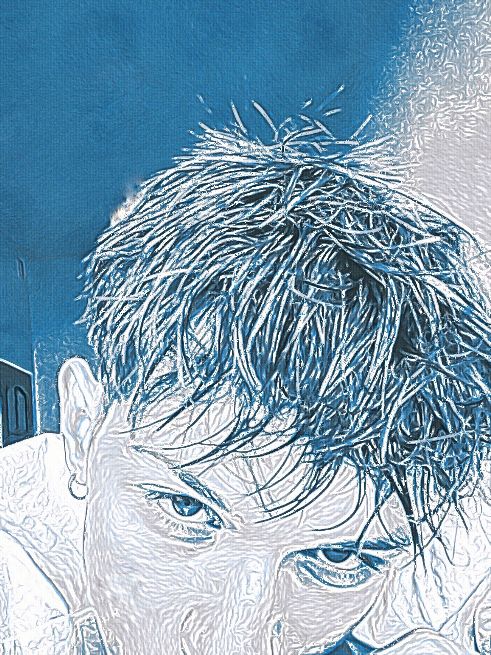
“Video Angelus internehilium et imortalis Even as we speak our hearts entwine. Senex et angelus video venestus caelum. Equiden lavare in meus vita empeteus Ah eeh ah eeh ah.”
*****
The boy who likes the excitement of fear.
“I worry about being thrown off the carousel in later life.”
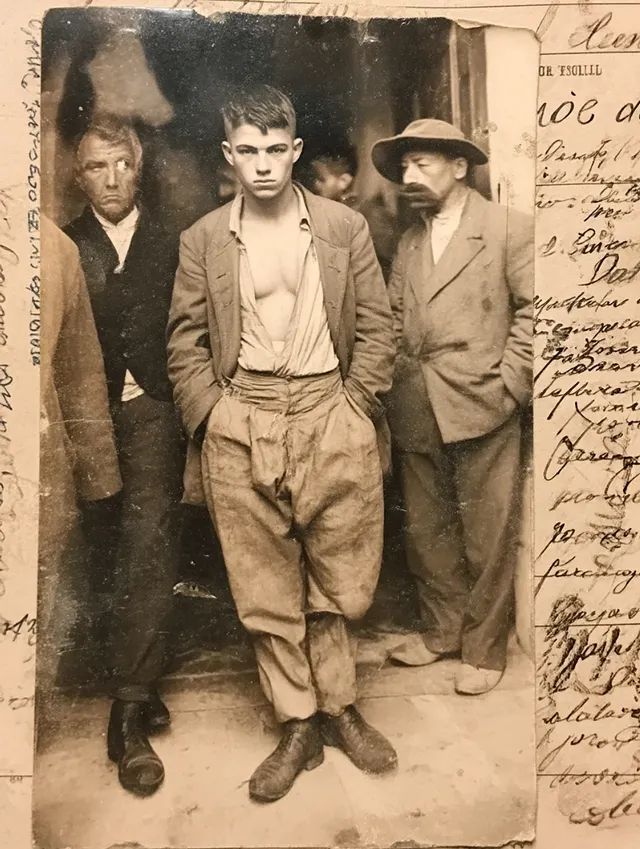
A skinny body and dirty pants.
*****
“He’s got it. Yeah, baby, he’s got it. I’m your Penis, I’m your fire. At your desire. Well, I’m your Penis, I’m your fire. At your desire.”
*****
Be careful who you choose because it can go wrong.
Hormonal Surge: Increased testosterone, fuelling restlessness and the need to discharge energy, sometimes through risky or boisterous play, mock fighting, and testing boundaries.
I wake and can hear music playing in the other room. It is an eighties song – Calling All the Heroes – and it is perfect. My first waking moments are defined by a song made before I was born. It will become a favourite. Whenever I hear it, I will recall the dream.
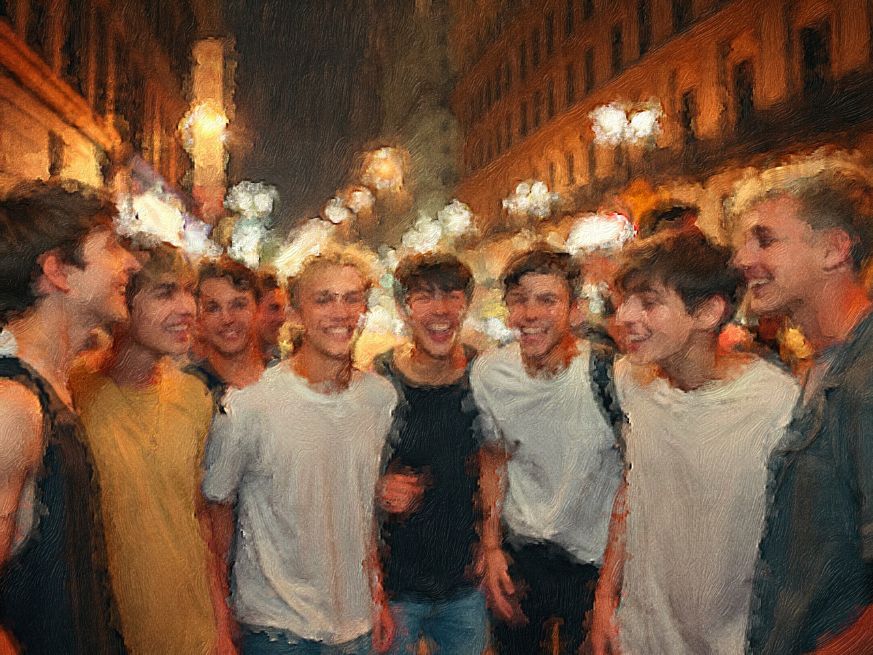
“I’m eighteen. Like I always am. There are twenty boys of a similar age. We don’t know each other, but we have bonded; something connects us, though I don’t know what it is. And now we are friends. Brothers who drink too much, laugh, and joke. We move from bar to bar until the group becomes fragmented, but still we keep bumping into one another — in different bars, on street corners, in dark streets – and each time we greet each other with high fives. I keep losing my coat that contains my mobile phone, but somebody in the group always finds it and saves it for me.”
What am I dreaming about?
Eighteen. Delayed or suspended adolescence. The moment just before categorisation -before ‘out’ or ‘not out’, before relationships are legible, before desire is policed or explained. A moment of pure potential, when attraction, friendship, and self-recognition have not yet been sorted into boxes. A group of boys I don’t know, where intimacy doesn’t have to announce itself as erotic to be real. Touch exists: high fives, a coded language, bodies moving together through night-time space, alcohol loosening edges, and the bond is felt rather than named.
These boys don’t posture. They don’t test me. They don’t ask who I was. They simply accept me. A world that perhaps never fully existed, but felt briefly possible.
The group breaks apart, but there is no need to cling because the bond reasserts itself naturally. “I still know you. You still know me.” I repeatedly lose my coat and my phone – yet I am never punished. I am held by others even when I am careless, distracted, or drifting. I don’t have to hold myself together perfectly. I’m not abandoned for losing my way. A fantasy of uncomplicated male belonging – one where youth, desire, friendship, and identity coexist without fracture or explanation.
The next part of the dream is important.
“There are ten of us staying in a hotel room. It is the only one available. We snack on almonds and slices of apple covered in salted caramel and maple sugar. Two double beds and a single mattress on the floor. When it comes to sleep, we must find space in one of the beds. I choose a double bed where four of us will squeeze together. I’m thrilled that the most handsome boy will sleep next to me. But at the last moment, he is taken. Another boy wants him to share the mattress on the floor, and I am devastated. The dream is never consummated.”
The hotel room matters. It is temporary, improvised, and not designed for this many bodies. I share a bed with four boys. The choice is telling. I don’t choose privacy, pairing, or exclusivity. I choose crowded intimacy – warmth, bodies, breath, limbs overlapping. Proximity without the exposure of being singled out. I am about to be close to the handsome boy without declaring him an object of desire, but he isn’t a person yet – he is a figure onto which desire might safely attach itself.
The handsome boy doesn’t reject me; he is summoned – pulled away by another boy. Desire is displaced, not denied. My devastation isn’t only about losing him. It is about losing the fantasy of being quietly chosen within the group. But the group has ruptured because somebody else’s desire has rearranged the night. My loss is intimate, quiet, internal – no one else even notices it happening – and so I do not follow. I do not compete. I do not protest. I absorb the loss silently.
Boys will be boys. Different sorts. Different morals. Not fussed really.
I can do nice boys I can do bad boys I can do polite boys I can do charming boys I can do clever boys I can do rough boys I can do tough boys I can do council boys I can do rich boys I can do student boys I can do clean boys I can do dirty boys I can do skinny boys I can do clean-cut boys I can do athletic boys I can do energetic boys I can do adventurous boys I can do sensitive boys I can do confident boys I can do caring boys I can do unconventional boys But I can’t do golden boys
“When I see this image, the first thing that comes to mind is my theory that in our youth we are all beautiful! Is it because in our twenties very few things scare us, or because life has barely run us over yet? It is not my intention to make you think that this is the best period of our lives, I absolutely don’t think that! But there is something there, perhaps the little life one still has behind them, that gives this stage a bright patina. Later, that shine doesn’t disappear, it just changes its nature. It becomes deeper, more complex, sometimes harder to see at first glance, but no less real.” – Nuria Velasco
Charlie didn’t go to Paris for Christmas. A family dispute—best addressed through absence—kept him away. Instead, he stayed with a cousin in Woodstock, near Blenheim Palace: an improbable place for pleasure. I was content with the opposite arrangement. Christmas alone. Eating, drinking, letting Netflix decide what mattered.
On Christmas Eve, I dreamed he climbed into bed and lay on top of me. His naked body was warm, yielding, unmistakably real. He kissed me. A faint musk rose from his skin—intimate, animal—stirring every sense at once. At last, I thought, this is the closeness.
I woke up with the sensation intact. The dream clung to me through Christmas morning, vivid enough to unsettle. I searched for an explanation and learned that smell can infiltrate dreams, especially when memory and desire are involved. Olfactory dreaming, they called it. Cologne was the usual example.
In the nineteenth century, a French physician, Alfred Maury, described inducing such dreams by getting his assistant to place eau de Cologne beneath his nose while he slept. On waking, Maury claimed to have dreamt of Cairo, of the perfumer Farina’s workshop, of adventures set loose by scent alone.
I hadn’t smelt Cologne. What lingered with me was the smell of a boy. And with it, a quieter truth: Charlie and I had never moved beyond kissing.
Someone, inevitably, had to puncture the theory. A psychiatrist dismissed the idea entirely. You don’t smell the coffee and wake up, she insisted. You wake up, then you smell the coffee.
I abandoned science and let Spotify take over. It suggested an album by Wolfgang Tillmans, which surprised me. I’d known him only as a photographer. The music turned out to be a sound work made for an exhibition—joy and heartbreak threading through collapse and repair.
I first encountered Tillmans years earlier through a Pet Shop Boys video composed almost entirely of mice living on the London Underground. Ever since, I’d found myself scanning platforms, tunnels, tracks—without success. A memory surfaced: my friend Stephen once worked on a four-hour Tillmans sound installation of It’s a Sin. He now despises the song completely.
Christmas dinner was an indulgence of sorts: cold baked beans eaten straight from the tin. I spent an hour scrolling through films before accepting, once again, that choosing outlasts watching. I downloaded the Christopher Isherwood biography David had recommended—the one that never seems to end—and fell asleep within pages.
When I woke, the room had darkened. Charlie had messaged: Will be home tonight at about eight x.
Transport on Christmas Day was nonexistent, yet somehow he’d convinced his cousin to drive him 130 miles. When Charlie arrived, I asked where his cousin was.
“Gone back,” he said.
“You didn’t invite him in?”
“It’s Christmas. He’ll want to be home.”
“And petrol money?”
He hesitated. “I didn’t think of that.”
Our former lodger once called Charlie a “me, me, me person.” Another friend was less generous and called him an asshole. Perhaps it was cultural. Perhaps it was simply him. Charlie struggled to imagine himself from the outside. I told myself it wasn’t malice. Just a narrow field of vision.
Despite the journey, he looked fresh, handsome. He smiled; I mirrored it. I considered mentioning the dream, then decided against it.
“Why come back early?”
“I shouldn’t have left you alone,” he said, without pause. “It’s Christmas.”
While he dropped his bag in the bedroom, I switched on the tree lights. We exchanged gifts a day early.
His were faultlessly chosen: Salò on Blu-ray, Sargent, Ramón Novarro, Edmund White, a glossy Igor Mattio photography book. Then he disappeared into the studio and returned with a canvas. He turned it around.
It was me.
He’d painted me sitting, relaxed, looking beyond the frame—as if caught somewhere warmer, lighter. My eyes were generous. My mouth was kind. Around my neck he’d included a thin silver chain, a birthday gift I wore only on rare occasions. The detail felt deliberate, almost intimate.
“I painted while you were writing,” he said. “I hope you like it.”
I had never been seen like that before. Not by anyone. I felt exposed, and cherished.
“I don’t know what to say,” I told him.
“One day,” he said lightly, “when you’re old—célèbre—people will say, painted by his French lover.’”
Charlie went to shower. Alone, I recognised a flicker of shame. I’d suspected his absence was a ruse. I’d rehearsed disappointment, punished him silently for not being who I wanted. The dream—so tender, so convincing—had fed that instinct. Sex can exist without love; love can exist without sex. The phrase circled uselessly.
Still, it would be nice.
There it was again. That reflex. The mind’s preference for negativity over positivity.
Charlie returned wearing only grey jogging bottoms and a Santa hat. He stretched out beside me on the sofa, smelling faintly of crushed mandarins, and rested his head in my lap.
“A Christmas film,” he murmured. “Something cosy.”
I stroked his stomach as we watched The Holdovers: a misaligned teacher, a sharp-tongued cook, a boy full of grievance. By the end credits, Charlie was asleep.
I didn’t move. I was afraid that motion would undo everything. His weight, his warmth, the faint citrus on his skin—it felt provisional, like something borrowed. The room held its breath.
I loved him then with a sudden, almost painful tenderness. Not the urge to claim, but to preserve. To keep the moment intact, untouched by language or expectation.
Don Bachardy and Christopher Isherwood. Early 1950s. Photograph by Zeitgeist Films / Everett Collection.
My friend David is reading a biography of the writer Christopher Isherwood on his Kindle. It has taken him a long time to get through—not because the book is difficult, but because it is extremely long. He joked that his Kindle had travelled with him from London to Munich and Paris, and back again, and he had only reached the fifty-percent mark.
“That’s the problem with an e-book,” he said. “We don’t talk about pages anymore. We obsess over percentages.”
I suggested that perhaps he was in too much of a hurry to finish it.
“That’s true,” he reflected, “but don’t you always have one eye on what you’re going to read next?”
David is a lot older than me, and I’m not entirely sure where we first met. He is educated, though—one of those men whose words are almost always guaranteed to entertain. We were walking beside the canal from Paddington Station towards Little Venice. It was dark, lonely, and faintly threatening. I half-expected a knife-wielding mugger to emerge from the shadows at any moment.
For someone like me, who comes from the provinces, London can feel dangerous. David had no such concerns. He regarded nighttime as the best time to wander its quieter streets, harvesting inspiration for his novels, though on this occasion he had also had to tolerate my repeated complaints.
He tried to change the subject.
“The other day I went into Daunt Books on Marylebone High Street,” he said, “and overheard two older women talking. One of them said, There are so many books to read, and so little time left to do it. That made me think about my own mortality. It’s probably why I’m in such a hurry to finish the Isherwood biography.”
It was the first time I’d heard him refer to his age in that way. I’d never really considered that it might trouble him.
It was my turn to change the subject.
“To be honest, I’ve never read Isherwood,” I said. “I find him a bit of a privileged bore.”
He seemed not to hear me.
“There are several comparisons between Isherwood and myself,” he continued. “I’ve been struggling to come up with new ideas recently, and while reading the biography I came across a quote from his diaries: A lack of creative inclination to cope with a constructed, invented plot—the feeling, why not write what one experiences from day to day? Why invent, when life is so prodigious?”
He paused, as if letting the words settle.
“That resonated with me. I’ve decided that my future writing will only be based on real life experiences. That will be far more satisfying.”
David’s work had always relied on a radiant imagination—several bestsellers proved that—but this declaration unsettled me. As if anticipating my concern, he smiled.
“I have a lifetime of fascinating stories involving my closest friends,” he said. “Some of them might raise a few eyebrows.”
“Did Isherwood do as he suggested?” I asked.
“Absolutely. He created characters based on people he knew. Sometimes he even wrote about himself in the third person, omniscient. I plan to do the same. I’ll call my character David—and absolve myself of any blame.”
Little Venice. Where the canals whisper secrets under the London stars
We passed moored canal barges. Most were dark, but a few glowed from within: a man cooking over a tiny stove, a woman bent over her laptop, someone stretched out watching television. Their lives were visible through brightly lit portholes, as if privacy were optional.
“There are other similarities between Isherwood and me,” David went on. “When he was forty-eight he met his long-term partner, who was only eighteen. Does that sound familiar? Joshua was twenty-one when I met him. I was forty-four. Seventeen years later, we’re still together.”
“To be honest,” I said, “I’m surprised your relationship has lasted this long.”
I thought of the times he had propositioned me, and of the occasions I had refused him. I would have been eight when he met Joshua, who was now approaching forty. I had been in my early twenties when I first met David.
“The secret,” he said, “is not to make a relationship exclusive. Not my words—Isherwood’s. He and Don Bachardy both had sex with other people.”
It sounded close to a confession.
“Young men enjoy the benefits of being with an older man,” he continued. “Even if they get their sex elsewhere. Boys can take on the identity of their mentor. Bachardy picked up Isherwood’s accent within a year. Joshua is still his own person, but he always comes home. He values stability.”
Above us, traffic thundered along the Westway flyover. Sirens cut through the night. London had become a city of constant alarm. We were nearing Little Venice—named, supposedly, by Lord Byron, who compared its rubbish-filled waters to the Italian city he had once lived in. In the darkness we could just make out Browning’s Island.
“This is where Paddington Bear was once carried by a swan,” David joked. “Though I suppose that means nothing to you.”
My mind was elsewhere.
“I know times were different,” I said, “but Isherwood might today be accused of grooming a young boy.”
“I knew you’d say that,” David replied. “And yes—you’re right. An established literary figure and a college freshman. There were even unkind rumours in New York that he was with a twelve-year-old. His friends disliked Bachardy. But they turned a moral weakness into a long-term relationship. Rather like Joshua and me.”
He paused.
“Back then, people were blissfully unaware. Today everything is played out before a global audience. If the same thing happened now, Isherwood would be cancelled—even if nothing illegal had occurred. We used to call it boy-love. An appreciation of male beauty going back to the Greeks and Romans. Now it’s considered dirty. That’s something I struggle with.”
A person with limited education is at a disadvantage when arguing with David. He always has the clever words ready. My clumsiness betrayed me.
“Can’t you see that there’s something disgusting about the age difference?”
He frowned—not so much at my disapproval, but at my inelegance.
“When I was young,” he said, “homosexuality wasn’t acceptable. Many of us missed out on young love. Then the AIDS crisis came. Now we grow old resentful, because there’s a void. Is it so terrible that we try to recover something we lost? You’re the generation without constraint. You don’t understand our predicament.”
He stopped walking.
“No matter how old you are,” he said, “there will always be something exquisite about youth.”
“Why?” I asked. “Isherwood came from an even older generation. And what you’re saying sounds pederastic to people my age.”
“When Isherwood was young in the 1920s, he was driven out of Germany by the Nazis. Berlin became dangerous. By the time Bachardy appeared, Isherwood was already considered ancient. Some say the boy did the chasing. The relationship later became non-sexual. Bachardy had other lovers.”
A group of students approached—three boys, two girls—laughing loudly before falling into an awkward silence as they passed us. I recognised the look. Suspicion. Not for the first time, I’d been mistaken for a male hooker. I resisted the urge to run after them and explain myself.
David smirked.
“I think I know why you struggle with age disparity,” he said. “That look on your face—it wasn’t moral outrage. It was embarrassment. Shame. You’re ashamed to be seen with someone older.”
He shook his head.
“That’s not a virtue I admire. One day you’ll find yourself old without warning. And the object of your desire will be much younger. I hope that boy doesn’t think the way you do now.”
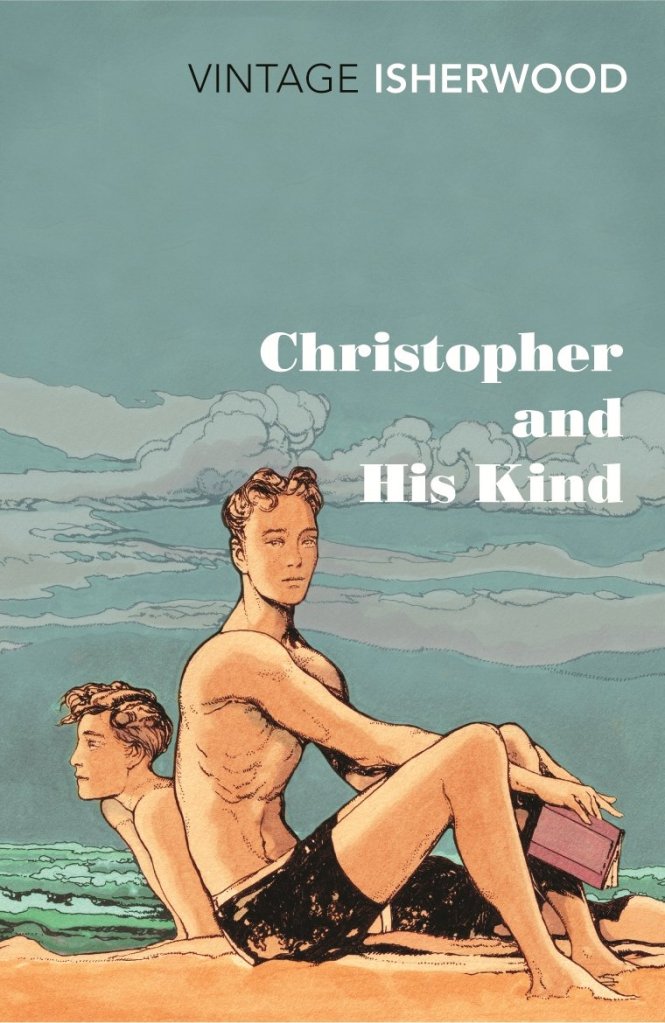
Christopher and His Kind is a 1976 memoir by Christopher Isherwood first printed in a 130-copy edition
I noticed him but he chose not to notice me. After he had dropped his mobile phone on the floor for the third time, he realised that he had to say something.
Harry Oldham is writing a novel based on his criminal and sordid past. To do so, he has returned to live at Park Hill, where he grew up, and the place that he once left behind. That was then and this is now, in which the old world collides with the new.(Parts 1 to 17 are available to read in the menu)
Perfectly Hard and Glamorous –Part 18
October 2025 There was a paperback of Saturday Night Fever published in 1977 by H. B. Gilmour. I read it when I was twelve. If I remember right, the novel said that Tony Manero looked like a young Al Pacino. In the film that came first, a girl he kissed on the dance floor gasped, “Ohh, I just kissed Al Pacino!”
I hadn’t a clue who Pacino was, only that he must’ve been something to look at. “Pacino! Attica! Attica! Attica!”
Decades later, Pacino published his autobiography at eighty-four. Everyone knows who he is now. It’s a decent book—above average—and I doubt he wrote it himself, but I’ll gladly be proved wrong. He writes beautifully about the part of life most people avoid thinking about: the last act, when the runway ahead is shorter than the one behind, as David Foster once put it.
Compared to Pacino, I’m still young. But sixty looms, and yes—I care a fuck. Quite a lot, actually.
I looked in the bathroom mirror and flinched. The face staring back didn’t belong to me. Wrinkles, dull skin, cheeks softening with age. Not the face of an eighteen-year-old; the face of an old man.
That night I dreamt of Andy, Jack, and me—partying by the Cholera Monument. Summer, though the skies were leaden. We were drunk, a boom box blaring New Musik. Rain began to fall, but we didn’t care. We danced, the drops sliding down our fresh, young faces. “It’s raining so hard now / Can’t seem to find a shore…”
We stripped to our boxers, soaked and clinging, leaping like fools. Paolo watched from under a tree, the outsider at the edge of a brotherhood. I wanted him to join us, but he stayed still, afraid.
When the song ended, our clothes were a sodden heap. We grinned, knowing this moment could never happen again. Paolo walked over, still fully dressed, and looked me up and down. Do you like what you see, Paolo?
He shook his head. When he finally spoke, I wished he hadn’t. “Harry, what are you doing? What happened to your body? Old men don’t behave like this.”
I woke to a shadow in the doorway. “Harry, you okay?”
Tom. He came and sat on the edge of the bed. “I think you were dreaming. You started shouting.”
“What did I say?”
“I don’t know, but you woke me up.”
“Fuck.”
“What were you dreaming about?”
I’d read that dreams fade fast because they live in the same part of the brain that controls movement—crowded out the moment we start to stir. But I remembered this one. And I blamed Al Pacino.
“What time is it?” I asked. “When did you get here?”
“Four a.m. After midnight, maybe. You didn’t hear me come in.”
“At least you haven’t lost your key yet. I take it you’ve finished your drug dealing for the night.”
He rolled his eyes. “Harry, I told you—what you don’t know won’t hurt you.”
Tom had mellowed since I met him two years ago. Back then he’d have clenched his fists and spat, “What the fuck’s it got to do with you?” Now twenty, he was as much a part of the flat as I was. He drifted in and out, sometimes gone for days, then suddenly asleep on the sofa when I woke.
Why I let him into my life, I’ve asked myself a hundred times. Just not tonight. Tonight, I was glad of him.
He lay back, staring at the ceiling. I went to piss. When I came back, he’d slid up beside me, hands behind his head.
“What are you doing?”
“I’ve never really been in your bedroom before.”
“Liar.” I’d made it clear it was off-limits, but I knew he’d snooped when I wasn’t around.
“Why did you become a writer?”
“Ah, the loneliest job in the world.” I hesitated, then answered.
“One night—a year before I left school—my parents came home from an open evening. Same story every year: teachers saying how useless I was. But that night, my mum came into my room looking excited. She said, ‘Mr Green, your English teacher, thinks you’ve got imagination if you put your mind to it. He said if you used better, longer words, you might pull through.’ My dad, standing behind her, added, ‘I told Mr Green he needs to speak properly first… but it’s a start.’ That was the only bit of hope they brought home.”
“Is that when you started writing?”
“Didn’t mean anything then. But in the early nineties, when I was broke, I had this client—older guy, fat—wanted me to piss on him. Easy money. We were lying on a wet plastic sheet in a hotel bed, talking. He worked for a publisher. Said I could make money writing about life as a London rent boy. I didn’t, of course—it sounded like work—but he told me to keep notes. Can you imagine?”
“And did you?”
“Not at first. Then one day I nicked a pack of exercise books from WH Smith and started jotting things down. Faces, nights, bits of talk. Eventually I began adding fiction, and that’s probably when I realised I could be a writer.”
My first book came out when I was in my forties. Nothing to do with rent boys. I’d drafted that novel, but no one wanted it—too sordid, too shallow, they said. One editor told me to try something else. So I wrote a formulaic thriller about a teacher investigating a missing student. I hated every minute of it, but it sold.
Tom turned toward me, and I braced for a jab. Instead, he said, “Maybe it’s time to revisit that old story. Nothing you write could shock anyone now. Might even fit with the book you’re working on.”
He hadn’t read any of my new work, not since that first night. My return to Sheffield and Park Hill had been interesting, if not productive. The book was two years late, my agent losing patience. Still—Tom had a point. I hadn’t thought about including the London years.
“There was a book published in the nineteenth century,” I said. “The Sins of the Cities of the Plain. No one knows who wrote it—some say a young rent boy named Jack Saul. It’s pretty explicit. I lived a life that echoed its pages once, long ago, when I was young… and now I’m not.”
The soul of a good time. But something changed. I’m not a social person anymore, but everybody wants me to be. They talk shit all night. I want to say, “Please go away, I prefer my own company now.”
Matchstick Man stretched and showed his slender stomach. Lean, flat and toned. It was for my benefit, and he knew that I would be distracted by the neat wave of wispy hair that headed south of his Calvin Klein waistband. But he still claimed to be straight, and when I suggested otherwise, he simply laughed.
The tall handsome guy, maybe in his twenties, looked fine from a distance. When he came over, I found that he’d had lots of botox and talked about Donald Trump in a squeaky voice.
An older man chatted me up, and said that I had a lovely smile. But I wasn’t in the mood, and played hard to get, and so I made an effort not to smile anymore. He called me an arrogant prick and left me alone.
A group of guys stood next to me. One of them, who appeared to be wearing aluminium foil, thought he was the patron saint for confused gays. He pontificated that he knew more than anybody else and his friends agreed with him. I wanted to make a noise like a sheep but somebody beat me to it.
Two guys told a friend that when they got together they were both tops, and so they tossed a coin to decide who would be the bottom.
Somebody behind me said something like, “Oh, poor love, poor heart, I played with your pain, I trampled on you with indifference!” – or words to that effect. I hoped that they were quoting from something, and this wasn’t part of their normal conversation, but somebody said, “I agree.”
The Angel grabbed me from behind and gave me a hug which I thought was sweet. He sat beside me and gave me a tour of his body tattoos. The last time I saw him, he insisted I speak to his grandmother on his mobile phone. It was an awkward conversation with somebody I didn’t know. She told me that he was ‘ a little shit’ because he forgets to take his ADHD medication and then he’s like a rabbit. My interpretation of a rabbit had been different to hers. Later… he ate pizza with his eyes closed and looked so tired that he may have drifted off at any moment.