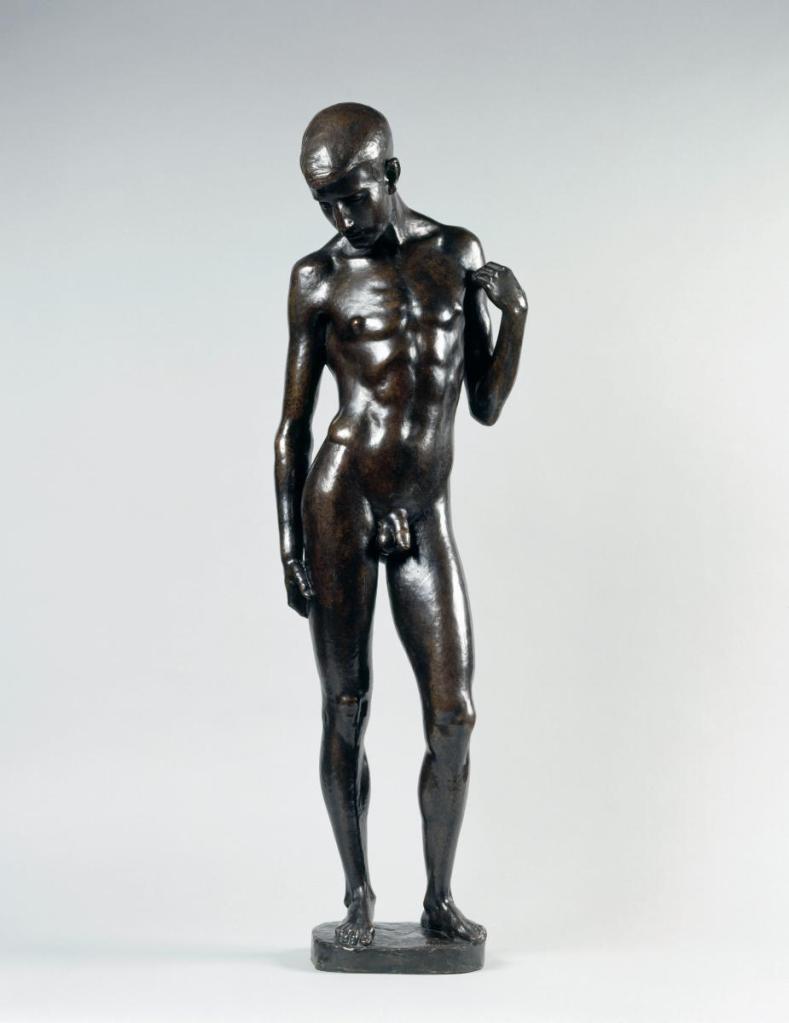
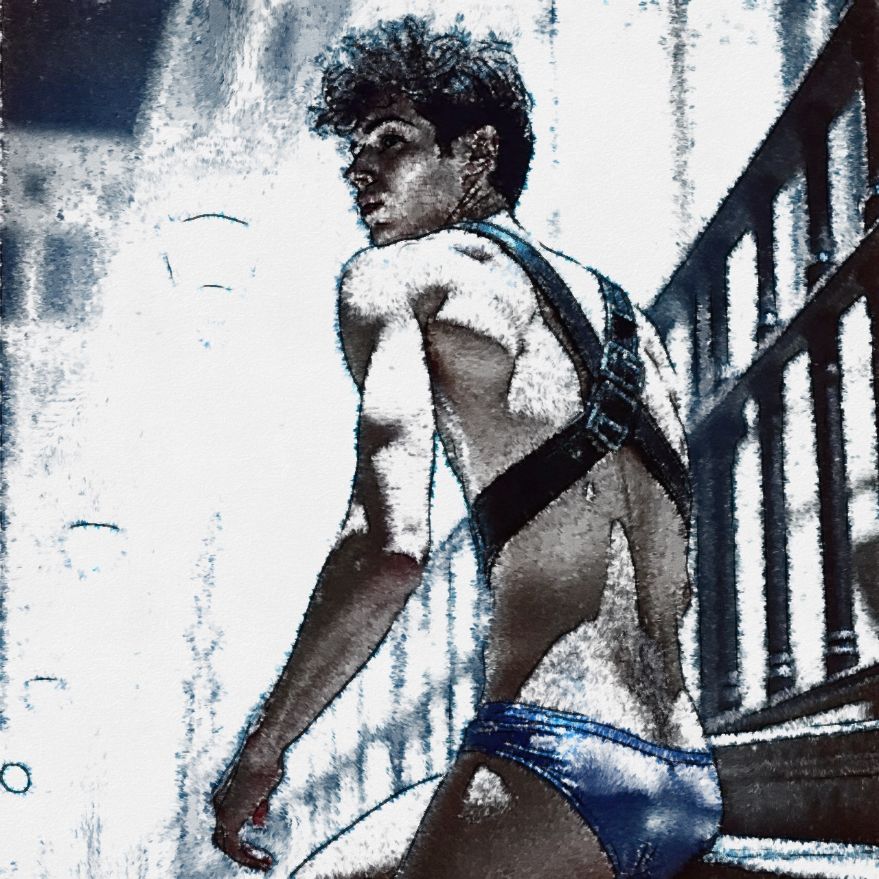
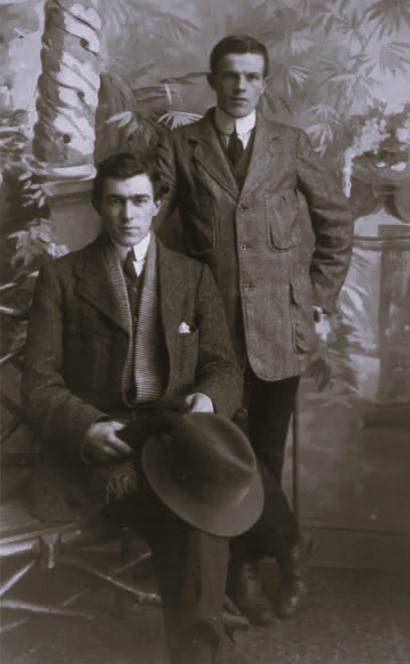
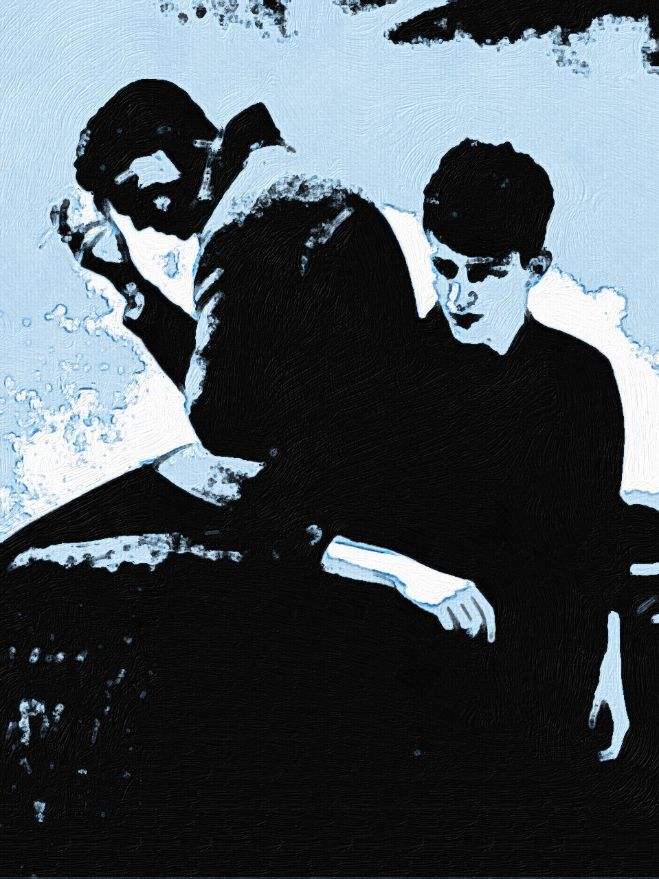
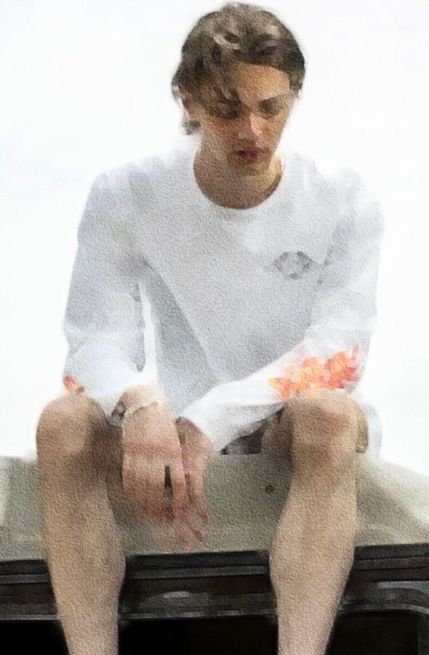
Le coureur cycliste (1907-08). Gaston George Colin was a young cyclist, Harry Graf Kessler a rich German aristocrat attracted by his figure, and Aristide Maillol the French sculptor stuck between them.
On falling for a bronze statue… Aristide Maillol. He seduced us with stone. Flirted in bronze. Gaston Colin. A mystery. Le Cycliste. A favour for a friend. Harry Graf Kessler. But Maillol didn’t do dick. But Charlie said, “It is conceivable that he hated the male penis. Much the same as I do with the female vagina.”
On realising that I know nothing about female anatomy… And so, to be real, I know nothing about female anatomy. Where to stick it? What to do? What to say? Multiple choice. Confused with a clitoris, vulva and a vagina. In case of emergency. Anus. Refer to Dummies Guide to Girl Parts.
On teenage scally boys messing with me… Broken promises and lies. Rebellious and street smart. Teenage scally boys who disrespected me. No trust, I told them. I’m burned now. I kicked the shit out of one of them. They threw eggs at me.
On flirting with the guy with a girlfriend… A flick of the eyes. Said it all. My heart surged. Not my normal type. A bit chunky. But good chunky. Everything changed. There was hope.
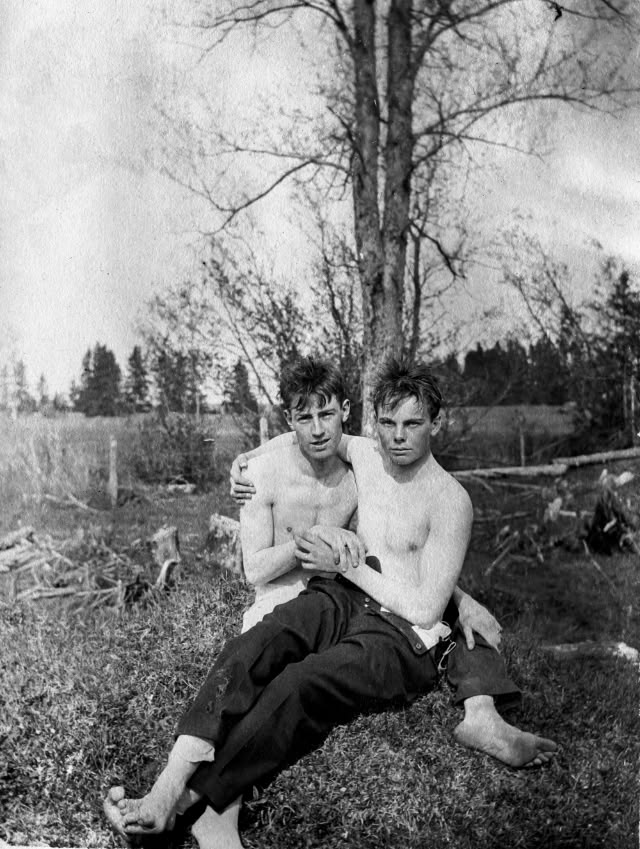
On discovering Len and Cub… Sweet boys. Lives can be forgotten. Lives can be rediscovered. Long after they are dead. I liked Cub.
Leonard “Len” Keith and Joseph “Cub” Coates fell for each other in early 20th-century New Brunswick, at a time and place where queer relationships were taboo.
On a house in a small Italian village… Tuscany. Eight houses. Fifteen people. Nine males. One handsome twink actor. No money to buy. Gutted.
On choosing my gay pen name… Pericoloso Eros.
On lusting after Matchstick Man… Getting thinner. Getting stickier. Getting bonier. Dickier. His girlfriend? Getting bigger, rounder, cockier. Fat bitch!
On being jealous over Joe… Because some Aussie twink in Perth claimed him and explored his cargo before I had the chance.
On listening to two guys talking… “Your psychology is impressive. Wikipedia or Chat GPT?”
On someone’s thoughts about Saturday Night Live… “Here’s the thing: I’ve rarely met a British person living in the US who has actually found SNL funny. It’s hard to say why this is.” – Emma Brockes (The Guardian)
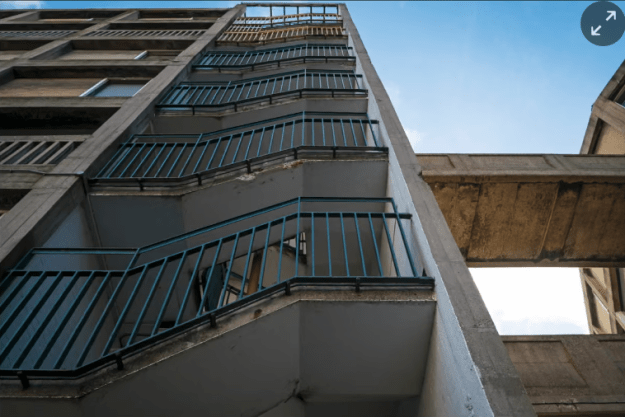
Harry Oldham is writing a novel based on his criminal and sordid past. To do so, he has returned to live at Park Hill, where he grew up, and the place that he once left behind. That was then and this is now, in which the old world collides with the new.(Parts 1 to 21 are available to read in the menu)
Perfectly Hard and Glamorous – Part 22
March 1985
If Billy Mason knew everything that happened in Sheffield, then Frank Smith knew even more. That was frightening.
“Now is not the time to pull out.”
“I mean it, Frank,” I said. “We’re done. It doesn’t matter what you say or do. It’s too late.”
We sat around June’s kitchen table with mugs of tea. Frank and June faced us while a lanky CID copper loitered in the doorway. I drummed my fingers on the plastic tablecloth and waited.
Frank picked up a custard cream and nibbled it.
“Alright,” he said. “Billy’s cottoned onto your deviances, but that doesn’t change our arrangement.”
“Except Billy knows we’ve been in contact,” I said. “And it won’t be long before the Rufus Gang know too.”
Frank lit a John Player Special and slid the packet across the table. Paolo had noticed that Frank always smoked when he was thinking. We sat in silence.
June looked sympathetic, but the crease in her forehead told me we weren’t going to like what came next. Paolo bit his lip and rested a nervous hand on my leg.
Frank finally spoke.
“All I ask is that you work tomorrow night. That’s it. After that, it’s over.”
“No,” I said immediately. “We’re not doing it.”
“Well,” he replied calmly, “things might look bleak for you, Harry. Less so for Paolo. Do as I ask and you both walk away.”
He paused.
“But…”
“There’s always a fucking but, Frank.”
“If you refuse, I’ll have no choice but to tell Paolo’s parents.”
“You bastard.”
He shrugged. “It’s not too much to ask.”
Paolo’s hand tightened painfully around my leg. His greatest fear was that his parents would discover the truth about him. Frank knew it.
Blackmail again.
We both understood there was no real choice.
“Just do your stuff and give me the details afterwards,” Frank said. “Names. What they got up to.”
The evidence he’d gathered must have filled a dozen notebooks, yet nothing ever seemed to happen.
“Mind you,” he added with a smirk, “I’m not sure what you’re going to tell the Rufus Gang. Looks like you’ll be going to ground when they come after you. Fuck me, Harry—everyone’s going to have it in for you.”
I already knew that.
“The thing is,” he went on, “the gaffers are starting to lean on me. Especially with this AIDS business kicking off. I hope you’ve both been careful.”
We hadn’t. We’d never even thought about it.
“Oh, my poor loves!” June said softly. “You must be careful. Best you stop now.”
“Fucking queers. Hope it wipes the lot of you out.”
The lanky copper had spoken for the first time.
I’d always assumed my early death would come from a fight or some stupid mistake. AIDS felt distant, unreal—something that happened to other people.
“We have to go,” Frank said, standing.
Paolo spoke quietly.
“Isn’t there something you want to say to us, Frank?”
Frank paused at the door.
“Yeah,” he said. “You’re right. The fucking miners’ strike is over.”
Then he walked out with the other copper.
*****
The waiting’s over, in shock they stare and cue fanfare
The house stood on the edge of the city overlooking the moors. More mansion than house. Flash cars lined the courtyard.
Someone said it had once belonged to a steel magnate. Now it was owned by a man building a retail empire.
Our final gig was going to be the most extravagant yet.
A DJ had set up beneath a row of spotlights. Frankie Goes to Hollywood blasted through the room while beautiful young boys in skimpy shorts carried trays of drinks among the well-heeled guests.
“You might find yourselves a rich sugar daddy tonight.”
Our minder Kenny surveyed the room with amusement. He was built like a tank and clearly capable of handling trouble.
We were taken into an adjoining room where two blond lads were already undressing.
“Are you the Sheffield boys?” one asked.
The rule of Park Hill was not to answer straight away. I simply nodded.
“Mikey,” he said, offering his hand. “This is Joey. We’re Manchester boys.”
It was rare to see lads our age.
I dropped my battered Adidas bag on the sofa.
Paolo wandered over to a silver statuette of a naked boy and examined it closely—his usual trick when he didn’t want to talk to strangers.
“Been doing this long?” Joey asked.
“Too long,” I said. “But this is the last time.”
Mikey and Joey exchanged looks.
“Good luck with that,” Mikey said. “Nobody walks away from Ronnie Rufus.”
We’d heard the stories: ruthless money-making, nobody crossing them.
The DJ burst into the room.
“Hi-energy tonight,” he announced. “Same format, no set list. I’m meant to wind them up until they turn into animals. Fifteen minutes.”
I cracked open the door and peered through.
The room was packed.
Joey stood behind me, watching too.
“See that bloke?” he whispered, pointing to a lonely figure. “Used to be straight.”
“Did he?”
“Apparently, he and his mates tried a Ouija board one night. Next thing he’s a raging homosexual.”
I laughed.
“He reckons a ghost penetrated him and he liked it.”
“Let’s hope the ghost leaves me alone.”
Joey pointed again.
“Recognise the guy in the flowery shirt?”
I shook my head.
“That’s Bobby Blue. TV chat show host. But the rest—professors, teachers, vicars, company bosses, yuppies with too much money.”
I was a council-estate lad. It was strange to think men like this had come to watch four working-class boys behave badly.
Mikey and Joey opened the show.
We watched through the crack in the door as they danced, warming the crowd.
“What are we going to do?” Paolo whispered.
“Nothing else for it,” I said. “We go on like always.”
“And then it’s finished?”
“Yeah. We leave tonight and cut all contact.”
Paolo slipped his arms around me.
“Do you think they’ll leave us alone?”
I already knew the answer.
“No,” I said. “We’ll probably have to disappear for a while.”
Our set was meant to be the centrepiece.
We followed Mikey and Joey onto the floor. Afterwards they’d have time to recover—cigarettes, drinks, a breather—before returning.
We wouldn’t.
Until then we danced.
We touched each other, teased the crowd, played to the music. By the time Evelyn Thomas hit her pounding climax I was inside Paolo, holding back so it looked real.
The real thing came later—for anyone willing to pay twenty quid.
The music stopped abruptly.
“Five minutes each!” the DJ shouted. “Hand your money to the little chicken and form a queue.”
The lights dropped. Music roared back.
Spotlights fixed on us.
For a moment nobody moved.
Then one man stepped forward and handed over a twenty-pound note.
Others followed.
After that everything dissolved.
Hands dragged me in every direction. Bodies pressed against me. I was twisted, pinned, shoved onto a table.
Pain spread through my back and legs.
Across the room I saw the others struggling too. Paolo was taking the worst of it. His slim frame was no match for the men pulling at him. Tears streamed down his face.
Then something cracked across my back.
A whip.
Pain exploded through me.
Again.
Cheers from the crowd.
Again—across my back, then my arse.
Kenny shouted for them to stop, trying to pull people away.
Too late.
The room spun.
I saw Paolo—wide-eyed, terrified—shouting my name.
Then blue lights flashed through the windows.
Sirens screamed closer.
And everything went black.
*****
Because these stardust memories fail to please
“He needs to go to hospital,” the ambulance man said.
I came round inside the ambulance.
“Nah,” said the lanky copper from June’s house. “He’s coming with us.”
“But he needs treatment.”
The copper ignored him.
“Where’s Frank?” I asked.
“Two weeks in Torremolinos.”
Of course he was.
The copper—who said his name was Ian—threw my clothes at me.
“Get dressed.”
The ambulance man handed me water.
“Where are we going?” I asked.
“Back to the nick.”
“And Paolo?”
“Locked up with the rest.”
Frank had sold us out. The moment he realised we were quitting; he’d arranged the raid.
Once dressed, I was handcuffed and pushed into a police car.
At the station the custody sergeant looked up.
“And Harry’s here for what reason?”
Ian recited the charges.
“Contravening the Sexual Offences Act 1956. Gross indecency. Public decency offences. Age of consent violations. Assault occasioning actual bodily harm. Living on the earnings of prostitution.”
The sergeant raised his eyebrows.
“Cell two.”
Ian dragged me down the corridor and kicked me hard before throwing me inside.
That was when I knew I’d reached the bottom.
My body hurt, but the shame hurt more.
I had probably lost my friends, my family, and any future I thought I had.
And prison still waited.
The cell held a wooden platform and a filthy toilet.
A blanket was tossed in before the door slammed shut.
The hatch opened seconds later. Ian looked in.
“You lot fucking disgust me.”
Then it slammed shut again.
I hardly slept.
The next morning, I was taken to the Magistrates’ Court, where a duty solicitor listened as I told him everything.
“You must plead not guilty,” he said. “When this goes to Crown Court we’ll argue entrapment. A good barrister will try to shame the police.”
He paused.
“But I must warn you—cases involving homosexuals aren’t going well now. There’s mass hysteria about AIDS.”
I noticed he had called me a homosexual.
I followed his advice and was released on police bail.
Walking hurt. I considered a taxi until I remembered my money had been in the bag left behind the night before.
F Scott Fitzgerald often used seasonal change to reflect the emotional trajectory of his characters. In The Great Gatsby, the narrative opens in the optimism of spring, reaches its fevered climax on the “hottest day” of summer, and concludes amid the quiet decay of early autumn. A similar pattern might be observed in David’s work. It has been noted that in almost all his books he refers to a particular season in the opening paragraph—yet, once established, the season is never mentioned again.
He pondered this as he walked through Kennington Park with Joshua. He was trying to compose the opening paragraph of a new book yet found himself unable to begin without invoking spring. The task was made more difficult by Joshua, who insisted on talking without pause.
Joshua waved a hand across the grass toward the flowerbeds, where the first signs of growth were beginning to appear.
Spring again.
“Freddie told me a weird thing. He was walking through the park and saw Bob Marley playing football with some guys from the Rasta Temple.” Joshua waited for a reaction, but David was still wrestling with the seasons and didn’t respond. “Are you listening to me?”
“Don’t you think it’s strange that Freddie was at this spot when he saw Bob Marley playing football?”
“That would have been impossible because Bob Marley died in 1981, and what year was Freddie born in?”
Joshua had been prepared for this and guessed that Freddie was a millennial child. “That’s why the story is so spooky, but he swears that it was Bob Marley playing football, and that he waved to him.”
David had long decided that Freddie was kooky.
“I’ve told you before,” Joshua continued. “Freddie is a ‘ghost whisperer’ and sees things that we can’t.”
“Like the ghost of Bob Marley?”
“Well Freddie did research and discovered that Bob Marley used to stay at house in St. Agnes Place and that he was photographed playing football here.”
David did not believe in the afterlife and regretted that Joshua seemed so easily taken in by it all. He was reminded of the time Freddie had visited Cleaver Square and claimed it was haunted by a man—someone who had murdered his female partner, a widow who made her living selling greengroceries.
“I can’t believe you can’t smell the cauliflowers,” Freddie had shouted.
Not long afterwards, while researching for a book, David came across a newspaper article from the 1960s that described Cleaver Square as “a square for the dead.”
“Freddie talks bullshit,” David sighed. Yet he could recall once seeing a photograph of Bob Marley playing football.
“There was that time we were walking along Kennington Lane,” Joshua went on, “and Freddie said he could see a man playing a barrel organ. I couldn’t see anything. But Freddie described two barefoot boys running out of a nearby house to collect pennies from passers-by. The man shouted, ‘’Ere you two—hop it!’ Do you know who he said one of the boys was?”
“I’ve no idea.”
“Charlie Chaplin—as a boy.”
David was not persuaded.
“How interesting.”
“And another time we were outside the Tankard and Freddie said he saw Charlie Chaplin peering in at the men from the vaudeville—dressed in chequered suits and bowler hats.”
David knew well enough that Chaplin had grown up around here. It had once inspired him to begin a short story about the time Chaplin destroyed an entire film rather than pay taxes on it. The incident was true enough, but the manuscript had never been finished and was still languishing somewhere.
Joshua had no idea, but David had once slept with Freddie. It had happened at a New Year’s Eve party near Elephant & Castle, when David had been in his forties and Freddie an irritating little twink. As the years passed, he had only grown more annoying—though also better looking. Now that David was in his sixties, he occasionally toyed with the idea of feigning an interest in the paranormal in the faint hope that past conquests might somehow be revived. But he had been with Joshua for eighteen years, and the thought of the “ghost twink” was quickly put out of his mind.
David sat down on a park bench.
“This is where Gay Pride began,” he said. “It was 1986. I was twenty-two and not brave enough. I came a few years later, when there was a big demonstration for gay rights. Thousands turned up. I remember Ian McKellen urging everyone to be open about their sexuality—to come out. I also recall Sandie Shaw singing.”
“Sandie who?”
David had forgotten that Joshua was still in his thirties, and the generation gap seemed to widen the older he grew. These days, while Joshua championed the big gay events, David preferred to avoid them. The crowds and the screaming queens were banished. The last time Pride had come around, he had spent the day rereading Edmund White’s A Boy’s Own Story instead. It had been the first gay book he had ever read, and he had kept it hidden beneath his mattress in case his mother found it.
Later, at the White Bear Theatre bar, David sipped a white rum and tonic. It was about all he could drink since being diagnosed with Type 2 diabetes—the small indignities of growing old, though it seemed these days that everyone was diabetic. Joshua, meanwhile, drank a pint of Madri, blissfully unaware of the perils that lay ahead in later life.
“I once saw a play in the theatre behind here,” David said. “I can’t remember what it was called, but it had something to do with a ring that had belonged to Leonardo da Vinci. It passed through a group of frequently naked gay men in America at the end of the twentieth century. My straight friend went to the bar during the interval, and someone asked him, ‘You watching the football?’ It turned out a match was being screened in the pub.
“‘Nah,’ he said. ‘I’m watching the queer play out the back. Mind you, I probably won’t stay if there are any more cocks showing.’
“That was it—that was the title: Leonardo’s Ring. Which said it all.”
Joshua had wanted to take David to see a Henry Moore sculpture on the Brandon Estate, but the older man had dismissed the idea.
“If there are two artists I hate most, it’s Henry Moore… and Barbara Hepworth. The whole world seems obsessed with Barbara fucking Hepworth.”
Afterwards David felt a twinge of guilt, because Joshua was also an artist. These days everyone seemed to be a fucking artist. Joshua made contemporary work too—it was his passion—but to David it often appeared absurd. Of course, he would never say so and accepted that the pieces had to be displayed around the apartment.
Joshua had also begun attracting the attention of collectors. Works that once sold for a few pounds now fetched thousands. Occasionally it crossed David’s mind that one day Joshua might become more famous than he was—and under his own name. David, despite being a well-known writer, had always published under a nom de plume.
“I would have liked to have been young and gay in the eighties,” Joshua said.
“Are you kidding?”
“But it was so pioneering—gay rights, marches for equality. Groundbreaking stuff.”
“And it was also miserable. There was nowhere to go. Queer bashing. Cottaging. Rent boys in dirty bedsits. Plucking up the courage to buy a copy of Gay Times at the newsagents. And, of course, AIDS.”
That generational divide again. Joshua had never lived in a society more backward than the one he knew now. In fact, David believed things were infinitely better. He had grown weary of people who complained endlessly about discrimination, forgetting how bleak the past had often been.
“There’s something else you should consider,” David added. “If you had been young and gay in the eighties, then now you’d be old and gay in the ‘roaring’ twenties.”
On the boy delivering junk mail… He stopped some distance from the door. He seemed like a prowling cat suddenly aware that there might be danger. He stayed still, contemplating whether to proceed or retreat. His eyes were nervous and suspicious. And I, standing almost naked in the doorway, smiled as if to say, “I might only be wearing yesterday’s dirty Calvin Klein’s but I’m no threat.” But he made his decision and turned away.
On the woman who told me… “It was a long time ago. I was young and pregnant and very drunk. I went to a guy in Spain who agreed to give me a tattoo on my huge stomach. I chose that yellow, grinning, trippy smiling ‘acid’ face. After I gave birth it looked like a deflated balloon and I’ve had to live with it.”
On resolving Liam’s finances… Liam the skater boy, who is short, cute, wears round glasses and has hairy legs. He told me that his girlfriend had moved out and now he was struggling to pay the rent. The briefest thought crossed my mind. I nearly suggested that he sell his body, and become my rent boy. But I didn’t. I remembered that I will not pay for sex until I am old.
On buying old homoerotic novels… My compulsion to buy vintage homoerotic novels – The Loom of Youth, Despised and Rejected, Tell England. The age of innocence… or was it? Those intense male relationships that remained aesthetic, psychological, and slightly dangerous, rather than purely physical. The obsession with male beauty and youth. The internal conflict between desire and morality. The longing that could not be fulfilled.
On meeting the boy with the moustache… The small skinny student with an angelic face who had grown a moustache. I hated it and resisted the urge to say so because I knew that he already lacked confidence. He, who couldn’t look me in the eye like he was ashamed of something. Who looked slightly scruffy in the careless way that hinted at potential—like a statue still hidden inside the stone.
On getting lots of messages… Like naughty schoolboys sniggering at other people’s shortcomings, we trade a constant stream of nonsense and casual insults about the world around us. It is the only language we seem to share, the only ground we truly have in common. From boys to men—ten years of a love affair that never happened. And yet each message makes my heart sing, filling me with a fragile hope, and I find myself wondering whether, somewhere on the other end, he might be feeling the same.
On listening to David reminiscing… An old song came on the radio: Calling Occupants of Interplanetary Craft. A sci-fi anthem about humanity attempting telepathic contact with extraterrestrial beings. I had never heard it before and mocked the corny American DJ intro.
David frowned. It turned out to be one of his favourites.
“Days at sea,” he said. “I think of a cloudy afternoon on a choppy Mediterranean, sailing from somewhere to somewhere. Feeding coins into a jukebox and drinking weak shandy from white plastic cups. Enough of it that we convinced ourselves we were drunk, though really it was just hormonal schoolboys egging one another on.
“It was a big hit for The Carpenters. Actually a cover of a song by a group called Klaatu, who people once claimed were The Beatles recording under a pseudonym. Absolute bollocks.”
“I adored everything about you: the way you looked, the way you talked, the way you smelt. I studied these small details with a kind of quiet devotion, as if they might one day explain you to me. But the untidy desk—a life carelessly arranged—suggested that we could never have been lovers.”
The people who excite me rarely seem interested in me, while those I feel nothing for often are. It’s a familiar paradox. Attraction doesn’t always align; sometimes it’s a mismatch of types, sometimes it’s the pull of emotional unavailability. I keep finding myself drawn to people who can’t—or won’t—choose me.
The sensible answer is obvious: stop chasing. Put that energy back into my own life instead of pursuing people who remain out of reach. Still, it’s irritating to realise that the very traits I possess—traits that don’t necessarily fit my own ideal—might be exactly what someone else has been looking for all along.
Harry Oldham is writing a novel based on his criminal and sordid past. To do so, he has returned to live at Park Hill, where he grew up, and the place that he once left behind. That was then and this is now, in which the old world collides with the new.(Parts 1 to 18 are available to read in the menu)
Perfectly Hard and Glamorous – Part 19
April 1984 When you look back over a life, there’s always a year that stands out. My annus mirabilis was 1984. Not that anything exceptional happened. But things were happy, and I was rolling in money.
It was also the year I turned eighteen.
Now I’m about to turn sixty, and it feels like a distant memory. Almost a life that belonged to someone else.
I remember one April night. The days were getting longer, and when darkness fell the sky above Park Hill was clear and moonlit, the air sharp with a chill. I leaned on the balcony rail and told myself something I had started to believe.
I was a male prostitute.
That didn’t bother me.
I thought about all the names people might have used to describe me. Queer. Faggot. Bender. Nancy boy. Shirt-lifter.
None of them applied.
Because I wasn’t any of those things.
I was straight.
Anyone could see it. I was a good-looking lad who could get any girl he wanted. That was obvious to everyone.
Especially Andy and Jack.
That year I’d become a bit of an enigma to them. I still hung around with them like I always had, but they didn’t know what I was really doing. None of us had jobs—we were living on the dole. Wasters, really. Nothing to do and nowhere to go. Boredom got us into trouble more often than not.
Our parents hated it.
But I didn’t care.
I didn’t need a job.
I always had money.
More than enough.
Andy and Jack couldn’t work it out. They didn’t understand how I could afford to go out most nights. What annoyed them even more was that I never invited them along.
We’d grown up together. We knew everything about each other.
Or at least they thought we did.
Andy took it the worst.
One night he punched me in the face. We were walking down the street when he suddenly turned and landed one on my chin. I charged at him and shoved him over a wall before Jack managed to drag us apart.
Later Andy said he didn’t know why he’d done it.
But I knew.
He could feel there was something about me he didn’t understand anymore.
Something I wasn’t telling him.
And there was Paolo.
I’d kept him away from Andy and Jack for a reason. If they ever met him, it would be game over.
Paolo was my work partner.
And because I kept telling myself I was straight, I hadn’t admitted something else.
He’d also become the person I cared about most.
Things had changed the year before. One side had been taken out… and those of us left were requisitioned by the survivors. Frank Smith had it all planned. Stage one complete. Now on to stage two of his masterplan.
The new world he dragged us into was worse than anything before.
But it paid.
Men didn’t just watch anymore—they wanted us. Big houses. Fancy mansions. Weekends filled with food, drink and sex.
A lot of sex.
And money.
So much bloody money we didn’t know what to do with it.
Sometimes it felt like we’d already sold everything there was to sell. Our innocence. Our dignity. Our bodies.
But every now and then we escaped from it.
One night Paolo curled up beside me in the back of a big Ford Granada and asked if he could stay at my place. His black curly hair brushed against my cheek, and I realised I liked it.
My parents were away visiting relatives in Skegness, and my younger brother Adam was off somewhere up north on a school trip.
There was no reason to say no.
Besides, I wanted him safe.
Photograph: David Sillitoe/Flickr
We got dropped off on Duke Street and walked in silence to my parents’ flat. Paolo had his coat wrapped tightly around him and a scarf pulled up around his neck so that he looked like one of those preppy American boys from the films.
I didn’t know much about the place where Paolo lived.
But when I opened the door to ours it smelt of burgers, chips and stale cigarettes.
I suddenly felt ashamed.
Paolo grabbed my hand like a frightened kid and let me pull him inside.
The flat was silent.
What we were doing felt wrong—but exciting at the same time. The same thrill I used to feel when the Geisha Boys broke into someone else’s place.
Except this time it was my home.
Paolo stayed close while I switched on the lights, hoping nothing embarrassing would reveal itself.
We were both bruised and exhausted. He asked if he could have a bath.
“I need to wash them off,” he said quietly.
The dirty old men.
I nodded.
He went into the bathroom and turned the hot tap full on. It ran loudly for a while before suddenly stopping.
“Harry?”
His voice echoed down the hall.
“Where are you? Come here.”
The door was unlocked. Paolo was sitting in the bath hugging his knees.
“Are you going to join me?”
I shook my head.
“Harry… I’d really like you to get in with me.”
So I undressed and climbed in.
It felt strange. We both knew every inch of each other’s bodies, but sitting there face to face suddenly felt awkward. I stretched my legs either side of him and he rested his elbow on my knee.
“The first time we met,” he said, “you hit me.”
I remembered.
“I didn’t know you, did I?”
“Would you ever hit me again?”
“No,” I said. “And now I’d hit anyone who hit you.”
Paolo smiled at that.
“I love you, Harry.”
I grimaced.
That was what Geisha Boys were supposed to do.
We slept together in my single bed that night. Nothing happened. He held me all night and I kept my arm around him. When he finally fell asleep, I rested my chin on his thick curly hair.
For a moment I felt something close to peace.
It didn’t last long.
The next day Andy called me a faggot.
He’d seen Paolo go into my flat.
“Who the fuck was that you took home?”
This time I hit him first.
I punched him so hard his nose burst and blood ran down his chin.
“You’re a cunt, Andy. That was my cousin.”
He didn’t believe a word of it.
“You’ve gone fucking weird,” he said.
Later Jack rang.
“Harry, you’ve busted Andy’s nose.”
“He called me a faggot,” I said. “And I ain’t no faggot, am I?”
“Nah,” Jack said. “I told him that. But he’s still pissed off with you.”
I couldn’t tell Jack the truth.
Mostly because I didn’t know it myself.
I wanted to say something else.
Do you remember Mr Johnson who taught us English? Let me tell you something, Jack. Last week he fucked me up the arse. Yeah. Our school teacher rammed me from behind.
But I ain’t no faggot.
But I couldn’t say that.
Could I?
I also remembered something else.
Years earlier we’d all been drunk at a party and ended up piled together on a sofa. We were messing around, laughing.
Then Andy and Jack kissed each other.
Properly.
Tongues and all.
That pissed me off. I stormed out and walked the streets for an hour because I was jealous.
But that didn’t mean anything.
Did it?
“A penny for your thoughts, love.”
I was sitting in June’s kitchen stirring a mug of tea far too many times.
“I’m a bit confused, June.”
“Is it Frank?” she asked.
“He’s the least of my problems.”
She smiled.
“So that means you’re thinking about Paolo.”
I gave her a look.
“Paolo’s a jewel,” she said. “And you, Harry, are a rough diamond. But when you put the two together something beautiful happens.”
“I ain’t queer, June.”
She didn’t argue.
“But you care about him,” she said gently. “And there’s a fine line between caring for someone and loving them.”
“It’s all a mess.”
“Is it?” she said softly. “I don’t see why.”
She leaned forward slightly.
“Paolo is a wonderful person. And I think—for the first time in your life—you’ve met someone who adores you exactly as you are.”
I looked down at my tea.
“Accept that,” she said. “Give him the chance.”
“And what happens then?”
June sighed.
“Harry… I don’t like what Frank’s doing to you both. I’ve told him so. But despite all that…”
She paused.
“I think something unexpected has happened.”
“What?”
“You’ve fallen in love with him.”
I laughed at that.
But June didn’t.
Frumpy old June—with a voice like an angel—had just told me the truth.
I have a feeling that something bad might happen. It makes me nervous. Like when you want to have a shit but you’re worried because the drains keep backing up.
“A bore is someone who deprives you of solitude without providing you with company.” – Oscar Wilde
Why do people talk shit and think that I am interested? The problem is me. I sit and listen and do my best to look interested, but it gives them an excuse to come back and talk even more boring shit. I need to stop being a drip tray.
When you look at boys, do you really look – do you look in detail? People see Bradley and assume that beauty must imply intelligence. It doesn’t. The truth is, he’s a bit of a himbo. There’s a Yorkshire saying for people like that: “thick as pig shit.” And Bradley, I suppose, fits it perfectly. He smiles – handsome, devilish – with a guileless sense of wonder. But how long can I keep swallowing my frustration? Physical attraction fades quickly, and I realise the only role he can play is arm candy: a beautiful body, empty-headed, ornamental.