Four Drummer Boys and a Piccolo


The church doors swung open and the newlyweds emerged into the afternoon heat beneath a shower of rice and the ringing of bells.

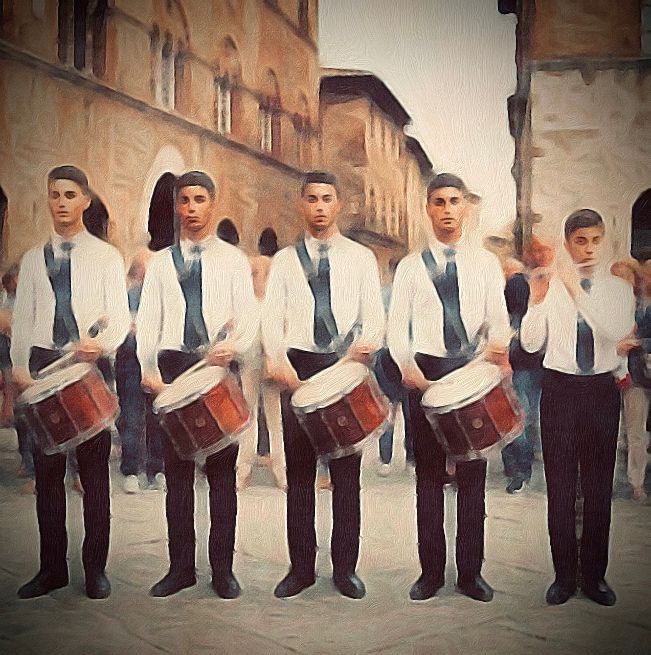
Forty paces away, five young musicians stood against the ancient stone wall of the piazza.

Four drummer boys and a piccolo.

They were impossibly handsome. Young, dark-haired and brown-skinned, dressed in white shirts, black trousers and polished black shoes. They stood in a neat row, looking rather more serious than the occasion required.

I fall in love too easily.

As the bride and groom stepped into the sunlight, the drummers raised their sticks.

The first strike seemed to shake the whole piazza.

Then the piccolo began.

A bright, piercing melody rose above the deep thunder of the drums, slipping between the old buildings and disappearing somewhere among the terracotta roofs. The five boys played without looking at the wedding guests. They simply stood there and played, as though the music belonged to them and we had merely been permitted to hear it.

I watched them.

I knew nothing about them.

Not their ages, where they lived, what they did when they weren’t playing at weddings. I didn’t even know their names.

And yet, for those few minutes, I loved them.

When the music ended, the bells suddenly seemed very loud.

The boys lowered their instruments. There was no bow, no waiting for applause. They simply turned and walked away, disappearing into a narrow alley beside the church.

As they went, one loosened his black tie. Another rolled up his sleeves. One of the drummers said something that made the others laugh.

And that was all.

They vanished into the old town, five young Italians swallowed by the afternoon.

I stood there for a moment longer.

It seemed terribly unfair that people could enter your life so completely and then disappear from it without ever knowing they had been there.

I would never see them again.

I would never know their names.

But for a few minutes in a sunlit piazza, four drummer boys and a piccolo had made me fall in love.

I took out my notebook.

I wrote only six words:

four drummer boys and a piccolo.

Christian Fox: The Arrogance of Youth

Some of the most beautiful people choose to live the hardest lives

I swear that I once read that there was a home in California for retired gay porn stars from the 1980s and 1990s. The weekly film night looked fun. But I stand to be corrected because I can’t find any evidence of it now.

I once knew a gay porn star. At least, that’s what he called himself. A bit of a fabrication, really. He made one movie and was dropped because of his inability to maintain an erection. The last I heard, he was a shop assistant at Mango Man in Alicante.

A lucky escape, really.

For all of us.

Yes. I’m stuck in a bubble of lube at the moment.

After being star-struck with Joey Stefano (RIP), another challenger surfaces for the ‘I fucked my life up’ award.

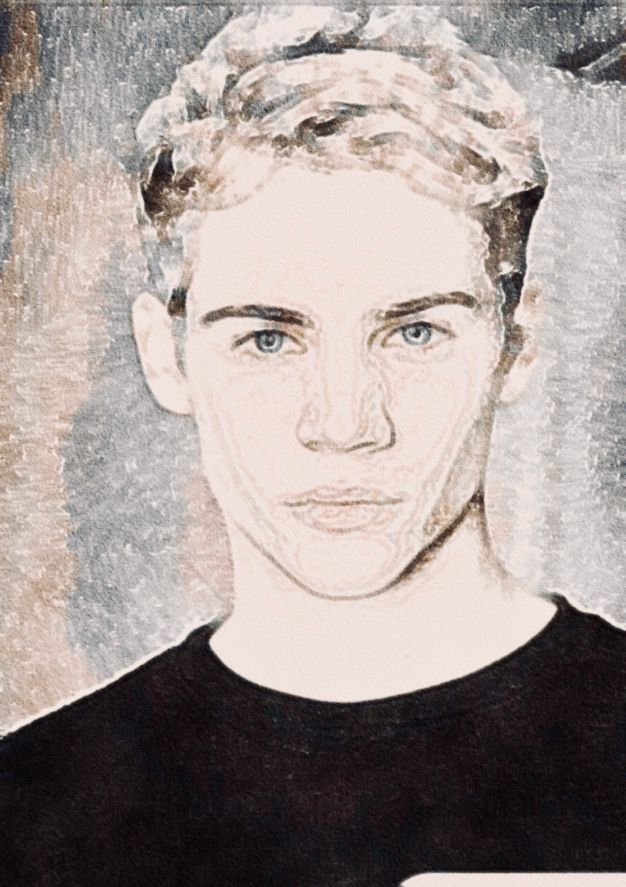
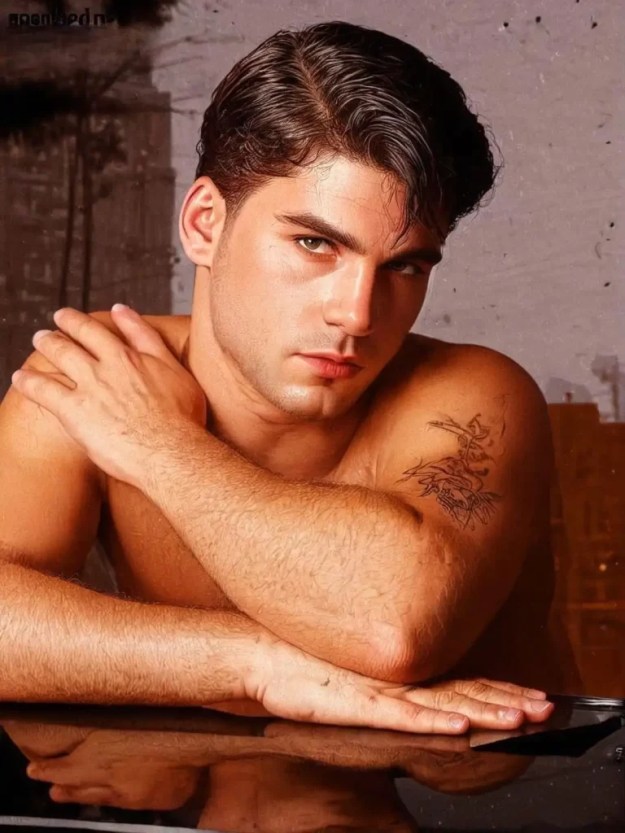
Christian Fox.

By the time you read this, it will be thirty years, almost to the day, since the 22-year-old died from a lethal ketamine overdose at his apartment in New Orleans. His body was discovered three days later. A suicide note was recovered from the scene.

There are a few social media posts that say Fox was ‘a lovely guy’.

But dead guys are always lovely guys.

The same thing happens when a young guy steals a car, evades a police chase and then wraps himself around a tree. Suddenly, he was a ‘lovely lad’.

I don’t know whether Christian Fox—love the name—was a lovely lad or not.

Chi Chi LaRue, patron saint of dead gay porn stars, called him one of the most challenging individuals to work with. He had a reputation for being difficult.

Beyond a shadow of a doubt, I would have liked him.

He ticked every box. And not just because of the athletic physique and ‘honey-blond’ aesthetic.

Born Christopher John McLaughlin in Port Hardy, British Columbia, in 1974, he had an unstable childhood and was placed into foster care at thirteen. He ran away after allegedly being sexually abused and travelled across Canada and the United States using fraudulent identification to conceal his age.

He became an underage dancer at late-night gay venues and adopted the name Christian Fox.

Don’t you admire the spunk of the kid?

He reportedly made his first adult film on his eighteenth birthday and became an exclusive model and actor for Falcon Studios. At the same time, he appeared in gay publications including Manshots, Jock, In Touch and Gay Video Guide.

Like Stefano, he bucked the trend and became known as a ‘premier bottom’ performer.

But Fox developed increasingly serious problems with substance abuse, making him progressively unreliable. By early 1996, his career was effectively over.

Fox had insisted that he would not allow his porn career to become something that wore him down or something of which he would eventually be ashamed.

When his talent agency terminated his contract, the writing was on the wall.

To secure legal residency in the United States, he entered into a marriage of convenience with an American friend and relocated to New Orleans.

But by then, the real problem wasn’t pornography.

It was everything else.

Substance abuse. Depression. Isolation. The inability to imagine what came next.

When Chi Chi LaRue warned him that he might suffer the same fate as Joey Stefano, Fox reportedly replied that he ‘wanted to go’.

LaRue also suggested that Fox was confused about his sexuality.

His neighbours only saw a young man who rode a motorcycle and walked around the French Quarter in a black leather jacket.

Success had come too easily and too young.

Behind the façade was a different world.

Fox was suffering from severe depression.

The porn industry didn’t care if somebody was mentally unstable. And when the cameras stopped rolling, Fox had no obvious way back into the real world.

Shortly before he was due to enter rehab, Fox attempted suicide by throwing himself through a plate-glass window. His injuries prevented him from being admitted.

His wife, Shawn, left him shortly afterwards.

And then, a month later, he was dead.

Twenty-two.

That is the bit I keep coming back to.

Not the body. Not the porn. Not the photographs. Not even the ridiculous mythology that grows around young men who die before they have had the opportunity to become anything else.

Twenty-two.

A whole life still sitting there, unused.

Perhaps that is why I like the idea of the retirement home for old porn stars. I want it to exist.

I want to imagine them at seventy, eighty, sitting around a communal television watching films they made when they were twenty, arguing about who had the best arse, complaining about the heating and asking what happened to everyone else.

Because somebody should get old.

Somebody should get the chance to become boring.

Somebody should survive long enough to look back and think:

Christ. What was I doing?

Hot Boys, Great Art

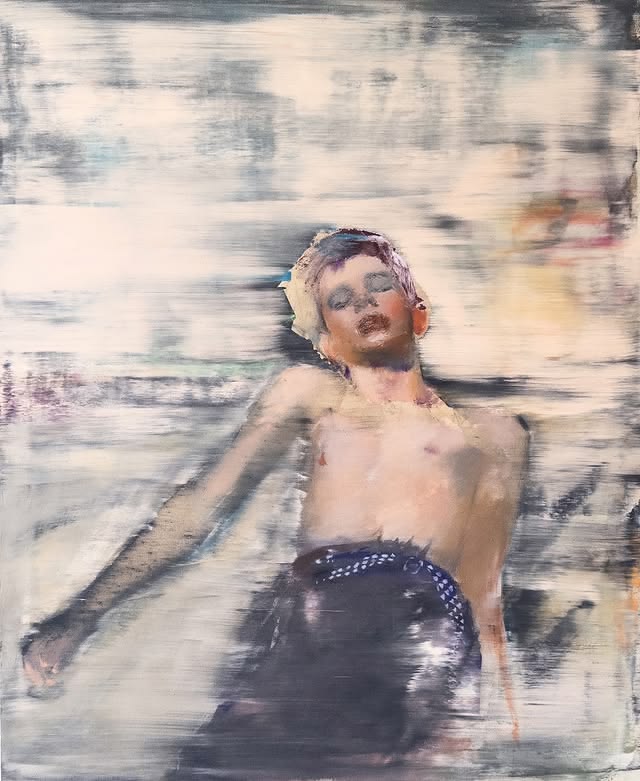
Reclining Boy: Eugene Shako

Reclining Boy was featured at the VCRB Gallery in Antwerp, Belgium, as part of Eugene Shako’s collective exhibition titled Silent Narratives, which ran from April 28 to June 7, 2026. 

Stillness.
Closed eyes.
Wet hair.
Bare skin.
The world rushing around him.
He doesn’t seem to care.
There is something beautiful about that.
Perhaps it is the vulnerability.
Perhaps it is the arrogance of youth.
Or perhaps
I simply want to lie beside him
and watch the world disappear.

There’s something about Shadko’s paintings that blurs reality with imagination.

The longer I look, the more I see.

And sometimes I wonder if I am seeing something that nobody else sees.

Shadko is a Belarusian artist living and working in Warsaw. His paintings begin with images — photographs, social media, something glimpsed online, something that catches his eye. He takes these fragments and passes them through himself. He studies them. Distorts them. Reimagines them.

Nothing remains quite as it was.

His paintings are often about faces and bodies. Youth. Vulnerability. Isolation. That strange fragility of adolescence.

His figures seem to exist somewhere outside reality. Alone. Spotlighted. Suspended in an imaginary world.

And perhaps that is what draws me in.

The feeling that there is something just beneath the surface.

Something I can see.

Something you might not.

Shadko studied at the Glebov Art College in Minsk and the Nicolaus Copernicus University in Toruń, Poland.

My Week, For What It Was Worth

Severin’s Next Move


Severin has decided to call time on Taormina.

Long days and nights working as a waiter have meant that his German juices have finally run dry.

Severin is a drifter — or, as he likes to put it, a rolling stone. He wanders from city to city, from job to job, looking for another Pietro; somebody who will take him in and pay for everything.

But he still has to find his next Pietro.

I confess I had thought Taormina might be where he finally settled down. His up-and-down relationship with Alfio had all the hallmarks of being long-term. I realise now that Severin is still looking for what he perceives to be the right person.

He has come up with a number of options for the months ahead — and they all seem to involve me.

With Verona out of the question, he is now considering a trip to Britain and would like to stay with me. I have explained that I am selling my apartment and will most likely be renting a room at Deej’s place in London by the time he arrives.

He has also raised his ‘World Tour’ idea again, and I have had to let him down gently on this one because my finances could best be described as unreliable at the moment.

Then Severin suggested meeting up in Rome. What’s more, he wants to invite Elio. It would, he reasoned, be a chance for Pietro’s three boys to get together again.

I have a soft spot for Severin, but I have my doubts about Elio. He was Pietro’s favourite and benefited most from his death. If my understanding is correct, Elio is pretty much set up for life.

Unlike Severin and myself.

The last I heard, Elio had launched a modelling agency in Milan which, no doubt, would boost his coffers even further. I had only met him once, at a Christmas meal at Bulgari Milano, where Pietro had thought nothing of showing off his three young ‘darlings’.

It might have been a disaster, but the three of us had actually got on rather well.

Severin and I never attended Pietro’s funeral.

We weren’t invited.

That is probably where some of my irritation with Elio comes from.

I confided all this to Signora Bruschi by telephone.

“I have never met Severin,” she said. “But I suspect that he has a good reason for wanting to spend time with you.”

“And that is?” I asked, rather dimly.

“Have you not considered that he might want to have a relationship with you?”

I hadn’t.

Signora Bruschi might be right.

After all, I hear from Severin most days. He messages and rings me during his breaks from the restaurant. I rather enjoy our conversations, but not once had I considered anything more.

“If that is the case,” she continued, “there is the problem of Bianchi.”

Oh! I thought.

The Chase Never Ends

Back in the UK. University city. Freshers everywhere. Oh, it brings back memories.

Young people dressed by their parents, scared as shit, homesick by the hour. I remember being a big brother, a lover, the older one who knew a little more about the world.

But I get older and they get younger.

Still, the chase never seems to end. I’ve missed this.

Bailey appears as though I’ve never been away. Doe-eyed, beautiful, and seemingly thick as shit — although perhaps that is part of his charm. He shows me the new tattoos across his back and, despite myself, they excite me.

Dilemma.

I miss Bianchi and his Italian charm.

Then Bailey tells me he’s disabled on his own prick, which raises a few questions.

And yet I’m tempted by the sheer stupidity of his beauty.


A Euro Child

There are two lives.

Italy versus the UK.

I’ve had the best summer. Montescaglioso, Taormina and Verona.

Not to mention too much about Paris.

Coming home feels like a sentence.

An apartment that is dead, yet full of good memories.

Charlie is gone, but his presence is everywhere. Clothes, books, paintings. A scent that still lingers.

But Charlie has disappeared.

I fear it is for good.

Who would have thought that a magazine could have brought it all to an end?

Estate agents pander to everything.

I think of Severin. I think of Cola. I think of Bianchi.

And I realise that I am, really, a Euro child.

Then I had a dream.

I dreamt of Sandro, the carabiniere, and his warnings. Of all the people who might have appeared, I dreamt of Sandro more than anyone else.

Why Sandro?

He has somehow crept, uninvited, into my consciousness. 

Fellini, Fascism, and a Fling: How to Spice Up Your 1970s Italian Art Crisis


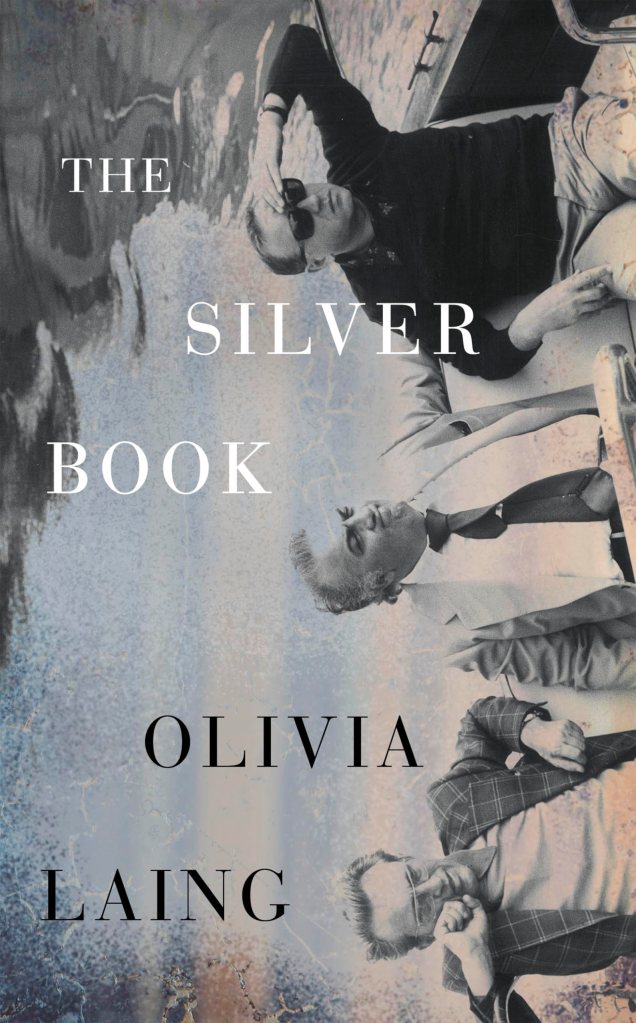
Olivia Laing

Naughty.

Retro.

Short chapters.

Fellini.

A life I might have killed for.

And then I remembered—

that is exactly what happened to Pasolini.

I read a review:

“The Silver Book is a novel distorted by the medium it has shaped itself to flatter: it is an Instagram feed bound between book covers. There can be no ugly, unseeable truth here; only the artful pose is of value.”

Ouch.


A Stumble-Find and a Good Looker


I’m always on the lookout for a good looker. Even better if they came to a tragic end.

Gerry Sundquist turned out to be a slow burner. A stumble-find on a sun-soaked terrace in Taormina.

The actor who was once called ‘the best-looking man on television’ and who dated Nastassja Kinski deserved some attention. This was back in the 1970s and, unsurprisingly, I’d never heard of him.

I know a lot about him now. Just about everything except the size of his penis. Had I been around back then, I would have made damned sure I knew that too.

I know about his rise to stardom. His cataclysmic downfall. His gruesome death.

Always a winner with readers.

So thank you, Gerry Sundquist, for providing me with the most-read post on this site. It started slowly. Then exploded.

Who would have thought it?


The Ultimate Guide to Ruining a French Vacation

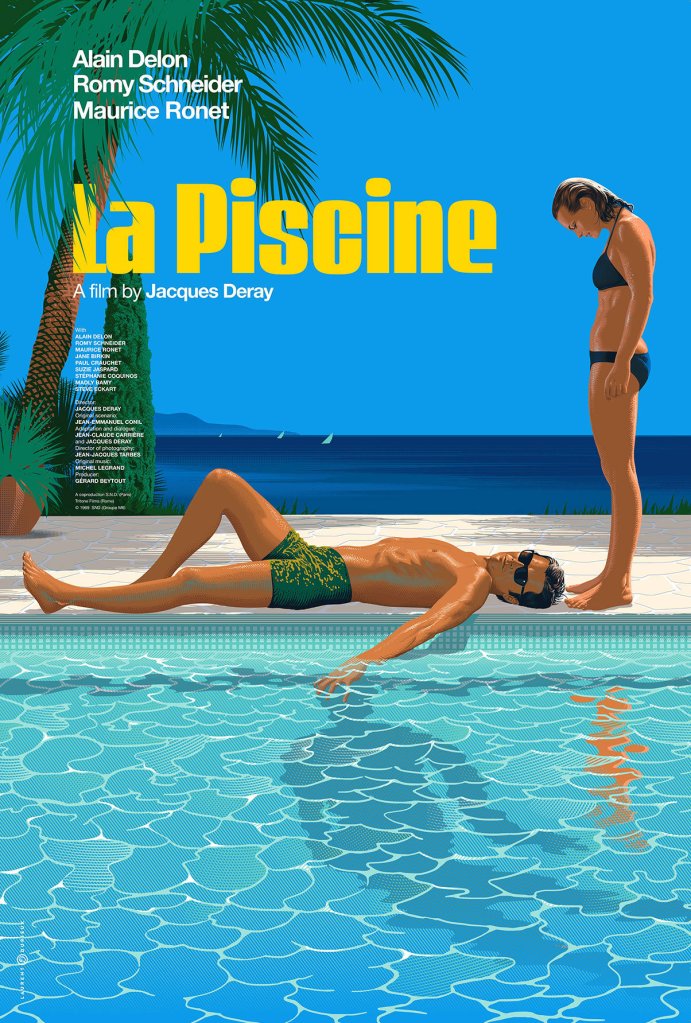
La Piscine (1969) – a summer moodboard. Alain Delon and Romy Schneider serve peak 60s quiet luxury by a Saint-Tropez pool, but it’s all high-key toxicity. Stunning on the surface; underneath it’s just pure, unhinged resentment. The most beautiful surfaces hide the deepest dangers. My new favourite word is feral. This is completely feral.


Unsent & Unfiltered

The secret lover can’t hold his shit. 

And so I wrote a message that was never sent.

“Breath of fresh air. So naive that it’s beautiful. But I will be pissed off if you show this to anyone. Please don’t piss me off. 😊 Stay gold.”


On the Cute and the Willing

Milan Ruoppolo. Photographed by Winter Vandenbrink (2026)

The Psychologist Says…

I got stuck somewhere between narcissism and the Lego


Somebody will probably be able to correct me, but I cannot find any credible evidence that J. H. Newton was actually a psychologist in the 1940s. Perhaps he was. Perhaps he wasn’t. Perhaps these words came from the pen of a dedicated — albeit rather clever — hack, employed to churn out ‘The Psychologist Says’ every week.

Either way, read on.

What do we mean by the love life of the child? Psychologists usually divide the love-life of a child into three or four stages.

The first stage is known as the auto-erotic stage which appears in infancy. The child is interested in his own body and is exploratory. During this period the child will insert beans and other foreign particles into his nose or ears. During this age the child may also locate the erogenous parts of the body and begin the practice of sexual acts.

Psychologists designate the second period as the narcissistic period, originating from the story of the beautiful youth who fell in love with his own image in a glassy pool. In the very nature of the case the child loves himself first.

The third stage in the child’s love life is known as the homosexual period. It is the gang age of the boy. The boy is more loyal to his gang than his parents. The gang often has more influence over the boy than the home.

Dr. Ruch says from the boys’ club or gang, youth may learn lessons of loyalty, independence, and social-mindedness that may not be distinctly beneficial to the developing boy. Boys’ clubs may need some supervision, but not too much.

Some homosexuals may never recover. If they marry, the outcome is usually very unsatisfactory and unhappy. It is just as important that the homosexuals grow out of this period into the period called the heterosexual stage as it is that the youth learn writing, arithmetic and the rest. Happiness and success in life depends upon it.

The fourth stage of the child’s love-life is commonly called the heterosexual period. It is the period of love between the opposite sexes. It should be encouraged and not discouraged.

The first stage, the auto-erotic period, usually extends to the fifth or sixth year; the stage of childish narcissism, from the sixth to the eleventh year; the homosexual stage extends approximately to sixteenth or seventeenth year; and thereafter the heterosexual period.

From The Paris News, Texas, February 1941.

I might laugh.

Actually, I do laugh.

But it also makes me think.

About being five years old and being taken to hospital after pushing Lego pieces up my bum.

About apparently progressing beautifully through the narcissistic stage, because I was — and remain — completely in love with myself.

About failing to receive the appropriate supervision, thereby discovering that boy gangs were, apparently, incredibly erotic.

And about staying Peter Pan for considerably longer than the good doctor might have considered healthy.

Because, according to this wonderfully alarming piece of 1941 psychology, I should have grown out of all that homosexual gang nonsense and eventually entered the glorious heterosexual period.

I missed the appointment.

Perhaps I was too busy with the Lego.

The Company


Rehearsals. Day 1.

We met in a room somewhere in Hackney. I got lost and turned up thirty minutes late. Max, the director, bawled me out and made sure everybody knew who I was, even if I didn’t know who they were. I chucked my bag on the floor and tried to make myself invisible.

It was an old church hall with arched windows looking onto the high street and a wooden floor worn smooth by years of feet. Max sat at a long table with people I didn’t know. Neither did I know the rest of the cast, who stood or leant against dirty cream-tiled walls. We were silent. Nervous. Not knowing what the thing we had fought so hard to get would entail.

Max laid down his three rules: promptness — I’d already failed the first — dedication and professionalism. Then he told us that we were going to be family for the next twelve months, whether we liked it or not.

I looked around. There were about twenty of us. Everyone nodded in agreement and smiled at their neighbours; people they had never met.

The one person I might have recognised wasn’t there.

Rehearsals. Day 7.

The same dingy room that now feels like home. The same monotonous dance routines.

The leads started a week after us and were holed up next door learning their vocal parts. We rarely saw them.

Except that today, I saw him for the first time.

Nobody else appeared to notice.

After lunch, he leant against the doorframe and stayed for a few minutes while we rehearsed. I watched him out of the corner of my eye and mistimed my move. I crashed into another boy and we both ended up on the floor.

I got bawled out by Maria, the choreographer, who told me to concentrate.

We started the routine again.

He smirked and went back next door.

This time I got it right.

Afterwards, dripping in sweat and smelling awful, we grabbed our belongings and piled downstairs into the street. Bonds had been formed. Outside, we laughed and joked and made plans for the evening.

Rehearsals. Day 10.

Now comes the difficult part. The part I dread.

Dancing is key, but most of us have forgotten that we must sing too. Joey, the musical director, sits us in a circle and reads through each song. I have never understood the reason for doing this. Why not sing them the first time? Most of us know the songs already.

But dancers hate to sing.

My fears are unfounded because Joey turns out to be a shortcut man. Instead of getting us to sing individually, we go through each song as a chorus while he tiptoes amongst us, making sure we’re giving our all. He stops us once or twice and gives advice.

At least there isn’t the piano that often gets rolled into the rehearsal space. I’ve grown to hate the sound of a solitary piano.

Joey is hi-tech, preferring to have someone play the scores through a laptop and big speaker.

After the first run-through, we high-five each other and feel pleased with ourselves.

None of us had noticed that Max had slipped into the room with a big frown on his face.

He tells us that we sound like a piece of shit.

Rehearsals. Day 14.

The point at which everyone is fed up to the back teeth with the musical.

We tell each other that we will never audition for this show again.

Endless hours spent matching the choreography to the singing, or, as Maria puts it, matching the singing to the choreography.

It is also the point where some of us break the monotony by daring to add little flourishes here and there. A turn of the head in another direction. A twist of a wrist. An extra wriggle of the body.

This means that the overall spectacle becomes a bit of a shambles.

Maria is ready for this and makes us sit down while she rattles off an age-worn speech about synchronisation and togetherness. She finishes by saying that Max will spot anything that shouldn’t be there.

She would hate us to upset Max.

Rehearsals. Day 21.

Them and us.

The leads and the ensemble.

We came together for the first time.

Max stood in the middle of the room and said that it was time we put things together. The leads were quietly discussing the script in a corner. We hung onto every word Max said because if we got it wrong, we were easily dispensable.

He wanted to start with the opening dance number that sets the scene for the musical.

The leads stopped talking.

We found our starting positions while Maria fired up the music on a laptop.

It went well until one of the girls slipped and ended up in a heap.

We improvised our moves to allow her to rejoin the routine.

Maria let it pass, but Max called a halt and screamed that it was fucking shit.

Start again.

In the corner, the leads exchanged knowing glances.

The girl apologised and we told her not to worry. It happens to all of us.

But Max was having none of it.

He told her not to make the same mistake because next time she’d be out.

It put pressure on all of us.

None of us had worked with a director like this before.

We began again and this time it went without a hitch.

But Max called us sloppy.

At lunchtime, we sat outside drinking lots of water.

Everybody called Max a cunt.

The way he speaks to people. They understand that everything needs to be perfect, but he demands it by spreading fear amongst us.

Then one of the boys pointed out that he doesn’t talk to the leads like that. Even though they have repeatedly fluffed their lines, he has let it ride.

We are aggrieved conspirators and have taken against them.

Rehearsals. Day 28.

The last day in the rehearsal space.

We’ve been here eight hours a day, six days a week, for a month. We’ve been through every scene a hundred times and danced until our feet hurt. I have blisters on my feet and have had to buy a new pair of trainers that are more comfortable.

Max tells us that if we thought it had been tough so far, then the next two weeks are going to be tougher.

The audience will expect a spectacular dance, he tells us.

And even though we are shit, he will make sure that is what they get.

He has fired two dancers, including the girl who slipped the week before.

The animosity with the leads has got worse.

Simon is the big name and they take their venom out on him most. He forgets his lines. Keeps referring to the script. Finds himself in the wrong place.

He is a has-been.

This is never to his face, of course, but within the confines of our group.

I try to remain positive and make excuses for him. At least he has been a has-been, I tell them.

One of the boys calls him a camp old queen and everybody laughs.

We rehearse the closing scenes in the afternoon.

The boys take off their vests to try deliberately to distract Simon. It is a wave of sweaty flesh, lean muscular bodies and eroticism.

Simon is all eyes and not much else.

He stumbles over his words and Max attempts to cover up for him by screaming at us instead.

Rehearsals. Day 35.

We have spent a week doing technical and dress rehearsals in a purpose-built space at Hammersmith.

But we miss the church hall.

In between rehearsals, we are fitted for costumes. We must practise fifteen quick changes.

We aren’t quick enough.

Max screams again.

Then we have to stop rehearsals so that they can tweak the lighting and sound. And then the recorded music is replaced by a sixteen-piece orchestra; eight of whom will travel with us, the other eight sourced locally at each place on the tour.

One girl suggests that we are now spending as much time waiting as we are rehearsing.

Everybody is tired by the end of the day, but Max insists that we stay behind because he wants to make changes to the big number that opens the second act.

The leads tut amongst themselves and mention Equity rules, but he flannels them until they can see the benefits of staying an extra hour.

We are the ones who must find extra bursts of energy, but none of us gets a say in the matter.

Disaster strikes.

One of the boys lands awkwardly and injures his foot.

At first everybody thinks it is a bad sprain, but a first aider, who none of us knew existed until now, insists that he goes to hospital, where it later turns out to be a broken ankle.

Max swears at us.

We are already two dancers down and the boy in question has an important role in the opening sequence.

It throws everything into turmoil and I am unfortunate enough to be standing close to Max when he makes a snap decision.

He clicks his fingers and points at me.

He calls me the wrong name and says that I must take over from the indisposed boy.

We abandon the planned rehearsal and instead improvise with the opening number.

My steps must change and it feels like a completely new dance routine.

Whereas I previously ended stage right, I must now finish dead centre.

It takes ten attempts to get it right.

And then I must stand and wait for Simon to come up from behind, put his arms around my waist and say, Hard work is how you succeed in life.

And then I must give a big smile and shout, Gee, Mr Dilalio, I think I’ve got it now.

But it is the first time I have ever spoken onstage and Max bawls me out for not being loud enough.

I point out that I will be miked up during performances.

Big mistake.

He comes right up to my face and whispers that he will turn the fucking mike off.

We go through the moves again and my voice is hoarse after shouting Gee, Mr Dilalio, I think I’ve got it now for the hundredth time.

Rehearsals. Day 38.

It feels strange.

My ranking amongst the ensemble has risen.

They like it that Max constantly screams at me.

I can do no right.

He criticises my dancing, maintains that I don’t project my voice enough, and now I am not smiling correctly.

I point out to Max that Mrs Brown from Bradford won’t care a toss if I smile correctly or not. She won’t have a clue, will she?

Max throws his mobile phone on the floor and storms over to me.

I couldn’t give a fuck about Mrs Brown from Bradford, he bellows.

My colleagues think I am deliberately winding Max up and therefore I’ve become a bad-boy hero and simply wonderful.

But my body aches. I’m tired and extremely short-tempered after two days of tech and dress rehearsals. I’ve never known a production have so many of them, and each time I get bawled out.

Something else has also happened.

That opening sequence where Simon comes up behind me and says, Hard work is how you succeed in life, has become noticeably weird.

At first, I was too pumped up to realise, but Simon’s hands didn’t rest on my hips anymore. They had moved a few inches higher until his hands grabbed both my sweaty flanks.

Then he started to squeeze them.

And with each rehearsal the squeezing got harder and harder until my sides were so sore that I winced when he grabbed me.

I got bawled out for that too.

At the point where the audience were expected to clap as we made a quick stage exit, Simon pinched the cheeks of my arse.

It was so fleeting that nobody noticed except me.

But it happened every time.

Late in the day, one of the girls slips me a cigarette during the break. She suggests that I go around the back and chill out for a bit.

I hadn’t smoked for months but gratefully accepted her offer and slipped outside.

Simon was smoking a miniature cigar.

We nodded at each other.

Then he spoke and I looked around to see who it was he was talking to.

It seemed that I was his only audience.

Have you heard the phrase That Was Then, This Is Now? he asks.

I shake my head.

It comes from S. E. Hinton’s 1971 coming-of-age novel. That specific line — The difference is that was then, this is now — is spoken by the main character, Bryon Douglas. It is also the name of a 1983 song by pop band ABC.

That Was Then, This Is Now.

How poignant a reminder that is, he continues.

I know that everybody thinks I’m a washed-up old actor. They’re probably right. I didn’t want to do this tour. But we hang onto the dream that our star might rise again.

It never does, he sighs.

I’m not sure how to reply.

I’ve made over fifty movies, he tells me, and have been top billing in the West End and Broadway. Now I’m consigned to entertaining Mrs Brown from Bradford, as you eloquently put it.

So, he says with an air of finality, please don’t begrudge me pinching your backside when I get the chance.

It is the only pleasure I have left.

The door opens and Max walks out.

Simon walks inside.

There you are, Max says to me.

He is about to address the company and I am the only one missing.

I throw away the cigarette and quickly follow him.

But Max stops and grabs my arm.

Before I do, he says, I want to tell you that you have done very well.

We’ll make a star out of you yet.

Instead of walking back into the hall, I float on air.

Max shouts for everyone to gather around because he has something important to say.

First, he tells us that tomorrow we have a day off.

Then he tells us that we are about to start the tour and that he is proud of us.

That we are the best company he has ever worked with.

Joey Stefano Is Dead. Madonna Isn’t

Porn, Madonna, drugs, death – and one red shirt


“At least once a week, I get asked, ‘Whatever happened to that Joey Stefano biopic you were going to do?’

“Every time, I sigh and reply, ‘Still trying to find the financing. Got a million bucks?’

“This for nearly eighteen years.”

Director Chad Darnell wrote those words in 2019.

Things haven’t changed.

It seems that nobody is particularly bothered about Joey Stefano anymore.

Spare me the blushes. It’s unlikely that I’ll be rushing out to find VHS tapes of his work anytime soon.

Joey Stefano — real name Nicholas Anthony Iacona Jr. — was a gay porn actor whose career took off in the 1990s under the guidance of Chi Chi LaRue, the American adult-film director and producer.

I love one particular description of Stefano:

“Stefano was the first bottom to hit big.”

It leaves absolutely nothing to the imagination. And, yes, you’ve guessed correctly.

For a time, Joey — or “Nicky” to those who knew him — was on a high, appearing in more than fifty gay porn films.

High.

Quite literally.

He struggled with drug and alcohol abuse, and in 1994 he died from a drug overdose at a Hollywood motel. The combination was cocaine, morphine, heroin and ketamine.

“His ashen body spread across sweat-soaked sheets.”

There was also the intriguing story of the red shirt he was wearing when he died.

The shirt fascinated Chad Darnell, too. Writing in Queerty, he recalled:

“I was also obsessed with finding the infamous red shirt everyone spoke of in their interviews.”

Nearly eighteen years later, Darnell finally got his hands on it.

“Mike (Skee) called me and said he’d found something he had to show me. He had recently come across a box of Karen Dior’s clothing and each of the pieces had little notes pinned inside them. Dresses. Shirts. Jeans.

“He pulled out a red poplin shirt with a note that read: ‘Nicky died in this’.

“I still have no explanation as to why I felt the need to find this shirt for nearly eighteen years, but here it was. I felt like I had finally caught this ghost I had been chasing for nearly two decades.”

We can all be macabre sometimes.

But Joey Stefano had another claim to fame — and this one took him well beyond the world of gay porn.

Madonna chose Stefano to appear as a featured model in her bestselling and highly controversial coffee-table book, Sex, released in October 1992.

She had noticed him through his growing notoriety and his work as an erotic dancer at New York City’s Gaiety Theatre in the late 1980s and early 1990s. Following the book shoot, Stefano also made a cameo appearance in the music video for Madonna’s single Deeper and Deeper.

The collaboration fitted neatly into Madonna’s wider exploration of transgressive sexuality, underground art and marginalised queer subcultures during her Erotica era.

And then Stefano died.

His death didn’t exactly set the newspapers alight, but I stumbled across an old article in Britain’s Sunday Mirror.

It is fascinating — although perhaps more for its inaccuracies than its accuracy.

“A former boyfriend of Madonna took a chilling secret to the grave — he was HIV positive.”

The article described Stefano as Madonna’s former boyfriend and claimed that he was a 26-year-old bisexual who had been paid just £100 to pose naked with other men in what appeared to be an orgy.

It claimed that, on his deathbed, Stefano had told a friend that Madonna had turned her back on him because he was a junkie. It also claimed that he knew he was HIV positive but had never told Madonna.

According to the article, the two had met after Madonna saw Stefano dancing at a New York theatre. She stayed for two shows, tucked twenty-dollar bills into his G-string and told a friend he was “gorgeous”.

There is, however, a problem.

As far as I can establish, Stefano was never Madonna’s boyfriend. Nor was there, as far as I can establish, any official diagnosis of HIV.

That doesn’t necessarily mean the entire story was invented. It is entirely possible that Madonna distanced herself from Stefano as his drug problems became more severe.

Film editor Mickey Skee certainly believed Stefano had been abandoned by the people who once surrounded him.

“He was abandoned by the rich and famous who once swarmed around him,” Skee said. “And he bad-mouthed Madonna. She had promised to come and see him and help get him jobs. She never did.”

And that, perhaps, is the part of the story that interests me most.

Not the porn.

Not the red shirt.

Not even the Madonna connection.

It’s the strange little gap between the man Joey Stefano became and the people who had briefly found him fascinating.

He was famous enough to be photographed for Sex, famous enough to appear in a Madonna video, famous enough to inspire a biopic that someone spent eighteen years trying to finance.

And yet, when he died, the story almost disappeared.

So I would like to have a word with Madonna.

I have a few questions.

Hot Boys, Great Art

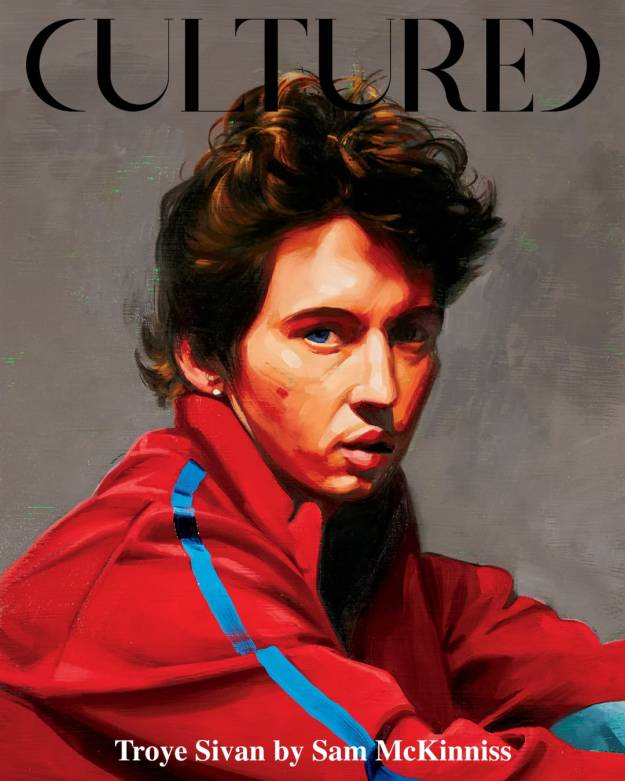
Troye Sivan: Sam McKinniss (2026)


The things that you discover.

Like, I didn’t know that Troye Sivan is really called Troye Sivan Mellet. That Sivan is the ninth month of the Hebrew calendar, usually falling in May or June, and that he was born in June — on 7 Sivan, as it happens.

And I still think he is a ‘dirty’ boy.

As far as art is concerned, Sivan has now popped up on the cover of the latest issue of CULTURED magazine, painted by American artist Sam McKinniss, who also interviewed him for the issue. The result is this rather gorgeous, slightly feverish portrait — and surely some magazine covers are destined to become collector’s items.

McKinniss, born in 1985 and based in New York, has been described as an ‘artist of celebrity’, having painted figures from popular culture and created the cover for Lorde’s Melodrama (2017), arguably one of his most memorable commissions.

He graduated from the Glasgow School of Art in 2005 before going on to exhibit throughout the United States and Europe. His paintings can veer from celebrity portraiture to lush, pop-cultural fantasy, with the occasional reclining male nude thrown in for good measure.

McKinniss first discovered Sivan on Instagram, when the then twenty-year-old had just released Blue Neighbourhood. He came across him again in 2018, when he saw Sivan in Joel Edgerton’s conversion-therapy drama Boy Erased. McKinniss remembered being impressed that someone from the pop world would take part in such a difficult and necessary film.

And now, years later, he has painted him.

Which, when you think about it, seems entirely appropriate.

My Week, For What It Was Worth

Rimbaud Still Prods Me Up the Bum


Most of us live to old age and never achieve the notoriety that Arthur Rimbaud did. He was only thirty-seven when he died, minus a leg, in 1891.

I like a bit of Rimbaud.

I even like his poetry.

We are stuck, however, with the knowledge that this raw, untamed youth, this rebellious genius, was, in truth, a bit of a ‘dirty arse’. And yet we gaze at Étienne Carjat’s iconic 1871 portrait, taken when Rimbaud was only seventeen, and lust after the boy with the wild, uncombed hair, slightly crooked tie and defiant stare.

Why wouldn’t we admire someone who, in that same year, penned the Sonnet of the Arsehole — originally titled L’Idole, or Le Sonnet du Trou du Cul — that gloriously obscene little collaboration with Paul Verlaine? Rimbaud wrote the opening quatrains; Verlaine supplied the tercets.

Rimbaud still prods me up the bum from time to time.

The latest occasion is the result of a new three-hour biopic, A. Rimbaud, written, co-produced and directed by American independent filmmaker Patrick Wang.

The chances of seeing it seem fairly remote, given its slow-burn release schedule.

Australian actor Blake Draper plays Rimbaud in what appears to be almost a one-man film.

“Utterly captivating to watch, in no small part because Draper balances theatrical expressiveness with nuance for the movie camera,” writes Variety.


Before He Was Gone


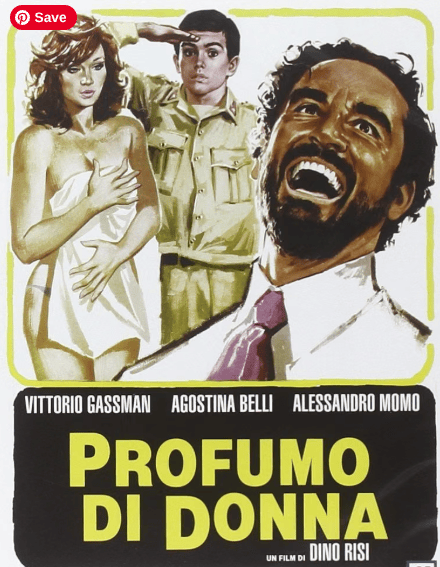
I managed to watch Profumo di donna (1974), the last film made by the Italian actor Alessandro Momo before his tragic death in a motorbike accident.

Its English title was Scent of a Woman. The film received two Oscar nominations and would later become the direct inspiration and source material for the much better-known 1992 American remake starring Al Pacino and Chris O’Donnell.

You might recall that Momo was only seventeen and not legally permitted to ride a motorcycle. The bike’s owner, 21-year-old actress Eleonora Giorgi, was investigated over the circumstances surrounding his death but was never indicted, having reportedly been told by Momo that he was 21.

I now have two observations.

First, Momo looked tiny, although there appear to be no reliable details about his height. One piece of information I came across suggests that he was actually a normal-height, slender adolescent rather than someone of unusually short or “tiny” stature.

Second, Momo looked about twelve years old. He certainly didn’t look 21, as he had apparently told Giorgi.

But what a handsome little devil he was.

I couldn’t help feeling sad watching him, knowing that just days after completing the film he would be dead. Never to grow old. Never to become the actor he might have become. There is something particularly poignant about seeing someone so young on screen when you know that their entire adult life has already been taken away from them.

Something else annoyed me, and it is something I have noticed in quite a few old Italian films: the way the dialogue was dubbed in post-production.

It always comes across as rather obvious—and often strangely awkward. The voices seem to exist slightly apart from the people speaking, as though everyone has been dubbed after the fact, which, of course, they were.

A bit of research suggests that the practice had roots in the Fascist regime’s attempts to eliminate regional dialects in favour of “standard” Italian. Dubbing subsequently became deeply embedded in Italian filmmaking, for a whole variety of practical and artistic reasons.

In Profumo di donna, Momo was dubbed by Sandro Acerbo, who would go on to have a very successful career as a voice actor.

So there I was, watching a fifty-something-year-old film, admiring an impossibly handsome seventeen-year-old actor, being irritated by the dubbing, and all the while knowing that the young man on the screen had only a few days left to live.

Cinema can be a rather strange thing.


A Man On My Bed


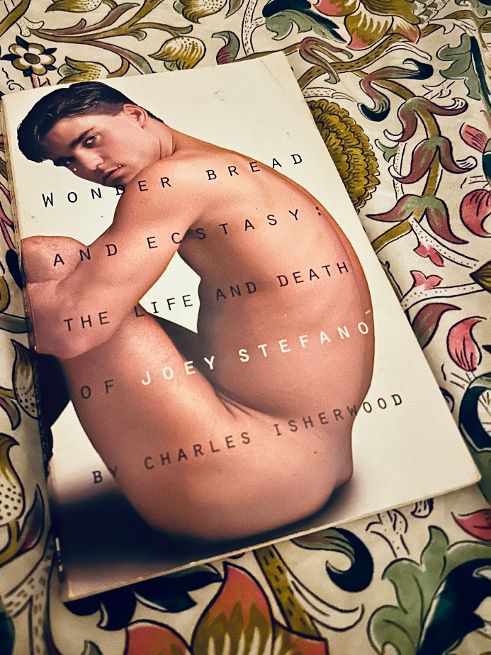
I walked into my room and found Joey Stefano naked on my bed. Actually it was a copy of Wonder Bread and Ecstasy: The Life and Death of Joey Stefano by Charles Isherwood that was published in 1996. 

It makes it a very old book in my eyes.

I don’t want to say too much about Joey Stefano because it will spoil things for next week.

But, you will have surmised from the title that he is dead.

My friend David put me onto Joey Stefano.

“The two of you would have been most incompatible,” he suggested. “He wasn’t called the ‘hungry bottom’ for nothing.”


For the Only English Person I Know


Luigi Bevilacqua, that elegant old gentleman, left me a gift, carefully wrapped in green floral Tassotti paper and tied with gold-coloured string.

It was a small book in a blue cloth case binding.

If I considered the book about Joey Stefano to be very old, then this book was absolutely ancient.

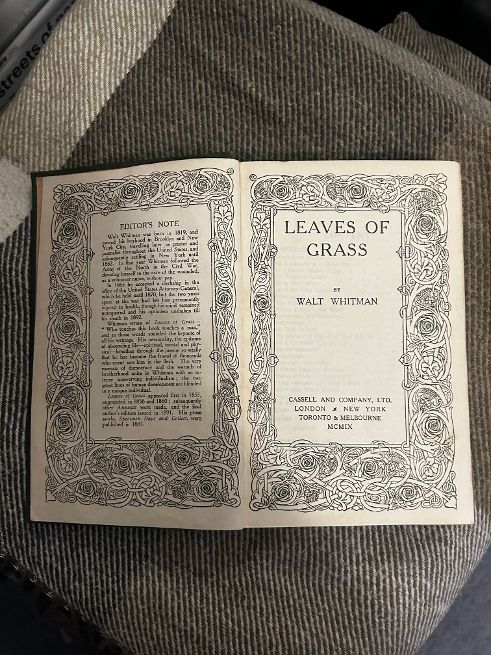
Leaves of Grass by Walt Whitman.

This particular English-language edition was published in 1909.

“Luigi sells second-hand books in Veronetta,” said Signora Bruschi. “He found this copy in a storeroom and will find it hard to sell.”

There was a handwritten card inside.

“Per l’unica persona inglese che conosco.”

For the only English person that I know.


The Algorithm Did Well


Scrolling through my phone because I’m bored, and the Al Gore-ithms point me towards 17-year-old Corin Altemus, who is a multidisciplinary artist. Yes, I had to look that up as well.

Altemus spends long periods being bored too, and turns to YouTube to talk about whatever happens to pop into his head. He slaps. I could watch and listen to him all day. I could probably talk with him all day too.

His Instagram feed is full of his artwork. It all looks good, although I don’t actually understand any of it. But tucked in amongst the art are a few random poems.

“Dumb stuff I wrote this morning,” he says.

Totally up my street

Corin Altemus YouTube


On the Cute and the Willing

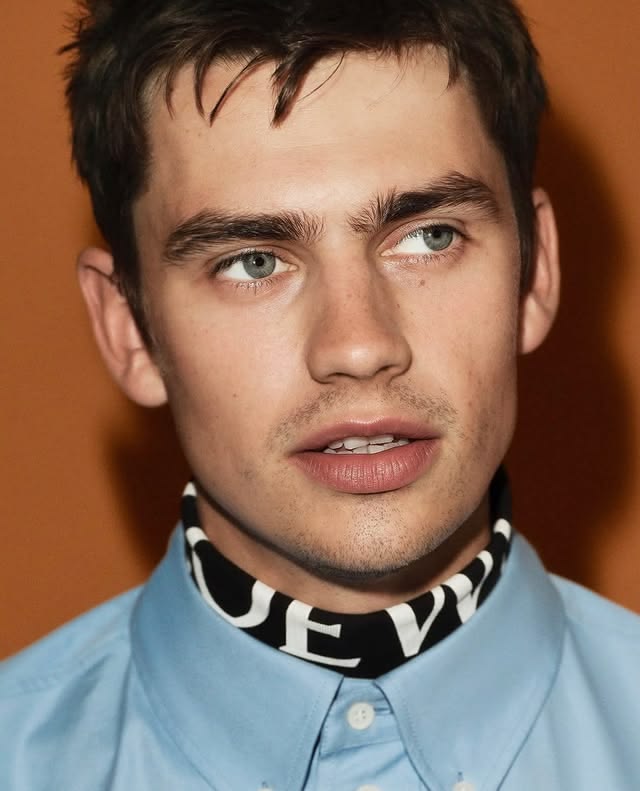
Actor Spike Fearn who leans leans into messy, relatable roles. Loose-limbed, charming and raw.

The Only Thing I Ever Wanted


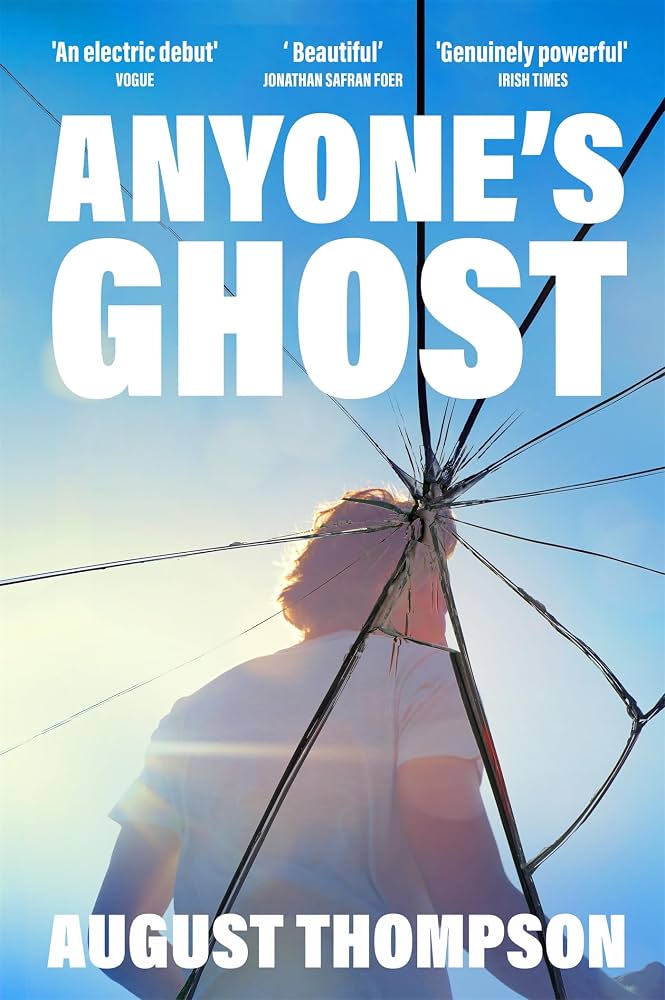
“No, no. Don’t joke. I’m trying here, trying to be real for a minute. It’s hard to explain. It’s like when you’re listening to a favourite song and there’s this one part you love – a guitar riff or the way the singer says something. And you wait and wait, enjoying it all, but just fucking dying for that moment. And when the moment comes, it’s like you can let go and finally be happy. That’s how people – that’s how I – feel around you.”

I looked to the right of his eyes, behind him, and let things blur. It was everything at once – the only thing I ever wanted. “Thanks man. That’s really nice of you.”

From Anyone’s Ghost, August Thompson, 2025.

There is something in this passage that I recognise from my own life, although I have never quite known what to do with that recognition. I have known what it is to wait for a moment and to attach too much importance to it, and I have known the strange fear that comes with wanting to take things further. Perhaps sometimes we hold back not because we don’t want something badly enough, but because we want it so badly that we are frightened of what might happen if we reach for it. There are things that remain precious precisely because we never tested how far they might have gone.