Rawly talented. Jeff Buckley. Photographed by Merri Cyr
Something strange had happened beforehand. A young guy sold me my cinema ticket. Soft features, dark curls, expressive eyes. Soft-spoken. All the time he smiled as though sharing a secret only he understood.
There were other staff around, but when I bought a coffee he served me again. He looked astonishingly vulnerable when he realised he’d screwed up making my hazelnut coffee. And then he scanned my ticket when I headed into the screening.
He might have been Jeff Buckley, if only he’d known who he was.
The cinema was empty, as though this showing were meant for my eyes alone—someone who only discovered him after he was already dead. That strange, almost mystical aura: the romantic legend whose story remains unfinished. It’s Never Over, Jeff Buckley.
A Pre-Raphaelite look—with scratchy stubble—and the whisper of a small child that could rise suddenly into a soaring falsetto, almost devotional. Was there ever anyone who captivated me so completely?
I heard the murmur of Cinema Boy: “The face that once commanded admiration and became a ruin, a tragic testament to a sad end.” That someone so beautiful would go swimming and never come back. My heart insists it was intentional.
One album—both his coming-out and his epitaph. One of the greatest albums ever recorded.
Six days. That’s all it took. A body decomposing, bloating. Skin that once felt so good to touch became pruned, pale and waterlogged—brownish, yellowish, ugly. Corpse wax. A moral fable in which the loss of physical perfection mirrors the decay of the soul.
The film ended. And Cinema Boy—who was probably called Will, or Aaron—came into the cinema to clear up after me.
He was still smiling to himself.
It’s Never Over: Jeff Buckley, a 2025 feature-length documentary directed by Amy Berg (known for Deliver Us From Evil and Janis: Little Girl Blue). It is the first comprehensive documentary authorised by the Jeff Buckley Estate.
Jeffrey Scott Buckley. Guardian angel. Born: Anaheim, California (1966). Died: Memphis, Tennessee (1997), aged 30.
Mainly I strive to show by deed and word How great my love for you, how deep and strong; Daily you hear my heart’s one passionate song, And still pass on as though you had not heard; Your slightest smile, your gentlest glance can gird My suppliant life with joy that lingers long, – You touch my hand, and straight a gladsome throng Of hopes are born, and all my soul is stirred.
But ah, you do not understand nor see, And when my looks of my devotion tell You deem it but some pitiful wayward spell; Love comes not my interpreter to be, And in your eyes, because you love not me, My greatest fault is loving you too well!
From Love in Earnest – Sonnets, Ballades and Lyrics by J.G.F. Nicholson (1892)
Ignacio Martínez Moreno, in Uranian Poetry: The Homosocial and Homoerotic Paradox (2020), describes John Gambril (Francis) Nicholson as “a prisoner of his feelings, only able to express them through poetry.” Hopeless Love reveals a form of homoeroticism in which the lightest touch can unleash a flood of feeling—emotions that need not be reciprocated to ignite passion within the poetic voice.
Oh yes, I know this all too well.
I perceive beauty where others see none. I feel a desire that no one else seems able to recognise. He is the pearl concealed within a hard exterior. Through close proximity, a sense of deep familiarity takes hold, awakening attraction and affection that override his less generous qualities.
It is an obsessive infatuation, one in which reciprocation will never arrive—because he refuses, or is simply unable, to see the effect he has on me.
And no matter how hard I try… it is not recognised.
“I give my white-skinned boy a pearl Fair as his body and as strange As still pools veiled in mists that change Their mysteries as they wreathe and curl: — So that his visions ever be Wondrous and subtle as the sea, I give my white-skinned boy a pearl.”
This verse comes from The Seven Gifts by Edmund John, published in the May 1916 edition of The English Review. It was introduced with the following note: “Suggested by the fragment of a letter from an Athenian father to his son, in the time of Pericles, now in the possession of Sydney Oswald, Esqre.”
The note was almost certainly fiction—an artful screen to disguise the real impulse behind the poem. Edmund John liked writing about boys.
One of Britain’s most obscure poets, Edmund John (1883–1917) was never afforded the opportunity to establish a reputation. His premature death at thirty-three ensured that his name would slip quietly into obscurity. Only three volumes of poetry were published: The Flute of Sardonyx (1913), The Wind in the Temple (1915), and the posthumous Symphonie Symbolique (1919). Today, he is largely forgotten, his small but striking body of work almost entirely overlooked.
John was born in Woolwich on 27 November 1883 to a Welsh father and a Scottish mother. He studied science—particularly biology and chemistry—before turning to philosophy. With his brother, he ran a boys’ school in Crouch End, supplementing his income by coaching undergraduates.
Travel appears to have played an important role in his development as a poet. The introduction to Symphonie Symbolique suggests that Cuba left a lasting impression:
“Where the glowing colours of the South, the luxuriance of the tropics, provided his palette with a richness that it did not possess before, and gave to his verse an almost exotic warmth and splendour.”
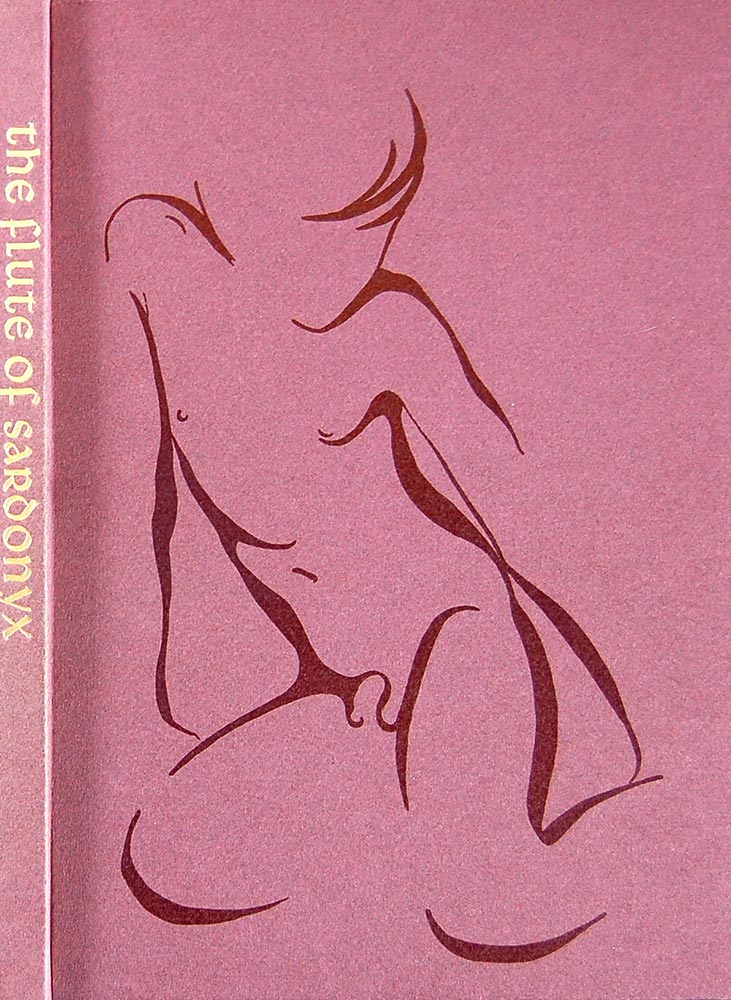
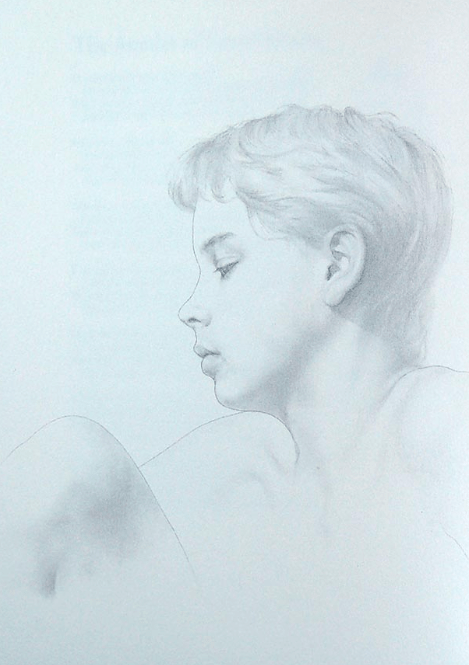
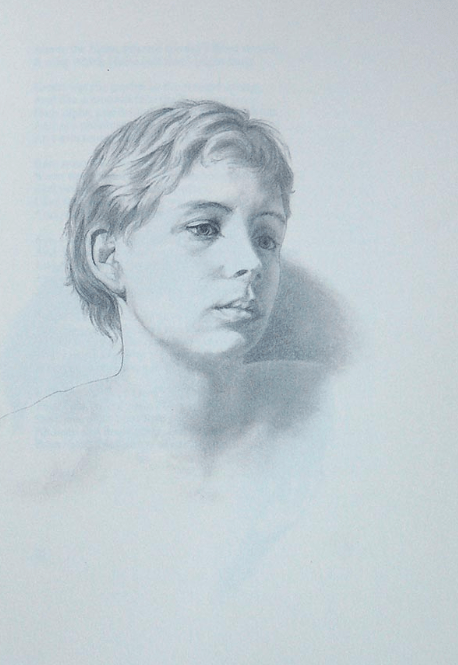
The Flute of Sardonyx (1913). Reprinted in 1991 (The Old Stile Press) with pencil drawing by Nicholas Wilde
His first book of poetry, The Flute of Sardonyx, gained immediate notoriety upon publication. Critics were, for the most part, receptive—perhaps because many failed to grasp its implications. One who did not was James Douglas, a prominent literary critic, who launched a fierce attack on both Edmund John and Stephen Williams, author of the book’s introduction.
“Williams in the introduction of The Flute of Sardonyx seeks to justify or excuse these poems by citing Milton’s definition of poetry, and he implies that Milton meant by the word ‘sensuous’ not merely the normal, healthy, and wholesome senses of the normal, healthy, and wholesome human being, but also the debased, depraved and degraded sensations of a perverted and abnormal erotomania. I have not the slightest doubt that in a court of law an English jury and an English judge would not hesitate to condemn Mr John as being guilty of a gross offence against elementary propriety. I demand without delay the volume should be withdrawn in deference to what I believe to the inevitable and inexorable verdict of public opinion.”
One poem in particular, Salome, provoked Douglas’s outrage.
“These stanzas, I venture to affirm, are of a vileness hitherto unparalleled in English poetry. Nothing approximating to or of approaching depravity has, as far as I am aware, ever been tolerated in English literature.”
Others were scarcely more forgiving. A. E. Manning Foster, writing in The Bookmarker, observed:
“Salome is an Aubrey Beardsley picture in words, and yet it is not entirely pleasing. Mr John brings into his poem what Oscar Wilde in his play on Salome and Flaubert in his short story never did—an unhealthy, perverted strain.”
Herbert Jenkins, John’s publisher, abruptly withdrew The Flute of the Sardonyx, later reissuing it in a revised edition that was, as one commentator noted, “meeker than the Shakespeare we use at school.”
One of the few surviving biographical sketches of Edmund John appears in George Norman Douglas’s memoir Looking Back: An Autobiographical Excursion (1933).
“We met through his sending verses to The English Review after the publication of The Flute of Sardonyx, and it often struck me how greatly his person resembled his writings—sensuous and ornate, elaborate in manner, a little over-dressed, too many rings and tiepins, too much thought expended upon the colour of socks. He would have grown out of these incongruities had he lived. Meanwhile he was young and handsome.
“He could drink like a fish and remain perfectly sober. In those days I bought my whisky in kegs, and it was alarming to see how he could put it away. Good company! At such moments he cast off that veil of precocity, though a certain refinement always clung to him; it was part of his nature.”
John’s second volume, The Wind in the Temple, published in 1915, was widely praised.
“The superb loveliness of these stanzas are beyond praise,” wrote the Westminster Gazette. “Seldom has the enhancing beauty of Greek thought so captivated the soul of a poet; seldom has this enchantment been rendered so felicitously in modern verse.” The Evening Standard noted: “Although owing much to Arthur Symons, these poems have a magic all their own, for Mr John knows the value of the leash, the most difficult of all lessons to be learnt.”
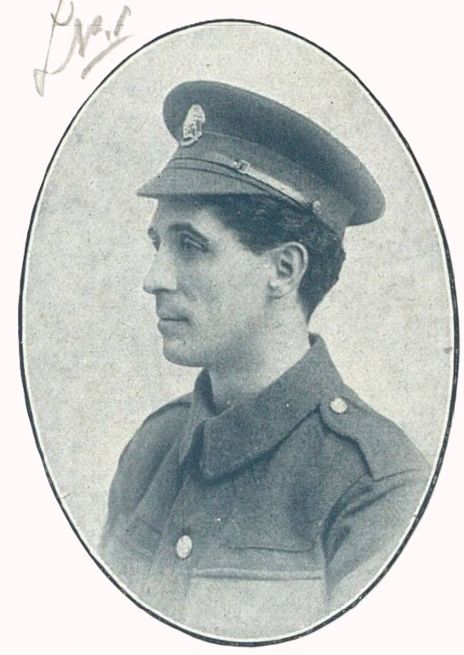
Edmund John in military uniform
Around this time, John enlisted in the 28th (London) Battalion, the Artist’s Rifles, to fight in the First World War. Founded in 1859 amid fears of a French invasion, the regiment attracted volunteers from public schools, universities, and the creative professions—painters, musicians, actors, architects.
John’s death in 1917 might easily be assumed to have been a casualty of war. Douglas, however, suggests otherwise.
“In his correspondence he told me that he had been invalided out of the army (in 1916) on account of his heart. He had also married for money, as he frankly confessed. His tastes were luxurious; coaching, and an occasional volume of verse would never make him feel at ease. It looked as if all were going well, yet I did not like the nervous tones of his letters….”
Seeking to recover his health, John travelled to Italy and settled in Taormina.
“It is a site of great distances—its soft colouring—its streets hushed at noonday as by some weird enchantment—its leaning walls in flower—its secluded gardens—its terraces—its lemon and almond groves; its crystal air, crystal and flare at noon, opal and pearl at either edge of the day; its castled crests and crumbling ruins.”
An obituary followed:
“On the 28th February (1917), at Taormina, Sicily, Edmund John, of heart failure, beloved husband of Kate Dalliba John, of Florence, and dearly loved eldest son of Thomas and Margaret John of 20 Cranley Gardens, London, aged thirty-three.”
Douglas corrected the record bluntly:
“I replied to John’s letter on the 19th of February 1917. On the 28th of the same month he killed himself. A miserable ending of which he seemed to have had a presentiment.”
From this point onward, certainty dissolves. The dead do not speak, and what remains is conjecture.
Certainly, John suffered from a debilitating heart condition and bouts of depression. But other forces may have contributed.
“Ah God, it was the Hope gave to me, Within the womb, of things unknown and fair, The Bud that blossomed into this Despair. Art Thou content, O God, with thus Thy work? Art Thou content that Thou hast planned so well? That Thy cold hands have thrust me into Hell?”
The Flute of Sardonyx. Pencil drawing by Nicholas Wilde (1991)
John’s poetry is suffused with Uranian themes—a term coined in the nineteenth century by Karl Heinrich Ulrichs, before the invention of the word homosexual.
“His eyes are brothers to the sun and sky, His body’s fragrance haunts the murmuring wood, And all the flowers are singing where he stood, And all the leaves are chanting their reply.”
In The Wind in the Temple, love is repeatedly figured as adolescent beauty.
“His body is like milk edged with rose-colour rare, With vine and lure of hemlock in his red-gold hair, Night-kissed, that burns and gleams; His grave sweet scarlet lips are parted voicelessly, His eyes like stars reflected in a violet sea Of dawn and dreams.”
And elsewhere:
“Harder, press harder with your scarlet mouth; Lie close, limbs woven of the passionate South; Twine nearer, subtle satin limbs of June, Burn your gold scented body into mine, Cling to my lips with yours of Graecian wine, Cling closer till the blood come and life swoon…”
Yes, Edmund John was a Uranian poet, and he harboured pederastic desires. Men and Boys (1924) reproduced part of a letter he wrote to a “young friend”:
“I have received your adorable, illustrated letter this morning and loved it so much I immediately made an altar before it, lit by amber candles in copper candlesticks, burnt incense before it and kissed its extreme beautifulness.”
Did his homosexuality weigh heavily upon him?
That John died in Taormina is suggestive. Long regarded as a “Queer Eden” for artists and intellectuals, the town was famed for its beauty, Greek mystique, and relative tolerance—an atmosphere reinforced by Wilhelm von Gloeden’s homoerotic photographs of local youths. Oscar Wilde and André Gide had passed through; later visitors would include Truman Capote, Tennessee Williams, Gore Vidal, Jean Cocteau, Thomas Mann, Somerset Maugham, and Roger Peyrefitte.
There is also the unresolved mystery of John’s marriage to Kate Dalliba, reportedly solemnised in Florence.
“Kate Dalliba, of St. John’s Wood. Famous for her Sunday night salon, referred to as The House of Music. Wealthy musicians in evening dress rub shoulders with poor and budding young geniuses in wrinkled light clothes and soiled linen. All here is democracy, art, Bohemianism.”
Born into a wealthy family in Cleveland, Ohio, Dalliba used her fortune to support artists such as Ezra Pound, Ida Rubinstein, Olga Rudge, and Ildebrando Pizzetti. She lived in Florence and maintained her London house as a free lodging and performance space for travelling musicians and artists.
It is entirely possible that John, described by George Norman Douglas as being poor, was drawn to her wealth. He had openly admitted that he married her for money. The rich older woman and the handsome young poet might have passed, outwardly, as a conventional May–December match.
Whether Dalliba later recognised the truth of the arrangement—and whether this recognition had consequences for John—remains unknown. She herself lost most of her fortune in the Wall Street Crash of 1929.
What remains is a handful of poems, a scandal, a life cut short, and the faint outline of a gifted, troubled poet whose voice—sensuous, excessive, and dangerous—proved too much for his time.
The Flute of Sardonyx. Pencil drawing by Nicholas Wilde (1991)
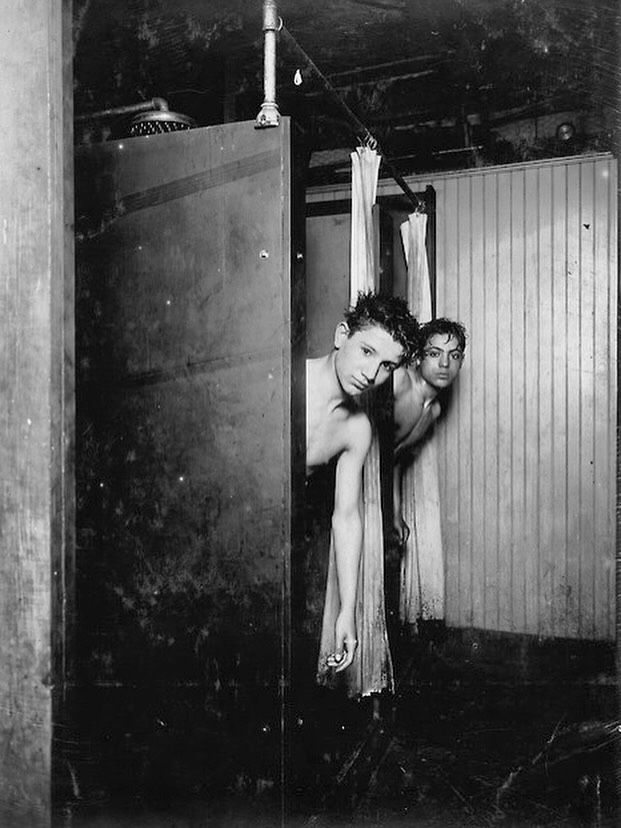
A famous photograph by Lewis Wickes Hine, taken in July 1910, showing young male telegraph messengers using shower baths at the Postal Telegraph Company on Broadway, New York. Hine, working for the National Child Labor Committee, documented the harsh conditions of child labour, but this image highlighted a positive aspect: the company provided showers, recognising good grooming was good for business and tips, a rare perk for these boys.
“No, sir — it ain’t no cinch, lemme tell ya. This life’s all leg-work. We don’t get no steady pay, not by the day nor the week — it’s by the message, an’ that means you’re on the jump all the time. Soon as I dump one off, I’m tearin’ back to the office for another.
“Two bits an’ a half is what I get for each one I sling, an’ if I tote back an answer for the wire, that’s three more cents in my pocket. That’s why I’ll hang around for a reply — I ain’t no chump.
“A boy that drags his feet or lays down on the job won’t make nothin’, but a hustler like me? I clean up. I knock out thirty messages a day if my legs hold. That’s near twenty miles on the hoof, an’ don’t forget the stairs — an’ New York’s lousy with ’em. Offices from the street clear up to the sixth, seventh floor, an’ you gotta hoof it every step.”
– Being the transcript of a letter unearthed in the long-sealed vaults of the Royal Bank of Scotland, November 2025
George Walker Wood 66 Cavendish Street, Marylebone London
29 November, 1881
My dear Reader,
If by curious chance you hold this manuscript in your hands, I entreat you to read its contents with the utmost seriousness. Only by such attentive perusal shall you perceive that the pages which follow are both an explanation and a justification for their long concealment.
Should it prove that I still draw breath when these lines meet your eye, then I beg of you—burn them without delay, and disclaim all knowledge of ever having encountered them. The shame that would ensue from their divulgence is of so dreadful a nature that I scarcely dare commit the thought to paper.
I shall therefore begin at the point where first I made the acquaintance of one Johane—an Irish youth of some four-and-twenty years, of humble condition, and with every outward appearance of one who might easily draw misfortune to my door. He was, however, most commonly called Jack, and by that familiar name I shall refer to him henceforth. Dear Jack belonged to a loose fraternity of young loafers and street-bred rascals—variously known as the “London Boys”—a wild and merry set whose manners were as questionable as their morals, yet whose very recklessness possessed, for me, an unaccountable fascination.
In time I grew most attached to Jack, and he attended me frequently at my lodgings in Marylebone. There, behind doors safely bolted, we indulged in certain intimacies which, though common enough within that unseen sphere of which London pretends ignorance, would cause polite society to feign horror. Jack’s person was slight, his garments threadbare and ill-assorted, and he bore all the marks of those who are forced to wrest their sustenance from the streets; yet beneath that rough exterior there was a warmth and vigour not easily described. When fortune smiled and I had a few coins to spare, he would remain with me until morning, and those nights—cold, anxious, sweet as they were—remain fixed in my memory.
I suspect that my landlady, Mrs. Chivers, a stout matron of no small curiosity, had taken something of a liking to Jack as well; for once I discovered him seated at her kitchen table devouring a modest breakfast of bread and scrape. The glint of mischief in his eye, as he looked up at me over the crust, told me all I needed to know. She had chosen to see nothing of the nature of my rooms above.
My days were spent at the old desk overlooking Cavendish Street, where I composed articles for The London Figaro and The Dark Blue. Yet I had long nourished the ambition to attempt a novel—something that might echo, however faintly, the triumph of A Tale of Two Cities. My parents, never slow to remind me of my deficiencies, assured me that I lacked both imagination and creative faculty, that I was fit only to set down facts and order them neatly upon a page.
Still, I could not forget the tales Jack whispered to me during those winter nights—tales of gentlemen of rank who sought his company at a high price; of drawing-room adventures veiled beneath the richest draperies; of temptations and behaviours of which the world speaks only in scandalised murmurs. Spurred by these accounts, I sought the acquaintance of a certain printer known to an associate of Henry Ashbee—a man whose livelihood depended upon the discreet production of pamphlets of a decidedly provocative character.
Mr. William Lazenby, a sharp-eyed fellow, showed interest in my idea and agreed to an initial impression of two hundred and fifty copies. He offered me a share of the profits, subtracting his considerable costs, should I but write with candour. The sums he mentioned far exceeded any I had yet earned, and the promise of so easy a reward was exceedingly tempting. He informed me that the book should be sold exclusively by mail-order through an address in Paris, and insisted that I adopt a nom de plume, lest I bring inevitable ruin upon myself.
When I conveyed the scheme to Jack, he immediately demanded—nor without justice—a share of the proceeds, and further insisted that his own name be affixed to the work. I warned him that the police might take a dim view of such recklessness, but he merely laughed and declared that the “mutton-shunters”, knowing full well he could neither read nor write, would never suppose him connected to any printed matter. With that he tumbled himself upon the bed in his usual impudent fashion and suggested that we commence our “research” without delay.
By June the manuscript was completed, and I had settled upon what I deemed a most fitting title—The Sins of the Cities of the Plain. Though Mr. Lazenby scoffed at it, he conceded that the biblical suggestion would doubtless catch the eye of those gentlemen who take an interest in such hidden matters. I confess I feared that certain passages, dealing as they did with the concealed customs of our clandestine fraternity, might prove too recognisable to those acquainted with that shadowed realm.
Lazenby nevertheless published the work in two parts, and it found immediate favour among readers eager to feast upon the covert indulgences of the great and respectable.
Though I tremble at the thought of its reception, I take comfort that my own name has thus far escaped suspicion. I offer here my apologies to Mr. Simeon Solomon and Mr. James Campbell Reddie—both of whom have been unjustly whispered about in connection with this deception. Jack, meanwhile, basks in the admiration of his companions and seems persuaded that a century hence his name will still be spoken among certain circles of “inverts”, as he jests.
This very day I have deposited my first earnings at the Lombard Street branch of Messrs. Glyn, Mills, Currie & Co., alongside this confession, sealed and hidden, to remain in the vault until such time as Providence ordains its discovery. Should that day come, I trust that The Sins of the Cities of the Plain shall be regarded as a truthful and unvarnished portrait of those whose society I have come to cherish.
Ever, dear Reader, your faithful servant,
𝒢. 𝒲𝒶𝓁𝓀𝑒𝓇 𝒲𝑜𝑜𝒹 ⌣⌣⌣⌣⌣⌣⌣⌣⌣ George Walker Wood
*****
Now read on to separate fact from fiction.
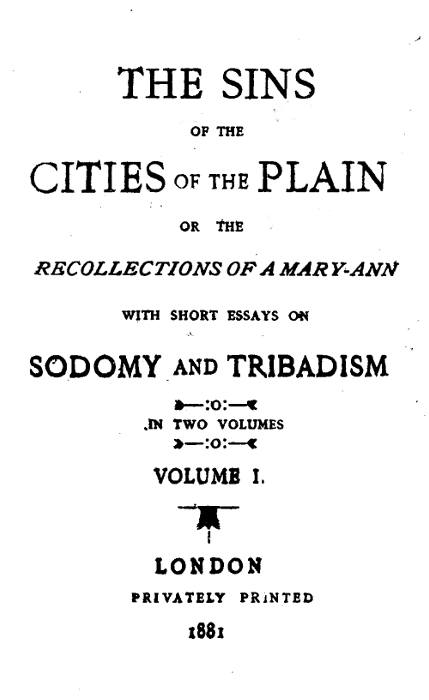
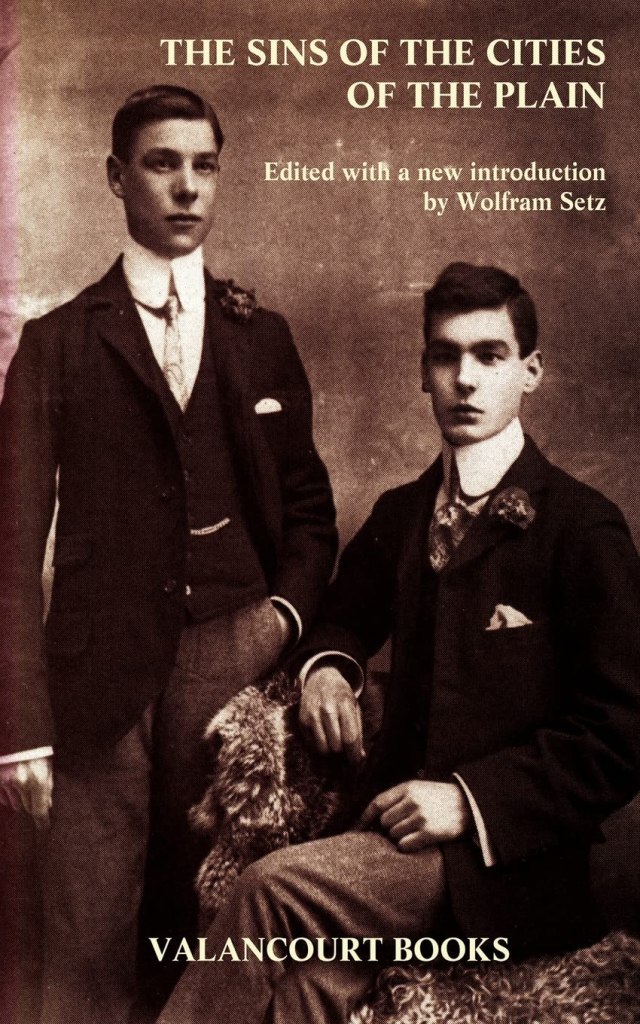
This edition contains the unabridged text of the first edition housed at the British Library, together with a new introduction by Wolfram Setz and a facsimile reproduction of the original volumes’ title pages.
The Sins of the Cities of the Plain is an influential Victorian erotic novel, originally published anonymously in 1881 and widely considered one of the first works of exclusively gay pornography in English. It is a fictionalized memoir attributed to real-life Irish prostitute Jack Saul.
The book is a narrative, presented as the “recollections” or “memoirs” of Jack Saul, detailing his experiences as a young male prostitute (a “Mary-Ann” or “rentboy”) in the clandestine gay underworld of Victorian London. It traces his escapades from boarding school into young adulthood, describing his sexual encounters with various men, from schoolboys and guardsmen to wealthy aristocrats and members of high society.
While attributed to Jack Saul, the actual author is debated by scholars, with some suggesting a ghostwriter or figures like the painter Simeon Solomon or James Campbell Reddie were involved. The book was privately printed in two volumes in 1881 by William Lazenby to avoid obscenity laws and sold for a high price.
The original printings are unobtainable today, but modern editions are widely available from various publishers, such as Valancourt Books and Mint Editions.
I confess—I didn’t notice the rabbits at first. But there was something in the photograph that drew me in. It was taken by Izis Bidermanas, the Jewish-Lithuanian photographer, in Whitechapel, London, in 1951.
It’s quite possible that the boy in the image is still alive, but the rabbits, of course, are not.
Bidermanas worked primarily in France and is best remembered for his photographs of French circuses, Parisian streets, and commissions for the iconic Paris Match magazine. He befriended Jacques Prévert, the French poet and screenwriter; both were described as “urban wanderers.” A year after this photograph was taken, they published Charmes de Londres, a book of black-and-white photographs of post-war London by Bidermanas, accompanied by Prévert’s poetic texts—a vivid portrait of the “shabby old capital in its threadbare post-war years.”
There is something both tender and prematurely adult about this image. A loosely tied scarf, a jacket slightly too big. His style seems effortless—almost cool—as if he had stepped out of his own decade and into ours.
He is someone out of sync with his time. The kind of boy you might spot today on the Underground platform, earbuds in, oversized coat slung over his shoulders. Certain types of youth are universal—postures, anxieties, and dreams that repeat across generations. It makes you want to know his story.
There is an angularity to his posture, an aloof tilt of the head. He strokes the rabbit but does not quite look at it. Tenderness in his hands, hardness in his shoulders. Quiet care, resilience, an emotional inheritance that compels him to protect something gentle, even if he has rarely known gentleness himself.
He seems too sharp, too perceptive for the smallness around him—working here because life left him no choice, waiting for the real story to begin. The rabbits were merely a way to earn a few coins.
What if he was drawn to things outside society’s expectations? Art, books, music—worlds not meant for boys like him. Perhaps he dreamed of Soho jazz clubs, photography, fashion—things his home would never have approved of.
He was a boy caught between worlds: childhood and adulthood, duty and desire, the past and the future. A timeless boy, carrying secret longings.
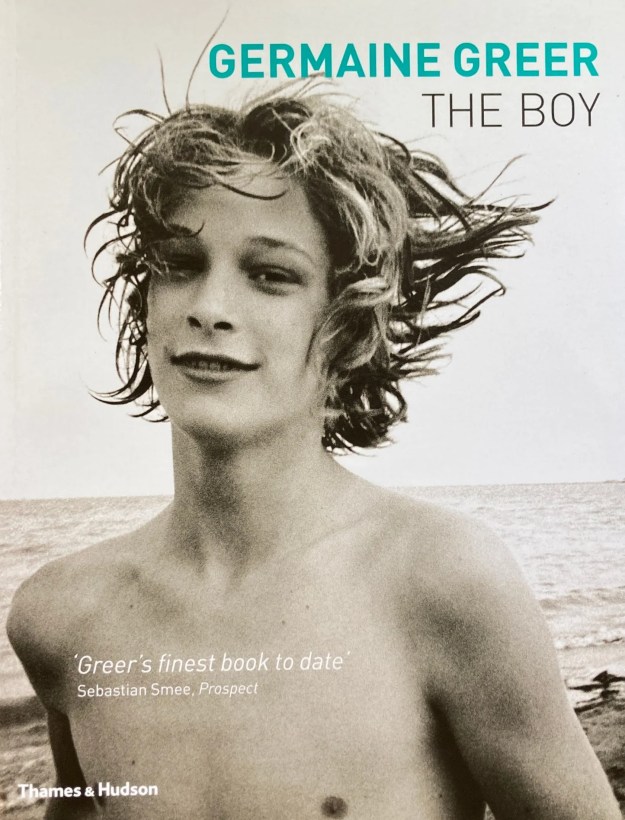
Germaine Greer – The Boy. Published by Thames & Hudson (2007)
Baron Corvo once told me in a dream that I should write something controversial. Terrible advice, obviously. But here we are.
I found a book in a charity shop that Charlie told me not to buy. He said it was distasteful. Which, of course, made me want it more.
The book was Germaine Greer’s The Boy — a 2003 art history study about how young males have been represented in Western art. Greer argued that, for centuries, it was the male body — not the female — that dominated the gaze. Art, she said, used to worship men. Then we decided that kind of looking was shameful.
When it came out, The Boy caused an uproar. Greer said she wanted to help women reclaim their “capacity for visual pleasure,” to look at men the way art has long looked at women. Then she dropped her most infamous line: “A woman of taste is a pederast — boys rather than men.” Predictably, everyone lost their minds.
The book is filled with over 200 images — statues, paintings, portraits — each exploring what Greer called the “evanescent loveliness of boys.” The soldier. The martyr. The angel. The narcissist. The seducer. It’s the sort of book that doesn’t end up on display in Oxfam, which is precisely why I found it there.
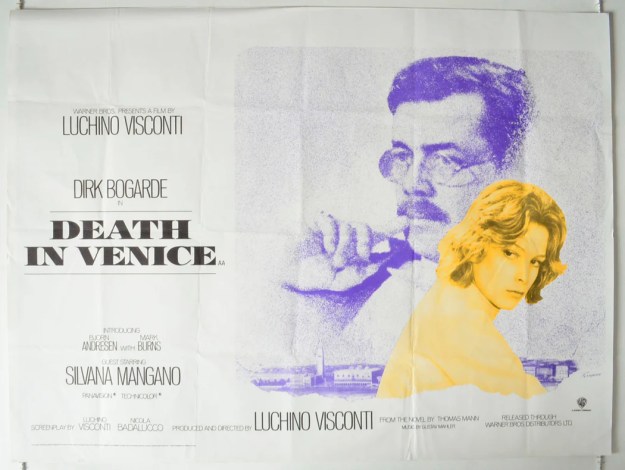
The cover shows Björn Andrésen, the Swedish actor who played Tadzio in Death in Venice (1971). The photograph was by David Bailey, but Andrésen said no one asked permission to use it. He was furious — disgusted, even. “I have a feeling of being utilised that is close to distasteful,” he said. And the irony? The week I bought the book, he died, aged seventy.
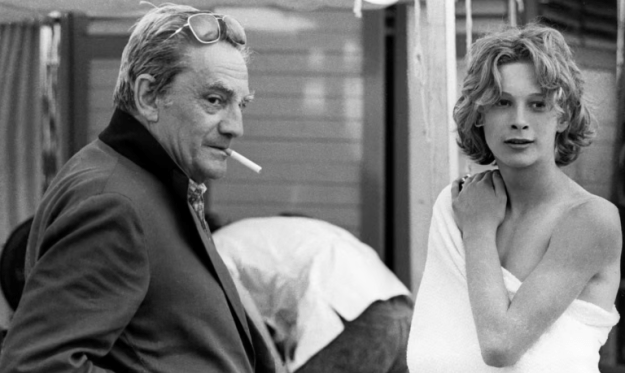
Björn Andrésen with Luchino Visconti on the set of Death in Venice. Photograph: Mario Tursi
Every obituary revisited the same scene: the audition tape from Death in Venice that was included in The Most Beautiful Boy in the World — a documentary about his life. Visconti tells him to smile. Then to undress. He laughs nervously. Strips to his trunks. Shifts under the gaze of men deciding whether he’s beautiful enough.
It’s hard to watch now. Visconti — Count of Lonate Pozzolo, titan of Italian cinema, and apparently, chaos in a cravat — ends up looking less like a mentor and more like a predator. But dead men can’t explain themselves.
When I was fifteen, I’d probably have thought that kind of attention was glamorous. Maybe I’d have handled it. Maybe it would’ve destroyed me. Hard to know. My own encounters with predatory men later on made Visconti look almost saintly by comparison. At least he left art behind. Maybe Andrésen’s story isn’t just one of exploitation, but what happens when fame and beauty collide with someone who’s too young to bear it.
Charlie, meanwhile, can’t stand The Boy. But he loves Death in Venice. He called Tadzio a “beau.” When I asked what that meant, he said: “The boy is beautiful. It’s sensuous, not pederastic. I’m surprised no one’s remade it.”
Which — yes — feels like a double standard. Both the book and the film are about the same thing: beauty. The kind we no longer know how to look at without flinching.
Could Death in Venice ever be remade?
I doubt it. The original is a masterpiece, and also completely unmakeable now. Mann’s 1912 novella was already controversial — a composer obsessed with a boy — and Visconti turned that tension into pure cinema. But in 2025, the moral landscape is different. Post-Me Too, post-Epstein, even looking can feel like a crime. No studio would touch it.
Unless you flipped it.
Make Tadzio older. Make the story less about sex and more about time — the hunger for youth, stillness, lost purity. Desire becomes existential, not erotic. If Visconti made the tragedy of seeing, a modern director — Luca Guadagnino, Todd Haynes, François Ozon, Joanna Hogg, Andrew Haigh — could make the tragedy of knowing you’re looking.
Visconti’s gaze was romantic. Ours would have to be self-conscious.
In their own way, both The Boy and Death in Venice celebrate the same thing — male beauty, youth, the brief perfection of being looked at before it fades. Once upon a time, that was sacred. Now it’s scandalous. Somewhere along the line, admiration turned into suspicion.
So yes, Baron Corvo told me to write something controversial. Bad idea from a worse man. But maybe he was right about one thing: sometimes, it’s worth writing about what we’re not supposed to look at.
Dirk Bogarde in Death in Venice (Morte a Venezia). Photograph: Ronald Grant Archive
Death In Venice (a.k.a. Morte a Venezia). Original British quad movie poster
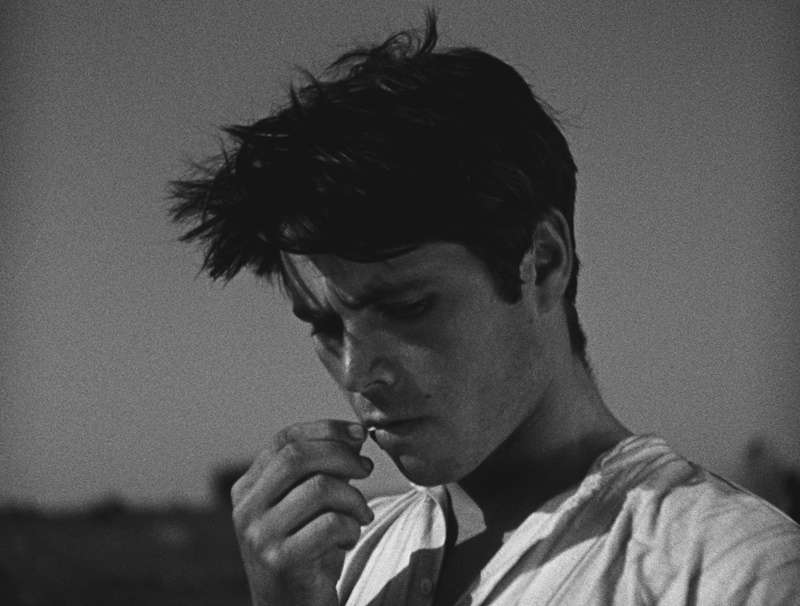
Handsome French boy. The light falls on him like a thought half-formed, catching the edges of his face before retreating into shadow. A quiet defiance in the way he chews on a matchstick. The air feels slow around him, salt and sand mingling with the scent of his skin. His shirt, open at the collar, softens the hardness of his jaw, and the wind seems to pause there – unsure whether to touch him or not. In that hesitation, the moment turns fragile, suspended – beauty caught between innocence and knowing. The image might have been taken yesterday, but this Brittany fisherman is from Finis Terrae, a 1929 French silent film written and directed by Jean Epstein.
Johnny and Vinny (second and fourth from left) – Danny Fitzgerald (1963). According to, Loncar and Kempster, Fitzgerald never printed this image. It was found in a short, four-frame strip of images of the brothers smoking between two cars with friends, on a street in Carroll Gardens, Brooklyn.
The noisy summer of 1963. Shouts, laughter, transistor radios blasting crooners and rock ’n’ roll. Danny Fitzgerald walked the streets of Carroll Gardens—sixty square blocks of brownstone row houses stretching from DeGraw Street to Hamilton Avenue, and from Court Street to Hicks. The neighbourhood bore the name of Charles Carroll, the only Roman Catholic to sign the Declaration of Independence, and as if on cue, the bell towers of St. Mary Star of the Sea and Sacred Hearts & St. Stephens rang out, reminding Fitzgerald that faith was still the glue holding this community together.
Everybody knew everybody here. Reputations mattered, gossip travelled faster than the summer heat, and though Fitzgerald wasn’t an outsider, he knew that by the time he reached Carroll Park, word of his presence would already have spread. He checked that the roll of ten-dollar bills was still safe in his pocket.
On one corner stood a family deli; opposite it, the bakery, its doorway spilling the smells of fresh bread, sfogliatelle, and espresso, along with the little paper cups of ice that kids clutched in the sun. A neon sign buzzed over the grocery, where a framed portrait of John F. Kennedy hung proudly behind the counter.
Sicilian and Neapolitan voices floated from stoops where old women in black dresses swept steps, aired laundry, and fanned themselves as they traded gossip. Below them, men smoked cigars and talked dockside work while listening to baseball on portable radios. Children darted about—stickball, stoop ball, bicycles weaving down Union Street, dodging cars, or shrieking as they ran through the spray of a fire hydrant on President Street.
Fitzgerald found what he was looking for on Columbia Street: teenage boys in leather jackets and rolled-up jeans, striking poses, trying hard to look older as they flirted with girls.
Johnny leaned against an iron railing, a toothpick lodged in the corner of his mouth, hair slicked so smooth it gleamed in the afternoon sun.
“Johnny! Vai a prendere il pane!” his mother called from the window, tossing him a crumpled dollar bill. Go get the bread.
He caught it with ease, sighed, and stuffed it into his pocket. His buddies leaned against a parked Buick, passing around a cigarette. Johnny joined them, hesitated briefly—his mother waiting for bread—then shrugged. She could wait.
Fitzgerald stepped forward, cautious but deliberate. “Hi Johnny. I’ve got a proposition for you—and your brother.”
In 1963, Danny Fitzgerald was forty-two. A first-generation Irish-Italian, he had only taken up photography in his thirties. He trained at Abraham Goldberg’s gym on Clinton Street, where he gained the trust of the young men who boxed and lifted there. For a few dollars, he persuaded them to pose for what he called “standard beefcake”—half-naked in pouches or bikini trunks. These images sold covertly to private collectors and to Joe Weider, who used them for magazine covers: Young Physique, Muscles a Go-Go, Demi-Gods.
Health-and-fitness publications doubled as discreet erotica for America’s homosexuals, offering a socially acceptable way to admire the male form. For Fitzgerald, the work was both a business and a means of feeding his own desires. He was said to have fallen hopelessly in love with one of his muses, a blonde youth named Orest—“unrequited love is a ridiculous state, and it makes those in it behave ridiculously.”
In the early sixties, Fitzgerald met the striking bodybuilder Richard Bennett, who became his primary model and collaborator. Together they founded Les Demi Dieux—“the demigods”—a venture that presented “sublime, muscled beauties from the streets of Brooklyn, the beaches of New Jersey, and the woods of Pennsylvania.” Bennett often acted as bait, coaxing young men into Fitzgerald’s lens for tastefully erotic photographs.
By 1963, when Fitzgerald approached Johnny and his brother Vinny, his focus had shifted back to the gritty realism of South Brooklyn street life. A ten-dollar bill was enough to persuade a boy to pose; a little more, and one might strip to the waist.
It was a handsome life, but a quiet one. The photographs were rarely seen beyond private circles, and after 1968 Fitzgerald stopped shooting altogether.
He died in 1990, destined for obscurity, until Robert Loncar and James Kempster acquired his archive the following year. They catalogued his life’s work, publishing Brooklyn Boys: Danny Fitzgerald and Les Demi Dieux (1993) and mounting an exhibition. Though the book is now out of print, coveted by collectors, his photographs survive online at a dedicated website. https://lesdemidieux.com
The rediscovery sparked excitement. Critics praised the work for its intimacy, its blend of realism and myth, its ability to capture both the spirit of its era and something hauntingly timeless. For a while, Fitzgerald’s name flickered in the wider cultural conversation. Yet as the years passed, interest faded again. Today, the collection drifts in a liminal space—remembered vaguely, rarely exhibited, and maybe a danger vanishing once more. Its half-life raises a lingering question: how easily can art be lost, even when once found?
Muscle Boy. Photograph from the early 1960s by Danny Fitzgerald and his studio Les Demi Dieux
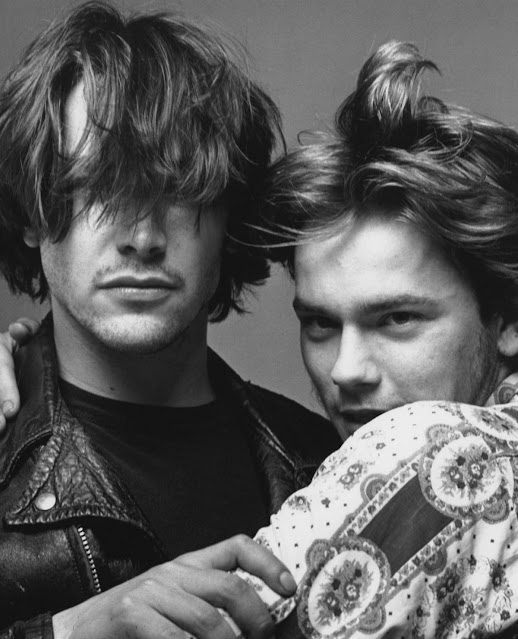
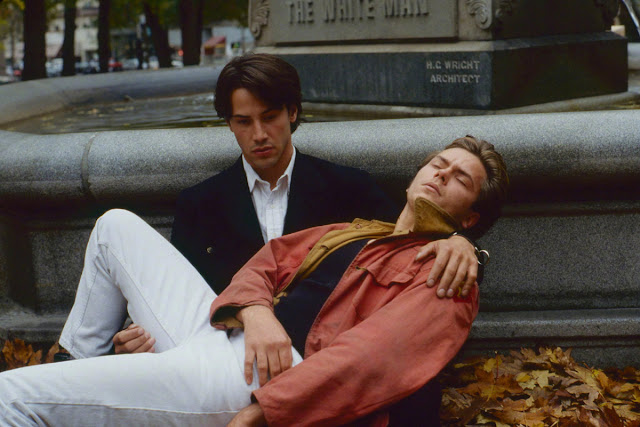
My Own Private Idaho. Keanu Reeves and River Phoenix. Promotional still (1991)
Scott: I only have sex with a guy for money.
Mike: Yeah, I know.
Scott: And two guys can’t love each other.
Mike: Yeah.
Mike: Well, I don’t know. I mean… I mean, for me, I could love someone even if I, you know, wasn’t paid for it… I love you, and… you don’t pay me.
Scott: Mike…
Mike: I really wanna kiss you, man… Well goodnight, man… I love you though… You know that… I do love you.
***
Watched ‘My Own Private Idaho’ for the first time. Charlie asked me if I’d seen Keanu Reeves recently because he looked old. But he was 61-years-old. River Phoenix still looks exactly the same… but that was how he left things. I remembered that I’d mentioned Phoenix before… but in one of my stories, he had appeared as a ghost.
It wasn’t going to be called ‘My Own Private Idaho’… better than ‘Blue Funk’ or ‘Minions of the Moon’… and named after a B-52s song. Inspired by Shakespeare’s Henry IV plays… Prince Hal and Hotspur and Falstaff… but here it was Scott Favor, privileged bisexual, Mike Waters, narcoleptic gay hustler searching for his mother, and Bob Pigeon, coke-dealing chickenhawk. Gus Van Sant: “My films are usually about relationships. I think you make films about things you lack.”
I can’t stop thinking about River Phoenix because, I guess, I’m in love with yet another dead man.
1987… “Run to the rescue with love and peace will follow.” – River Phoenix.
1989… Star burning bright. Beautiful. Lightness. Creative. Camera object.
1991… Indie moment. ‘My Own Private Idaho’. Realism to fantasy. Challenging the norm. Self-destructive attitudes. Dark themes. Cool culture. Downbeat hustlers. Wanderers. A chance to become an adult actor. Gus Van Sant simply being Gus Van Sant.
Keanu Reeves laying in bed playing with his nipple. What River Phoenix needed after making this movie – a bath, a shave, an exfoliating facial scrub.
“How do you see yourself fitting in with younger Hollywood acting?” (A sweet voice). “I don’t see any of them in the perspective or in the limelight of Hollywood. I really don’t ever want to get that objective or self-consciousness of my place in this world of showbusiness.”
1993… LA nightclub. Halloween. Music blasting. Sitting on a couch. Tired. Intoxicated. Skinny. Bad skin. Ticking time bombs. Heroine. Cocaine. Morphine. Marajuana. Valium. Cold remedies. Addiction is an open secret here. And then the star exploded all over the pavement. Never did anyone move from casual drug use to death so quickly. The night that Fellini died – ‘A director’s sweet life. An actor’s brief life.’
Retrospective.
2025… ‘My Own Private Idaho’. Turning point. A troubling effect. Midnight rock sessions. Alcohol. Uncontrollable drug use. Crystal meth. Hooked. No chance of going back now. Progressive and fatal. Like ‘The Little Shop of Horrors’…if you go too near to the plant it will eat you. The best performance… but from now on he didn’t care enough about himself to look after himself. What about those he left behind? Nobody did anything to help him when he was alive… guilt… and lasting sadness.
Have a nice day!
My Own Private Idaho. Keanu Reeves and River Phoenix. Promotional still (1991)
My Own Private Idaho. Keanu Reeves and River Phoenix. Movie poster (1991)








 Perfectly Hard and Glamorous