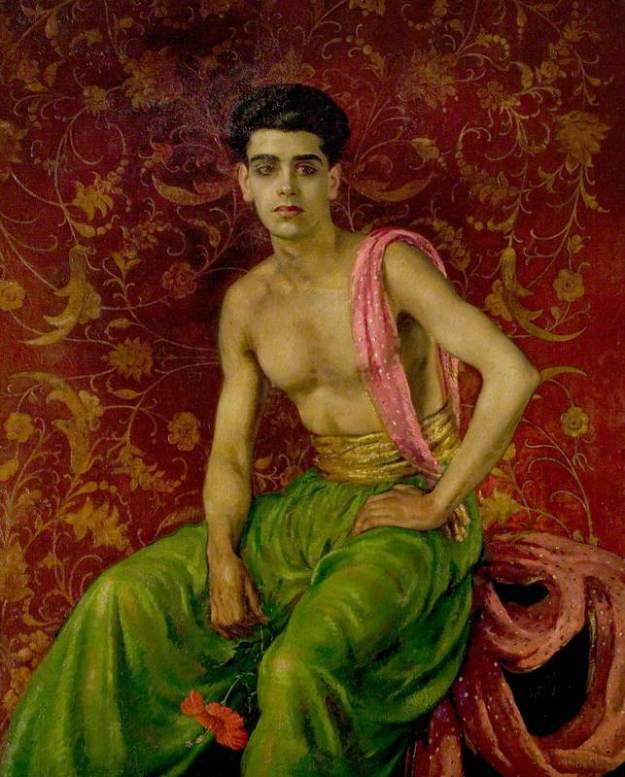
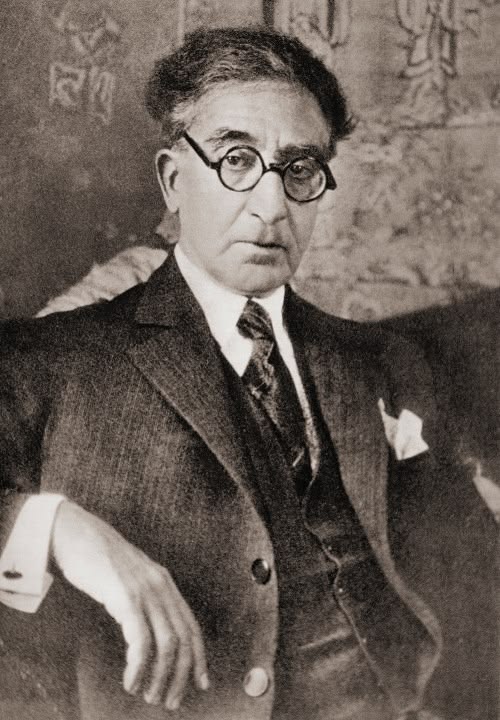
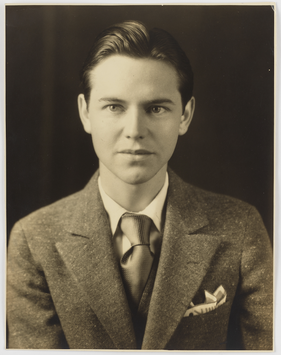
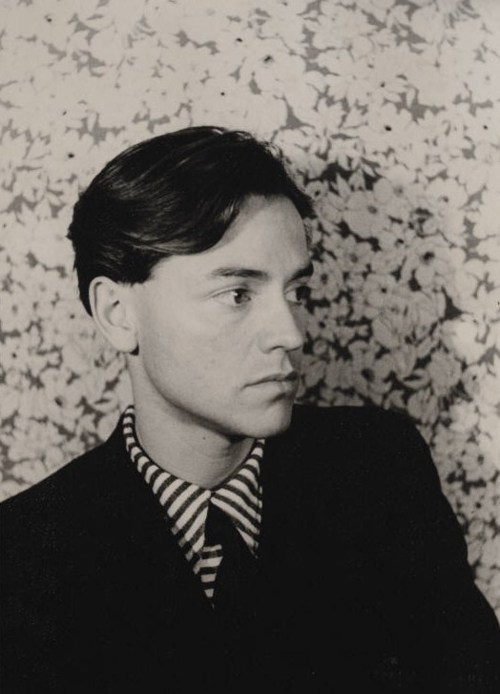
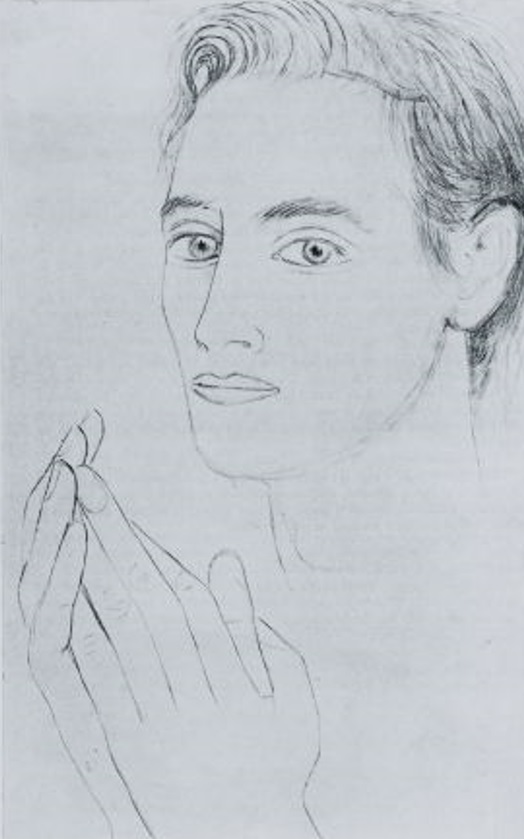
Klaus Mann. Cute twink. What did you become? A chaotic mix: part mongrel, openly queer, a junkie, and premature anti-Fascist. The eldest son of German literary giant Thomas Mann. Born with a permanent side-eye for the world and zero patience.
Every book he published before 1933 got tossed straight into the flames during the Nazi book burnings.
His 1942 autobiography, The Turning Point, reads like a roll call of lost friends; an unsettling number of the people in it had died by suicide, more than feels believable in one life.
Seven years later, in Cannes, he followed the same tragic path.
“Memories are made of peculiar stuff, elusive and yet compelling, powerful and fleet. You cannot trust your reminiscences, and yet there is no reality except the one we remember.” – Klaus Mann (The Turning Point)
On being famous in a hundred years…
I will die and in a hundred years people will decide that I was iconic. Maybe I was just too avant-garde for my era, and everyone needed a lot of time to catch up. Or maybe… I was just a shit writer and in a hundred years time people won’t be writing at all. And when they rediscover my work, it will make my shit writing seem like that of an intellectual.
On hearing about an intriguing snack…
“He said that he would fix me a snack, but that it might take a little time. I read while he disappeared into the kitchen. When he returned fifteen minutes later, he handed me a plate containing three salted crackers and an unknown delicacy that had been thinly spread over each one. I asked what it was, but he shushed me and said that they were best eaten straight away. I ate them and afterwards he told me that the crackers had been covered with his sperm.”
On the urge to write gay porn…
I write gay sex scenes in which nothing really happens. So why not write gay porn where everything does? The thought crosses my mind, but embarrassment stops me. I have no wish to shock anyone, or to offend.
People tell me there is money in it. In that world you can have sex with anyone you like on the page—the most beautiful man, the ugliest. No limits, no refusals. Anything can happen because you decide it does.
The urge to write it grows stronger.
But then my unhealthy fascination with Baron Corvo returns, as it often does, and he appears in my dreams again. He reminds me—rather coldly—that, like him, I am already sufficiently depraved, bordering on the disgusting, and that there is really no need to write about it.
On realising what I look at each morning…
I’ve started following a French blog called Gay Cultes—my daily hit of a beautiful male body, a little lust, and a sprinkle of homo culture. And it makes me a little jealous because it is simple and never misses.
On loving these lines in a book…
“He spat and beat his donkey, which farted, kicking one leg. I followed his advice, as the commotion I seemed to be causing was making me a little uncomfortable.”
On observing three guys in a band…
Three guys are standing there with guitar cases on their backs, talking among themselves. From what I catch, they’re starting a band.
For a second I feel this urge to tell them they’re absolutely doomed. Not because of the music—who knows, they might be good. But visually? It’s a disaster. Two chubby guys and one tall, spotty skeleton.
On finding a good poem…
Together Sleeping together … how tired you were … How warm our room … how the firelight spread On wall and ceiling and great white bed! We spoke in whispers, as boys will do, And now it was l—and then it was you Slept a moment, to wake-time fled;— “I’m not a bit sleepy,” one of us said. I woke in your arms,—you were sound asleep. So close together we had tried to creep,— Clinging fast in the darkness, we lay Sleeping together,—that yesterday!
C. Mansfeld
On hearing a man say to his small son…
“Gi’ it a look. It’s reyt callin’ out, innit? All sat there beggin’ for it—everythin’ tha needs t’ knock up a proper bit o’ slopdosh, if tha’s not soft.”
*****
Did I believe in life after love? In love after love? In life after life? I was unsure at that time.
Harry Oldham is writing a novel based on his criminal and sordid past. To do so, he has returned to live at Park Hill, where he grew up, and the place that he once left behind. That was then and this is now, in which the old world collides with the new.(Parts 1 to 20 are available to read in the menu)
Perfectly Hard and Glamorous – Part 21
March 1985
Ice cream was the reason that Paolo came to Sheffield. He was born at Montescaglioso in the Province of Matera; his father from an ice-cream making family and his mother the only daughter of a farmer. Like a lot of Italian families, they believed that opportunities existed elsewhere. His father, Giovanni, decided that Sheffield might be the best place but perhaps hadn’t realised that the city already had generations of Italian ice-cream sellers. Paolo was two years old when the family settled in England. Being around Italian parents meant that he still had his native accent.
“I wasn’t sure when it was that I realised I preferred boys to girls,” Paolo told me. “But one thing was certain and that was that I must never tell my mother and father. If news ever got back to Italy, then I would become an outcast. Gay boys and Catholicism are frowned upon even though they are known for practising in secret”
We were taking advantage that his parents had returned to Montescaglioso for a holiday. Paolo had wanted me to stay with him for the two week duration and I had been only too willing. We were in his narrow bed facing the crucifix that hung by a nail on the wall. His sheets were crisp and clean and smelt of lavender that showed that his mother took her household chores seriously. Better than my own mother did. We were both naked; Paolo faced the door as though somebody might walk in; I pressed up against his glowing body and licked the tiny black curls on his neck. His body throbbed with pleasure.
“I suppose that we’re both in a similar position,” I suggested. “Can you imagine how people would react if they found out that I was a bum bandit?”
“And a good one at that,” he moaned. “We do what we love.”
The situation was irrational. We had somehow managed to separate our nightly debaucheries from the moments when we were alone together. Our employment with the Rufus Gang meant that I was expected to deflower Paolo in front of an audience almost every night. Hordes of lecherous men cheered as we went through the motions. But these exhibitions had become mechanical, devoid of feeling. Our love was not something meant to be shared with strangers. Our resentment for the crowd only deepened when they demanded to do the same to each of us in turn.
Everything changed when we were alone. Then we could show our love as it was meant to be. But such opportunities were rare. We both still lived at home, and the chance to share a bed was frustratingly uncommon. Most of the time we met in a secluded corner of the park, sitting close together until darkness fell. Once night came, we could never seem to get enough of each other.
“It was always you that I wanted,” Paolo said.
“You only liked the idea of a bad boy,” I replied. “Someone who was always getting into trouble. Someone you thought you’d never stand a chance of having.”
“But I did, didn’t I?”
“Yeah,” I said. “You did. In the end.”
“When did you realise that you loved me?”
I thought about the conversation at June’s kitchen table.
“It was the moment that June told me that I had fallen in love. Before that I’d resisted any suggestion and thought that I liked girls because they all seemed to fall in love with me. Not Andy. Not Jack. Always me. But I was bored with it all. The thought of sex bored me. But then something strange happened. And then I remembered the time when Frank Smith made us kiss each other on that bench. Something snapped that night. I’d kissed a guy and something inside me stirred. I didn’t know what it was and struggled to understand it.”
Paolo turned and kissed me on the lips.
“Any regrets?”
“What do you think?”
“Ah, that is a good answer. You are my man, Harry.”
I squeezed him hard.
“I’ve been thinking,” he said. “Maybe we should go on holiday. I’d like to take you to my hometown in Italy.”
The suggestion caught me off guard.
“Is that a good idea?”
“Why not? We’ve made plenty of money. We should spend some of it. Go somewhere we don’t have to keep looking over our shoulders. And you’ll like Italy.”
“I’m not sure,” I said. “Where would we stay? What would your family think?”
“We could book a hotel.”
Even so, I had my reservations. The farthest I’d ever travelled was Ingoldmells with the boys, and that had ended badly: a fight with a group of lads from Nottingham and a night in a Lincolnshire police cell. The thought of going abroad unnerved me. There was also the small matter that I didn’t have a passport.
But what would you tell your parents?” I asked.
“Harry, we need to get away and spend some time on our own.”
Another problem occurred to me then. What would I tell Andy and Jack? We’d always done everything together. If they heard I was going on holiday, they’d expect to come along. And I couldn’t tell them I was travelling with Paolo.
As far as they were concerned, Paolo didn’t exist.
The thought hung between us like an elephant in the room.
“I’ll think about it,” I told him, before leaning over and licking his ear.
*****
For weeks afterwards I wrestled with the problem. I knew that, sooner or later, the day of reckoning would come. I just hadn’t expected it to arrive the way it did.
We were playing pool at Penny Black. I was lining up a shot when I saw Billy Mason walk in with something tucked under his arm.
“Fuck,” I muttered.
I fluffed the shot and passed the cue to Jack.
“Don’t look now, boys,” I said quietly, “but look who’s just walked in.”
They both turned immediately.
“Who the fuck are we looking at?” Andy asked.
Then it dawned on me: they only knew Billy Mason by reputation, not by sight.
“I think we should leave,” I said.
Andy set his pint down on the edge of the pool table.
“We’re not going anywhere.”
Jack sank his shot and wandered over to sit down, but I was already planning a hasty exit. Billy seemed to know half the people in the place and spent a few minutes chatting to them. I hoped he hadn’t noticed us.
Then, the next minute, he came walking over—smiling, easy, friendly.
In our world, when a man walked up like that, you braced yourself for the worst.
Andy rolled his shoulders and clenched his fists. Jack got to his feet and began prowling around the table. I tightened my grip on the cue—something that could pass for a weapon if it came to it.
Three against one. Easy.
Except that every other cunt in the place would be on Billy’s side.
“Boys, boys, boys,” he said lightly. “Easy on it.”
Billy gave me a quick nod, but I didn’t return it.
“Harry,” he laughed. “Aren’t you going to introduce me to your friends?”
I said nothing.
“Let me guess,” he went on. “This must be Andy and Jack. I’ve heard plenty about you both, though we haven’t had the pleasure.”
“Who the fuck are you?” Jack asked.
“Billy Mason,” he said. “I thought Harry might have mentioned that he and I recently became acquainted.”
Andy and Jack turned to look at me, puzzled.
“I did a nice little number on him a few weeks ago,” Billy added cheerfully. “Call it payback for the trouble you lads caused my girl.”
Andy seemed to grow an inch or two and stepped forward.
“Don’t try anything,” Billy warned calmly. “There are men in here. Not boys who only think they are.”
“Get the fuck out of our faces,” Andy snapped. His expression was dark—partly because Billy Mason and his lot could wreck us if they wanted to, and partly, perhaps, because there were things I hadn’t told him.
Billy only smiled.
“I’m sure you know I’m a big man in Sheffield,” he said. “I don’t take kindly to people messing with me.”
“That robbery was ages ago,” Jack said.
Billy’s smile faded.
“Oh yes,” he said quietly. “It was. But in my line of work, it pays to remember the people who’ve caused you trouble.” He paused, then shrugged. “Still, I’m not here to settle old scores. Far from it. Let bygones be bygones.”
I’d been so caught up in the moment that I hadn’t noticed what he’d been carrying under his arm. Then he dropped my black Adidas bag onto the table.
“I’m only returning lost property,” he said casually. “I believe this belongs to you, Harry.”
I froze.
“Shall we check that nothing’s missing?”
I lunged for it, but Billy was quicker.
“Oh no,” he said brightly. “I insist we make sure.”
Before I could stop him, he tipped the bag over and began emptying the contents across the table. When he’d finished, he held it upside down to show it was empty, then let it fall to the floor.
My mind was racing. Everything was spread out in front of us. I thought about walking away, but I knew that would only raise more questions.
Andy and Jack edged closer to Billy, though not in any threatening way. They were too busy staring at what lay on the table.
Several tubes of KY jelly—some half used, some still sealed. Two bottles of baby oil. A couple of pairs of clean boxer shorts, and one dirty pair. A grubby T-shirt. A small bottle of poppers.
And a cock ring.
Billy looked straight at me.
“What a curious collection, Harry.”
Now it was Andy and Jack’s turn to look at me. Neither of them spoke. Andy frowned, his brow creasing with confusion. Jack held my gaze for a few seconds, then looked down at the floor.
Billy looked smug.
“Isn’t it funny,” he said to the others, “the things we don’t know about our friends? If I didn’t know better, I might think these belonged to someone who’s a bit of a woofter.”
“Fuck you, Billy,” I shot back. “You’ve planted those to make me look bad. I swear I’ll get my own back.”
It sounded plausible enough, and I thought I might salvage something from the wreckage.
“Yeah, that’s right,” Andy said quickly. “You’d do anything to settle a score. Harry’s not a bum-bandit. Not even close. I suggest you piss off now, because you’re starting to get on my nerves.”
He picked up his pint, drained it in one go, then held the empty glass loosely in his hand.
“Leave,” Jack said, taking the cue from me. He gripped it by the thin end, ready to swing.
“Thought you might say that,” said Billy calmly. “But before I go, there’s something else you ought to know.”
I fixed him with a stare, daring him to say another word.
“You see,” he continued, “there are other things you don’t know about Harry. Me? I know everything. I’ve got eyes and ears everywhere.”
“Go on then,” Andy said.
“Well, for starters, Harry’s in cahoots with a copper. Lucky for you, really. Thanks to him you only got a slap on the wrist for that robbery.”
“And?”
Billy smiled.
“The next bit’s a little delicate, isn’t it, Harry? I’m guessing he hasn’t told you what he gets up to in other people’s houses.” He blew me a kiss. “Handsome Harry’s quite the favourite with the blokes.”
He gestured lazily at the things spread across the table.
“And I suppose all this rather proves the point, doesn’t it?”
Andy and Jack said nothing.
“You’re a fat bastard, Billy,” I said.
By then I didn’t care if he beat the shit out of me. He’d already done enough damage. Getting knocked unconscious almost seemed like the better option. All I could think was: why me?
“I’ll be off then, boys.”
Billy turned as if to leave, then paused.
“Oh—nearly forgot. How’s your Italian boyfriend, Harry?”
Andy smashed the empty glass down on the pool table.
“So long, fellas,” Billy called over his shoulder. “And watch your arses while Harry’s around.”
*****
My head was resting in Paolo’s lap, the tip of his cock pressing against the side of my neck. He stroked my hair gently, his delicate fingers tracing the old scars that ran across my face.
“Andy and Jack went to the bar and bought themselves drinks. Not for me.
“While they sat there staring, I gathered everything from the table and stuffed it back into the bag. That was the worst part of it all—the silence. Not one fucking word.
“In the end I left them sitting in the Penny Black and came straight here.”
“Povero ragazzo mio,” he murmured softly. “Ti amo.”
I didn’t understand but it had a soothing effect.
I’d disturbed Paolo on one of the few nights that we weren’t working. The Golden Girls played out in front of us. He’d turned the sound down low. He drank strong coffee from a tiny cup and offered me some. It tasted vile but I wasn’t Italian.
“I’m finished, Paolo. I’ll never be able to show my face again and I’ve probably lost my two best friends.”
He made shushing sounds.
“And now it’s got to stop.”
“What do you mean?” Paolo asked with concern.
“I’m going to tell Frank that we’re not doing it anymore. That shit has cost me everything.”
“But if we hadn’t done so, we would never have met.”
“There is that, but we have each other now. Honestly, Paolo, we’re in serious shit and we need to get out. We can go and live in Italy. We’ll get jobs. We’ll build new lives.”
Paolo didn’t respond. He was probably thinking the same as I was. It was never going to happen. But I had to think of somewhere that was as far away as possible.
The telephone rang.
Paolo got up to answer it.
“Pronto.” It appeared that anybody who rang here was going to be Italian. But then Paolo started speaking in English. “When? Where? I shall tell him. Arrivederci.”
“It was Frank,” he said. “He is looking for you and wants us to go to June’s house.”
F Scott Fitzgerald often used seasonal change to reflect the emotional trajectory of his characters. In The Great Gatsby, the narrative opens in the optimism of spring, reaches its fevered climax on the “hottest day” of summer, and concludes amid the quiet decay of early autumn. A similar pattern might be observed in David’s work. It has been noted that in almost all his books he refers to a particular season in the opening paragraph—yet, once established, the season is never mentioned again.
He pondered this as he walked through Kennington Park with Joshua. He was trying to compose the opening paragraph of a new book yet found himself unable to begin without invoking spring. The task was made more difficult by Joshua, who insisted on talking without pause.
Joshua waved a hand across the grass toward the flowerbeds, where the first signs of growth were beginning to appear.
Spring again.
“Freddie told me a weird thing. He was walking through the park and saw Bob Marley playing football with some guys from the Rasta Temple.” Joshua waited for a reaction, but David was still wrestling with the seasons and didn’t respond. “Are you listening to me?”
“Don’t you think it’s strange that Freddie was at this spot when he saw Bob Marley playing football?”
“That would have been impossible because Bob Marley died in 1981, and what year was Freddie born in?”
Joshua had been prepared for this and guessed that Freddie was a millennial child. “That’s why the story is so spooky, but he swears that it was Bob Marley playing football, and that he waved to him.”
David had long decided that Freddie was kooky.
“I’ve told you before,” Joshua continued. “Freddie is a ‘ghost whisperer’ and sees things that we can’t.”
“Like the ghost of Bob Marley?”
“Well Freddie did research and discovered that Bob Marley used to stay at house in St. Agnes Place and that he was photographed playing football here.”
David did not believe in the afterlife and regretted that Joshua seemed so easily taken in by it all. He was reminded of the time Freddie had visited Cleaver Square and claimed it was haunted by a man—someone who had murdered his female partner, a widow who made her living selling greengroceries.
“I can’t believe you can’t smell the cauliflowers,” Freddie had shouted.
Not long afterwards, while researching for a book, David came across a newspaper article from the 1960s that described Cleaver Square as “a square for the dead.”
“Freddie talks bullshit,” David sighed. Yet he could recall once seeing a photograph of Bob Marley playing football.
“There was that time we were walking along Kennington Lane,” Joshua went on, “and Freddie said he could see a man playing a barrel organ. I couldn’t see anything. But Freddie described two barefoot boys running out of a nearby house to collect pennies from passers-by. The man shouted, ‘’Ere you two—hop it!’ Do you know who he said one of the boys was?”
“I’ve no idea.”
“Charlie Chaplin—as a boy.”
David was not persuaded.
“How interesting.”
“And another time we were outside the Tankard and Freddie said he saw Charlie Chaplin peering in at the men from the vaudeville—dressed in chequered suits and bowler hats.”
David knew well enough that Chaplin had grown up around here. It had once inspired him to begin a short story about the time Chaplin destroyed an entire film rather than pay taxes on it. The incident was true enough, but the manuscript had never been finished and was still languishing somewhere.
Joshua had no idea, but David had once slept with Freddie. It had happened at a New Year’s Eve party near Elephant & Castle, when David had been in his forties and Freddie an irritating little twink. As the years passed, he had only grown more annoying—though also better looking. Now that David was in his sixties, he occasionally toyed with the idea of feigning an interest in the paranormal in the faint hope that past conquests might somehow be revived. But he had been with Joshua for eighteen years, and the thought of the “ghost twink” was quickly put out of his mind.
David sat down on a park bench.
“This is where Gay Pride began,” he said. “It was 1986. I was twenty-two and not brave enough. I came a few years later, when there was a big demonstration for gay rights. Thousands turned up. I remember Ian McKellen urging everyone to be open about their sexuality—to come out. I also recall Sandie Shaw singing.”
“Sandie who?”
David had forgotten that Joshua was still in his thirties, and the generation gap seemed to widen the older he grew. These days, while Joshua championed the big gay events, David preferred to avoid them. The crowds and the screaming queens were banished. The last time Pride had come around, he had spent the day rereading Edmund White’s A Boy’s Own Story instead. It had been the first gay book he had ever read, and he had kept it hidden beneath his mattress in case his mother found it.
Later, at the White Bear Theatre bar, David sipped a white rum and tonic. It was about all he could drink since being diagnosed with Type 2 diabetes—the small indignities of growing old, though it seemed these days that everyone was diabetic. Joshua, meanwhile, drank a pint of Madri, blissfully unaware of the perils that lay ahead in later life.
“I once saw a play in the theatre behind here,” David said. “I can’t remember what it was called, but it had something to do with a ring that had belonged to Leonardo da Vinci. It passed through a group of frequently naked gay men in America at the end of the twentieth century. My straight friend went to the bar during the interval, and someone asked him, ‘You watching the football?’ It turned out a match was being screened in the pub.
“‘Nah,’ he said. ‘I’m watching the queer play out the back. Mind you, I probably won’t stay if there are any more cocks showing.’
“That was it—that was the title: Leonardo’s Ring. Which said it all.”
Joshua had wanted to take David to see a Henry Moore sculpture on the Brandon Estate, but the older man had dismissed the idea.
“If there are two artists I hate most, it’s Henry Moore… and Barbara Hepworth. The whole world seems obsessed with Barbara fucking Hepworth.”
Afterwards David felt a twinge of guilt, because Joshua was also an artist. These days everyone seemed to be a fucking artist. Joshua made contemporary work too—it was his passion—but to David it often appeared absurd. Of course, he would never say so and accepted that the pieces had to be displayed around the apartment.
Joshua had also begun attracting the attention of collectors. Works that once sold for a few pounds now fetched thousands. Occasionally it crossed David’s mind that one day Joshua might become more famous than he was—and under his own name. David, despite being a well-known writer, had always published under a nom de plume.
“I would have liked to have been young and gay in the eighties,” Joshua said.
“Are you kidding?”
“But it was so pioneering—gay rights, marches for equality. Groundbreaking stuff.”
“And it was also miserable. There was nowhere to go. Queer bashing. Cottaging. Rent boys in dirty bedsits. Plucking up the courage to buy a copy of Gay Times at the newsagents. And, of course, AIDS.”
That generational divide again. Joshua had never lived in a society more backward than the one he knew now. In fact, David believed things were infinitely better. He had grown weary of people who complained endlessly about discrimination, forgetting how bleak the past had often been.
“There’s something else you should consider,” David added. “If you had been young and gay in the eighties, then now you’d be old and gay in the ‘roaring’ twenties.”
On the boy delivering junk mail… He stopped some distance from the door. He seemed like a prowling cat suddenly aware that there might be danger. He stayed still, contemplating whether to proceed or retreat. His eyes were nervous and suspicious. And I, standing almost naked in the doorway, smiled as if to say, “I might only be wearing yesterday’s dirty Calvin Klein’s but I’m no threat.” But he made his decision and turned away.
On the woman who told me… “It was a long time ago. I was young and pregnant and very drunk. I went to a guy in Spain who agreed to give me a tattoo on my huge stomach. I chose that yellow, grinning, trippy smiling ‘acid’ face. After I gave birth it looked like a deflated balloon and I’ve had to live with it.”
On resolving Liam’s finances… Liam the skater boy, who is short, cute, wears round glasses and has hairy legs. He told me that his girlfriend had moved out and now he was struggling to pay the rent. The briefest thought crossed my mind. I nearly suggested that he sell his body, and become my rent boy. But I didn’t. I remembered that I will not pay for sex until I am old.
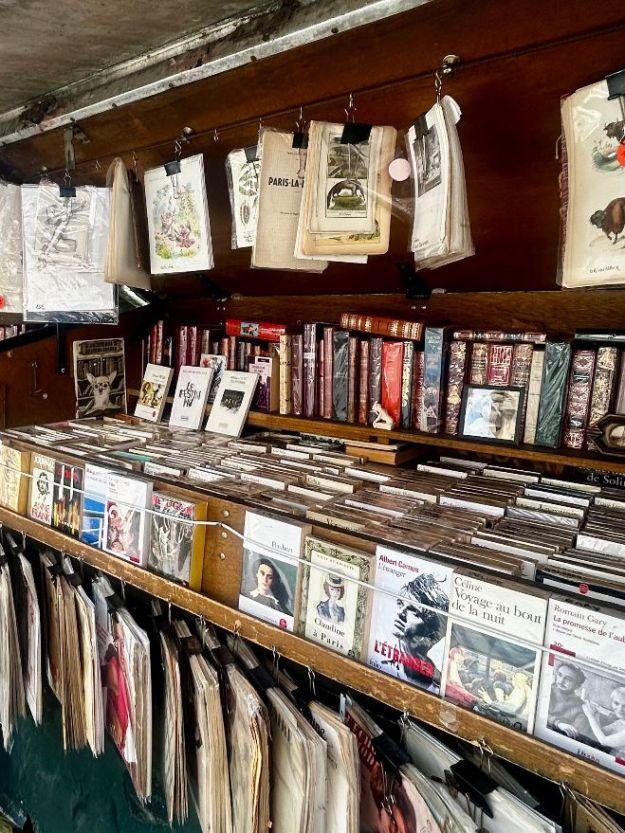
On buying old homoerotic novels… My compulsion to buy vintage homoerotic novels – The Loom of Youth, Despised and Rejected, Tell England. The age of innocence… or was it? Those intense male relationships that remained aesthetic, psychological, and slightly dangerous, rather than purely physical. The obsession with male beauty and youth. The internal conflict between desire and morality. The longing that could not be fulfilled.
On meeting the boy with the moustache… The small skinny student with an angelic face who had grown a moustache. I hated it and resisted the urge to say so because I knew that he already lacked confidence. He, who couldn’t look me in the eye like he was ashamed of something. Who looked slightly scruffy in the careless way that hinted at potential—like a statue still hidden inside the stone.
On getting lots of messages… Like naughty schoolboys sniggering at other people’s shortcomings, we trade a constant stream of nonsense and casual insults about the world around us. It is the only language we seem to share, the only ground we truly have in common. From boys to men—ten years of a love affair that never happened. And yet each message makes my heart sing, filling me with a fragile hope, and I find myself wondering whether, somewhere on the other end, he might be feeling the same.
On listening to David reminiscing… An old song came on the radio: Calling Occupants of Interplanetary Craft. A sci-fi anthem about humanity attempting telepathic contact with extraterrestrial beings. I had never heard it before and mocked the corny American DJ intro.
David frowned. It turned out to be one of his favourites.
“Days at sea,” he said. “I think of a cloudy afternoon on a choppy Mediterranean, sailing from somewhere to somewhere. Feeding coins into a jukebox and drinking weak shandy from white plastic cups. Enough of it that we convinced ourselves we were drunk, though really it was just hormonal schoolboys egging one another on.
“It was a big hit for The Carpenters. Actually a cover of a song by a group called Klaatu, who people once claimed were The Beatles recording under a pseudonym. Absolute bollocks.”
Harry Oldham is writing a novel based on his criminal and sordid past. To do so, he has returned to live at Park Hill, where he grew up, and the place that he once left behind. That was then and this is now, in which the old world collides with the new.(Parts 1 to 19 are available to read in the menu)
Perfectly Hard and Glamorous – Part 20
March 2025 Do you ever look at someone and feel certain they remind you of somebody else? The maddening part is not knowing who.
It happened to me last night.
Tom was sprawled on the sofa watching South Park — a show which, until then, I had probably been the only person on the planet never to see. He lay there like he owned the place, which in a way he now did. He hadn’t officially moved in, but he’d managed it in that quiet, stealthy way that gave me no real moment to object.
He wore nothing but a T-shirt and a pair of black football shorts. His head rested in the cushions while one smooth leg hooked lazily over the back of the sofa so that his bare foot dangled in the air.
I had seen that posture before.
Somewhere. Somehow.
I tried to place it, but nothing came.
“Why are you staring at me, Harry?”
“I’m not,” I lied.
There’s something you should know about Tom, though it probably won’t surprise you.
Shortly after Christmas he’d been arrested for dealing drugs. He spent his weekends drifting around the city-centre clubs selling small bags of cocaine and making what he called “decent money.” One night a CCTV camera caught him in the act and within minutes he was surrounded by police.
Unluckily for him it had been a quiet night. When they searched him they found quite a stash hidden in his underwear. After they relieved him of it, he spent the night in a cell and was told to expect a court summons.
According to Tom, he was only the middleman — which, as it turned out, made matters worse. The man above him was furious about the lost merchandise and decided Tom owed him for it. Before long there was a price on his head.
Not for the first time, Tom had shown up on my doorstep covered in blood.
That was when I discovered how deep his troubles really ran. Two men with baseball bats had beaten him black and blue and informed him that his services were no longer required.
That night Tom told me almost everything.
He said he couldn’t go home to Hillsborough — too many questions, too many explanations. Instead he took a long shower, wrapped himself in a towel, and eventually curled up in his usual place on the sofa.
Since then he’d only ventured outside during the day. Evenings were spent stretched out in front of the television.
So far I hadn’t objected.
I never gave him a hard time about it either. My own past had been far murkier than Tom’s, and I hoped that maybe the experience had taught him something.
If it had, good. If not, I wasn’t exactly the man to lecture him.
I knew how he must have felt.
The memory came back suddenly — a night nearly forty years earlier.
I hadn’t thought about Billy Mason from Gleadless Valley in decades, but he evidently hadn’t forgotten me.
A few years before that night, the Geisha Boys had robbed cigarettes from an off-licence where Billy’s girlfriend worked. She’d been hurt in the scuffle while Andy and Jack had been arrested. Word eventually got back to Billy about who’d been involved.
Frank Smith — an unruly police sergeant who occasionally did us favours — managed to have the charges dropped. He warned Billy Mason to leave it alone.
But I still remembered Frank’s words.
“The trouble is,” he’d said, “I can’t trust him.”
Billy Mason was the hardest case in the Valley. I normally stayed well clear of the place, but on that particular night I’d been sent there to entertain someone in a maisonette.
No Paolo this time.
It was a comedown after some of the houses I’d visited. No Jaguars or Mercedes outside. Just battered Vauxhall Cavaliers and old Ford Escorts.
But by then the Rufus Gang controlled the city’s rent boys, and when they told you where to go, you went. There was no negotiating.
Before heading up there I called into the John O’Gaunt for a pint.
A stupid mistake, as it turned out.
I hadn’t realised it was Billy Mason’s local.
He spotted me at the bar and followed when I left. I wasn’t exactly sure where I was going and took a shortcut behind some garages.
Another mistake.
Ironically, the only man never actually implicated in the robbery was the one Billy chose to punish.
He smashed a bottle over my head.
While I lay on the ground he kicked and stamped on me until I cried out.
“Don’t let anyone say Billy Mason holds a grudge,” he told me. “That’s wrong. I just hurt them instead.”
Then he left me grovelling in the mud and nicked my bag — several tubes of KY jelly and a spare change of clothes inside.
My head was split open and everything hurt.
I never made it to the maisonette. I staggered miles back home instead.
And if meeting Billy Mason had been an ordeal, the aftermath was nearly worse.
The Rufus Gang were not impressed that I’d failed to turn up. They made their feelings known with another beating and a warning not to cross them again.
“I guess we’ve lived parallel lives,” I said to Tom.
He lay there in the half-light, his body half hidden in shadow.
And then it hit me.
Hard.
Harder than I could have imagined.
“Tell me about yourself, Tom.”
“I’ve told you. There’s nothing to tell.”
“Tell me about your family.”
“What?” He sat up quickly. His face went pale.
Game over.
“What’s this really been about?”
“I don’t know what you mean,” he muttered.
Memories flashed in my head. Old anger. Old violence.
I grabbed him by the throat and shoved him back against the sofa.
He tried to push me away but I was stronger. I pinned him down, my knee digging into his groin.
I wanted to hurt him.
I tightened my grip as he gasped for breath.
“I’ve been so fucking stupid!”
His blue eyes filled with tears. That was confirmation enough.
Just before he lost consciousness I released him.
Instead of fighting back he collapsed into sobs, choking for air, snot running down his nose as he tried to breathe.
I stood over him.
“Tell me who your dad is.”
He couldn’t answer at first. He just curled away, crying. I doubted the tough little bastard had cried in front of anyone before.
Eventually I sat in the chair opposite and waited.
“I’m sorry, Harry,” he whimpered.
“Jack will eat no fat, and Harry no lean. Yet between them both Harry licks Jack’s ass clean.”
I watched him closely.
“Why didn’t you tell me your dad was Jack?”
Tom stared at his feet, fiddling with his toes — something he always did when he was nervous.
“Jack’s the same age as me,” I continued quietly. “Which means he had you late.”
Tom nodded.
“I’m the youngest,” he said. “Got a brother and two sisters.”
I shook my head.
“I’m struggling to understand this. Why all the cloak-and-dagger stuff?”
“My dad knew you were back in Sheffield. He wanted to know why.”
“Why didn’t he ask me himself?”
Tom shrugged helplessly.
“You’ll have to ask him that.”
“And it wasn’t an accident you ended up here?”
“No.”
“Was it planned?”
He nodded again.
“He wanted me to get to know you.”
I laughed bitterly.
“And I fell for it.”
“But why now?” I asked. “We haven’t seen each other in forty years.”
“A few years ago my dad showed me your books,” Tom said. “That’s how I knew who you were. He’d read them all. Said he used to know you, but whenever I asked how he’d change the subject.”
Jack reading books? I struggled to imagine it.
“Did he tell you why I left Sheffield?”
“No. Just that the Geisha Boys turned their backs on you.”
I sighed.
“When I needed my friends most, they fucked me off,” I said simply.
Tom studied the floor before speaking again.
“There’s something else you don’t know. My dad missed you more than you think. Maybe it was guilt. I don’t know.”
“Bollocks,” I said.
“I’m serious. He wanted me to find out if you were okay.”
I lit a cigarette and handed him one. His hands shook as he tried to light it.
“I told him you were doing well,” Tom continued. “That you were writing about the past.”
“And?”
“He looked… sad.”
That caught me off guard.
“I loved your dad,” I admitted quietly. “I loved Andy too. But Jack more.”
Tom listened without interrupting.
“He had everything going for him. Handsome. Charismatic. Brilliant footballer. I even dated his sister for a while just to stay close to him.”
Tom raised an eyebrow.
“So you fancied him?”
“Yes,” I said. “Though I didn’t understand it at the time. Things were different back then.”
We talked until the early hours.
For me it felt like a revelation. For Tom it was a relief not to lie anymore.
Eventually he settled back onto the sofa while I went to bed, though sleep refused to come.
Too many thoughts.
Too many memories.
Some time later the bedroom door creaked open and Tom slipped in beside me.
I turned away.
“Are you still mad at me?” he asked quietly.
“I don’t know,” I said. “But I’m glad the truth’s out.”
After a pause I added:
“Your job was done months ago. Yet you’re still here. Doesn’t Jack find it strange you’re never home?”
Tom hesitated.
“I told him I was staying with my girlfriend.”
“The mysterious girlfriend.”
“Yeah… about that.”
“You haven’t been staying with her, have you?”
“No.”
“Why keep coming here?”
He took a long breath.
“There never was a girlfriend, Harry. But you probably guessed that.”
I didn’t answer.
“I kept coming back because I felt safe here,” he said. “And… I liked being around you. After a while it just felt normal.”
I could hear the nervousness in his voice.
“I guess I hoped it could stay like this.”
I sighed.
“When I came back to Sheffield I wanted peace and quiet,” I said. “But I’ve enjoyed having you around.”
Tom shifted closer.
“I really need a hug right now,” he murmured.
I turned and wrapped an arm around him.
He pressed into my shoulder, warm and solid, his breath brushing my cheek.
For a moment he felt like Jack.
But he wasn’t Jack.
He was his son.
And the feeling was both wonderful and deeply wrong.
“There’s something else,” Tom said after a moment.
“Go on.”
He groaned softly.
“God, this is awkward.”
“Spit it out.”
He took another breath.
“I think… I sort of fell in love with you.”
I laughed quietly.
“So what you’re saying is you’re a faggot after all.”
Tom snorted.
“Oi. I’m supposed to be the one calling you that.”
“That’s how it works,” I replied. “Takes one to know one.”
That was all it took.
We fell asleep wrapped around each other, waking every now and then just to confirm it wasn’t a dream.
For me it felt like something I’d wanted for years without realising.
For Tom it was the beginning of his first real love affair.
When morning came I discovered I couldn’t move because his arm was wrapped firmly around me.
I tried to shift.
He held tighter.
“Tom,” I said.
“Mmm?”
“Let go.”
“Where are you going?”
“I need to get up.”
“Stay a bit longer,” he mumbled, kissing my cheek.
“I have to write.”
“Write what?”
“The rest of my book.”
He opened one eye.
“And when it’s finished?”
“I want you to read it,” I said.
“Why me?”
“Because the ending matters.”
I looked at him carefully.
“Only when you read the ending will you understand everything.”
There is a new film director in our apartment. Not literally, of course. But after seeing Kleber Mendonça Filho’s The Secret Agent at the cinema, we discovered that MUBI was showing a small collection of his earlier films. Trust Charlie to want to watch Aquarius, which—naturally—wasn’t among them.
The thing about Charlie is that he never gives up. He eventually found it on the Internet Archive, only to be dismayed that it was in Portuguese. He tried to locate English or French subtitles, but to no avail. The other thing about Charlie is that he is impatient.
I wrestled the TV remote from him and began investigating for myself. This was not what he wanted. “Give it back,” he ordered. “You’re wasting my time now.”
Call me childish, sulky—perhaps simply bad-tempered—but I had what can only be described as an adult tantrum. I threw the remote into his lap and stormed off to bed.
The next morning, Charlie went for the César Award. “I was frightened,” he claimed. “You threw the remote at my head. I believe I may even have been unconscious for a while.”
By the Lake: An Ode to Freedom and Youth by Niv Shank. HeyBoyMag (2025)
“I’m home again in my old narrow bed Where I grew tall and my feet hung over the end The low beam room with the window looking out On the soft summer garden Where the boys grew in the trees.”
“I searched online,” he said, “and found no evidence that you have ever written anything.”
In one sense this was reassuring. I write under an assumed name, after all. Yet it was also unsettling, because the remark revealed that Charlie had been looking. If he were ever to find my work, he might not appreciate how frequently he appears in it.
He forgets that I am blocked from viewing his Instagram page, though that obstacle proved easily solved with a hastily created fake profile.
“Some people prefer to remain anonymous,” I told him.
Charlie cannot understand this. The French boy dreams of fame and dabbles in anything that might propel him towards it. I, on the other hand, prefer the safety of obscurity.
My friend David, a successful author, has written under a nom de plume for decades. As he once explained, “If I knew a book would succeed, I’d happily publish it under my real name. But writers are haunted by failure. Imagine the shame of having that failure attached to the real you.”
I have never had the heart to tell him that his real identity can be discovered by anyone, anywhere in the world.
Charlie might have uncovered my secret already, had he possessed a little more information. A few weeks ago I typed the titles of several of my stories into Google. To my alarm, an AI assistant suggested that they might have been written by me. It had linked three titles to Spotify playlists of the same name on my profile. I quickly changed the account name, but the episode left me with an uneasy realisation: artificial intelligence will always be a few steps ahead of us.
Anonymity, it turns out, is fertile ground for paranoia.
Charlie later recommended that I watch a short film on YouTube.
“It is about a writer with a mental block,” he said, “who rents a summer house and becomes obsessed with a young boy on the beach.” Then he gave me a mischievous wink. “Watch it. It is very you.”
The film was Belgian. It followed Louis, an ageing writer who becomes fixated on Tommy, a young man who visits the beach each day with his girlfriend. The obsession rekindles Louis’s imagination, and in the novel he begins to write he conveniently drowns the girlfriend, leaving Tommy entirely to himself. At least, I think that is what happens. The ending leaves you uncertain whether the events belong to fiction or reality.
Charlie was right. It was “very me”, in the sense that I often begin with a person and build a story around them. What Charlie did not know was how close that description came to the truth. I found myself wondering whether he had somehow hacked into my laptop.
“Why did you search for my work?” I asked.
He hesitated.
“Well,” he said eventually, “I am curious about what you are writing—and whether it is good.”
That was the dilemma. Long ago I realised that I depend on acceptance for survival, and that my writing might reveal far more of my inner life than I would ever willingly confess.
“I’m not sure I could face the shame of criticism,” I said. “Or the possibility of being exposed as incompetent.”
It was meant as an offhand remark, yet it revealed more than I intended.
I half expected reassurance, perhaps even encouragement. None came.
“I suppose we are all afraid that people might see our flaws,” Charlie said thoughtfully. Then he smiled.
“Except, of course, when you do not have any. Like me.”
“I adored everything about you: the way you looked, the way you talked, the way you smelt. I studied these small details with a kind of quiet devotion, as if they might one day explain you to me. But the untidy desk—a life carelessly arranged—suggested that we could never have been lovers.”