Sometimes I underestimate how good I can be. When all seems lost, the unexpected can happen.
The night before, Cola had argued with his mother. It had been loud and vocal, the sort of argument that made the walls seem thinner. Bianchi and I escaped outside while the exchange continued in the kitchen. Bianchi nervously bit his lip. I was glad not to be involved.
The cause was the Valenti issue.
Signora Bruschi had pleaded with Cola to leave his employment. Cola, with typical teenage stubbornness, had refused to listen.
There had been no winner.
When it was over, Signora Bruschi slammed pots around the kitchen while Cola came outside to sulk.
“What do you think about it, Miles?”
My opinion wasn’t expected to count.
“I’d rather you didn’t ask. What I say might not be what you want to hear.”
“You think I should quit working for Signor Valenti?”
“I do.”
“And so do I,” Bianchi added.
Cola looked first at Bianchi, with his familiar air of innocence, and then at me. I waited for the rebuke.
Instead, he looked defeated.
“Then I shall leave,” he announced.
There was something inevitable about it, as though he had already reached the decision before asking for our opinions.
“Good friends will always protect the ones they love,” I said, although I still didn’t quite believe him. I expected him to change his mind.
But Cola had been as good as his word.
He telephoned Signor Valenti to tell him that he was quitting and would return the car immediately. It was difficult to hear what was being said from the Torricelle, but Cola’s face suggested that the conversation had not been pleasant.
Meanwhile, Signora Bruschi could be seen smiling through the window.
She had heard everything.
“He understands,” Cola announced when the call ended.
I doubted it.
I went with Cola to return the Abarth, but the house was empty. He parked the car and left the keys on the bonnet.
Then we faced the long and uncomfortable walk home.
As we approached Montericco, a familiar car appeared in the distance. It sounded its horn and pulled alongside us.
It was Antonio, driving his old Fiat Panda.
It was a welcome sight.
Bianchi was beside him, looking concerned and relieved to have found us.
We didn’t say much on the way back.
From the back seat, I watched Antonio and Bianchi exchange occasional looks. They were brief but deliberate, as though they were sharing a secret.
The exchanges unsettled me.
For the first time, I wondered if there might be more to their friendship than I had realised.
Antonio, the typical grubby teenager, seemed far removed from the sort of person I imagined Bianchi being attracted to. Bianchi, with his clean-cut looks, would have aroused interest from almost anyone.
So far, I had done little to encourage Bianchi’s infatuation with me.
But Signora Bruschi was aware of my weakness, as she liked to call it, and I had allowed her to put that distance between us. Whether she had done it for my benefit or to protect Bianchi, only she could say.
I was forced to admit that I was jealous.
Cola interrupted my thoughts.
“Now you must do what is right.”
I took out my phone and messaged Signora Valenti. I thanked her for the offer of work and explained that I had to return to England and would not be able to complete my side of the arrangement.
Then I blocked her number.
Signora Bruschi treated us like returning war heroes.
She fussed around the kitchen table and poured wine for everyone.
“I have spoken to Signora Scala,” she announced, “and she knows of a vacancy in a warehouse at Interporto Quadrante Europa. It would suit you, Cola.”
“Does it come with a car?” Cola asked, with just enough sarcasm to make his feelings clear.
“It will pay well,” she persevered, “and we shall have peace of mind knowing that you are doing an honest day’s work.”
Cola was about to say something, probably something he would later regret, but I kicked him beneath the table.
I signalled for him to say nothing.
The bell to the front door sounded.
Bianchi volunteered to answer it.
“Who is calling at this time of night?” Cola wondered.
The expression on Signora Bruschi’s face suggested that she already knew.
Moments later, Bianchi returned with two carabinieri officers.
They removed their caps and bowed.
“Buonasera, Signora Bruschi,” Sandro said. “I received your message and came here as soon as I was able.”
She gestured for them to sit and poured them both glasses of Aranciata Rossa.
Sandro was no longer the small boy I had seen in the photograph. He had grown into a tall, muscular young man, his blond hair cut fashionably short. He was everybody’s idea of a carabiniere.
His colleague, Michele, was older and probably the senior of the two, but seemed content to let Sandro take the lead.
Signora Bruschi noticed my interest.
Or perhaps she spotted my weakness, as she liked to call it.
“Sandro is about to be married,” she revealed. “His fiancée is a lovely girl from Valdonega. They make a perfect couple.”
It was a warning.
Leave well alone.
Sandro momentarily blushed before turning to Cola.
“You are my best friend, Cola, and somebody I care about a lot. I am glad you have stopped working for the Valenti family. It is a huge weight off my mind.”
“I worked on his estate,” Cola protested. “I had nothing to do with the things people are talking about.”
“But you would have been implicated when the authorities caught up with Alessandro Valenti.”
“It was a good job.”
Michele looked at him.
“You must trust us, Cola. Big things are going on. You will be shocked when the truth comes out. But for now, I must ask you not to say anything. And that goes for everyone else in this room.”
He looked around the table.
“As far as you are concerned, we have never had this conversation. We have risked our careers by coming here. If word gets back to the Valenti family, everything could be ruined.”
“Signor Valenti is dangerous,” Sandro added. “But Signora Valenti is even more dangerous.”
“What do you mean?” I asked.
“Valentina is a member of the Rossi family from Milan. They are feared by many. She married Alessandro, but it is suggested that she is the brains behind the Verona operation. She can be manipulative and incredibly vindictive.”
“Which is why you must have no further contact with them,” Michele said.
What have you got us into, Cola?
I didn’t sleep well that night.
The heat was stifling and a thousand things went through my mind. I must have eventually dozed off because I was woken in the early hours by the sound of somebody creeping into the room.
I expected to see Bianchi.
It was Cola.
“I cannot sleep,” he whispered. “And I don’t want to be alone.”
He lowered himself onto the bed and rested his head on my stomach.
It reminded me of the times he had done the same thing as a child.
“I have a confession to make,” he whispered.
I waited.
“I met Signor Valenti because I was selling drugs for somebody around Porta Nuova railway station. The guy I was working for double-crossed Signor Valenti. I don’t know what happened to him.”
He paused.
“I guess Alessandro liked me because I ended up working for him instead. But I only did manual labour around his estate.”
He was silent for a moment.
“I think I was the son he wanted and never had.”
“You knew what he was doing?”
“Please don’t tell my mother.”
“Cola, I thought you were better than that.”
“And I’ve seen things. Heard things. Things I didn’t want to be part of. I convinced myself that what I was doing was honest. But nobody else will see it that way.”
If Cola expected words of comfort, he didn’t get them.
Not because I didn’t want to comfort him, but because I simply had no idea what to say.
“Ti voglio bene, Miles.”
Cola fell silent.
A few moments later I realised he had fallen asleep.
I lay awake, staring into the darkness.
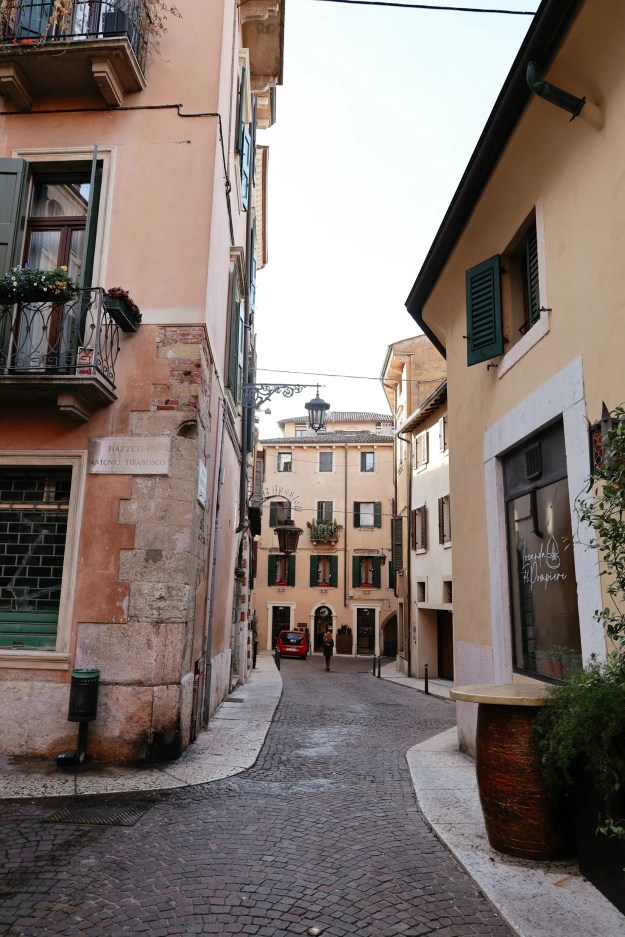
Outside, Verona was silent.
But somewhere in the city, the Valenti family was still awake.