Why do people talk shit and think that I am interested? The problem is me. I sit and listen and do my best to look interested, but it gives them an excuse to come back and talk even more boring shit. I need to stop being a drip tray.

Why do people talk shit and think that I am interested? The problem is me. I sit and listen and do my best to look interested, but it gives them an excuse to come back and talk even more boring shit. I need to stop being a drip tray.

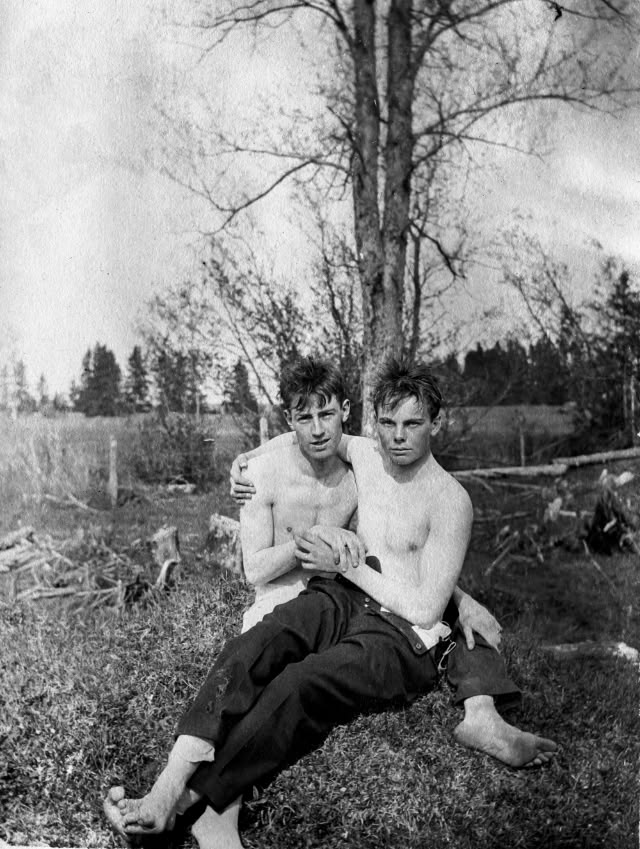
There was this guy, always half-naked like he was daring the block to say something. All nerves and sweat and attitude. All fight in him. You could smell the testosterone, I swear—like sweat, cigarettes, and bad decisions mixed together.
You ever hear somebody get called Pistachio Dick? Yeah. Welcome to Queens. Ho yay!
Antonio was like that with Dito—mean to everyone else, but around him? Forget it. Full guard up. Like he was protecting something he didn’t even know how to name. Two guys, both tough, both turning red whenever they got too close. Nobody said anything. Nobody had to.
And here’s the thing that kills me about Channing Tatum—this guy did nothing. Nothing. Just the right sperm hit the right egg and boom, whole fuckin’ world started orbiting him. Not my line. Some guy named Anonymous said it. But yeah. That’s how it went.

The body grows older; the mind, one hopes, grows softer. Justin Bieber steps onto the Grammys stage wearing little more than boxer shorts and black socks, and suddenly we declare him grown. A raw act, we’re told—an offering of honesty, of soul laid bare. Others call it baffling, even disturbing, unsettled by a performance that flirts so closely with undress. But who are we to protest?
Once, the disdain came loudest from older men who sneered at his pre-pubescent voice, his softness, his prettiness—at the very things that made him desirable. He was easy on the eye, a doll to be admired and dismantled in the same breath. It was fashionable to hate him.
Then came the litany of recklessness: urinating in a restaurant mop bucket, the abandoned monkey in Germany, the tabloid parade of bratty excess. Legal troubles piled up, stories of disrespect followed close behind, and obscene wealth insulated him from consequence, from the slow education of ordinary life. Entitlement clung to him like cologne.
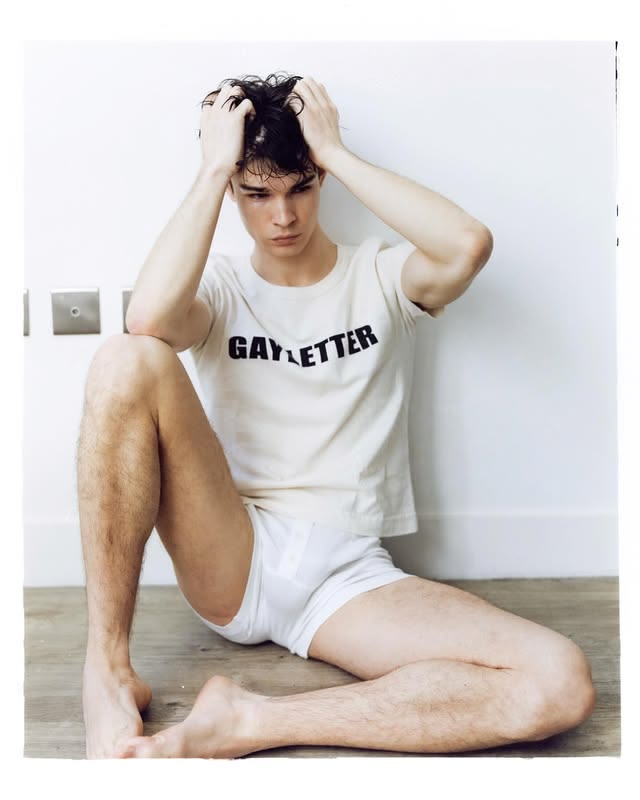
And yet here we are. A sharp crew cut, a half-naked body under the glare of millions, and absolution arrives. Forgiveness, it seems, does not always come through music. Sometimes it comes through the body.

When you look at boys, do you really look – do you look in detail? People see Bradley and assume that beauty must imply intelligence. It doesn’t. The truth is, he’s a bit of a himbo. There’s a Yorkshire saying for people like that: “thick as pig shit.” And Bradley, I suppose, fits it perfectly. He smiles – handsome, devilish – with a guileless sense of wonder. But how long can I keep swallowing my frustration? Physical attraction fades quickly, and I realise the only role he can play is arm candy: a beautiful body, empty-headed, ornamental.

*****
“Video Angelus internehilium et imortalis Even as we speak our hearts entwine. Senex et angelus video venestus caelum. Equiden lavare in meus vita empeteus Ah eeh ah eeh ah.”
*****
The boy who likes the excitement of fear.
“I worry about being thrown off the carousel in later life.”
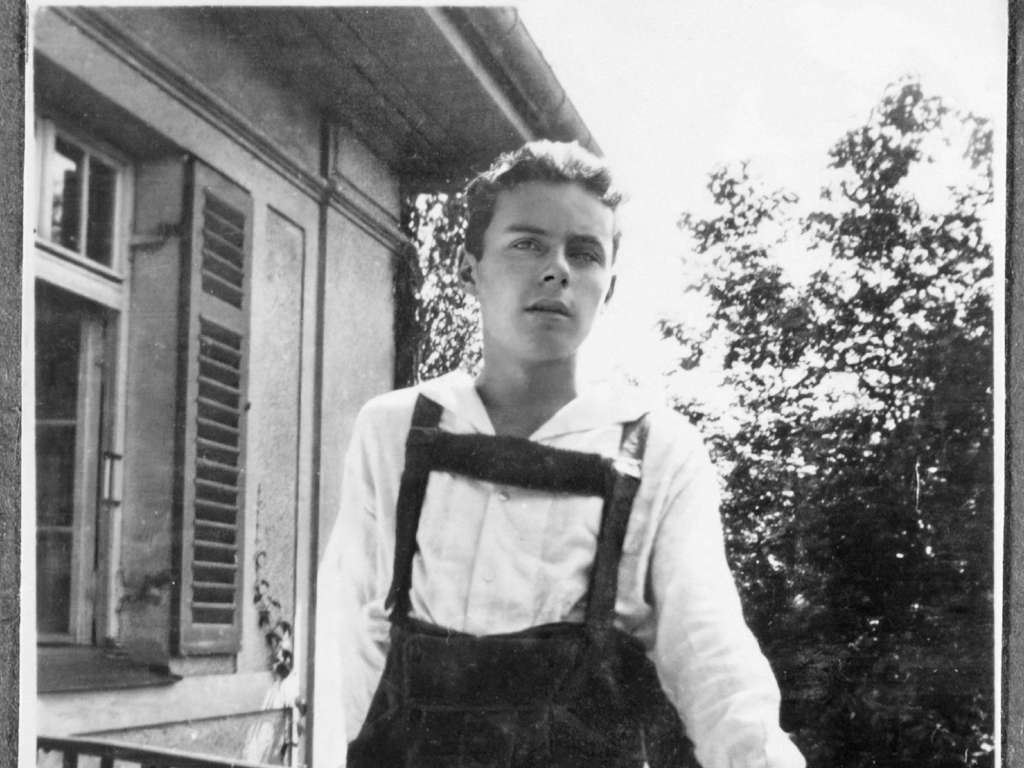
A skinny body and dirty pants.
*****
“He’s got it. Yeah, baby, he’s got it. I’m your Penis, I’m your fire. At your desire. Well, I’m your Penis, I’m your fire. At your desire.”
*****
Be careful who you choose because it can go wrong.
Is it that Bailey is still a virgin?
A shelter on a beach full of books.
A lake in an abandoned quarry.
Is it love that never quite reaches an orgasm?
A boy who turns up late is always popular.
Pasticcio.
The Organ of Lorenzini.

Hormonal Surge: Increased testosterone, fuelling restlessness and the need to discharge energy, sometimes through risky or boisterous play, mock fighting, and testing boundaries.
I wake and can hear music playing in the other room. It is an eighties song – Calling All the Heroes – and it is perfect. My first waking moments are defined by a song made before I was born. It will become a favourite. Whenever I hear it, I will recall the dream.
“I’m eighteen. Like I always am. There are twenty boys of a similar age. We don’t know each other, but we have bonded; something connects us, though I don’t know what it is. And now we are friends. Brothers who drink too much, laugh, and joke. We move from bar to bar until the group becomes fragmented, but still we keep bumping into one another — in different bars, on street corners, in dark streets – and each time we greet each other with high fives. I keep losing my coat that contains my mobile phone, but somebody in the group always finds it and saves it for me.”
What am I dreaming about?
Eighteen. Delayed or suspended adolescence. The moment just before categorisation -before ‘out’ or ‘not out’, before relationships are legible, before desire is policed or explained. A moment of pure potential, when attraction, friendship, and self-recognition have not yet been sorted into boxes. A group of boys I don’t know, where intimacy doesn’t have to announce itself as erotic to be real. Touch exists: high fives, a coded language, bodies moving together through night-time space, alcohol loosening edges, and the bond is felt rather than named.
These boys don’t posture. They don’t test me. They don’t ask who I was. They simply accept me. A world that perhaps never fully existed, but felt briefly possible.
The group breaks apart, but there is no need to cling because the bond reasserts itself naturally. “I still know you. You still know me.” I repeatedly lose my coat and my phone – yet I am never punished. I am held by others even when I am careless, distracted, or drifting. I don’t have to hold myself together perfectly. I’m not abandoned for losing my way. A fantasy of uncomplicated male belonging – one where youth, desire, friendship, and identity coexist without fracture or explanation.
The next part of the dream is important.
“There are ten of us staying in a hotel room. It is the only one available. We snack on almonds and slices of apple covered in salted caramel and maple sugar. Two double beds and a single mattress on the floor. When it comes to sleep, we must find space in one of the beds. I choose a double bed where four of us will squeeze together. I’m thrilled that the most handsome boy will sleep next to me. But at the last moment, he is taken. Another boy wants him to share the mattress on the floor, and I am devastated. The dream is never consummated.”
The hotel room matters. It is temporary, improvised, and not designed for this many bodies. I share a bed with four boys. The choice is telling. I don’t choose privacy, pairing, or exclusivity. I choose crowded intimacy – warmth, bodies, breath, limbs overlapping. Proximity without the exposure of being singled out. I am about to be close to the handsome boy without declaring him an object of desire, but he isn’t a person yet – he is a figure onto which desire might safely attach itself.
The handsome boy doesn’t reject me; he is summoned – pulled away by another boy. Desire is displaced, not denied. My devastation isn’t only about losing him. It is about losing the fantasy of being quietly chosen within the group. But the group has ruptured because somebody else’s desire has rearranged the night. My loss is intimate, quiet, internal – no one else even notices it happening – and so I do not follow. I do not compete. I do not protest. I absorb the loss silently.
I woke up.

A razzle. A night on the town. Blurred lines. Anyone with a penis qualifies. Charlie says “You’re drunk!” I tell him that I’m tortured but coping nicely. “A walk in the fog is all that it needs to calm me.” But Charlie issues a warning. “Beware of Orpheus because he might seduce you on a back lane.” I am intrigued and walk into the fog calling for Orpheus.

A flicker of FOMO. A spoiled rich boy invites everyone to a birthday dinner, and I’m left out. I wasn’t meant to be there – and I wasn’t. Everyone’s buzzing, and no one gives a fuck whether I’m there or not. Still, life goes on. I grant myself a little grace, even if there isn’t much to give. Let them, I tell myself. Let them spend obscene amounts of money, drink too much, and throw it all up later. I’m in charge of my own happiness. I have a ‘wonder mind’. I buy prawn linguine, a tub of Ben & Jerry’s Chew Chew ice cream, and watch Fellini’s La Strada instead.

I got a message from David. The first I’d heard from him since our falling out in December. I hadn’t been expecting an apology and didn’t get one. I wasn’t even sure one was required. Some days I thought I might be the one who owed it. Still, the silence had broken, and that felt like something.
‘My boy turned forty this week and wanted to see where he was born. I took him to the Kapiʻolani Medical Center, where his mother gave birth to him. It wasn’t what he had in mind. But he stood straight, like the military taught him, and was too polite to tell me to go to hell. He was a Kamaʻāina — child of the land — but this wasn’t where he grew up.’
“What???” I replied.
David rang immediately.
I paused Heated Rivalry, which had literally just started. I hadn’t even got past the opening credits. Everyone had been talking about it, which was precisely why I’d been avoiding it. The same thing had happened with Adolescence. The louder the praise, the more stubbornly uninterested I became. But Heated Rivalry had the added incentive of steamy gay sex scenes — and I liked the idea that large audiences wanted that and were openly enjoying it. So fine. I’d given in. And then David called.
“It’s a paragraph I’ve just written,” he said. “I found a draft of something I wrote about Hawaii in the eighties. A good story’s been hiding in a drawer for forty years. It’s time to rewrite it. Update it.”
“Hawaii?”
“If memory serves, I based it on a Rolling Stone article about a teen suicide. But I think that was Kansas. Or somewhere like it. No idea why I chose Hawaii.”
“Suicide?”
“That only comes at the end.”
“Well,” I said, buying time, “I suppose there has to be a happy ending.”
“A suicide and a birth,” he said, as if that clarified things. “You get the opening now?”
I didn’t. Except that David was a successful writer, and it clearly made sense to him. Which, apparently, was enough.
“I think I know why I chose Hawaii,” he continued. “There was a film I saw. Big Wednesday. Surfing. Jan-Michael Vincent, Gary Busey. Semi-naked most of the time. Very young. Very hot.”
“Who?” My patience was thinning.
“Ah. Before your time. Though now that I think of it, that film was set in California.”
“Get to the point, David. The longer we talk, the longer I’m delayed from steamy gay sex. What’s the story actually about?”
“Whoa,” he laughed. “So you’ve sorted things out with Charlie. What did I tell you? You can’t keep a good man down.”
I froze. Had I really discussed my prolonged sexual drought with David?
“I’ll be brief,” he said. “It’s about jealousy. At least on one side. When three people are involved, somebody always loses.”
This was unexpected territory for him. David could spin a tight crime plot or disappear happily into a historical setting, but relationships were something he normally sidestepped entirely.
“It feels a bit left-field,” I said. “And why go back to something written that long ago?”
“It was shite,” he said cheerfully. “I never read past the first page after I shoved it in a drawer. My first novel came out ten years later — my style had changed completely by then. But time’s counting down. It feels like unfinished business. I want to turn it into something wonderful.”
“How old were you when you wrote it?”
“Let’s see… I started it in 1984, so I’d have been twenty. Finished it the year after. That’s why the characters were that age.” He paused. “It’ll read like I’m reliving myself.” Then, suddenly: “Goddammit. I remember now. I’d just read Michener’s Hawaii. That’s why. Oahu, specifically. And Magnum P.I. was on television.”
I thought about my own life. Whether anything I’d written would still exist in forty years. Whether I’d ever be considered established, in any meaningful sense. I’d been carrying an idea for a book for years, but inertia kept winning. Instead, I scraped a living writing about country houses and cities. It all felt increasingly dull. Stranger still, it occurred to me that David must have written that early draft on a typewriter — a genuinely painful way to work, as far as I was concerned.
He said he had to go.
“By the way,” he added, “I’ve finished the Isherwood biography on Kindle. It ended rather abruptly. One moment he was alive, the next he was gone. Dead. But I won’t mention it again. You seem sensitive about that.”
I restarted Heated Rivalry. Two seconds later, my phone buzzed.
‘Forgot to say. I’m going for a drink with a young man — a student — only nineteen. Just out of nappies, really. Don’t tell Josh, but of all people, I thought you’d like to know. 😏’

Four guys are waiting for a haircut. One hides inside a black hoodie so that all I can see is the tip of his nose. I call him a ‘scally boy’ – someone with edge, rawness, no inhibition; danger; lower social class. People only see what they must see: confidence, arrogance, hardness. They fail to see his vulnerability, his ignorance of those who might exploit him, and his lack of ambition.
When it is his turn, he stands and takes his hoodie off—but he gets it wrong. As he pulls it over his head, his T-shirt comes with it and he is left half-naked. He corrects things quickly, but it is too late. I have already processed every inch of him: the pale skin, the smoothness, the flat stomach, the black hairs showing above his waistband, the tattoo on his arm that says Adam.
Such a shame, I think, because he is primed for one thing only—a girl. His masculinity, the expectation, the understanding that anything else will not do. The girl will fall in love with Adam, but what he feels about her will not matter. He will have done what is expected and will display her like a trophy before discarding her for another.
Adam catches my eye and snarls, “Do you like what you see, faggot?”