Author Archives: Delicto

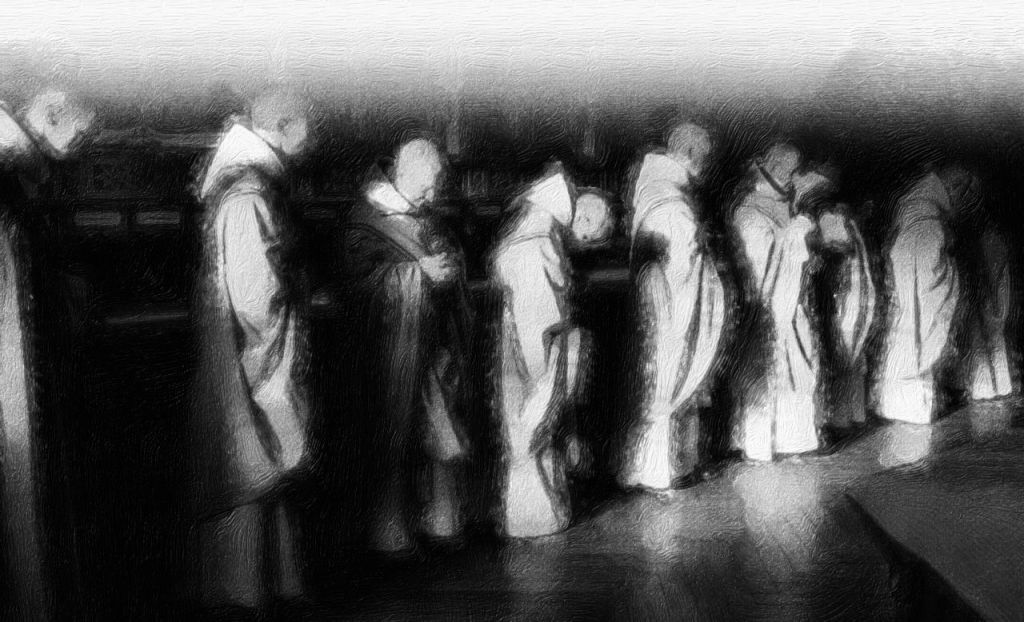
And then to bed, where half in doze, I seemed to float about a glimmering night of Uranians

Image – Charlie Marseilles

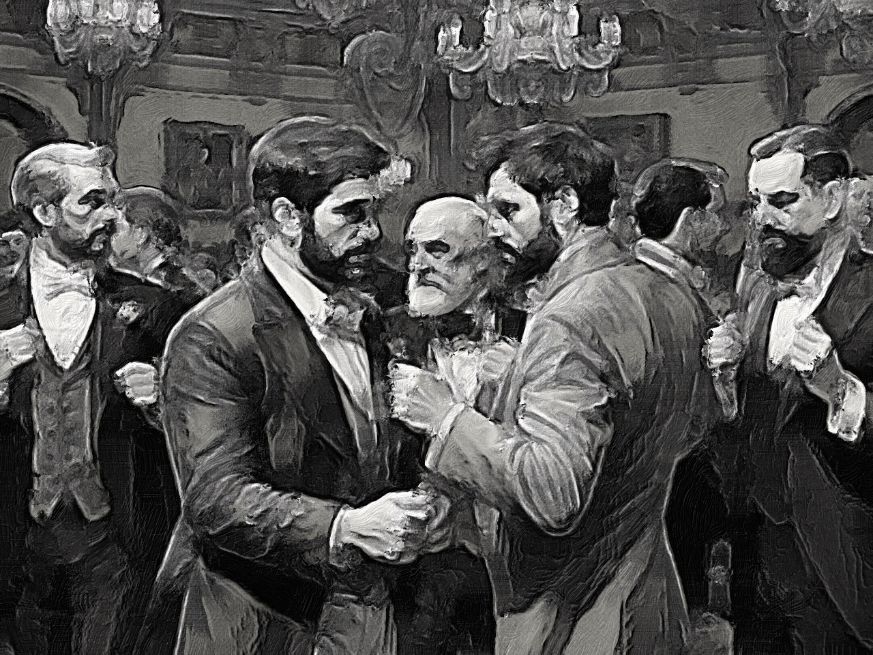
I was dancing with ghosts. Men who lived from the reign of Queen Victoria, through Edward VII, to King George V. A few lived beyond. They were spectral figures circling me, wavering, and waiting for a response. Watchful. Whispering. Lingering. For the most part, they were happy that I was there, but a few eyed me with caution. They lived in a time when it was wiser to trust nobody.

More and more joined the dance. Coming out of doors that had long closed, from dark corners, and miserable places to where they were banished.

Each told me their name, some I knew, but most were unfamiliar, and frowned at my ignorance. There were those whose names I recognised, but not the men they belonged to. But there were so many that I would not remember everyone, and I resorted to recording names in a notebook. I wrote frantically, eager to please, careful not to miss anyone.

A long list of dead people, some of whom were friends, acquaintances, and some who were strangers to one another. They danced because they were connected – names intrinsically linked – but they might not have known it. They had gone into my notebook because they shared something in common.

When they lived I did not exist. I came much later, born into a kinder world. 

The passage of time puts me at an advantage. A century later,  it is easy for me to see how they lived, what achievements came their way, if at all, and how they were remembered, for better or worse. The links are  in the chain –  who was attached to who?

Sympathy looks good on me. So sorry (not really)

Image: Sympathy – Charlie Marseilles

Six years. Remember the first time? Ignorant shit of a boy. I was the best, but to be fair, you did eventually realise that. Six years flirting. Six years wasted. All because you married that horse of a girl who never liked me. It ended badly. Tears tonight because you’re scared. I sympathised and looked incredibly sad. All the right moves. But really, my heart sang from the rooftops. My skinny petit pois…. ha ha!

Seven cool things that I heard this week


“ I heard Earth, Wind and Fire singing ‘Ba-dee-ya’ on the radio, and I thought, oh no, this is another step towards autumn.” – a woman on the bus referring to the song September.

“There in the shade, like a cool drink waiting, he sat with slow fire in his eyes, just waiting.”  – Johnny Hartman singing A Slow Hot Wind. 

He comes from an old Dorset family that made grandfather clocks and had a swan’s head as their emblem.” – a posh woman boasting about the man who her daughter is marrying.

“Hey, is there anywhere to play pickleball around here?” – a student in Starbucks.

“I can hear monks chanting.” – Charlie laid in bed in the middle of the night.

“The drawback is that you always get corn dust up your bum.” – a farmer on the radio.

“Come and look at this rock, it’s shaped like your willy!” – a young girl shouting to her older brother.

The Boy with the Black Dog

Image: The Boy with the Black Dog – Charlie Marseilles

Ten o’clock in the morning and I hoped that I wasn’t too late. I stood on the terrace and looked upon the narrow street, the wait tense, every figure a possibility, every person making my pulse leap, until I remembered the black dog, and the disappointment set in.

I was in my hiding place, and he wouldn’t know that I was there, the anticipation laced with secrecy, maybe even guilt. I was invisible, while he was exposed for everyone to see. What would happen if he looked up? Would he even notice me? What if I wasn’t the only watcher?

The minutes ticked by and I hoped that he would appear, and when he did, it would seem like the world was holding its breath. I waited for the boy with the black dog.

Stolen Words / Commander in Camp


“The  president is a camp icon. He’s like a drag queen. He’s outrageous, he’s transgressive, he’s catty, he’s a narcissist the likes of which we haven’t seen since Alexander the Great.” – James Kirchick, journalist and author of ‘Secret City: The Hidden History of Gay Washington’, as quoted in in The New York Times.

Charlie / I’m gonna be the man who goes along with you

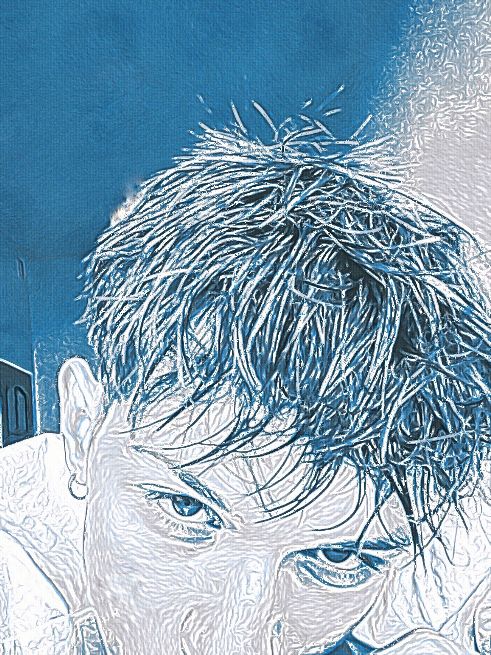
Image: Charlie Marseilles

Charlie was enthusiastic about going hiking in the countryside. I hadn’t realised the motive behind this sudden urge to get into the wild.

Our progress was slow. Every few minutes Charlie would stop, hand me his mobile phone, and ask me to take a video. Charlie walking up a hill towards the camera, Charlie opening a gate and closing it behind him. Charlie pretending to climb a rock face (he was only a few feet from the ground). Charlie walking into the distance. Charlie eating a sandwich. Charlie admiring the valley below.

Each time he said, “Just one more video, and that will be it.” But it never was. He tutted if he wasn’t happy with the results. “You will never make a great director,” he told me, and I was inclined to agree.

We walked ten miles and it took us six hours. Later, as we drank coffee in the late afternoon sun, he informed me that his ‘reel’ had been edited and posted, and that he was getting hundreds of likes.  But there was no mention of the unfortunate guy who shot the videos.

When I’m not in the mood. Sad scenes from a gay bar

Image: Charlie Marseilles

Matchstick Man stretched and showed his slender stomach. Lean, flat and toned. It was for my benefit, and he knew that I would be distracted by the neat wave of wispy hair that headed south of his Calvin Klein waistband. But he still claimed to be straight, and when I suggested otherwise, he simply laughed.

The tall handsome guy, maybe in his twenties, looked fine from a distance. When he came over, I found that he’d had lots of botox and talked about Donald Trump in a squeaky voice. 

An older man chatted me up, and said that I had a lovely smile. But I wasn’t in the mood, and played hard to get, and so I made an effort not to smile anymore. He called me an arrogant prick and left me alone. 

A group of guys stood next to me. One of them, who appeared to be wearing aluminium foil, thought he was the patron saint for confused gays. He pontificated that he knew more than anybody else and his friends agreed with him. I wanted to make a noise like a sheep but somebody beat me to it.

Two guys told a friend that when they got together they were both tops, and so they tossed a coin to decide who would be the bottom. 

Somebody behind me said something like, “Oh, poor love, poor heart, I played with your pain, I trampled on you with indifference!” – or words to that effect. I hoped that they were quoting from something, and this wasn’t part of their normal conversation, but somebody said, “I agree.”

The Angel grabbed me from behind and gave me a hug which I thought was sweet. He sat beside me and gave me a tour of his body tattoos. The last time I saw him, he insisted I speak to his grandmother on his mobile phone. It was an awkward conversation with somebody I didn’t know. She told me that he was ‘ a little shit’ because he forgets to take his ADHD medication and then he’s like a rabbit. My interpretation of a rabbit had been different to hers. Later… he ate pizza with his eyes closed and looked so tired that he may have drifted off at any moment.

Charlie / When boys parted and the broken handshake


“We were brought up as good Catholic boys,” Charlie confided. “But there is no such thing as a good Catholic boy. I am living proof of that.” 

Charlie and his brother went to a Catholic school on the outskirts of Paris. He loved it, whereas Thomas hated it, and was expelled for accidentally setting fire to the priest’s Renault Clio. 

“But Catholic school turned me into a homosexual, and that makes me sad.” He rolled with laughter. “I fooled you! I have such happy memories. I was a prince amongst pigs.” Was this a French expression that was lost in translation?

The conversation happened before we watched Au revoir les enfants (on DVD, no less). The film is set in a French Catholic school in 1944. A boy – Julien – becomes friendly with a new boy – Jean – who turns out to be a Jew in hiding. Throw in the Germans, and you can guess the rest.

Charlie’s school hadn’t been a boarding school, but he probably wished it had been. Living and sleeping amongst dozens of hormonal schoolboys would have suited him wonderfully.

The film’s end scenes were traumatic. Julien, a precocious boy, nervously glances at his friend, tipping off the Gestapo official and, seemingly, causing Jean’s arrest. Later, as he is being led away, he walks over to shake Julien’s hand, but just as their fingers touch, Jean is snatched away. And when the headmaster, Père Jean, also arrested for harbouring Jews, and utters the line – “Au revoir, les enfants!” – the tears rolled down Charlie’s cheeks.  

Louis Malle directed the film and provided the closing voiceover:

“More than forty years have passed, but I will remember every second of that January morning until I die.” (He would depart this world eight years later).

It was based on Malle’s experiences of World War Two when he attended Petit-Collège d’Avon at Fontainebleau. Three Jewish students and a teacher were rounded up and sent to Auschwitz while the school’s headmaster, Père Jacques, would die in the concentration camp at Mauthausen. The memory of his lost friend, and that broken handshake, kept bobbing to the surface, but it took Malle 43 years to make the film.

As the credits rolled, Charlie was in a sombre mood and scanned the back of the empty DVD case. “It was made in 1987, and I cannot believe that I have never seen or heard of this movie before… and it was French too.” He used the fingers of both hands to help him with a calculation. “Do you realise that it has been 38 years since this movie was made? Think about it. Those boy actors will now be old men.”

Both sides untouched. Not for listening. Display only

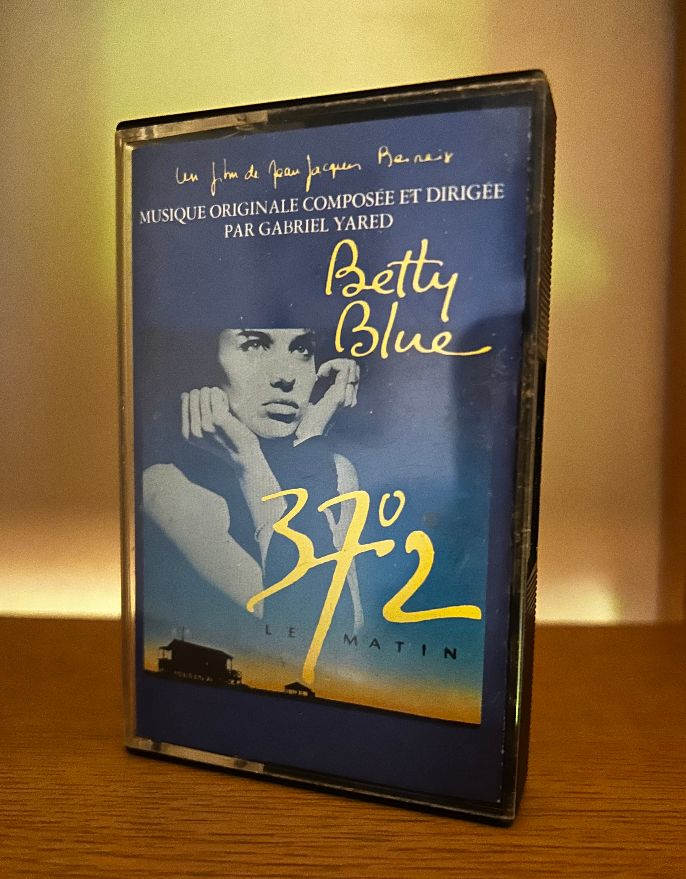
Betty Blue – 37°2 le matin – Gabriel Yared (1986)

A second-hand record store. Old French chansons played over the speakers. “Très bien,” Charlie beamed, because it made him feel at home. But this wasn’t France, it was an English suburb on a quiet Saturday afternoon. I Shazamed a song on my phone. It was Jeanne Moreau singing Les Voyages. 

Charlie rummaged through a cardboard box of old cassette tapes and I pointed out that had he found something interesting, then he wouldn’t be able to listen to it, because we didn’t have anything to play it on. 

And besides, I told him, I was surprised that he even knew what they were because they were obsolete before he’d been born. “That is not the point,” said the Millennium Child. “I have a good reason for looking.”

At last, he found something that pleased him. “This is what I want,” and he held up the soundtrack album to Betty Blue, or 37°2 le matin, if we want to give it the proper title. (I later discovered that it was released in 1986).

“But how are you going to play it?”

“I am not going to listen to it. If I wanted to do that I would listen to the music on Spotify. I have something else in mind.” With that, he borrowed a pound coin with which to buy it. 

The apartment. The office (which used to be Levi’s bedroom). The cassette tape is stood upright on a shelf alongside vintage postcards, pebbles and shells collected from beaches, and a wooden model of the Arc de Triomphe. “It is simply for show,” said Charlie.

Jour de Charlie. A reincarnation of Jacques Tati

Jacques Tati

A few weeks ago, Charlie introduced me to the works of Jacques Tati. We started with Jour de fête (1949) and over a week watched his Monsieur Hulot, featured in Les Vacances de Monsieur Hulot (1953), Mon Oncle (1958), Playtime (1967) and Trafic (1971). I’m late to Tati’s work, but it wasn’t hard to catch up, because he made so few films, and the ones that he did were genius. 

Charlie knew I would like Tati’s humour but confessed to knowing little about him. Intrigued to find out more, I bought one of the many biographies and spent warm evenings on the terrace absorbed in the life of this French legend.

Tati had a gentle spirit, and a quiet dignity, but behind the camera he could be elusive, stubborn and emotionally distant. This was easily confused with arrogance and I was left with the impression that he wasn’t a nice person. It troubled me because I discovered too many similarities with the person I lived with. I thought, ‘Fuck me! Is Charlie a reincarnation of Jacques Tati?’

Charlie, who tries hard to be good at everything, but doesn’t really know what it is he is best at. Painting? Photography? Modelling? He’s a complex person, committed to artistic vision – sometimes to the point of obsession – and to an outsider he can seem a bit of a shit.

He’s quite the opposite really, but his devotion to art can seem almost monastic. He pushes for the purity of his vision, as though wanting to leave behind something beautiful, and that pursuit can sometimes be baffling. 

I explained this to Charlie, and as the English like to say, he got ‘the face on’. “You do not understand my ache of misunderstood devotion,” he replied. “But I appreciate your concern, because it is mine also, and I need to decide what it is that I am going to be brilliant at.”