“I was probably eight or nine, a child of the postwar boom, and on vacation with my family at the Jersey shore. We had stopped at a convenience store on the way home from a day at the beach, and I was pawing through the store’s magazine rack while my mother shopped. I don’t remember picking up the magazine, but it opened to a page which stopped and startled me. Two mostly naked teenagers were posed for a picture titled “Victor and Vanquished,” one slung over the other’s shoulders—the spoils of a heated but not unfriendly war. Both boys were smiling, exhilarated, but I was fixated on their points of contact, especially where the naked groin of the Vanquished touched the Victor’s bare shoulder. What did that feel like? What could that feel like? Thinking about it made me dizzy and more aroused than I realized.”
The curtains quiver, the window blows open and into the room flies a lovely boy clad only in cobwebs and autumn leaves and the juices that ooze out of trees.
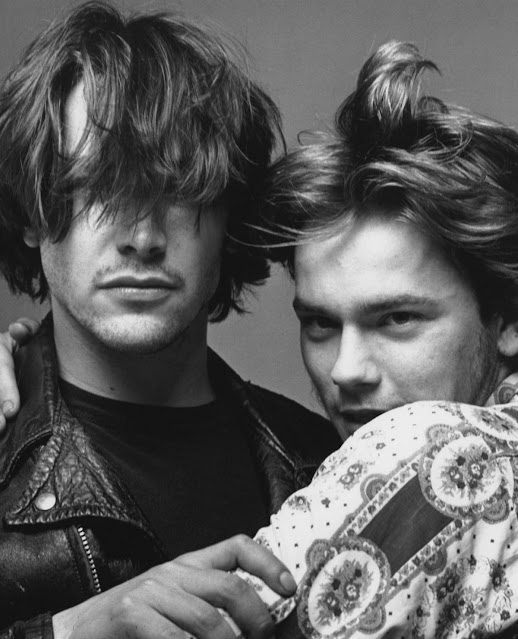
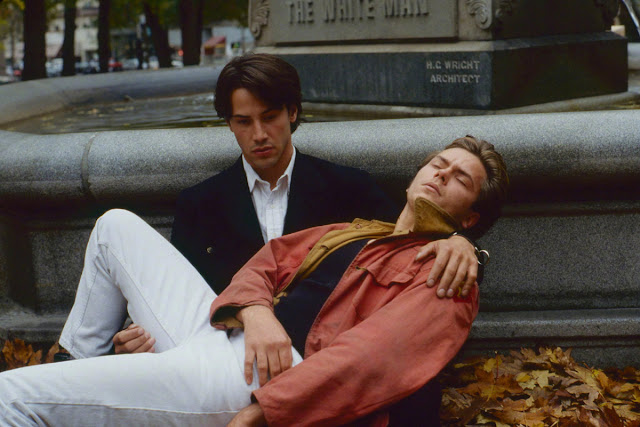
My Own Private Idaho. Keanu Reeves and River Phoenix. Promotional still (1991)
Scott: I only have sex with a guy for money.
Mike: Yeah, I know.
Scott: And two guys can’t love each other.
Mike: Yeah.
Mike: Well, I don’t know. I mean… I mean, for me, I could love someone even if I, you know, wasn’t paid for it… I love you, and… you don’t pay me.
Scott: Mike…
Mike: I really wanna kiss you, man… Well goodnight, man… I love you though… You know that… I do love you.
***
Watched ‘My Own Private Idaho’ for the first time. Charlie asked me if I’d seen Keanu Reeves recently because he looked old. But he was 61-years-old. River Phoenix still looks exactly the same… but that was how he left things. I remembered that I’d mentioned Phoenix before… but in one of my stories, he had appeared as a ghost.
It wasn’t going to be called ‘My Own Private Idaho’… better than ‘Blue Funk’ or ‘Minions of the Moon’… and named after a B-52s song. Inspired by Shakespeare’s Henry IV plays… Prince Hal and Hotspur and Falstaff… but here it was Scott Favor, privileged bisexual, Mike Waters, narcoleptic gay hustler searching for his mother, and Bob Pigeon, coke-dealing chickenhawk. Gus Van Sant: “My films are usually about relationships. I think you make films about things you lack.”
I can’t stop thinking about River Phoenix because, I guess, I’m in love with yet another dead man.
1987… “Run to the rescue with love and peace will follow.” – River Phoenix.
1989… Star burning bright. Beautiful. Lightness. Creative. Camera object.
1991… Indie moment. ‘My Own Private Idaho’. Realism to fantasy. Challenging the norm. Self-destructive attitudes. Dark themes. Cool culture. Downbeat hustlers. Wanderers. A chance to become an adult actor. Gus Van Sant simply being Gus Van Sant.
Keanu Reeves laying in bed playing with his nipple. What River Phoenix needed after making this movie – a bath, a shave, an exfoliating facial scrub.
“How do you see yourself fitting in with younger Hollywood acting?” (A sweet voice). “I don’t see any of them in the perspective or in the limelight of Hollywood. I really don’t ever want to get that objective or self-consciousness of my place in this world of showbusiness.”
1993… LA nightclub. Halloween. Music blasting. Sitting on a couch. Tired. Intoxicated. Skinny. Bad skin. Ticking time bombs. Heroine. Cocaine. Morphine. Marajuana. Valium. Cold remedies. Addiction is an open secret here. And then the star exploded all over the pavement. Never did anyone move from casual drug use to death so quickly. The night that Fellini died – ‘A director’s sweet life. An actor’s brief life.’
Retrospective.
2025… ‘My Own Private Idaho’. Turning point. A troubling effect. Midnight rock sessions. Alcohol. Uncontrollable drug use. Crystal meth. Hooked. No chance of going back now. Progressive and fatal. Like ‘The Little Shop of Horrors’…if you go too near to the plant it will eat you. The best performance… but from now on he didn’t care enough about himself to look after himself. What about those he left behind? Nobody did anything to help him when he was alive… guilt… and lasting sadness.
Have a nice day!
My Own Private Idaho. Keanu Reeves and River Phoenix. Promotional still (1991)
My Own Private Idaho. Keanu Reeves and River Phoenix. Movie poster (1991)
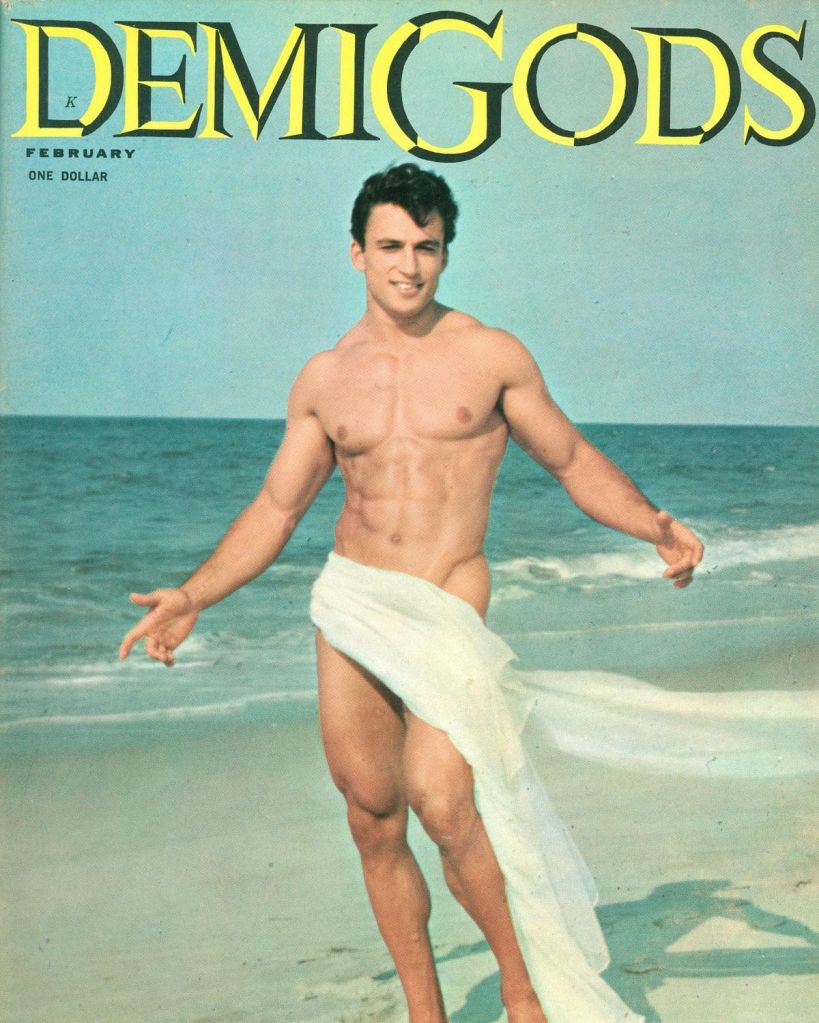
“We speak of the body of the young man at his fullest development, just on the brink of maturity, a young man who has retained some of his original innocence. The model for the classic Greek was the young athlete, from an aristocratic family, who competed in the nude in the original Olympic Games. It is not until later that the natural male form was used as a medium for the expression of godliness, an idea that later became the basis for a popular religious sect. A look back through the twentieth century will demonstrate just how long the Beautiful Boy has been absent from our field of vision. Examine the popular male images of the past 60 years. How many of them have been both young and beautiful?”
The script didn’t work. We looked at it for hours… days even… until somebody said… “Ditch the Peter Pan shit, because everybody knows the Peter Pan shit already… focus on Michael, and only Michael, a handsome son of a bitch who Peter Pan would have fucked anyway.”
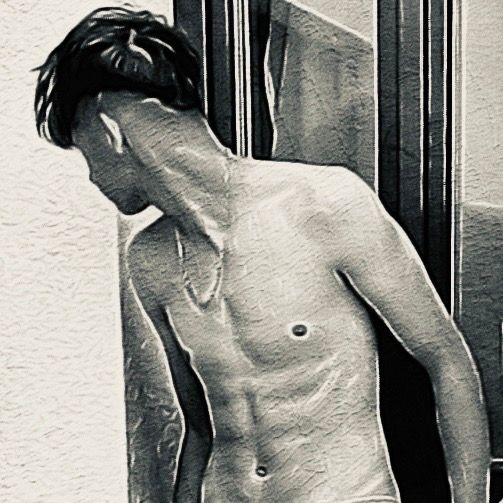
“Shameless. He floats naked in the water, the light rippling over chest and stomach. His lips, as if caught between a breath and a moan, his hand loose at his side like he’s waiting to be grabbed. There’s nothing soft about it – just flesh, need, and the unspoken dare in his stillness. Every line built for touch, for heat, waiting to be claimed. The invitation to take what you want. The sight is blunt, undeniable: he wants to be used.”
Charlie had taken his art in a new direction. He was bored, disillusioned with paintings of landscapes, objects and street scenes. A flirtation with what he called ‘art contemporain’ had ended in frustration. “Circles, squares, solid colours, lines, zig-zags … they mean nothing to me!”
The first that I knew about this new path was when I returned home to find Levi, our former lodger, sprawled on the sofa in just his underwear. “It isn’t what it looks like,” he flushed. ”I’m only doing it as a favour.”
Charlie shouted from the bathroom. “I am ready now. The bathtub is full and my camera is ready.” I was bemused to say the least.
Charlie wandered into the room. “Ah, you are home, mon ami. I need the bathroom for thirty minutes while I photograph Levi.”
The Polish boy with the Yorkshire accent followed him along the corridor and into the brightly lit bathroom. With a certain amount of embarrassment he stepped into the bath. “Lay down, Levi, and put your head underwater. I am going to stand on both sides of the bath and take photos from above.”
I watched from the doorway and listened while Levi was told to take deep breaths and submerge himself. Then he had to raise his right arm, then his left, and then both of them together. All the time, Charlie was precariously balancing, taking shot after shot.
When they had finished, Levi stood up, looking satisfyingly toned, and dripping from head to toe. Charlie looked him up and down. “As I suspected, you have a little dick, but we cannot all be lucky. You can get dry now.”
“I feel stupid,” Levi told him, “and I haven’t brought any dry boxer shorts.” Charlie flicked through the images and appeared not to have heard him, so I went to a bedroom drawer and gave him a pair of mine to change into.
That night Charlie spent hours searching for the right photo. The next morning he visited a local print shop and had it blown up to the size of a small poster. He placed it on an artist’s easel and studied it. “I am going to use this photo to create my next painting,” he announced. “If it is successful then I am going to start painting beautiful men from now onwards.”
I reminded him that there had been a time when he would have considered Levi anything but beautiful. “That was the case,” he replied, “but I needed somebody that I knew who was willing to model for me, and when I have finished, I will make him appear extremely homoerotic which is something he is definitely not.”
I was dancing with ghosts. Men who lived from the reign of Queen Victoria, through Edward VII, to King George V. A few lived beyond. They were spectral figures circling me, wavering, and waiting for a response. Watchful. Whispering. Lingering. For the most part, they were happy that I was there, but a few eyed me with caution. They lived in a time when it was wiser to trust nobody.
More and more joined the dance. Coming out of doors that had long closed, from dark corners, and miserable places to where they were banished.
Each told me their name, some I knew, but most were unfamiliar, and frowned at my ignorance. There were those whose names I recognised, but not the men they belonged to. But there were so many that I would not remember everyone, and I resorted to recording names in a notebook. I wrote frantically, eager to please, careful not to miss anyone.
A long list of dead people, some of whom were friends, acquaintances, and some who were strangers to one another. They danced because they were connected – names intrinsically linked – but they might not have known it. They had gone into my notebook because they shared something in common.
When they lived I did not exist. I came much later, born into a kinder world.
The passage of time puts me at an advantage. A century later, it is easy for me to see how they lived, what achievements came their way, if at all, and how they were remembered, for better or worse. The links are in the chain – who was attached to who?
Six years. Remember the first time? Ignorant shit of a boy. I was the best, but to be fair, you did eventually realise that. Six years flirting. Six years wasted. All because you married that horse of a girl who never liked me. It ended badly. Tears tonight because you’re scared. I sympathised and looked incredibly sad. All the right moves. But really, my heart sang from the rooftops. My skinny petit pois…. ha ha!
Image: The Boy with the Black Dog – Charlie Marseilles
Ten o’clock in the morning and I hoped that I wasn’t too late. I stood on the terrace and looked upon the narrow street, the wait tense, every figure a possibility, every person making my pulse leap, until I remembered the black dog, and the disappointment set in.
I was in my hiding place, and he wouldn’t know that I was there, the anticipation laced with secrecy, maybe even guilt. I was invisible, while he was exposed for everyone to see. What would happen if he looked up? Would he even notice me? What if I wasn’t the only watcher?
The minutes ticked by and I hoped that he would appear, and when he did, it would seem like the world was holding its breath. I waited for the boy with the black dog.
“The president is a camp icon. He’s like a drag queen. He’s outrageous, he’s transgressive, he’s catty, he’s a narcissist the likes of which we haven’t seen since Alexander the Great.” – James Kirchick, journalist and author of ‘Secret City: The Hidden History of Gay Washington’, as quoted in in The New York Times.






 Perfectly Hard and Glamorous