Category Archives: Short Stories

The Shadowed Hand Behind the Letter


Being the transcript of a letter unearthed in the long-sealed vaults of the Royal Bank of Scotland, November 2025

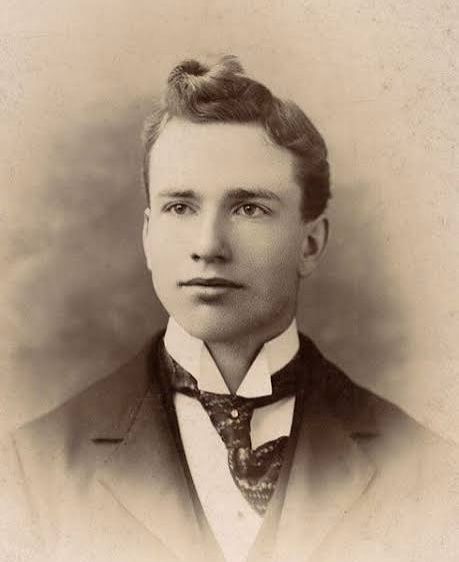
George Walker Wood
66 Cavendish Street,
Marylebone
London

29 November, 1881

My dear Reader,

If by curious chance you hold this manuscript in your hands, I entreat you to read its contents with the utmost seriousness. Only by such attentive perusal shall you perceive that the pages which follow are both an explanation and a justification for their long concealment.

Should it prove that I still draw breath when these lines meet your eye, then I beg of you—burn them without delay, and disclaim all knowledge of ever having encountered them. The shame that would ensue from their divulgence is of so dreadful a nature that I scarcely dare commit the thought to paper.

I shall therefore begin at the point where first I made the acquaintance of one Johane—an Irish youth of some four-and-twenty years, of humble condition, and with every outward appearance of one who might easily draw misfortune to my door. He was, however, most commonly called Jack, and by that familiar name I shall refer to him henceforth. Dear Jack belonged to a loose fraternity of young loafers and street-bred rascals—variously known as the “London Boys”—a wild and merry set whose manners were as questionable as their morals, yet whose very recklessness possessed, for me, an unaccountable fascination.

In time I grew most attached to Jack, and he attended me frequently at my lodgings in Marylebone. There, behind doors safely bolted, we indulged in certain intimacies which, though common enough within that unseen sphere of which London pretends ignorance, would cause polite society to feign horror. Jack’s person was slight, his garments threadbare and ill-assorted, and he bore all the marks of those who are forced to wrest their sustenance from the streets; yet beneath that rough exterior there was a warmth and vigour not easily described. When fortune smiled and I had a few coins to spare, he would remain with me until morning, and those nights—cold, anxious, sweet as they were—remain fixed in my memory.

I suspect that my landlady, Mrs. Chivers, a stout matron of no small curiosity, had taken something of a liking to Jack as well; for once I discovered him seated at her kitchen table devouring a modest breakfast of bread and scrape. The glint of mischief in his eye, as he looked up at me over the crust, told me all I needed to know. She had chosen to see nothing of the nature of my rooms above.

My days were spent at the old desk overlooking Cavendish Street, where I composed articles for The London Figaro and The Dark Blue. Yet I had long nourished the ambition to attempt a novel—something that might echo, however faintly, the triumph of A Tale of Two Cities. My parents, never slow to remind me of my deficiencies, assured me that I lacked both imagination and creative faculty, that I was fit only to set down facts and order them neatly upon a page.

Still, I could not forget the tales Jack whispered to me during those winter nights—tales of gentlemen of rank who sought his company at a high price; of drawing-room adventures veiled beneath the richest draperies; of temptations and behaviours of which the world speaks only in scandalised murmurs. Spurred by these accounts, I sought the acquaintance of a certain printer known to an associate of Henry Ashbee—a man whose livelihood depended upon the discreet production of pamphlets of a decidedly provocative character.

Mr. William Lazenby, a sharp-eyed fellow, showed interest in my idea and agreed to an initial impression of two hundred and fifty copies. He offered me a share of the profits, subtracting his considerable costs, should I but write with candour. The sums he mentioned far exceeded any I had yet earned, and the promise of so easy a reward was exceedingly tempting. He informed me that the book should be sold exclusively by mail-order through an address in Paris, and insisted that I adopt a nom de plume, lest I bring inevitable ruin upon myself.

When I conveyed the scheme to Jack, he immediately demanded—nor without justice—a share of the proceeds, and further insisted that his own name be affixed to the work. I warned him that the police might take a dim view of such recklessness, but he merely laughed and declared that the “mutton-shunters”, knowing full well he could neither read nor write, would never suppose him connected to any printed matter. With that he tumbled himself upon the bed in his usual impudent fashion and suggested that we commence our “research” without delay.

By June the manuscript was completed, and I had settled upon what I deemed a most fitting title—The Sins of the Cities of the Plain. Though Mr. Lazenby scoffed at it, he conceded that the biblical suggestion would doubtless catch the eye of those gentlemen who take an interest in such hidden matters. I confess I feared that certain passages, dealing as they did with the concealed customs of our clandestine fraternity, might prove too recognisable to those acquainted with that shadowed realm.

Lazenby nevertheless published the work in two parts, and it found immediate favour among readers eager to feast upon the covert indulgences of the great and respectable.

Though I tremble at the thought of its reception, I take comfort that my own name has thus far escaped suspicion. I offer here my apologies to Mr. Simeon Solomon and Mr. James Campbell Reddie—both of whom have been unjustly whispered about in connection with this deception. Jack, meanwhile, basks in the admiration of his companions and seems persuaded that a century hence his name will still be spoken among certain circles of “inverts”, as he jests.

This very day I have deposited my first earnings at the Lombard Street branch of Messrs. Glyn, Mills, Currie & Co., alongside this confession, sealed and hidden, to remain in the vault until such time as Providence ordains its discovery. Should that day come, I trust that The Sins of the Cities of the Plain shall be regarded as a truthful and unvarnished portrait of those whose society I have come to cherish.

Ever, dear Reader, your faithful servant,

𝒢. 𝒲𝒶𝓁𝓀𝑒𝓇 𝒲𝑜𝑜𝒹
⌣⌣⌣⌣⌣⌣⌣⌣⌣
George Walker Wood

*****

Now read on to separate fact from fiction.

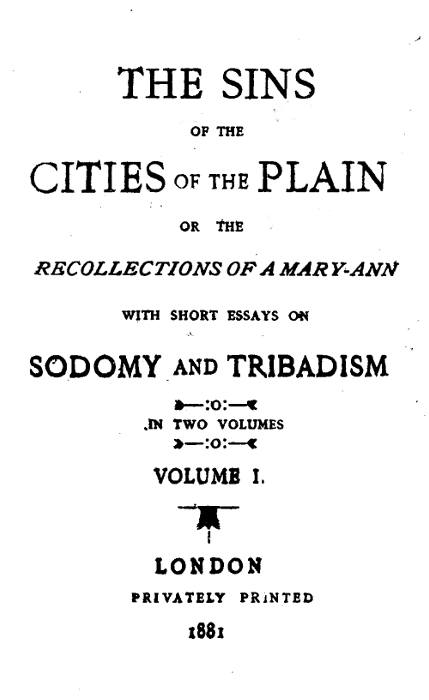
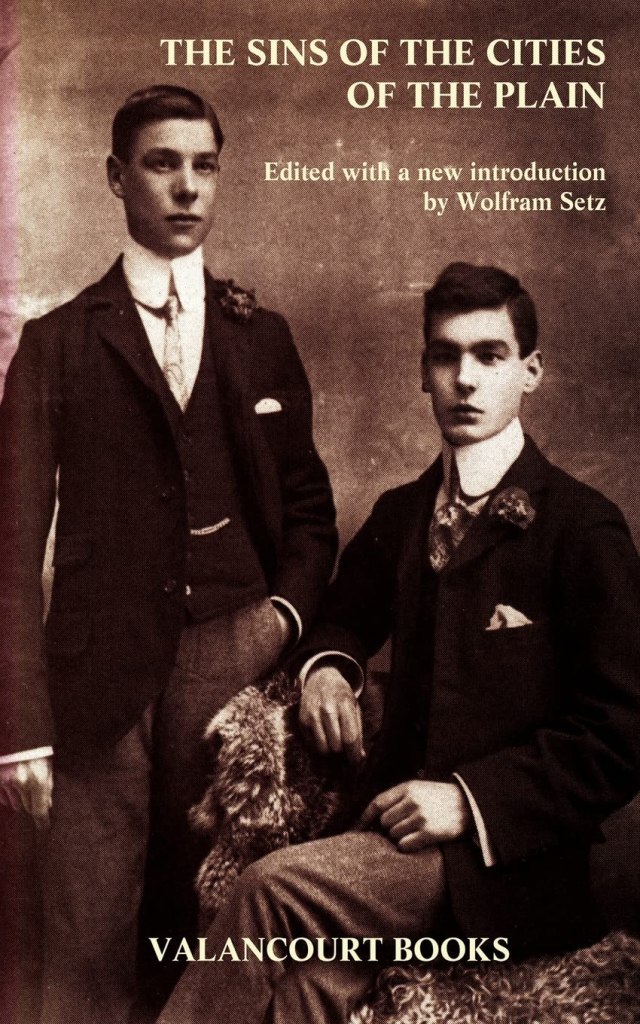
This edition contains the unabridged text of the first edition housed at the British Library, together with a new introduction by Wolfram Setz and a facsimile reproduction of the original volumes’ title pages.

The Sins of the Cities of the Plain is an influential Victorian erotic novel, originally published anonymously in 1881 and widely considered one of the first works of exclusively gay pornography in English. It is a fictionalized memoir attributed to real-life Irish prostitute Jack Saul.

The book is a narrative, presented as the “recollections” or “memoirs” of Jack Saul, detailing his experiences as a young male prostitute (a “Mary-Ann” or “rentboy”) in the clandestine gay underworld of Victorian London. It traces his escapades from boarding school into young adulthood, describing his sexual encounters with various men, from schoolboys and guardsmen to wealthy aristocrats and members of high society.

While attributed to Jack Saul, the actual author is debated by scholars, with some suggesting a ghostwriter or figures like the painter Simeon Solomon or James Campbell Reddie were involved. The book was privately printed in two volumes in 1881 by William Lazenby to avoid obscenity laws and sold for a high price.

The original printings are unobtainable today, but modern editions are widely available from various publishers, such as Valancourt Books and Mint Editions.

Twink on Trial

Twink – Charlie Marseilles (2025)

Johnny had Sabrina Carpenter in his ears again, looping ‘Feather’ from Russell Square all the way to Wood Green. She didn’t know she was basically the narrator of his life, but one day he’d tell her. That’s what twinks do: dream big, unrealistic, sparkly dreams and somehow convince themselves it’ll all work out. Johnny didn’t care. He usually jumped head-first into the unknown anyway.

The day had been a slog. Instead of listening to his tutor, he’d spent two hours doodling in his notebook — the one with the Eric Ravilious cover he pretended made him look cultured. The tutor finally snapped and kept him back. “How would you describe your life?” he’d asked, like Johnny had personally offended academia.

Johnny had smiled. “Fed, pampered, and impatient. Honestly? My life is one long, sexy, pouty battle.”

The tutor hadn’t expected honesty. Or attitude. “In my day,” he’d muttered, “you would have been called a prostitute.”

Harsh, sure. But Sabrina would’ve had his back. She’d remind him he was eighteen, hot, and fully allowed to be desired — and if someone wanted to bankroll his glitter-coated lifestyle, that was on them. She’d conveniently skip the part about him being high twink maintenance: fine dining, special diets, beach holidays, designer clothes, and accommodation that didn’t smell like student desperation.

Alexander funded the whole thing, because Johnny lived for an Instagram-ready existence and the universe had not, so far, given him the bank account to match.

Twinks are vulnerable, Johnny decided, and love could never be found in a discount store.

When he got home, Alexander was already there, drinking wine and listening to Vivaldi — the soundtrack of men who’d survived ‘twink death’ and were now coasting through their late thirties in cashmere.

“We need to talk,” Alexander said. Serious voice. Terrible sign. Johnny tossed his Reiss puffer on the floor anyway. He was a trophy boy, and trophies didn’t hang themselves up.

Alexander cleared his throat. “The thing is… sugar babies aren’t really financially viable anymore. I need to do a quarterly business evaluation.”

Johnny froze. Thank God he’d kept all the receipts — he’d at least prove he’d been properly maintained. And he was not going down quietly.

“Look,” Johnny said, already shifting into survival mode, “you’re old enough to be fluent in PowerPoint and so I’m going to prepare a presentation of all my key deliverables. I think you’ll find them very compelling. Being adorable. Emotional availability. Pretending to like oysters. And really? That’s just the intro slide.”

Fashion Brothers and the Absurd


“I’m in love with a Lego brick,” Josef said, grinning like it was the most normal thing in the world.

Tomas raised an eyebrow. “What do you know, Joe? Are you an AI prostitute now?”

“No,” Josef said seriously, as if clarifying a crucial fact. “I’m Gigolo Joe.” He slammed the cases into the trunk with mock solemnity.

“Are we ready?” Tomas asked.

“Ready when you are, brother. But make it fashion,” Josef said, voice smooth as a sales pitch.

Tomas laughed, a little bitter towards his little brother.“I used to be somebody. I used to take people places.”

Their parents groaned, caught between shame and exasperation. “Put some clothes on, Tomas!”

Something Worth Remembering

Dominik Datko and Maciej Poplonyk. Photographed by Arthur Iskandarov

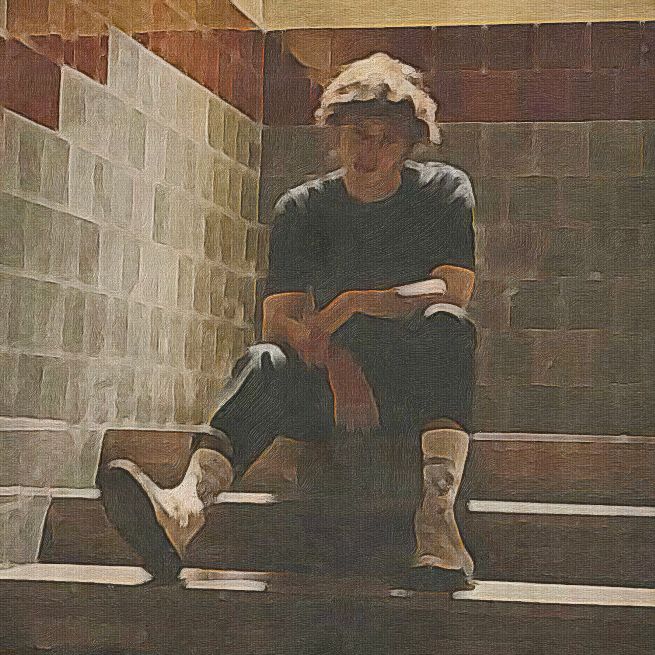
Dominic chose fourteen stone steps to sit on. They hadn’t been cleaned in a century; weathered and frost-damaged, they had taken on a patina — the greyness broken by lichens and mosses, ivy-leaved toadflax, and ryegrass. He rested his head against the iron railings and sighed.

Arthur sat thinking below him, his legs sprawled across the pavement. 

 “Once upon a time, a horse and carriage pulled up, and a well-dressed man — wearing a top hat and fine coat — disembarked and climbed these steps. He rang the bell and waited while an old butler answered the door, then handed over the hat and coat before being shown into a reception room.”

“How do you know that?” said Dominic, who lit a cigarette and looked towards the front door. There was no grandeur anymore. A glass door stood behind a padlocked gate; dirty net curtains protected the inside from prying eyes. The house was empty and unloved.

 “You only say it because you are describing something that you have seen or read. You don’t know what happened, because you weren’t here.”

Arthur picked up a piece of stone that had crumbled from one of the two pillars at the foot of the steps. He examined it before putting it inside a trouser pocket. This was something else to add to his ‘shelf of memories’. One day, when they were old men, he would pick up the piece of stone and show it to Dominic and say, “Do you remember the day we sat on those stone steps?” But he doubted that Dominic would grow old.

“My dear boy, despite your charm and privilege, you sadly lack imagination and prefer to live that shallow existence on TikTok and Instagram. Such a waste of an upbringing.”

Dominic laughed.

“And besides,” Arthur continued, “you will never become famous if you don’t contribute anything worthwhile that you can be remembered for.”

“That, my love, sounds too much like hard work,” Dominic replied. “But I envy you, Arthur, because you believe that writing those shitty little posts will turn you into a brilliant writer.”

There was a note of sarcasm in his voice, and Arthur knew that Dominic didn’t mean to be unkind.

“It is true. There are millions of tadpoles swimming in this huge pond. Why should anybody take notice of this one ordinary tadpole? But, Dominic, it’s not about being a brilliant writer. It’s about learning from mistakes — because I look back at some of the things I’ve written and cringe. But I remind myself that writing is about me, and I write for my own enjoyment.”

Marigold ‘Boy O’Boy’


Once, a handsome Sicilian boy, the son of Eros and a nymph, fell deeply in love with the sun, and couldn’t bear to stay another minute where he couldn’t see it. He worshipped it wherever he went, and when it wandered out of sight, especially at night, he couldn’t rest, because that object he loved wasn’t warm upon his tanned breast. For this reason, he never walked, stood, or lay in the shade, the love, in full sway, was boundless, and made his life its prey.

At one time, the sun remained under a cloud for eight days; during this period, the boy, Cylmenon, was very unhappy, and because he could not find his beloved, pined away and died. It was a tragic end for a fine young boy. When the sun shone again it found Cylmenon’s body near a fountain where he had tried to see the sun’s reflection, and so grieved was the sun, that it changed the lad’s body into a golden flower, of the first Marigold.

Study of a Sicilian boy with Passionflowers in his hair, Sicily, c.1899 – Baron Wilhelm von Gloeden

An explanation: Marigolds are known as “herbs of the sun” and represent the sun’s power, warmth, energy, and light. They are often associated with joy, optimism, passion, and creativity. This story is based on an obscure and forgotten poem from 1868 by Peter Spenser. Little is known about him other than that he was the eldest son of the Rev. Peter Spenser, Rector of Temple Ewell, near Dover. He wrote poetry for local newspapers across England and also published the magnificently titled ‘Parvula, or, a Few Little Rhymes: About a Few Little Flowers, a Few Little Birds, and a Few Little Girls, to Which Are Added, a Few Little Songs, and a Few Other Little Things.’ (1863)

The Ghost on All Hallows’ Eve


There is nothing to see, and yet—a ghost lingers. A handsome young man in fine attire, bearing no malice, drifting silently between the worlds. I see him, though you cannot. His gaze falls upon you with a tender awe—admiring, sorrowful, and tinged with jealousy that life continues without him.

Once, he loved a lady. He lost her, and now he wanders, unable to find his way back to her embrace. He is here, and there, and everywhere—a soft luminescence that clings to the hearts of the romantic and the doomed alike. Still, he searches for his beloved.

I tell him she no longer walks among the living, and he weeps, for he does not know where else to look. He is trapped in his own glass box of memory, with nowhere to go.

Beautiful young souls—he drifts above you, circling in a spectral dance. A shadowplay. Raise your hands and feel his trembling light, for this is All Hallows’ Eve, and he weeps.

Millions Once Watched

Forgotten – Charlie Marseilles

Noah sat cross-legged on the floor, eating a bowl of cornflakes. Henry had seen this before—only then, it was on a YouTube video during a train ride from Manchester to London. In that video, Noah had poured milk over his cereal and collapsed onto the floor to eat, idly watching his housemates move around him. They hadn’t said a word, stepping carefully to avoid him—an inconvenience they tolerated.

Now, Noah sat on the floor again, eating breakfast as Henry checked his bag, picked an apple from the fruit bowl, and scrolled through his messages before work. The scene unfolded in silence, broken only by the soft tap of Noah’s spoon against the bowl. Their life had become a loop of flashbacks—moments once broadcast to millions, now replayed quietly within the confines of their apartment.

Banjo – or the Modern Adonis

Zach Majmader at Storm Management – London

Adonis was said to be the son of Theias, king of Syria, and his daughter Myrrha. There was nothing, it seemed, like a touch of incest to produce a child of exquisite beauty. When her father discovered her pregnancy, Myrrha fled and was transformed into a myrrh tree. Yet even in that form, she gave birth to a boy so lovely that Aphrodite herself took pity on him.

The goddess carried the infant to the underworld, entrusting him to Persephone’s care. But when Adonis grew into a youth of rare grace, both women fell hopelessly in love with him. It was inevitable, perhaps, that beauty would bring both adoration and ruin.

One day, while hunting, Adonis was fatally gored by a wild boar—sent, some say, by Artemis to punish his vanity. His blood mingled with Aphrodite’s tears and gave birth to the first anemone. Thus, his beauty became eternal, immortalised in a flower.

And so the story of Adonis was handed down through the ages, until it reached a boy called Banjo.

There is something wonderfully absurd about a boy named Banjo. The name had been chosen simply because his grandfather played the instrument—nothing more mystical than that. Had Banjo been plain, the name might have invited merciless teasing. But as fate would have it, he was beautiful—achingly so—and thus the name became a kind of charm.

He was the sort of young man who made strangers feel vaguely inadequate. They would take in his fine-boned features, his golden skin, his effortless grace, and feel the familiar pang of envy or desire. His beauty unsettled people, as though they were confronted by something not entirely human.

Banjo, however, found his looks exhausting. So he delighted in the single imperfection that spoiled the illusion: a missing front tooth. When people stared too long, he would flash a grin—a broad, dazzling smile—and there it was: the flaw that disrupted the marble perfection.

No one knew how he’d lost it. The rumours ranged from drugs to fights to some impoverished past before fame. The truth, however, was known only to Banjo, and he guarded it carefully. The missing tooth became his private rebellion against the myth others had built around him.

He liked the way it disarmed people, how it made him seem approachable, almost ordinary. It was a reminder that even gods have their fractures. Beauty, he thought, was not found in perfection, but in the quirks and vulnerabilities that betrayed our humanity.

If the ancient sculptors had carved him, they had stopped just short of finishing the smile—leaving him, deliberately, incomplete.

Banjo never replaced the tooth. He kept it as a secret charm, a flaw that told the truth: that myths do not survive in the real world, and perfection is the loneliest lie of all.

The Boys on the Bridge – The Last Game

Images – Merel Hart for Behind the Blinds

The warm light of day. A sudden shout. A boy’s voice: “Questa è la fine!” — This is the end! The cry carries over the water, impossible to know which of them called it, only that it came from one of these boys, each charged with careless energy.

“Con petto nudo,” comes the whisper — with bare chest. “Speak it now, or the moment will slip into memory.”

The dares run high: peer pressure, bravado, that fragile seam between recklessness and courage. None of them yet know it, but this is their rite of passage — the pivot between innocence and the pull of adulthood. Here, in the heat, end the rituals, the invisible hierarchies, the unspoken rules of the pack.

The summer outsider watches. Friendship, rivalry, longing, jealousy, innocence, danger — all play out before his eyes. And he understands the cry for what it truly is: not a game, not a dare, but a declaration.

It is the end.

Image – Merel Hart for Behind the Blinds

Somewhere he hasn’t yet imagined


He crouched at the platform’s edge, elbows balanced on his knees, his bare arms lit starkly by the fluorescent tubes above. The train had not yet arrived, but the rails sang faintly, a low vibration that climbed through the soles of his shoes. He leant forward, alert, as if he could will it closer with the sharpness of his gaze.

The station smelt of metal and damp stone, a place most would find tired and ordinary. But for him it felt alive – charged. His youth made everything sharper: the hum of electricity, the echo of footsteps along the tiled walls, even the restless air that slipped through the tunnel ahead. He sniffed his armpits and detected the sweet aroma of innocent sweat that he rather liked.

And then the lights appeared, two pale orbs cutting through the dark, and his breath caught. It was only a train—one of a thousand that came before and would come after. Yet in that moment it felt like something else entirely, a promise or a dare. The train held his past, and once he had boarded, it would move him towards a future. He didn’t know where it would go, only that he was ready to be carried.

He grinned to himself, a private smile that nobody else saw. His whole body hummed with the knowledge that he was young, and that youth meant possibilities.