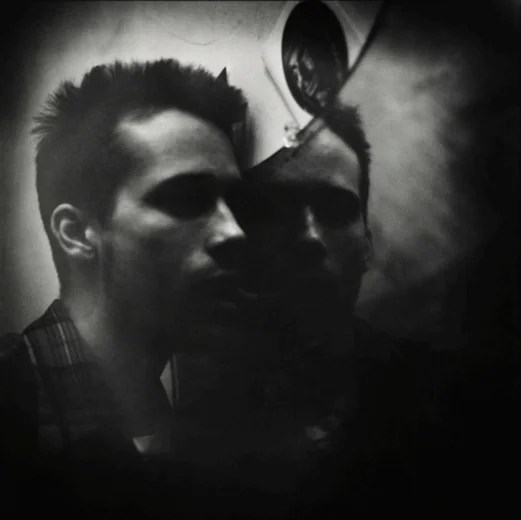
Rawly talented. Jeff Buckley. Photographed by Merri Cyr
Something strange had happened beforehand. A young guy sold me my cinema ticket. Soft features, dark curls, expressive eyes. Soft-spoken. All the time he smiled as though sharing a secret only he understood.
There were other staff around, but when I bought a coffee he served me again. He looked astonishingly vulnerable when he realised he’d screwed up making my hazelnut coffee. And then he scanned my ticket when I headed into the screening.
He might have been Jeff Buckley, if only he’d known who he was.
The cinema was empty, as though this showing were meant for my eyes alone—someone who only discovered him after he was already dead. That strange, almost mystical aura: the romantic legend whose story remains unfinished. It’s Never Over, Jeff Buckley.
A Pre-Raphaelite look—with scratchy stubble—and the whisper of a small child that could rise suddenly into a soaring falsetto, almost devotional. Was there ever anyone who captivated me so completely?
I heard the murmur of Cinema Boy: “The face that once commanded admiration and became a ruin, a tragic testament to a sad end.” That someone so beautiful would go swimming and never come back. My heart insists it was intentional.
One album—both his coming-out and his epitaph. One of the greatest albums ever recorded.
Six days. That’s all it took. A body decomposing, bloating. Skin that once felt so good to touch became pruned, pale and waterlogged—brownish, yellowish, ugly. Corpse wax. A moral fable in which the loss of physical perfection mirrors the decay of the soul.
The film ended. And Cinema Boy—who was probably called Will, or Aaron—came into the cinema to clear up after me.
He was still smiling to himself.
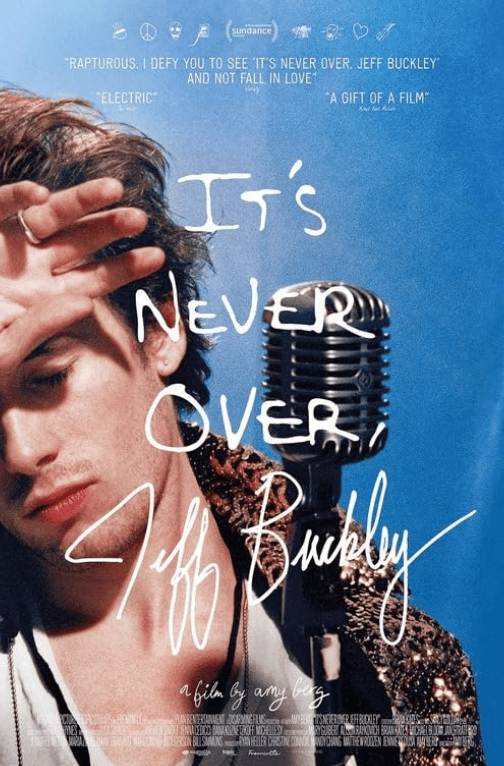
It’s Never Over: Jeff Buckley, a 2025 feature-length documentary directed by Amy Berg (known for Deliver Us From Evil and Janis: Little Girl Blue). It is the first comprehensive documentary authorised by the Jeff Buckley Estate.
Jeffrey Scott Buckley. Guardian angel. Born: Anaheim, California (1966). Died: Memphis, Tennessee (1997), aged 30.
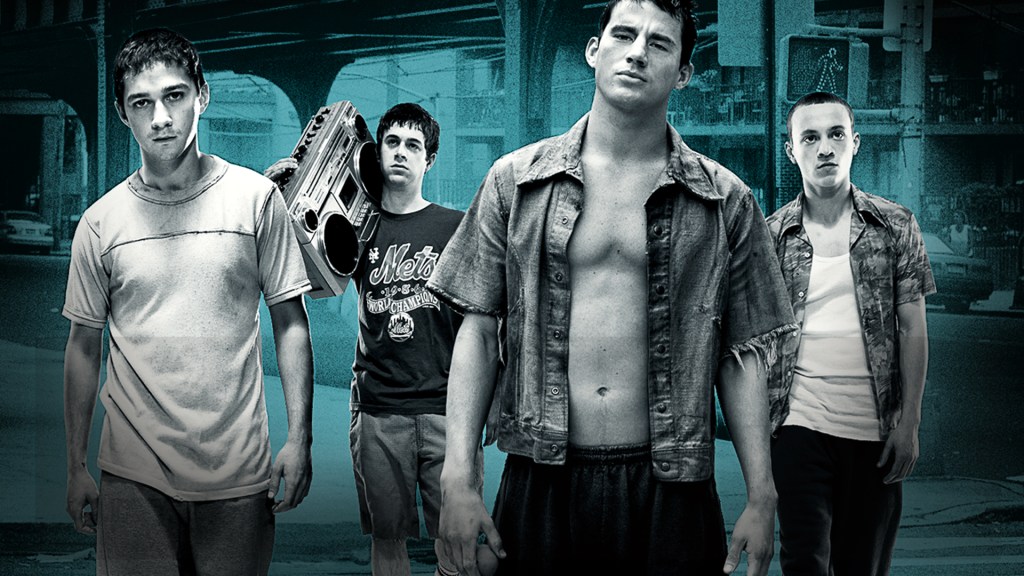
A Guide to Recognizing Your Saints (2006). Directed by Dito Montiel. With Channing Tatum as Young Antonio and Shia LaBeouf as Young Dito.
There was this guy, always half-naked like he was daring the block to say something. All nerves and sweat and attitude. All fight in him. You could smell the testosterone, I swear—like sweat, cigarettes, and bad decisions mixed together.
You ever hear somebody get called Pistachio Dick? Yeah. Welcome to Queens. Ho yay!
Antonio was like that with Dito—mean to everyone else, but around him? Forget it. Full guard up. Like he was protecting something he didn’t even know how to name. Two guys, both tough, both turning red whenever they got too close. Nobody said anything. Nobody had to.
And here’s the thing that kills me about Channing Tatum—this guy did nothing. Nothing. Just the right sperm hit the right egg and boom, whole fuckin’ world started orbiting him. Not my line. Some guy named Anonymous said it. But yeah. That’s how it went.
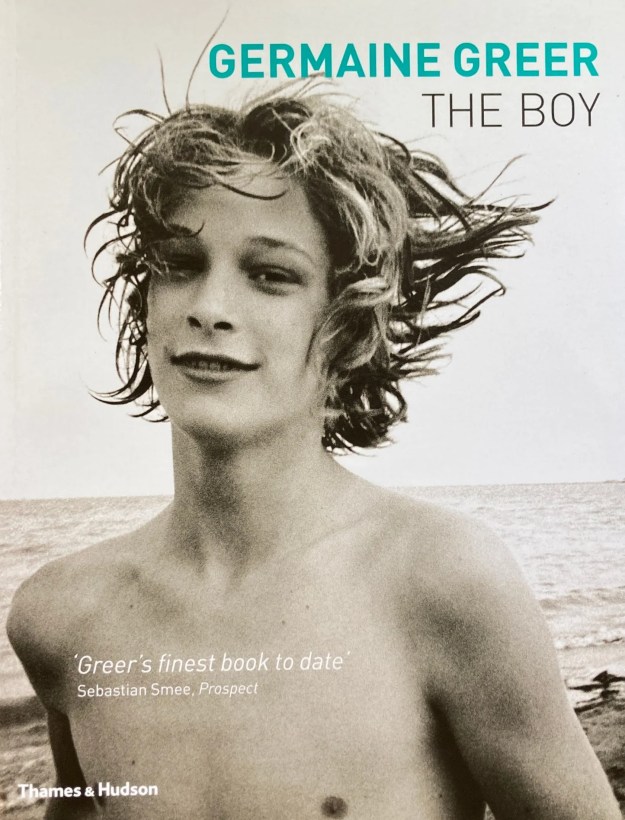
Germaine Greer – The Boy. Published by Thames & Hudson (2007)
Baron Corvo once told me in a dream that I should write something controversial. Terrible advice, obviously. But here we are.
I found a book in a charity shop that Charlie told me not to buy. He said it was distasteful. Which, of course, made me want it more.
The book was Germaine Greer’s The Boy — a 2003 art history study about how young males have been represented in Western art. Greer argued that, for centuries, it was the male body — not the female — that dominated the gaze. Art, she said, used to worship men. Then we decided that kind of looking was shameful.
When it came out, The Boy caused an uproar. Greer said she wanted to help women reclaim their “capacity for visual pleasure,” to look at men the way art has long looked at women. Then she dropped her most infamous line: “A woman of taste is a pederast — boys rather than men.” Predictably, everyone lost their minds.
The book is filled with over 200 images — statues, paintings, portraits — each exploring what Greer called the “evanescent loveliness of boys.” The soldier. The martyr. The angel. The narcissist. The seducer. It’s the sort of book that doesn’t end up on display in Oxfam, which is precisely why I found it there.
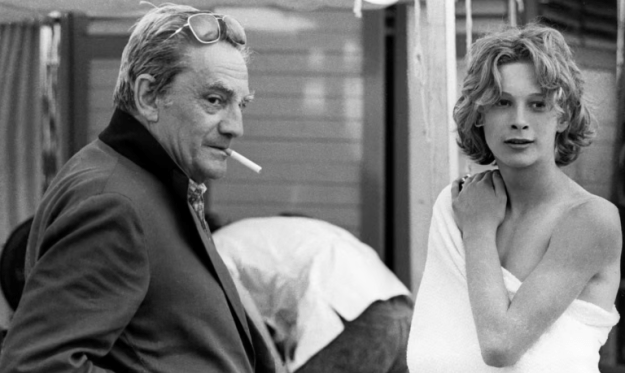
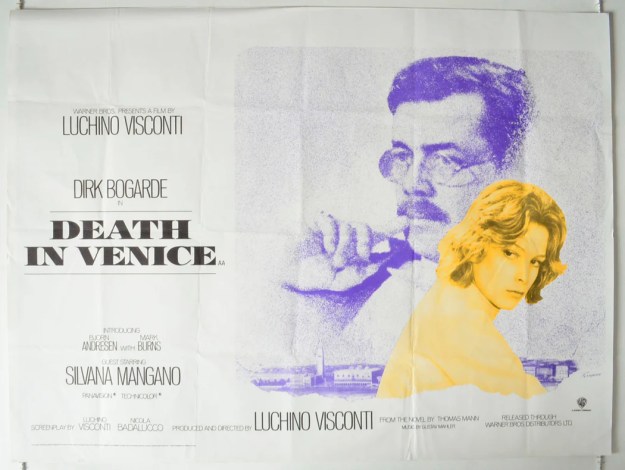
The cover shows Björn Andrésen, the Swedish actor who played Tadzio in Death in Venice (1971). The photograph was by David Bailey, but Andrésen said no one asked permission to use it. He was furious — disgusted, even. “I have a feeling of being utilised that is close to distasteful,” he said. And the irony? The week I bought the book, he died, aged seventy.
Björn Andrésen with Luchino Visconti on the set of Death in Venice. Photograph: Mario Tursi
Every obituary revisited the same scene: the audition tape from Death in Venice that was included in The Most Beautiful Boy in the World — a documentary about his life. Visconti tells him to smile. Then to undress. He laughs nervously. Strips to his trunks. Shifts under the gaze of men deciding whether he’s beautiful enough.
It’s hard to watch now. Visconti — Count of Lonate Pozzolo, titan of Italian cinema, and apparently, chaos in a cravat — ends up looking less like a mentor and more like a predator. But dead men can’t explain themselves.
When I was fifteen, I’d probably have thought that kind of attention was glamorous. Maybe I’d have handled it. Maybe it would’ve destroyed me. Hard to know. My own encounters with predatory men later on made Visconti look almost saintly by comparison. At least he left art behind. Maybe Andrésen’s story isn’t just one of exploitation, but what happens when fame and beauty collide with someone who’s too young to bear it.
Charlie, meanwhile, can’t stand The Boy. But he loves Death in Venice. He called Tadzio a “beau.” When I asked what that meant, he said: “The boy is beautiful. It’s sensuous, not pederastic. I’m surprised no one’s remade it.”
Which — yes — feels like a double standard. Both the book and the film are about the same thing: beauty. The kind we no longer know how to look at without flinching.
Could Death in Venice ever be remade?
I doubt it. The original is a masterpiece, and also completely unmakeable now. Mann’s 1912 novella was already controversial — a composer obsessed with a boy — and Visconti turned that tension into pure cinema. But in 2025, the moral landscape is different. Post-Me Too, post-Epstein, even looking can feel like a crime. No studio would touch it.
Unless you flipped it.
Make Tadzio older. Make the story less about sex and more about time — the hunger for youth, stillness, lost purity. Desire becomes existential, not erotic. If Visconti made the tragedy of seeing, a modern director — Luca Guadagnino, Todd Haynes, François Ozon, Joanna Hogg, Andrew Haigh — could make the tragedy of knowing you’re looking.
Visconti’s gaze was romantic. Ours would have to be self-conscious.
In their own way, both The Boy and Death in Venice celebrate the same thing — male beauty, youth, the brief perfection of being looked at before it fades. Once upon a time, that was sacred. Now it’s scandalous. Somewhere along the line, admiration turned into suspicion.
So yes, Baron Corvo told me to write something controversial. Bad idea from a worse man. But maybe he was right about one thing: sometimes, it’s worth writing about what we’re not supposed to look at.
Dirk Bogarde in Death in Venice (Morte a Venezia). Photograph: Ronald Grant Archive
Death In Venice (a.k.a. Morte a Venezia). Original British quad movie poster
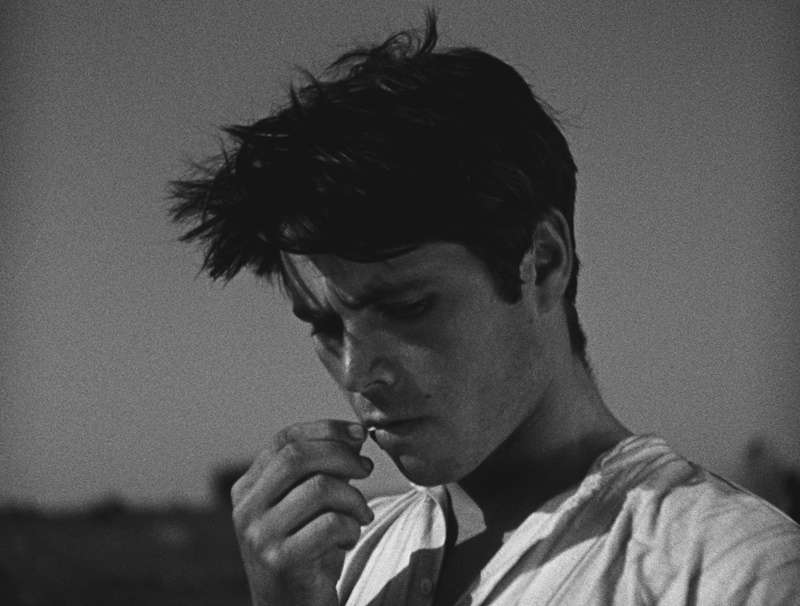
Handsome French boy. The light falls on him like a thought half-formed, catching the edges of his face before retreating into shadow. A quiet defiance in the way he chews on a matchstick. The air feels slow around him, salt and sand mingling with the scent of his skin. His shirt, open at the collar, softens the hardness of his jaw, and the wind seems to pause there – unsure whether to touch him or not. In that hesitation, the moment turns fragile, suspended – beauty caught between innocence and knowing. The image might have been taken yesterday, but this Brittany fisherman is from Finis Terrae, a 1929 French silent film written and directed by Jean Epstein.
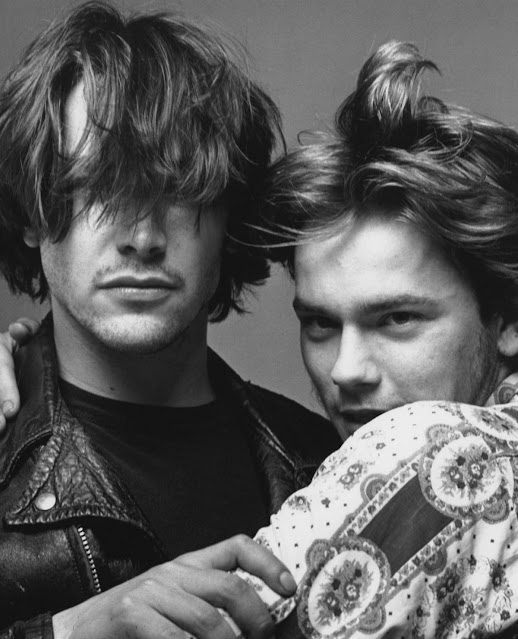
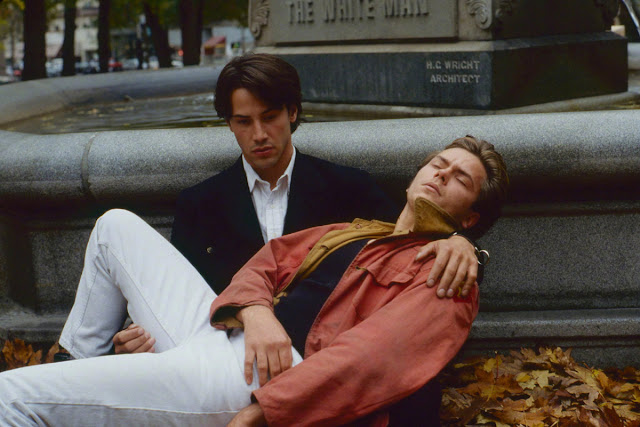
My Own Private Idaho. Keanu Reeves and River Phoenix. Promotional still (1991)
Scott: I only have sex with a guy for money.
Mike: Yeah, I know.
Scott: And two guys can’t love each other.
Mike: Yeah.
Mike: Well, I don’t know. I mean… I mean, for me, I could love someone even if I, you know, wasn’t paid for it… I love you, and… you don’t pay me.
Scott: Mike…
Mike: I really wanna kiss you, man… Well goodnight, man… I love you though… You know that… I do love you.
***
Watched ‘My Own Private Idaho’ for the first time. Charlie asked me if I’d seen Keanu Reeves recently because he looked old. But he was 61-years-old. River Phoenix still looks exactly the same… but that was how he left things. I remembered that I’d mentioned Phoenix before… but in one of my stories, he had appeared as a ghost.
It wasn’t going to be called ‘My Own Private Idaho’… better than ‘Blue Funk’ or ‘Minions of the Moon’… and named after a B-52s song. Inspired by Shakespeare’s Henry IV plays… Prince Hal and Hotspur and Falstaff… but here it was Scott Favor, privileged bisexual, Mike Waters, narcoleptic gay hustler searching for his mother, and Bob Pigeon, coke-dealing chickenhawk. Gus Van Sant: “My films are usually about relationships. I think you make films about things you lack.”
I can’t stop thinking about River Phoenix because, I guess, I’m in love with yet another dead man.
1987… “Run to the rescue with love and peace will follow.” – River Phoenix.
1989… Star burning bright. Beautiful. Lightness. Creative. Camera object.
1991… Indie moment. ‘My Own Private Idaho’. Realism to fantasy. Challenging the norm. Self-destructive attitudes. Dark themes. Cool culture. Downbeat hustlers. Wanderers. A chance to become an adult actor. Gus Van Sant simply being Gus Van Sant.
Keanu Reeves laying in bed playing with his nipple. What River Phoenix needed after making this movie – a bath, a shave, an exfoliating facial scrub.
“How do you see yourself fitting in with younger Hollywood acting?” (A sweet voice). “I don’t see any of them in the perspective or in the limelight of Hollywood. I really don’t ever want to get that objective or self-consciousness of my place in this world of showbusiness.”
1993… LA nightclub. Halloween. Music blasting. Sitting on a couch. Tired. Intoxicated. Skinny. Bad skin. Ticking time bombs. Heroine. Cocaine. Morphine. Marajuana. Valium. Cold remedies. Addiction is an open secret here. And then the star exploded all over the pavement. Never did anyone move from casual drug use to death so quickly. The night that Fellini died – ‘A director’s sweet life. An actor’s brief life.’
Retrospective.
2025… ‘My Own Private Idaho’. Turning point. A troubling effect. Midnight rock sessions. Alcohol. Uncontrollable drug use. Crystal meth. Hooked. No chance of going back now. Progressive and fatal. Like ‘The Little Shop of Horrors’…if you go too near to the plant it will eat you. The best performance… but from now on he didn’t care enough about himself to look after himself. What about those he left behind? Nobody did anything to help him when he was alive… guilt… and lasting sadness.
Have a nice day!
My Own Private Idaho. Keanu Reeves and River Phoenix. Promotional still (1991)
My Own Private Idaho. Keanu Reeves and River Phoenix. Movie poster (1991)
“We were brought up as good Catholic boys,” Charlie confided. “But there is no such thing as a good Catholic boy. I am living proof of that.”
Charlie and his brother went to a Catholic school on the outskirts of Paris. He loved it, whereas Thomas hated it, and was expelled for accidentally setting fire to the priest’s Renault Clio.
“But Catholic school turned me into a homosexual, and that makes me sad.” He rolled with laughter. “I fooled you! I have such happy memories. I was a prince amongst pigs.” Was this a French expression that was lost in translation?
The conversation happened before we watched Au revoir les enfants (on DVD, no less). The film is set in a French Catholic school in 1944. A boy – Julien – becomes friendly with a new boy – Jean – who turns out to be a Jew in hiding. Throw in the Germans, and you can guess the rest.
Charlie’s school hadn’t been a boarding school, but he probably wished it had been. Living and sleeping amongst dozens of hormonal schoolboys would have suited him wonderfully.
The film’s end scenes were traumatic. Julien, a precocious boy, nervously glances at his friend, tipping off the Gestapo official and, seemingly, causing Jean’s arrest. Later, as he is being led away, he walks over to shake Julien’s hand, but just as their fingers touch, Jean is snatched away. And when the headmaster, Père Jean, also arrested for harbouring Jews, and utters the line – “Au revoir, les enfants!” – the tears rolled down Charlie’s cheeks.
Louis Malle directed the film and provided the closing voiceover:
“More than forty years have passed, but I will remember every second of that January morning until I die.” (He would depart this world eight years later).
It was based on Malle’s experiences of World War Two when he attended Petit-Collège d’Avon at Fontainebleau. Three Jewish students and a teacher were rounded up and sent to Auschwitz while the school’s headmaster, Père Jacques, would die in the concentration camp at Mauthausen. The memory of his lost friend, and that broken handshake, kept bobbing to the surface, but it took Malle 43 years to make the film.
As the credits rolled, Charlie was in a sombre mood and scanned the back of the empty DVD case. “It was made in 1987, and I cannot believe that I have never seen or heard of this movie before… and it was French too.” He used the fingers of both hands to help him with a calculation. “Do you realise that it has been 38 years since this movie was made? Think about it. Those boy actors will now be old men.”
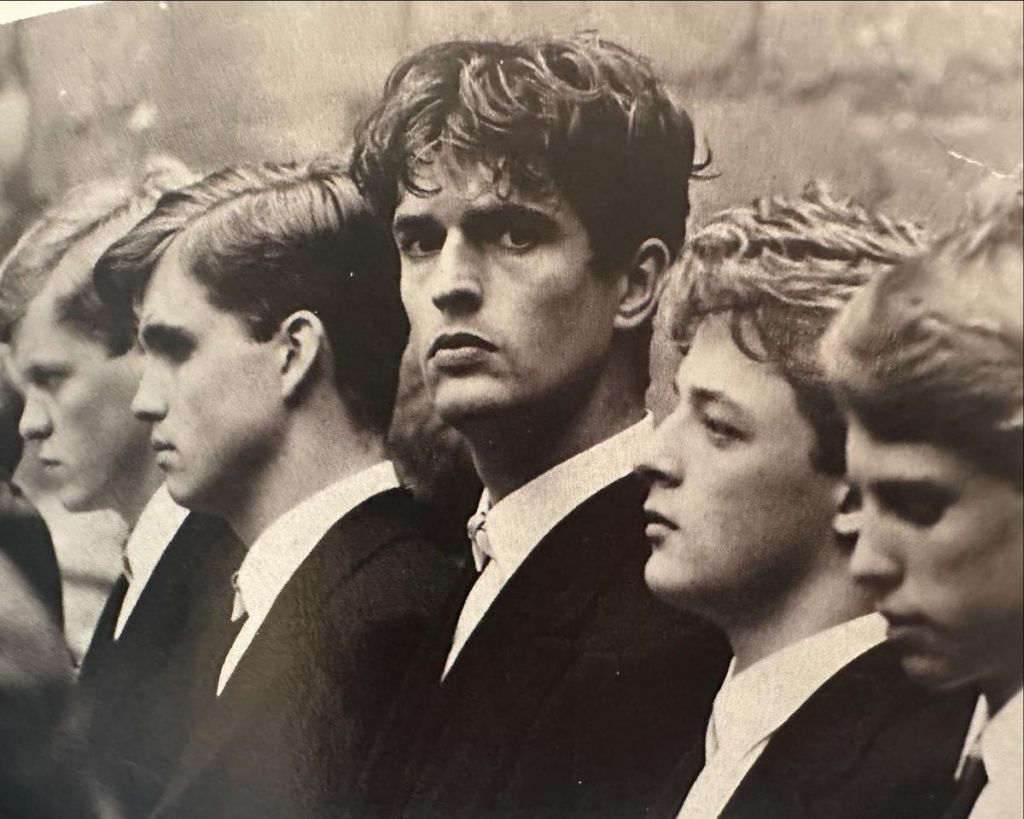
Rupert Everett and Colin Firth in Another Country. Directed by Marek Kanievska (1984)
It’s taken me a long time to watch Marek Kanievska’s Another Country because the thought of Soviet spies didn’t exactly fill me with excitement. It turned out to be a red herring. The film opens with Rupert Everett as Guy Bennett (think Guy Burgess), a wheelchair user in his drab Moscow apartment, who reflects on his schooldays at a 1930s English public school.
“It was delightful, utterly despicable.”
I’d forgotten how incredibly handsome Everett, Colin Firth and Cary Elwes as young chickens were. Well, it’s a gay movie and gloom pervades throughout. The agonies of homosexual love and the even greater agonies of being played with by the power structure.
Afterwards, Everett, flushed with anarchy, and a former public schoolboy himself, looks to have blurred his character with real life. A bit of a nightmare then, but I admire him for it. (I think that Everett is a brilliant memoirist – read his books).
When the film was released in 1984, an American newspaper queried why the biggest question hadn’t been answered. How did the lanky, dishevelled Bennett move from a witty and irreverent schoolboy to become a Soviet spy? We never did find out.
A good film, beautifully shot, if not a bit pedestrian at times.
And so, to the sad story of Frederick Alexander (aged 22), a close friend of Everett, who played Jim Menzies, but was really called Piers Flint-Shipman.
He and Everett were the only members of the original stage cast to appear in the film. “A much subtler and better actor that people at first gave him credit for. Wonderfully arrogant. Great dash and élan. One of the few people who could keep Rupert in order,” said its writer, Julian Mitchell.
In June 1984, while travelling back from France to attend the preview-cum-premiere of Another Country he was killed when a suicidal driver turned into his oncoming car. He would never grow old like Everett, Firth and Elwes.
And a recent anecdote.
Charles Spencer, 9th Earl Spencer, brother of Diana, Princess of Wales, was a young extra when it was filmed in Oxford, Northamptonshire and London in 1983.
“I bumped into Colin Firth – whose first film this also was – when he was promoting The King’s Speech, and said: ‘Colin, you won’t remember me – but we took a shower together in Another Country’.
“Of course I remember!”, he laughed: “You have fantastic buttocks!”
“Had, I’m afraid”, I replied: “not have…”
Rupert Everett (centre) and Charles Spencer (far left) in a scene from Another Country
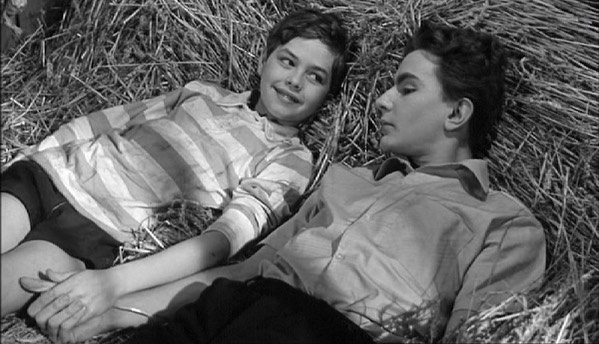
Image: Les amitiés particulières (1964). Directed by Jean Delannoy
It was the last night of our short seaside holiday and Charlie decided that it would be a good idea to stream a movie. He spent well over an hour flicking through Netflix and Prime Video until my patience finally ran out.
“Charlie, we will soon have spent as long looking for a movie than it would to watch one.” He stopped flicking. “Then I shall choose this one, and if you do not like it, I shall not be held responsible,” he said petulantly.
The movie he chose was in black and white and called This Special Friendship. It soon became apparent that it was old (1964), and in French, which delighted Charlie, but the English subtitles would soon annoy him, while I would be annoyed with Charlie for moaning about them.
“It is called Les amitiés particulières, which means ‘special friendships’, but the English cannot translate it correctly,” he told me. “The synopsis is simple. It is set in the rigid atmosphere of a Jesuit boarding school and is a tender relationship between a 14-year-old upperclassman and a 12-year-old boy, who is the object of his desire.” Charlie’s expertise had come after consulting his iPhone.
The movie seemed harmless enough, and because it was made in the 1960s was tame when compared to boy-love movies of today, but after only a few minutes Charlie tutted with disdain. “The character of Georges is supposed to be 14 years old,” he said, “but he looks like he is older than me.” I later found out that the actor, Francis Lacombrade, according to one source, had been 21, but others stated that he had been 17.
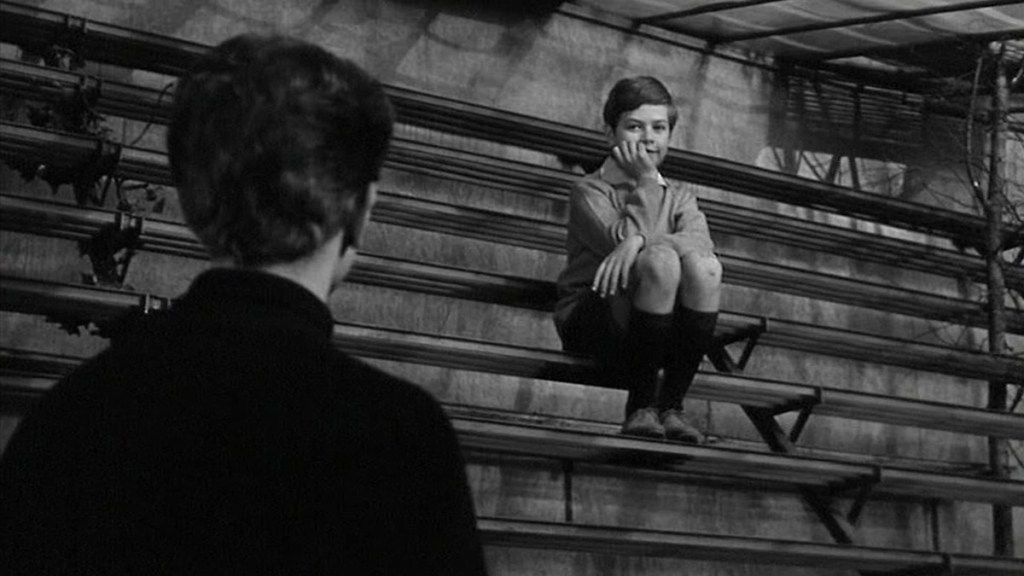
Charlie’s derision intensified when the object of his desire appeared for the first time. He was a small cupid-faced boy carrying a lamb which we presumed was meant to be the symbolism of Jesus Christ as the Lamb of God. “Bordel de merde! Please tell me that this boy isn’t going to be his lover.” His fears proved to be correct, and I agreed that the age difference was disturbing.
He was called Alexandre, who turned out to be a bit of a cock-tease for Georges, but the romance mainly involved love letters passed between the two of them. The relationship is destroyed by a priest’s will to protect them from homosexuality. “We know why he did that,” said Charlie knowingly. “That priest wanted his wicked way with the little boy.” That wasn’t the case, but there were no happy endings, because heartbroken Alexandre jumped to his death from a moving train.
“The movie was good,” Charlie said afterwards, “but I found it troubling.” I agreed and began my own internet search to see what people thought about it. I was surprised to find that modern-day audiences seem unperturbed by the subject matter but could see that the Catholic Church had tried unsuccessfully to get it banned on its release.
Charlie disappeared into the kitchen while I fell down a rabbit hole as I dug deeper into the movie’s background. When he returned with two mugs of tea I told him my findings.
“I’ve found things that might upset you even more.”
“What do you mean?”
“The movie is based on a book written by a French author called Roger Peyrefitte and is said to be autobiographical because he had a similar romance, and the younger boy committed suicide.” My pronunciation was poor, and it came out as Pay-ri-fit.
Charlie corrected me. “Pey-ri-fee.” He stretched on the leather sofa and mulled over my new-found knowledge.
“But there is more,” I said, scrolling down the page of a French literary site. “Peyrefitte visited the movie set and fell in love with a 12-year-old boy who played a small part as a choir boy. They had a relationship, and the boy became his personal secretary and was eventually adopted by him.”
“It is Greek love,” Charlie frowned. “Erastes and Eromenos. What happened to them?”
“The boy was called Alain-Philippe Malagnac d’Argens de Villèle.” My English pronunciation left a lot to be desired, but Charlie looked at me as though I had said something significant.
“Alain-Philippe Malagnac?”
“I suppose so.”
“It cannot be the same person,” he cried, “but my father once knew somebody with that name.”
I continued reading.
“Malagnac became proprietor of Le Club Colony in Paris and briefly managed French singer Sylvie Vertan but it almost bankrupted Peyrefitte and forced him to sell artworks and erotic antiques.”
“The Alaine-Philippe Malagnac that my father knew was married to Amanda Leah, who he believes to really be a man, but a gay icon. He died in a fire near the Alpilles Mountains.”
I saved my pièce de résistance until last.
“Malagnac married Amanda Lear in 1979. She was close friends with Salvador Dali, who disapproved of the marriage.”
Charlie smiled triumphantly. “That is incredible. I cannot wait to tell my father, but what shall I say?” He began fiddling inside his shorts, something he tended to do when he mulled things over. At last, he came to a decision. “I will not say anything because he will become worried that I might also be seduced by an older man.”
I smiled. “I think it is most likely to be the other way around.”
Image: Les amitiés particulières (1964). Directed by Jean Delannoy






 Perfectly Hard and Glamorous