
“I’m home again in my old narrow bed
Where I grew tall and my feet hung over the end
The low beam room with the window looking out
On the soft summer garden
Where the boys grew in the trees.”
Boys in the Trees (1978). Lyrics by Carly Simon.
“I’m home again in my old narrow bed
Where I grew tall and my feet hung over the end
The low beam room with the window looking out
On the soft summer garden
Where the boys grew in the trees.”
Boys in the Trees (1978). Lyrics by Carly Simon.
The apples were nearly ripe. Red where the sun had kissed them too hard, green in the hollows of shade. Some were freckled, some split open already, pale flesh browning, bees drunk on the sugar. The smell hung low and thick.
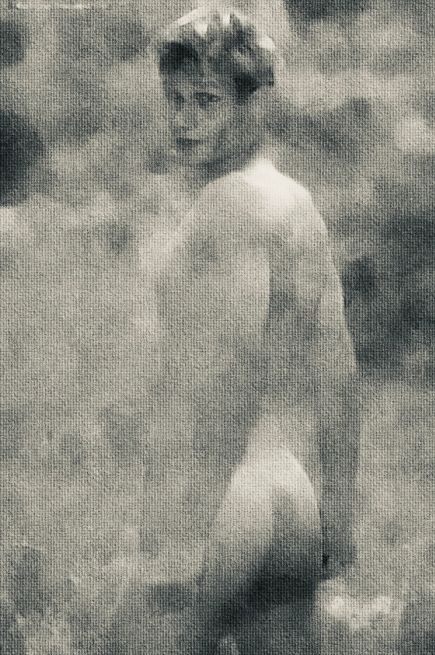
He didn’t decide to dance. It happened the way shivering happens. One bare foot scraped the ground, testing it. His shoulders rolled, stiff and then looser, like he was shrugging off something heavy. His arms lifted, awkward, elbows bent too sharply, wrists slack. He laughed under his breath at how stupid he must look, alone in a field with no one to see.
That was part of it. The not-being-seen.
But the boy danced naked under the apple tree.
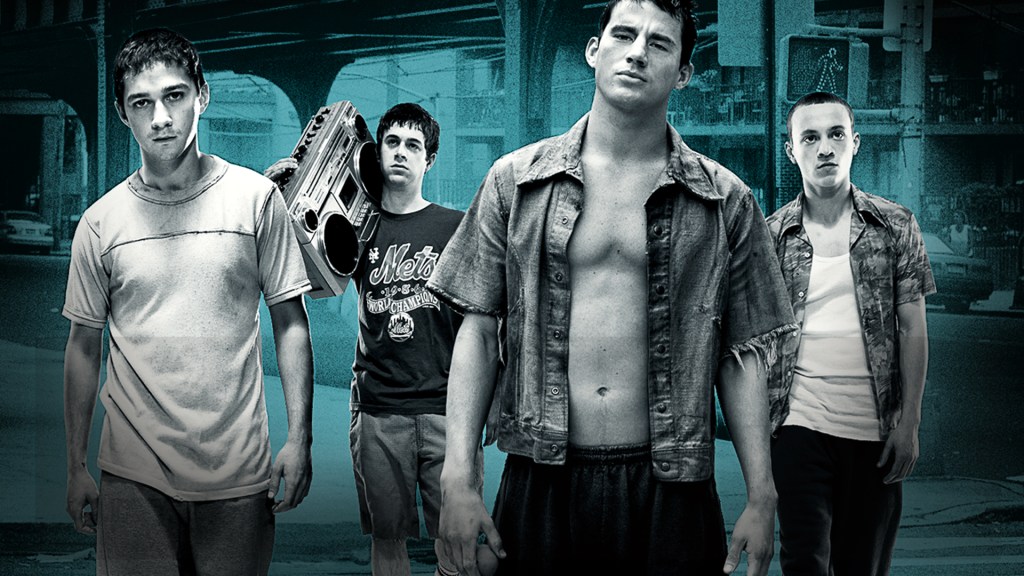
There was this guy, always half-naked like he was daring the block to say something. All nerves and sweat and attitude. All fight in him. You could smell the testosterone, I swear—like sweat, cigarettes, and bad decisions mixed together.
You ever hear somebody get called Pistachio Dick? Yeah. Welcome to Queens. Ho yay!
Antonio was like that with Dito—mean to everyone else, but around him? Forget it. Full guard up. Like he was protecting something he didn’t even know how to name. Two guys, both tough, both turning red whenever they got too close. Nobody said anything. Nobody had to.
And here’s the thing that kills me about Channing Tatum—this guy did nothing. Nothing. Just the right sperm hit the right egg and boom, whole fuckin’ world started orbiting him. Not my line. Some guy named Anonymous said it. But yeah. That’s how it went.
When you look at boys, do you really look – do you look in detail? People see Bradley and assume that beauty must imply intelligence. It doesn’t. The truth is, he’s a bit of a himbo. There’s a Yorkshire saying for people like that: “thick as pig shit.” And Bradley, I suppose, fits it perfectly. He smiles – handsome, devilish – with a guileless sense of wonder. But how long can I keep swallowing my frustration? Physical attraction fades quickly, and I realise the only role he can play is arm candy: a beautiful body, empty-headed, ornamental.
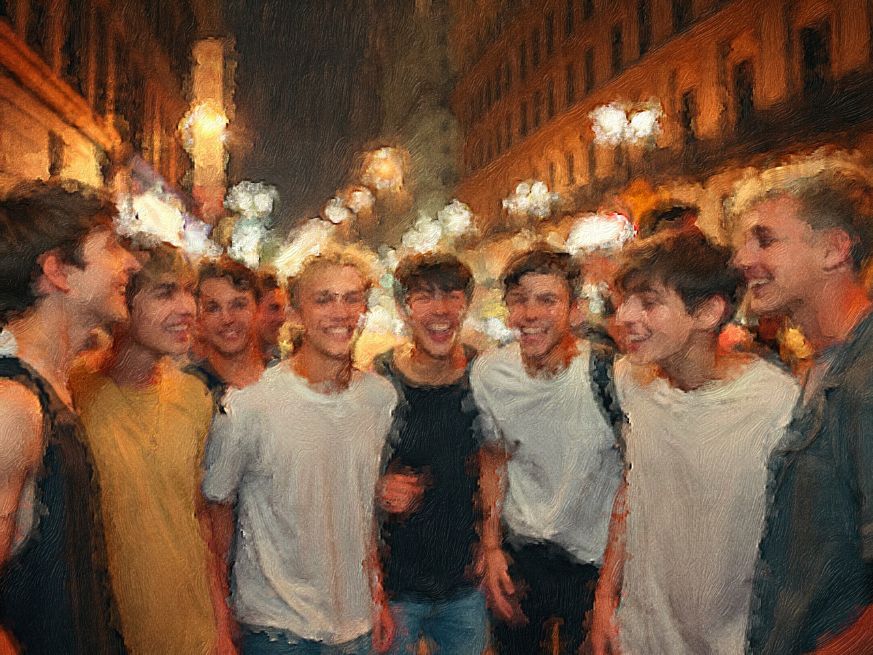
Hormonal Surge: Increased testosterone, fuelling restlessness and the need to discharge energy, sometimes through risky or boisterous play, mock fighting, and testing boundaries.
I wake and can hear music playing in the other room. It is an eighties song – Calling All the Heroes – and it is perfect. My first waking moments are defined by a song made before I was born. It will become a favourite. Whenever I hear it, I will recall the dream.
“I’m eighteen. Like I always am. There are twenty boys of a similar age. We don’t know each other, but we have bonded; something connects us, though I don’t know what it is. And now we are friends. Brothers who drink too much, laugh, and joke. We move from bar to bar until the group becomes fragmented, but still we keep bumping into one another — in different bars, on street corners, in dark streets – and each time we greet each other with high fives. I keep losing my coat that contains my mobile phone, but somebody in the group always finds it and saves it for me.”
What am I dreaming about?
Eighteen. Delayed or suspended adolescence. The moment just before categorisation -before ‘out’ or ‘not out’, before relationships are legible, before desire is policed or explained. A moment of pure potential, when attraction, friendship, and self-recognition have not yet been sorted into boxes. A group of boys I don’t know, where intimacy doesn’t have to announce itself as erotic to be real. Touch exists: high fives, a coded language, bodies moving together through night-time space, alcohol loosening edges, and the bond is felt rather than named.
These boys don’t posture. They don’t test me. They don’t ask who I was. They simply accept me. A world that perhaps never fully existed, but felt briefly possible.
The group breaks apart, but there is no need to cling because the bond reasserts itself naturally. “I still know you. You still know me.” I repeatedly lose my coat and my phone – yet I am never punished. I am held by others even when I am careless, distracted, or drifting. I don’t have to hold myself together perfectly. I’m not abandoned for losing my way. A fantasy of uncomplicated male belonging – one where youth, desire, friendship, and identity coexist without fracture or explanation.
The next part of the dream is important.
“There are ten of us staying in a hotel room. It is the only one available. We snack on almonds and slices of apple covered in salted caramel and maple sugar. Two double beds and a single mattress on the floor. When it comes to sleep, we must find space in one of the beds. I choose a double bed where four of us will squeeze together. I’m thrilled that the most handsome boy will sleep next to me. But at the last moment, he is taken. Another boy wants him to share the mattress on the floor, and I am devastated. The dream is never consummated.”
The hotel room matters. It is temporary, improvised, and not designed for this many bodies. I share a bed with four boys. The choice is telling. I don’t choose privacy, pairing, or exclusivity. I choose crowded intimacy – warmth, bodies, breath, limbs overlapping. Proximity without the exposure of being singled out. I am about to be close to the handsome boy without declaring him an object of desire, but he isn’t a person yet – he is a figure onto which desire might safely attach itself.
The handsome boy doesn’t reject me; he is summoned – pulled away by another boy. Desire is displaced, not denied. My devastation isn’t only about losing him. It is about losing the fantasy of being quietly chosen within the group. But the group has ruptured because somebody else’s desire has rearranged the night. My loss is intimate, quiet, internal – no one else even notices it happening – and so I do not follow. I do not compete. I do not protest. I absorb the loss silently.
I woke up.

Boys will be boys.
Different sorts.
Different morals.
Not fussed really.
I can do nice boys
I can do bad boys
I can do polite boys
I can do charming boys
I can do clever boys
I can do rough boys
I can do tough boys
I can do council boys
I can do rich boys
I can do student boys
I can do clean boys
I can do dirty boys
I can do skinny boys
I can do clean-cut boys
I can do athletic boys
I can do energetic boys
I can do adventurous boys
I can do sensitive boys
I can do confident boys
I can do caring boys
I can do unconventional boys
But I can’t do golden boys
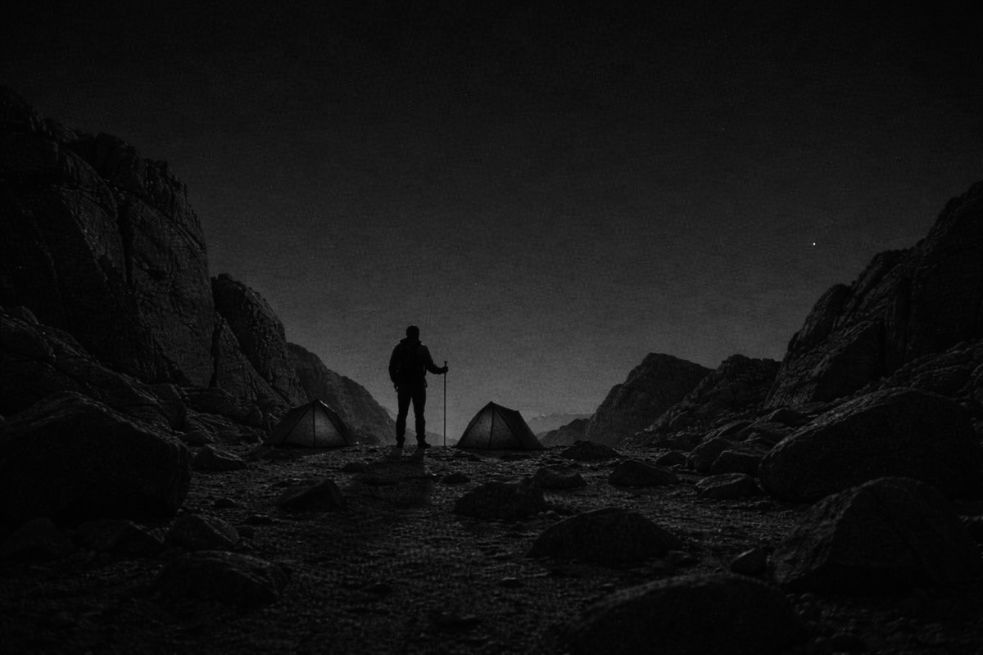
A solitary figure stands above Kinder Scout. He cannot be seen, yet he watches from afar. The darkness thickens over the peaks, and a westerly wind rises as if summoned from nothing, but neither deters him. This is not a place for the unprepared. The temperature will fall; the warmth of the day will slip away, unnoticed, into the stone.
As the figure observes the six boys pitching their tents, a quiet certainty settles within him: he is powerless. He cannot call out. He cannot warn them. Leaning on his stick, he endures the bitter air and waits, bound to witness how they will meet the night. Their laughter will thin, their bravado ebb, as loneliness takes hold. Escape will become a wish rather than a choice, and sleep the only surrender, each of them willing the morning to arrive.
When he is certain the boys have fallen into a restless, unhappy slumber, the figure moves. He steps softly across rock and scrub, listening, careful not to betray his presence. Only when he is satisfied that he will not frighten them does he pause to peer into each tent. There he sees them cocooned within their sleeping bags, clinging to one another, sharing the fragile warmth of slender, adolescent bodies against the cold.
At last, he chooses a broad, ancient rock and settles there, a silent sentinel. He remains, guarding their sleep, until the first pale glow of the new day begins to rise in the east.

The warm light of day. A sudden shout. A boy’s voice: “Questa è la fine!” — This is the end! The cry carries over the water, impossible to know which of them called it, only that it came from one of these boys, each charged with careless energy.
“Con petto nudo,” comes the whisper — with bare chest. “Speak it now, or the moment will slip into memory.”
The dares run high: peer pressure, bravado, that fragile seam between recklessness and courage. None of them yet know it, but this is their rite of passage — the pivot between innocence and the pull of adulthood. Here, in the heat, end the rituals, the invisible hierarchies, the unspoken rules of the pack.
The summer outsider watches. Friendship, rivalry, longing, jealousy, innocence, danger — all play out before his eyes. And he understands the cry for what it truly is: not a game, not a dare, but a declaration.
It is the end.

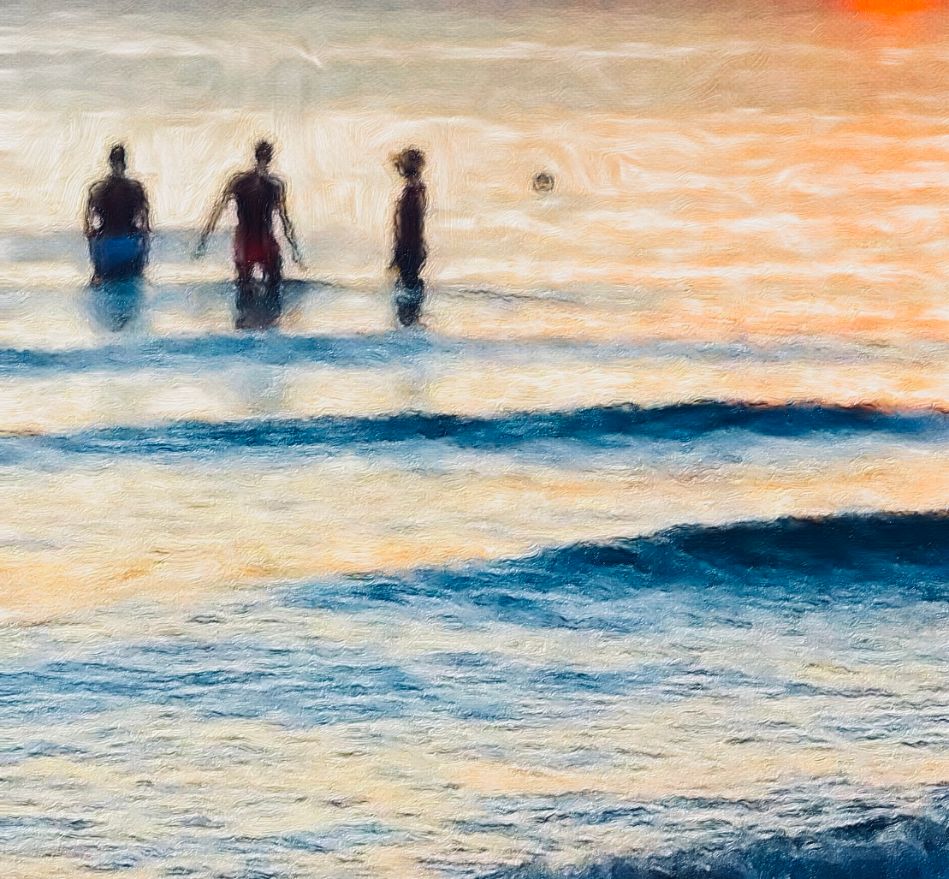
I had never been to Lake Garda before, and I was surprised by how much it reminded me of the coast. The water was a soft turquoise, rippling with silver and white crests. The hills rolled gently, dotted with olive groves and cypresses. Braccobaldo Beach turned out to be a mix of pastel colours – terracotta roofs, lemon-yellow houses, pale pink facades – and construction sites.
Cola took me to the pebbly beach where his friends hung out and introduced me to Leo and Sandro. His girlfriend, Cinzia, came from San Giorgio in Salici. She relaxed on a sun lounger, attracting attention from cheeky young Italian boys who had arrived on scooters. Cola sat glaring at them, but he needn’t have worried because it was obvious that Cinzia was in love with him. She spoke in English (because it was better than my Italian) and wanted my views about Donald Trump and Giorgia Meloni, who she plainly didn’t like.
Cinzia asked what I did for a living, and I told her that I was a writer, which sounded grander than it was meant to be. I explained that the novel I was writing, if it ever got published, would struggle to sell because only romantic fiction was keeping the book market alive. She raised an eyebrow when I told her that people had moved on from Harry Potter and were now interested in raunchy romantasy books.
The boys went swimming in the lake, and we watched as they grappled and tried to duck each other underwater. These were the last antics of teenage boys, a final celebration before they became men. All three were dark and handsome, but skinny Cola towered above the others. They had known each other since school, Cinzia told me, and were inseparable, but that was about to change. Leo was training for the army, Sandro was joining the Carabinieri, but she was unsure what the future held for Cola.
I asked how he was able to afford a brand new Abarth 500, and she laughed. It was not his car; it belonged to a signor from Torricelle who liked Cola and let him use the car in exchange for doing jobs around his big house in the hills. Cola was very skilful, she said, and could put his mind to anything that involved manual work. He was not, she added with sarcasm, very good academically. And she worried about what might happen if the signor dispensed with his services.

“It is a sign that you are growing old,” said the old man, his voice soft with resignation. “Each year, the boys seem to get better. As if someone laced the ordinary—Big Macs, frozen pizzas, vending machine snacks—with something secret and sublime that improves a man’s sperm. A quiet alchemy that sharpens jawlines, brightens eyes, perfects the symmetry of youth. It’s not just beauty—it is evolution disguised as convenience. And I watch them pass, these boys, like living advertisements for a future I won’t inhabit. It makes me sad. And jealous. Not of their youth, but of the ease with which they wear it.”
 Perfectly Hard and Glamorous