Category Archives: Life Story

My Week, For What It Was Worth

On returning to that bronze statue…
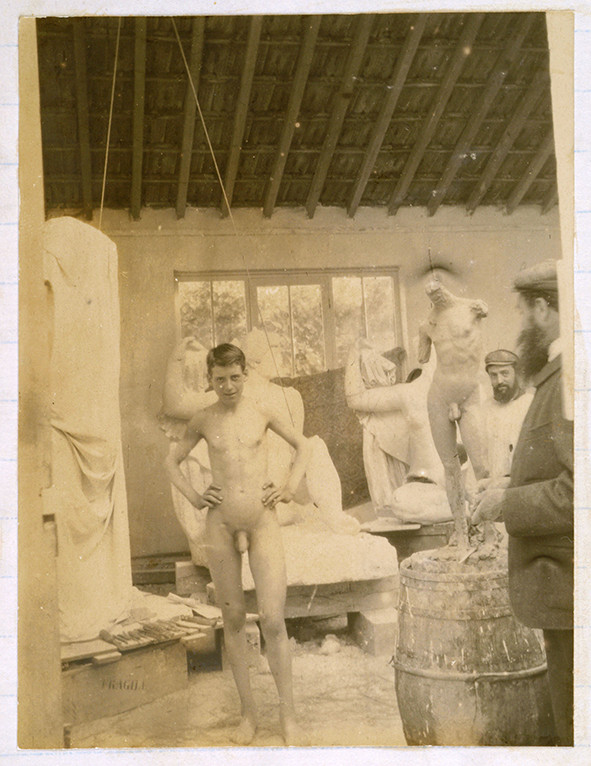
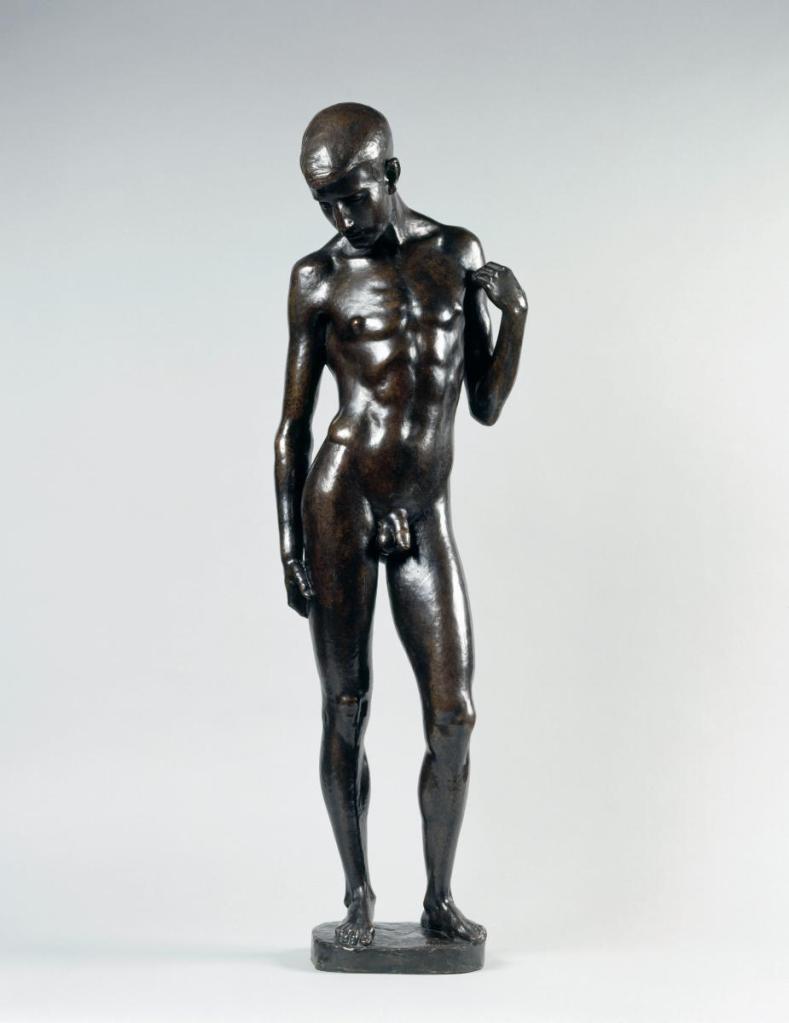
Gaston George Colin (1891–1957), by most accounts a young cyclist, perhaps even a jockey, and later a pilot—but certainly a chauffeur to Harry Graf Kessler, the well-connected German diplomat, writer, and patron of modern art.

Kessler’s diaries reveal that he began a relationship with the seventeen-year-old in 1907, hosting him both at the family castle and during stays in Paris, Rome, and Denmark.

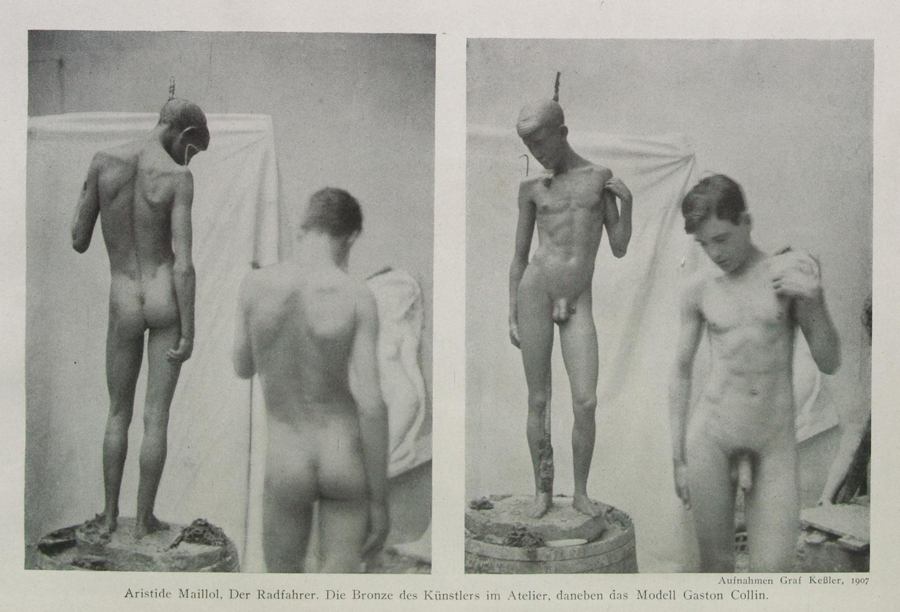
While in Paris that same year, Kessler asked his friend Aristide Maillol to create a life-sized marble statue of the young man. He was said to have wanted a likeness of Narcissus, inspired by ancient Greece, which he saw as a culture where relationships between men and youths were openly acknowledged.

The outcome, however, was not a marble statue but a smaller bronze work, The Racing Cyclist (Le coureur cycliste), capturing a classical ideal of beauty and strength.

Maillol, who rarely worked with male nudes, struggled with the piece—his efforts complicated by Kessler’s constant attention to detail. The sculpture was not cast until early 1909, and Maillol remained dissatisfied, noting its unusual proportions, particularly the enlarged head and penis.

It was eventually exhibited in the French pavilion of Decorative Arts at the Turin Universal Exhibition in 1911.

Following the Nazis’ rise to power in 1933, a fearful Kessler left Germany for Paris, later moving on to Mallorca and finally to southern France. It was only in 1985, when his early diaries were discovered in a bank vault, that the extent of his fixation on Gaston Colin came to light.

Four casts are known: Kessler’s original is now held at the Kunstmuseum Basel, while others are in the Museum Folkwang, the Musée d’Orsay, and the Bavarian State Painting Collection in Berlin. Additional versions may exist, as Maillol is believed to have produced a second edition around 1925.
On finding that Joseph (or Sam) was queer…
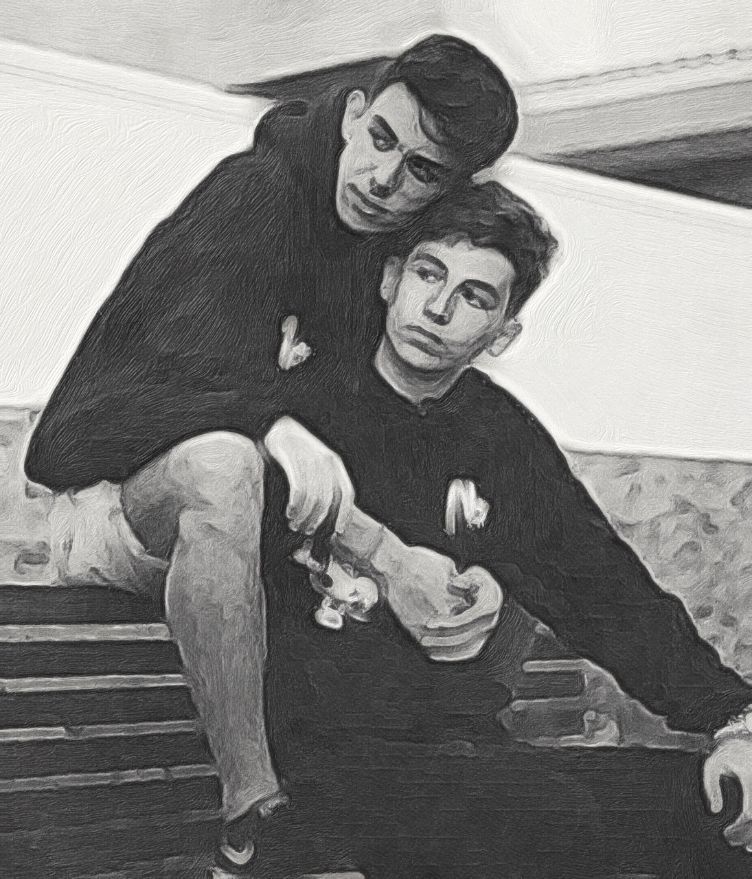
It turns out Joseph lied to me. I found out that the flirty boy with the rolled sleeves, the nice arse, and the quiet smile is called Sam. And he hasn’t served me coffee for weeks. I still go in every day, but he’s disappeared—off studying, or back to his girlfriend. Then on Monday, he came in as a customer, joking with the staff behind the counter. A good-looking guy followed him in. Sam touched him lightly on the arm, and the guy patted him on the arse. They left holding hands, and I had to accept that Sam wasn’t available to me anymore.

It was an emotional snap. The interest hadn’t been given time to fade; it just hit a wall. That turns into jealousy very quickly—why them, not me? Seeing that physical ease between them—the touch, the closeness—intensified everything. It wasn’t simply that he was taken; it was seeing what that looked like. That’s what stung more than I expected. I told myself not to inflate things beyond what they were. I hadn’t even been rejected—just abruptly cut off.

I had to stop idealising someone I’d barely interacted with, especially once they became unavailable. That was the truth of it: there had been no real interaction. My mind had filled in the gaps, making Sam more significant than he ever really was.

But there was still that lingering feeling—a symbol the mind clings to—a sense of missed opportunity.

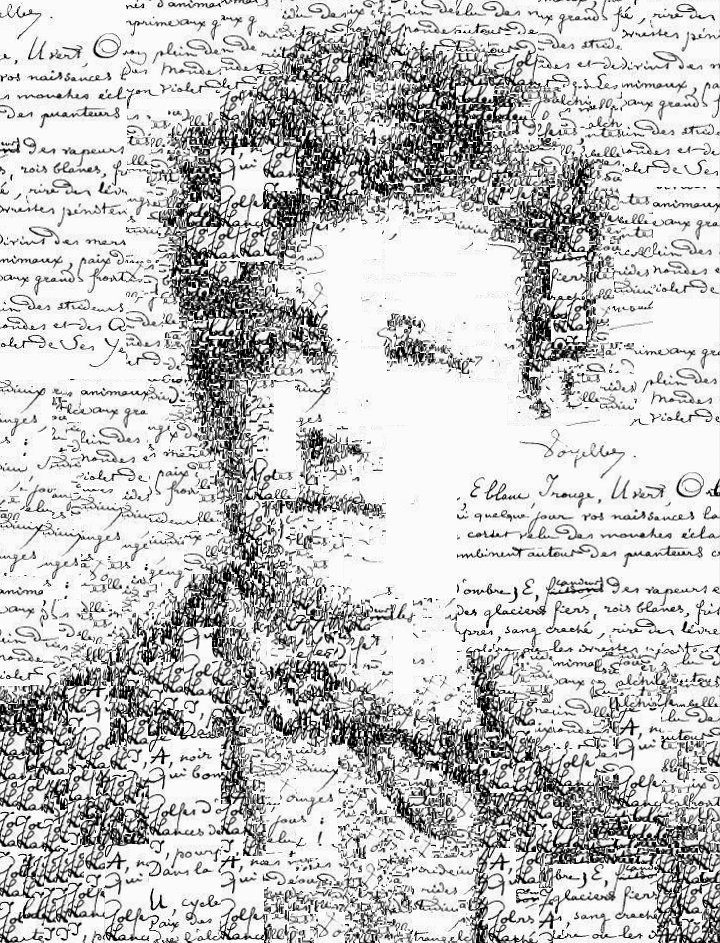
On discovering Arthur Rimbaud’s homoerotic poem

Stupra II (1871)
Our buttocks are not theirs.
I have often seen people unbuttoned behind some hedge;
and, in those shameless bathings where children are gay,
I used to observe the form and performance of our arse.

Firmer, in many cases pale, it possesses striking forms
which the screen of hairs covers;
for women, it is only in the charming parting
that the long tufted silk flowers.

A touching and marvellous ingenuity such as you see only
in the faces of angels in holy
pictures imitates the cheek
where the smile makes a hollow.

Oh! for us to be naked like that,
seeking joy and repose,
facing one’s companion’s glorious part,
both of us free to murmur and sob?

Arthur Rimbaud (1854-1891)

The Latin ‘stupra’ is plural for stuprum, which means an obscene and/or illegitimate copulation. Because of their explicit homoerotic content, these poems were not published during Rimbaud’s lifetime. They first appeared in a private, limited edition in 1923.

On watching a film that seemed familiar…
There was a similarity — a flicker of déjà vu. It softened the boundary between experience and memory, as though something new had already been lived. For a moment, my mind misread the present as the past, conjuring a false familiarity. Certain scenes felt strangely recognisable, as if they belonged to me already.

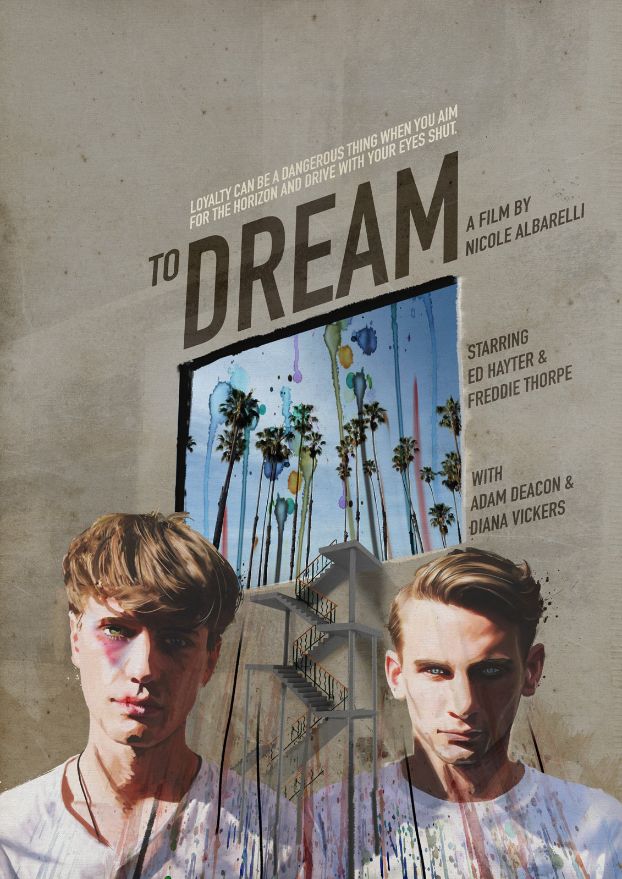
To Dream is a story of friendship — hopeful, intimate — set against a harsh inner-city backdrop. Best friends Luke and Tommy live in an unforgiving corner of London. Having dropped out of school and still at home, they find themselves dreaming of what might come next. Their shared ambition has always been escaping: to leave London’s grime behind for an imagined American paradise. It is a dream that has carried them through the realities of abusive homes, and one that binds them tightly together. But as family tensions worsen, and Luke’s new love interest begins to unsettle their bond, loyalty pushes Tommy toward a decision that will alter their lives forever. (Winter Film Festival – New York City).

Change the setting, reshape the structure — the dynamic remains. Four years on, as I approached the final instalment of Perfectly Hard and Glamorous, this little-seen B-movie felt like an omen.

Then I realised what I had missed: the father. There is always an abusive father. Somehow, I had forgotten him.

To Dream. United Kingdom (2026). Directed and produced by Baltimore-born, London-based Nicole Albarelli. Starring Freddie Thorp, Edward Hayter, Adam Deacon, Frank Jakeman.

On the cute and willing…

Artem. Photo by Archie – Saint Petersburg (2025)

My Week, For What It Was Worth

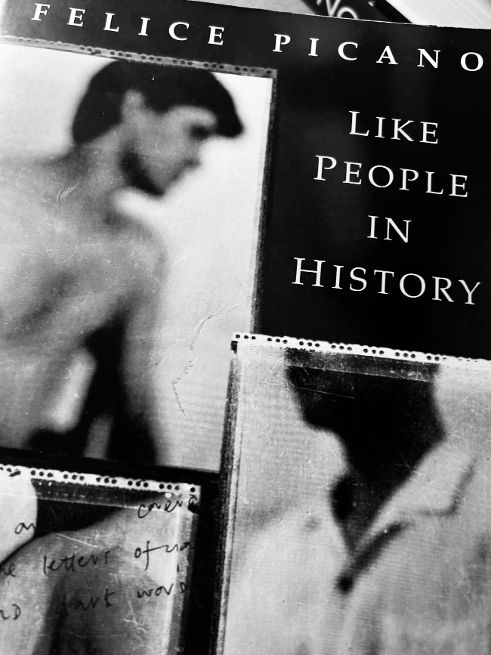
On reading Like People in History…


In January 2000, somebody called Gregory Nash pencilled his name on the front page of a paperback book. I don’t know what happened to it for the next 26 years, but a few weeks ago, a friend found it at a second hand book shop in London and gave it to me as a present.

Published in 1995, Like People in History, by Felice Picano, traced not just the protagonists’ lives but provided the defining moments of American gay history between 1954 and 1991. 

‘The big novel we’ve all been waiting for – the gay Gone with the Wind,’ wrote Edmund White at the time, which was hardly surprising. Picano and White were both founding members of the Violet Quill Club, considered to have been a gay urban version of the Bloomsbury Group. They met regularly in Manhattan and on Fire Island in the early 1980s to discuss their works in progress.

I must explain that I thoroughly enjoyed the book although comparing it with Gone with the Wind didn’t do it any favours. 

“Sex is the defining characteristic,” critic Patricia Rodriguez wrote back then. “He (Picano) buys into every stereotype that many gays wince at, giving ammunition to bigots. Nothing’s ever as good as it was when THEY were on the cutting edge.”  (Fort Worth Star-Telegram 1995).

If I have interpreted her correctly, Rodriguez was referring to the 1970s. The archetypal mincing queens with moustaches and lots of hair, who danced to loud disco music, and spoke to each other like they were girls. 

“Mary, you are too much. She’s giving everything. Don’t be so dramatic, girl.” 

Well, they were having a good time, and who could have blamed them. 

But afterwards it became a problem with some gays, particularly for those who hadn’t been there. Such as me. 

I guess that what I am trying to say is that the seventies gay scene (particularly in the USA) aged badly. Too flamboyant and in your face – and decades before RuPaul hyped it up again. 

If AIDS curtailed the eighties, then the reset came in the 1990s. 

Since then, everything seems to have been less colourful and non-scene, and which those from the 1970s might consider boring.

I prefer it this way.

Picano, who published 17 novels and eight volumes of memoirs, died last year, and was better qualified to write about the scene than most. And he did it well. Me? I am trying my best not to come across as a disrespectful and ungrateful cunt.

My adopted copy of Like People in History goes onto my gay literature shelf and stands alongside other members of the Violet Quill Club: Christopher Cox, Robert Ferro, Michael Grumley, Andrew Holleran and George Whitmore. Four had died of AIDS by 1990 and only Holleran is still alive. 

 Last word to Picaro:

“We were all friends and lovers – literally. Robert Ferro and Michael Grumley were partners since the University of Iowa writing school. Andrew Holleran was also at that school. Michael and Robert were together for years. I met Edmund White in Greenwich Village in 1976, and George Whitmore in ‘77. Chris Cox was Edmund’s boyfriend: George and I were tempestuous boyfriends at the time, but he was instrumental in forming the group. Robert was also very socially active, so he and George pulled it together.”

On coming upon a skanky boy…


I don’t know your name. I don’t know how old you are. I don’t know where you live. I know absolutely nothing about you.

But I do know that you are a bad apple that has fallen from the tree. Realise that people judge you for what you are.  A skank – dirty, untrustworthy, disreputable, and sexually promiscuous.

Levi, the Polish boy with the Yorkshire accent, once picked up on something I had written.

“Boys who stuff their hands down their underwear because they think it makes them hard. Boys who pretend their sweet smelling piss and cum fingers are guns.”

He understands that I am hopelessly addicted to skanky boys.

And lust is only a starting point for deeper connections.

On realising that if I had been around in 1960…


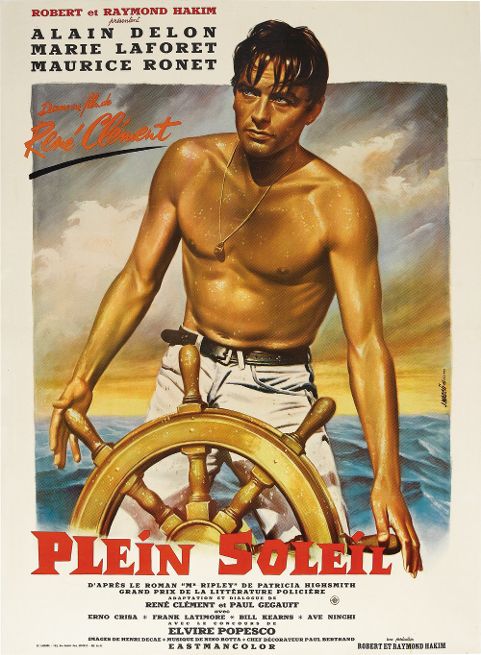
I would have been going to the cinema and masturbating over Alain Delon in Plein Soleil. That unnatural beauty, chilling menace and simmering homoeroticism. And don’t get me started on Rocco and his Brothers.

On that furtive glance from beneath his baseball cap…
The look that said: “I know that we’ve known each other for ten years, and I know that you’ve always loved me, and I’ve been a complete shit to you. But now that I’m in my prime, I’m ready and willing to have that relationship.”

On the barman who smiled at me…
I cannot say, in all honesty, whether he was handsome or not. But beauty is not everything. He was shy, and polite, which said something. And when he faced me there was a hint of attraction that appealed to my shallow mind. 

I cannot say that wearing shorts was a good idea either. I know fine legs when I see them and yet I was still deciding whether it was the case here. But he was brave enough to wear them on a cold March night and that showed guts. And when the realisation hit that I was still staring at them, I knew that he probably had good legs after all. 

But what absolutely blew me away was when, amidst his boredom, he saw that I was giving him attention and cracked a most beautiful smile. It was all so sudden. A big genuine smile. The last time a chicken smiled like that, he ended up moving in with me. 

On the cute and willing…
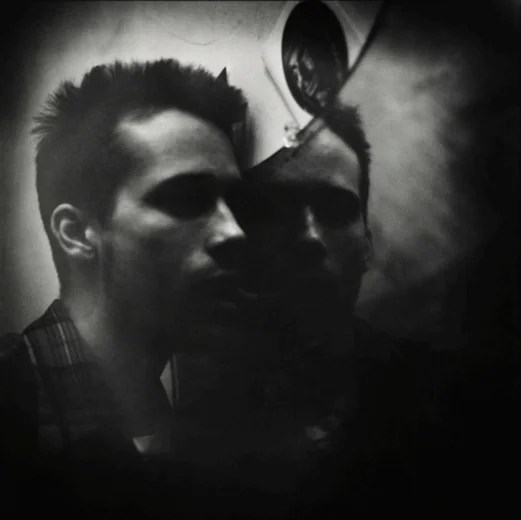
Marcelo Jimenez, model. Photograph by Ryan Duffin

My Week, For What It Was Worth

Le coureur cycliste (1907-08). Gaston George Colin was a young cyclist, Harry Graf Kessler a rich German aristocrat attracted by his figure, and Aristide Maillol the French sculptor stuck between them.

On falling for a bronze statue…
Aristide Maillol. He seduced us with stone. Flirted in bronze. Gaston Colin. A mystery. Le Cycliste. A favour for a friend. Harry Graf Kessler. But Maillol didn’t do dick. But Charlie said, “It is conceivable that he hated the male penis. Much the same as I do with the female vagina.”

On realising that I know nothing about female anatomy…
And so, to be real, I know nothing about female anatomy. Where to stick it? What to do? What to say? Multiple choice. Confused with a clitoris, vulva and a vagina. In case of emergency. Anus. Refer to Dummies Guide to Girl Parts.

On teenage scally boys messing with me…
Broken promises and lies. Rebellious and street smart. Teenage scally boys who disrespected me. No trust, I told them. I’m burned now. I kicked the shit out of one of them. They threw eggs at me.

On flirting with the guy with a girlfriend…
A flick of the eyes. Said it all. My heart surged. Not my normal type. A bit chunky. But good chunky. Everything changed. There was hope. 

On discovering Len and Cub…
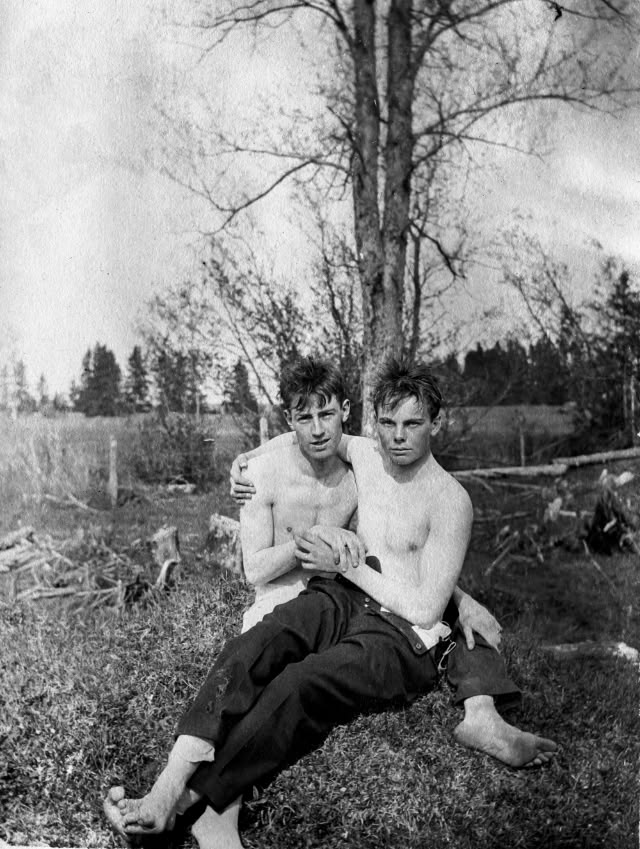
Sweet boys. Lives can be forgotten. Lives can be rediscovered. Long after they are dead. I liked Cub.

Leonard “Len” Keith and Joseph “Cub” Coates fell for each other in early 20th-century New Brunswick, at a time and place where queer relationships were taboo. 

On a house in a small Italian village…
Tuscany. Eight houses. Fifteen people. Nine males. One handsome twink actor. No money to buy. Gutted.

On choosing my gay pen name…
Pericoloso Eros.

On lusting after Matchstick Man…
Getting thinner. Getting stickier. Getting bonier. Dickier. His girlfriend? Getting bigger, rounder, cockier. Fat bitch! 

On being jealous over Joe…
Because some Aussie twink in Perth claimed him and explored his cargo before I had the chance. 

On listening to two guys talking…
“Your psychology is impressive. Wikipedia or Chat GPT?”

On someone’s thoughts about Saturday Night Live…
“Here’s the thing: I’ve rarely met a British person living in the US who has actually found SNL funny. It’s hard to say why this is.” – Emma Brockes (The Guardian)

On the cute and willing…

Finny Tapp, model. Photographed by Gleb Behrens

My Week, For What It Was Worth

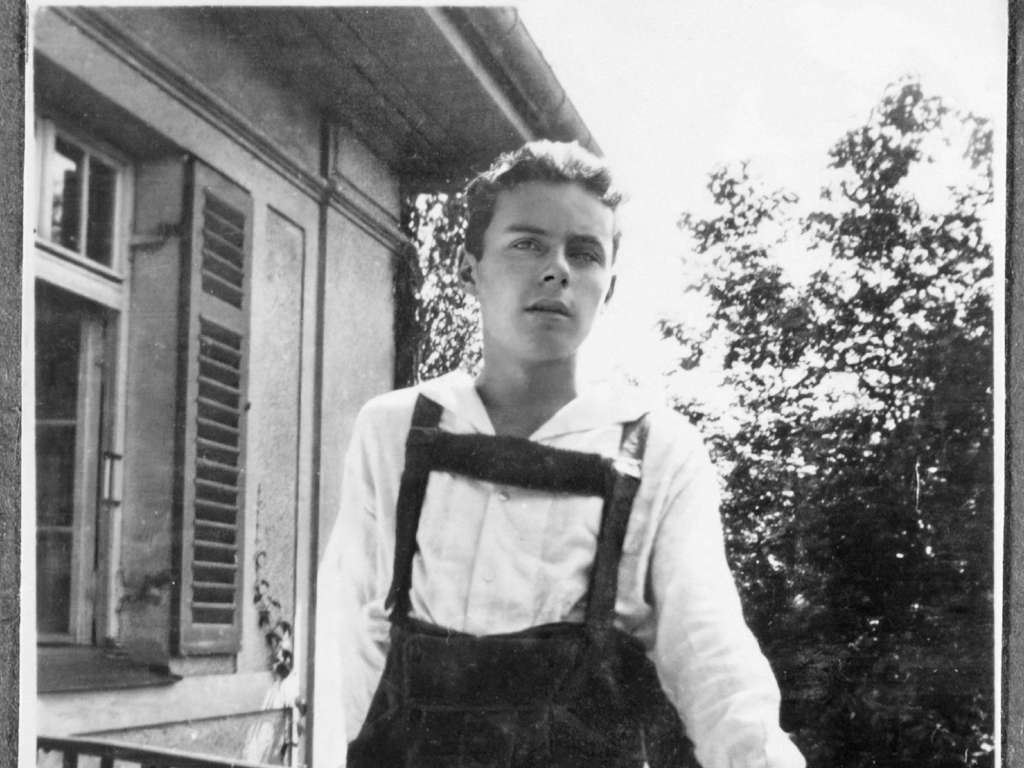
Klaus Mann (1906 – 1949)

On finding a photo of 16-year-old Klaus Mann…

Klaus Mann. Cute twink. What did you become? A chaotic mix: part mongrel, openly queer, a junkie, and premature anti-Fascist. The eldest son of German literary giant Thomas Mann. Born with a permanent side-eye for the world and zero patience.

Every book he published before 1933 got tossed straight into the flames during the Nazi book burnings.

His 1942 autobiography, The Turning Point, reads like a roll call of lost friends; an unsettling number of the people in it had died by suicide, more than feels believable in one life.

Seven years later, in Cannes, he followed the same tragic path.

“Memories are made of peculiar stuff, elusive and yet compelling, powerful and fleet. You cannot trust your reminiscences, and yet there is no reality except the one we remember.” – Klaus Mann (The Turning Point)

On being famous in a hundred years…

I will die and in a hundred years people will decide that I was iconic. Maybe I was just too avant-garde for my era, and everyone needed a lot of time to catch up. Or maybe… I was just a shit writer and in a hundred years time people won’t be writing at all. And when they rediscover my work, it will make my shit writing seem like that of an intellectual. 

On hearing about an intriguing snack…

“He said that he would fix me a snack, but that it might take a little time. I read while he disappeared into the kitchen. When he returned fifteen minutes later, he handed me a plate containing three salted crackers and an unknown delicacy that had been thinly spread over each one. I asked what it was, but he shushed me and said that they were best eaten straight away. I ate them and afterwards he told me that the crackers had been covered with his sperm.”

On the urge to write gay porn…

I write gay sex scenes in which nothing really happens. So why not write gay porn where everything does? The thought crosses my mind, but embarrassment stops me. I have no wish to shock anyone, or to offend.

People tell me there is money in it. In that world you can have sex with anyone you like on the page—the most beautiful man, the ugliest. No limits, no refusals. Anything can happen because you decide it does.

The urge to write it grows stronger.

But then my unhealthy fascination with Baron Corvo returns, as it often does, and he appears in my dreams again. He reminds me—rather coldly—that, like him, I am already sufficiently depraved, bordering on the disgusting, and that there is really no need to write about it.

On realising what I look at each morning…

I’ve started following a French blog called Gay Cultes—my daily hit of a beautiful male body, a little lust, and a sprinkle of homo culture. And it makes me a little jealous because it is simple and never misses. 

On loving these lines in a book…

“He spat and beat his donkey, which farted, kicking one leg. I followed his advice, as the commotion I seemed to be causing was making me a little uncomfortable.”

On observing three guys in a band…

Three guys are standing there with guitar cases on their backs, talking among themselves. From what I catch, they’re starting a band.

For a second I feel this urge to tell them they’re absolutely doomed. Not because of the music—who knows, they might be good. But visually? It’s a disaster. Two chubby guys and one tall, spotty skeleton. 

On finding a good poem…

Together
Sleeping together … how tired you were …
How warm our room … how the firelight spread
On wall and ceiling and great white bed!
We spoke in whispers, as boys will do,
And now it was l—and then it was you
Slept a moment, to wake-time fled;—
“I’m not a bit sleepy,” one of us said.
I woke in your arms,—you were sound asleep.
So close together we had tried to creep,—
Clinging fast in the darkness, we lay
Sleeping together,—that yesterday!

C. Mansfeld

On hearing a man say to his small son…

“Gi’ it a look. It’s reyt callin’ out, innit? All sat there beggin’ for it—everythin’ tha needs t’ knock up a proper bit o’ slopdosh, if tha’s not soft.” 

*****

Did I believe in life after love? In love after love? In life after life? I was unsure at that time.

But we were happy.

My Week, For What It Was Worth


On the boy delivering junk mail…
He stopped some distance from the door. He seemed like a prowling cat suddenly aware that there might be danger. He stayed still, contemplating whether to proceed or retreat. His eyes were nervous and suspicious. And I, standing almost naked in the doorway, smiled as if to say, “I might only be wearing yesterday’s dirty Calvin Klein’s but I’m no threat.” But he made his decision and turned away.

On the woman who told me…
“It was a long time ago. I was young and pregnant and very drunk. I went to a guy in Spain who agreed to give me a tattoo on my huge stomach. I chose that yellow, grinning, trippy smiling ‘acid’ face. After I gave birth it looked like a deflated balloon and I’ve had to live with it.”

On resolving Liam’s finances…
Liam the skater boy, who is short, cute, wears round glasses and has hairy legs. He told me that his girlfriend had moved out and now he was struggling to pay the rent. The briefest thought crossed my mind. I nearly suggested that he sell his body, and become my rent boy. But I didn’t. I remembered that I will not pay for sex until I am old.

On buying old homoerotic novels…
My compulsion to buy vintage homoerotic novels – The Loom of Youth, Despised and Rejected, Tell England. The age of innocence… or was it? Those intense male relationships that remained aesthetic, psychological, and slightly dangerous, rather than purely physical. The obsession with male beauty and youth. The internal conflict between desire and morality. The longing that could not be fulfilled.

On meeting the boy with the moustache…
The small skinny student with an angelic face who had grown a moustache. I hated it and resisted the urge to say so because I knew that he already lacked confidence. He, who couldn’t look me in the eye like he was ashamed of something. Who looked slightly scruffy in the careless way that hinted at potential—like a statue still hidden inside the stone.

On getting lots of messages…
Like naughty schoolboys sniggering at other people’s shortcomings, we trade a constant stream of nonsense and casual insults about the world around us. It is the only language we seem to share, the only ground we truly have in common. From boys to men—ten years of a love affair that never happened. And yet each message makes my heart sing, filling me with a fragile hope, and I find myself wondering whether, somewhere on the other end, he might be feeling the same.

On listening to David reminiscing…
An old song came on the radio: Calling Occupants of Interplanetary Craft. A sci-fi anthem about humanity attempting telepathic contact with extraterrestrial beings. I had never heard it before and mocked the corny American DJ intro.

David frowned. It turned out to be one of his favourites.

“Days at sea,” he said. “I think of a cloudy afternoon on a choppy Mediterranean, sailing from somewhere to somewhere. Feeding coins into a jukebox and drinking weak shandy from white plastic cups. Enough of it that we convinced ourselves we were drunk, though really it was just hormonal schoolboys egging one another on.

“It was a big hit for The Carpenters. Actually a cover of a song by a group called Klaatu, who people once claimed were The Beatles recording under a pseudonym. Absolute bollocks.”

The Better Boy Problem


Pepperoni Passion.
BBQ Chicken Bliss.

“I don’t get you,” said the boy behind the counter. “You’ve already got a great boyfriend.”

“But there’s always someone better.”

He looked at me.

“Is there? From where I’m standing, this new guy’s a loser.”

Pause.

“You’re the only one who thinks he isn’t.”

Hot Honey Dough Balls?

The Untidy Desk


“I adored everything about you: the way you looked, the way you talked, the way you smelt. I studied these small details with a kind of quiet devotion, as if they might one day explain you to me. But the untidy desk—a life carelessly arranged—suggested that we could never have been lovers.”

The Distance Between Brothers

Image – Marc and Uri Carbonell at Two Management

Maxwell and Myles: two brothers, yet two entirely different temperaments.

Maxwell, the extrovert; Myles, the introvert.

Maxwell reserved only in appearance, Myles inwardly repressive.

Maxwell is confident where Myles is nervous.

Careless meets diligent.

Dominant faces the submissive.

The imaginative brother beside the one more firmly rooted.

An optimist paired with a pessimist.

Adventurousness set against caution.

All of it the quiet outcome of the genetic lottery: strands of DNA shuffled and recombined into millions of possible arrangements. From the same parents, yet never the same person. And then life intervenes—different encounters, different choices, different small accidents of experience.

What begins as chance becomes character.

What begins as similarity drifts toward contrast.

In the end, perhaps they also choose it—each brother carving out a separate niche, shaping himself in deliberate opposition to the other, until the distance between them feels almost inevitable.

Jeff Buckley – Beautiful Things Drown

Rawly talented. Jeff Buckley. Photographed by Merri Cyr

Something strange had happened beforehand. A young guy sold me my cinema ticket. Soft features, dark curls, expressive eyes. Soft-spoken. All the time he smiled as though sharing a secret only he understood.

There were other staff around, but when I bought a coffee he served me again. He looked astonishingly vulnerable when he realised he’d screwed up making my hazelnut coffee. And then he scanned my ticket when I headed into the screening.

He might have been Jeff Buckley, if only he’d known who he was.

The cinema was empty, as though this showing were meant for my eyes alone—someone who only discovered him after he was already dead. That strange, almost mystical aura: the romantic legend whose story remains unfinished. It’s Never Over, Jeff Buckley.

A Pre-Raphaelite look—with scratchy stubble—and the whisper of a small child that could rise suddenly into a soaring falsetto, almost devotional. Was there ever anyone who captivated me so completely?

I heard the murmur of Cinema Boy: “The face that once commanded admiration and became a ruin, a tragic testament to a sad end.” That someone so beautiful would go swimming and never come back. My heart insists it was intentional.

One album—both his coming-out and his epitaph. One of the greatest albums ever recorded.

Six days. That’s all it took. A body decomposing, bloating. Skin that once felt so good to touch became pruned, pale and waterlogged—brownish, yellowish, ugly. Corpse wax. A moral fable in which the loss of physical perfection mirrors the decay of the soul.

The film ended. And Cinema Boy—who was probably called Will, or Aaron—came into the cinema to clear up after me.

He was still smiling to himself.

It’s Never Over: Jeff Buckley, a 2025 feature-length documentary directed by Amy Berg (known for Deliver Us From Evil and Janis: Little Girl Blue). It is the first comprehensive documentary authorised by the Jeff Buckley Estate.

Jeffrey Scott Buckley. Guardian angel. Born: Anaheim, California (1966). Died: Memphis, Tennessee (1997), aged 30.

Get the Message Idiot

Question Mark – Charlie Marseille (2026)

The people who excite me rarely seem interested in me, while those I feel nothing for often are. It’s a familiar paradox. Attraction doesn’t always align; sometimes it’s a mismatch of types, sometimes it’s the pull of emotional unavailability. I keep finding myself drawn to people who can’t—or won’t—choose me.

The sensible answer is obvious: stop chasing. Put that energy back into my own life instead of pursuing people who remain out of reach. Still, it’s irritating to realise that the very traits I possess—traits that don’t necessarily fit my own ideal—might be exactly what someone else has been looking for all along.