Author Archives: Delicto

Charlie / I’m gonna be the man who goes along with you

Image: Charlie Marseilles

Charlie was enthusiastic about going hiking in the countryside. I hadn’t realised the motive behind this sudden urge to get into the wild.

Our progress was slow. Every few minutes Charlie would stop, hand me his mobile phone, and ask me to take a video. Charlie walking up a hill towards the camera, Charlie opening a gate and closing it behind him. Charlie pretending to climb a rock face (he was only a few feet from the ground). Charlie walking into the distance. Charlie eating a sandwich. Charlie admiring the valley below.

Each time he said, “Just one more video, and that will be it.” But it never was. He tutted if he wasn’t happy with the results. “You will never make a great director,” he told me, and I was inclined to agree.

We walked ten miles and it took us six hours. Later, as we drank coffee in the late afternoon sun, he informed me that his ‘reel’ had been edited and posted, and that he was getting hundreds of likes.  But there was no mention of the unfortunate guy who shot the videos.

When I’m not in the mood. Sad scenes from a gay bar

Image: Charlie Marseilles

Matchstick Man stretched and showed his slender stomach. Lean, flat and toned. It was for my benefit, and he knew that I would be distracted by the neat wave of wispy hair that headed south of his Calvin Klein waistband. But he still claimed to be straight, and when I suggested otherwise, he simply laughed.

The tall handsome guy, maybe in his twenties, looked fine from a distance. When he came over, I found that he’d had lots of botox and talked about Donald Trump in a squeaky voice. 

An older man chatted me up, and said that I had a lovely smile. But I wasn’t in the mood, and played hard to get, and so I made an effort not to smile anymore. He called me an arrogant prick and left me alone. 

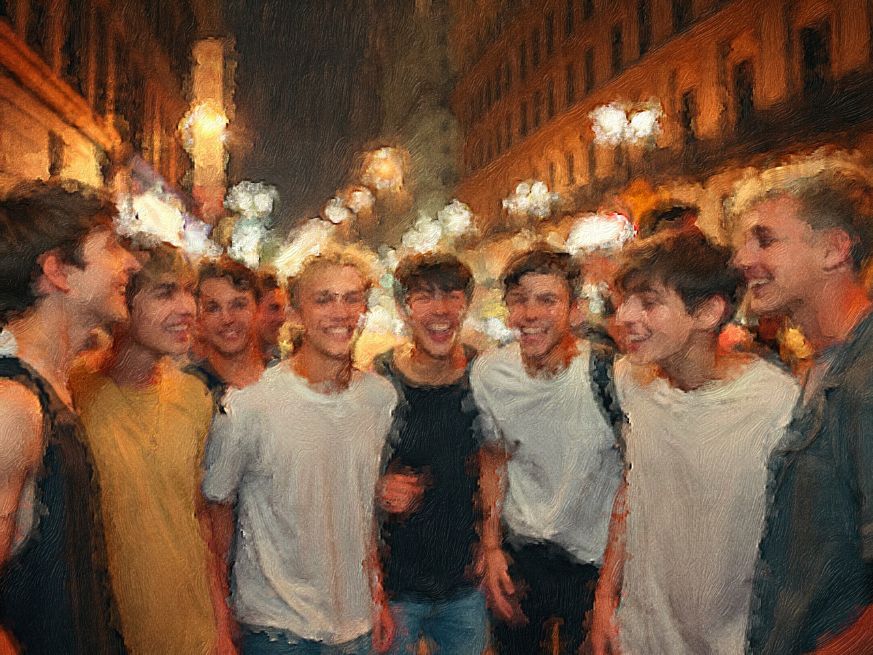
A group of guys stood next to me. One of them, who appeared to be wearing aluminium foil, thought he was the patron saint for confused gays. He pontificated that he knew more than anybody else and his friends agreed with him. I wanted to make a noise like a sheep but somebody beat me to it.

Two guys told a friend that when they got together they were both tops, and so they tossed a coin to decide who would be the bottom. 

Somebody behind me said something like, “Oh, poor love, poor heart, I played with your pain, I trampled on you with indifference!” – or words to that effect. I hoped that they were quoting from something, and this wasn’t part of their normal conversation, but somebody said, “I agree.”

The Angel grabbed me from behind and gave me a hug which I thought was sweet. He sat beside me and gave me a tour of his body tattoos. The last time I saw him, he insisted I speak to his grandmother on his mobile phone. It was an awkward conversation with somebody I didn’t know. She told me that he was ‘ a little shit’ because he forgets to take his ADHD medication and then he’s like a rabbit. My interpretation of a rabbit had been different to hers. Later… he ate pizza with his eyes closed and looked so tired that he may have drifted off at any moment.

Charlie / When boys parted and the broken handshake


“We were brought up as good Catholic boys,” Charlie confided. “But there is no such thing as a good Catholic boy. I am living proof of that.” 

Charlie and his brother went to a Catholic school on the outskirts of Paris. He loved it, whereas Thomas hated it, and was expelled for accidentally setting fire to the priest’s Renault Clio. 

“But Catholic school turned me into a homosexual, and that makes me sad.” He rolled with laughter. “I fooled you! I have such happy memories. I was a prince amongst pigs.” Was this a French expression that was lost in translation?

The conversation happened before we watched Au revoir les enfants (on DVD, no less). The film is set in a French Catholic school in 1944. A boy – Julien – becomes friendly with a new boy – Jean – who turns out to be a Jew in hiding. Throw in the Germans, and you can guess the rest.

Charlie’s school hadn’t been a boarding school, but he probably wished it had been. Living and sleeping amongst dozens of hormonal schoolboys would have suited him wonderfully.

The film’s end scenes were traumatic. Julien, a precocious boy, nervously glances at his friend, tipping off the Gestapo official and, seemingly, causing Jean’s arrest. Later, as he is being led away, he walks over to shake Julien’s hand, but just as their fingers touch, Jean is snatched away. And when the headmaster, Père Jean, also arrested for harbouring Jews, and utters the line – “Au revoir, les enfants!” – the tears rolled down Charlie’s cheeks.  

Louis Malle directed the film and provided the closing voiceover:

“More than forty years have passed, but I will remember every second of that January morning until I die.” (He would depart this world eight years later).

It was based on Malle’s experiences of World War Two when he attended Petit-Collège d’Avon at Fontainebleau. Three Jewish students and a teacher were rounded up and sent to Auschwitz while the school’s headmaster, Père Jacques, would die in the concentration camp at Mauthausen. The memory of his lost friend, and that broken handshake, kept bobbing to the surface, but it took Malle 43 years to make the film.

As the credits rolled, Charlie was in a sombre mood and scanned the back of the empty DVD case. “It was made in 1987, and I cannot believe that I have never seen or heard of this movie before… and it was French too.” He used the fingers of both hands to help him with a calculation. “Do you realise that it has been 38 years since this movie was made? Think about it. Those boy actors will now be old men.”

Both sides untouched. Not for listening. Display only

Betty Blue – 37°2 le matin – Gabriel Yared (1986)

A second-hand record store. Old French chansons played over the speakers. “Très bien,” Charlie beamed, because it made him feel at home. But this wasn’t France, it was an English suburb on a quiet Saturday afternoon. I Shazamed a song on my phone. It was Jeanne Moreau singing Les Voyages. 

Charlie rummaged through a cardboard box of old cassette tapes and I pointed out that had he found something interesting, then he wouldn’t be able to listen to it, because we didn’t have anything to play it on. 

And besides, I told him, I was surprised that he even knew what they were because they were obsolete before he’d been born. “That is not the point,” said the Millennium Child. “I have a good reason for looking.”

At last, he found something that pleased him. “This is what I want,” and he held up the soundtrack album to Betty Blue, or 37°2 le matin, if we want to give it the proper title. (I later discovered that it was released in 1986).

“But how are you going to play it?”

“I am not going to listen to it. If I wanted to do that I would listen to the music on Spotify. I have something else in mind.” With that, he borrowed a pound coin with which to buy it. 

The apartment. The office (which used to be Levi’s bedroom). The cassette tape is stood upright on a shelf alongside vintage postcards, pebbles and shells collected from beaches, and a wooden model of the Arc de Triomphe. “It is simply for show,” said Charlie.

Jour de Charlie. A reincarnation of Jacques Tati

Jacques Tati

A few weeks ago, Charlie introduced me to the works of Jacques Tati. We started with Jour de fête (1949) and over a week watched his Monsieur Hulot, featured in Les Vacances de Monsieur Hulot (1953), Mon Oncle (1958), Playtime (1967) and Trafic (1971). I’m late to Tati’s work, but it wasn’t hard to catch up, because he made so few films, and the ones that he did were genius. 

Charlie knew I would like Tati’s humour but confessed to knowing little about him. Intrigued to find out more, I bought one of the many biographies and spent warm evenings on the terrace absorbed in the life of this French legend.

Tati had a gentle spirit, and a quiet dignity, but behind the camera he could be elusive, stubborn and emotionally distant. This was easily confused with arrogance and I was left with the impression that he wasn’t a nice person. It troubled me because I discovered too many similarities with the person I lived with. I thought, ‘Fuck me! Is Charlie a reincarnation of Jacques Tati?’

Charlie, who tries hard to be good at everything, but doesn’t really know what it is he is best at. Painting? Photography? Modelling? He’s a complex person, committed to artistic vision – sometimes to the point of obsession – and to an outsider he can seem a bit of a shit.

He’s quite the opposite really, but his devotion to art can seem almost monastic. He pushes for the purity of his vision, as though wanting to leave behind something beautiful, and that pursuit can sometimes be baffling. 

I explained this to Charlie, and as the English like to say, he got ‘the face on’. “You do not understand my ache of misunderstood devotion,” he replied. “But I appreciate your concern, because it is mine also, and I need to decide what it is that I am going to be brilliant at.”

Beauty and politics of desire, a boy who never grew old, and the buttocks of history

Rupert Everett and Colin Firth in Another Country. Directed by Marek Kanievska (1984)

It’s taken me a long time to watch Marek Kanievska’s Another Country because the thought of Soviet spies didn’t exactly fill me with excitement. It turned out to be a red herring. The film opens with Rupert Everett as Guy Bennett (think Guy Burgess), a wheelchair user in his drab Moscow apartment, who reflects on his schooldays at a 1930s English public school.

“It was delightful, utterly despicable.”

I’d forgotten how incredibly handsome Everett, Colin Firth and Cary Elwes as young chickens were. Well, it’s a gay movie and gloom pervades throughout. The agonies of homosexual love and the even greater agonies of being played with by the power structure.

Afterwards, Everett, flushed with anarchy, and a former public schoolboy himself, looks to have blurred his character with real life. A bit of a nightmare then, but I admire him for it. (I think that Everett is a brilliant memoirist – read his books).

When the film was released in 1984, an American newspaper queried why the biggest question hadn’t been answered. How did the lanky, dishevelled Bennett move from a witty and irreverent schoolboy to become a Soviet spy? We never did find out.

A good film, beautifully shot, if not a bit pedestrian at times.

And so, to the sad story of Frederick Alexander (aged 22), a close friend of Everett, who played Jim Menzies, but was really called Piers Flint-Shipman.

He and Everett were the only members of the original stage cast to appear in the film. “A much subtler and better actor that people at first gave him credit for. Wonderfully arrogant. Great dash and élan. One of the few people who could keep Rupert in order,” said its writer, Julian Mitchell. 

In June 1984, while travelling back from France to attend the preview-cum-premiere of Another Country he was killed when a suicidal driver turned into his oncoming car. He would never grow old like Everett, Firth and Elwes.

And a recent anecdote.

Charles Spencer, 9th Earl Spencer, brother of Diana, Princess of Wales, was a young extra when it was filmed in Oxford, Northamptonshire and London in 1983.

“I bumped into Colin Firth – whose first film this also was – when he was promoting The King’s Speech, and said: ‘Colin, you won’t remember me – but we took a shower together in Another Country’.

“Of course I remember!”, he laughed: “You have fantastic buttocks!”

“Had, I’m afraid”, I replied: “not have…”

Rupert Everett (centre) and Charles Spencer (far left) in a scene from Another Country

That Moment – Familiarity is Dangerous


A night of drunken defiance, the air outside warm and sticky, carrying the sour breath of alcohol from the open doors. My head feels heavy, my stomach lined with white rum, and the thought of going home to curl up with a Jacques Tati biography feels more attractive than another drink. Still, I order another one – habit, not desire.

Ben messages to see if I’m out, and I can feel the eagerness in his words, the barely disguised hunger. Last week we sat in a corner booth until five in the morning, the world narrowing to the scrape of glasses and the whisper of confidences. But I put him off tonight. Familiarity is dangerous.

I once fell for him and, in a moment of reckless honesty, suggested we sleep together. He brushed it off with a laugh, not knowing that I never give anyone a second chance.

A Swan King, a lake, a vanished truth—Ludwig’s final act remains unwritten

Ludwig II (Ludwig Otto Friedrich Wilhelm; 25 August 1845 – 13 June 1886)

Bavaria’s favourite monarch ‘Mad’ King Ludwig, who liked to build fancy castles, and whose body was found in a lake in June 1886, along with that of Dr Bernhard von Gudden of the Munich Asylum.

His death was declared suicide by drowning but as the story slides further into history, the conspiracy theories grow – murdered by whom and for what purpose?

The composer Richard Wagner appears to have played Ludwig like an orchestra violin, and there were rumours of sexual relationships with Paul Maximillian Lamoral, Prince of Thurn and Taxis, chief equerry Richard Hornig, the Hungarian theatre actor Josef Kainz, and courtier Alfons Weber.

And then there was Karl Hesselschwerdt, quartermaster of the Royal Stables, who allegedly procured young cavalrymen for Ludwig’s pleasure.

Alas, Ludwig Otto Friedrich Wilhelm, King of Bavaria, also known as Count Palatine of the Rhine, Duke of Bavaria, Duke of Franconia and Duke in Swabia, was probably no madder than the rest of us. His extravagance used against him to declare his insanity.

Bittersweet in its quiet absurdity, but the boys get better

Image: Winter Vandenbrink

“It is a sign that you are growing old,” said the old man, his voice soft with resignation. “Each year, the boys seem to get better. As if someone laced the ordinary—Big Macs, frozen pizzas, vending machine snacks—with something secret and sublime that improves a man’s sperm. A quiet alchemy that sharpens jawlines, brightens eyes, perfects the symmetry of youth. It’s not just beauty—it is evolution disguised as convenience. And I watch them pass, these boys, like living advertisements for a future I won’t inhabit. It makes me sad. And jealous. Not of their youth, but of the ease with which they wear it.”

Fake and be friend. The dance of Caesar and Brutus

Image: Charlie Marseilles

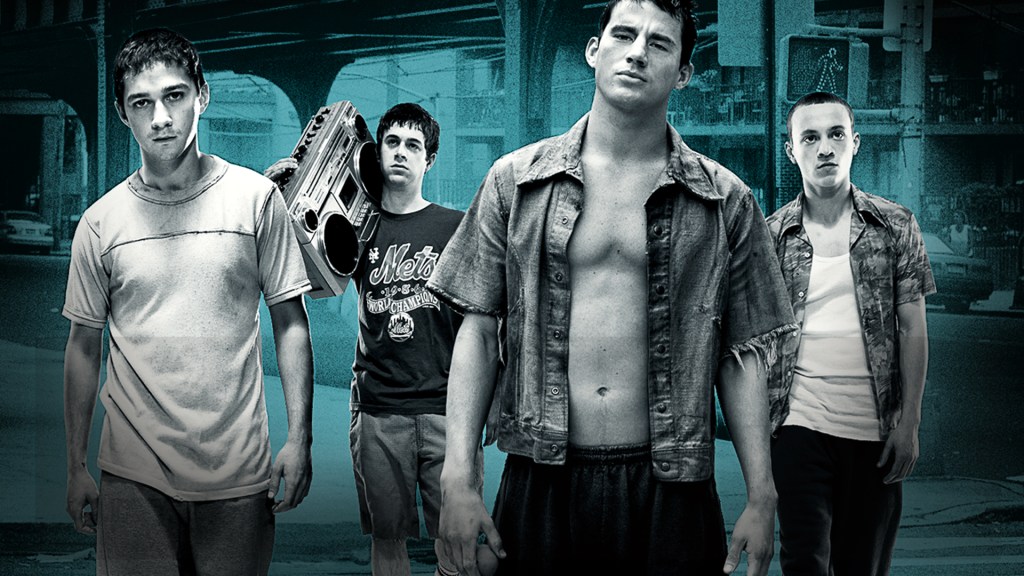
Urban adolescent. Prowling the streets. Catching stares. Bringing himself to orgasm and waiting for one that will be.

Colvey is number one and will die before he is properly a man. He is angry and suspicious of everyone. Wary of his enemies and more so of those who say they are friends. (Know what I mean bro?) Some will argue that this streak of uncertainty gives him an advantage, but one day he will meet the person that will plunge a knife into him and then knowing who to trust and who not to will be irrelevant. One thing I do know is that it will be the person he least suspected.

Angry with everyone. Controlling the uncontrollable. Respect from those who have no idea what it means. (Respect bro!)

Until then, Colvey must control this unruly band of boys – tearaways, petty thieves, and miscreants – who cannot muster up a brain between them, and who idolise him because they are afraid of the consequences if they don’t. Look around the city and you will see the tags on shitty walls, doors and metal shutters that protect empty shops in rundown streets. Our territory, our ground, our space.

Grooming. A word that has become part of modern society. A bad word. A careless word. Colvey might be accused of grooming kids to swell his ranks. But it is something he started when he was a small boy who shit his pants in school.

Provincial demon. Misery. Mayhem. 

Keep your enemy close to you and let him do your dirty work.

Mason is number two and must wait. Living under a shadow that must surely fade. It is one thing knowing those who will cause you harm, another when that threat comes from within. Catch these hands. Colvey knows this. (You’re my best mate bro). The dance of Caesar and Brutus. Fake and be friend. 

I watch. I see. Tattletale, snitch, informant, telltale, squealer. Colvey’s bitch. The one person he says he can trust. The one person who could bring him down if I wanted to. But that ain’t gonna happen because I’ll be a good number two.

Secrets and lies. Scrawny and slim. Wiry. The violent sex. “You want to know something?” Colvey lies next to me. “I ain’t gay bro. I like pussy. This is only bud sex.” ‘I ain’t a batty boy either,” I tell him. Colvey kisses me. “This is sheesh. Don’t tell anyone that I like bussin’ you bro.”