Tag Archives: gay fiction

The Truth Will Set You Free, but it Will Also Hurt

Harry Oldham is writing a novel based on his criminal and sordid past. To do so, he has returned to live at Park Hill, where he grew up, and the place that he once left behind. That was then and this is now, in which the old world collides with the new. (Parts 1 to 23 are available to read in the menu)

Perfectly Hard and Glamorous – Part 24

April 2025

I swear there were tears in Tom’s eyes when he finished reading the closing chapter of my story. The reasons were unclear. Perhaps he believed I had been dealt a cruel hand. Perhaps he had come to realise that Jack—his father—had played a part in my abrupt departure from family and closest friends. And then there was Paolo’s suicide, and the shameful way the police had treated us.

I was young, and everything had become intolerable. The only option had been to nick a car and head for London, where I was unknown and made to feel thoroughly unwelcome. But youth is resilient, and even though it took me nearly forty years, I climbed out of the gutter and—dare I say it—became almost respectable.

I knew, of course, that I had played a part in my own downfall.

But this was now, and something had shifted the moment Tom revealed who his father was. We had become unlikely lovers—the ageing novelist and the young drug dealer. It pulled the past sharply into the present, and with it came complications.

The most obvious issue was the age difference. Tom had gate-crashed my world and taken root within it. The intrusion had been deliberate, set in motion by his father, Jack. Yet Tom had stayed; a compelling glimpse into a generation with which I had no real connection. More than anything, I had watched him change—from a surly young man into someone capable of warmth and compassion—and that, to me, had been irresistible, though I had no right to expect anything at all.

There was also Jack, whose hand I had last shaken forty years earlier, when my fate had been sealed. Those final words—“Seeing your boyfriend?” He had meant Paolo, whose own destiny was unfolding elsewhere, and without me. At the time, I had taken Jack’s question as sarcasm, but years later, when time had dulled the memory, I began to hear it differently; perhaps he had been genuinely interested.

The question still lingered.

I imagined Jack asking it again: “Seeing your boyfriend?” Only now he was no longer referring to Paolo, but to his own son—and this time, I heard it as a threat.

But there was another complexity that I hadn’t expected. 

A letter arrived on April Fool’s Day, forwarded by my publisher. It promised answers to past events.

One sunny morning, a few days later, I found a dilapidated bench overlooking the city centre. I waited until he arrived and sat beside me. He was a very old man now, moving only with difficulty, supported by a walking stick. He reminded me of someone from long ago. “If you’re not with the Mooney’s, then who are you with? You’re not with the Park lads—I’ve never seen you before.” “We’re the Geisha Boys,” Jack had explained.

We did not look at one another but stared out at the view.

“I did a lot of business here. Do you remember this bench, Harry? It’s where you and Paolo first met.” The voice was frail, the muscles long since weakened.

“How was Torremolinos?” I asked.

“I don’t remember,” Frank Smith replied. “I drank too much, smoked too much, and the wife would’ve read the riot act afterwards. Gone now, bless her. She was the only one who could keep me in line.”

He turned to me and held out a conciliatory hand.

“I thought you might punch me,” he said. “But I told myself, if you did, it would probably kill me.”

I shook his hand. More than that, I offered him a cigarette, which he accepted.

“We’ve spent a lot of time shaking hands and sharing cigarettes—but I think this is a first for us, Harry. I came here thinking I might give you a hard time, for old times’ sake, but I realised it was only in my head. I don’t have the strength for that anymore. I’m ninety-two now.”

“I got your letter.”

“My daughter has a way with words. Not like me—I’d have been dead before I finished it. She didn’t want to send it. Thought I was too old to be dredging up the past.”

Frank began to cough, and I hoped it wouldn’t take him before he had the chance to explain. When it passed, he took another drag on the cigarette.

“We left things badly, Harry. But I watched from a distance. I had connections in the Met—they kept me informed. There were a few scrapes, as you know, but my boys saw to it.”

I thought back to the arrests. Three for soliciting, twice for violence, once for shoplifting. I had always assumed the London coppers had gone easy on me.

“It worked, Harry,” he went on. “I knew you’d come good in the end. You became a successful writer. That eased my conscience. And here we are.”

“It’s only possible to ease a conscience if you had one to begin with.”

“I’m going to tell you a few things, and I want you to listen. Will you let me?”

I nodded.

“Sheffield was a bad place in the eighties. Crime, vice—the police were struggling to keep a lid on it. We were under pressure to get results, whatever it took. Some of us became… unorthodox. But we got results, and that kept the ‘pips and crown’ happy.

I was tasked with clearing out criminal gangs who thought they could make money exploiting a minority—the gays. We had to infiltrate them, and the best way was to pose as bent coppers who could help them. I’ll admit, I took my share of hush money along the way.

“We started with the weakest gang—that’s where you came in. The others thought they were paying me to remove the competition. What they didn’t know was that I’d use the same tactic on them. And it worked. There were smaller players too—groups who saw what happened and abandoned their plans. If I’d failed, Harry, I suspect you might have tried your hand as a small-time operator yourself.”

So far, Frank had told me nothing I didn’t already know.

“You might have wondered how you got pulled into it. There was a night I came to your flat—we thought you’d set fire to Manor Library. You’d just had a bath, and I did something small, just to make a point. I ran a finger down your chest. I expected you to live up to your reputation and kick off. But you didn’t. That made me think. Had I stumbled onto something about Harry Oldham that he didn’t yet know himself?

“I already had Paolo in my pocket—that was easy. He was scared out of his wits, would have done anything. What I needed was someone who looked the part and could handle himself. That was you, Harry. My instincts were right, though I was surprised how naturally you took to it—not least, becoming involved with Paolo.

“The rest, as they say, is history. I made Inspector off the back of it.”

Frank had mentioned Paolo, and even now, after all these years, it still hurt.

“I never saw Paolo again, Frank. And I never got the chance to say goodbye.”

“You mentioned having a conscience. But I must ask you the same. Did you have a conscience, Harry? You were happy enough to take the money. It only stopped when Billy Mason outed you.”

“Maybe I only found my conscience afterwards.”

“At the time, I thought I was doing the right thing. And, if I’m honest, I hated queers—and then the AIDS crisis began, and I hated them even more. But I changed. And the two people who changed me were Paolo and you.”

“What do you mean, Frank?”

“I liked Paolo. Sweet little Paolo, always polite. I never had any intention of outing him to his parents. I liked you too, Harry—rough and ready. If I kept you in line, everything held together. And you were different from the others. There was a spectrum: Andy, a complete head case; Jack, who wanted to be the same but didn’t have it in him; and you, who didn’t have the faintest idea what you wanted to be. I never intended to out you either. But I needed you both to believe that I could.

“And don’t think I didn’t have regrets. I had plenty. Things went downhill quickly. I hadn’t realised that DC Ian Thornhill was such a bastard. He hated queers even more than I did—and he had it in for you, Harry. He couldn’t understand why I was trying to protect you. To him, you were scum who deserved locking up. I came back from holiday to find you’d been arrested and charged. The work I had to do to sort that out…”

“And Paolo’s death made everything worse. Questions were asked—why he’d taken his own life. I was one of them.

“The gaffers got involved as well. The ringleaders managed to slip away, leaving their lackeys to take the fall. There were bigger names mixed up in it all—judges, solicitors, doctors, even coppers. Anyone with something to hide. What they were doing was illegal, but they were never charged. They knew the right people, high up in the force. I questioned it, and do you know what the gaffers said? Keep quiet, Frank, and we’ll make sure you’re looked after. The weight of it landed on ordinary blokes looking for a cheap thrill. The publicity ruined most of them.

“And then everything changed after Hillsborough. New bosses came in, looking for scapegoats. Everything had to be squeaky clean. They started reopening old cases—anything where the police might be held accountable. It got uncomfortable. I was questioned about Paolo, about you, about my role in it all. What I’d done was illegal too—and there was no one left to protect me.”

“What happened?”

“I left the force. And I’ve been looking over my shoulder ever since, expecting a knock at the door.”

Frank’s revelations showed me a side of him I had never imagined. Not once had I thought him capable of regret. It changed something between us—but it did not change what had happened. And once again, I knew I had to accept my own share of the blame.

Frank had not finished.

“I’ve read all your books, Harry. Had to, didn’t I? In a way, it gave me some satisfaction knowing you’d made something of yourself.”

“There’s something you should know,” I told him. “The next book is finished. It’s about the Geisha Boys—Andy, Jack, Paolo, me… and you, Frank. And you don’t come out of it well.”

He smiled.

“I’m not going to ask you to leave me out. What’s done is done. Go ahead—publish it. But there are a few things I need to say first.”

Frank gripped my arm.

“Do you know what happened to Andy and Jack?”

“I’ve met Jack’s son,” I said. “Tom. It’s a long story. I know Jack was asking questions about me, but he doesn’t know anything about Andy.”

“Things changed after you left for London,” Frank went on. “The case was closed as far as the exploitation went, but there was another side to it. Andy and Jack thought they could carry on without you… but it didn’t work out that way.

“I knew Andy was trouble, but you pushed him over the edge. Everything started to unravel. He began operating on his own—serious stuff: drugs, armed robbery, the lot. Jack wanted no part of it.

“But the deeper Andy got, the more he attracted attention from people bigger and smarter than him. All we had to do was wait. It ended badly, a few years later. Beaten to death at a flat in Nottingham. His body wasn’t found for weeks. I won’t pretend I was sorry.”

For years, I had held on to the hope that one day I might reconcile with Andy and Jack. Wishful thinking. But learning that Andy—my oldest friend—was dead still struck hard.

“Did Jack know?”

“Probably not,” Frank said. “Andy turned on everyone who knew him. The family kept it quiet. By then, Jack’s lot had already moved out of Park Hill.”

“We looked up to Andy,” I said. “He was everything we thought we wanted to be.”

“But he couldn’t cope without you.”

“That was his choice,” I said, bitterness creeping in. “I needed him. I needed Jack. But then I got arrested. That settled any doubts they had about me. After that, they didn’t want me anymore.”

“That part was your doing. You wanted out—you made that clear enough. I wanted to hold off, because I wasn’t going to be around, but you forced my hand. If you’d waited, it would have ended anyway… just without the mess it caused.”

I wanted to ask Frank something I had asked myself countless times. The answer mattered.

“Do you think I was to blame for Paolo’s death?”

“Well,” he said, “his family certainly did. According to them, you turned him into a queer and drove him to take his own life. They moved back to Italy afterwards. Not what you wanted to hear, is it?”

“No, Frank.”

“But I knew Paolo loved you. He told me. I told him not to be a sentimental fool. So—do I think you were to blame?” He paused. “No. I don’t. If anything, I’m the one who should carry that. And there’s something else I need to tell you. Something that changes everything.”

“When I came back from holiday, I couldn’t find my notebook—the one with all the names, addresses, telephone numbers. I searched my desk. Gone. A few days later, I needed a file from Ian Thornhill’s desk, and while I was looking, I found the notebook buried under a stack of papers. When I asked him about it, he said he’d needed a number for a case. Which case? I asked. He said he couldn’t remember.

“I checked the notebook—made sure nothing was missing—and noticed a coffee stain on the page for M. There were only three entries there. Two were old informants already inside. The third was Moretti—Paolo.

“I asked Ian again. He said he’d needed Paolo’s number in a hurry and had grabbed my notebook instead of going through the files. It sounded plausible. But something didn’t sit right.

“I checked the records. There had been calls and visits between Paolo’s family and other officers—but none from Ian. Anyone else might have thought nothing of it—that he’d passed the number on to someone else. But I knew better.

“That night, I took him for a drink. Started talking about Paolo’s case. Told him the gaffer was asking questions about the lead-up to the suicide, that I needed to know everything—even anything off the books—so I could cover for everyone if it came to it.

“That’s when he told me.”

“Told you what?”

“A few days before they found Paolo’s body, someone had called asking for me. Ian told him I was on holiday. But the caller said he’d been told to ring me for a number. And the idiot gave it to him—just like that. No questions. And worse than that, Ian reckoned the caller was Andy.”

“What?” I gasped. “Andy didn’t even know him.”

“Let me finish, Harry.”

“After that, I went to Park Hill to find him. It wasn’t difficult. He was with Jack in the Parkway. I told Jack to clear off and dragged Andy outside. That’s what I liked about that place—plenty of dark corners. He looked a mess: bags under his eyes, stubble on his chin, drunk. There was no fight in him. I pinned him against the wall and told him exactly what I thought.”

“What was that?”

“Oh, Harry,” he sighed. “Don’t you see?”

I didn’t.

“The next day, I went to see Paolo’s family. I asked his mother if he’d received any calls before he died. No, she said—she’d tried to intercept them all. But then she let something slip. There had been one call she hadn’t reached in time—when your mate managed to pass on a message, telling Paolo to meet you at your usual place.”

“What place?”

“An abandoned factory.”

“Frank, I can’t believe that. Are you saying—”

“Yes,” Frank said. “I told Andy what I suspected. Paolo had gone out, thinking he was meeting you. But when he got there, it was Andy. And Andy blamed him for everything—for coming between you, for being queer, for making you the same.”

I shook my head, unable to take it in.

But Frank went on.

“He killed Paolo. Pushed him from the edge of the building.”

“No, Frank. That can’t be true. Andy was many things, but not that. I don’t believe it.”

“All Andy said to me that night at Park Hill were two words: Prove it. But that was enough. Enough to know I was right. And he was right too—because he knew I could never make it stick.”

I broke down, and Frank let me.

“It was good to see you again, Harry. I mean that. And I’m sorry things turned out the way they did.”

“Why didn’t you tell me all this years ago?”

“I thought about it. But I knew what you’d do. You’d have wanted revenge.”

He was right.

“There’s an expression—never shit on your own doorstep. I remember saying that to Billy Mason. He did me a favour—a big one—and he waited for the right moment to return it. Took his chance somewhere else… Nottingham, as it happens.”

“What are you saying?”

Frank struggled to his feet.

“I have to go,” he said. “My daughter’s picking me up in five minutes.” He began to hobble away, then paused.

“I meant to ask,” he said. “Are you seeing anyone?”

“Would you believe me if I said I was involved with Jack’s son?”

“Yes,” he said, with a faint smile. “I would.”

Charlie: The Promise of Paris – Partie 2

Thomas – Charlie Marseille (2026)

I had assumed that French people’s reputation for being sexually daring and uninhibited was overstated. My relationship with Charlie confirmed it. An observer could have thought that I was more typical of the French than he was. Charlie avoided sexual gratification: my desire for sex could be insatiable.

My reason for going to Paris was not, as I had told Charlie, to review an exhibition at an art gallery, but simply to find Thomas, his older brother, who had urged me to go. Charlie had every reason to suspect that this had been my intention all along. He had watched my contrived journey around the city with scepticism. Every message, each question, was an effort to catch me out.

Charlie knew much more about his unlikely brother than he cared to mention. “Make sure you do not go to see Thomas.” It was a warning that implied something unthinkable might happen if I did. That was the allure. I hoped that something might happen.

My arrival had stirred a buzz of excitement. Thomas had greeted me like a returning lover. But there was still ambivalence. He had rooms above Bar Dieudonné and I had noticed the only bed which suggested that I was going to share it with him.

The arrival of Ambre was the first time I realised that he had a girlfriend, and I confess that I initially regarded her as unwelcome competition. His friend, Léo, added to the uncertainty. After that, I resigned myself to sleeping on the brown leather sofa.

While Thomas worked at the bar, Ambre and Léo took me into Le Marais and we ended up at Joe Le Sexy, a gay sex boutique, where I had discovered naked photos of Charlie in the glossy magazine Le Pénis.

Ambre consulted Thomas and took it upon herself to make me drunk. After drinking too many Vodka-Apples I began telling them everything that was wrong with Charlie. They comforted me in a way I had never known. Ambre kept kissing me and brushing her cheek against mine. Léo insisted on nibbling my ear and letting his lips trail down my neck. I found that I was enjoying the attention.

We encountered Thomas as he was shutting down Bar Dieudonné for the night. He slipped his arm around me. “My brother is an idiot,” he whispered. “But we shall make your stay memorable, and then you might not wish to go back.” He insisted that we go to a late-night café on Rue de Seine where bar staff gathered after work.

It was a small place; tables with candles squeezed into every available space; the walls covered in black and white prints of Paris in the 1960s; chart music turned low. “Brigitte Bardot, Françoise Hardy and Serge Gainsbourg used to come here,” said Ambre.

There was a vacant table in a dark corner.

“Come,” Thomas gestured. “Sit beside me and we can lust over Ambre and Léo together.” His hand rested lightly on my knee.

A young man brought bottles of red wine and fussed attentively over us.

“The waiter who was in charge of that part of the room was a young, handsome fellow, about 23 years of age,” said Ambre, smiling. Her eyes followed the blushing boy and then settled upon Léo.

“Civil, good-natured, and obliging,” Léo interjected. “He was a favourite with both master and son, the latter of whom, black-eyed beauty as he was, seemed to regard him with even affection.”

He signalled for Ambre to continue.

“But he was only a waiter: he was an heir,” she sighed and shook her head in quiet sadness. “Mutual affection is, in civilised parts of the world, a mere folly.”

Everyone laughed.

“The French are crazy people,” the waiter said to me with a shrug.

When he had gone, Thomas restored a sense of order around the table.

“I must see the incriminating photographs that have caused such remue-ménage.”

Ambre pulled out Le Pénis and handed it to him.

Thomas slowly flicked through the magazine, carefully studying each page, raising his eyebrows once or twice. We, the jury, waited until he finally reached the images of Charlie. Léo kicked me under the table while Thomas spent a long time examining the photographs.

“Thomas!” Ambre shrieked. “If you spend any more time looking at them, I shall think that you are becoming aroused by your own brother. What do you think?”

“I think it is a tragedy and a regeneration,” he replied. “Good pictures. Unusual themes—beautiful, dramatic, romantic—exquisitely thrilling and appealing. What more can I say.” 

So far, I had been allowed to wallow in my misery; the quiet spectator who was content to let the others remain the focus of attention. But Ambre and Léo were waiting for me to say something.

“Your critique is interesting, it is almost an art form,” I managed to say, “but, sadly, that is not the way I see it.”

Thomas gave a great sigh and stroked my hand.

“I understand that you are hurting. I understand that you are embarrassed and angry. But we are not talking about war, suffering, or death. We are talking about photographs.”

“Only photographs,” I agreed, “but naked photographs of Charlie with an erection. It was a shock because I had no idea that he had agreed to be photographed in this way. Charlie usually tells me everything. In this case, he didn’t because he knew that I would disapprove.”

“And why would you have done so?” asked Ambre.

“Because,” I stammered, “I fail to see why the world should see him like this when I have not. Why has he allowed this to happen? I feel like a fool.”

My phone pinged again as it had done dozens of times. I looked at my messages, some accusatory, and some, I might add, showing concern. But I had no desire to reply. Among them, I saw that Bianchi had also messaged, and, for once, I did not feel guilty.

“Give me your phone,” Thomas demanded.

I resisted. It was said that a boy and his dog were inseparable, and the same might have applied to a boy and his phone. Especially when you knew that Thomas was about to do something that I might regret.

Thomas held his hand out and waited until I reluctantly handed it to him.

He laid the copy of Le Pénis on the table and took a photograph of it. Then he opened WhatsApp and sent it to Charlie.

It was as simple as that. No need to make excuses for not replying to messages. Make him see that I was angry without saying anything.

Almost immediately, the phone pinged.

“No, monsieur,” Thomas warned. “You are not permitted to look at it and certainly not allowed to answer it… at least not for three years.”

Charlie maintained that Thomas was stupid but, from what I saw and heard, I began to understand that the opposite was true. Thomas was like Charlie in some ways, and, as the older of the two brothers, had been able to refine his instincts in a way that made Charlie seem less complete.

Thomas turned and kissed me. His lips were warm and soft, and I felt the brush of stubble against my chin. When he pressed his tongue into my mouth I yielded, accepting that this had been the moment I had waited for. There was a soft, melodic hum—Ambre’s way of showing that she found this display of affection ‘cute’ and ‘heartwarming’. Léo gripped my inner thigh. “Nous prendrons soin de toi, ami,” he said soothingly.

We were interrupted by the waiter who, satisfied that the occupants of this corner table were unlikely to cause any trouble, had brought more red wine.

We talked for ages: nothing of any consequence.

“Thomas tells us that you are an established travel writer. That must be very exciting.”

“Well,” I volunteered, “Thomas is only partly correct. I am a travel writer who does not go anywhere.”

“And that you are also living in Italy.”

“Again, Thomas is being creative with the truth. I can stay in a room that Signora Bruschi keeps for me. It is not mine, and when I go, which is not often, I am allowed to stay rent free.”

“But you are able to make a living?”

I decided that the truth could wait for another day and nodded. My head spun slightly as I did so.

“Miles must earn money to keep Charlie,” Thomas interjected. “My brother is known for not paying his own way. But I think that they are in love most of the time.”

I pulled a face.

“I am a student at Paris Diderot University,” Léo said. “I study history and one day I shall win a Nobel Prize for my genius.”

Ambre howled with laughter.

“And that means you are always spending your time with friends, visiting cafés, and enjoying the nightlife. Studying is only a small part.”

“And do not underestimate the importance of sleep,” he said “Ambre does nothing worthwhile. She works in a fashion store at Canal Saint-Martin and spends her days complaining about loathsome Parisians with too much money and no manners.”

We talked for ages: nothing of any consequence.

“Where did you all meet?” I asked.

“We do not know when or how we met,” said Thomas. “A French thing. It is usually through a friend, or a friend of a friend, and after we have been introduced, they disappear and we are left with each other. It is a union of those people who are not wanted.”

“Non,” Ambre decided, “it was about sex.”

“What?”

“The French prioritise the art of seduction, and our appetites are natural and normal rather than shameful. We were certainly attracted to each other sexually.”

If that were true, then I had been unfortunate enough to have become involved with the only French person who did not follow such principles. But Charlie had allowed strangers to see him in a way that I, his lover, had never been permitted to. I thought back to the times when I had tried to be affectionate and the refusals that followed. And now there was the realisation that, if this relationship was to survive, it might have to be shared through the pages of magazines like Le Pénis.

I slipped away to the toilet, and, with Thomas not there to admonish me, I could not resist the urge to look at my phone. The last message from Charlie had been an hour ago and read: I love you. Really, I do. I had always understood the meaning of a Queen’s silence, or what might now be a King’s silence, and I was not drunk enough to forget it. I did not reply.

When I returned, Ambre was lip-synching to Melodrama. Léo was nowhere to be seen. Thomas had that ecstatic look on his face which suggested that he had taken something. But then I noticed that Léo had slipped beneath the table and was giving him a blow job. When somebody came over to say hello, Thomas shook their hand as he came in Léo’s mouth.

My Week, For What It Was Worth

On reading Like People in History…


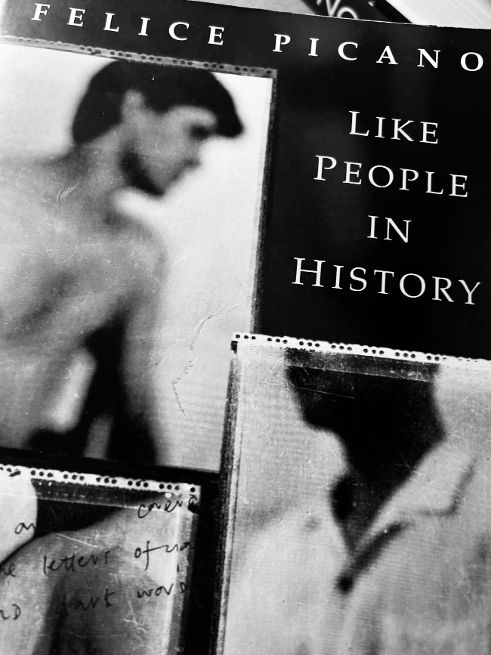
In January 2000, somebody called Gregory Nash pencilled his name on the front page of a paperback book. I don’t know what happened to it for the next 26 years, but a few weeks ago, a friend found it at a second hand book shop in London and gave it to me as a present.

Published in 1995, Like People in History, by Felice Picano, traced not just the protagonists’ lives but provided the defining moments of American gay history between 1954 and 1991. 

‘The big novel we’ve all been waiting for – the gay Gone with the Wind,’ wrote Edmund White at the time, which was hardly surprising. Picano and White were both founding members of the Violet Quill Club, considered to have been a gay urban version of the Bloomsbury Group. They met regularly in Manhattan and on Fire Island in the early 1980s to discuss their works in progress.

I must explain that I thoroughly enjoyed the book although comparing it with Gone with the Wind didn’t do it any favours. 

“Sex is the defining characteristic,” critic Patricia Rodriguez wrote back then. “He (Picano) buys into every stereotype that many gays wince at, giving ammunition to bigots. Nothing’s ever as good as it was when THEY were on the cutting edge.”  (Fort Worth Star-Telegram 1995).

If I have interpreted her correctly, Rodriguez was referring to the 1970s. The archetypal mincing queens with moustaches and lots of hair, who danced to loud disco music, and spoke to each other like they were girls. 

“Mary, you are too much. She’s giving everything. Don’t be so dramatic, girl.” 

Well, they were having a good time, and who could have blamed them. 

But afterwards it became a problem with some gays, particularly for those who hadn’t been there. Such as me. 

I guess that what I am trying to say is that the seventies gay scene (particularly in the USA) aged badly. Too flamboyant and in your face – and decades before RuPaul hyped it up again. 

If AIDS curtailed the eighties, then the reset came in the 1990s. 

Since then, everything seems to have been less colourful and non-scene, and which those from the 1970s might consider boring.

I prefer it this way.

Picano, who published 17 novels and eight volumes of memoirs, died last year, and was better qualified to write about the scene than most. And he did it well. Me? I am trying my best not to come across as a disrespectful and ungrateful cunt.

My adopted copy of Like People in History goes onto my gay literature shelf and stands alongside other members of the Violet Quill Club: Christopher Cox, Robert Ferro, Michael Grumley, Andrew Holleran and George Whitmore. Four had died of AIDS by 1990 and only Holleran is still alive. 

 Last word to Picaro:

“We were all friends and lovers – literally. Robert Ferro and Michael Grumley were partners since the University of Iowa writing school. Andrew Holleran was also at that school. Michael and Robert were together for years. I met Edmund White in Greenwich Village in 1976, and George Whitmore in ‘77. Chris Cox was Edmund’s boyfriend: George and I were tempestuous boyfriends at the time, but he was instrumental in forming the group. Robert was also very socially active, so he and George pulled it together.”

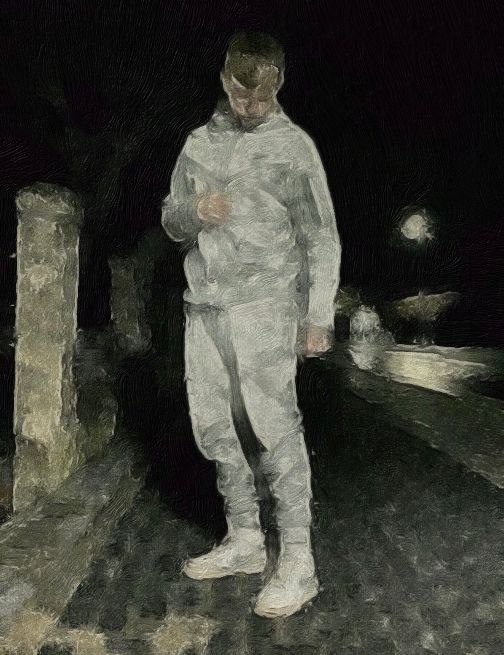
On coming upon a skanky boy…


I don’t know your name. I don’t know how old you are. I don’t know where you live. I know absolutely nothing about you.

But I do know that you are a bad apple that has fallen from the tree. Realise that people judge you for what you are.  A skank – dirty, untrustworthy, disreputable, and sexually promiscuous.

Levi, the Polish boy with the Yorkshire accent, once picked up on something I had written.

“Boys who stuff their hands down their underwear because they think it makes them hard. Boys who pretend their sweet smelling piss and cum fingers are guns.”

He understands that I am hopelessly addicted to skanky boys.

And lust is only a starting point for deeper connections.

On realising that if I had been around in 1960…


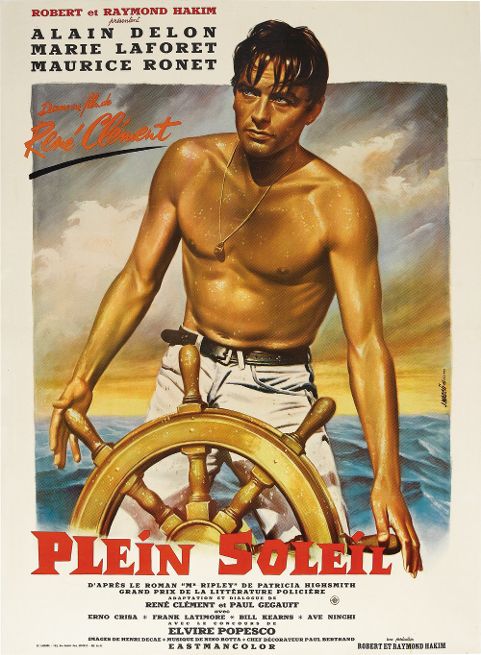
I would have been going to the cinema and masturbating over Alain Delon in Plein Soleil. That unnatural beauty, chilling menace and simmering homoeroticism. And don’t get me started on Rocco and his Brothers.

On that furtive glance from beneath his baseball cap…
The look that said: “I know that we’ve known each other for ten years, and I know that you’ve always loved me, and I’ve been a complete shit to you. But now that I’m in my prime, I’m ready and willing to have that relationship.”

On the barman who smiled at me…
I cannot say, in all honesty, whether he was handsome or not. But beauty is not everything. He was shy, and polite, which said something. And when he faced me there was a hint of attraction that appealed to my shallow mind. 

I cannot say that wearing shorts was a good idea either. I know fine legs when I see them and yet I was still deciding whether it was the case here. But he was brave enough to wear them on a cold March night and that showed guts. And when the realisation hit that I was still staring at them, I knew that he probably had good legs after all. 

But what absolutely blew me away was when, amidst his boredom, he saw that I was giving him attention and cracked a most beautiful smile. It was all so sudden. A big genuine smile. The last time a chicken smiled like that, he ended up moving in with me. 

On the cute and willing…

Marcelo Jimenez, model. Photograph by Ryan Duffin

There’s No One Left Who Wanted Me Anymore

Harry Oldham is writing a novel based on his criminal and sordid past. To do so, he has returned to live at Park Hill, where he grew up, and the place that he once left behind. That was then and this is now, in which the old world collides with the new. (Parts 1 to 22 are available to read in the menu)

Perfectly Hard and Glamorous – Part 23

March 1985

They played You Spin Me Round (Like a Record) on the radio. We used it in our act, and every time I heard it, it cut deep—a reminder that everything had gone tits-up.

I had wanted that night at the big house to end things. It had—but not as I’d imagined.

My body ached, inside and out. The lesions across my back, my legs, my arse burned like hell.

The night after the police bust, I tried phoning Paolo. No answer. I needed to see him. I wanted to hold him, to tell him everything would be alright, even though I didn’t believe it myself.

Over the next few days, I made call after call. Nothing. He never rang back. I began to wonder if he wanted rid of me—if he blamed me for it all. If he did, I needed him to understand that I was a victim too.

I couldn’t face going out. I stayed in, watching television, drifting through the day.

“Harry, what the hell’s up with you?”

Dad came home from work. Mum had already told him I’d been moping around the flat.

“Where are Andy and Jack? Why aren’t you out with them? I know you get up to no good, but even that’s better than hanging round here under your mum’s feet.”

I shrugged. Said nothing. They’d find out soon enough.

On the sixth day, Mum went into town. I trashed my bedroom. When she got back, I was gone, leaving chaos behind.

I’d decided to go to Paolo’s house.

I knocked and waited. Movement inside. The door opened to a woman wiping her hands on a towel—Paolo’s mother. She looked exhausted.

“Is Paolo in?”

“Who wants to know?”

“Harry. Can you tell him I’m here?”

She tried to close the door. I stopped it.

“Please,” I said. “I need to speak to him.”

She looked me up and down, eyes wet.

“I just need to know he’s alright.”

“Paolo has told us everything,” she said, her Italian accent hardening her words. “The last thing we need is you turning up here.”

I waited, hoping he’d appear, that he’d tell her it was fine. The house stayed silent.

“My son’s life is ruined,” she said. “He is a finocchio. He will be mocked, blackmailed… and in time, he will die a lonely death.”

“That won’t happen.”

She held rosary beads tight in her hand.

“My beautiful Catholic boy has danced with the devil. If anyone could have saved him, it was you. But you danced with him too. If you had been strong, this shame would not have happened.” She paused. “He trusts you. He thinks he is in love with you.”

“I love him too.”

“It is not love,” she snapped. “It is sodomy. Against the will of God.”

It landed hard.

“Paolo is not here. We sent him to his Aunt Luisa in London. He must return to answer police questions. After that, he will go to relatives in Montescaglioso.”

I felt myself breaking.

“Will you tell him I came?”

“He would never forgive me if I didn’t,” she said, dabbing her eyes. “He will be back Saturday. His father will be working. Ring then. Say goodbye—and promise me you will never contact each other again.”

I nodded. I had no intention of keeping it.

*****

I saw Andy and Jack before they saw me.

They were by the steps outside our block. Andy leaned against the wall in jeans and a white Levi T-shirt. Jack sat on the bottom step in black shorts and a Sheffield Wednesday top, staring at something on his knee.

They looked up as I approached.

I stopped in front of them. Waited.

Then I saw it on the wall behind them:

HARRY IS A QWEER

“Bum bandit,” Andy said, not even looking at me. Jack glanced around, pretending it wasn’t aimed at anyone.

“I want to explain,” I said.

Andy shoved his hands in his pockets and turned to face me. Jack kept his head down.

“What I can’t get over,” Andy said, “is knowing someone for years, then finding out they’ve been living a lie.”

“I never lied.”

“But you turned out queer. What’s that supposed to mean for us? All those years—were you fancying us?”

It seemed every bloke thought that.

“Maybe I didn’t know at first. But don’t flatter yourself. Not every ‘queer’ thinks you’re a catch. I don’t see girls throwing themselves at you either.”

“You’re a bent cunt!”

“Do you want to hear him out?” Jack asked, tentative.

“Don’t bother,” Andy snapped.

“At first I was blackmailed by Frank Smith,” I said. “Then I got pulled into something bigger.” I told them everything.

Andy spat.

“So, it’s true?” he said, almost hopeful it wasn’t.

“Yes. I made good money doing it.”

“But you never told us,” Jack said.

“How could I? What would you have said? Why didn’t I walk away? Because once I started… I liked it.”

“Where does that curly-haired little cunt fit in?” Andy asked. “You denied everything.”

“Paolo? He was in the same position. We got close.”

“Is he your boyfriend?” Jack asked.

No one had ever asked me that.

“Yes,” I muttered. “I suppose he is.”

Silence.

Andy lit a cigarette, offered one to Jack. Not to me.

“Show him,” Jack said.

Andy pulled out a torn front page of The Star.

POLICE SMASH GAY SEX RING

My stomach dropped.

“Want me to read it?” Andy asked.

I nodded.

“It says this is the second operation targeting fucking queers. Loads arrested. My mate Harry—turns out he’s one of them. Charged as a bender.”

Not exactly true—but close enough.

“Your mum and dad will see it,” Jack added.

Andy wasn’t finished.

“We’re done, Harry. You’re not one of us. Not anymore.”

“I want to sort this out—”

“Fuck that.”

I turned to Jack. “Is that what you want?”

He met my eyes. Said nothing.

That was answer enough.

I offered my hand to Andy. Geisha Boys never shook hands.

“Don’t want to catch anything,” he said. “I don’t want AIDS.”

I offered it to Jack. He took it. Held it tighter than I expected.

Then I left them.

“Seeing your boyfriend?” Jack called.

“I’m ringing him Saturday.”

Too much information.

“Harry is a queer!” Andy shouted after me.

His handiwork was on the wall.

*****

In the 1980s, everyone bought The Star. Ritual. Dad picked it up near work, read the football first, then the headlines on the bus home.

They were waiting.

Mum crying. Dad with his head in his hands.

I knew.

“Everything alright?” I asked.

“A few days,” Dad said. “That’s all you’ve got. Pack your things and get out. We’re ashamed of you. We don’t want to know you.”

His voice faltered.

“I won’t be able to show my face. My son’s a Nancy boy.”

*****

Saturday afternoon.

I rang Paolo. His mother answered.

“He’s not here. An old schoolfriend called. He went out for the day.”

“Did you tell him I’d ring?”

“I did,” she said coolly. “It seems he doesn’t want to speak to you.”

I tried again later. Still nothing.

“Tell him to call me.”

“I’ll tell him,” she said, “but he seems more interested in his other friends now.”

“What’s that supposed to mean?”

“It means he’s moving on. Someone like you isn’t what he wants anymore.”

I slammed the phone down.

*****

There was no reprieve from my parents. I delayed packing, hoping they’d calm down.

They didn’t.

On Monday, Dad gave me an ultimatum.

“When I get home Wednesday, you’d better be gone. If not, I’ll throw you out.”

I stood on the balcony, looking over the city. Below, Andy and Jack laughed as they walked down the hill.

Adam came up behind me, wrapping his arms around me.

“What’s going on, Harry? I don’t like it.”

“Me neither,” I said. “But I’m stuffed.”

*****

Tuesday evening.

I packed a few clothes into my Adidas bag. Counted the money I’d made. Hid it at the bottom.

Tomorrow I’d go to June’s.

My parents’ voices drifted from the other room.

I wished I hadn’t turned out such a disappointment. Then again, I always had been. Trouble from the start. Crime. Violence. And now this.

Fuck them, I thought. Fuck all of them. I was still a Geisha Boy.

I went into the lounge, turned on the TV. They left the room.

Basketball on Channel 4. I barely watched.

I picked up The Star.

A body found at a derelict factory in Attercliffe. I recognised the place—we’d smashed it up once. I flicked through, checking for more about the ‘gay sex ring’.

Nothing.

That night I went to Paolo’s street. Waited at a bus stop, hoping he’d appear.

Hours passed.

He never did.

I went home for the last time.

Voices inside. Not just my parents.

They stopped when I slammed the door.

“Harry, come here.”

Two uniformed officers sat on the sofa. Mum and Dad in armchairs. By the window—Ian. The lanky copper I despised.

I thought they’d come to arrest me again.

“Fuck me. What now?”

“It’s a delicate matter,” Ian said. “Sit down.”

I squeezed between the officers.

“When did you last see Paolo Moretti?”

“Not since the arrest. And he won’t speak to me.”

“And since then?”

A cold grip of panic.

“What do you mean? Has something happened?”

“Workmen found his body this morning. 

“No,” I said. “No, that’s not—”

“Found him at the bottom of an old lift shaft.”

Everything stopped.

“He jumped,” Ian added. “Couldn’t handle the shame. Mess everywhere. No note.”

I stood, almost collapsing. One of the officers caught me.

“Goes to show,” Ian laughed, “another homosexual bites the dust.”

“YOU FUCKING BASTARD!”

*****

Early Wednesday morning.

Dark. Empty road. A sign: London – 80 miles.

I didn’t remember how far I’d come.

After the police left, nothing was said.

I lay on my bed and cried into the pillow. Not since infant school.

I needed Andy and Jack—but they were gone.

More than anything, I needed Paolo. I thought of his body beside mine—warm, alive—and it almost broke me.

Gone.

Forever.

I thought about jumping from the balcony. Joining him.

Sometime after midnight, I took my bag and walked out. Said nothing. Not to my parents. Not even to Adam.

A Renault 5 sat near the flats.

I broke in. Hotwired it. Jack had taught me well.

I drove onto the Parkway. Then the M1. Straight towards London.

Fuck them all.

The David Problem: Notes from a Life


The Boys of Harrow… and Rockley Beach

David had been researching his new novel: a story set in nineteenth-century Woolwich, where two families are pitched against one another. The plot was already mapped out, but he now wanted to weave in an episode he had discovered in an old newspaper.

In 1850, thirty-three boys were expelled from the Carshalton and Woolwich Military Academies for what the paper called “grossly immoral practices.” The report described their behaviour as being of “a distressing and disgusting nature.” Their humiliation was made public: they were marched through the streets and deposited on the doorsteps of their families.

David decided that the youngest son of the genteel Morgan family would be one of these unfortunate boys.

But the discovery distracted him. As he continued searching, he found other accounts of young men disgraced and dismissed from the armed forces.

In 1976, several young airmen in the Royal Air Force were reportedly paid to perform sex acts at parties hosted by executives from influential companies. The story surfaced soon after eighteen soldiers were dismissed for posing for suggestive photographs in a gay magazine.

A decade later, two sailors were discovered together in a cabin aboard HMS Torbay. The ensuing investigation implicated three more men, including an officer, for homosexual acts.

David knew from experience that when boys were thrown together, it was almost inevitable that those inclined that way would find one another. The thought brought back pleasant memories of his schooldays at Harrow in the 1970s—before he was expelled, that is.

When he was fifteen, David had been caught in flagrante delicto with another boy. Peter had been a year older and known to most as ‘cock of the school’. David had been afraid of Peter because he strutted around as if he owned the place. He was the toughest boy—and the most arrogant—and Peter had often been at the end of his cruel jibes. 

One sunny evening David had found a spot under a tree to read his well-thumbed copy of The Passing of the Modern Age. He had been disturbed by a group of older boys on their way to rugby practice. They hadn’t noticed him in the shadows and passed by without comment. David watched them go and marvelled that boys’ legs could be extremely attractive.

He had just tackled the crisis of individualism when someone came out of the bushes. Peter had split from the group and doubled back. David, in awe of the older boy, feared the worst and put his book down.

“Come with me,” said Peter.

David did as he was told and followed Peter through the bushes towards the tractor shed. There was no doubt that Peter was going to inflict some kind of schoolboy torture on him. He expected to see other boys waiting to witness his humiliation.

But there was nobody around.

Inside the shed, Peter forced David up against the back wheel of the groundsman’s Massey Ferguson. He stuck his bubble-gum tongue inside David’s mouth and started kissing him. David had not resisted. 

“Let me make love to you,” Peter had instructed and began tugging at David’s trousers. He stuffed the trailing end of David’s school tie into his mouth to stop him making any noise and bent him over the wheel of the tractor. That, as David reflected later, had been the most exciting thing that had ever happened.

They returned to the tractor shed often after that—until the day the groundsman, having left his house key in the tractor, came back for it. He found them both naked and reported them to the headmaster. They were expelled from the school and never saw each other again.

That first encounter with Peter never left his thoughts. All these years later, he accepted that their relationship had been purely physical—there had been no love between them. What remained was the memory of contact, and the illicit thrill of something strictly forbidden. The excitement, as someone had once put it, lay in the chase.

But David’s thoughts also drifted to Nigel—or Nige, as he preferred to be called—a young sailor he had met in the late eighties.

David had been twenty-five, holidaying with friends in Barbados. It was a hot July, and most days were spent lounging on the crowded stretch of Rockley Beach. Fifteen years later, he returned to the same place and found it completely deserted.

He could still remember the book he’d been reading—Koko, a horror-mystery by Peter Straub—pristine when he bought it at the airport, dog-eared within days. He had set it down in the sand, closed his eyes, and listened to the conversations drifting around him.

Vendors moved along the beach, trying to persuade holidaymakers that the unlabelled bottles of pure aloe vera they carried were the secret to a perfect tan. David had bought one, of course, only to discover it did nothing except increase the risk of sunburn. 

David had drifted off for a few minutes, and when he woke he found himself surrounded by young men in tight bathing costumes. “Sailors from a British warship,” his friend Debbie smirked. They were gathered in small clusters, towels spread out on the sand, cans of beer passed easily between them.

The one he later learned was called Nige lay stretched out nearest to him. David found himself drawn to the pale, slender body—the long legs, the flat stomach, and the way his shorts seemed to accentuate what lay beneath—of the nineteen-year-old.

They fell into conversation, and David learned that Nige was an able seaman aboard HMS Intrepid. A bit rough and ready, he thought—the Yorkshire accent lending him an air of unpolished charm—but friendly. More than anything, David found him most handsome.

It was David who suggested a beer at an open-air bar at the far end of the beach. They talked and drank bottles of Banks—“pee beer,” as the young Black barmaid jokingly called it—until they noticed the beach had emptied and a magnificent sunset had taken hold in the west. In Barbados, the day did not fade so much as vanish; the sun slipped cleanly into the sea, and night arrived almost at once. Then the tree frogs began to make themselves heard.

David never quite reflected on what followed.

Nige, in T-shirt and shorts, remarked with easy indifference that he felt hot and sticky, and wished he were back aboard ship for a shower. David—less innocently—suggested he come back to his room instead, where he could use his. The young seaman accepted without hesitation, and the two of them crossed the road together.

A few words might have applied; aroused, horny, frisky, and most definitely ‘in the mood’. Nige took his shower and invited David to join him, which was all that he had hoped for. And then they had indulged in hours of drunken sex, only halted by Nige’s necessity to get back to ship before curfew.

David stood naked in the doorway as Nige left. At that exact moment, Anderson—a good-looking, God-fearing porter—passed by, his glance lingering just long enough for curiosity to harden into suspicion, and then into something closer to disgust.

Still, David and Nige agreed to meet again the following day.

Only years later, after some research, did David grasp how serious the consequences might have been had they been reported. Nige—young, impulsive—would likely never have considered that homosexuality was an offence in the armed forces, one that could have led to immediate dismissal. David, meanwhile, would have risked falling foul of the island’s colonial laws, under which homosexuality was illegal. A conviction might have meant life imprisonment in Glendairy Prison, notorious for its brutality, overcrowding, and inhumane conditions—grimly known as a “house of horrors” before it was destroyed by fire during a riot in 2007.

Ignorance had allowed David to preserve certain memories, untouched and untroubled.

But he sometimes wondered what had become of Nige, who would now be fifty-six and long since retired—no doubt altered by time: the silky crew cut gone, the firmness of youth softened into weight, skin loosening, and body hair in unwelcome places. Had they passed each other in the street, he might not have given him a second glance—and Nige, he suspected, would have done the same.

Things had changed.

Homosexuality was legalised in the British armed forces at the turn of the millennium. But Barbados had been slower to catch up. The island had enacted its Sexual Offences Act in 1992, which carried a grim warning: “Any person who commits buggery is guilty of an offence and liable on conviction on indictment to imprisonment for life.” Even worse, the law specified that the offence applied “whether natural or unnatural, involving the use of the genital organs for the purpose of arousing or gratifying sexual desire.”

Homosexuality had gone entirely underground, though David took some comfort in the fact that prosecutions had been relatively few. It was not until 2022 that the law was finally repealed, and same-sex relationships legally recognised, when the Sexual Offences Act was declared unconstitutional.

David finally admitted the truth: he had let himself grow lazy. His novel would never be finished if he continued to daydream.

When the Past Came Back as Tom

Harry Oldham is writing a novel based on his criminal and sordid past. To do so, he has returned to live at Park Hill, where he grew up, and the place that he once left behind. That was then and this is now, in which the old world collides with the new. (Parts 1 to 19 are available to read in the menu)

Perfectly Hard and Glamorous – Part 20

March 2025
Do you ever look at someone and feel certain they remind you of somebody else? The maddening part is not knowing who.

It happened to me last night.

Tom was sprawled on the sofa watching South Park — a show which, until then, I had probably been the only person on the planet never to see. He lay there like he owned the place, which in a way he now did. He hadn’t officially moved in, but he’d managed it in that quiet, stealthy way that gave me no real moment to object.

He wore nothing but a T-shirt and a pair of black football shorts. His head rested in the cushions while one smooth leg hooked lazily over the back of the sofa so that his bare foot dangled in the air.

I had seen that posture before.

Somewhere.
Somehow.

I tried to place it, but nothing came.

“Why are you staring at me, Harry?”

“I’m not,” I lied.

There’s something you should know about Tom, though it probably won’t surprise you.

Shortly after Christmas he’d been arrested for dealing drugs. He spent his weekends drifting around the city-centre clubs selling small bags of cocaine and making what he called “decent money.” One night a CCTV camera caught him in the act and within minutes he was surrounded by police.

Unluckily for him it had been a quiet night. When they searched him they found quite a stash hidden in his underwear. After they relieved him of it, he spent the night in a cell and was told to expect a court summons.

According to Tom, he was only the middleman — which, as it turned out, made matters worse. The man above him was furious about the lost merchandise and decided Tom owed him for it. Before long there was a price on his head.

Not for the first time, Tom had shown up on my doorstep covered in blood.

That was when I discovered how deep his troubles really ran. Two men with baseball bats had beaten him black and blue and informed him that his services were no longer required.

That night Tom told me almost everything.

He said he couldn’t go home to Hillsborough — too many questions, too many explanations. Instead he took a long shower, wrapped himself in a towel, and eventually curled up in his usual place on the sofa.

Since then he’d only ventured outside during the day. Evenings were spent stretched out in front of the television.

So far I hadn’t objected.

I never gave him a hard time about it either. My own past had been far murkier than Tom’s, and I hoped that maybe the experience had taught him something.

If it had, good.
If not, I wasn’t exactly the man to lecture him.

I knew how he must have felt.

The memory came back suddenly — a night nearly forty years earlier.

I hadn’t thought about Billy Mason from Gleadless Valley in decades, but he evidently hadn’t forgotten me.

A few years before that night, the Geisha Boys had robbed cigarettes from an off-licence where Billy’s girlfriend worked. She’d been hurt in the scuffle while Andy and Jack had been arrested. Word eventually got back to Billy about who’d been involved.

Frank Smith — an unruly police sergeant who occasionally did us favours — managed to have the charges dropped. He warned Billy Mason to leave it alone.

But I still remembered Frank’s words.

“The trouble is,” he’d said, “I can’t trust him.”

Billy Mason was the hardest case in the Valley. I normally stayed well clear of the place, but on that particular night I’d been sent there to entertain someone in a maisonette.

No Paolo this time.

It was a comedown after some of the houses I’d visited. No Jaguars or Mercedes outside. Just battered Vauxhall Cavaliers and old Ford Escorts.

But by then the Rufus Gang controlled the city’s rent boys, and when they told you where to go, you went. There was no negotiating.

Before heading up there I called into the John O’Gaunt for a pint.

A stupid mistake, as it turned out.

I hadn’t realised it was Billy Mason’s local.

He spotted me at the bar and followed when I left. I wasn’t exactly sure where I was going and took a shortcut behind some garages.

Another mistake.

Ironically, the only man never actually implicated in the robbery was the one Billy chose to punish.

He smashed a bottle over my head.

While I lay on the ground he kicked and stamped on me until I cried out.

“Don’t let anyone say Billy Mason holds a grudge,” he told me. “That’s wrong. I just hurt them instead.”

Then he left me grovelling in the mud and nicked my bag — several tubes of KY jelly and a spare change of clothes inside.

My head was split open and everything hurt.

I never made it to the maisonette. I staggered miles back home instead.

And if meeting Billy Mason had been an ordeal, the aftermath was nearly worse.

The Rufus Gang were not impressed that I’d failed to turn up. They made their feelings known with another beating and a warning not to cross them again.

“I guess we’ve lived parallel lives,” I said to Tom.

He lay there in the half-light, his body half hidden in shadow.

And then it hit me.

Hard.

Harder than I could have imagined.

“Tell me about yourself, Tom.”

“I’ve told you. There’s nothing to tell.”

“Tell me about your family.”

“What?” He sat up quickly. His face went pale.

Game over.

“What’s this really been about?”

“I don’t know what you mean,” he muttered.

Memories flashed in my head. Old anger. Old violence.

I grabbed him by the throat and shoved him back against the sofa.

He tried to push me away but I was stronger. I pinned him down, my knee digging into his groin.

I wanted to hurt him.

I tightened my grip as he gasped for breath.

“I’ve been so fucking stupid!”

His blue eyes filled with tears. That was confirmation enough.

Just before he lost consciousness I released him.

Instead of fighting back he collapsed into sobs, choking for air, snot running down his nose as he tried to breathe.

I stood over him.

“Tell me who your dad is.”

He couldn’t answer at first. He just curled away, crying. I doubted the tough little bastard had cried in front of anyone before.

Eventually I sat in the chair opposite and waited.

“I’m sorry, Harry,” he whimpered.

“Jack will eat no fat, and Harry no lean. Yet between them both Harry licks Jack’s ass clean.”

I watched him closely.

“Why didn’t you tell me your dad was Jack?”

Tom stared at his feet, fiddling with his toes — something he always did when he was nervous.

“Jack’s the same age as me,” I continued quietly. “Which means he had you late.”

Tom nodded.

“I’m the youngest,” he said. “Got a brother and two sisters.”

I shook my head.

“I’m struggling to understand this. Why all the cloak-and-dagger stuff?”

“My dad knew you were back in Sheffield. He wanted to know why.”

“Why didn’t he ask me himself?”

Tom shrugged helplessly.

“You’ll have to ask him that.”

“And it wasn’t an accident you ended up here?”

“No.”

“Was it planned?”

He nodded again.

“He wanted me to get to know you.”

I laughed bitterly.

“And I fell for it.”

“But why now?” I asked. “We haven’t seen each other in forty years.”

“A few years ago my dad showed me your books,” Tom said. “That’s how I knew who you were. He’d read them all. Said he used to know you, but whenever I asked how he’d change the subject.”

Jack reading books? I struggled to imagine it.

“Did he tell you why I left Sheffield?”

“No. Just that the Geisha Boys turned their backs on you.”

I sighed.

“When I needed my friends most, they fucked me off,” I said simply.

Tom studied the floor before speaking again.

“There’s something else you don’t know. My dad missed you more than you think. Maybe it was guilt. I don’t know.”

“Bollocks,” I said.

“I’m serious. He wanted me to find out if you were okay.”

I lit a cigarette and handed him one. His hands shook as he tried to light it.

“I told him you were doing well,” Tom continued. “That you were writing about the past.”

“And?”

“He looked… sad.”

That caught me off guard.

“I loved your dad,” I admitted quietly. “I loved Andy too. But Jack more.”

Tom listened without interrupting.

“He had everything going for him. Handsome. Charismatic. Brilliant footballer. I even dated his sister for a while just to stay close to him.”

Tom raised an eyebrow.

“So you fancied him?”

“Yes,” I said. “Though I didn’t understand it at the time. Things were different back then.”

We talked until the early hours.

For me it felt like a revelation. For Tom it was a relief not to lie anymore.

Eventually he settled back onto the sofa while I went to bed, though sleep refused to come.


Too many thoughts.

Too many memories.

Some time later the bedroom door creaked open and Tom slipped in beside me.

I turned away.

“Are you still mad at me?” he asked quietly.

“I don’t know,” I said. “But I’m glad the truth’s out.”

After a pause I added:

“Your job was done months ago. Yet you’re still here. Doesn’t Jack find it strange you’re never home?”

Tom hesitated.

“I told him I was staying with my girlfriend.”

“The mysterious girlfriend.”

“Yeah… about that.”

“You haven’t been staying with her, have you?”

“No.”

“Why keep coming here?”

He took a long breath.

“There never was a girlfriend, Harry. But you probably guessed that.”

I didn’t answer.

“I kept coming back because I felt safe here,” he said. “And… I liked being around you. After a while it just felt normal.”

I could hear the nervousness in his voice.

“I guess I hoped it could stay like this.”

I sighed.

“When I came back to Sheffield I wanted peace and quiet,” I said. “But I’ve enjoyed having you around.”

Tom shifted closer.

“I really need a hug right now,” he murmured.

I turned and wrapped an arm around him.

He pressed into my shoulder, warm and solid, his breath brushing my cheek.

For a moment he felt like Jack.

But he wasn’t Jack.

He was his son.

And the feeling was both wonderful and deeply wrong.

“There’s something else,” Tom said after a moment.

“Go on.”

He groaned softly.

“God, this is awkward.”

“Spit it out.”

He took another breath.

“I think… I sort of fell in love with you.”

I laughed quietly.

“So what you’re saying is you’re a faggot after all.”

Tom snorted.

“Oi. I’m supposed to be the one calling you that.”

“That’s how it works,” I replied. “Takes one to know one.”

That was all it took.

We fell asleep wrapped around each other, waking every now and then just to confirm it wasn’t a dream.

For me it felt like something I’d wanted for years without realising.

For Tom it was the beginning of his first real love affair.

When morning came I discovered I couldn’t move because his arm was wrapped firmly around me.

I tried to shift.

He held tighter.

“Tom,” I said.

“Mmm?”

“Let go.”

“Where are you going?”

“I need to get up.”

“Stay a bit longer,” he mumbled, kissing my cheek.

“I have to write.”

“Write what?”

“The rest of my book.”

He opened one eye.

“And when it’s finished?”

“I want you to read it,” I said.

“Why me?”

“Because the ending matters.”

I looked at him carefully.

“Only when you read the ending will you understand everything.”

The Shadowed Hand Behind the Letter


Being the transcript of a letter unearthed in the long-sealed vaults of the Royal Bank of Scotland, November 2025

George Walker Wood
66 Cavendish Street,
Marylebone
London

29 November, 1881

My dear Reader,

If by curious chance you hold this manuscript in your hands, I entreat you to read its contents with the utmost seriousness. Only by such attentive perusal shall you perceive that the pages which follow are both an explanation and a justification for their long concealment.

Should it prove that I still draw breath when these lines meet your eye, then I beg of you—burn them without delay, and disclaim all knowledge of ever having encountered them. The shame that would ensue from their divulgence is of so dreadful a nature that I scarcely dare commit the thought to paper.

I shall therefore begin at the point where first I made the acquaintance of one Johane—an Irish youth of some four-and-twenty years, of humble condition, and with every outward appearance of one who might easily draw misfortune to my door. He was, however, most commonly called Jack, and by that familiar name I shall refer to him henceforth. Dear Jack belonged to a loose fraternity of young loafers and street-bred rascals—variously known as the “London Boys”—a wild and merry set whose manners were as questionable as their morals, yet whose very recklessness possessed, for me, an unaccountable fascination.

In time I grew most attached to Jack, and he attended me frequently at my lodgings in Marylebone. There, behind doors safely bolted, we indulged in certain intimacies which, though common enough within that unseen sphere of which London pretends ignorance, would cause polite society to feign horror. Jack’s person was slight, his garments threadbare and ill-assorted, and he bore all the marks of those who are forced to wrest their sustenance from the streets; yet beneath that rough exterior there was a warmth and vigour not easily described. When fortune smiled and I had a few coins to spare, he would remain with me until morning, and those nights—cold, anxious, sweet as they were—remain fixed in my memory.

I suspect that my landlady, Mrs. Chivers, a stout matron of no small curiosity, had taken something of a liking to Jack as well; for once I discovered him seated at her kitchen table devouring a modest breakfast of bread and scrape. The glint of mischief in his eye, as he looked up at me over the crust, told me all I needed to know. She had chosen to see nothing of the nature of my rooms above.

My days were spent at the old desk overlooking Cavendish Street, where I composed articles for The London Figaro and The Dark Blue. Yet I had long nourished the ambition to attempt a novel—something that might echo, however faintly, the triumph of A Tale of Two Cities. My parents, never slow to remind me of my deficiencies, assured me that I lacked both imagination and creative faculty, that I was fit only to set down facts and order them neatly upon a page.

Still, I could not forget the tales Jack whispered to me during those winter nights—tales of gentlemen of rank who sought his company at a high price; of drawing-room adventures veiled beneath the richest draperies; of temptations and behaviours of which the world speaks only in scandalised murmurs. Spurred by these accounts, I sought the acquaintance of a certain printer known to an associate of Henry Ashbee—a man whose livelihood depended upon the discreet production of pamphlets of a decidedly provocative character.

Mr. William Lazenby, a sharp-eyed fellow, showed interest in my idea and agreed to an initial impression of two hundred and fifty copies. He offered me a share of the profits, subtracting his considerable costs, should I but write with candour. The sums he mentioned far exceeded any I had yet earned, and the promise of so easy a reward was exceedingly tempting. He informed me that the book should be sold exclusively by mail-order through an address in Paris, and insisted that I adopt a nom de plume, lest I bring inevitable ruin upon myself.

When I conveyed the scheme to Jack, he immediately demanded—nor without justice—a share of the proceeds, and further insisted that his own name be affixed to the work. I warned him that the police might take a dim view of such recklessness, but he merely laughed and declared that the “mutton-shunters”, knowing full well he could neither read nor write, would never suppose him connected to any printed matter. With that he tumbled himself upon the bed in his usual impudent fashion and suggested that we commence our “research” without delay.

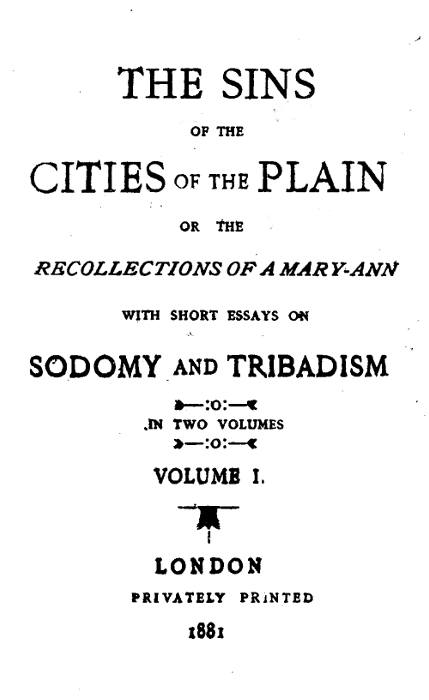
By June the manuscript was completed, and I had settled upon what I deemed a most fitting title—The Sins of the Cities of the Plain. Though Mr. Lazenby scoffed at it, he conceded that the biblical suggestion would doubtless catch the eye of those gentlemen who take an interest in such hidden matters. I confess I feared that certain passages, dealing as they did with the concealed customs of our clandestine fraternity, might prove too recognisable to those acquainted with that shadowed realm.

Lazenby nevertheless published the work in two parts, and it found immediate favour among readers eager to feast upon the covert indulgences of the great and respectable.

Though I tremble at the thought of its reception, I take comfort that my own name has thus far escaped suspicion. I offer here my apologies to Mr. Simeon Solomon and Mr. James Campbell Reddie—both of whom have been unjustly whispered about in connection with this deception. Jack, meanwhile, basks in the admiration of his companions and seems persuaded that a century hence his name will still be spoken among certain circles of “inverts”, as he jests.

This very day I have deposited my first earnings at the Lombard Street branch of Messrs. Glyn, Mills, Currie & Co., alongside this confession, sealed and hidden, to remain in the vault until such time as Providence ordains its discovery. Should that day come, I trust that The Sins of the Cities of the Plain shall be regarded as a truthful and unvarnished portrait of those whose society I have come to cherish.

Ever, dear Reader, your faithful servant,

𝒢. 𝒲𝒶𝓁𝓀𝑒𝓇 𝒲𝑜𝑜𝒹
⌣⌣⌣⌣⌣⌣⌣⌣⌣
George Walker Wood

*****

Now read on to separate fact from fiction.

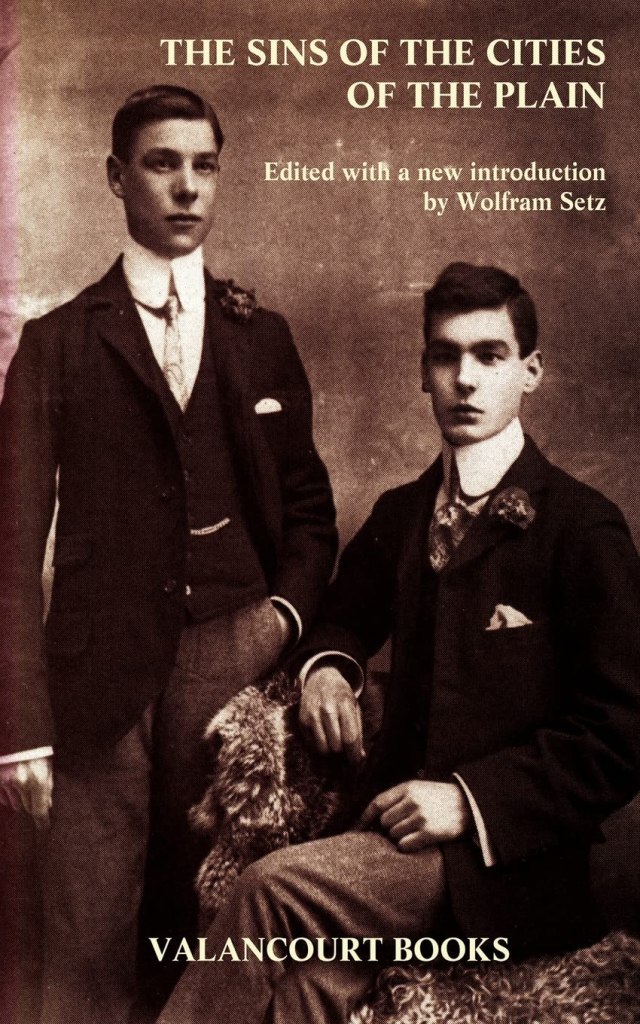
This edition contains the unabridged text of the first edition housed at the British Library, together with a new introduction by Wolfram Setz and a facsimile reproduction of the original volumes’ title pages.

The Sins of the Cities of the Plain is an influential Victorian erotic novel, originally published anonymously in 1881 and widely considered one of the first works of exclusively gay pornography in English. It is a fictionalized memoir attributed to real-life Irish prostitute Jack Saul.

The book is a narrative, presented as the “recollections” or “memoirs” of Jack Saul, detailing his experiences as a young male prostitute (a “Mary-Ann” or “rentboy”) in the clandestine gay underworld of Victorian London. It traces his escapades from boarding school into young adulthood, describing his sexual encounters with various men, from schoolboys and guardsmen to wealthy aristocrats and members of high society.

While attributed to Jack Saul, the actual author is debated by scholars, with some suggesting a ghostwriter or figures like the painter Simeon Solomon or James Campbell Reddie were involved. The book was privately printed in two volumes in 1881 by William Lazenby to avoid obscenity laws and sold for a high price.

The original printings are unobtainable today, but modern editions are widely available from various publishers, such as Valancourt Books and Mint Editions.

Stolen Words / Now he feels like some ageing pin-up

Image: Amy Dury

“Now he feels like some ageing pin-up finding a pimply kid masturbating over photos of him as a boy, and peeping lecherously in on those carnal couplings of his youth.” – Separate Rooms – Pier Vittorio Tondelli – Italy – 1989