
“Man is least himself when he talks in his own person. Give him a mask, and he will tell you the truth”
Words by Oscar Wilde in his 1891 essay The Critic as Artist.

“Man is least himself when he talks in his own person. Give him a mask, and he will tell you the truth”
Words by Oscar Wilde in his 1891 essay The Critic as Artist.

“I’m home again in my old narrow bed
Where I grew tall and my feet hung over the end
The low beam room with the window looking out
On the soft summer garden
Where the boys grew in the trees.”
Boys in the Trees (1978). Lyrics by Carly Simon.
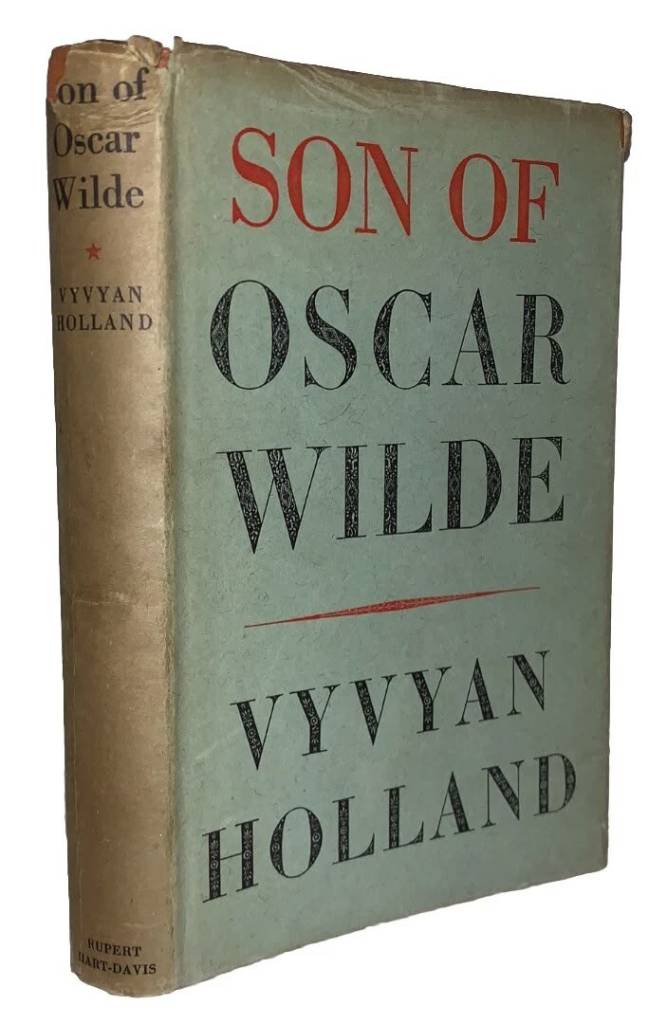
“The self-righteousness of that age was really camouflage to disguise its own hypocrisy, and the people who were loudest in their condemnation of my father were often those whose own lives could least bear investigation.”
– Vyvyan Holland writing in Son of Oscar Wilde. Published by Rupert Hart-Davis (1954)
And I can’t help thinking that the same still applies…
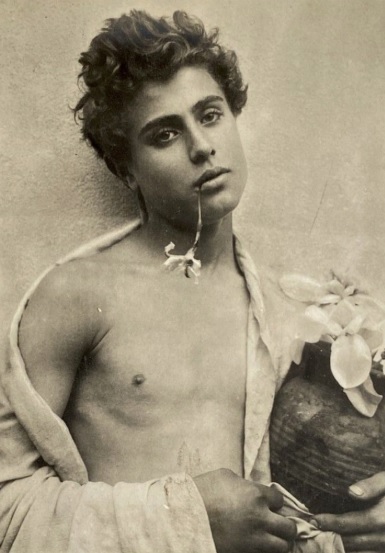
He came in the glow of the noon-tide sun,
He came in the dusk when the day was done,
He came with the stars; but I saw him not,
I saw him not.
But ah, when the sun with his earliest ray
Was kissing the tears of the night away,
I dreamed of the moisture of warm wet lips
Upon my lips.
Then sudden the shades of the night took wing,
And I saw that love was a beauteous thing,
For I clasped to my breast my curl-crowned king,
My sweet boy-king.
John Francis Bloxam writing under his pseudonym of Bertram Lawrence . It appeared in The Chameleon, a one-off literary magazine edited by Bloxam, in December 1894.

“In my 20s a few days after I moved to LA. I met Josh. Someone who changed who I am today. Someone who changed my life. We both fell in love. He took me away from the nightlife and from the gay adult industry, I thought I was gonna get into. Josh was on top of my life from the day I met him. During those five years, Josh put me to college, took me on trips, took me to the doctor, and had my bad teeth fixed. He literally gives me all his 30s and I give him part of my 20s. It was beautiful and I learned so much from him. We spent five amazing years together but like everything, it had an end and we ended it. It was a beautiful breakup. It was mutual. And in some way healthy.”
– Meet Steven Polania Buitrago – VoyageLA – 13 July, 2020
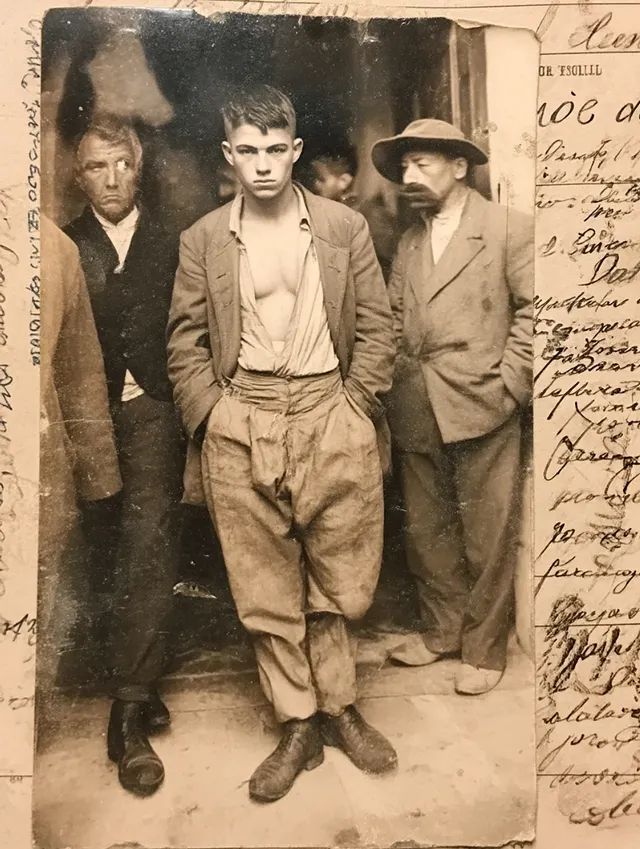
“When I see this image, the first thing that comes to mind is my theory that in our youth we are all beautiful! Is it because in our twenties very few things scare us, or because life has barely run us over yet? It is not my intention to make you think that this is the best period of our lives, I absolutely don’t think that! But there is something there, perhaps the little life one still has behind them, that gives this stage a bright patina. Later, that shine doesn’t disappear, it just changes its nature. It becomes deeper, more complex, sometimes harder to see at first glance, but no less real.” – Nuria Velasco
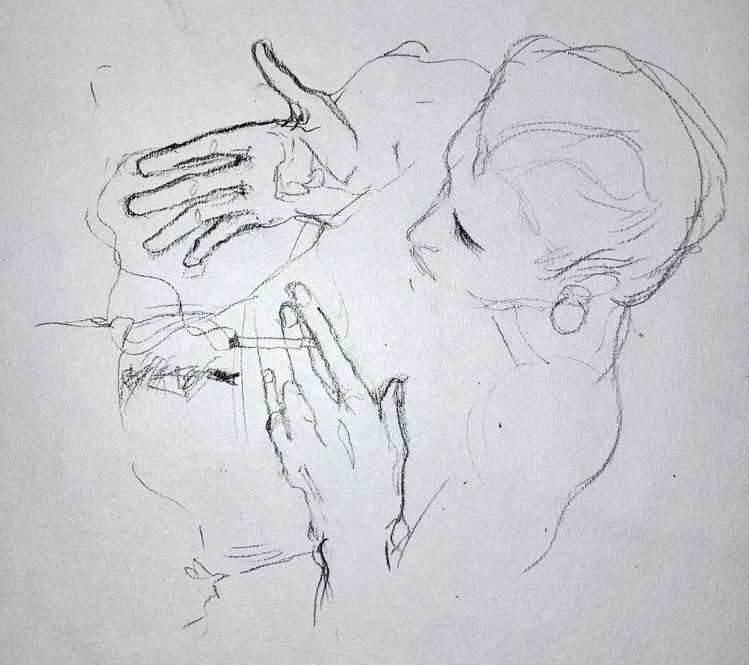
Players
I send thee cigarettes for thy delight.
Smoke my belov’d and think awhile of one
Who thinks and dreams of thee from sun to sun
Longing to have thee, lov’d one, in his sight;
To hold to his thy lissom body tight;
To press thy lips and, pressing, to surprise
Thy soul and his together in thine eyes …
If this be wrong, no love on earth is right!
By Edmund John
Schoolmaster and Poet (1883-1917)

Love, I adore the contours of thy shape,
Thine exquisite breasts and arms adorable;
The wonders of thine heavenly throat compel
Such fire of love as even my dreams escape:
I love thee as the sea-foam loves the cape,
Or as the shore the sea’s enchanting spell:
In sweets the blossoms of thy mouth excel
The tenderest bloom of peach or purple grape.
I love thee, sweet! Kiss me again, again!
Thy kisses soothe me, as tired earth the rain;
Between thine arms I find mine only bliss;
Ah let me in thy bosom still enjoy
Oblivion of the past, divinest boy,
And the dull ennui of a woman’s kiss!
From ‘Caprices: Poems by Theodore Wratislaw’ (London: Gay and Bird, 1893)
No mystery about what’s going on here.
When someone at the Pall Mall Gazette got an early look at Caprices, they immediately picked up on the vibe — To a Sicilian Boy and L’Eternal Feminin were clearly written with a Uranian (homoerotic) theme. The staffer freaked out and threatened bad reviews unless those poems were cut. The publisher caved and swapped them for two safer options, Paradox and At Midnight.
But nobody seemed to notice the poems quietly dedicated to Oscar Wilde and Lord Alfred Douglas. That particular scandal was still waiting in the wings.
To a Sicilian Boy eventually found its way into Charles Kains Jackson’s The Artist and the Journal of Home Culture, a more open-minded publication of the time.
Theodore William Graf Wratislaw (1871–1933) — yes, he claimed to be a Count thanks to his grandfather, who basically declared himself one — was born in Rugby. These days, almost no one remembers him, but he wrote about 160 poems, most during the so-called “naughty nineties.” His work popped up in Love’s Memorial, Some Verses, The Yellow Book, and The Strand Magazine. He’s even rumoured to have inspired Max Beerbohm’s character Enoch Soames.
At some point, Wratislaw swapped the pen for a government desk job — which he famously called “penal servitude.” He married three times, but people still speculated about his sexuality, and To a Sicilian Boy didn’t exactly hide the clues. The timing’s telling: Wilde’s trial happened in 1895, and that same August, Wratislaw quietly joined the Civil Service. Draw your own conclusions.
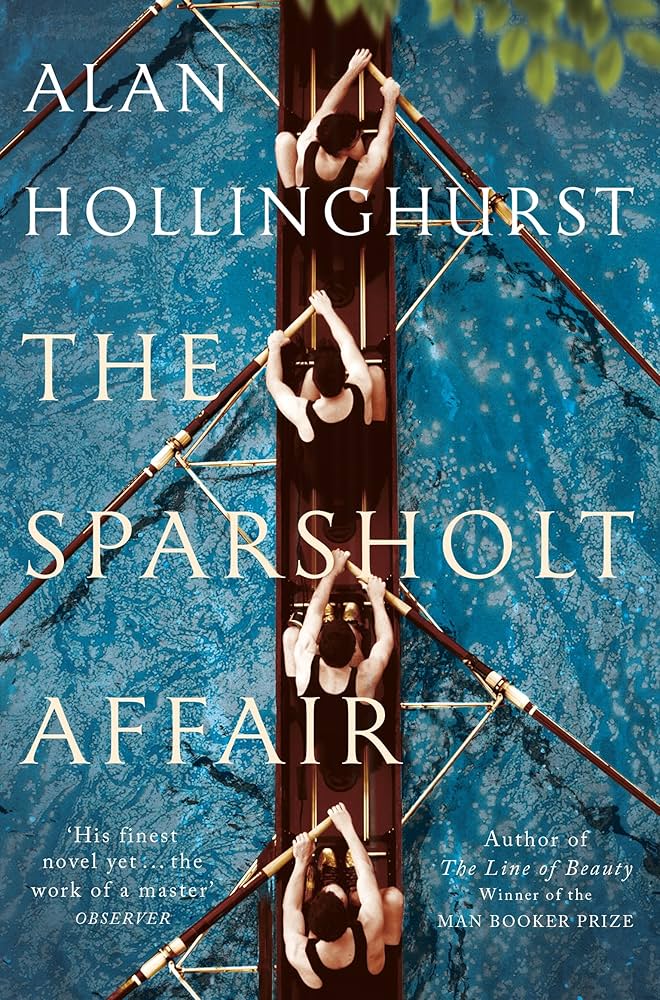
“He slid forward in his chair, head thrown back, boots straight out across the hearthrug. Evert knew already how David took drink, and noted the way he mugged being drunker than he was. He saw for three seconds David was showing him a thing beyond speech, and looked away and back again in hot-faced excitement. Then David dropped his hand and covered himself loosely, as if Evert were indeed a pervert to peep at a man’s lap.”
Alan Hollinghurst – The Sparsholt Affair (2017)
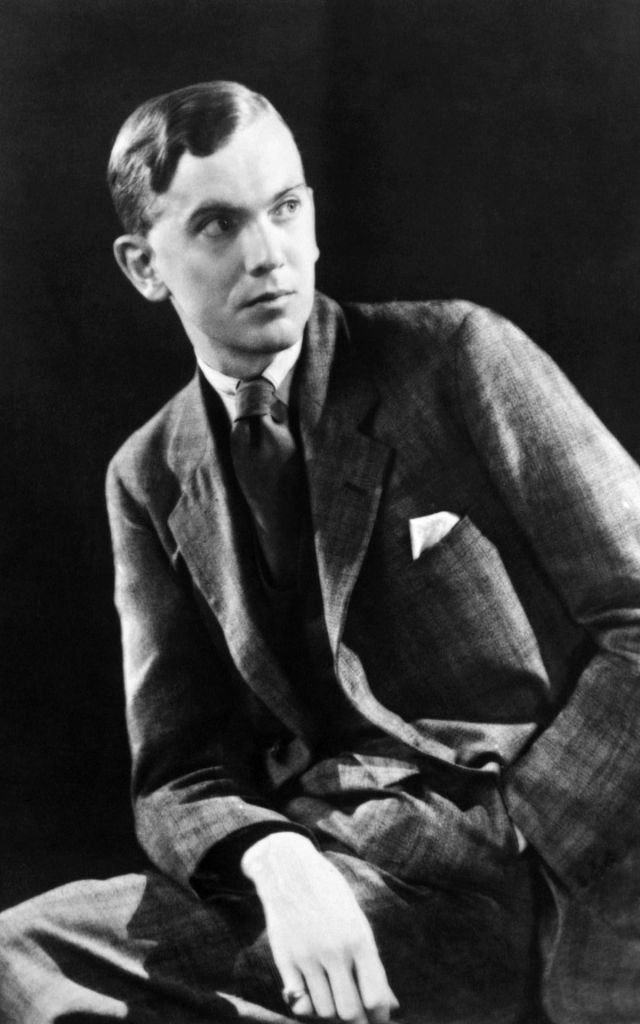
“I have no talent. It’s just a question of working, of being willing to put in the time.”
– Novelist Graham Greene (1904-1991) speaking to American author Michael Mewshaw in 1972.
 Perfectly Hard and Glamorous