
Destruction has its own pleasure: a compulsion—call it weakness or strength—to obliterate the good and start anew. I’ve done this all my life and won’t stop now.

Destruction has its own pleasure: a compulsion—call it weakness or strength—to obliterate the good and start anew. I’ve done this all my life and won’t stop now.
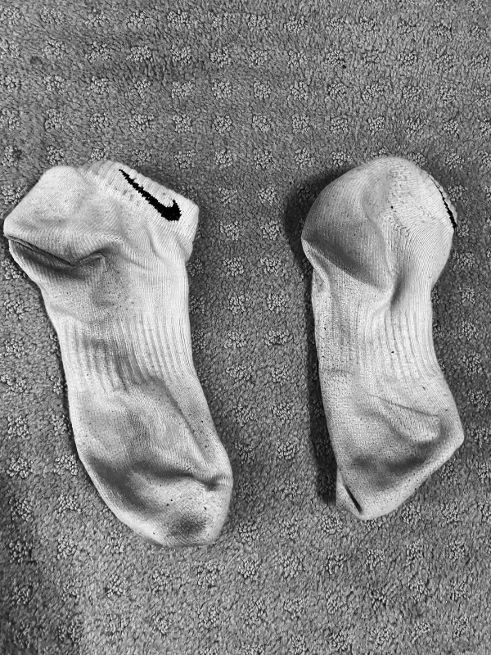
There’s something sneaky going on in the subconscious — innocence, purity, chaos, sweat. Dirty white socks hit all of it at once. They spark that weird little thrill: the musk, the heat, the trace of someone’s body still clinging to the cotton. It’s a micro-kink, sure, but the power comes from whatever story you attach to them — private, charged, and way more psychological than you’d ever admit out loud.

Dominic chose fourteen stone steps to sit on. They hadn’t been cleaned in a century; weathered and frost-damaged, they had taken on a patina — the greyness broken by lichens and mosses, ivy-leaved toadflax, and ryegrass. He rested his head against the iron railings and sighed.
Arthur sat thinking below him, his legs sprawled across the pavement.
“Once upon a time, a horse and carriage pulled up, and a well-dressed man — wearing a top hat and fine coat — disembarked and climbed these steps. He rang the bell and waited while an old butler answered the door, then handed over the hat and coat before being shown into a reception room.”
“How do you know that?” said Dominic, who lit a cigarette and looked towards the front door. There was no grandeur anymore. A glass door stood behind a padlocked gate; dirty net curtains protected the inside from prying eyes. The house was empty and unloved.
“You only say it because you are describing something that you have seen or read. You don’t know what happened, because you weren’t here.”
Arthur picked up a piece of stone that had crumbled from one of the two pillars at the foot of the steps. He examined it before putting it inside a trouser pocket. This was something else to add to his ‘shelf of memories’. One day, when they were old men, he would pick up the piece of stone and show it to Dominic and say, “Do you remember the day we sat on those stone steps?” But he doubted that Dominic would grow old.
“My dear boy, despite your charm and privilege, you sadly lack imagination and prefer to live that shallow existence on TikTok and Instagram. Such a waste of an upbringing.”
Dominic laughed.
“And besides,” Arthur continued, “you will never become famous if you don’t contribute anything worthwhile that you can be remembered for.”
“That, my love, sounds too much like hard work,” Dominic replied. “But I envy you, Arthur, because you believe that writing those shitty little posts will turn you into a brilliant writer.”
There was a note of sarcasm in his voice, and Arthur knew that Dominic didn’t mean to be unkind.
“It is true. There are millions of tadpoles swimming in this huge pond. Why should anybody take notice of this one ordinary tadpole? But, Dominic, it’s not about being a brilliant writer. It’s about learning from mistakes — because I look back at some of the things I’ve written and cringe. But I remind myself that writing is about me, and I write for my own enjoyment.”

Jeffrey and his mafia. And me—only me—still unaware that I was God. A mutual understanding never consummated in public. We conspired like poets at war: Jeffrey with his loyal men, and I, followed only by those who believed in my every word. Yet I remember one moon-warmed night, when the sea breathed softly beneath us, and at the stern of a drifting ship, we clasped hands and swore our respect. The water glowed like milk around us. It was the start of a beautiful romance that put fear into the hearts of everyone except ourselves.

Once, a handsome Sicilian boy, the son of Eros and a nymph, fell deeply in love with the sun, and couldn’t bear to stay another minute where he couldn’t see it. He worshipped it wherever he went, and when it wandered out of sight, especially at night, he couldn’t rest, because that object he loved wasn’t warm upon his tanned breast. For this reason, he never walked, stood, or lay in the shade, the love, in full sway, was boundless, and made his life its prey.
At one time, the sun remained under a cloud for eight days; during this period, the boy, Cylmenon, was very unhappy, and because he could not find his beloved, pined away and died. It was a tragic end for a fine young boy. When the sun shone again it found Cylmenon’s body near a fountain where he had tried to see the sun’s reflection, and so grieved was the sun, that it changed the lad’s body into a golden flower, of the first Marigold.

An explanation: Marigolds are known as “herbs of the sun” and represent the sun’s power, warmth, energy, and light. They are often associated with joy, optimism, passion, and creativity. This story is based on an obscure and forgotten poem from 1868 by Peter Spenser. Little is known about him other than that he was the eldest son of the Rev. Peter Spenser, Rector of Temple Ewell, near Dover. He wrote poetry for local newspapers across England and also published the magnificently titled ‘Parvula, or, a Few Little Rhymes: About a Few Little Flowers, a Few Little Birds, and a Few Little Girls, to Which Are Added, a Few Little Songs, and a Few Other Little Things.’ (1863)
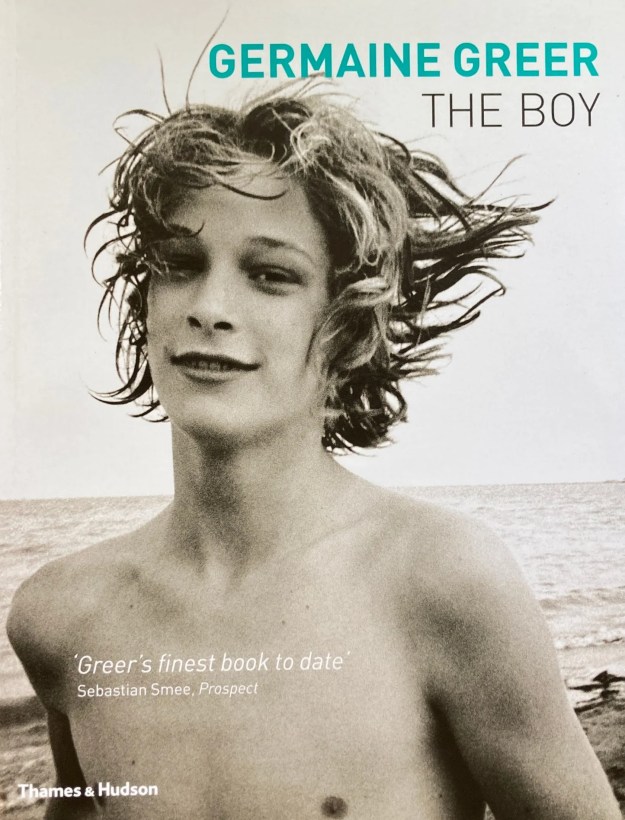
Baron Corvo once told me in a dream that I should write something controversial. Terrible advice, obviously. But here we are.
I found a book in a charity shop that Charlie told me not to buy. He said it was distasteful. Which, of course, made me want it more.
The book was Germaine Greer’s The Boy — a 2003 art history study about how young males have been represented in Western art. Greer argued that, for centuries, it was the male body — not the female — that dominated the gaze. Art, she said, used to worship men. Then we decided that kind of looking was shameful.
When it came out, The Boy caused an uproar. Greer said she wanted to help women reclaim their “capacity for visual pleasure,” to look at men the way art has long looked at women. Then she dropped her most infamous line: “A woman of taste is a pederast — boys rather than men.” Predictably, everyone lost their minds.
The book is filled with over 200 images — statues, paintings, portraits — each exploring what Greer called the “evanescent loveliness of boys.” The soldier. The martyr. The angel. The narcissist. The seducer. It’s the sort of book that doesn’t end up on display in Oxfam, which is precisely why I found it there.
The cover shows Björn Andrésen, the Swedish actor who played Tadzio in Death in Venice (1971). The photograph was by David Bailey, but Andrésen said no one asked permission to use it. He was furious — disgusted, even. “I have a feeling of being utilised that is close to distasteful,” he said. And the irony? The week I bought the book, he died, aged seventy.
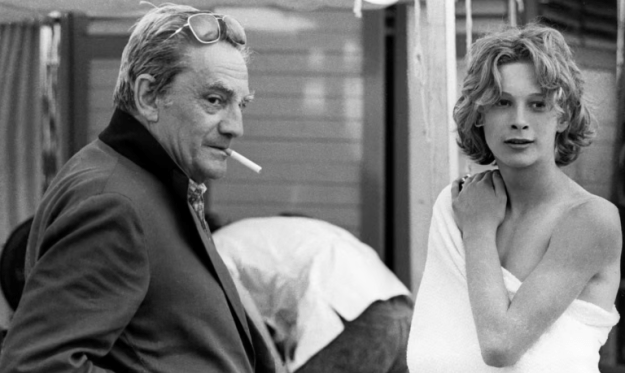
Every obituary revisited the same scene: the audition tape from Death in Venice that was included in The Most Beautiful Boy in the World — a documentary about his life. Visconti tells him to smile. Then to undress. He laughs nervously. Strips to his trunks. Shifts under the gaze of men deciding whether he’s beautiful enough.
It’s hard to watch now. Visconti — Count of Lonate Pozzolo, titan of Italian cinema, and apparently, chaos in a cravat — ends up looking less like a mentor and more like a predator. But dead men can’t explain themselves.
When I was fifteen, I’d probably have thought that kind of attention was glamorous. Maybe I’d have handled it. Maybe it would’ve destroyed me. Hard to know. My own encounters with predatory men later on made Visconti look almost saintly by comparison. At least he left art behind. Maybe Andrésen’s story isn’t just one of exploitation, but what happens when fame and beauty collide with someone who’s too young to bear it.
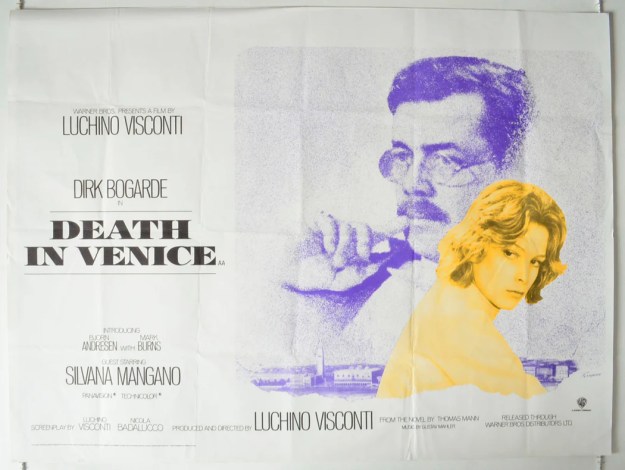
Charlie, meanwhile, can’t stand The Boy. But he loves Death in Venice. He called Tadzio a “beau.” When I asked what that meant, he said: “The boy is beautiful. It’s sensuous, not pederastic. I’m surprised no one’s remade it.”
Which — yes — feels like a double standard. Both the book and the film are about the same thing: beauty. The kind we no longer know how to look at without flinching.
Could Death in Venice ever be remade?
I doubt it. The original is a masterpiece, and also completely unmakeable now. Mann’s 1912 novella was already controversial — a composer obsessed with a boy — and Visconti turned that tension into pure cinema. But in 2025, the moral landscape is different. Post-Me Too, post-Epstein, even looking can feel like a crime. No studio would touch it.
Unless you flipped it.
Make Tadzio older. Make the story less about sex and more about time — the hunger for youth, stillness, lost purity. Desire becomes existential, not erotic. If Visconti made the tragedy of seeing, a modern director — Luca Guadagnino, Todd Haynes, François Ozon, Joanna Hogg, Andrew Haigh — could make the tragedy of knowing you’re looking.
Visconti’s gaze was romantic. Ours would have to be self-conscious.
In their own way, both The Boy and Death in Venice celebrate the same thing — male beauty, youth, the brief perfection of being looked at before it fades. Once upon a time, that was sacred. Now it’s scandalous. Somewhere along the line, admiration turned into suspicion.
So yes, Baron Corvo told me to write something controversial. Bad idea from a worse man. But maybe he was right about one thing: sometimes, it’s worth writing about what we’re not supposed to look at.


Suspicion — the cynic — grows tiresome after a while. He toys with a silver St. Christopher medal, the patron saint of twinks slipping through his fingers.
He’s doe-eyed, all innocence, and says, “I like older men.” I smile, let him think he’s got me hooked — but he’s no match for experience.
Still, he’s waiting for a response, so I play along.
“Why do you like older men?” My voice can’t quite hide the boredom.
“Because,” he says, “older men are more experienced.” An off-the-peg answer.
I lean forward. He flinches, thinks I might kiss him.
“Here’s how this goes,” I tell him. “You’ll want me to fall for you — to believe I can’t live without someone barely out of nappies. You’ll lead me on until you work out what you can get: a place to stay? Money? A holiday? A stop-gap? And then you’ll move on, find someone else.”
He’s shocked — hand over mouth, as if such despicable thoughts had never crossed his mind. But he knows it isn’t going well.
“I might be older,” I say, “but I once sat where you are now.”
He sinks into his seat.
“I played them all, never realising I’d grow old too. We all do — it’s the one thing we can’t control. But don’t worry. I’ve swapped seats, yes, but I’ve kept yours warm for you.”

Harry Oldham is writing a novel based on his criminal and sordid past. To do so, he has returned to live at Park Hill, where he grew up, and the place that he once left behind. That was then and this is now, in which the old world collides with the new. (Parts 1 to 17 are available to read in the menu)
Perfectly Hard and Glamorous – Part 18
October 2025
There was a paperback of Saturday Night Fever published in 1977 by H. B. Gilmour. I read it when I was twelve. If I remember right, the novel said that Tony Manero looked like a young Al Pacino. In the film that came first, a girl he kissed on the dance floor gasped, “Ohh, I just kissed Al Pacino!”
I hadn’t a clue who Pacino was, only that he must’ve been something to look at. “Pacino! Attica! Attica! Attica!”
Decades later, Pacino published his autobiography at eighty-four. Everyone knows who he is now. It’s a decent book—above average—and I doubt he wrote it himself, but I’ll gladly be proved wrong. He writes beautifully about the part of life most people avoid thinking about: the last act, when the runway ahead is shorter than the one behind, as David Foster once put it.
Compared to Pacino, I’m still young. But sixty looms, and yes—I care a fuck. Quite a lot, actually.
I looked in the bathroom mirror and flinched. The face staring back didn’t belong to me. Wrinkles, dull skin, cheeks softening with age. Not the face of an eighteen-year-old; the face of an old man.
That night I dreamt of Andy, Jack, and me—partying by the Cholera Monument. Summer, though the skies were leaden. We were drunk, a boom box blaring New Musik. Rain began to fall, but we didn’t care. We danced, the drops sliding down our fresh, young faces. “It’s raining so hard now / Can’t seem to find a shore…”
We stripped to our boxers, soaked and clinging, leaping like fools. Paolo watched from under a tree, the outsider at the edge of a brotherhood. I wanted him to join us, but he stayed still, afraid.
When the song ended, our clothes were a sodden heap. We grinned, knowing this moment could never happen again. Paolo walked over, still fully dressed, and looked me up and down. Do you like what you see, Paolo?
He shook his head. When he finally spoke, I wished he hadn’t. “Harry, what are you doing? What happened to your body? Old men don’t behave like this.”
I woke to a shadow in the doorway. “Harry, you okay?”
Tom. He came and sat on the edge of the bed. “I think you were dreaming. You started shouting.”
“What did I say?”
“I don’t know, but you woke me up.”
“Fuck.”
“What were you dreaming about?”
I’d read that dreams fade fast because they live in the same part of the brain that controls movement—crowded out the moment we start to stir. But I remembered this one. And I blamed Al Pacino.
“What time is it?” I asked. “When did you get here?”
“Four a.m. After midnight, maybe. You didn’t hear me come in.”
“At least you haven’t lost your key yet. I take it you’ve finished your drug dealing for the night.”
He rolled his eyes. “Harry, I told you—what you don’t know won’t hurt you.”
Tom had mellowed since I met him two years ago. Back then he’d have clenched his fists and spat, “What the fuck’s it got to do with you?” Now twenty, he was as much a part of the flat as I was. He drifted in and out, sometimes gone for days, then suddenly asleep on the sofa when I woke.
Why I let him into my life, I’ve asked myself a hundred times. Just not tonight. Tonight, I was glad of him.
He lay back, staring at the ceiling. I went to piss. When I came back, he’d slid up beside me, hands behind his head.
“What are you doing?”
“I’ve never really been in your bedroom before.”
“Liar.” I’d made it clear it was off-limits, but I knew he’d snooped when I wasn’t around.
“Why did you become a writer?”
“Ah, the loneliest job in the world.” I hesitated, then answered.
“One night—a year before I left school—my parents came home from an open evening. Same story every year: teachers saying how useless I was. But that night, my mum came into my room looking excited. She said, ‘Mr Green, your English teacher, thinks you’ve got imagination if you put your mind to it. He said if you used better, longer words, you might pull through.’ My dad, standing behind her, added, ‘I told Mr Green he needs to speak properly first… but it’s a start.’ That was the only bit of hope they brought home.”
“Is that when you started writing?”
“Didn’t mean anything then. But in the early nineties, when I was broke, I had this client—older guy, fat—wanted me to piss on him. Easy money. We were lying on a wet plastic sheet in a hotel bed, talking. He worked for a publisher. Said I could make money writing about life as a London rent boy. I didn’t, of course—it sounded like work—but he told me to keep notes. Can you imagine?”
“And did you?”
“Not at first. Then one day I nicked a pack of exercise books from WH Smith and started jotting things down. Faces, nights, bits of talk. Eventually I began adding fiction, and that’s probably when I realised I could be a writer.”
My first book came out when I was in my forties. Nothing to do with rent boys. I’d drafted that novel, but no one wanted it—too sordid, too shallow, they said. One editor told me to try something else. So I wrote a formulaic thriller about a teacher investigating a missing student. I hated every minute of it, but it sold.
Tom turned toward me, and I braced for a jab. Instead, he said, “Maybe it’s time to revisit that old story. Nothing you write could shock anyone now. Might even fit with the book you’re working on.”
He hadn’t read any of my new work, not since that first night. My return to Sheffield and Park Hill had been interesting, if not productive. The book was two years late, my agent losing patience. Still—Tom had a point. I hadn’t thought about including the London years.
“There was a book published in the nineteenth century,” I said. “The Sins of the Cities of the Plain. No one knows who wrote it—some say a young rent boy named Jack Saul. It’s pretty explicit. I lived a life that echoed its pages once, long ago, when I was young… and now I’m not.”
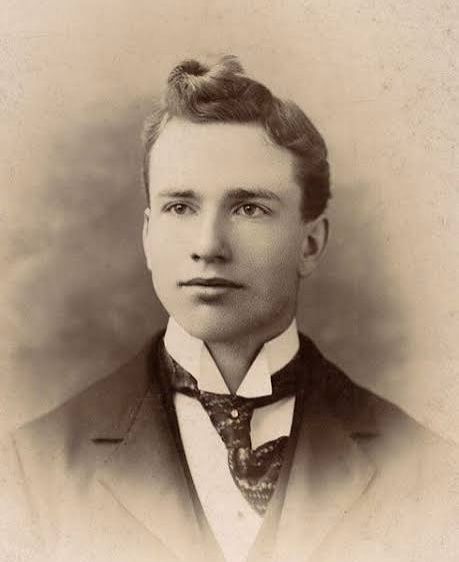
There is nothing to see, and yet—a ghost lingers. A handsome young man in fine attire, bearing no malice, drifting silently between the worlds. I see him, though you cannot. His gaze falls upon you with a tender awe—admiring, sorrowful, and tinged with jealousy that life continues without him.
Once, he loved a lady. He lost her, and now he wanders, unable to find his way back to her embrace. He is here, and there, and everywhere—a soft luminescence that clings to the hearts of the romantic and the doomed alike. Still, he searches for his beloved.
I tell him she no longer walks among the living, and he weeps, for he does not know where else to look. He is trapped in his own glass box of memory, with nowhere to go.
Beautiful young souls—he drifts above you, circling in a spectral dance. A shadowplay. Raise your hands and feel his trembling light, for this is All Hallows’ Eve, and he weeps.
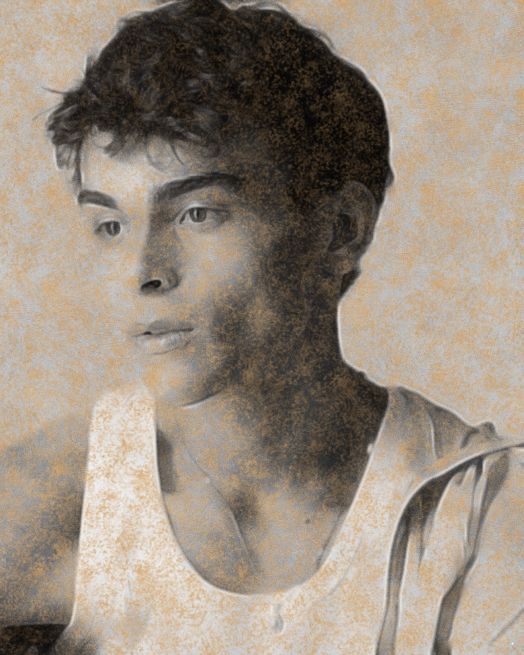
Noah sat cross-legged on the floor, eating a bowl of cornflakes. Henry had seen this before—only then, it was on a YouTube video during a train ride from Manchester to London. In that video, Noah had poured milk over his cereal and collapsed onto the floor to eat, idly watching his housemates move around him. They hadn’t said a word, stepping carefully to avoid him—an inconvenience they tolerated.
Now, Noah sat on the floor again, eating breakfast as Henry checked his bag, picked an apple from the fruit bowl, and scrolled through his messages before work. The scene unfolded in silence, broken only by the soft tap of Noah’s spoon against the bowl. Their life had become a loop of flashbacks—moments once broadcast to millions, now replayed quietly within the confines of their apartment.
 Perfectly Hard and Glamorous