Tag Archives: Venice

Comte de Castello

He was beautiful. He was impossible. And nobody could keep him.
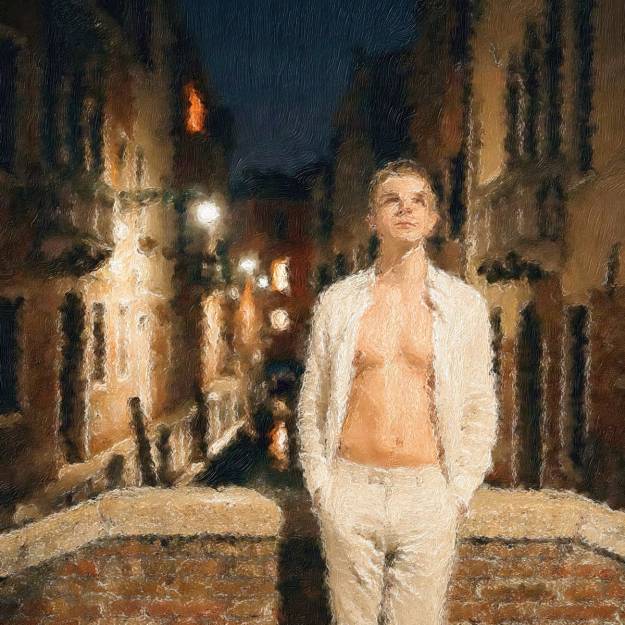

In Venice, as in the rest of Italy, seventeen is an unlucky number. Written in Roman numerals, it becomes XVII, which, when rearranged, spells vixi: “I have lived”, an expression traditionally associated with death. It was this number that some chose to attach to the so-called Mystery Boy, for Venetians can be remarkably superstitious when darkness falls. Yet, as far as anyone knew, he had caused no harm and certainly had brought death to no one.

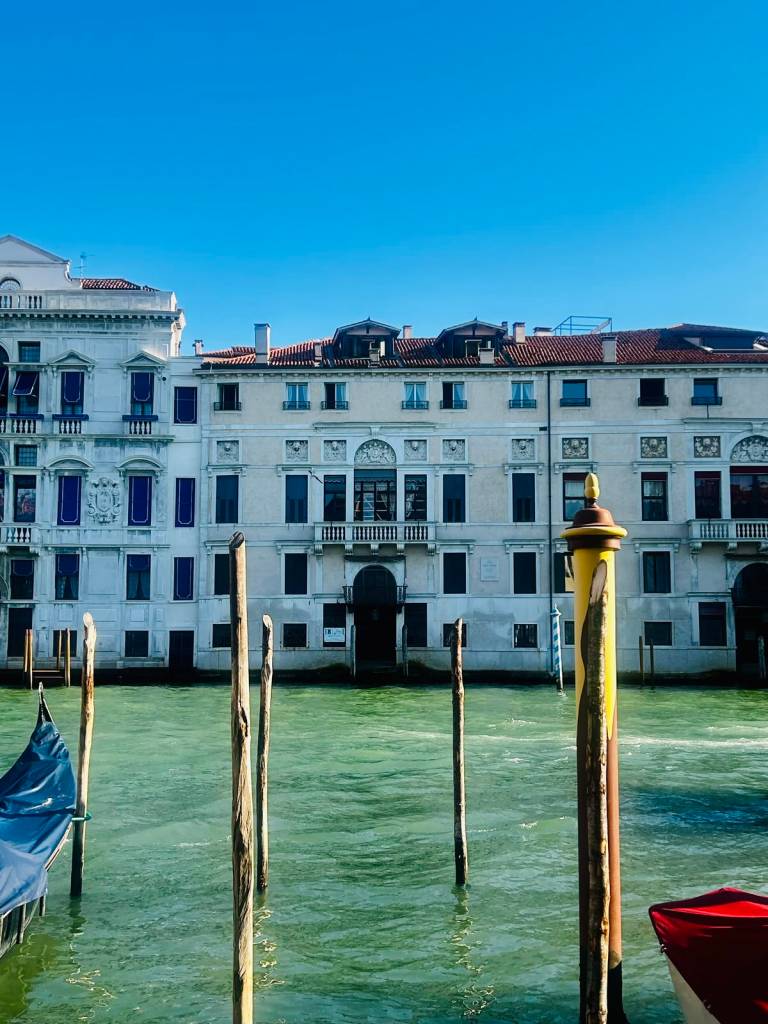
The story was reported in Il Gazzettino, which, with a modicum of certainty, identified the Mystery Boy as Bertie Van Tahn, a young man of Dutch and Flemish descent. He was said to be the seventeen-year-old son of wealthy bankers who spent much of the year in a sixteenth-century palazzo near the Rio dei Mendicanti, which marks the boundary between the Venetian sestieri of Cannaregio and Castello. The newspaper, however, was somewhat perplexed by the reasons for his eccentric behaviour.

There was another rumour, too, that circulated about the Mystery Boy: a centuries-old tale passed down from one generation to the next, embellished with every telling until myth had become reality and the whole affair had acquired an air of the plainly ridiculous.

It concerned the infamous Comte de Saint Germain, an enigmatic eighteenth-century adventurer and polymath whose origins remain uncertain, and who was often referred to as The Man Who Never Dies. Official records placed his death in February 1784, in Eckernförde, Germany, yet he was alleged to have been seen at intervals ever since.

Quite why the Comte de Saint Germain, Master of the Ancient Wisdom, should reappear as a teenage boy in Venice seemed unfathomable. Nevertheless, a wave of hysteria proved sufficient to unsettle even the soundest of minds. Those inclined to believe this absurd theory maintained that the enigmatic count had discovered an anti-ageing elixir, the secret of which permitted him to live indefinitely.

The rumour gained further momentum through tales circulating in the corridors of Università Ca’ Foscari and Scuola Navale Militare Francesco Morosini. Those who claimed to have seen the boy described his eyes as spectral violet and spoke of a Maltese cross, rendered in periwinkle, which he wore about his neck.

The excitement soon provided gondoliers with a novel means of beguiling their tourists. Standing tall at the stern, a silhouette of effortless grace, one might add a little something to the usual account of Venice: it was no longer safe, they would explain, to venture out after dark.

One thing, however, seemed certain. While respectable Venetians slept in their beds, someone, or something, roamed the age-old flagstones, wandered beside the splendid canali and slipped across deserted bridges. A rational observer might have scoffed at such foolishness, but the evidence mounted almost daily to suggest that someone did, after all, appear in the dead of night.

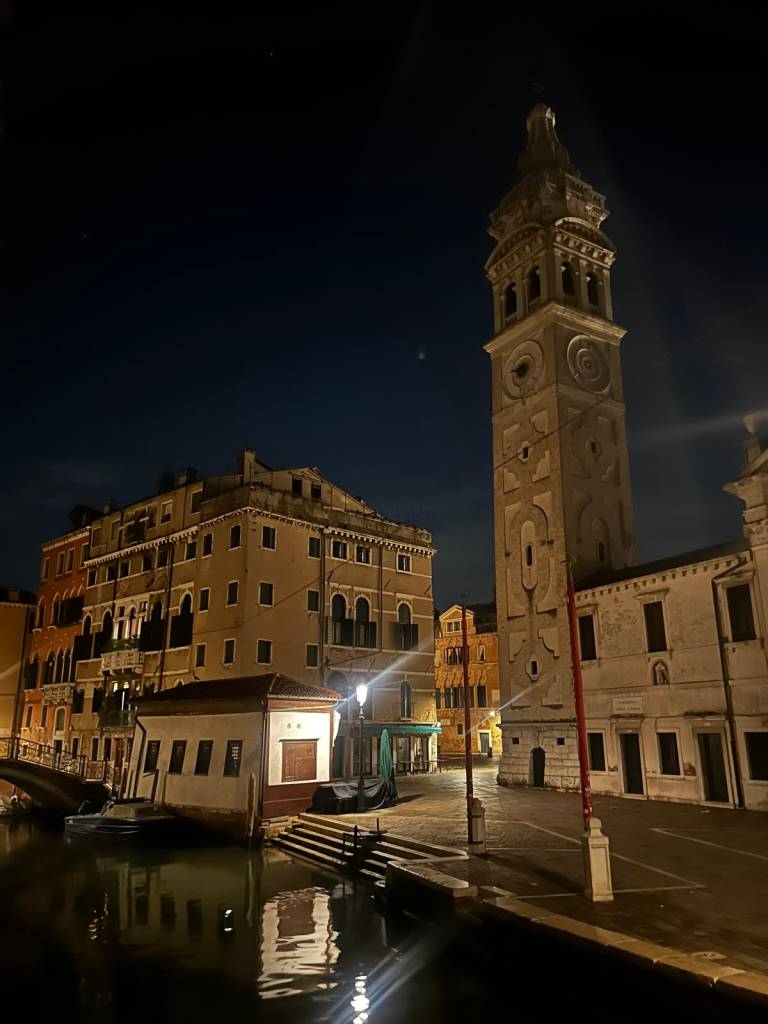
It was a young girl who first claimed to have seen the figure who would come to be known among her enthusiastic contemporaries as the Comte de Castello. She had observed the young man standing at the apex of the elegant stone Ponte dei Greci, an appropriate symbolic gateway into Castello, beneath the shadow of the leaning bell tower of nearby San Giorgio dei Greci.

The boy had stood for a long time, staring down into the dark waters of the Rio di San Lorenzo, silent and scarcely moving. Then, as though roused by some distant summons, he raised his white shirt above his head, tilted his face towards the heavens and gazed longingly upwards.

“He had a pale, slender, almost feminine physique,” the girl reported. “He placed one hand upon his stomach and seemed enchanted by its smoothness. His expression was one of ecstasy, and nothing could have disturbed it. He cared nothing for what anyone might think. He was not normal, in the ordinary sense of the word. When I looked again, he had vanished.”

Few thought to question why the girl had been abroad at such an ungodly hour. Instead, they indulged her by allowing her to tell her story to anyone prepared to listen. By the following evening, it had been repeated hundreds of times, and the girl was no longer the only person to have witnessed the Comte de Castello’s curious behaviour.

Although, of course, none of them had.

The drama might have subsided at that point.

But a few nights later, a restless boy named Almorò found himself unable to sleep. Remembering the tale of the handsome young count, he scrambled from his bed and perched cross-legged upon the ledge of his bedroom window, which overlooked the Ponte Cavagnis.

He hoped to catch a glimpse of the count who had become the subject of so much gossip.

It must have been three o’clock in the morning, for he heard the distant chimes of a church bell. This was significant, because he had never heard those particular chimes before, nor did he hear them again.

The final note had scarcely faded when Almorò detected movement at the foot of the steps. Anxious not to attract attention, he held his breath and fixed his gaze upon the bridge.

Out of the shadows emerged a boy considerably older than himself.

He climbed the steps slowly, placing one foot before the other, until he reached the summit. There he paused, resting both hands upon the ironwork.

In the moonlight, Almorò could discern the boy’s short, fair hair, fine-featured face and agreeable appearance. But it was his shirt that caught the young observer’s attention most. Immaculately white and fastened with small buttons, it was carefully undone, revealing a chest whose pallor suggested alabaster.

The boy caressed it with an almost devotional tenderness.

As though aware that he was being watched, he turned slowly towards Almorò and smiled. From his pocket he drew a small stone, held it flat upon his palm, and cast it as far as he could into the canal.

All Almorò saw was the spreading ripple, followed by a succession of smaller disturbances, each one setting another in motion.

When he looked back towards the boy, the bridge was empty.

Overcome by the intensity of his experience, Almorò told his parents that the boy had been beautiful. His father was quick to remind him that such a description was entirely inappropriate. Boys, he explained, could be handsome, but never beautiful.

The sensible course would have been to remain silent. Unfortunately, Almorò’s mother made the mistake of sharing her son’s extraordinary experience on social media.

It must have been the Comte de Castello, she wrote.

By the end of the day, the post had been shared thousands of times, and a remarkable number of people claimed to have witnessed the same inexplicable phenomenon. As before, however, none of them had. But it made a good story.

Over the following weeks, the narrative grew until the Carabinieri and Polizia Locale calculated that there was scarcely a soul left in Venice who had not seen the boy. Such was the public concern that additional officers were assigned to discourage the inquisitive from wandering the streets in the hope of catching a glimpse of him.

It was during one of these nightly patrols that two young officers approached the hushed Rio di Santa Maria Formosa, near the spot where John Singer Sargent had once painted one of his celebrated Venetian watercolours.

As they neared the Ponte del Mondo Novo, one officer seized the other by the arm, preventing him from taking another step. He pointed towards the bridge, where a figure stood utterly motionless.

It was a teenage boy, apparently absorbed by the murky water below, as though studying his own reflection.

The two officers stood transfixed. Neither dared to move, and neither called out.

The fair-haired boy might have been a ghost. Equally, he might have been an apparition of quite another kind: a vision of such extraordinary beauty that the distinction hardly seemed to matter.

He moved delicately, undoing the buttons of his shirt to reveal a lean, bare chest. His pectoral muscles sloped from the collarbones, curved towards the sternum and tightened with each breath. Then, with an unhurried deliberation, he caressed both nipples.

“It is the Comte de Castello,” one officer whispered.

“Shush,” replied the other.

But the boy had heard them.

Disturbed from his reverie, he turned and extended the palm of his hand. Resting upon it was a small stone that glowed an inexplicable shade of lilac.

He studied it for a moment and then, for the first and last time, he spoke.

“I know that I am beautiful, and that is good enough for me. Who are these people to doubt my intentions? If they want me, they cannot have me.”

With that, he dropped the stone into the Rio del Mondo Novo.

The two officers agreed upon one significant point. Having cast the amethyst into the water, the boy had disappeared. Neither could explain where he had gone, nor, more importantly, how. One moment he had been there; the next, he was not.

They agreed that the incident should never be mentioned.

They were unaware, however, that a dozen pairs of eyes had watched from darkened windows and witnessed the same phantasm. Those who had seen it longed to speak, but lacked the courage to do so.

There were further sightings of the Comte de Castello, each less convincing than the last. In time, as so often happens, the furore subsided, until nothing more was recorded. The elegant boy faded into folklore, becoming a story that descendants might one day discover in a book devoted to supernatural occurrences.

There was, however, an interesting twist to the tale, of which the Venetians remained entirely unaware.

On a bleak November morning, a Carabiniere with whom you are already acquainted arrested a teenage boy near the Ponte di Rialto. His offence was the time-honoured one of relieving careless tourists of their possessions as they shuffled, unsuspecting, over the steps beside the Canal Grande. A search revealed a collection of stolen wallets, purses and mobile phones which he had been unable to pass on to an accomplice.

Such misdemeanours were commonplace and tedious for law-enforcement officers. Catching the offenders, however, was not always so routine.

The Carabiniere called for a police launch to take them to the Comando Stazione Carabinieri Venezia Cannaregio. After handcuffing his prisoner, he escorted him to the waiting vessel, where they made the short journey to the station.

The boy in custody was seventeen-year-old Mani di Velluto, a native of Trento who had come to live with cousins in Mestre, a family already notorious for its misdeeds.

A personable boy, and somehow familiar, the officer mused.

He remarked upon this to his prisoner, adding that there was still time for him to mend his ways and lead an honest life.

Velluto gazed back at him with wide, innocent eyes.

“I am surprised that you caught me,” he said. “I am usually rather good at disappearing.”

The Carabiniere paid little attention to the remark. Then the boy said something that caused him to look up sharply.

“If they want me, they cannot have me.”

The officer had heard those words before.

He turned towards Velluto.

The boy had disappeared.
A Venetian Affair

Part 2 – The Venetian Complication 


“Ciao,” said Bianchi.

“Ciao,” I replied.

“S-ciào vostro,” he grinned.

I am your slave.

He had discovered that ciao was derived from an old Venetian expression and couldn’t resist repeating it whenever he had the opportunity.

Venice woke early and seemed determined to wake us with it. The vibrating hum of delivery boats bounced off the brick façades of the Renaissance buildings, followed by the dull thunk of their hulls against the wooden mooring piles. Then came the metallic rattle of carrelli being pushed along the wooden decks.

“Slaves don’t sleep in the same bed as their masters.”

“But I have a good master and I must surrender to his wishes,” Bianchi replied cheekily.

My phone vibrated.

A message from Cola.

My mother is furious with you both. She knew that you would sleep together.

I smiled.

Bianchi crawled to the end of the bed and opened the curtains. He was naked, unlike the night before, and it was the first time I had seen him that way. He turned towards the window, completely oblivious to the effect he was having on me.

He had got his wish. Almost.

I had remembered Signora Bruschi’s warnings and allowed nothing more than a few kisses and cuddles. Nothing beyond that. Bianchi had no idea how much willpower it had taken not to give in to him.

But he was playing the long game and, for now, seemed perfectly happy.

Alas, the inevitable would happen eventually.

Sunrise had brought a soft morning light and a rising canal fog that would soon burn away.

“I shall make coffee,” Bianchi declared as he scrambled down the spiral staircase to the kitchen below.

I stayed in bed and closed my eyes.

I listened to the patter of his feet across the terrazzo, followed by the rattling of cups. Then came the sound of the French doors opening onto the stone balcony.

“Cazzo!”

He scuttled back inside.

“I did not know there were apartments overlooking us… and you can see everything.”

I peered through the newel posts and watched him grab a large towel and wrap it around himself.

I am going to struggle here, I thought.


The message from Charlie came at midday.

Ponte delle Guglie. 8pm?

I sent a thumbs-up.

Nothing more.

We shall see you then, he replied.

We.

My mind was made up.

I would definitely be taking Bianchi with me.

When I told him, I detected a nervousness that hadn’t been there earlier. But, as he explained, Signora Bruschi had sent him to accompany me and he would respect her wishes.


We resisted the urge to kick tourists into the nearest canal, seemingly oblivious to the fact that we were tourists too.

We spent the day wandering narrow calli, crossing little bridges and drinking too much coffee outside cafés.

It was a way of killing time.

I was apprehensive about seeing Charlie again. The outcome was uncertain. Was this going to be closure for both of us, or the beginning of a new chapter?

I was mindful that I had instigated our enforced absence, although I hadn’t intended it to turn out the way it had. Not for the first time, I had ruined something that, on the surface at least, had seemed special.

But I had forgotten that Charlie was stubborn. And if he believed he had been wronged, nothing would alter his mind.

An observer might have regarded the whole mess as six of one and half a dozen of the other.

Quite true.

Charlie had inexplicably posed naked for a French gay magazine, confident that I would never find out.

On the other hand, I had slept with his brother.

And that, it appeared, was a far greater sin.

The other question I kept asking myself was whether we were still in love with each other.

There had been an unwillingness on both sides to resolve the mess and move on. Months apart had only strengthened our positions.

Part of me hoped that our meeting would lead to reconciliation.

But another part told a different story.

That story involved Thomas in Paris.

The uncertainty wasn’t helped by Bianchi, who had become uncharacteristically subdued. His early-morning brightness had gradually faded until he slipped into an awkward silence.

It wasn’t until we were heading back that I understood why.

We had reached the end of a ramo — a dead-end alley overlooking the Rio de la Pleta — and stopped to watch the boats passing below.

“There is a boy at work called Cesco,” Bianchi began.

He paused.

“He doesn’t say much. When I first met him, I tried to make conversation. He simply nodded. Now he sometimes smirks and occasionally speaks. We are slowly getting there. I think he trusts me.”

I tried to understand where the conversation was heading.

“The other staff say that Cesco is a handsome boy. Such a shame about the spots. They wish he’d do something better with his hair. They want him to be more sociable. They often lose patience with him.

“But when he smirks, they think he is smiling. My friends say, ‘How do you get him to do that?’”

Bianchi sat on the stone step and rested his elbows on his knees.

“And so they send me to collect the orders. I stand and wait. I make small talk. Sometimes I get a reaction.

“I tell my colleagues that I enjoy the challenge.

“‘You’re always so calm and collected,’ they say. ‘What’s your secret? Why doesn’t he speak to us? Why do you make time for his bad habits?’

“The answer is easy,” Bianchi continued. “I like handsome people. I can do spots. I can accept bad haircuts.

“I look at him in his black jeans, black T-shirt and black apron. Everything about him is black.

“But underneath all that black there is something attractive.”

I sat beside him, suddenly unsure that I was going to like what came next.

“What is that?”

“I imagine him standing behind his counter,” Bianchi replied. “I imagine him transformed in my mind, and suddenly I can wait patiently.”

I didn’t know how to respond.

L’erba del vicino è sempre più verde, he said sadly.

I tried to translate it.

The grass is always greener.

It was Bianchi’s way of sending a warning shot, and I was determined not to react.

“I cannot wait forever, Miles.”

One of my failings is that I sometimes fail to see what is right in front of me.

Bianchi was in love.

He had quietly persevered, waiting for me to return his affection.

I wanted to tell him that I loved him too.

But I would become a liar if my reunion with Charlie ended positively.

Life can be complicated.

Charlie.

Thomas.

Bianchi.

They all had a hold on me.

“I am not looking forward to meeting your boyfriend,” he added.

“Ex-boyfriend,” I corrected.

“But what if you decide to get back together? Where does that leave me? I might never see you again.”

He bit his lip.

“I am not sure that I would want to see you again if you did.”

“If it makes you feel any better, you don’t have to come with me.”

“I will come,” he decided. “But it is difficult for me to accept.”

“I know you have feelings, Bianchi, and I’m sorry that you’re caught up in all this. But please realise that the grass isn’t always greener on the other side.”

“Then tell me there is hope. Tell me I am not wasting my time. If not, for my own sanity, I must look somewhere else.

“Even if it is the boy with spots and a bad haircut.”

I laughed, not unkindly, and squeezed his arm.

“You are not wasting your time, Bianchi.”

I wanted to hold him.

I wanted nothing more.

And he would gladly have let me.

But then the nose of a gondola appeared and glided silently into view.

Three women of various ages and sizes looked startled to see us sitting on the steps. Then they looked at us with curiosity.

Standing behind them, a young gondolier made light work of propelling the boat along.

“Buonasera,” Bianchi called.

And the gondola disappeared around the corner.

My Week, For What It Was Worth

Hindsight


The week that my post on Jonathan Brandis made social media sit up. In other words, it was an unexpected success.

What is this obsession with dead guys?

I keep asking myself that question.

I’ve seen a lot of death.

Far more than anybody understands.

I’m not talking about family or friends. I’m talking about people I never knew.

It is an unhealthy addiction from which abstinence is not an option.

For a start, dead guys are more interesting than living ones.

I like researching their lives. Trying to piece together who they were, and form my own conclusions about how and why they died.

The strange thing is that I have this ridiculous notion that I might somehow have been able to save them.

It is a burden I shouldn’t have to carry.

There is a term for it.

Hindsight bias.

I’m looking at the past with information I only have now because the event has already happened. My brain rewrites history, convincing me that I should have seen the warning signs. That I should have known. That I might have done something.

But I couldn’t have done any of those things because I never knew them.

And often, they died before I was even born.

I explained all this to someone who asked about the increasing frequency of my ‘dead guy’ posts.

They didn’t understand.

They thought I was weird.

But in their attempt to get me committed to an asylum, they may also have stumbled upon something.

“It is a misplaced extension of your love and responsibility for them. You wish you could have been their protector, even against the odds.”

Byron


Mad, bad, and dangerous to know.

Lord Byron has crept into my psyche.

Somewhere between Venice, poetry and beautiful young men, I find myself becoming rather too interested in a dead man. My loins have developed a historical imagination.

Byron embodied his own creations: brooding, melancholic, rebellious, mysterious. He turned his life into a kind of living poem — and surrounded himself with a close-knit circle of younger, adoring companions whom he likened to the Theban Band, the ancient Greek military unit composed of male lovers.

And then there were the boys.

John, the choirboy — “violent though pure love and passion.”

Eustathius, the volatile Greek youth.

Nicolo, the fourteen-year-old Franco-Greek beauty.

And Loukas, the agonising, unfulfilled love.

It all begins to feel less like biography and more like fever dream.

So here I am, wandering through Venice in search of Byron.

I’ve gone looking for Byron and discovered that Byron was looking for me.

Noctambulate


I like walking late at night.

Swallowing the shadows. The darkness.

Just gentle water and silence. A whole city asleep.

For a while, I become a ghost. An observer moving through streets that belong to no one.

The emptiness feels like a temporary pause from life. No demands. No noise. Nothing expected of you.

And strangely, you’re never afraid.

Not even when you turn a corner into a dark calle and suddenly find someone standing there.

You just keep walking.


Villain


I realised that more people don’t like me than do.

Lately, the air has shifted, and the echoes returning to me are all wrong.

I caught a glimpse of my reflection in the eyes of someone —a sudden, freezing clarity. They didn’t see a cautious soul trying to navigate a loud world. They saw something cold. They saw a calculated, arrogant silence. To them, my hesitation is a snub. My quietness is a judgmental withdrawal.

For years, I assumed the growing crowd of people who disliked me did so because I wasn’t enough—not funny enough, not present enough, not bright enough. Now, I see the truth is far more unsettling. They hate a version of me that I have never met. They are reacting to a loud, imposing stranger who wears my clothes and speaks with my voice, but possesses none of my intent.

They have already written the script, and I am the villain, completely unaware of my own lines.


Kid 90


Punky Brewster had hundreds of hours of personal and archival video footage, audio tapes and diaries from her teenage years. This documentary brings it all back: partying, friendships, adolescent romance — and the darker side of early notoriety. Substance abuse. Suicide. The unfiltered chaos of the 1990s set against stark, quiet interviews in the present day. Kid 90 is a jolting reminder that we could be bad in our youth. And some of us will get older.


Secret


That famous line from The Killers:

You had a boyfriend who looks like a girlfriend that I had in February of last year.

It makes me feel a bit guilty.

Maybe because it reminds me of the opening line of my favourite book:

Last night I fell out with Amy when she caught me sucking off her boyfriend under the table.

There’s a lot of sexual ambiguity going on here.

Who looks like whom? Who is doing what to whom? And, more importantly, why does all of this somehow feel completely normal?

It’s all very early-2000s indie boy meets literary sexual confusion.

I’m here for it.


Tease


Sometimes it feels like Venice is playing a game with you.

I’m not remotely interested in playing, but neither do I want to leave.

Perhaps that is the game.

It teases you with beauty, then hides it. Gives you a glimpse of something extraordinary, only to turn a corner and disappear.

You follow anyway.

You always follow.

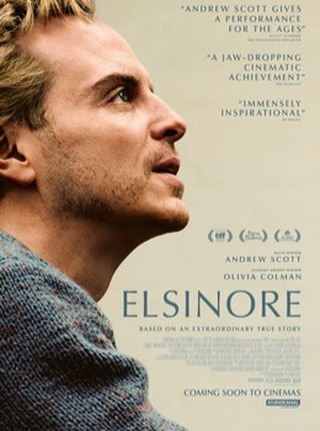
Elsinore


I was fortunate enough to see Andrew Scott in the premiere of Elsinore.

For me, he’s one of those actors who has always been around. Never out of work. Consistently good. Completely underrated.

Is this the performance that finally earns him an Oscar?

Bloody hell, he was good!

I’ve read a few reviews, and there are some Nix Negatives out there. But if I’m glued to a film from start to finish, then it must be doing something right.

I don’t need a chorus of critics to tell me what I’ve just witnessed.

Sometimes, you just know.


On the Cute and the Willing

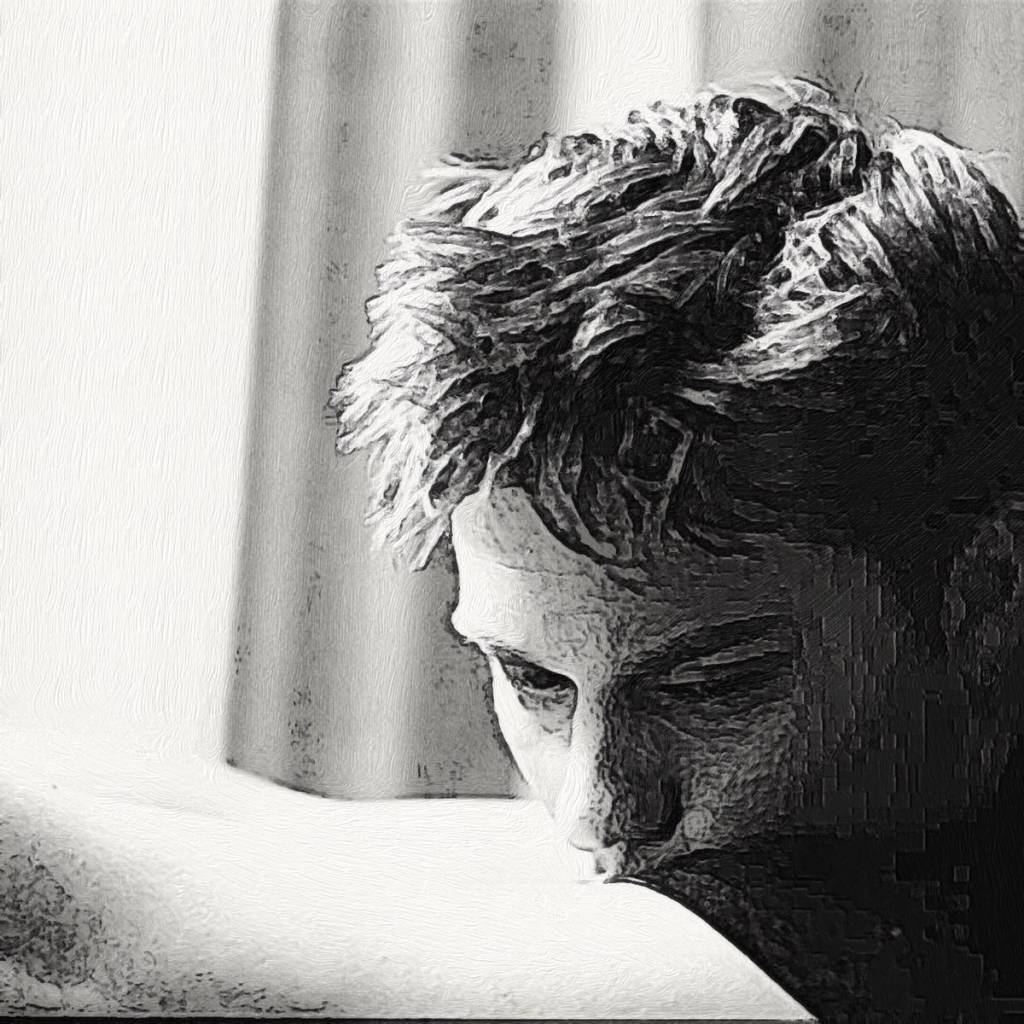
Zach Duncan. Photo by Retina Conspiracy (2026)