“Grab a cushion and sit down. Make yourself at home. Feel free to trash the place.”
These words from a famous old actress. Not ancient like Maggie Smith, but seasoned nevertheless, and we were in her rented apartment.
Our actress was in the provinces, biding time before the next big one.
“I’ve so enjoyed this past week,” and she poured me a large whisky.
We’d met in a bar, and I knew exactly who she was. And she’d sat down beside me and talked about her career.
We became good friends…. for that week at least.
She told me that she’d been asked to join ‘I’m a Celebrity… Get Me Out of Here!” and I said not to do it, and she took my advice.
And that became the routine. Meet in the bar, back to hers, and talk until night turned into day.
A week later, she’d gone.
We kept in touch for a time, and then the messages stopped.
A few years later, I contacted her to say I was in London to see her show.
“How marvellous to hear from you again. That’s fantastic news. Make sure you come and see me in the bar afterwards. x.”
And I did. I waited in the tiny bar alongside celebrities who crowded around her when she eventually appeared. They told her how wonderful she was, and she loved it.
“Thank you darling. I’m so glad you enjoyed it. It was nothing really.”
I waited to speak to her, and when I did, she looked at me as though she’d met me for the first time.
I told her who I was. She pretended to know me. I knew she was high on adrenaline, or something else.
“It’s so good to see you again,” she said. And I thought, fuck you!
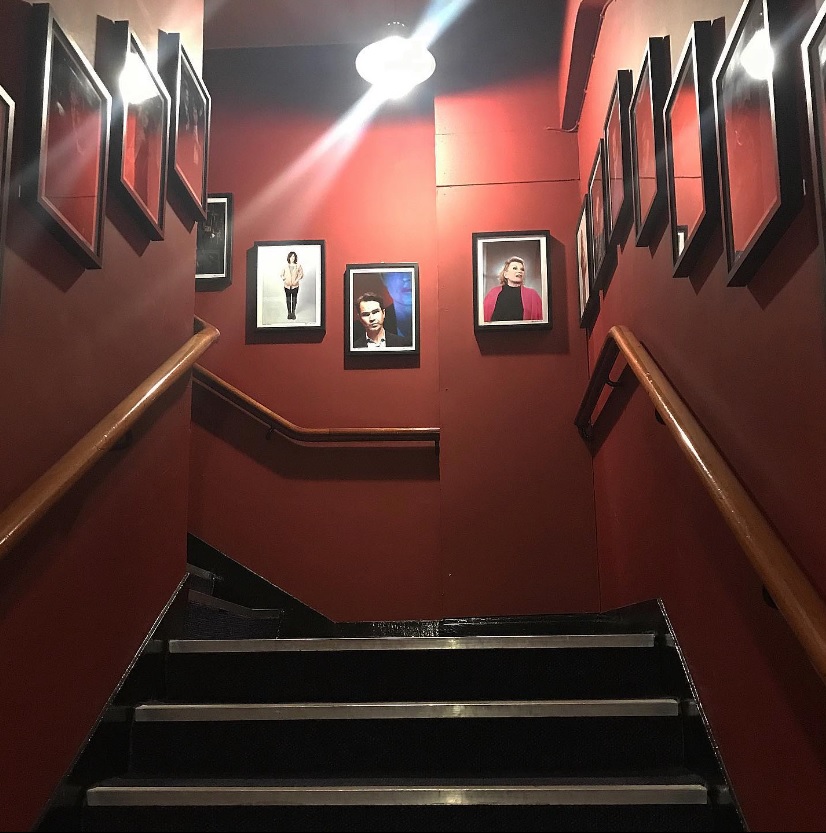
I asked the barman to take a photo on my phone. He obliged and on it you’ll see that I’m smiling, but at that moment, I was probably the better actor.
A man came over and spoke to her.
“Is there a problem here?”
“No darling, only a fan” And she turned to me and said, “But if you’ll excuse me, I must speak to somebody.”
I left, found another bar, and ordered a large cocktail.
I thought a lot about her.
She’d been a lonely individual in a strange city with nobody to manipulate that ego. I’d been the antidote to that. A friend for hire.
But back in London, with people she was comfortable with, I wasn’t needed, nor remembered, and certainly not welcome.
“Never forget where you came from and who helped you get there.”
A few years ago, I watched Yann Demange’s ’71,’ set on the streets of Belfast during the height of the troubles. I would have been five years old, and recall watching TV news about bombs and soldiers. The stories were gloomy but Northern Ireland had been a world away and nothing to do with me. They left their mark, and even now Belfast is the last place I’d consider visiting.
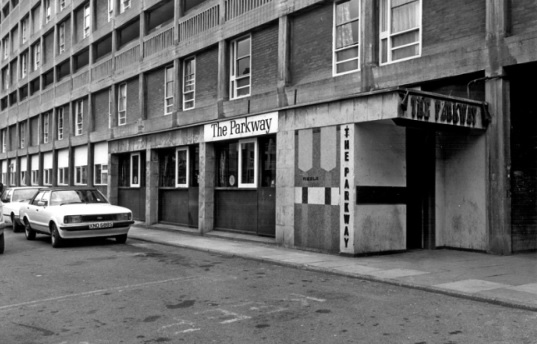
There is a scene in a pub at the Divis Flats, a republican stronghold at the bottom of Falls Road. It reminded me of The Parkway on Long Henry Row. I found out afterwards that it was filmed at Park Hill, used as a double for the demolished block.
It came back to me when I walked into the convenience store.
There were two murals to the left of the entrance. The first depicted a red crown on a grey background. The second reminded me of those yellow bollards that you find at the end of an alleyway. I hadn’t seen them before, but I knew this had been The Parkway with its dreary concrete frontage. It looked completely different, the small windows replaced with shiny metal and gleaming glass, and the interior showed no evidence that this had once been a rough pub. There was trendy alcohol on sale, a dessert bar, American sweets, Costa, as well as general groceries. I speculated what Terry Watson might have thought had he still been around.
I bought skimmed milk, a sourdough bloomer with kalamon olives, and balsamic vinegar.
“I told you to buy milk, normal milk in a bottle, and only a Fletcher’s thick loaf will do. Your dad likes it for his packing up. And only Sarson’s vinegar for his chips.”
That would have been my mum screaming at me.
At least I’d bought them on a credit card, or an app on my phone, because once upon a time I would have nicked them and pocketed the money she’d given me.
I walked back to the apartment and thought of Terry Watson.
In my mind’s eye, he was still hiding around the corner, waiting for me to turn towards the lift. He’d jump out, grab me by the throat, and pin me against the wall, his eyes raging, and his breath stinking of beer.
Terry was in his thirties, and I was sixteen.
“I’ll kill you,” he threatened. “I want my fifty quid back, and if I don’t, the three of you will end up at the bottom of the canal in little pieces.” He’d waited for a reaction. I was shitting myself. “And I mean reyt little pieces.”
He’d meant it. Terry Watson would have killed every one of the Geisha Boys, including his own son.
Andy’s dad was a villain and never worked. He plied his trade in The Parkway, along with his cronies, and earned a living buying and selling knocked off gear, supplementing it with dole money, and spending most of it across the bar.
It was a bad idea, but fifty quid in the kitchen cupboard was too much of a temptation. We needed new clothes, and Colvin’s was difficult to nick from. Andy pocketed the cash, we skipped the last days of school, and spent it on new jeans and tee-shirts.
It turned out that Terry owed somebody else that fifty quid, and those threats had been filtered down to us.
He got his fifty quid back. I gave it him, but at this moment I won’t say how I got it.
***
There was a misconception that Andy was stupid because school had told him so. His parents had given him nothing, but he made up for this genetic deficiency, and was quite clever. He was far cleverer than Jack and me, and if you got him in the right mood, he was academically brilliant. But those occasions were rare.
I remember watching Sale of the Century and Andy would come up with all the correct answers. He was lazy, that’s all there was to it.
That snotty nosed little boy taught me how to distract shopkeepers so that he could nick sweets. And then it was record sleeves, because shops used to keep vinyl behind the counter, and we would stick them on our bedroom walls for decoration. Then it was clothes, and people wondered where we got our money from.
My mum and dad worried about him, an only child, physically abused by his father, but initially they didn’t like him. As we got older, their opinion changed, charmed by his friendly politeness at the kitchen table where he spent most teatimes at ours.
“You always make fantastic meals Mrs Oldham.”
When she turned thirty, Andy presented her with a marvellous bouquet of flowers stolen from City Road Cemetery.
And when dad hurt his hand on a grinder, and spent weeks off work, Andy nicked a copy of The Sun from the rack outside the newsagents and took it to him every day.
But there was another side to Andy, and I recall seeing it when dad paid for everyone to see Raiders of the Lost Ark at the Gaumont cinema.
We sat in the front seats, and halfway through Andy went to the toilet. He never came back, but when the lights came up, we found him sitting a few rows behind with his arm draped across Donna Wainwright’s shoulder. She was four years older and seemed incredibly old to us. He had a smirk on his face and the biggest love bite. We took the piss out of Donna, not him, telling her that she was the child catcher from Chitty Chitty Bang Bang.
“There are children here somewhere. I can smell them. Come along, kiddie-winkies! Here we are children, get your lollipops, lollipops, come along my little ones.”
Andy grew more handsome, able to chat up any girl, and the older they were, the more it pleased him.
From the age of twelve or thirteen, girls claimed him. He spent dark nights pressed against cold concrete as they kissed and explored him. He was a magnet to every slutty teenage girl across Park Hill, and if they couldn’t have him, then they turned to Jack and me, and we’d find our own dark corner.
Andy was never serious about girls. They all thought he loved them, but the next evening it would be a different one in another part of the complex. And then they’d become jealous, and the girls would fight each other, scream, pull hair, and scratch eyes out.
There were times when boyfriends and big brothers came looking for him.
“You’ve been shagging my bird.”
“You’ve been shagging my little sister.”
“I’ll fucking have you!”
It added to the fun because three against one was easy competition and they’d end up covered in blood in a damp walkway.
And it was never about sex. It was about collecting trophies and trying to look good to each other. We were young boys and didn’t understand the other sex. Everything we did to them we’d seen on TV. Except that Andy was better at it.
And I know when he lost his virginity. He was fourteen.
Mandy Brown lived with her bloke on the top floor of our block. She was in her thirties with peroxide blonde hair, mini skirt, and low cut top that showed off big tits. We joked as she tottered along to The Link in high heels and leopard skin fur.
Late one night, we were dossing on the steps when she returned home. She’d been entertaining married men at the pub and was drunk.
“Get out of my fucking way.” None of us moved.
“Go fuck yourself slag.”
Instead of pushing past, she slumped between us and lit a cigarette. She offered the pack and Jack took three out and pocketed the rest.
“Life’s a fucking bore,” she said. “Old blokes with beer bellies. Old blokes with shrivelled up willies. Old blokes who want to fuck me in exchange for a Babycham.”
“I thought you had a bloke already.”
She ran a hand through her hair and revealed black roots. “He’s a cunt. Sleeps all day. Works all night.”
“Get a new fella,” I told her.
She screwed her eyes up and stared at me. “Fucking clever bastard. Grow up and you’ll be God’s gift to fuck all.” I blushed and she relented. “If there are three bad boys, then you’re probably the best of the bad.”
Andy stretched his foot out and touched Mandy on the ankle. It was meant to be discreet, but I noticed.
She spoke again. “I think you want to be loved by your bad boy mates, but your conscience gets in the way.” She looked to the foggy sky and blew a cloud of smoke. “Get rid of that and anything’s possible.”
“If you wanted to shag any of us, who’d you choose?” It was a question that Jack always asked.
“You’re boys. Fucking schoolboys.”
Mandy rubbed her skinny ankle against Andy’s outstretched leg and stole a sideways glance. He looked at me and said nothing.
“But if we were older, who’d be the one you’d shag?”
“If I were to fuck any of you then I’d go to prison. But if I had to choose.”
She looked long and hard at each of us.
She stared at Jack. “Too pretty. Too small. Massive cock. No fucking idea how to use it.”
Then it was me. “Dark horse. Weird looking. Big cock. Not sure where he wants to put it.”
Andy was last. She slapped him on the leg. “Dangerous. Good-looking. Nice cock.”
That was it.
“And so, if I had to choose, I’d say go and wank each other off until you’re older.” She laughed. Jack and I looked at each other and pretended not to be disappointed.
Mandy looped one arm through Andy’s, the other through mine, and we climbed upstairs.
“These steps will kill me by the time I’m thirty,” she joked.
“In your dreams love,” said Andy.
Jack walked ahead of us and when he reached his landing turned and smiled before disappearing. “Fucking loves himself,” she murmured.
It was my landing next, and I left Andy to walk her to the next floor. “Fucking strange,” she muttered.
I stopped and listened as they scrambled upstairs. They were talking but I couldn’t make out what they were saying. The conversation faded and I pictured Andy giving her a peck on the cheek, as he was prone to do, before heading home and turning on the TV.
I decided to follow them. I crept upstairs, peering around each turn, until I reached the next level. I looked along Andy’s landing, but he was nowhere to be seen.
I repeated the process, ticking off each floor until I could go no further. Mandy’s flat was at the far end, and I could see her fumbling for keys in her handbag. Andy was behind, steadying her by the hips, like a boy might help his mum. She found them, turned towards Andy, and giggled. And then she kissed him on the forehead. Once they’d gone inside, I waited for him to come back out. But he never did.
I was jealous, but I wasn’t exactly sure what I was jealous about. The green-eyed monster was something I became familiar with. When I got jealous, it manifested itself into anger, and when I got angry, I was inconsolable.
I sat on the floor and stared at the empty sidewalk. I thought of Mandy’s parting words. “Fucking strange.” And I thought how wrong it all was.
Despite every terrible thing the three of us had ever done – fighting, stealing – this was much worse. I swore that I would tell somebody, and Mandy would be in trouble, and Andy would be sorry. But I realised that if I did that, I would lose both Andy and Jack.
Then I thought that things like this shouldn’t matter, and I’d do something equally as bad.
Each hour I sat there was consumed with inner fury, and when I realised that I couldn’t do anything about it, I punched the wall and broke my hand.
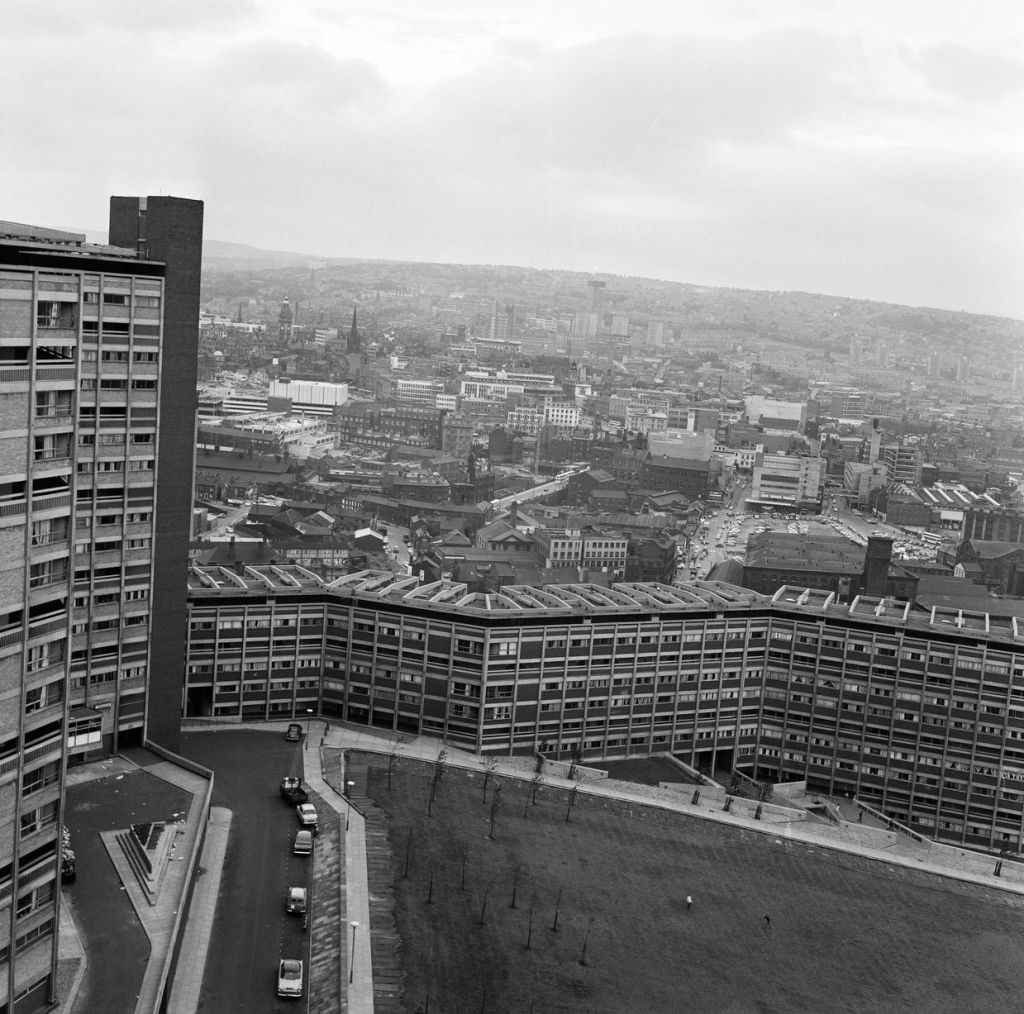
Park Hill/Deprivation, whose environment is bleak, dreary and hostile/The Times/1980
Part 4
“Tell me about Jack.”
I hadn’t said anything. Instead, I’d saved my thoughts for the train journey back to Sheffield, absorbed myself in 80s music, and drifted in and out of sleep.
I’d met Meghan, my literary agent, in a pub off Wardour Street. She’d looked tired. The book business was taking its toll and she was desperate for a bestseller. I wasn’t sure that I’d be the one to deliver it.
“I don’t know where it’s leading,” she’d said. “And I never took you as being a chav bad boy.”
I’d laughed. The word ‘chav’ hadn’t been invented then and it had made me think of Jeremy Kyle.
“There’s a lot you don’t know about me.”
Meghan frowned. “I worry that once people realise it’s about you that some of your charm will disappear.”
“I know that people don’t want to know that I grew up in a council flat. But I did, and they might not like me afterwards.”
She’d folded her arms on the table. “If that’s the sacrifice then it means we have a bestseller on our hands.”
***
Park Hill had changed beyond recognition. It was the same buildings that I once knew, the same framework, the same concrete, but it had a new soul.
Despite my initial reservations I was feeling slightly homesick. Not for London, but the apartment in Sheffield where you couldn’t hang a coat because the bare concrete couldn’t be disturbed.
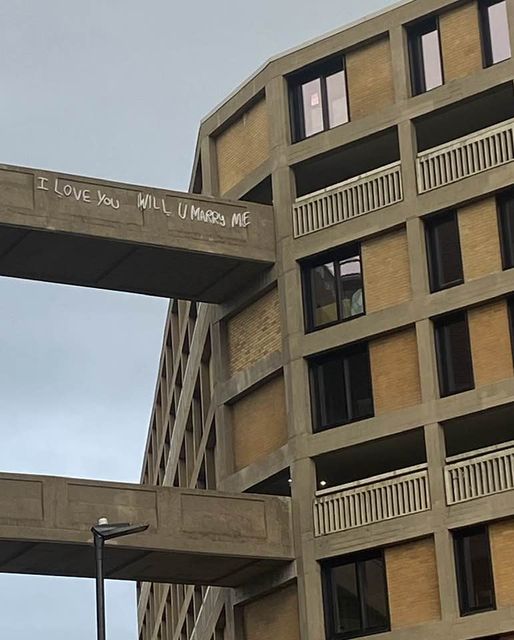
I thought of the high up neon sign that said, ‘I love you… will u marry me.’
And on that train home I remembered when we’d dangled Jack over that same walkway. He was the only one brave enough to be suspended hundreds of feet above ground and paint ‘Geisha Boys’ in big letters.
We’d hung on, threatening to drop him at any moment, but he’d added his mark on the drab concrete.
But it was wasted. At ground level you could hardly see it and the lettering made no sense. And then a council worker came along and removed Jack’s efforts. It gave somebody else the chance to write, ‘I love u… will u marry me.”
I love you… will u marry me
***
Andy was the handsome one. He was the boy that all the girls liked and had anyone he wanted. Next was Jack. Cute and adorable Jack. The lad with the six-pack and infectious smile. And then it was me. Harry with the black spiky hair, not as handsome but taller than the others.
Jack was shorter but had the confidence and personality to make up for it. His six-pack arrived by the time he was a young teenager, and that was because he liked sport, especially football. He played for the school team and was picked for Sheffield Boys, but we told him it wasn’t right. He had a trial with Rotherham United and we got him drunk the night before. We didn’t want Jack to leave us.
He also had a big sister, Louise. She hung around with girls her own age and was distinctive for the long leather coat that nearly touched her ankles. All the boys coveted her.
But something changed. As we grew older, became perfectly hard and glamorous, I got the girls. The prettiest, the sexiest, and the oldest. Andy and Jack would get jealous, and that suited me fine. But things were never what they seemed.
***
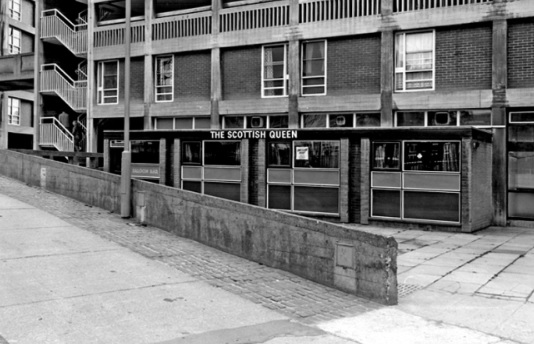
The Scottish Queen/Park Hill/Modern Mooch
We were fourteen and notorious. Branded for drinking, smoking, fighting, stealing, and mindless vandalism. That standing followed us to comprehensive school, a 95 bus ride to Manor Top, and a long walk to Ashleigh School.
It was a shock to be there. Next to Ashleigh was Hurlfield where most of our schoolmates ended up. We were shunted into a different environment to straighten us out, but we ended up as adversaries to our former classmates.
But a bigger school meant bigger boys and they soon found us. Or rather they found Jack first.
We always went home together but one afternoon Jack had football practice. By the time he’d showered and was walking across Ashleigh field we were already home and smoking fags outside the Scottish Queen.
Jack looked dreadful when he came back. His trousers were ripped, his shirt hung open because the buttons had been torn off, and his face was bloody. But Jack still smiled.
The three lads had been hanging around the cricket nets and Jack was an easy target for them.
“They tried to nick my footy gear,” he told us.
They’d grabbed him, pushed him to the ground, and kicked him. But Jack was having none of it. He got up, kicked the first lad in the knee, thrust a foot into the second lad’s bollocks, and on the third he landed a punch that broke a nose.
The incident went unreported to the school, but the word in the corridors was that payback was heading Jack’s way.
We had to be the first to act.
Monday evening was youth club. On this day we never went home after school and always went to Manor Top chippy, where we stuffed ourselves with cod and chips, as well as cans of Top Deck shandy. We’d go to the newsagents and steal porno magazines which we read behind the fire station, and then leave them where little kids might find them.
That Monday night, we went back to school for seven. We diverted into nearby woods and found sticks that we hid alongside our school bags behind the boiler room.
We played table football, shot pool, and danced to music in the darkened assembly hall. It was about flirting with girls, lots of them, beautiful and ugly, and then scrawling our names and conquests on the toilet wall.
Andy loves Jayne, Jack loves Julie. Harry loves Kay.
It was also about having teachers watch us all the time because we might start a fight or vandalise the toilets.
That night, the arrogance and restlessness amongst us was nervous tension. We’d noticed the three spotty boys following us from room to room, staring, smirking, and whispering between themselves.
Saggy, Tommo, and Hesso, lived on the flats at Gleadless Valley, and were bullies who everybody avoided.
We plotted and schemed, blew kisses, and stuck two fingers up at them. They glared at us, but only Saggy and Tommo looked like they might be a problem because Hesso was supporting his smashed knee with a crutch.
When they weren’t looking, we left and crept into the shadows outside.
Everybody left at nine and headed towards the main road.
Saggy and Tommo came out first, and instead of following the crowd, turned towards the dark field and the flats beyond. Hesso was next, struggling with the crutch, and trying to catch up. The night was black and dangerous, but with safety in numbers, they trekked into it.
We picked up our sticks and followed.
We crept across the muddy grass, weapons in hand, and got nearer our prey. That’s when it happened.
Andy gave the nod, and we raised our sticks. The second nod was the signal for us to run as fast as we could.
Jack was fastest and hit Hesso across the back of the head. Hesso screamed and collapsed in a heap, and Jack followed up with a blow across his already destroyed knee.
Saggy and Tommo turned but they were too late.
Andy landed a crushing blow on Saggy’s temple, and he slumped forward. I aimed at Tommo’s chest and knew straightaway that I’d broken his ribs. They lay on the ground moaning, but we hadn’t finished and delivered blow after blow until they begged us to stop.
It was then that the clouds parted, and the moon cast an eery glow over the incident.
Andy stamped on Hesso’s crutch until it snapped, and Jack got his dick out and pissed all over Saggy. I collected the discarded sticks, fascinated that Jack had such a big one.
“Never mess with Park Hill lads.”
“I’ll piss on all of you.”
“All for one and one for all!”
It never crossed our minds that we could have killed somebody.
The three of us didn’t go to school the following day because there might have been too many questions. Angry teachers, enraged parents, and battered boys. There was even a chance that the police might have been waiting.
We walked into town and lounged outside Castle Market, cadging cigarettes from bus drivers, and stole a big bottle of Woodpecker Cider from the Co-op.
In the event, nothing happened at all.
Saggy, Tommo and Hesso had a code of honour. They were like us. And their standing would have suffered had it been known that they’d been humiliated by three fourteen year old schoolboys.
But we had an enemy, and retribution would come much later.
When they weren’t looking, we left and crept into the shadows outside
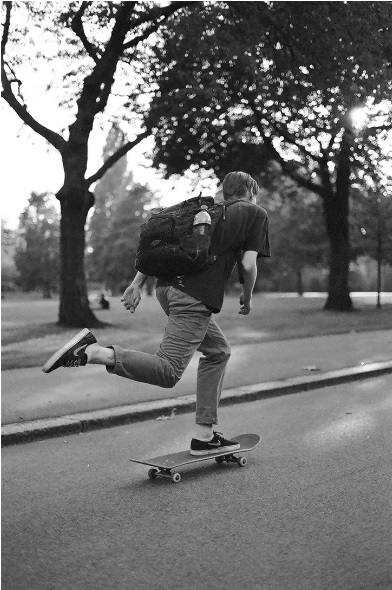
The sweetness is in the boy. It’s there for all to see. JJ asks him how old he is, and he replies that he is eighteen. Such a young boy to be working in an uptight environment. But when he talks, Oliver looks JJ straight in the eye, but there is wariness.
“Who are you waiting for?” “Nobody.” He looks to the floor. “Why are you still here?” “I don’t know.” And Oliver clutches the skateboard to his chest. “I guess I’ll get going,” and Oliver walks into the dark. A small, lonely figure.
And then Caitland rushes out and asks where Oliver is and sees him standing alone at the edge of the road. She rushes towards him and puts her arms around him. He drops the skateboard, and they embrace, but this is no romance, because it is a comforting hug that suggests that Oliver is not in a good place.
I’ve been watching in silence, and I tell JJ that we need to go. We get in the car and JJ says that Oliver reminds him of me. Cute and polite. I’m flattered.
As we drive away, I see them huddled together under a streetlight and it looks like Oliver is crying. I feel sad and when I get home, I write a message.
“Hey Oliver. There was something wrong with you and I talked to JJ, and he thought the same too. A bit of anger in those eyes. Hope all is ok with you. I’ve got a lifetime experience of fucking up, so I’m well qualified if you need a chat.”
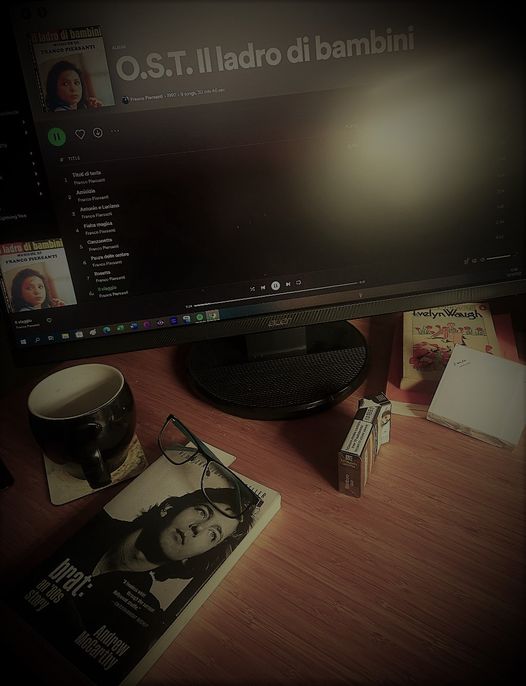
If I’d been a member of the Brat Pack, I would have wanted to have been Rob Lowe. But I was more like Andrew McCarthy.
He wasn’t handsome, nor was he a good actor. I wasn’t handsome either, or ever been an actor.
Underneath that cute shyness he was an outsider, not liked by his contemporaries, and he was resentful, and probably not a nice person.
“Early on in The Great Gatsby, F. Scott Fitzgerald describes the character Tom Buchanan as a ‘national figure in a way, one of those men who reach such an acute limited excellence at twenty-one that everything afterward savours of anti-climax.’”
Now we know the truth.
McCarthy thought he could deal with fame, but wasn’t able to, and lived by the bottle. And this meant that once he’d peaked at a young age it was downhill. And then, by his own choice, it ended.
“Maybe you didn’t want it,” Alec Baldwin said to him on the Here’s the Thing podcast without realising he’d come closer to the core than McCarthy ever had.
I’m not sure I liked him after reading this, but he writes clearly and honestly, and afterwards I realised that we were alike after all.
He might not have been a nice person, but I suspect he might be now.
I‘d wandered along the balcony and climbed the concrete steps that smelt of piss and disinfectant. It was a big climb and when I reached the new world it looked the same. A sweeping row of front doors and a long balcony.
There was a small kid in tiny red wellingtons riding a kiddie’s tricycle. He cycled furiously towards me and stopped. His nose was snotty, and he kept wiping it with the sleeve of his blue anorak.
“What are you doing here?”
“I’m looking for my dad,”
“My dad will beat your dad up.”
“He will not. My dad killed your dad.”
“He did not. My dad hit your dad with a big stick and now he is champion of the world.”
In later years, I realised that Andy’s dad would have easily beaten my dad up, and he would have been the one to have done any killing.
“I’m going,” I told him.
“You’re a scaredy cat.”
I ran back down the steps. “Fuck you,” I called.
We saw each other often. Usually at a distance. We would look at each other as our mother’s dragged us in opposite directions. He would dawdle and his mother would clout him across the head.
“She’s a bad woman,” my mother once said to me.
“Fuck her,” I replied, and she slapped me harder.
Our paths crossed again when we were five years old. It was our first day at school, and we were scared. We decided, encouraged one another, that we didn’t want to go, and so we both cried with the hope that they would let us go back home. But they didn’t.
From that moment we were inseparable. We sat next to one another and were a hellish combination.
Our flats were on consecutive floors, sharing the same view, and outside school we’d congregate at the bottom of the lifts. We rode bikes, became little soldiers, and played football because we were Sheffield Wednesday fans.
We were hard little bastards. Anybody who crossed us ended up dealing with the other too. We gained a reputation for being unruly and played up to it. We misbehaved in class and found that punishment enhanced our status further.
I recall that Andy once threw a tin of bright yellow powder paint over Paula Smith because she called him a bummer. It was funny but she cried, and Mr Newsome grabbed Andy by the hair and paraded him in front of the class. He bent him over and walloped him across the arse with such ferocity that he couldn’t sit down for hours.
The class looked on in admiration at this defiant small boy who smiled and became ‘cock’ of the school.
I was incredibly jealous and wanted the same adoration.
My turn came one rainy afternoon. We were being taught by Mr Ellerby, a pipe-smoking guy who everybody liked. He called me to his desk. I stood waiting and watched my classmates play with Colour Factor. I saw Andy pocketing long red bricks that he would later toss off his balcony.
Mr Ellerby had been writing school reports. In his scrawly handwriting he had carefully put comments against each of us.
‘Andy. Disruptive. More effort required.’ ‘Harry. Not very boyish. More effort required.’
It was the first sign that I could explode. And I did. I swept everything off his desk until there was a pile of papers and pens on the floor. All except a half filled coffee mug that I picked up and threw at the nearest person who happened to be a boy called Ivan. It hit him in the face and cut his eye.
Mr Ellerby dragged me outside.
“What the hell are you doing lad?”
I couldn’t catch my breath and realised it was the point of no return. But it was my moment of glory.
I suspect that teachers would have gladly queued up to punish me. But it was nice Mr Ellerby who proved he could be equally nasty and smacked me ten times with a battered old plimsoll. My arse smarted and I’d never experienced such pain before. I tried not to cry, and when I looked up, I saw Andy smiling and then he winked at me. My standing had been cemented.
When the school report reached my parents, it read differently.
‘Harry. Behavioural problems. More effort required.’
I also found out that I’d misread Mr Ellerby’s illegible notes. I’d forgotten that there was an effeminate boy in our class called Barry Green.
‘Barry. Not very boyish. More effort required.’
Years later I had an email from somebody called Amanda Green who had read one of my articles online.
“You may not remember me, but we once went to school together. I was called Barry in those days.”
There was another consequence to that day.
Sitting at the back of the classroom was a boy called Jack Dempsey. He was small, sporty, and well liked. He’d nervously watched my retribution and made his mind up.
Jack was waiting outside the school gate and tagged along as we walked home to Park Hill. We entered the lift and pressed the button to go up. He exited on the landing beneath mine. I was next. Andy was the last one out.
He was called Fabrício and said he came from Rocinha in Rio de Janeiro. It was the tattoo I noticed first, a bird on his neck, and I was suspicious of guys who had tattoos. We sat drinking beer at the counter. The barman cleaned up. The night was ending.
“What is your name?” “Where are you from?” “What do you do?” “What are you doing here?”
Fabrício wanted to talk, but I was tired, and came across as being rude.
In the mirror I saw two guys. And I found a thousand things wrong with me, but only the bird on Fabrício’s neck.
“I’m gonna make a change, for once in my life. It’s gonna feel real good. Gonna make a difference. Gonna make it right.”
Fabrício gently sang the opening verse from Man in the Mirror. It was a sweet voice. I could not sing.
I looked in the reflection and noticed him looking at me. It reminded me of a scene in Rebel Without a Cause where Plato looks at Jim with a look of adoration. A coded declaration of love. Gay desire.
“I’m starting with the man in the mirror. I’m asking him to change his ways. And no message could have been any clearer. If they wanna make the world a better place, take a look at yourself, and then make a change.”
That was it. The first time for me. We had met in a hotel bar in Fort Lauderdale and ended up making love behind a stack of deck chairs on the beach, protected by the roar of the sea, and waiting for the cop with a torch and gun.
Park Hill. I Love You/Will You Marry Me/The Guardian
Part 2
Tonight, I walked up the old-cobbled street from Sheffield Station. It passed over the railway line and was probably once lined with slum terrace houses. They vanished long before I was born. In my lifetime, this lost street has always fallen under the shadow of Park Hill.
It was dark and raining and the new streetlights made the wet stones sparkle. I saw three lads balancing on the old white railings at the top. They watched me approach. I slipped a hand in my pocket and felt for the tactical torch.
“Wrap the strap around your wrist, grab the torch like a dagger, and hit them on the side of the head with the jagged edge, remembering to twist it at the same time.”
I remembered these words from the man who gave it to me in London. It was after I’d been robbed of my phone in Bethnal Green. That was four years ago, still handy with my fists, but no match for the knife that stuck in my arm.
Park Hill might have become trendy, but some things never changed.
The lads said nothing, and I knew that silence could be dangerous. Three minds, three trains of thought, three different outcomes. I knew from experience.
I considered the time forty years ago when I’d sat in the same spot with Andy and Jack. Teenagers. Geisha Boys. Hard boys from the flats.
The lad had walked up this same street. We recognised him from Hyde Park, and he was walking into our territory. We stared him out, but this lad turned out to be more stupid than brave.
“What’s tha looking at bum boys?” he’d said.
We didn’t reply.
Andy was the first. He’d punched him in the face, blood splattering down the lad’s parka coat. Jack had kicked him in the stomach, and the lad fell to the floor. I reached for a half house brick and smashed it down on the back of his head.
There it was. Three minds, three trains of thought, three different outcomes.
All these years later, I thought that karma came around.
These three lads were different. One was White, one was Black, the other was Asian. Teenagers.
I recalled the words of the man who gave me the tactical torch.
“Be warned. You might end up killing somebody!”
“Have you got a smoke?” I think I took them by surprise.
The White lad produced a cigarette from nowhere and the Black lad gave me a cheap purple lighter. I lit it and took a drag.
“Thanks guys. I appreciate it.”
The Asian lad nodded. The White lad looked at the floor. “It’s ok bro’,” said the Black lad.
I smoked the cigarette as I walked towards the apartments. I didn’t look back until I reached the communal door. The three lads were still there, deep in conversation, and no threat to me.
What if that Hyde Park lad had done the same? Might things have been different? He had been called Brian and two years after we beat him up, he fell from the tenth floor of Hyde Park flats.
I have been back in Sheffield a month now and have yet to start writing my fourth novel. But tonight, I thought about these three young lads, and they reminded me of the Geisha Boys. And I thought about all the memories that have resurfaced these past weeks, and I accepted that Megan, my agent, might be right.
I sat down at my laptop and wrote the following words: –
“I was making a coffee at the time, staring out of the window, looking at a world that used to be marvellously different.”
*****
I was born in the sixties, and I didn’t know anything about Park Hill. It was years later, when writing an article for The Guardian, that I learned about the place I grew up.
It was allegedly based on Le Corbusier’s Unité d’Habitation In Marseilles but this was too bizarre for us to understand.
I was born in 1966, the last time England won the World Cup, and Sheffield Wednesday lost a cup final to Everton. Park Hill was home. It was the only place I knew. We lived in the sky and looked down at the rest of the world. And for all I can remember, my first five years were spent within four walls and on a balcony as wide as a street. My earliest memory is the milk cart, as big as a car, that delivered every morning.
Park Hill/Building.Co.Uk
My family were called Oldham. It was an unusual surname, but my dad liked it because every Christian name went well with it. He was Peter Oldham, my mum was Pat Oldham, I was called Harry Oldham, and my younger brother became Adam Oldham. And there were lots of cousins across Sheffield.
Mum and dad moved to Park Hill in 1962 when it was still new. They were rehoused after their old back-to-back house at Netherthorpe was bulldozed. He was a cutlery worker, she was a wages clerk, and they were relatively poor.
But Park Hill promised clean and modern surroundings in which to raise a decent family. That dream eventually died, and the respectability of the Oldham family was often placed in doubt by Harry Oldham… me.
I hated my name. Harry was the name for an old man. When I was growing up there was nobody called Harry. But life goes full circle and at last, at the age of 56, I have a fashionable name and happy to be Harry.
Before lockdown, I was invited to see a play at the Crucible Theatre called Standing at the Sky’s Edge. I visited Sheffield with my partner, Scott, who had never been before. The account began in 1961 and told the story of three families over sixty years living in Park Hill. Scott loved it, but I came away feeling sad because it aroused memories of a life I thought was behind me. It might have been written about my family, my friends, and me.
I went back to London and wrote a third novel, and when that flopped, I realised that I wasn’t clever enough to be a crime writer.
Now I am back here. At Park Hill. I am writing another novel, one where I will not have to do any research and spend weeks scripting the storyline. The plot is already in my head. It has already happened. The story is real.
Yet, as I write, I realise that it is not so much a novel but is a collection of reminiscences.









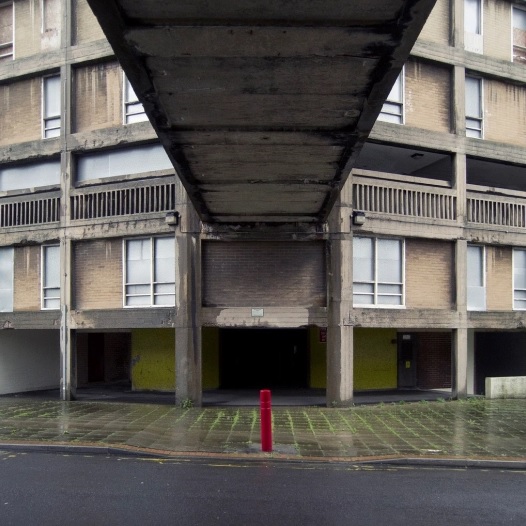
 Perfectly Hard and Glamorous