It was long overdue and might have been a mistake, but I checked the email repeatedly, and it was certainly meant for me.
The photographer was from Brazil, and he’d chosen me after looking at my online portfolio. This wasn’t going to be a fashion shoot for a glossy magazine. Pablo had a reputation for taking raunchy images, and I hoped that he might make me look like the boys who made me feel inadequate.
The email didn’t give a lot away, but I knew there would be a lot of flesh, and the images might end up on the right side of Tumblr’s community guidelines.
I’d been to photoshoots before and hoped that it didn’t involve a room full of ego-driven males.
Don’t get me wrong. I know a lot of easy going guys, but there are many more self-centred boys involved. It’s an insecure business, one where you’ll be gone by the time you are thirty, and beneath the bravado is the fear that it can quickly be taken away.
The reality is that agencies no longer look at your body or looks. They are far more interested in how many Instagram followers you have, and that puts added pressure on. But that isn’t everything. I have an Insta-famous friend who does a lot of major campaigns and almost nobody knows who he is.
On the day, I turned up at an old factory located in the East End. It was split into separate business units, and Park Studio was on the second floor.
I walked up the staircase with its peeling walls and realised that money hadn’t been mentioned. The shoot would offer little financial reward and fell into the category of providing exposure only. I wouldn’t be leaving my job at Waitrose anytime soon.
I was relieved to find that there were only a handful of people present, those who made things happen. Photography assistant, stylist, make-up artist and the guy who handed out coffee.
After the obligatory hugs and kisses, I was directed behind a screen that served as the changing area. There was another guy who was half-undressed. He was called Luca and was from Italy. We blushed as we swapped our cheap underwear for snowy white Calvin Kleins.
We walked across to the big screen that would serve as the background to the shoot and made small talk. I discovered that Luca’s girlfriend was waiting outside.
At times like this, you mustn’t be self-conscious. Even when you’re practically naked next to a straight guy who you’d assumed was also gay. I was anxious not to make a fool of myself.
Pablo ignored us, played with his cameras, and barked orders about lighting and shading. When he realised that the main event was before him, he gave instructions as to what we should do, explaining the postures he wanted, and the way we had to interact.
The theme was ‘Boys Who Tease’ and that required Luka to be the dominant one, holding, touching, slinging me over his shoulder and placing his arms around me.
This went on for hours, Pablo firing shot after shot, and inventing new angles in which to enhance his standing in the photographic world.
We’d arrived well-groomed and smelling sweet, but by the time Pablo had burnt through his umpteenth roll of film, we were sweating under the hot spotlights, and he complained that our bodies were wet and glistening.
The assistant threw us towels and we wiped each other down. I told Luca that I was enjoying the experience, and he cocked an inquisitive eye.
For the final shots of the day, I had to crouch in front of Luca, who stood motionless with his arms by his side. Pablo told me to close my eyes and tilt my forehead until it touched the band of his Calvins. I was only a hairbreadth away from his crotch, and the slightest movement would have meant that my nose rubbed against his dick.
This was a tricky situation.
Pablo said to hold the position. I tried not to breathe, but I could sense Luca’s trembling body, and smelt baby oil and talcum powder on him. I was scared that I might embarrass myself, and started thinking about my checkout job at Waitrose, about what I might eat later, and about Luca’s girlfriend waiting in the street outside.
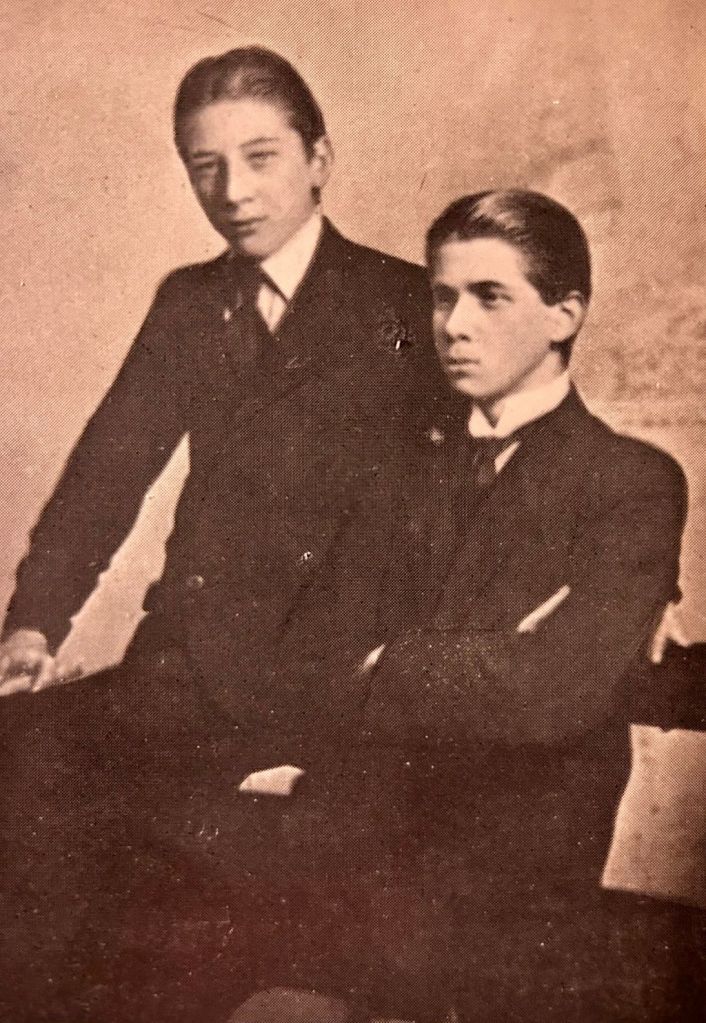
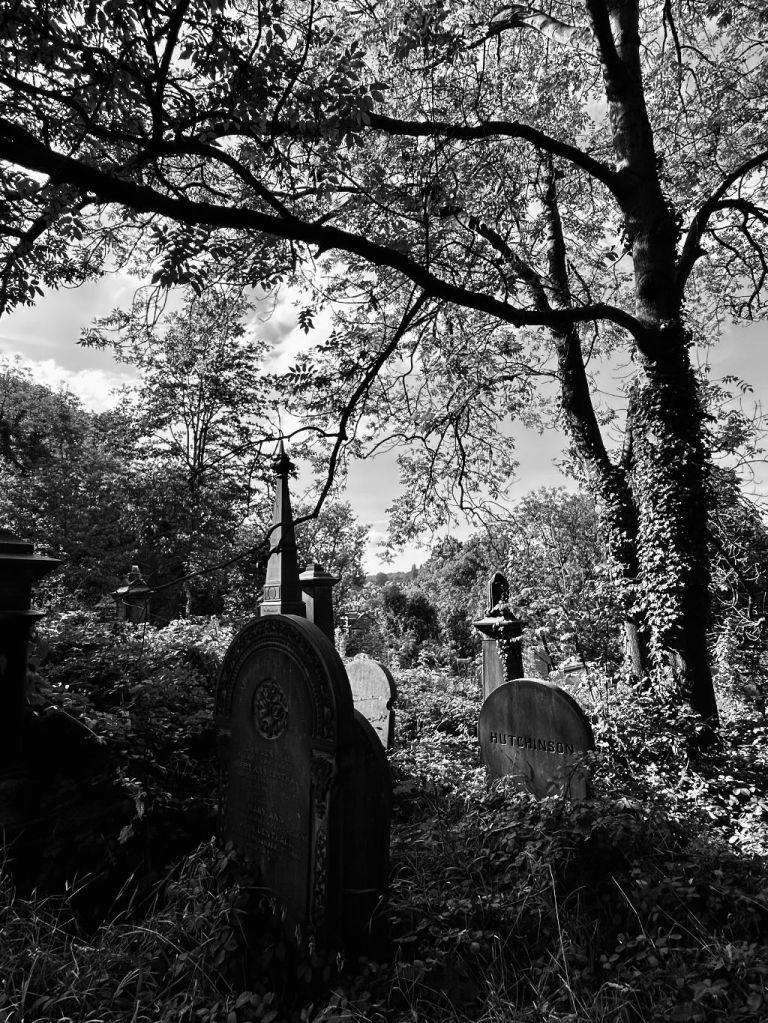
I’m on good terms with William and Julian Percy. We’ve had an intimate relationship these past four years. I was fourteen when I found them. It was a spring day, and I took a shortcut through the cemetery when I wasn’t supposed to. My mother had said it was out of bounds. Bad things happened to boys who wandered here, but she never said what these bad things were. As a child I imagined dead people crawling through the undergrowth, walking amongst graves, hiding behind crumbling monuments, ready to pounce on little boys. As I got older, I realised it wasn’t the dead that I needed to be afraid of, but the living.
I’ve come to believe that William and Julian called me that day. Voices from beyond urging me to leave the rough path and clamber over graves and through waist-deep brambles and nettles until I was lost. The sun shone and birds sang a ripe chorus. Amidst this secrecy was the long forgotten grave of William and Julian Percy who beckoned me to sit on the warmth of their heated stone.
I read the carved inscription: –
Here lies William Percy 1900 – 1918. Also, Julian Percy 1901 – 1918
“The sorrow we felt we cannot explain, The ache in our hearts Will always remain.”
I realised that they had been brothers, but only recently did I understand that they had been victims of that Great War.
I used to think that their bodies lay side by side, but the narrow tomb wouldn’t have allowed that. They were undoubtedly on top of each other, their brotherly bodies had rotted until they became one, their skeletal remains intwined.
These boys had been loved, mourned, and eventually forgotten. Nature had claimed their bodies as well as their final resting place.
The grave had sunk, and small holes had appeared where the stone had shifted. I peered into the blackness hoping to see something. I reached inside but they were merely hollows where I would later hide cans of Stella and packets of Marlboro Gold.
I came here daily and talked to William and Julian. I shared my secrets and thoughts, and told them about my small world. They always spoke back to me.
They didn’t mind me coming because they liked me and I they.
I don’t see them as skeletons anymore. They are handsome young boys who gave their lives for their country. They remain out of sight during the day, waiting for me to visit, and when darkness falls and owls call from the trees, they come out and roam amongst their friends.
They were musical. William played the cornet and Julian was expert at the violin, and their instruments were buried with them. Was this true? I like to think so. I’ve played them the music I listen to – Bring Me the Horizon, YUNGBLUD and The Reytons – and they smile at the Yorkshire accents because it reminds them of people they once knew.
They didn’t mind that long hot summer when I sunbathed naked on top of them and drank a full bottle of wine I’d stolen from the corner shop and fell asleep until I burned red.
They liked it when I read the opening paragraph of a cool book I found in Oxfam.
“Last night, I fell out with Amy when she caught me sucking her boyfriend under the table of some stinking Euro-pop club in not so gay Paris. She’d been going out with him for five days and claimed he was straight. But as soon as I clocked how much eyeliner he had on, I told her the only place he was going was straight to a gay bar.”
They’d both laughed and made me recite the whole book over the next few days.
Today, they want to have a serious conversation.
“We’ve really enjoyed your visits,” said William.
“It’s been lovely to talk to someone after a hundred years,” interrupted Julian.
“Yes,” said William, “But the time has come when you will no longer be able to come and talk to us.”
“What do you mean?”
“What we’re saying,” said Julian, “is that today is the anniversary of our deaths, and we realise that we might have misled you into thinking that we were soldiers who died at war.”
“But that wasn’t the case,” said William. “Yes, we both served our country and were scarred but came home unharmed.”
“I don’t understand.”
“Remember when you came to us a few years ago and spoke about a pandemic and you were forced to stay at home for months?”
“Lockdown,” I agreed.
“But you still came to see us every day,” Julian commented, “And we didn’t feel it was the right time to tell you the truth about how we died.”
“How did you die?”
“Well,” continued William, “we both died of influenza, a dreadful disease that one of us picked up in France.”
“The Spanish flu?”
“That’s what they called it,” said Julian, “and it was an unpleasant experience that turned into pneumonia, and ultimately our deaths.”
“Julian got it first and I sat beside his bed while he slipped away, and then I became ill and by the end of the day had surrendered to it as well. We had each other, but our parents were heartbroken.”
“You see why we didn’t want to frighten you before?” asked Julian.
“That’s so sad,” I told them, “But I’ll keep visiting.”
“Yes, you can visit, and I hope that you shall, but I’m afraid that we won’t be able to speak with you.”
“Whyever not?”
“As the oldest, I was eighteen years old when I died. How old are you now?”
“I’m eighteen, almost nineteen.”
“And come tomorrow you will have lived a longer life than I did, and that means that our ability to talk must come to an end.”
“But what about Julian? He was only seventeen.”
“Alas,” said Julian, “Brothers must stick together in life and in death and where my brother goes, I shall follow.”
“You’re both leaving?”
“We move on, somewhere else, but we shall occasionally return to see our final home. And you shall get on with your own life and in time will forget we ever existed.”
I left the cemetery. Angry, dejected, and sad. I never even said goodbe. And, as I crawled through the familiar undergrowth, the day darkened and spots of rain started to fall, and I swear that I could hear a tune somewhere behind me. It was played by a mournful trumpet and a sorrowful violin.
A smoked bacon sandwich and sunbathing on the Aisle of Aldi And Dixon Dallas and his explicit gay country songs And a winding canal of no-added sugar apple and blackcurrant juice And a trip to the inconvenience store And the dead writer Eric Jourdan who sits with a wet and dripping Jeff Buckley who has climbed out of the Mississippi River And a stick man who jumps off the shelf above my desk And Chrissie Hynde who steals my unopened pack of twelve sharp HB pencils And jazz-funk played out of a wind-up gramophone And a beach hut with a blue flag on top And Grandmaster Flash who plays dominoes with a white-suited Johnny Cash and hum White Lines together And a cucumber sandwich filled with juniper berries, crab sticks and piccalilly And the boy’s a slag, the best you ever had And the handsome guy whose hair is cut by Jar Jar Binks And come see, come see, remember me And Heartbeat on perpetual loop And Timothée Chalamet dancing to Rush with Troye Sivan’s underwear between his teeth And Taylor Swift biting the head off a street drinker on Tottenham Court Road and spitting it into the Thames And train drivers who believe they’re poor And dirty teenage boys who are shirtless and ride Vespas up and down the seafront at Cannes And rusting Italian scooters dumped at the bottom of a Venice lagoon And Pier Paolo Pasolini reading Enid Blyton stories to Cornish piskies on Bodmin Moor And Arthur Rimbaud, who promises to be nice, quoting poetry, bumbling and buzzing over stinking cruelties, And Noel Coward dueting with Nicki Minaj on a bandstand in Barbie World USA And the Eifell Tower in French France weeping tears of diluted Gautier And the photo of Derek Jarman that blows over when a house from Kansas drops through the roof of TK Maxx And the sweaty rent boy that drinks Jack Daniels and bleach on the rocks And the woman who has her clitoris pierced by Brigitte Bardot wearing jam jar glasses in Taco Bell And the lanky lad with tarantula bites on his legs And the boyfriend who says he doesn’t love me anymore And Come On, Harry, We Want to Say Goodnight to You.
Close your eyes. Hear the silent snow. Listen to your soul speak/Adrienne Posey
It snowed in New York on New Year’s Eve. It started early morning and shrouded the city with relentless cruelty. It ruined everyone’s plans and forced them to stay home. By late evening, the city was silent.
Mitch Keller felt miserable. Truth be known, he’d been unhappy for weeks and he didn’t know why. This made him feel even worse.
He’d bailed on party invites and realised how his absence would be taken. They would think him arrogant for not going, their parties not important enough for somebody of his repute.
Instead, he’d stayed in his cavernous TriBeCa apartment, the Triangle Below Canal Street, and looked through steamed up windows at a strange world. And all the time he drank Jack Daniels because he thought it would make him feel better, but it didn’t.
Mitch had everything. A leading role in a TV series, a play on Broadway, and his agent said he was first choice for a forthcoming movie role. He was recognised when he walked the streets.
In the afternoon, Mitch watched a rerun of ER, the one where Carter paid a visit to his drug-addict cousin who answered the door looking like shit. “How are you feeling?” Carter asks him. “When you’re ill, you feel worse than you are.”
He turned the channel over and watched Homicide: Life on the Street, but it depressed him even more, and switched the TV off.
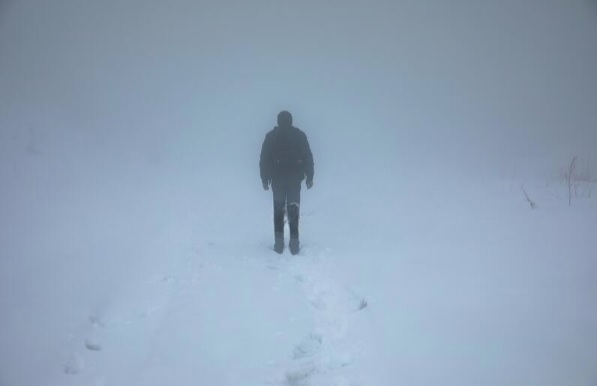
When night came, Mitch did something he rarely did. He dressed in a big coat from a charity store, found a woolly hat that wasn’t his, and the loneliest man in the world went outside. He walked the cold abandoned streets that nobody went to.
The snow was knee high in places and where it wasn’t, it crunched underfoot, because the temperature had dropped. He saw the white hats that had formed on chairs and tables outside a café he knew. Snow piled up against the door of its dark entrance. He thought about the people who worked there, having fun with family and friends inside a bright and cheery apartment in a part of the city where it was cheaper to live.
Mitch could only think of Zombies.
But he continued walking through unfamiliar streets where there was nobody, and cars were lost under thick blankets, and lights shone from upper apartments. There was a secret world above, one he wasn’t part of, and he wished that he could be in one of them, a tiny apartment, with somebody who cooked spaghetti and meatballs and talked to him like a normal person.
He remembered the summer when he was a teenage boy and walked down a similar street. Mrs Zsepy leaned out of an upstairs window and waved. Mitch shouted and asked her how she was, and she called back that she was fine. Afterwards, he heard her shout to a neighbour across the street. “Mitch is a good kid,” she called. “He’s a sensitive boy.” There was nobody leaning out of a window tonight.
Mitch thought about Patrick Swayze, whom he once met and liked, and the movie that he was hoping to star in with him. He thought about Sam in Ghost, a decent man, a decent ghost, but then he remembered the scene where his friend Carl is killed by a huge piece of falling glass and steps out of his body and is whisked away by black spirits, doomed for eternity.
The snow was falling harder, and the faster it fell, it caused the weight on his mind to get heavier. He was soaked, a thousand snowflakes clinging to his hat and coat, and he was cold. Each snowflake weighed heavy on him. And he’d wandered somewhere he didn’t know, where the streets would never be cleared of snow because nobody went there.
There were abandoned factories and meat packing plants where snow blew through broken windows and the missing tiles to form little mountains inside. There was a doorway, protected by planks of wood nailed together, but with space for somebody to climb through.
Mitch thought of dead rats, frozen in the snow, and wanted to see one.
He climbed through the gap and found himself in a dark hallway that might once have been the entrance to an office. It matched the strange silence. A city wrapped in cotton wool, muffled until nothing could be heard.
He sat in a corner, amidst broken glass and syringes, closed his eyes and thought about his nightmare. He needed somebody to talk to, but there was nobody. But the longer he remained there, in this dank, dark space, the more it provided odd comfort.
As he slipped between sleep and consciousness, he thought about people hitting the bottom. And he believed that when you hit rock bottom you bounced, but it was a matter of how hard you bounced. If you hit the bottom hard then you were likely to bounce right back to where you came from. But a slow fall didn’t provide enough bounce and you might settle on that bottom forever.
Mitch did bounce, and he bounced hard, and he considered that moment the worst it could get. But he picked himself up, went outside, and walked through the snow back to his apartment. He saw other people in the streets who were celebrating a new beginning.
It was time for a change, and he needed a new start as well.
Mitch resolved to put New York, and dreams of Hollywood, behind him, and move to Paris where he would be successful in Europe. And that’s what he did.
He never made that Swayze movie, but before he left New York, he starred in a film, the one that everybody remembered, and for one scene.
It was a long time ago now, but it still seemed like yesterday, and he thought back to when production had wrapped, and Danny had encouraged him to go to that small cinema at the Paramount lot to watch the preview cut. He hadn’t wanted to go, but Danny insisted.
Danny had been his childhood friend and he remembered the days when they used to shoot pool together, but when Mitch started acting, they drifted apart, and one day somebody told Mitch that Danny had died in a car accident. But he hadn’t, because one day Mitch saw him on the street outside his New York apartment and the two were reunited.
The two of them sat in the dark theatre and watched the movie, and Mitch thought he was quite good in it. He hadn’t been looking forward to the final scene, the one that earned him an Oscar nomination, but when it came, he thought it brilliant.
The scene is where Mitch is in a derelict factory, propped up in a corner where he has sheltered from the snow outside, and the camera pans across his unshaven face and sunken eyes, wet with snow, but showing no emotion. And then, somebody clambers through a gap in the boarded-up doorway and sits beside him.
The down-at-heel stranger talks to him, but Mitch is too cold to respond. It plays out for several minutes, and the stranger, who is just a kid, tells him that his life is wasted. They share a needle, and Mitch just sits there while something is pumped into the vein on his arm.
Mitch thinks the kid is good.
And then, the kid steals his hat and coat, and goes through the pockets where he finds a little money. Mitch sits motionless, watching this unfamiliar person, but grateful that there is somebody to talk to. And the look in his pained eyes, as the kid goes back into the snow wearing his hat and coat and leaving Mitch to die.
The lights came up and everybody clapped and cheered, and Mitch knew that the movie would be a critical success.
On the way out, Mitch saw River Phoenix, who’d watched the preview, and had made his way over to them. He told Mitch that it was an awesome performance and that last scene would always be be remembered. But Mitch realised that it couldn’t have been River Phoenix because he had died a few years earlier and he wondered who it might have been.
Danny put his arm around Mitch’s shoulder and guided him outside where there was a bright light, a mysterious light that looked incredibly beautiful.
Benoit was sixteen on the night his grandfather died. He climbed onto the roof, curled up against the warm chimney, and looked over the rooftops of Le Septième.
His grandfather had been ill for months. The tiny bed had been pushed against the window where he would watch the street and its people. In the evenings, Benoit’s mother sat beside him, and talked about old times.
When he died, they both cried.
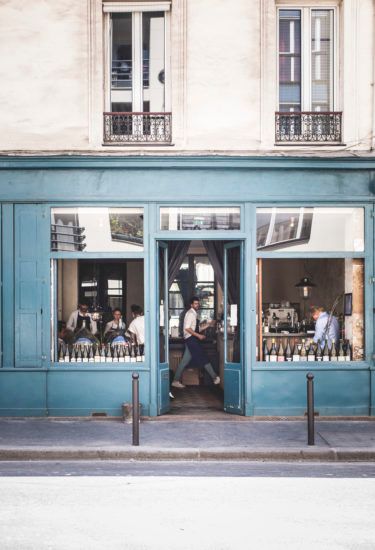
That night, Benoit listened to the noisy traffic, police sirens, and the animated chatter from Café Maxim below. As it got later, the traffic quietened, and voices were replaced by the clatter of plates being washed in the kitchens. By the early hours, most Parisians were asleep.
It started to rain, and Benoit found the sound of raindrops trickling down the sloping roof strangely reassuring.
The city grew quiet, and the people of Paris slipped into their beds. A church bell chimed one o’clock and Benoit listened carefully.
It was a familiar sound.
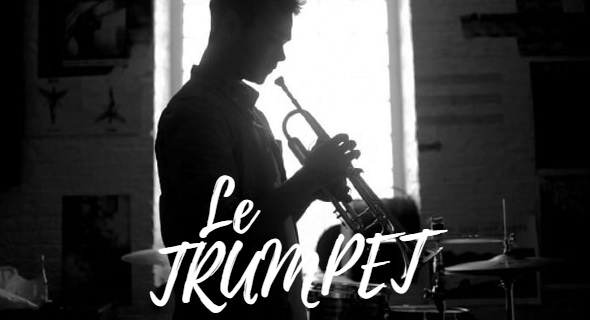
A mournful trumpet played across the dark rooftops, and it was his grandfather’s tune.
Benoit thought about the battered old trumpet that still lay beside the empty bed, the one that used to play Stardust.
***
Sebastien was in the market when somebody told him that Landry had died in his bed.
The news made him sad, and he went for a walk to remember the good times he’d had with the old man.
With a baguette under his arm, he walked beside the river where the fishermen on the bank thought he looked a lonely sight.
When it began to go dark, he walked through the park and kicked autumn leaves like he used to as a little boy.
Sebastien was twenty-two now and was at the Paris Conservatory where he studied classical trumpet.
He thought of the day outside Café Maxim where Landry had showed him the trumpet he’d found in the attic of an old house in Normandy and then taught him how to play it.
And Sebastien played it quite well and was good enough for his parents to buy him a new one that had cost a lot of money.
Sebastien called at Café Maxim and spoke with Landry’s friends. They bought him a beer and ate the baguette that had snapped into two pieces, and they all agreed that they would miss the old Frenchman.
They raised several toasts to Landry, and it was after midnight when Sebastien arrived home.
He climbed the rickety stairs to the flat on the top floor and opened the French windows. The breeze caused the curtains to billow inwards and the first drops of rain started to fall.
He looked at his shiny trumpet and thought about the first tune he’d played.
The clock from the church chimed once, and he put the trumpet to his lips and played in memory of Landry.
I was browsing vintage books and had just picked up an Oliver Messel biography. I was debating whether to buy it or not. The aisles were narrow and as far as I was aware there was nobody else in the tiny shop. But there was. And I was conscious that somebody had stuck their head around the corner. It was a boy, probably in his late teens, who held a book in his hand. He scanned the rows of old Daphne Du Maurier novels, didn’t see what he wanted, and retreated. I could hear him presenting his book to the shopkeeper. “I’m happy I’ve got what I wanted.” A bell rang above the door, and he was gone. I decided to buy the Oliver Messel book and left carrying it under my arm.
That might have been the end of the story had it not been for me wanting a cigarette. I walked the short distance to the quayside, found a bench, and smoked. It was a sunny day without the usual tourists, and I watched a cargo ship sail into harbour and up-river towards the China Clay docks.
The ship sailed past, and I noticed the boy from the bookshop. He leant over the harbour wall looking at the boats below. He drank from a takeaway coffee cup and placed it alongside his book.
He turned around, smiled, grabbed his possessions, and came over to sit beside me.
“Hasn’t anybody told you that smoking is bad for you?”
“I’m too young to worry,” I replied, “And too young for anybody to notice.”
I blew smoke over him, and he waved it away.
“I saw you in the bookshop. What did you buy?” I showed him the Messel book. He nodded in approval.
“What did you get?” He turned the cover to me, and it was a biography about Alfred Munnings.
“I expected to see Du Maurier,” I told him.
“I live in a house where Daphne Du Maurier once lived,” he stated. “My bedroom is where she slept. And when I’m half asleep I swear she visits and looks over me. I think she’s my guardian angel.” He paused. “So here we are. A pair of teenagers reading books that we shouldn’t be reading until we’re fifty.”
The boy was right. Two old heads on young shoulders. I liked him.
A mop of thick black hair, blue eyes, milk bottle complexion, and not particularly handsome. But when he smiled, he had perfect white teeth, and his narrow face lit up and he was strangely attractive. I guessed from his voice that he was local. He stretched his legs out, clutched the book to his chest, and gazed out to sea.
“I’m seventeen,” he said, “And one day I’ll be old, and I’ll be sitting here on this bench talking to a stranger, who’ll also be an old man.”
“I’m nineteen,” I told him, “And that stranger might be me, and I’ll remember the day we met when we were young.”
“And we’ll talk about regrets, and the things we never achieved, and how life became intolerable, and how we wished we were young again.”
The boy was called Samuel and the son of a wealthy mother, no father, who lived by the river, and he told me that he would grow up to be an intellectual.
He crossed his legs and revealed a patch of white skin above his ankle. He sensed my stare and allowed the leg of his jeans to ride further up to show tiny wisps of dark hair.
“I’m Zack,” I told him. “I live with my girlfriend in a bedsit in North London. No history. No ghosts. We’re students struggling to make a life together, and we study theatre design.”
“And that’s why you bought a book about Oliver Messel,” he confirmed. He looked at the cover that featured a self-portrait of Messel when he was the same age I was now. “He was handsome.”
“But he got older,” I said, “and less handsome, but incredibly successful.”
“I think I’m gay,” the boy said matter of fact. Why did he say that? Does he think I am too? Did I not say I had a girlfriend?
My silence was conspicuous. He looked me in the eye. “That’s what they say at college.”
“Why are you telling me this?”
“Because I’ve never told anybody before. And you seemed to be the right person I could tell.”
“I’m not gay. What qualifies me to understand?”
He hadn’t taken his eyes off me. Pleading eyes that hoped for an answer he wanted to hear.
I thought of Kirsty, my first love, the girl who I shared everything with. Then I recalled the argument we’d had earlier, when she’d accused me of not being interested in her. By that, I discovered, she wanted me to take endless photographs of her for that Instagram feed of five thousand followers. I left to walk the streets.
And then Samuel appeared, and in a few minutes, I would walk away and never see him again.
“I didn’t say you were gay,” he said dejectedly. “I just wanted to tell somebody. It’s a big thing because what they say is probably true. I do like other boys.”
“And are they fine with that?”
“Some are. Some aren’t. Mostly they tease.”
“Does that bother you?”
“Not really, but sometimes it makes me sad. There are times when I meet somebody I like, and I want to explode because I’m afraid to say anything.” He took his eyes off me and looked across the water. “It’s a mind game. Instead of coming right out and saying that I like them, I drop subtle hints that never get picked up on.” He fumbled with his coffee cup. “And if I did say anything, I’m afraid of what the outcome would be.”
“The fear of rejection?”
“Yes, and what would happen if anybody found out.”
Nobody had ever confided in me. It was a strange feeling. Somebody I had never met before was pouring his heart out to a stranger. This was somebody else’s life, not mine. It meant nothing. And yet, I sat there feeling uneasy about it all. I didn’t know what to say, and we sat in silence, clutching our old books
“I know. Let’s go for a walk. I want to show you something.”
It should not have happened like it did. Samuel guided me along narrow Fore Street, its shops, cafes, and restaurants, doing scant off-season business. People hindered us as they walked side-by-side, oblivious to their surroundings. I followed him. He was smaller than I thought, but confident in his stride.
Shops gave way to holiday cottages, and Samuel stopped and waited for me to catch up. He had a mischievous look about him, swept a hand through his thick hair, and using the Munnings book as a guide, pointed down a narrow alleyway. It looked to be a dead-end, but I followed him down the cobblestones to the point where he disappeared through a gap to the right. It led into a tiny courtyard, surrounded by four stone walls. At one end was a rickety paint-worn door secured by a padlock. Samuel found a key in his pocket, unlocked it, and beckoned me through.
We were on a small stone terrace that looked over the harbour. The sea was azure blue. Small boats bobbed on their anchor. He closed the door and I realised we were completely hidden.
“This is my secret place,” he told me. “Nobody comes here, all but forgotten, except I found it and claimed it as my own.”
It was beautiful. The afternoon sun glinted off the water and cast rippling shadows on the wall. Water lapped against the granite. It was blissfully quiet, except for the faraway voices of fishermen and boatmen, and the put-put of a passing motorboat.
“This is where I come to be alone, read, and to dream.”
The words were perfect for THAT moment. Many years later, when I started writing plays, I would use that same line and remember where they came from. No matter how many times I heard it, spoken by the finest actors, it was never right. Never again would it be THAT time, THAT place, THAT person.
Samuel sat on the warm stone, pulled his shoes and socks off, then rolled up the legs of his jeans. He sat on the edge and dipped his toes in the water. His gaze was fixed on the opposite bank where another life existed. “One day I’ll be a writer, and I’ll describe this place.”
I stacked the two books on top of one another and sat cross-legged beside him.
“This is the place where you come to hide?”
“There’s no place to hide because the world is on the other side of that door. One day, I’ll have to face it.”
“It’s not a bad world,” I told him. “It’s difficult, but it’s a life worth living.”
And then I thought of Kirsty and felt guilt. I wasn’t sure why. Was it because I had been too hard on her? Was it because I had left her sobbing in the holiday flat? Then I realised it was neither. I was glad at what I said.
I thought of the time I got drunk and slept with another girl. I fell asleep and nothing happened, but afterwards I was full of remorse.
Joshua Peach/By Julia Romanovskaya/Boys By Girls
“You’ve gone very quiet,” said Samuel. “I’m starting to think that bringing you here was a mistake.”
“Far from it,” I replied. “I’m glad I came. I’m just trying to absorb everything.”
“Like what?”
“Less than half an hour ago, I’d never met you. I saw you in a bookshop, had a conversation on a bench, and now I’m here in this secluded spot by the sea.”
“No regrets?”
“None at all,” I assured him.
“It’s warm.” Samuel slipped off his tee-shirt and revealed his slender lily-white body. He was still a boy, not quite filled out, with a smooth chest and skinny arms. He leant back on both hands and put his face to the sun.
“There’s only two years between us, but somehow you seem a lot older than me.”
“Two years is a long time. I remember being seventeen and it seems a lifetime ago. You’ll finish college, probably go to university, because you seem clever, and suddenly you’ll be the same age as me.”
He laughed. “My mother says I’ll never leave Cornwall. I’m her spoiled child and she thinks I’ll grow up, get married, have kids, and then we’ll all move in and live with her.”
“Does she know about you and… other boys?”
“She’s too absorbed in her work and committees to notice anything. That’s a good thing because you haven’t seen her when she goes into meltdown. She calls me queer, but not in THAT sense.”
He flashed a smile, and I realised that I’d been staring at him. And then that strange feeling returned. If it wasn’t guilt, then what was it? My head was hazy, and my stomach twitched.
“I have something for you.” He jumped up and walked to the corner of the small jetty. Water splashed from his feet, and he trailed delicate footprints across the warm stone. He crouched in the corner, pulled away part of the stonework, and reached inside. He extracted a bottle of cheap red wine, almost full, and held it aloft.
He unscrewed the top, took a long swig, and passed it to me. Then he sat back down beside me.
“Remember this moment, because I am going to do something that you’ll never forget”
Samuel kissed me on the cheek, and then I allowed him to kiss me on the mouth, and it felt good.
He was right. I never forgot that moment. And now, years later, as I look back, it changed everything.
Afterwards, I never saw or heard from Samuel again.
But I recently had an appointment in London and was smoking with my agent outside Starbucks. He told me that a client of his was working on a new biography about Oliver Messel.
And then a handsome guy, who looked vaguely familiar, walked past, and shook his head. “Hasn’t anybody told you that smoking is bad for you?” And for a moment, I was back on a secret stone jetty, beside the river, one sunny afternoon.
On a cold dark night, the car park is empty. The only movement is the rubbish that blows across the front of the shop.
The old man who buys a loaf of bread doesn’t see them. Neither does the woman who pulls up in a Range Rover. An old woman ties her dog to a post, and only her little Yorkie can see them. They play with it, and when she comes back with her milk, she admonishes the dog as it whines and strains on its lead.
But they are there. They are there night after night, but you won’t see them. These lost souls hang outside the Co-op and sit on the railings and talk to each other.
They are angry, sad, and have regrets, but at least they have each other. And they joke, fancy one another, and never grow old.
These are the lost children. The dead. The people who lost their young lives to knives, guns, drugs, and horrific violence. They think they are too young to move on. Instead, they cling to the fragments of their short lives and hope that they will be returned to the living. It will never happen.
One by one, they will grow tired, and when they do, they are at their most vulnerable. That bright light will be too hard to ignore, and they will walk across that lonely car park and disappear forever. And then one night, they will all be gone




 Perfectly Hard and Glamorous