Category Archives: Short Stories

This autumn gloom has got me in deep now


The summer ended and everything good about it disappeared too. Long days gave way to decline and by the time the leaves had turned the colour of brown leather, my world was unbearably melancholic.

Last night, I crawled through the undergrowth and scaled the stone wall like a hundred times before. Then I squatted under the horse chestnut tree from where I could see your bedroom. Third floor. Two windows from the left. There was no light, all darkness, and I knew that you’d gone.

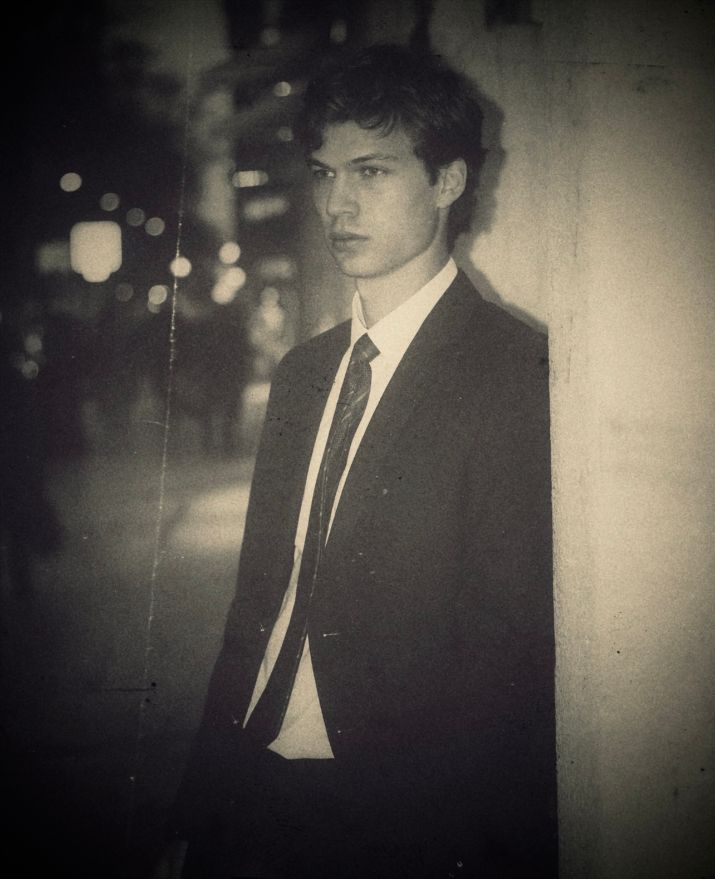
“Remember the first day I saw you? When you stepped out of the sea and walked confidently towards where I lay on the sand. Beach blonde. Tanned. Swim shorts clinging tightly around your arse cheeks. The hairs on your body damp, glistening, and irresistible to a fourteen year old boy.”

I became a trophy, somebody to show off, to tease, and a plaything to practice on. I was the shadow that followed you, intoxicated when you were there, and bereft when you weren’t.

“They said you were called Theo, which seemed right for someone who came from a wealthy family and lived in a big house with iron gates and a long drive. Theo who liked to surf, chat with girls, and listen to indie music until the sun came up.”

Your friends tolerated me because I belonged to you and were obliged to include me in everything. Those days in the sun, laying on the beach, and going into town when you looked out for me and made sure that I didn’t go without. Sometimes we did nothing at all. But the days I enjoyed most were the ones when there were only the two of us. When you put your arm around my shoulders and treated me like an adult. 

“Remember when I snapped my surfboard? It hit the rocks and drifted out to sea, and I nearly cried because all I could think about was not being able to ride the waves anymore. The next day you bought me a bright yellow Thunderbolt Slasher board that cost you well over a grand.”

I didn’t want to share you with anyone, but I could never say that, and when you ended up with a girl, I’d scramble through the undergrowth and wait with the foxes and rabbits until you came home. And I would look with envious eyes as you undressed and strutted naked around the room that was bigger than our cottage by the harbour.

“Theo likes you, they said. He loves you like a little brother. The kind who throws you over his salty shoulders and squeezes until you become aroused. Except that I didn’t want to be a little brother, I wanted to be a lover. A girl called Olivia, who smelled of Unicorn farts, said that I was far too young.”

The last thing you did before going to bed was shower, and with damp hair and a big fluffy towel around your waist, you’d open the window and survey the land that one day would be yours. Then the light would go out, and I’d wander around that massive garden. I would strip naked and swim lengths of the pool that you said you pissed in when you were drunk. Then, I’d imagine climbing the ivy and slipping into your bedroom.

You asked me about the scratches on my arms and legs. When I blushed and said that I’d got them playing football, you’d winked and said that it looked like I’d been fighting with brambles. That was the moment when I realised that you’d known all along, and despite my best efforts at concealment, you’d seen me in the shadows. But then I knew that those nightly performances had been for my benefit.

“I hated the girls who talked with you and hated the boys even more. They were enthralled that you rode a fast Ducati down narrow country lanes, that you could play Edward Elgar’s Cello Concerto, and would be going to Trinity College.”

The room is sulking in your absence. Memories won’t last forever. When I sat under the tree last night, I watched your parents coming and going in their flash cars. Were they thinking about you? Were they worrying? They didn’t seem to care. But I knew that you’d be charming the posh boys and girls of Cambridge, and I fretted about whose boxer shorts or knickers might come off first. 

“Theo is going away, they said. He must prepare for a life worthy of his ancestors. The last thing you did was to give me a peck on the cheek, a scent of Aqua di Gio, and a trace of pepperoni pizza on your breath.”

I get so drunk and the craziest thoughts bounce between my ears


A crowded city bar. Night.

ALEX, a tall dark guy, drinks beer and sits opposite MARK, who is absorbed with his mobile phone. MARK drinks from a bottle of vodka.

*****

ALEX: Why are you always on your phone whenever we go out together?

MARK: It is because you make me drink too much and I get drunk.

ALEX: That doesn’t explain why you ignore me.

MARK: That is not technically true.

ALEX: But you are on your phone now and the only reason that you’re talking to me is because I’ve asked you a question.

MARK: Was I ignoring you earlier in the evening?

ALEX: No, you were good fun then. But now it seems that I’m boring you.

MARK: That was before it got dark.

ALEX: You’re not making any sense.

MARK: It is simple. I spend days in the sun thinking about what to write and getting nowhere. The moon rises over the horizon and I become evil and inspirational. A few minutes is all it takes.

ALEX: I don’t understand.

MARK: I’m a writer who writes best at night.

ALEX: Then spare me the embarrassment of sitting in silence.

MARK: You are an extremely important part of the process, but you don’t realise that.

ALEX: What are you writing on your phone?

MARK: Something amazing.

ALEX: Would you care to show me?

MARK: No, I can’t do that. I need time to rewrite and edit it, and I can only do that in the daytime. Otherwise, people will think I’m a bad writer.

ALEX: I give up.

MARK: Keep talking. I’m listening. I call my notes the Penis Monologues but somebody already used that title. 

ALEX: Penis Monologues?

MARK: My phone is full of notes. Observations. Conversations. Ideas. I turn them into something wonderful. Right now I have a menace energy that comes when I drink vodka by itself. I get so drunk and the craziest thoughts bounce between my ears and then I write brilliant things… over and over again. Vodka is my best friend.

ALEX: Where do I come into it?

MARK: This conversation. It might end up in a book, a short story, or maybe an entry in my secret diary. I don’t ignore you, because you are an important part of the Penis Monologues.

Naked in the Snow


Jaymz had been missing for weeks. One minute he was there, and the next he wasn’t. People hadn’t noticed, at least not to start with, but after a couple of days the void was unavoidable. It was then that people began to speculate.

Emily, with her spotty face, was the first to realise, because she was secretly in love with him, and thought that he might have taken up with a girl. Bradley, the boy who claimed to have the biggest dick, claimed that Jaymz had been arrested. Then there was sweet and innocent Olivia, who worried that he might be lying injured in a hospital bed. Dav, which was short for Davion, pulled himself away from his iPhone, and said that Jaymz was dead in a ditch. Conor reckoned that he was delirious with pneumonia.  I didn’t say anything.

It was a credit to Jaymz that people came up with such outlandish reasons for his disappearance.

The last time anybody saw him was on a freezing cold Wednesday night. He climbed the railings beside the Lagon and stared at the twinkly lights on the other side. Then he turned around and told us about the time he jumped fully clothed into the blackness of the river. There hadn’t been a reason to do so but had seemed like a good thing to do.

We got into the back of Conor’s old Bedford Dormobile and drove up to Belfast Castle with spectacular views over the city. We sat on a wall drinking cheap cider until it started to snow, and Conor worried that the camper van might not make it back down the winding slope. Jaymz laughed and said that anything would get to the bottom of the hill in snow. It might not get down in one piece, but it would certainly get there.

The snow got heavier and while Bradley and Dav made snowballs, we huddled in the cold. Emily told Jaymz that she loved the way he spelt his name, which was exactly what he wanted to hear. That’s me, cool by nature, he’d swaggered, forgetting that he’d once told me that his granda had chosen the name after an obscure disco singer. Emily, with her black greasy hair and spots, almost wet her knickers because Jaymz had spoken to her.

Jaymz was plastered, but always able to make everyone else seem drunker than he was. A casual observer might not notice the difference between the extrovert and the booze fighter, but at times like this he could be unpredictable. Like the time he was drunk and climbed a tall oak tree to swing from its branches before jumping twenty feet to the ground. He should have broken a leg or something, but he didn’t. And when he scaled tall scaffolding on Agincourt Avenue and hung upside down by the legs, he might easily have slipped to his death. But nothing bad ever happened to him.

Despite his background, Jaymz was an enigma, larger than life, happy, and oozing confidence. He was never one for words, had little knowledge about anything, but what he lacked from his pitiful upbringing, he made up with composure that gave him film star appeal. There were plenty who said it was arrogance, and the police hated him for it, but it wasn’t hard to see why we adored him, and as you’ve probably guessed, worshipped the ground that he walked on.

But on that chilly night, he did something quite extraordinary. To our astonishment, he took off all his clothes and stood bollock naked. There were no inhibitions, the embarrassment was ours, and then he slowly fell backwards into the snow, and stared at the sky. He turned milky white, whiter than the snow around him, goose pimples on his arms and legs, and shivered uncontrollably. With a defiant look on his face, Jaymz said nothing at all.

We laughed and cheered, not at him, because whatever he did was okay with us. And then, after laying in the snow for ten minutes, he stood up like he was rising from the dead, his body dripping wet. Bradley, who now had every right to claim the world’s biggest dick, collected Jaymz’ sodden clothes and helped him dress. Jaymz didn’t say a word, but smirked, and looked like he’d fallen into a trance. Maybe he did catch pneumonia that night, because after he slipped away into the darkness, none of us had seen him since.

Days turned into weeks and when Jaymz didn’t appear, Dav and Olivia went to his house at Cliftonville to find him. Dav looked worried when he reported back. His parents hadn’t seen Jaymz either, or weren’t the least bit concerned about his disappearance. The old man had swigged from a can of beer and cussed Jaymz for not looking after his XL Bully. His mother had shrugged her shoulders and carried on watching The Chase, something lost on Dav because she wasn’t the brightest, and he believed that Jaymz’ level of thickness came from her.

I remembered a note that Jaymz once wrote and was shocked to see that the scrawl belonged to that of a small child. “The soul has beem givem its owm ears to hear thigs the mimd does not umderstamd.”

His slip into obscurity wasn’t surprising to me. There were clues on social media that the others hadn’t noticed. While their own accounts contained dozens of photos of Jaymz and his misdemeanours, they failed to realise that he posted very little himself. His Facebook page only contained a couple of images. There was nothing on Instagram, X, or Tik Tok, and for somebody as extroverted as Jaymz this was strange.

I picked up on this anomaly during the summer and spent weeks looking for reasons why this might be. That was how I was. If I saw something that intrigued me then I’d go to great lengths to find out more. It was an obsession that made me think that I might have a form of OCD.

At first, I tried to find out whether Jaymz had secret accounts, but that got me nowhere. Then I set up fake accounts in case he was blocking people that knew him. I suspected that he’d cottoned on to my sleuthing because for a while he seemed overly friendly, as if he was testing me, but I put that down to my paranoia.

With no success, I started following Jaymz like a stalker. Except that I didn’t see myself as one. He had no idea, and it wasn’t my intention to make him feel uncomfortable. If I had, then Jaymz would have punched me hard in the face.

Whenever Jaymz said that he was going home, I made excuses and said that I was going home too. With this pretence I would walk in the opposite direction and double back after him. The first few times I lost him, and this was because he wasn’t going home at all. I discovered this after almost bumping into him as he walked back into the city.

He sloped along Wellington Place before disappearing in the streets. It was always the same story. I followed him several times, but he gave me the slip.

Sometimes I asked questions to find out what it was that he wasn’t telling us, and hoped that he might let something slip, but he never did. He would laugh and give the same cretinous responses. What do you want to know? I like Fontaines D.C. I have a tattoo on my arse. I once shagged a donkey. I piss the bed when I’m drunk. I’m a Catholic bastard. Haha! Always a joke.

This consuming passion stopped when I realised that I had become his stalker after all. What had I been hoping to achieve? If there was a hidden side to him then maybe it was because I had created it.  

After that night, Jaymz never reappeared and melted away with the snow. Emily often talked about him and couldn’t bear the thought of not seeing him again. Conor told her to forget him. He’d shown everyone that he had a small dick and had always been a waste. She looked like she might cry.

Life was dull, as if a light had been switched off, but nobody reported him missing. Not his parents. Not his older brother who was in prison. Not his big sister with ten screaming kids. I thought about him occasionally, believing that if I did, then he would think about us too. But whether he thought about us or not, it didn’t matter, because nothing happened, he had gone.

Dav repeated his comment about Jaymz being dead in a ditch, and I thought it might be true. There were those who didn’t like his cockiness, a need to be centre of attention, and he might have rubbed them up the wrong way. Especially the kids around the Waterworks who weren’t afraid to inflict the severest form of punishment. Every time they pulled a body from the Lagon I waited to see if it was Jaymz, but it never was.

Eventually, we decided that Dav was right, that Jaymz was dead, and chose to remember him as we did that night, naked in the snow, never growing old. And then, in years to come, with bad eyes, poor hearing, and stumbling with walking sticks, we’d still be able to laugh about him.

“Just like you did, Nido – her great grandson. It is the curse of your family. The curse of the Lombardos.”

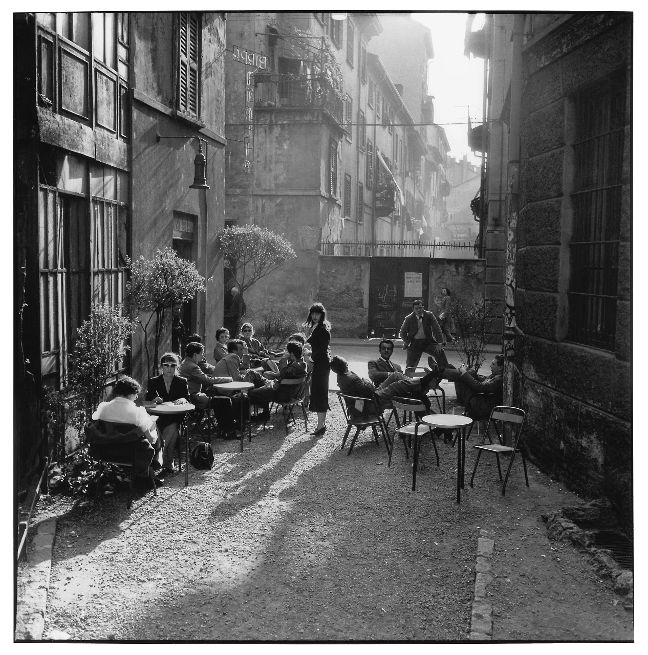
Image: Ugo Mulas

The grey gloom of a rainy afternoon and the empty alleyway is depressing. Only the yellowish headlamp of an ancient Vespa ridden by Salvo the old greengrocer suggests that colour exists in monochrome surroundings. He drives through puddles and looks at us suspiciously.

Marco stands on the step and stares at nothing, because there is nothing there, but his face suggests something different. 

“What do you see?”  

“What do YOU see?” he challenges. I shrug my shoulders. 

“I see sunshine and shadows,” he says. “The heat of a lazy afternoon. Tables and chairs. Miniature olive trees in pots. Young men and women sitting and talking.” He moves his gaze to the crumbling stucco wall. “There is a woman wearing sunglasses who holds a pen in her right hand with a notebook in front of her. There is something in the bag at her feet that holds a dark secret. But she doesn’t want to tell me anything. I want to tell her that from where I stand she is now dead.”

“What else can you see?” I ask.

“The woman opposite her, an old lady now, is reading the Memoirs of Jacques Casanova. The men wear sports jackets and baggy trousers and talk amongst themselves about football and fast cars – Alfa Romeos and Lancias – and the women they want to flirt with. 

“Salvo the greengrocer is a young man, and he leans back on his chair, a Corriere della Sera sticking out of his pocket, and he is talking to a slender woman with long black hair and stiletto heels. She is ignoring him because she senses something but doesn’t know what it is.”

“Who is she?”

“This is your great grandmother and she is looking towards where you stand, but you are invisible to her because you haven’t been born. But she is troubled because something lies in wait that will cause distress to her family. She doesn’t know it yet, but your great grandfather, who sits before her, a philosopher amongst friends, with a violent temper, will kill the man he is talking to. Just like you did, Nido – her great grandson. It is the curse of your family. The curse of the Lombardos.”

Is this the saddest and perfect end? The final act of betrayal never felt so good


Innocence came calling. What are you writing? I was writing about you, but didn’t say that, and it would have made no difference because it was never part of the plan.

Have you been sent by someone?
Have you come with a message?
Have you come to taunt me?
Have you come to kill me?

In the dark, I think only of sweat, tattoos, and dirty underwear. How erotic is that? The excitement before you destroy me.

Have you come with love?
Have you come with hate?
Have you come with both?
Have you come with nothing?

There is desire in the shadows. Hands everywhere, controlling, and satisfyingly rough. But there are unanswered questions. Do these hands belong to someone who wants me dead?

Have you got a disease?
Have you got a condom?
Have you got a knife?
Have you got other ways of killing me?

They will get you in the least expected way. Beware of Gabriele of Stadium, they said. He will exploit your weakness. He is the Angel of Death and brings only a glass full of piss and blood.

Lust shattered my guard.
Lust drowned my senses
Lust clouded my judgement.
Lust is the death of me.

The romantic Gypsy of Roma, who dances with a gun, and destroys hearts with the blade of Ardizzone, looks into my eyes. Is this the most addictive boy ever? Is this the saddest and perfect end? And after he slits my throat he will say to Alberto of Ostia that it was too easy.

Some day I will bid it goodbye, I’ll put my fiddle away and I’ll say… crazy rhythm!

“People will look and see nothing. I will be an insignificant black and white photograph. But there will be a day when somebody sees me and is wonderstruck. They will want to know who that smirking boy with sleek black hair and Jewish nose was. I care not who that person might be, or what their motivation is, but I will know, my spirit will burst forth, and I will offer a skeletal hand in gratitude. That person will know that I cared nothing about wealth and good fortune, and that I only ever wanted to follow my dreams. They will find out if I succeeded, and be able to differentiate between the truth and the lies that might have been written.” 

Roger Wolfe Kahn (1907-1962), American jazz and popular musician, composer, bandleader and aviator. Sometimes I am captivated by a photograph and must find out more. I would like to think that the skeletal hand of gratitude was being offered… but, alas, this is a work of fiction.

A colour to our actions, disturbing us with our own memory, indecently revealing corners of the soul


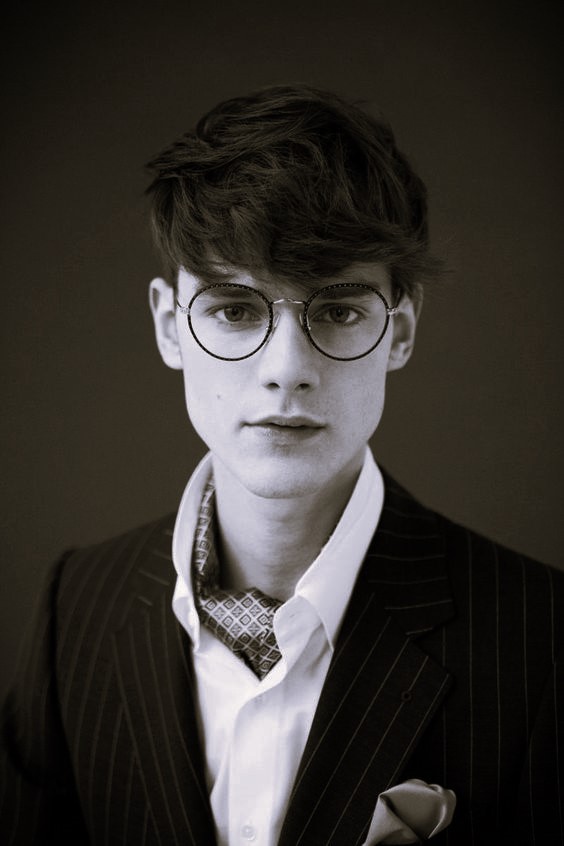
Felix came into the room at the same time as the music switched from Jacques Brel to an obscure eighties disco beat. He turned his nose up and the eyes showed disapproval behind round spectacles. His father cut the music, passed me a generous glass of brandy, and slumped down on the sofa. Our conversation would have to wait for another time. Felix sat in the leather armchair by the fireplace and opened the book that he’d been carrying. It was Hilaire Belloc’s The Path to Rome, published in 1902, and further deepened the mystery of this young man. There was an uncomfortable silence, and the crackle of flames intensified the moment. Felix had purposely interrupted. I studied his face in the half light and watched this strangely handsome boy frowning and mouthing words of the sentence that he was making a pretence of reading. Aware that we were staring, he sighed and closed the book. “Did you know that I am being groomed by algorithms? Spotify has created a playlist for me called 30s Vintage Hollywood Wednesday Late Night.”

The Last Mafia Hit / I’ve committed crimes that I wasn’t destined to commit

A cobbled square with pigeons. A fountain casts shadows in the sunlight and there are shuttered buildings, silent in the heat of the afternoon. A boy in black trousers and a clean white shirt plays the violin in the shade of an archway. I think that these moments are incredibly beautiful. A car drives noisily into the piazza and stops. Mint green with a red stripe. I relax because a killer won’t be seen in a Fiat Cinquecento. The engine stops, and calm is restored. The boy plays something sorrowful as though he knows what comes next. The driver’s window slides down. A .22 revolver, black, shiny, and pointing at me. Bang! Bang! Bang! Blackness. But I can still hear the violinist – Corelli – Violin Sonata in D minor, Opus 5 – No. 12 La Folia.

I open an eye and see a light bulb on the ceiling. I open the other and see that the ceiling is dirty yellow. I can hear people talking. “He was supposed to die,” somebody says. “He probably will,” says another, “but we shall do our best.” I know that they are referring to me, and I’m frightened because I’m not dead, and that would have been the better option. My chest hurts, and so does my leg. I’m in excruciating pain but nobody seems to care. Perhaps they think I am a lost cause.

The door opens and a man with blue eyes stands over me. He shows concern but when he sees that I am conscious he relaxes. “He is still alive.” I try to tell him that I might be better off dead, but I can barely raise a whisper and the man doesn’t understand. I’m tired and must sleep, but I can hear someone singing. Raffaella Cara appears at my feet. “Rumore, Rumore.” She laughs and I try to give a thumbs up, but more blackness descends. 

When I wake, there are three people in the room. 

To the right of the bed is Mateo Pincerna, who wears a dark suit and sunglasses. “Rest,” he says, “I swear that I will get whoever did this to you.” I want to tell him that I’m exhausted, and that the killings have achieved nothing. We will always be at war, and I want to walk away from it. I also want to tell him that he is looking old and frail. My throat is bone dry and I say nothing.

I see mama sitting at the end of the bed, and I want to crawl into her lap like I did when I was a small boy. She would stroke my hair and tell me stories and I remember liking ‘The man who only came out at night’. Mama is dead, and she is weeping like the day that papa got killed in Scampia. She reaches out and says a prayer, and I want to confess that I’m lost to the church.

Pasolini is to my left. “I know what it is like to die a horrible death,” he says. “But you must not die because I need you to tell everyone that they got it wrong. They would not give me Salò back, and that was why I was killed.” He looks like he did in photographs, but in the fog, I realise he must be over one hundred years old. “He knows the truth!” he shouts, pointing accusingly at Mateo Pincerna who cannot see or hear him. “You must tell the truth!” 

The door opens, and the child whose face I never wanted to see again, is holding the hand of his grandfather. The boy is four and has the face of an angel. His grandfather whispers something and the boy looks at me. I know what the old man has said. “This is the man who shot you. This is the man who murdered you.” I need to apologise and say that it was a mistake, but I cannot speak. The shot was intended for Federico but I aimed badly and killed the small boy instead. Mama clutches her rosary beads that I thought were in a small box at the bottom of my wardrobe. Pasolini shakes his head in disbelief. 

“Who are you looking at?” Mateo Pincerna asks. His eyes search the room but there is nobody there. “You are delirious,” he says.

This should not have happened. I never wanted to be a bad person but needed to feel that I belonged. I’ve committed crimes that I wasn’t destined to commit. And now, in these last moments, I wish I’d stayed with my books and music and been like mama wanted me to be. But it is too late now.

It is getting dark, and my eyes heavier, but I try to keep them open because I know that when I close them, it will mean it is the end.

“I am here,” says a young man, who stands behind mama and gently puts his hand on her shoulder. “I have come for your son.”  Mama looks up at him and her face softens. “What is your name?” “I am Michele,” he says. “God bless you,” mama gasps. “I am grateful that you are so understanding.” I try to tell Michele that he is handsome and that I’m sorry he died young, but he holds up a hand and stops me. “It is time to go.” 

I shut my eyes and the pain subsides. I hear Mateo Pincerna splutter something. “An eye for an eye.” I submit, and sink deep into the mattress, but something happens… there is light, the brightest light I’ve ever seen, and Michele holds my hand, one that belongs to an assassin, and he speaks beautifully. “Come with me,” he says, “Your mama and papa are waiting.” 

Cliffside Jack / Why do good men have to die?

Jack Blanton. Image: Bob Hawkins/Remember Cliffside

I once went to a funeral and cried. It surprised everyone, not least Eleanor, because I wasn’t known for sentimentality. She gave me her handkerchief and I blubbered like a baby and everyone in church looked at me. On the way home, she said, “Joe, I didn’t realise that you knew Jack that well.”

There were a lot of things that my wife didn’t know about me. That’s the way things were. It was the last time we spoke about Jack Blanton.

***

It is now Christmas 1941, and that funeral was seven years ago. Eleanor and I are separated, and I only see the boys once a month. For the boys’ sake, she’s invited me to dinner, but a dark shadow threatens everybody’s celebrations because America is at war.

On Christmas Eve, I telephoned her and said that I wouldn’t be going.

At times like this, I needed a friend to turn to, somebody to share my fear of what lay ahead, because I knew that war would come for me. The only friend I ever had was Jack, and he’d left me in 1934.

I sat on the steps of Cliffside Elementary School, where both my boys attended, and thought how quiet and deserted it was at holiday time. It was a far cry from the schoolroom at the textile mill where Jack and I had met as young boys.

We came from respectable families and were inseparable. That surprised everyone because Jack had a God-abiding background whereas I hated religion.

I remembered the words of Pastor Hunnicut as we laid Jack to rest.

“Jack had a cheerful disposition and pleasant smile from which he greeted everyone, from childhood until his last breath, for he died with a smile of love and victory on his face.”

Kindness oozed out of him, and I never heard him say a bad word about anybody.

Jack was smart, cleverer than me, and he might have gone to college, but he was athletic and wanted to be a boxer instead. As kids, we filled an old cloth sack with horsehair and sand, then hung it from the beam of a ramshackle barn. I’d watch while Jack punched the heavy bag until his knuckles bled, prompting his father to buy him  his first pair of boxing gloves.

An old pro at the gymnasium taught him how to fight properly, and by the time he turned eighteen he was in boxing tournaments.

I sat in his corner, rubbed his shoulders between bouts, and gave him words of encouragement. In victory, he smiled, and in defeat, he also smiled.

When there was nobody left to fight in Cliffside, we travelled to Charlotte for the big fights. He was twenty when he knocked down Buck Bridgers to win the decision, and the following year he floored Lloyd Parris after two rounds.

Jack was the squarest and cleanest shooter to climb through the ropes, and all the girls adored him, but he wasn’t interested, and too busy to notice that I had gone off the rails.

While he lived his clean-cut life, I had become addicted to illicit liquor that I obtained from a jailbird at Boiling Springs.

The night he mistakenly drank the ammonia used to purify water; I was getting drunk with Walt Parker in his backyard. I heard the next day that he’d only taken a sip, but the doctor said he had to pull out of his fight with Jim Swinson.

I went to see Jack, nursing a headache and racked with guilt, and told him that he needed to look after himself because he was my best friend. That was when he told me he’d met a girl and was going to marry her.

I said that it was a bad idea and promised to get straight if he’d reconsider, but he laughed and asked me to go to the wedding.

Jack married Juanita Crawford at the Baptist Parsonage in Avondale, and everyone was shocked because it had happened so quickly. They looked the perfect couple, Jack with his Italianate looks and slicked back hair, and Juanita with flowers in hers.

She was a sweet girl, but I resented the fact that she had stolen Jack from me.

A few weeks later I got hitched to Eleanor, who said I was worth a shot and thought she could help me mend my ways. It was a shotgun affair and nobody else was invited. Afterwards, I told Jack, and he said that I should take good care of her, but I knew that by not inviting him to the wedding, I had hurt him.

The following year, Jack fought ‘Kid’ Belk for the Championship of the Carolinas at the County Fairground. It was a close contest, but he was outpointed, and I remember the look of disappointment on his face, as if he had let everyone down.

I told him that I was proud of him and to focus on his next fight with ‘Kid’ Belk, but Jack was knocked out in the third round.

He changed after that, as if he knew that he was never going to be a great boxer, and when Juanita became pregnant, his priorities shifted to finding a good job. But these were bad times, with long unemployment lines, and work was even harder to find for a twenty-three-year-old.

This despondency might have sent Jack the same way as I had, but he never touched a drop of liquor. The Cliffside Baptist Church was his escape, getting involved with all sorts of activities, and attending prayers every Sunday and Wednesday.

He trained young boxers at the school gym and was excited when he discovered the next Carolina Carnera, a young boy called Walter ‘Bill’ Hamrick.

We went fishing like the old days, and talked about our childhood, the failures, and our hopes and dreams.

“Sometimes our disappointments turn out for the best. I see now that it was best that I did not continue boxing,” he said.

With no job, and the need to make ends meet, Jack joined Roosevelt’s Tree Army, and spent eighteen months planting trees and shrubs near Forest City.

Before he left, he grabbed me by the shoulders and looked me straight in the eyes. ”Joe, I love you like I do my brothers, Bill and Jim, and my sisters, Georgia, and Lillie-Bell. If ever you are in trouble, you must call me.”

Jack received a monthly salary of $30, of which $25 was sent to Juanita to help buy food, clothing, and fuel.

When he returned, his church connections landed him a job as supervisor at Cliffside Waterworks, as well as becoming the district milk inspector.

The last time I ever saw Jack, he showed me the Charlotte Observer and a photograph of his young daughter, Peggy Louise, who had been chosen as a Cliffside mascot. She smiled like her daddy did, and I knew that Jack had reason to be proud.

A few weeks later, I did something bad, and killed a man who stole a dollar off me. I punched him on the jaw, and followed it up, punch after punch, like Jack had shown me. I left him in an alleyway and got drunk with Walt who said he would give me an alibi.

That night, I went to see Jack because he would know what to do.

“He’s sleeping, Joe,” Juanita said, “He’s sick. He’s got real bad stomach pains.” I pleaded with her to let me see Jack, but she refused to wake him. “I’ll tell him you called as soon as he’s well again.”

Jack never did get better.

On Monday afternoon he was rushed to the Rutherford Hospital where doctors operated for appendicitis, but they said gangrene had already set in. He died a few hours later.

I went to offer my condolences to Juanita who was comforting Peggy Louise on the porch.

“He could never see the bad in you, Joe.”

She gave me Jack’s boxing gloves with their brown patina and cracked leather.

While I was leaving, she called after me.

“Why do good men have to die, Joe? Why isn’t it the bad ones?”

***

Back on the steps of the Elementary School, the light was fading, and snowflakes had started to fall.

I reached into the inside pocket of my jacket and pulled out a faded photograph. It was a photo of Jack, taken at a studio on Drug Store Street, a few days before his fight with Jerome Spangler. That would have been about 1930 when he was twenty three.

His fists are raised, eyes down, and I won’t forget that thick black hair that reminded people of a matinee idol.

He was wearing red boxing shorts that were tightened with string because he had been too skinny. On them, were the sewn-on letters ‘LB’ – Lawrence ‘Jack’ Blanton – that his mother had once cut from black cloth.

“Jack, I sure as hell miss you.”

Beating Hearts of the Mermen

A sea-salt breeze. I think of Daryl Hannah in Splash inviting a young Tom Hanks to join her. I read an article that said that seventy-five per cent of mermen had an interest in mermaids as a child. In some stories they were very sexual, in others they sank ships, while others said they were royalty that ruled the sea. Are there really such things as mermen? And yet, I see one heading towards me now. He will invite me to take my last walk through the noise to the sea, not to die, but to be reborn.

Love Came For Me. Lyrics by Will Jennings & Lee Holdridge