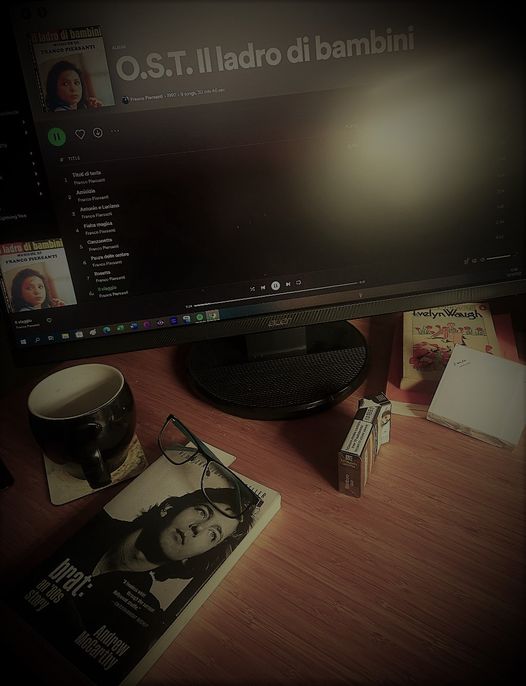
If I’d been a member of the Brat Pack, I would have wanted to have been Rob Lowe. But I was more like Andrew McCarthy.
He wasn’t handsome, nor was he a good actor. I wasn’t handsome either, or ever been an actor.
Underneath that cute shyness he was an outsider, not liked by his contemporaries, and he was resentful, and probably not a nice person.
“Early on in The Great Gatsby, F. Scott Fitzgerald describes the character Tom Buchanan as a ‘national figure in a way, one of those men who reach such an acute limited excellence at twenty-one that everything afterward savours of anti-climax.’”
Now we know the truth.
McCarthy thought he could deal with fame, but wasn’t able to, and lived by the bottle. And this meant that once he’d peaked at a young age it was downhill. And then, by his own choice, it ended.
“Maybe you didn’t want it,” Alec Baldwin said to him on the Here’s the Thing podcast without realising he’d come closer to the core than McCarthy ever had.
I’m not sure I liked him after reading this, but he writes clearly and honestly, and afterwards I realised that we were alike after all.
He might not have been a nice person, but I suspect he might be now.
I‘d wandered along the balcony and climbed the concrete steps that smelt of piss and disinfectant. It was a big climb and when I reached the new world it looked the same. A sweeping row of front doors and a long balcony.
There was a small kid in tiny red wellingtons riding a kiddie’s tricycle. He cycled furiously towards me and stopped. His nose was snotty, and he kept wiping it with the sleeve of his blue anorak.
“What are you doing here?”
“I’m looking for my dad,”
“My dad will beat your dad up.”
“He will not. My dad killed your dad.”
“He did not. My dad hit your dad with a big stick and now he is champion of the world.”
In later years, I realised that Andy’s dad would have easily beaten my dad up, and he would have been the one to have done any killing.
“I’m going,” I told him.
“You’re a scaredy cat.”
I ran back down the steps. “Fuck you,” I called.
We saw each other often. Usually at a distance. We would look at each other as our mother’s dragged us in opposite directions. He would dawdle and his mother would clout him across the head.
“She’s a bad woman,” my mother once said to me.
“Fuck her,” I replied, and she slapped me harder.
Our paths crossed again when we were five years old. It was our first day at school, and we were scared. We decided, encouraged one another, that we didn’t want to go, and so we both cried with the hope that they would let us go back home. But they didn’t.
From that moment we were inseparable. We sat next to one another and were a hellish combination.
Our flats were on consecutive floors, sharing the same view, and outside school we’d congregate at the bottom of the lifts. We rode bikes, became little soldiers, and played football because we were Sheffield Wednesday fans.
We were hard little bastards. Anybody who crossed us ended up dealing with the other too. We gained a reputation for being unruly and played up to it. We misbehaved in class and found that punishment enhanced our status further.
I recall that Andy once threw a tin of bright yellow powder paint over Paula Smith because she called him a bummer. It was funny but she cried, and Mr Newsome grabbed Andy by the hair and paraded him in front of the class. He bent him over and walloped him across the arse with such ferocity that he couldn’t sit down for hours.
The class looked on in admiration at this defiant small boy who smiled and became ‘cock’ of the school.
I was incredibly jealous and wanted the same adoration.
My turn came one rainy afternoon. We were being taught by Mr Ellerby, a pipe-smoking guy who everybody liked. He called me to his desk. I stood waiting and watched my classmates play with Colour Factor. I saw Andy pocketing long red bricks that he would later toss off his balcony.
Mr Ellerby had been writing school reports. In his scrawly handwriting he had carefully put comments against each of us.
‘Andy. Disruptive. More effort required.’ ‘Harry. Not very boyish. More effort required.’
It was the first sign that I could explode. And I did. I swept everything off his desk until there was a pile of papers and pens on the floor. All except a half filled coffee mug that I picked up and threw at the nearest person who happened to be a boy called Ivan. It hit him in the face and cut his eye.
Mr Ellerby dragged me outside.
“What the hell are you doing lad?”
I couldn’t catch my breath and realised it was the point of no return. But it was my moment of glory.
I suspect that teachers would have gladly queued up to punish me. But it was nice Mr Ellerby who proved he could be equally nasty and smacked me ten times with a battered old plimsoll. My arse smarted and I’d never experienced such pain before. I tried not to cry, and when I looked up, I saw Andy smiling and then he winked at me. My standing had been cemented.
When the school report reached my parents, it read differently.
‘Harry. Behavioural problems. More effort required.’
I also found out that I’d misread Mr Ellerby’s illegible notes. I’d forgotten that there was an effeminate boy in our class called Barry Green.
‘Barry. Not very boyish. More effort required.’
Years later I had an email from somebody called Amanda Green who had read one of my articles online.
“You may not remember me, but we once went to school together. I was called Barry in those days.”
There was another consequence to that day.
Sitting at the back of the classroom was a boy called Jack Dempsey. He was small, sporty, and well liked. He’d nervously watched my retribution and made his mind up.
Jack was waiting outside the school gate and tagged along as we walked home to Park Hill. We entered the lift and pressed the button to go up. He exited on the landing beneath mine. I was next. Andy was the last one out.
He was called Fabrício and said he came from Rocinha in Rio de Janeiro. It was the tattoo I noticed first, a bird on his neck, and I was suspicious of guys who had tattoos. We sat drinking beer at the counter. The barman cleaned up. The night was ending.
“What is your name?” “Where are you from?” “What do you do?” “What are you doing here?”
Fabrício wanted to talk, but I was tired, and came across as being rude.
In the mirror I saw two guys. And I found a thousand things wrong with me, but only the bird on Fabrício’s neck.
“I’m gonna make a change, for once in my life. It’s gonna feel real good. Gonna make a difference. Gonna make it right.”
Fabrício gently sang the opening verse from Man in the Mirror. It was a sweet voice. I could not sing.
I looked in the reflection and noticed him looking at me. It reminded me of a scene in Rebel Without a Cause where Plato looks at Jim with a look of adoration. A coded declaration of love. Gay desire.
“I’m starting with the man in the mirror. I’m asking him to change his ways. And no message could have been any clearer. If they wanna make the world a better place, take a look at yourself, and then make a change.”
That was it. The first time for me. We had met in a hotel bar in Fort Lauderdale and ended up making love behind a stack of deck chairs on the beach, protected by the roar of the sea, and waiting for the cop with a torch and gun.
Park Hill. I Love You/Will You Marry Me/The Guardian
Part 2
Tonight, I walked up the old-cobbled street from Sheffield Station. It passed over the railway line and was probably once lined with slum terrace houses. They vanished long before I was born. In my lifetime, this lost street has always fallen under the shadow of Park Hill.
It was dark and raining and the new streetlights made the wet stones sparkle. I saw three lads balancing on the old white railings at the top. They watched me approach. I slipped a hand in my pocket and felt for the tactical torch.
“Wrap the strap around your wrist, grab the torch like a dagger, and hit them on the side of the head with the jagged edge, remembering to twist it at the same time.”
I remembered these words from the man who gave it to me in London. It was after I’d been robbed of my phone in Bethnal Green. That was four years ago, still handy with my fists, but no match for the knife that stuck in my arm.
Park Hill might have become trendy, but some things never changed.
The lads said nothing, and I knew that silence could be dangerous. Three minds, three trains of thought, three different outcomes. I knew from experience.
I considered the time forty years ago when I’d sat in the same spot with Andy and Jack. Teenagers. Geisha Boys. Hard boys from the flats.
The lad had walked up this same street. We recognised him from Hyde Park, and he was walking into our territory. We stared him out, but this lad turned out to be more stupid than brave.
“What’s tha looking at bum boys?” he’d said.
We didn’t reply.
Andy was the first. He’d punched him in the face, blood splattering down the lad’s parka coat. Jack had kicked him in the stomach, and the lad fell to the floor. I reached for a half house brick and smashed it down on the back of his head.
There it was. Three minds, three trains of thought, three different outcomes.
All these years later, I thought that karma came around.
These three lads were different. One was White, one was Black, the other was Asian. Teenagers.
I recalled the words of the man who gave me the tactical torch.
“Be warned. You might end up killing somebody!”
“Have you got a smoke?” I think I took them by surprise.
The White lad produced a cigarette from nowhere and the Black lad gave me a cheap purple lighter. I lit it and took a drag.
“Thanks guys. I appreciate it.”
The Asian lad nodded. The White lad looked at the floor. “It’s ok bro’,” said the Black lad.
I smoked the cigarette as I walked towards the apartments. I didn’t look back until I reached the communal door. The three lads were still there, deep in conversation, and no threat to me.
What if that Hyde Park lad had done the same? Might things have been different? He had been called Brian and two years after we beat him up, he fell from the tenth floor of Hyde Park flats.
I have been back in Sheffield a month now and have yet to start writing my fourth novel. But tonight, I thought about these three young lads, and they reminded me of the Geisha Boys. And I thought about all the memories that have resurfaced these past weeks, and I accepted that Megan, my agent, might be right.
I sat down at my laptop and wrote the following words: –
“I was making a coffee at the time, staring out of the window, looking at a world that used to be marvellously different.”
*****
I was born in the sixties, and I didn’t know anything about Park Hill. It was years later, when writing an article for The Guardian, that I learned about the place I grew up.
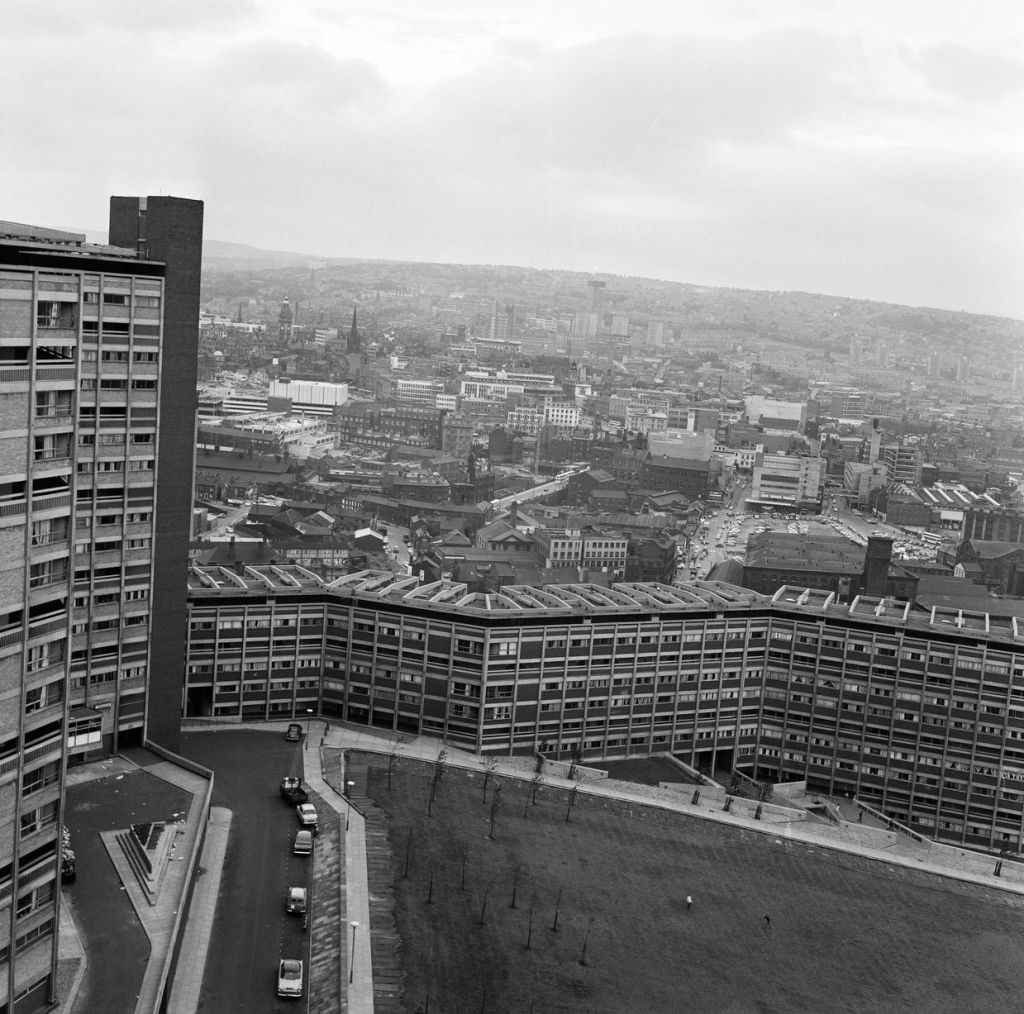
It was allegedly based on Le Corbusier’s Unité d’Habitation In Marseilles but this was too bizarre for us to understand.
I was born in 1966, the last time England won the World Cup, and Sheffield Wednesday lost a cup final to Everton. Park Hill was home. It was the only place I knew. We lived in the sky and looked down at the rest of the world. And for all I can remember, my first five years were spent within four walls and on a balcony as wide as a street. My earliest memory is the milk cart, as big as a car, that delivered every morning.
Park Hill/Building.Co.Uk
My family were called Oldham. It was an unusual surname, but my dad liked it because every Christian name went well with it. He was Peter Oldham, my mum was Pat Oldham, I was called Harry Oldham, and my younger brother became Adam Oldham. And there were lots of cousins across Sheffield.
Mum and dad moved to Park Hill in 1962 when it was still new. They were rehoused after their old back-to-back house at Netherthorpe was bulldozed. He was a cutlery worker, she was a wages clerk, and they were relatively poor.
But Park Hill promised clean and modern surroundings in which to raise a decent family. That dream eventually died, and the respectability of the Oldham family was often placed in doubt by Harry Oldham… me.
I hated my name. Harry was the name for an old man. When I was growing up there was nobody called Harry. But life goes full circle and at last, at the age of 56, I have a fashionable name and happy to be Harry.
Before lockdown, I was invited to see a play at the Crucible Theatre called Standing at the Sky’s Edge. I visited Sheffield with my partner, Scott, who had never been before. The account began in 1961 and told the story of three families over sixty years living in Park Hill. Scott loved it, but I came away feeling sad because it aroused memories of a life I thought was behind me. It might have been written about my family, my friends, and me.
I went back to London and wrote a third novel, and when that flopped, I realised that I wasn’t clever enough to be a crime writer.
Now I am back here. At Park Hill. I am writing another novel, one where I will not have to do any research and spend weeks scripting the storyline. The plot is already in my head. It has already happened. The story is real.
Yet, as I write, I realise that it is not so much a novel but is a collection of reminiscences.
I was browsing vintage books and had just picked up an Oliver Messel biography. I was debating whether to buy it or not. The aisles were narrow and as far as I was aware there was nobody else in the tiny shop. But there was. And I was conscious that somebody had stuck their head around the corner. It was a boy, probably in his late teens, who held a book in his hand. He scanned the rows of old Daphne Du Maurier novels, didn’t see what he wanted, and retreated. I could hear him presenting his book to the shopkeeper. “I’m happy I’ve got what I wanted.” A bell rang above the door, and he was gone. I decided to buy the Oliver Messel book and left carrying it under my arm.
That might have been the end of the story had it not been for me wanting a cigarette. I walked the short distance to the quayside, found a bench, and smoked. It was a sunny day without the usual tourists, and I watched a cargo ship sail into harbour and up-river towards the China Clay docks.
The ship sailed past, and I noticed the boy from the bookshop. He leant over the harbour wall looking at the boats below. He drank from a takeaway coffee cup and placed it alongside his book.
He turned around, smiled, grabbed his possessions, and came over to sit beside me.
“Hasn’t anybody told you that smoking is bad for you?”
“I’m too young to worry,” I replied, “And too young for anybody to notice.”
I blew smoke over him, and he waved it away.
“I saw you in the bookshop. What did you buy?” I showed him the Messel book. He nodded in approval.
“What did you get?” He turned the cover to me, and it was a biography about Alfred Munnings.
“I expected to see Du Maurier,” I told him.
“I live in a house where Daphne Du Maurier once lived,” he stated. “My bedroom is where she slept. And when I’m half asleep I swear she visits and looks over me. I think she’s my guardian angel.” He paused. “So here we are. A pair of teenagers reading books that we shouldn’t be reading until we’re fifty.”
The boy was right. Two old heads on young shoulders. I liked him.
A mop of thick black hair, blue eyes, milk bottle complexion, and not particularly handsome. But when he smiled, he had perfect white teeth, and his narrow face lit up and he was strangely attractive. I guessed from his voice that he was local. He stretched his legs out, clutched the book to his chest, and gazed out to sea.
“I’m seventeen,” he said, “And one day I’ll be old, and I’ll be sitting here on this bench talking to a stranger, who’ll also be an old man.”
“I’m nineteen,” I told him, “And that stranger might be me, and I’ll remember the day we met when we were young.”
“And we’ll talk about regrets, and the things we never achieved, and how life became intolerable, and how we wished we were young again.”
The boy was called Samuel and the son of a wealthy mother, no father, who lived by the river, and he told me that he would grow up to be an intellectual.
He crossed his legs and revealed a patch of white skin above his ankle. He sensed my stare and allowed the leg of his jeans to ride further up to show tiny wisps of dark hair.
“I’m Zack,” I told him. “I live with my girlfriend in a bedsit in North London. No history. No ghosts. We’re students struggling to make a life together, and we study theatre design.”
“And that’s why you bought a book about Oliver Messel,” he confirmed. He looked at the cover that featured a self-portrait of Messel when he was the same age I was now. “He was handsome.”
“But he got older,” I said, “and less handsome, but incredibly successful.”
“I think I’m gay,” the boy said matter of fact. Why did he say that? Does he think I am too? Did I not say I had a girlfriend?
My silence was conspicuous. He looked me in the eye. “That’s what they say at college.”
“Why are you telling me this?”
“Because I’ve never told anybody before. And you seemed to be the right person I could tell.”
“I’m not gay. What qualifies me to understand?”
He hadn’t taken his eyes off me. Pleading eyes that hoped for an answer he wanted to hear.
I thought of Kirsty, my first love, the girl who I shared everything with. Then I recalled the argument we’d had earlier, when she’d accused me of not being interested in her. By that, I discovered, she wanted me to take endless photographs of her for that Instagram feed of five thousand followers. I left to walk the streets.
And then Samuel appeared, and in a few minutes, I would walk away and never see him again.
“I didn’t say you were gay,” he said dejectedly. “I just wanted to tell somebody. It’s a big thing because what they say is probably true. I do like other boys.”
“And are they fine with that?”
“Some are. Some aren’t. Mostly they tease.”
“Does that bother you?”
“Not really, but sometimes it makes me sad. There are times when I meet somebody I like, and I want to explode because I’m afraid to say anything.” He took his eyes off me and looked across the water. “It’s a mind game. Instead of coming right out and saying that I like them, I drop subtle hints that never get picked up on.” He fumbled with his coffee cup. “And if I did say anything, I’m afraid of what the outcome would be.”
“The fear of rejection?”
“Yes, and what would happen if anybody found out.”
Nobody had ever confided in me. It was a strange feeling. Somebody I had never met before was pouring his heart out to a stranger. This was somebody else’s life, not mine. It meant nothing. And yet, I sat there feeling uneasy about it all. I didn’t know what to say, and we sat in silence, clutching our old books
“I know. Let’s go for a walk. I want to show you something.”
It should not have happened like it did. Samuel guided me along narrow Fore Street, its shops, cafes, and restaurants, doing scant off-season business. People hindered us as they walked side-by-side, oblivious to their surroundings. I followed him. He was smaller than I thought, but confident in his stride.
Shops gave way to holiday cottages, and Samuel stopped and waited for me to catch up. He had a mischievous look about him, swept a hand through his thick hair, and using the Munnings book as a guide, pointed down a narrow alleyway. It looked to be a dead-end, but I followed him down the cobblestones to the point where he disappeared through a gap to the right. It led into a tiny courtyard, surrounded by four stone walls. At one end was a rickety paint-worn door secured by a padlock. Samuel found a key in his pocket, unlocked it, and beckoned me through.
We were on a small stone terrace that looked over the harbour. The sea was azure blue. Small boats bobbed on their anchor. He closed the door and I realised we were completely hidden.
“This is my secret place,” he told me. “Nobody comes here, all but forgotten, except I found it and claimed it as my own.”
It was beautiful. The afternoon sun glinted off the water and cast rippling shadows on the wall. Water lapped against the granite. It was blissfully quiet, except for the faraway voices of fishermen and boatmen, and the put-put of a passing motorboat.
“This is where I come to be alone, read, and to dream.”
The words were perfect for THAT moment. Many years later, when I started writing plays, I would use that same line and remember where they came from. No matter how many times I heard it, spoken by the finest actors, it was never right. Never again would it be THAT time, THAT place, THAT person.
Samuel sat on the warm stone, pulled his shoes and socks off, then rolled up the legs of his jeans. He sat on the edge and dipped his toes in the water. His gaze was fixed on the opposite bank where another life existed. “One day I’ll be a writer, and I’ll describe this place.”
I stacked the two books on top of one another and sat cross-legged beside him.
“This is the place where you come to hide?”
“There’s no place to hide because the world is on the other side of that door. One day, I’ll have to face it.”
“It’s not a bad world,” I told him. “It’s difficult, but it’s a life worth living.”
And then I thought of Kirsty and felt guilt. I wasn’t sure why. Was it because I had been too hard on her? Was it because I had left her sobbing in the holiday flat? Then I realised it was neither. I was glad at what I said.
I thought of the time I got drunk and slept with another girl. I fell asleep and nothing happened, but afterwards I was full of remorse.
Joshua Peach/By Julia Romanovskaya/Boys By Girls
“You’ve gone very quiet,” said Samuel. “I’m starting to think that bringing you here was a mistake.”
“Far from it,” I replied. “I’m glad I came. I’m just trying to absorb everything.”
“Like what?”
“Less than half an hour ago, I’d never met you. I saw you in a bookshop, had a conversation on a bench, and now I’m here in this secluded spot by the sea.”
“No regrets?”
“None at all,” I assured him.
“It’s warm.” Samuel slipped off his tee-shirt and revealed his slender lily-white body. He was still a boy, not quite filled out, with a smooth chest and skinny arms. He leant back on both hands and put his face to the sun.
“There’s only two years between us, but somehow you seem a lot older than me.”
“Two years is a long time. I remember being seventeen and it seems a lifetime ago. You’ll finish college, probably go to university, because you seem clever, and suddenly you’ll be the same age as me.”
He laughed. “My mother says I’ll never leave Cornwall. I’m her spoiled child and she thinks I’ll grow up, get married, have kids, and then we’ll all move in and live with her.”
“Does she know about you and… other boys?”
“She’s too absorbed in her work and committees to notice anything. That’s a good thing because you haven’t seen her when she goes into meltdown. She calls me queer, but not in THAT sense.”
He flashed a smile, and I realised that I’d been staring at him. And then that strange feeling returned. If it wasn’t guilt, then what was it? My head was hazy, and my stomach twitched.
“I have something for you.” He jumped up and walked to the corner of the small jetty. Water splashed from his feet, and he trailed delicate footprints across the warm stone. He crouched in the corner, pulled away part of the stonework, and reached inside. He extracted a bottle of cheap red wine, almost full, and held it aloft.
He unscrewed the top, took a long swig, and passed it to me. Then he sat back down beside me.
“Remember this moment, because I am going to do something that you’ll never forget”
Samuel kissed me on the cheek, and then I allowed him to kiss me on the mouth, and it felt good.
He was right. I never forgot that moment. And now, years later, as I look back, it changed everything.
Afterwards, I never saw or heard from Samuel again.
But I recently had an appointment in London and was smoking with my agent outside Starbucks. He told me that a client of his was working on a new biography about Oliver Messel.
And then a handsome guy, who looked vaguely familiar, walked past, and shook his head. “Hasn’t anybody told you that smoking is bad for you?” And for a moment, I was back on a secret stone jetty, beside the river, one sunny afternoon.
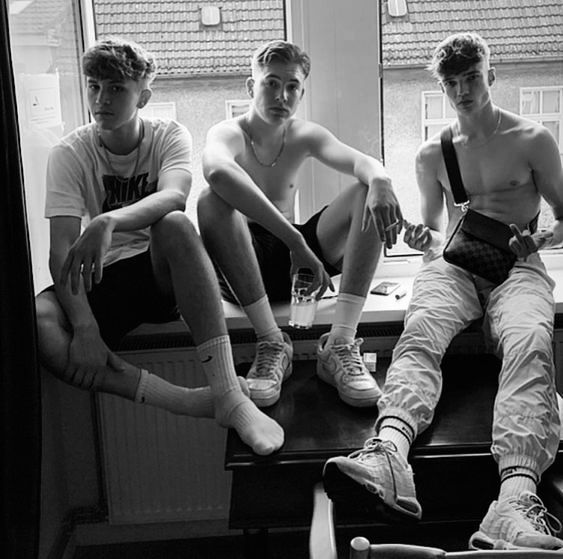
Three Sheffield lads living on Park Hill. Andy, Jack, and Harry. They are typical working class lads. Three dysfunctional families struggling to survive. Three lads that grew up together and on the brink of adulthood.
Part 1
There is a song by the Pet Shop Boys. It starts like this, “When I look back on my life, it’s always with a sense of shame, I’ve always been the one to blame.” I heard it on the radio the other day, and I knew all the lyrics. I was making a coffee at the time, staring out of the window, looking at a world that used to be marvellously different.
It was the same city, bathed in sunshine, and brighter than the one I remembered. The skyline had changed. Now there were swish tower blocks, lots of cranes, and flatness where industry once thrived.
I look at this landscape every day, and each time I feel sadness, and remember something from the eighties.
The three of us were sat on a wall at Duke Street, smoking fags, and passing a can of Kestrel lager back and forth. An old man struggled along the other side of the road, relying on his walking stick. Suddenly, he fell forward, the stick flying into the road and almost getting run over by a passing bus. For a second or two, he was motionless, then made feeble attempts to lift himself off the ground.
We sat and watched with childish amusement. And then, with compassion or guilt, we crossed the road to help him. Andy and Jack grabbed an arm each and lifted him upright while I retrieved his battered old stick. “Up you get, Grandad.”
The old man composed himself and eyed us guardedly.
“Don’t try it on with me lads. I took a bullet in the leg, and I’m ready to shoot some bastard for it.”
“Calm down Grandad,” said Jack, “We’re only trying to help.”
The old man pointed his stick at us. “Aye, that might be son. But I must be on my guard around here.”
“Fancy a swig of lager?” Andy gave him the can and the old man took a mouthful before stuffing it in his coat pocket.
“You lot with the Mooneys?”
“Never heard of them,” I said. “Who the fuck are the Mooneys?”
The old man stared at us and rested both hands on the walking stick. Then he looked up and down the street and seemed satisfied that we weren’t a menace. Slowly he made towards the wall and sat down.
“If you’re not with the Mooneys, then who are you with? You’re not with the Park lads because I’ve never seen you before.”
“We’re the Geisha Boys,” Jack said proudly. “That’s what our mates call us.”
It was true. The lads on the flats had called us ‘Geisha Boys’ because we’d once been in a fight with some posh boy at Crazy Daisy in town. We were sixteen and had slipped past the bouncer and drank as much lager as we could steal off people’s tables. A lad, wearing a dazzling white tee-shirt with ‘Geisha’ across the front, had clocked us and offered us all out. Jack chucked a pint of lager at him, and the lad had responded by smashing a pint glass and threatening us with it. We piled in, throwing wild punches, and kicking him, until he was a bloody mess on the floor. It had happened so quickly that by the time we ran up the stairs and into the street the bouncer hadn’t realised something was amiss. Afterwards, we were famous on Park Hill, known as Geisha Boys, which we liked because we thought it made us sound tough.
Pet Shop Boys/It’s A Sin/1987
The old man shook his head. “Never heard of you. Do you know Sam Garvin?” It was our turn to shake our heads. “He’ll have all three of you if you’re not careful.”
“Nobody fucks with the Geisha boys,” I said. “Tell him we’ll take him on anytime.”
“See that over there?” The old man pointed towards the flats. “That’s the alleyway where Spud Murphy shot me from. Got it in the leg. Sam showed him that nobody messed with the Park Brigade. He cut him with a knife, and he’ll do the same to you.”
There was no alleyway, only the block of shops beneath the flats. Jack caught our attention and circled his finger around his ear, and we knew that the old man was cuckoo.
“I’ve got a gun in my pocket,” said the old man. But he pulled out the can of Kestrel and had another swig.
And that was how we had left it that summer day in 1982. The old man had limped up Duke Street and disappeared into the New Inn. Only afterwards, did I realise that Andy had lifted his wallet.
Now I am back where it began.
There is a lot of concrete, and I can’t remember this much. It’s been thirty years, and London has been the place I’ve lived the longest.
“I’ve found the most fabulous place for you to live,” said Megan. “Near the city centre, near the station, and the apartments are retro modern.”
I knew straight away, as only a Sheffielder would, that she was talking about Park Hill.
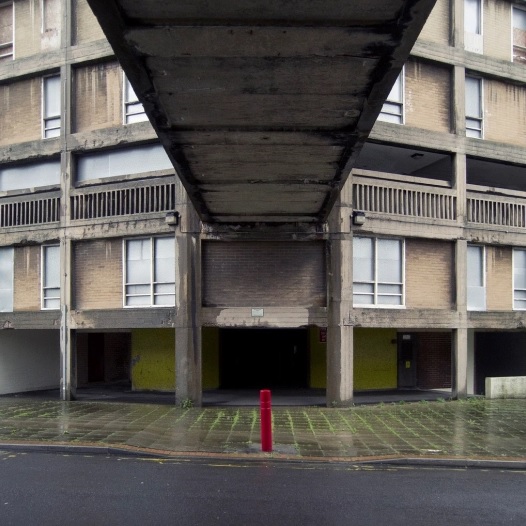
When we lived here, it was on its knees. Not quite. But eventually it would be. The people moved out and it stood empty for years. For better or worse, it’s listed status allowed it to survive.
It was February when she called me at my Kensington flat.
“How are you?” asked Megan.
“Not good, but thanks for asking.”
She hesitated and seemed to choose her words carefully.
“Have you seen him?”
“No, and I don’t want to.”
Megan was referring to Scott, my lover of ten years, now my ex-lover.
Good looking Scott. The best thing that happened to me. Reliable Scott. I was lucky to have him.
But there turned out to be another side to him.
Cheating Scott. The one I discovered had been sleeping around for years, and that was the end of it all.
“I hate to bring this up but writing magazine articles isn’t the way forward. Remember you have a book deal.”
Megan was right. I had to write novels. The first couple flew off the shelves, the third bombed, and Megan, as my agent, had been the one to pick up the pieces with the publisher.
“You need to score with the next one. Write about your time growing up, your family, the people you met, your adventures. But for Christ’s sake, make it good.”
And that is the reason why I came back, and it’s all very different, but the past remembers me.
Last night the ghosts crawled out of the walls and interrupted my sleep. Embedded into Park Hill are the memories of my parents, hard-working servants of the city, sent into early submission. And my younger brother, Adam, who’s still around, but living somewhere in Scotland.
And my best mates – Andy and Jack – came too.
Everybody came last night, exactly as they used to be, and it was only me who had changed. And when I woke, I realised I’d changed a lot.
With its brutalist design, there is no other sight on the Sheffield skyline that holds people’s gazes as much as Park Hill flats.
On a cold dark night, the car park is empty. The only movement is the rubbish that blows across the front of the shop.
The old man who buys a loaf of bread doesn’t see them. Neither does the woman who pulls up in a Range Rover. An old woman ties her dog to a post, and only her little Yorkie can see them. They play with it, and when she comes back with her milk, she admonishes the dog as it whines and strains on its lead.
But they are there. They are there night after night, but you won’t see them. These lost souls hang outside the Co-op and sit on the railings and talk to each other.
They are angry, sad, and have regrets, but at least they have each other. And they joke, fancy one another, and never grow old.
These are the lost children. The dead. The people who lost their young lives to knives, guns, drugs, and horrific violence. They think they are too young to move on. Instead, they cling to the fragments of their short lives and hope that they will be returned to the living. It will never happen.
One by one, they will grow tired, and when they do, they are at their most vulnerable. That bright light will be too hard to ignore, and they will walk across that lonely car park and disappear forever. And then one night, they will all be gone
It is a cold September afternoon and not the weather to be wearing shorts and little else. But Leo is different. We don’t know his real name, but we shall call him that, because he looks like he should be called Leo.
Leo is in a small supermarket, and he looks about fifteen or sixteen. He has a shaved head, mischievous eyes, and boyish stubble. He will never be considered good-looking until he abandons that pursuit of chaviness.
‘I am Leo, and I will shock you.’
The only signs of manhood are his scrubby hairy legs. His slender torso is pale, smooth, and scrawny. Despite the cold, there are beads of sweat across his chest, and if you stand close enough, you’ll recognise that faint smell of a teenage boy.
Leo is quick, and if you were to fight him, he would be incredibly slippy.
He has no money, and as he brushes past old women, he thinks about stealing a packet of crisps, or a chocolate bar, but there is nowhere to hide them.
When Leo reaches the newsstand, something catches his eye. He stands and stares, and somebody looks straight back at him.
Leo studies the fox-like face on the front cover of Vogue magazine. He looks at the gentle lips, that noble nose, and green sex eyes, then notices that the eyebrows have been carefully plucked. Most of all, he likes the thick black curly hair. Leo thinks that he has never seen a man look so handsome.
Leo stares too long and realises that he’s put his hand down the front of his shorts like gangsta boys do.
“You battyboy, bro?” says a gangsta boy voice behind him. Carter, dressed in school uniform, grins over Leo’s shoulder.
Leo clenches his fists and swings around.
“I ain’t no battyboy, bro,” challenges Leo. And in his deepest gangsta boy voice, tells Carter. “I swear I will bang you if you ever say that again!”
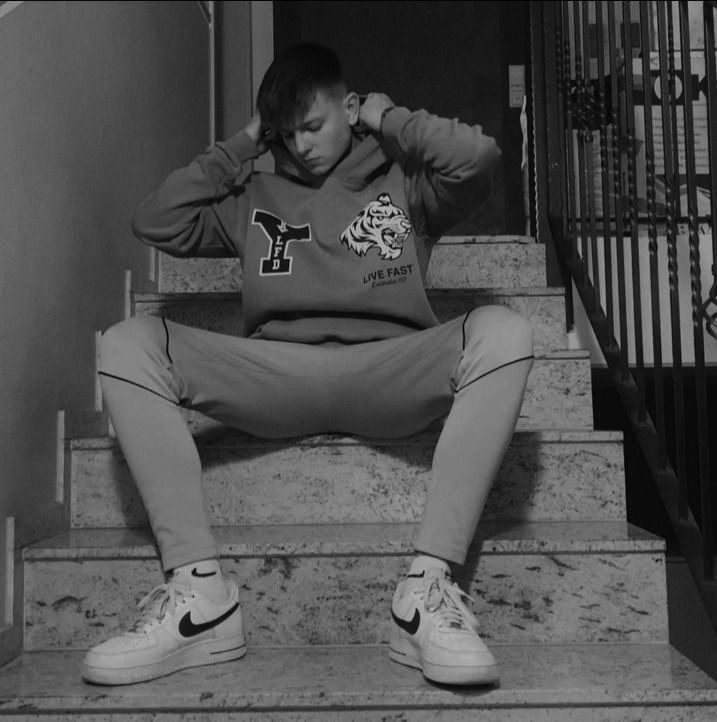
One day Harry will grow up. But it might be too late then. He mixes with the wrong people, and when there is trouble, you know he will be involved. He carries a blade for protection because there are many who will hurt him. There is a rumour that he once shot somebody, and that could be true. And you live with the realisation that one day he will come unstuck and will end up in prison or worse.
Harry can lose his temper, and when he is angry, he will strike first, and for that reason we should be afraid.
But those of us who are well acquainted are not scared. If Harry likes you, he will invite himself into your bed and you will not resist.
In the darkest hours, when he is safe in someone’s arms, he becomes the sweetest little boy again, and will love you until morning claims him back.
It happened to me once, and I saw the scars across his chest and stomach from when drug deals had gone wrong. And Harry whispered in my ear that I was one of his boys, and he would protect me.
Harry has been good as his word. He gives me dodgy money, stolen gifts, and friendship, and once beat up my ex-boyfriend because he found out he’d been sleeping with somebody else.
But Harry has never returned, and I live in the hope that he will be back, but I worry that his time will soon run out, and he will be lost forever.
It’s two days since bad boy Jamie disappeared. His messages stopped, and he didn’t come around as promised. I was angry, unfriended him on social media, and deleted every trace.
I cannot trust a person who hurt me because I know he will do it again.
Last night, Jamie turned up in a busy bar, and I ignored him. But he kept appearing in the crowd and glancing across.
He messaged me. ‘Sorry I was in a police cell.’
I ignored it, and this meant he had to come over and speak. He asked me if I was turning my back on him. I said yes.
And he got drunker, more desperate, and more apologetic, and this is when he is dangerous, and might end up in a police cell again.
And now, the emotional drama.
‘I understand that you’re angry with me. All I can do is apologise.’










 Perfectly Hard and Glamorous