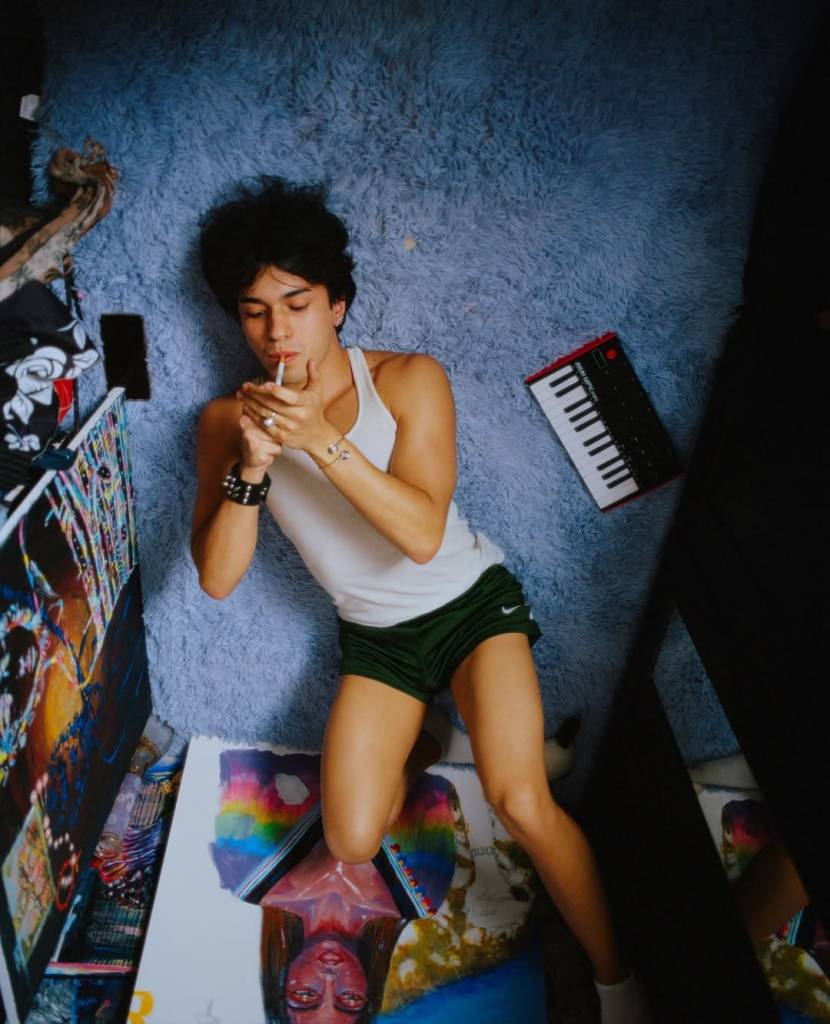
Deej

I’ve moved in with Deej.
My official address is now a room in a Victorian terraced house he rents in Brixton.
I can see why he wanted me here. The rent costs a small fortune, and the house is far too big for one person. It’s probably too big for two people as well, but my presence at least halves his monthly rent.
I like Deej, but this little house-share romance isn’t going to be easy.
We first met at a party and have a bit of shared history. We’re good friends, but our mutual friend Emily has already described our day-to-day dynamic as a classic Odd Couple setup.
Deej is highly charismatic, fiercely competitive and blessed with a boundless, infectious energy. His laddish tendencies tend to come out as playful, well-meaning banter rather than anything malicious. He’s fiercely loyal, but taking the mickey out of me is pretty much his default setting.
He’s six feet tall, athletically built, with short, skin-faded brown hair that looks effortlessly messy but actually requires a trip to a Turkish barber every three weeks. He also has tattoos across his chest, which he insisted on showing me on my first night. Not the wisest thing to do when your audience is inclined to admire them and perhaps touch them a little more than is strictly appropriate.
Of course, Deej is straight and has absolutely rubbish dating habits.
Being a straight man in his late twenties in London, his dating life is something of a revolving door of Hinge dates. He’s charming enough on a first date, but seems to struggle with the transition to anything deeper, largely because he’s reluctant to compromise his current, rather self-indulgent weekend routine.
When he complains that a girl is “too intense” after three dates, you can be fairly sure she’ll be history by the end of the week.
But it’s the domestic reality that could prove the real challenge.
The kitchen counter features an impressive collection of empty hot sauce bottles, abandoned pizza boxes and a tower of Amazon delivery boxes he’s apparently forgotten to take to the recycling bin.
His bedroom smells like a locker room with a hint of Lynx Africa.
But the bathroom and toilet are going to be the real battleground.
There are dried splashes of toothpaste on the taps, stray whiskers scattered across the counter and a single bar of soap slowly dissolving into a gooey puddle. Half-empty bottles of 3-in-1 body wash, shampoo and conditioner are lined up along practically every available surface.
A single, stiff, damp-smelling towel hangs crookedly over the edge of the bath.
Dirty clothes, underwear and socks are abandoned in the general vicinity of the laundry basket. Empty toilet roll tubes and discarded razor cartridges have been left on the back of the cistern.
And, as if all this weren’t enough, there are suspicious splashes around the rim and base of the toilet, the seat is invariably left up, and the bathroom bin is overflowing with empty tissue rolls and discarded toiletries.
“We’re going to have a great time together,” Deej announced.
Crush

According to what I’ve read, Johnny Orlando’s sophomore studio album, Songs For Young Lovers, was released to critical evolution. Could somebody explain to me what critical evolution actually means? A deluxe expansion of the album, titled Like We’re Lovers, has now dropped.
I like Johnny Orlando, even if his name sounds made-up.
It isn’t.
His real name is John Vincent Orlando. He’s a Canadian singer-songwriter, actor and YouTube sensation.
I tried to persuade my friend Emily, the one I call the sensible one, to give his new album a listen. She dipped in and out of a few tracks before sighing.
“The problem I have is that most twenty-something male singers all sound the same.”
A rather clever piece of diplomacy. What Emily was really saying was that she didn’t give a shit about Johnny Orlando.
I must have looked a little hurt on his behalf.
Emily, perhaps sensing this, tried to explain herself.
“The problem with you,” she continued, “is that you pay more attention to what they look like than to how they sound. Johnny Orlando is just another one of your celebrity crushes.”
Books
Primetime

The reviews of Lance Oppenheim’s psychological thriller Primetime (2026) have been generally favourable. I gave it three stars on Letterboxd and was gently taken to task by a few friends (“At least give it three and a half”).
For the uninitiated.
Primetime dramatises the chaotic rise and ethical fallout of the 2000s reality TV show To Catch a Predator. The film stars a much-praised, transformative Robert Pattinson as NBC journalist Chris Hansen, who partners with an online vigilante group to orchestrate televised sting operations targeting child predators. As the ratings soar, a high-stakes operation in Texas ends in tragedy, prompting questions about media morality, sensationalism and the nature of performative justice.
So, about those shameful three stars.
For much of its running time, the film captures the slick aesthetic and peculiar nostalgia of early-2000s television. But then comes the third act, which takes a rather unexpected turn into something resembling a musical-theatre fever dream. Pattinson’s Chris Hansen, a wonderfully unsettling blend of ambition and ratings obsession, keeps you glued to the screen. Yet the finale seems to abandon some of the film’s more interesting observations about the media in favour of full-blown operatic melodrama.
Consider, for example, the decision to send the entire town’s SWAT team to arrest a child predator.
Of all the possible ways to respond to a high-stakes real-world tragedy, having Skyler Gisondo’s character, Decoy Dan, comfort a distraught Texas assistant district attorney by singing Seasons of Love from the musical Rent over the phone is certainly an imaginative one. Suddenly, we’re measuring the emotional weight of a sting operation in “midnights, in sunsets, in cups of coffee”. The film has somehow travelled from Nightcrawler to the school drama club, and I’m not entirely sure how we got there.
Then there’s the cinematic staging of Bill Conradt’s death. Rather than allowing the moment to speak for itself, the film gives us a particularly theatrical piece of visual staging, with Conradt positioned in front of a window for maximum dramatic effect. It’s a striking image, certainly, but one that nudges the film away from gritty realism and towards something altogether more camp and B-movie in spirit.
And while everyone seems to be raving about Pattinson, I found his portrayal of Hansen distinctly creepy. Interestingly, the real Chris Hansen apparently felt much the same, having complained that Pattinson played him more like a horror-movie character than a journalist.
Perhaps that’s part of the point. Still, I wasn’t quite as captivated as everyone else seems to be.
On a brighter note, this is the second time in two weeks I’ve mentioned Seasons of Love. Perhaps I’m less interested in reviewing films than finding increasingly unlikely ways to promote Rent.
Sex
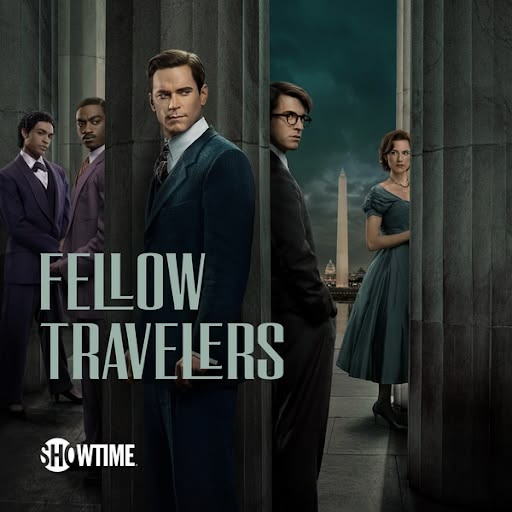
“The (gay) sex scenes are both jaw-droppingly graphic and crucial to the plot,” declared a newspaper review.
Watched Fellow Travelers with my straight friend, Deej.
He kept giving me funny looks, and I found myself blushing with embarrassment. I began to wonder whether he was getting a little turned on.
Then came one particularly momentous scene.
Deej got up from the sofa, put a hand on my shoulder and asked, with impeccable timing, whether I’d like a coffee.
On the Cute and the Willing