Tag Archives: storytelling

River Phoenix said it was an awesome performance

Close your eyes. Hear the silent snow. Listen to your soul speak/Adrienne Posey

It snowed in New York on New Year’s Eve. It started early morning and shrouded the city with relentless cruelty. It ruined everyone’s plans and forced them to stay home. By late evening, the city was silent.

Mitch Keller felt miserable. Truth be known, he’d been unhappy for weeks and he didn’t know why. This made him feel even worse.

He’d bailed on party invites and realised how his absence would be taken. They would think him arrogant for not going, their parties not important enough for somebody of his repute.

Instead, he’d stayed in his cavernous TriBeCa apartment, the Triangle Below Canal Street, and looked through steamed up windows at a strange world. And all the time he drank Jack Daniels because he thought it would make him feel better, but it didn’t.

Mitch had everything. A leading role in a TV series, a play on Broadway, and his agent said he was first choice for a forthcoming movie role. He was recognised when he walked the streets.

In the afternoon, Mitch watched a rerun of ER, the one where Carter paid a visit to his drug-addict cousin who answered the door looking like shit. “How are you feeling?” Carter asks him. “When you’re ill, you feel worse than you are.”

He turned the channel over and watched Homicide: Life on the Street, but it depressed him even more, and switched the TV off.

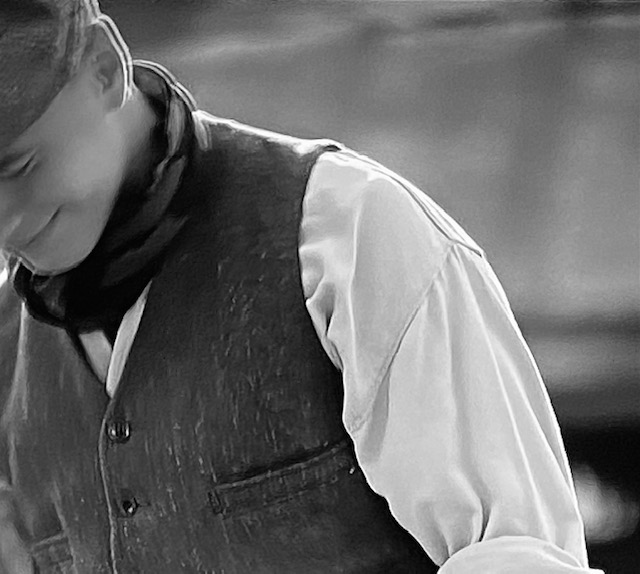
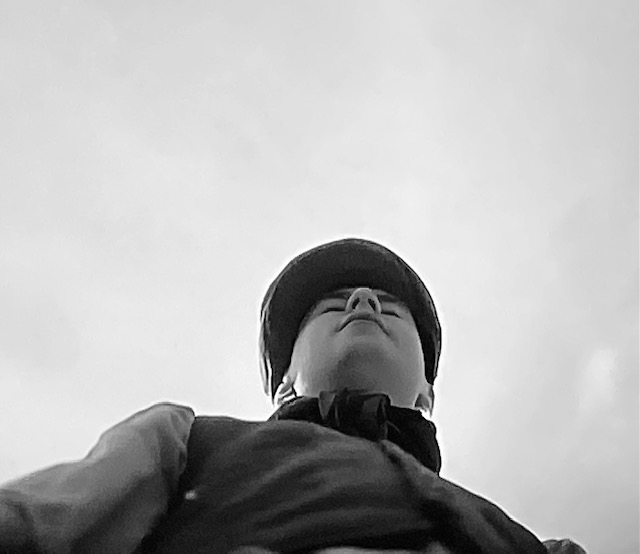
When night came, Mitch did something he rarely did. He dressed in a big coat from a charity store, found a woolly hat that wasn’t his, and the loneliest man in the world went outside. He walked the cold abandoned streets that nobody went to.

The snow was knee high in places and where it wasn’t, it crunched underfoot, because the temperature had dropped. He saw the white hats that had formed on chairs and tables outside a café he knew. Snow piled up against the door of its dark entrance. He thought about the people who worked there, having fun with family and friends inside a bright and cheery apartment in a part of the city where it was cheaper to live.

Mitch could only think of Zombies.

But he continued walking through unfamiliar streets where there was nobody, and cars were lost under thick blankets, and lights shone from upper apartments. There was a secret world above, one he wasn’t part of, and he wished that he could be in one of them, a tiny apartment, with somebody who cooked spaghetti and meatballs and talked to him like a normal person.

He remembered the summer when he was a teenage boy and walked down a similar street. Mrs Zsepy leaned out of an upstairs window and waved. Mitch shouted and asked her how she was, and she called back that she was fine. Afterwards, he heard her shout to a neighbour across the street. “Mitch is a good kid,” she called. “He’s a sensitive boy.” There was nobody leaning out of a window tonight.

Mitch thought about Patrick Swayze, whom he once met and liked, and the movie that he was hoping to star in with him. He thought about Sam in Ghost, a decent man, a decent ghost, but then he remembered the scene where his friend Carl is killed by a huge piece of falling glass and steps out of his body and is whisked away by black spirits, doomed for eternity.

The snow was falling harder, and the faster it fell, it caused the weight on his mind to get heavier. He was soaked, a thousand snowflakes clinging to his hat and coat, and he was cold. Each snowflake weighed heavy on him. And he’d wandered somewhere he didn’t know, where the streets would never be cleared of snow because nobody went there.

There were abandoned factories and meat packing plants where snow blew through broken windows and the missing tiles to form little mountains inside. There was a doorway, protected by planks of wood nailed together, but with space for somebody to climb through.

Mitch thought of dead rats, frozen in the snow, and wanted to see one.

He climbed through the gap and found himself in a dark hallway that might once have been the entrance to an office. It matched the strange silence. A city wrapped in cotton wool, muffled until nothing could be heard.

He sat in a corner, amidst broken glass and syringes, closed his eyes and thought about his nightmare. He needed somebody to talk to, but there was nobody. But the longer he remained there, in this dank, dark space, the more it provided odd comfort.

As he slipped between sleep and consciousness, he thought about people hitting the bottom. And he believed that when you hit rock bottom you bounced, but it was a matter of how hard you bounced. If you hit the bottom hard then you were likely to bounce right back to where you came from. But a slow fall didn’t provide enough bounce and you might settle on that bottom forever.

Mitch did bounce, and he bounced hard, and he considered that moment the worst it could get. But he picked himself up, went outside, and walked through the snow back to his apartment. He saw other people in the streets who were celebrating a new beginning.

It was time for a change, and he needed a new start as well.

Mitch resolved to put New York, and dreams of Hollywood, behind him, and move to Paris where he would be successful in Europe. And that’s what he did.

He never made that Swayze movie, but before he left New York, he starred in a film, the one that everybody remembered, and for one scene.

It was a long time ago now, but it still seemed like yesterday, and he thought back to when production had wrapped, and Danny had encouraged him to go to that small cinema at the Paramount lot to watch the preview cut. He hadn’t wanted to go, but Danny insisted.

Danny had been his childhood friend and he remembered the days when they used to shoot pool together, but when Mitch started acting, they drifted apart, and one day somebody told Mitch that Danny had died in a car accident. But he hadn’t, because one day Mitch saw him on the street outside his New York apartment and the two were reunited.

The two of them sat in the dark theatre and watched the movie, and Mitch thought he was quite good in it. He hadn’t been looking forward to the final scene, the one that earned him an Oscar nomination, but when it came, he thought it brilliant.

The scene is where Mitch is in a derelict factory, propped up in a corner where he has sheltered from the snow outside, and the camera pans across his unshaven face and sunken eyes, wet with snow, but showing no emotion. And then, somebody clambers through a gap in the boarded-up doorway and sits beside him.

The down-at-heel stranger talks to him, but Mitch is too cold to respond. It plays out for several minutes, and the stranger, who is just a kid, tells him that his life is wasted. They share a needle, and Mitch just sits there while something is pumped into the vein on his arm.

Mitch thinks the kid is good.

And then, the kid steals his hat and coat, and goes through the pockets where he finds a little money. Mitch sits motionless, watching this unfamiliar person, but grateful that there is somebody to talk to. And the look in his pained eyes, as the kid goes back into the snow wearing his hat and coat and leaving Mitch to die.

The lights came up and everybody clapped and cheered, and Mitch knew that the movie would be a critical success.

On the way out, Mitch saw River Phoenix, who’d watched the preview, and had made his way over to them. He told Mitch that it was an awesome performance and that last scene would always be be remembered. But Mitch realised that it couldn’t have been River Phoenix because he had died a few years earlier and he wondered who it might have been.

Danny put his arm around Mitch’s shoulder and guided him outside where there was a bright light, a mysterious light that looked incredibly beautiful.

River Phoenix/By Bruce Weber

Have you ever grieved for someone you never knew?

I once visited a Mediterranean island. Every night I took a book onto the balcony and read for a few hours.

Across the street was a restaurant, always busy. A young Greek boy politely greeted every customer. In between, he would pace up and down, lost in his thoughts. I watched him all the time.

My book became my excuse.

One night, the boy stopped his routine and waved. It became a nightly ritual, and I would wave back. And then he started smiling and acknowledging me with a friendly nod. He would get back to his customers, stealing a glance whenever he could. And all the time I had the advantage of watching him from above.

And then he was gone, simply disappeared.

One night, he didn’t appear, nor did he the one after. I enquired about him at the restaurant and a waitress fetched the owner.

He asked if I knew the boy well, and I said I did, sort of.

And then he told me that the boy had been riding home from work on his scooter and collided with a taxi. He had died instantly.

Have you ever grieved for someone you never knew? It is probably worse than grieving for someone you did.

All these years later, I think of that young boy, and in my thoughts, he waves, and he smiles, and he nods and casts furtive glances. Then he turns his back and is gone.

And you may look the other way

They played Stayin’ Alive and the kids had orgasms. It erupted. More than it did when we knew it. But that twinge of teenagism stirred and I was thirteen again.

I want somebody/I don’t want somebody

Fuck me. Ben is horny. He is mine for the taking. But tonight I’m not interested. What the fuck is all that about?

Stolen words/The ‘bicycle thief’ of Manhattan’s West 14th Street Pier

I see something written by somebody else, and like it. But I will forget the words, and they will be gone. I shall put them here. When I am old, and remember nothing, I will know that they didn’t get lost.

“I was startled to see a nimble young youth on bicycle come to rest before my gaze, silhouetted by the violent blaze of twilight. Straddling his bike like a desperado, he stood transfixed by the dazzling spectacle of blazing colours. I thought, ‘rather pensive for a toughie; the kid has the soul of a poet.’ So, I approached him and saw that his face had ‘bicycle thief’ written all over it. I asked him if he would acquiesce to having his picture taken – he agreed, this boy who stepped out of Genet’s mythology of the young hoodlum, whose coltish grace and coquetry were his adornment.”

Fred H. Berger/Propaganda Magazine/Winter 1999

Your story is etched in lines and shading, and I read it on your arms, legs, shoulders, and stomach

Inky. Arty. Sexual. A magazine of the human skin. That tender moment became an exploration of naked flesh. It meant something to you. It meant nothing to me. But then your obsession became my obsession too.

That moment/I stared through the window

I have a lot of stories about trains. There are people that you’ve never met before, but for a brief time you are intrinsically connected.

I was with a friend on a train from London to Brighton, and we had nothing to say because we were bored with each other.

It was late on Saturday, and at that moment, Fatboy Slim was performing on Brighton Beach and 400,000 people had turned up and caused mayhem.

But this train was strangely quiet.

I stared through the window at blackness and saw nothing.

But I did see something.

It was the reflection of a boy, sat a few seats further forward, staring at darkness just like me.

Lost in his thoughts and dreams, I supposed he lived an incredibly exciting life.

I watched him far too long.

Then he suddenly smiled, and I smiled back, and for that passing moment I believed we were lovers.

I sleep with ghosts by my bed

My friend Blake can see dead people. He tells me I am surrounded by two of them. They watch me. They follow me. They talk to me. But only Blake can hear what they say. He says he knows all my secrets because they tell him.

There is John, a great-great uncle, who died long before I was born. He found me when I was a small boy and has kept me from danger. I amuse him. He regrets that he lived his life at the wrong time and was deprived of the life I lead. But he says I lived his life for him.

There is a teenage boy, and he is called Anthony. We met once, but I can’t remember him. Barely an hour after we talked, he died from a heart condition. That’s tragic. He told Blake he became my guardian angel because I was the last person he spoke to. He liked me. And he is happy that I have lived a longer life.

One day I will die, and I will meet John for the first time, and because age means nothing Anthony will become my eternal lover.

And I will still be able to talk to Blake.

That moment/I saw the light of day

It was true. We had good times. My first girlfriend. We were young. Then you talked about engagement, and I was confused and uncomfortable. Our relationship was a falsehood, because I was in love with your 17-year-old brother, and he was with me. I had to be ruthless and I told you I didn’t want to see you anymore. That was forty years ago, and you never knew the reason why.

My name is Harry/I have a conscience/Get that out of the way and anything can happen

A book that will never be published. I’m not a good writer, and I write to entertain myself. But somebody asked if Harry, from Perfectly Hard and Glamorous, is based on a real person, and I had to come clean.

He is called Harry, but where does his character came from? He is a combination of lots of people I’ve known, but he is also me.

The stories he tells are a lot of the things that happened to me. And underneath that rough image, there is a sensitivity that is really based on the quiet shy boy I once was and probably still am.

This idiosyncrasy surfaces in Harry at an early age and reveals a jealousy when he can’t have the things he wants. As I’ve got older, this unfortunate part of my psyche sometimes gets too much to bear, and on occasions has resulted in a destructive outcome. This failing is also part of Harry’s anima and he eventually turns his back on those people he cares about most.

I’ve never been violent or dishonest but sometimes wished I had. It just wasn’t part of my upbringing. And so, Harry makes up for it, as do Andy and Jack, with their brutal style of living. But Harry is distinctive from the rest.

In one of the chapters somebody says that if there were three bad boys then Harry is the best of the bunch. He has a conscience, but once that’s out of the way, anything can happen.

There is a tendency for people to make assumptions about Andy, Jack and Harry.

They see themselves in all three boys and even in some of the peripheral characters. But I stayed clear of real names and have deliberately mixed up their personalities to disguise the obvious. And the decades have allowed me to introduce people to one another when in reality they’ve never met.

There is another part to this adventure and it involves the plot line.

In between writing there is a need to earn money. This involves spending hours stood doing nothing, and hours can pass without anything to do. This is where my iPhone comes into its own.

Most of the plot has been created when most of you are tucked up in bed. Ideas reveal themselves at the most inappropriate times, and this when I start typing notes on my phone.

As always, I continue to write anonymously but should anybody ask who I am, I shall say that ‘My name is Harry.’