
On returning to that bronze statue…
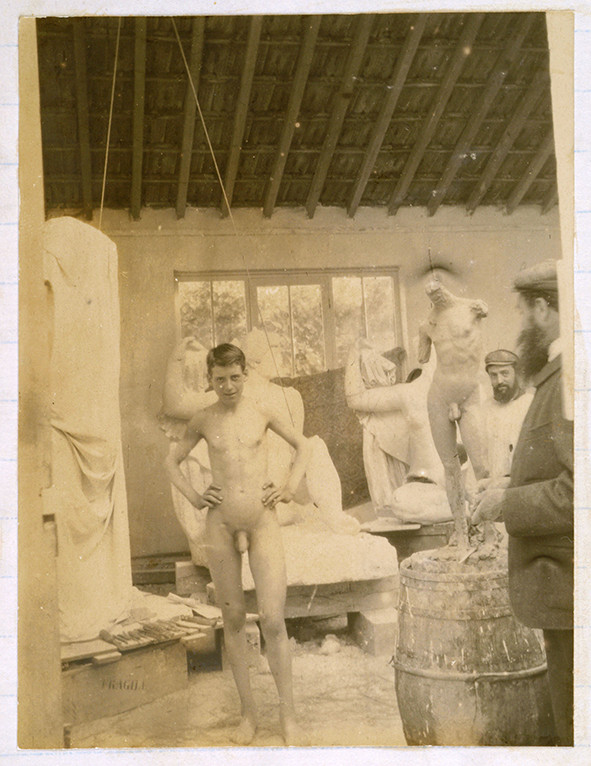
Gaston George Colin (1891–1957), by most accounts a young cyclist, perhaps even a jockey, and later a pilot—but certainly a chauffeur to Harry Graf Kessler, the well-connected German diplomat, writer, and patron of modern art.
Kessler’s diaries reveal that he began a relationship with the seventeen-year-old in 1907, hosting him both at the family castle and during stays in Paris, Rome, and Denmark.
While in Paris that same year, Kessler asked his friend Aristide Maillol to create a life-sized marble statue of the young man. He was said to have wanted a likeness of Narcissus, inspired by ancient Greece, which he saw as a culture where relationships between men and youths were openly acknowledged.
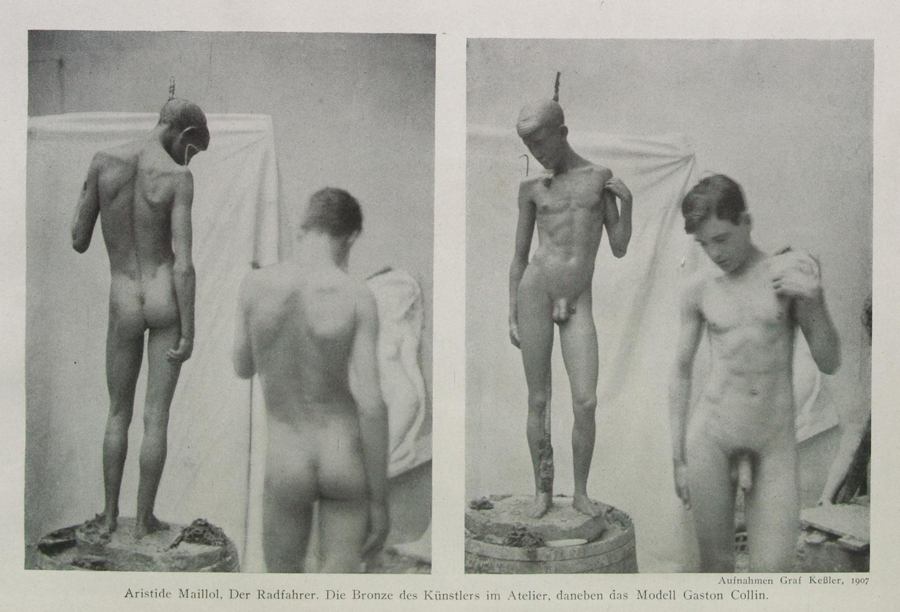
The outcome, however, was not a marble statue but a smaller bronze work, The Racing Cyclist (Le coureur cycliste), capturing a classical ideal of beauty and strength.
Maillol, who rarely worked with male nudes, struggled with the piece—his efforts complicated by Kessler’s constant attention to detail. The sculpture was not cast until early 1909, and Maillol remained dissatisfied, noting its unusual proportions, particularly the enlarged head and penis.
It was eventually exhibited in the French pavilion of Decorative Arts at the Turin Universal Exhibition in 1911.
Following the Nazis’ rise to power in 1933, a fearful Kessler left Germany for Paris, later moving on to Mallorca and finally to southern France. It was only in 1985, when his early diaries were discovered in a bank vault, that the extent of his fixation on Gaston Colin came to light.
Four casts are known: Kessler’s original is now held at the Kunstmuseum Basel, while others are in the Museum Folkwang, the Musée d’Orsay, and the Bavarian State Painting Collection in Berlin. Additional versions may exist, as Maillol is believed to have produced a second edition around 1925.
On finding that Joseph (or Sam) was queer…
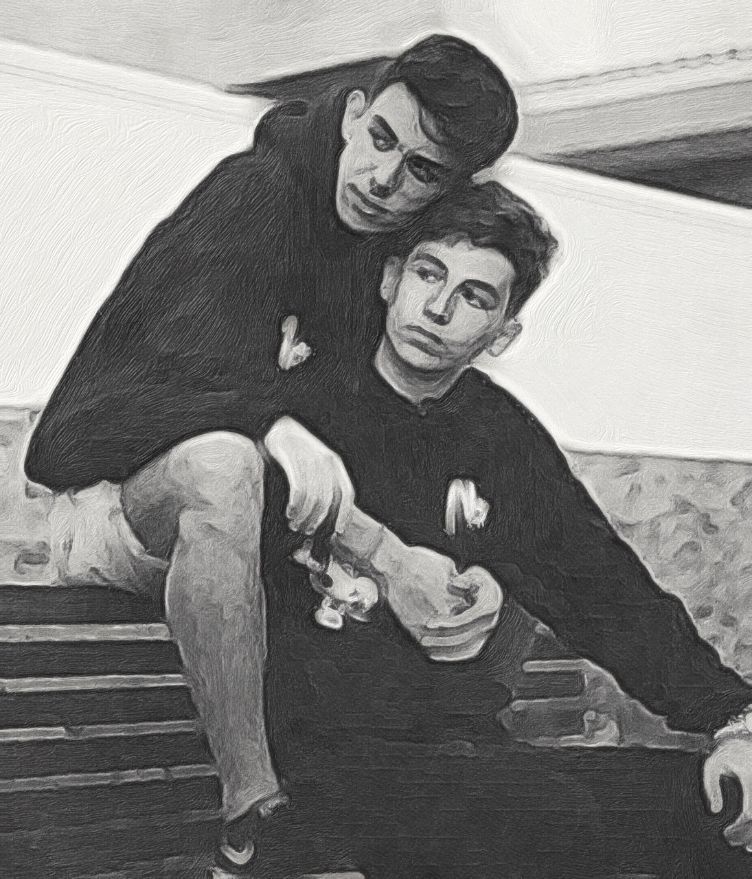
It turns out Joseph lied to me. I found out that the flirty boy with the rolled sleeves, the nice arse, and the quiet smile is called Sam. And he hasn’t served me coffee for weeks. I still go in every day, but he’s disappeared—off studying, or back to his girlfriend. Then on Monday, he came in as a customer, joking with the staff behind the counter. A good-looking guy followed him in. Sam touched him lightly on the arm, and the guy patted him on the arse. They left holding hands, and I had to accept that Sam wasn’t available to me anymore.
It was an emotional snap. The interest hadn’t been given time to fade; it just hit a wall. That turns into jealousy very quickly—why them, not me? Seeing that physical ease between them—the touch, the closeness—intensified everything. It wasn’t simply that he was taken; it was seeing what that looked like. That’s what stung more than I expected. I told myself not to inflate things beyond what they were. I hadn’t even been rejected—just abruptly cut off.
I had to stop idealising someone I’d barely interacted with, especially once they became unavailable. That was the truth of it: there had been no real interaction. My mind had filled in the gaps, making Sam more significant than he ever really was.
But there was still that lingering feeling—a symbol the mind clings to—a sense of missed opportunity.
On discovering Arthur Rimbaud’s homoerotic poem…
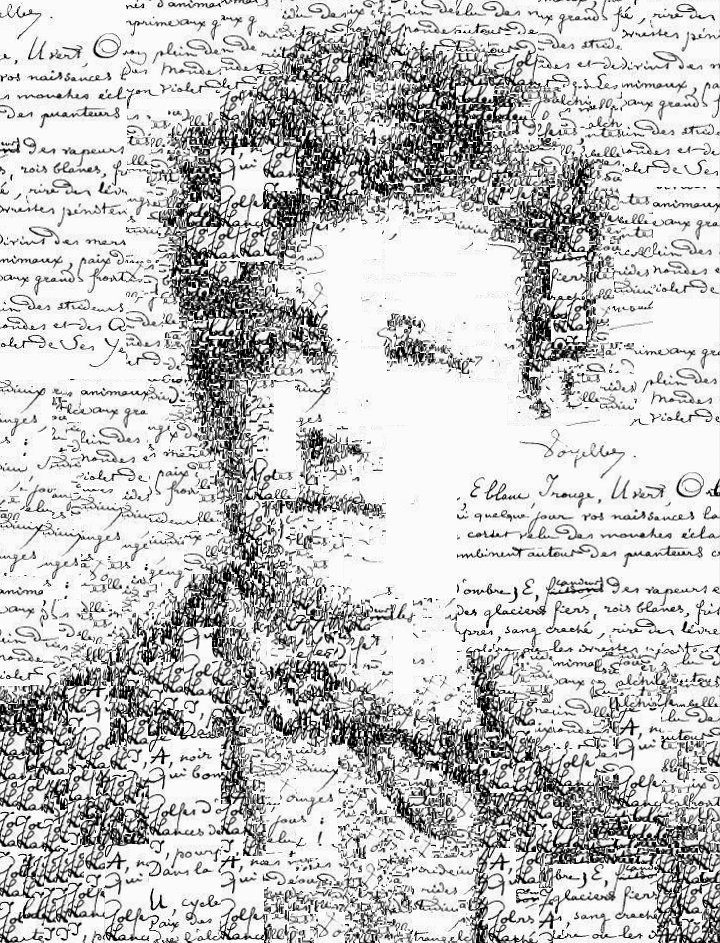
Stupra II (1871)
Our buttocks are not theirs.
I have often seen people unbuttoned behind some hedge;
and, in those shameless bathings where children are gay,
I used to observe the form and performance of our arse.
Firmer, in many cases pale, it possesses striking forms
which the screen of hairs covers;
for women, it is only in the charming parting
that the long tufted silk flowers.
A touching and marvellous ingenuity such as you see only
in the faces of angels in holy
pictures imitates the cheek
where the smile makes a hollow.
Oh! for us to be naked like that,
seeking joy and repose,
facing one’s companion’s glorious part,
both of us free to murmur and sob?
Arthur Rimbaud (1854-1891)
The Latin ‘stupra’ is plural for stuprum, which means an obscene and/or illegitimate copulation. Because of their explicit homoerotic content, these poems were not published during Rimbaud’s lifetime. They first appeared in a private, limited edition in 1923.
On watching a film that seemed familiar…
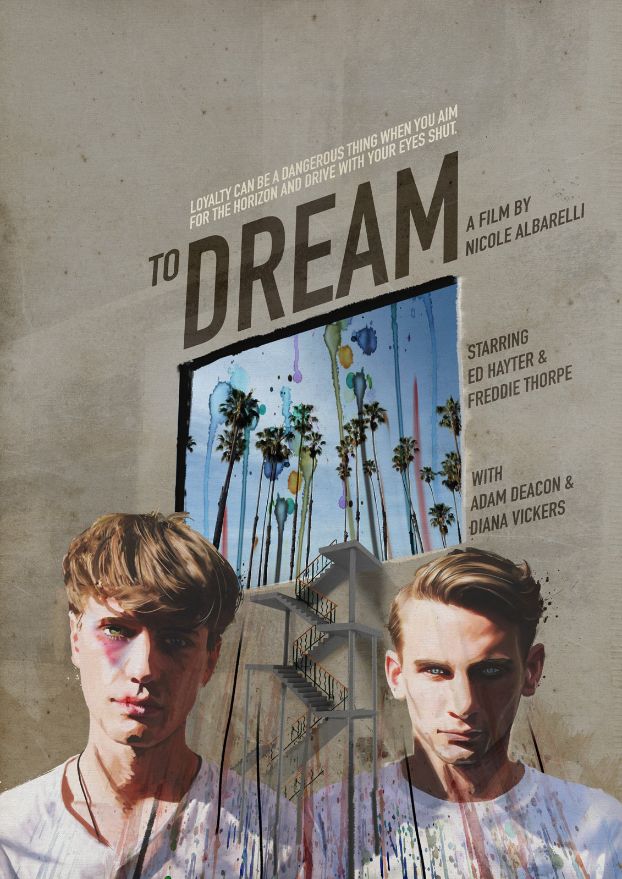
There was a similarity — a flicker of déjà vu. It softened the boundary between experience and memory, as though something new had already been lived. For a moment, my mind misread the present as the past, conjuring a false familiarity. Certain scenes felt strangely recognisable, as if they belonged to me already.
To Dream is a story of friendship — hopeful, intimate — set against a harsh inner-city backdrop. Best friends Luke and Tommy live in an unforgiving corner of London. Having dropped out of school and still at home, they find themselves dreaming of what might come next. Their shared ambition has always been escaping: to leave London’s grime behind for an imagined American paradise. It is a dream that has carried them through the realities of abusive homes, and one that binds them tightly together. But as family tensions worsen, and Luke’s new love interest begins to unsettle their bond, loyalty pushes Tommy toward a decision that will alter their lives forever. (Winter Film Festival – New York City).
Change the setting, reshape the structure — the dynamic remains. Four years on, as I approached the final instalment of Perfectly Hard and Glamorous, this little-seen B-movie felt like an omen.
Then I realised what I had missed: the father. There is always an abusive father. Somehow, I had forgotten him.
To Dream. United Kingdom (2026). Directed and produced by Baltimore-born, London-based Nicole Albarelli. Starring Freddie Thorp, Edward Hayter, Adam Deacon, Frank Jakeman.
On the cute and willing…


 Perfectly Hard and Glamorous