
A Book from Osbert
An obsession with grabbing hold of vintage books at a reasonable price. I have a curious interest in the Sitwells. Twice, quite inadvertently, I have found myself meeting a few of the modern ones. But it is the dead Sitwells who remain the most famous — and the most eccentric.
Sometimes there is a surprise hidden inside.
Osbert Sitwell, modernist author, poet, satirist and prominent cultural figure, lived from 1892 to 1969. Alongside his equally famous siblings, Edith and Sacheverell, he was known for his formidable personality, eccentricity and fierce nonconformity.
His book Open the Door was published in 1941. That same year, with characteristic generosity, Osbert sent copies to friends for Christmas.
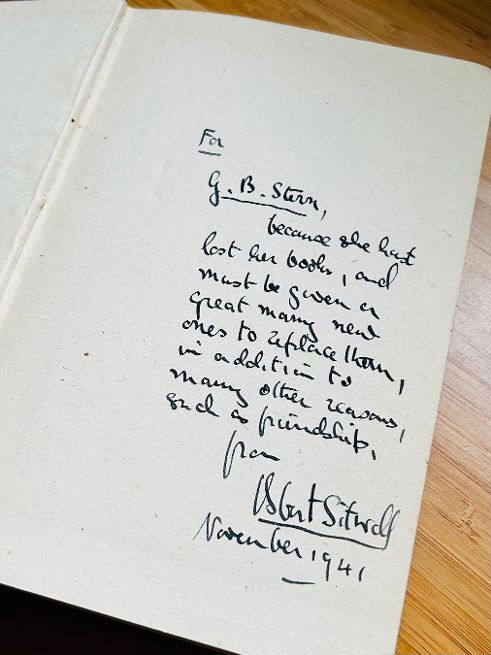
In my copy there is an inscription:
For G. B. Stern, because she lost her books, and must be given a great many new ones to replace them, in addition to many other reasons, and a friendship, from Osbert Sitwell, November 1941.
G. B. Stern — Gladys Bronwyn Stern — was an English novelist, playwright, journalist and literary critic. Over a career spanning six decades she wrote more than forty novels, as well as plays, short stories, screenplays and memoirs. She moved through the literary world of London with friends and acquaintances including H. G. Wells, W. Somerset Maugham, Rebecca West and Noël Coward.
And then there is the reason for Osbert’s inscription.
In 1941, during the German air raids on London, Stern’s home was hit by a bomb and completely destroyed. She survived physically unharmed, but lost almost everything: her house, her library, family heirlooms, papers and personal belongings.
She emerged from the rubble with virtually nothing.
Except the clothes she was wearing and her favourite walking stick.
And then, two months later, Osbert Sitwell sent her a book.
A Fox at Battersea
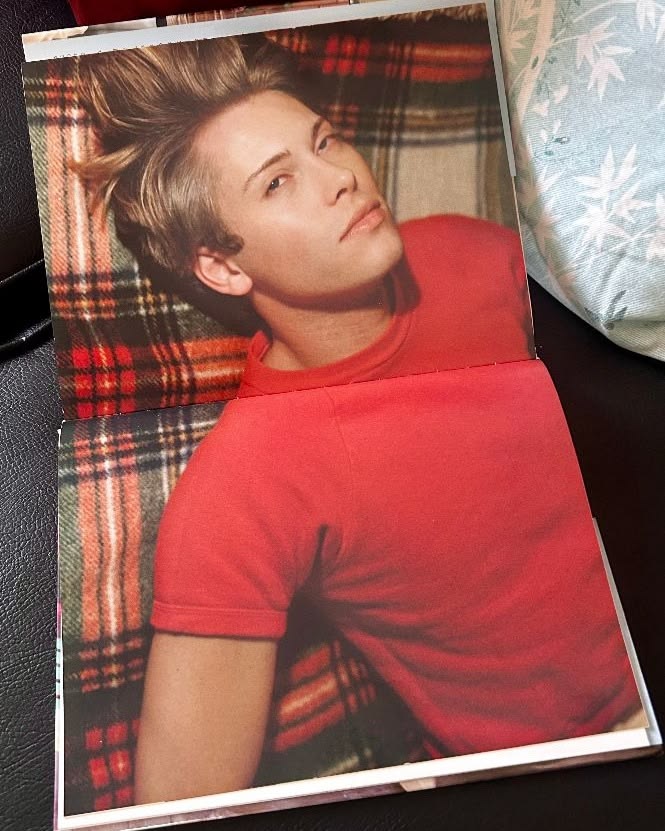
I get why David Hockney’s muse, Peter Schlesinger, left him for Eric Boman (1946–2022). I mean, who wouldn’t have? I found this photograph in a book, taken by Schlesinger at Battersea in 1977. I’d say Boman was a bit of a ‘Fox’, as they said in the 1970s. Wouldn’t you agree? Schlesinger famously recalled that people would crash their cars in the street just to steal a glance at him. He was a rare creature: as beautiful on the inside as he was on the outside, leaving an undeniable and unforgettable mark on the world. And yet, somehow, he still isn’t worthy of a Wikipedia page.
What Becomes of Joey?

Getting my head around the fact that Joey, turning a trick or two in 1987, would be 61 now. I’m sure he never imagined that the beauty being advertised here was something temporary. We are shallow and cruel. We fall for youth, then discard it when it disappears. Would we even give Joey the time of day now?
Troppo giusto!
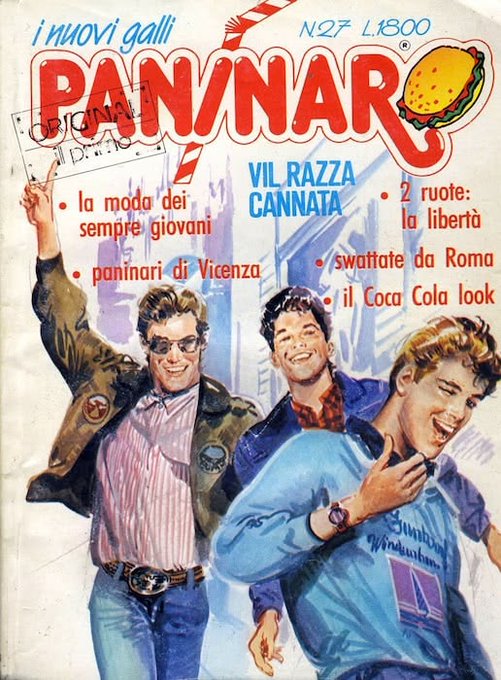
Paninaro. Milan, 1980s. Fast food. Designer labels. Mopeds. New York fantasies. Basically, a whole aesthetic before anyone called it an aesthetic. I wish I’d been a Paninaro.
“Girls, boys, arts, pleasure,/ Food, cars, travel, food, cars, travel, travel,/ New York, New York, New York,/ Armani, Armani, A-A-Armani, Versace, Cinque”.
The Decadent Comrades
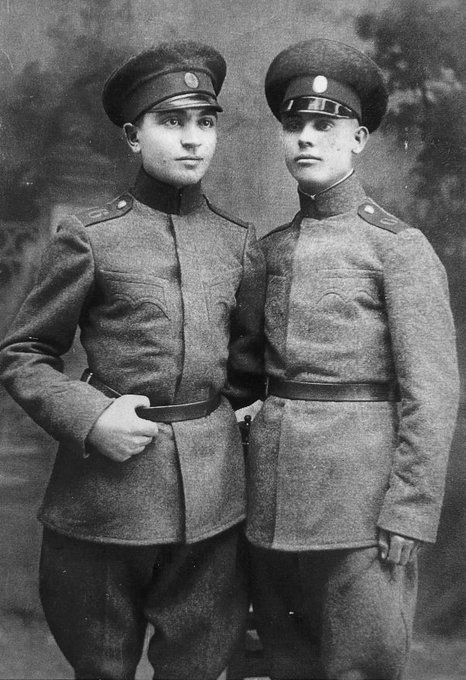
Casimir, destroyer of peace, and Leonid, son of the lion, shared a love of baked apple, cinnamon and each other. Branded remnants of ‘bourgeois decadence’ and capitalist moral decay, they were shunned by their comrades. In their loneliness, they turned to a growing art form called ‘gaysky pornsky’.
Bedtime Books
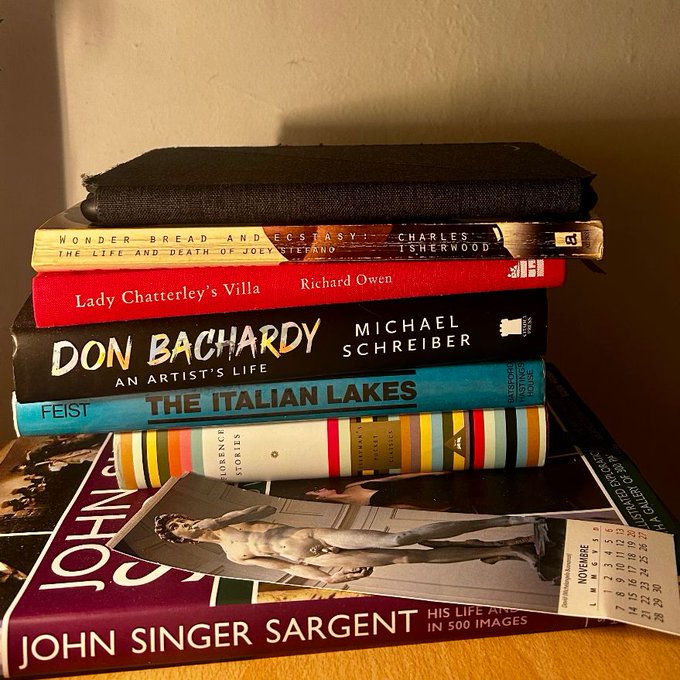
Bedside table energy: beautiful men, Italian lakes, doomed artists and absolutely no intention of going to sleep.
That Unspoken Rizz
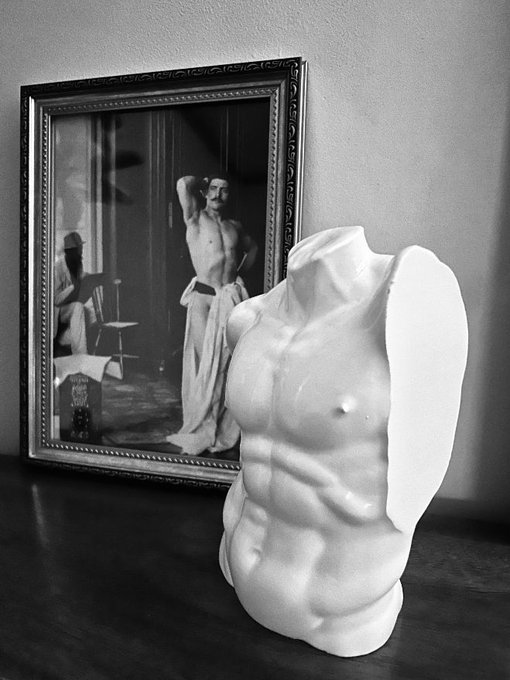
The Split from Desire. True eroticism in representation. Classic inspo. The male form as the ultimate standard of aesthetic excellence. Male beauty has been serving since antiquity.
German Decadence
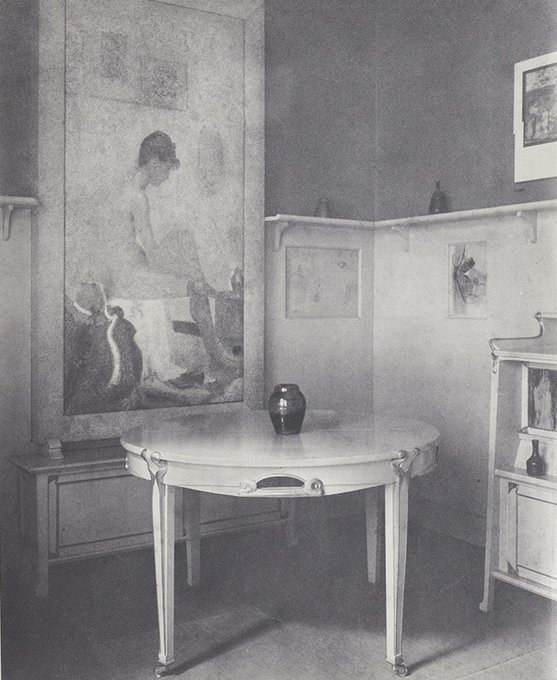
Says it all. The dining room of Harry Graf Kessler’s apartment in Berlin, circa 1900. An inherent critic of the rigid, hyper-masculine culture of Imperial Germany. He expressed his aesthetic and homoerotic interests in everyday life, writing in his diaries about his attraction to athletes at boxing matches in London or handsome sailors in Belgium.
On the Cute and the Willing