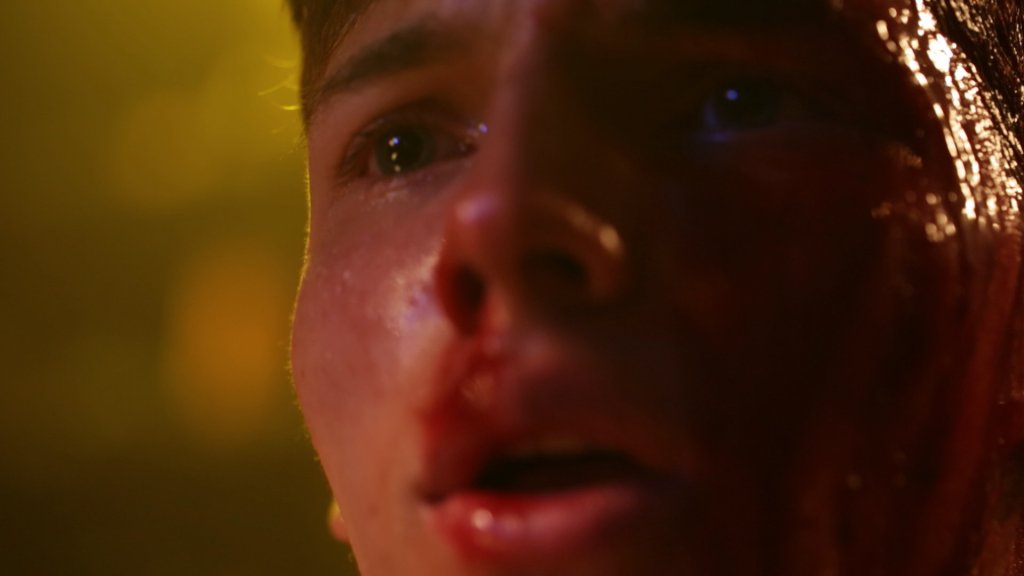
His head was shrouded in cigarette smoke, and when it cleared, it was a frightened face that peered from the hoodie. His eyes were sore from crying and my heart went out to him.
I’d heard stories about people like this, and the extreme measures they might go to. I tried to put him out of my mind and walked past, but the voice of a concerned mother called out for her little boy. I went back and asked him if he was okay.
There was pleading in those troubled eyes, and I realised that little boys grow up to have problems too. He told me that he was fine, and I asked if there was anything I could do to help. He shook his head and stared at the puddle where he’d tossed his fag end.
I wanted to stay longer and help, but I didn’t. These were conflicting emotions, guilt, curiosity, embarrassment. I wanted to put my arm around him and tell him that everything would be fine, but I walked away.
A trembling voice shouted thank you, and I prayed that he would soon find the happiness that had abandoned him.
Charlie has been nice to Levi, and he offered to take him out for the day in his Austin A35. Reverse psychology. If he’s nice to Levi, then Levi won’t tease him about having a crush on him. Levi has also been pleasant, and the other day he stood over Charlie and told him that he liked his paintings.
They are both playing mind games, and I am blissfully aware that they are using me to do it.
Whilst eating breakfast yesterday, Levi appeared in his underwear. He put his arms around me and whispered something in Polish into my ear. It sounded romantic but I don’t understand the language, and neither does Charlie, and Levi might have said anything. Charlie gave him a dirty look, and politely said, “Good morning. I hope that you slept well.”
Last night, we all stayed in and watched a movie. It was a low budget slasher film in which a teacher with a class full of unruly sixteen-year-olds finally snaps. One night, as two boys are walking home, he strikes, and drags them to a lock-up and cable-ties them to a desk. Thereafter, he gives the lesson of a lifetime, and if they get a question wrong, he drives a nail through the palms of their hands.
I shared the sofa with Charlie because Levi had occupied the chair where he would normally sit. Halfway through, Charlie stretched his legs and placed his bare feet on my lap. “Would you massage my feet please?” I was taken aback because this was out of character for him, but I obligingly rubbed and kneaded while he oohed and aahed. He’s got nice feet and moisturises them with something called Udderly Smooth that I presume is made from cows.
At that moment, the teacher used a nail gun to drive a six inch nail through one of the boy’s necks, causing lots of blood and gore to spew from his mouth.
“I find this kind of thing quite homoerotic,” Levi said.
“He is only massaging my feet,” gloated Charlie, “so there is no need to be jealous.”
“I wasn’t talking about you. I’m referring to boys covered in blood and driving nails into them.”
I went to bed and was listening to Troye Sivan on my headphones when Charlie appeared with a copy of The Hidden Michelangelo under his arm. “I’ve come to say goodnight,” he said, “and then I am going to read in my bedroom.”
I thought it was rather sweet because he’d never done this before.
Almost immediately, Levi brushed past him, and gave me a peck on the cheek.
He winked at me and squeezed Charlie’s backside as he left the room.
Charlie looked bewildered, while Troye Sivan sang, “he’s got the personality, not even gravity could ever hold him down.”
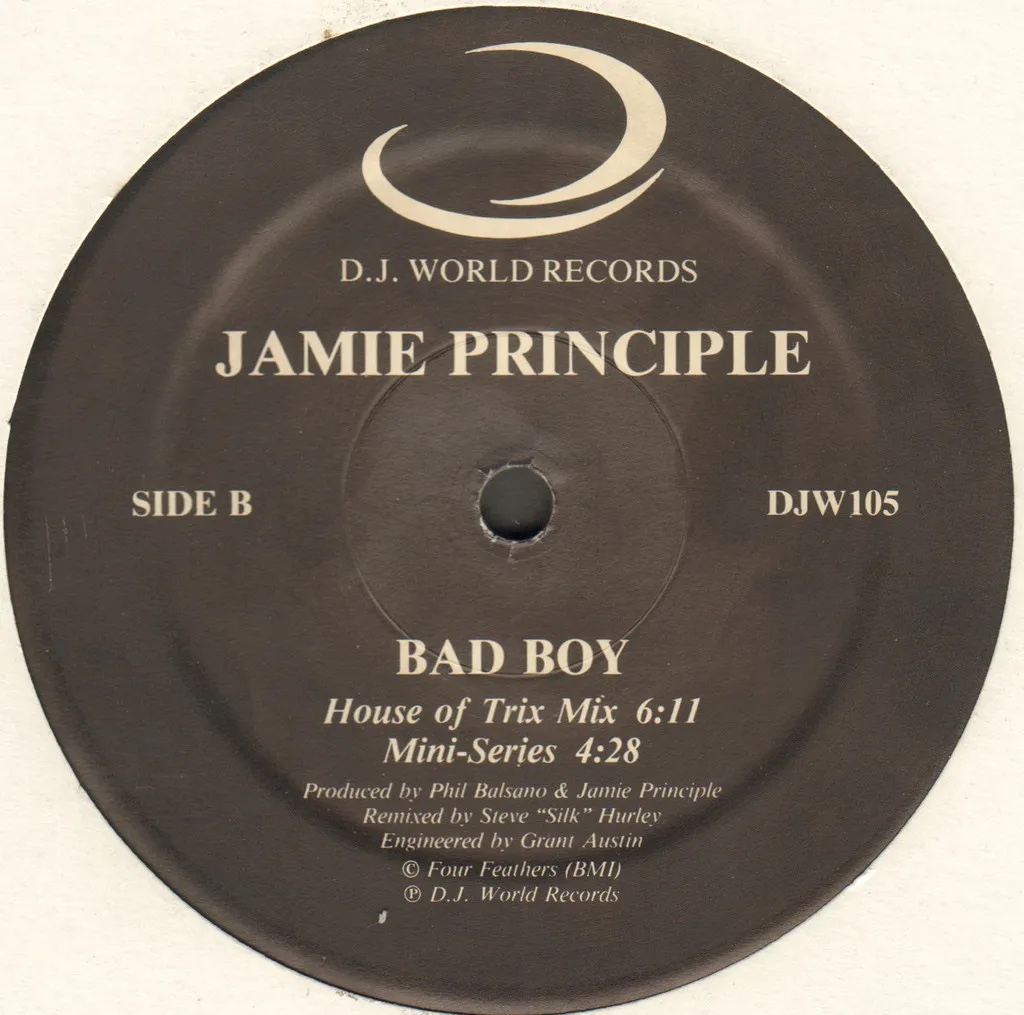
I’ve decided that I’m attracted to anyone who is called Jamie, and I realise that every time I meet a Jamie, he’s always a bad one. There are too many Bad Boy Jamies, and I kind of like that.
Something woke me in the middle of the night. I lay in the dark and there was the fragrance of cologne. It faded, and I tried to get back to sleep, but that lemony scent kept returning. I only ever knew one person that used Pure Portofino, and they had gone. The Angel of the Night was checking up on me… or it might have been the devil in disguise.

Jack Blanton. Image: Bob Hawkins/Remember Cliffside
I once went to a funeral and cried. It surprised everyone, not least Eleanor, because I wasn’t known for sentimentality. She gave me her handkerchief and I blubbered like a baby and everyone in church looked at me. On the way home, she said, “Joe, I didn’t realise that you knew Jack that well.”
There were a lot of things that my wife didn’t know about me. That’s the way things were. It was the last time we spoke about Jack Blanton.
***
It is now Christmas 1941, and that funeral was seven years ago. Eleanor and I are separated, and I only see the boys once a month. For the boys’ sake, she’s invited me to dinner, but a dark shadow threatens everybody’s celebrations because America is at war.
On Christmas Eve, I telephoned her and said that I wouldn’t be going.
At times like this, I needed a friend to turn to, somebody to share my fear of what lay ahead, because I knew that war would come for me. The only friend I ever had was Jack, and he’d left me in 1934.
I sat on the steps of Cliffside Elementary School, where both my boys attended, and thought how quiet and deserted it was at holiday time. It was a far cry from the schoolroom at the textile mill where Jack and I had met as young boys.
We came from respectable families and were inseparable. That surprised everyone because Jack had a God-abiding background whereas I hated religion.
I remembered the words of Pastor Hunnicut as we laid Jack to rest.
“Jack had a cheerful disposition and pleasant smile from which he greeted everyone, from childhood until his last breath, for he died with a smile of love and victory on his face.”
Kindness oozed out of him, and I never heard him say a bad word about anybody.
Jack was smart, cleverer than me, and he might have gone to college, but he was athletic and wanted to be a boxer instead. As kids, we filled an old cloth sack with horsehair and sand, then hung it from the beam of a ramshackle barn. I’d watch while Jack punched the heavy bag until his knuckles bled, prompting his father to buy him his first pair of boxing gloves.
An old pro at the gymnasium taught him how to fight properly, and by the time he turned eighteen he was in boxing tournaments.
I sat in his corner, rubbed his shoulders between bouts, and gave him words of encouragement. In victory, he smiled, and in defeat, he also smiled.
When there was nobody left to fight in Cliffside, we travelled to Charlotte for the big fights. He was twenty when he knocked down Buck Bridgers to win the decision, and the following year he floored Lloyd Parris after two rounds.
Jack was the squarest and cleanest shooter to climb through the ropes, and all the girls adored him, but he wasn’t interested, and too busy to notice that I had gone off the rails.
While he lived his clean-cut life, I had become addicted to illicit liquor that I obtained from a jailbird at Boiling Springs.
The night he mistakenly drank the ammonia used to purify water; I was getting drunk with Walt Parker in his backyard. I heard the next day that he’d only taken a sip, but the doctor said he had to pull out of his fight with Jim Swinson.
I went to see Jack, nursing a headache and racked with guilt, and told him that he needed to look after himself because he was my best friend. That was when he told me he’d met a girl and was going to marry her.
I said that it was a bad idea and promised to get straight if he’d reconsider, but he laughed and asked me to go to the wedding.
Jack married Juanita Crawford at the Baptist Parsonage in Avondale, and everyone was shocked because it had happened so quickly. They looked the perfect couple, Jack with his Italianate looks and slicked back hair, and Juanita with flowers in hers.
She was a sweet girl, but I resented the fact that she had stolen Jack from me.
A few weeks later I got hitched to Eleanor, who said I was worth a shot and thought she could help me mend my ways. It was a shotgun affair and nobody else was invited. Afterwards, I told Jack, and he said that I should take good care of her, but I knew that by not inviting him to the wedding, I had hurt him.
The following year, Jack fought ‘Kid’ Belk for the Championship of the Carolinas at the County Fairground. It was a close contest, but he was outpointed, and I remember the look of disappointment on his face, as if he had let everyone down.
I told him that I was proud of him and to focus on his next fight with ‘Kid’ Belk, but Jack was knocked out in the third round.
He changed after that, as if he knew that he was never going to be a great boxer, and when Juanita became pregnant, his priorities shifted to finding a good job. But these were bad times, with long unemployment lines, and work was even harder to find for a twenty-three-year-old.
This despondency might have sent Jack the same way as I had, but he never touched a drop of liquor. The Cliffside Baptist Church was his escape, getting involved with all sorts of activities, and attending prayers every Sunday and Wednesday.
He trained young boxers at the school gym and was excited when he discovered the next Carolina Carnera, a young boy called Walter ‘Bill’ Hamrick.
We went fishing like the old days, and talked about our childhood, the failures, and our hopes and dreams.
“Sometimes our disappointments turn out for the best. I see now that it was best that I did not continue boxing,” he said.
With no job, and the need to make ends meet, Jack joined Roosevelt’s Tree Army, and spent eighteen months planting trees and shrubs near Forest City.
Before he left, he grabbed me by the shoulders and looked me straight in the eyes. ”Joe, I love you like I do my brothers, Bill and Jim, and my sisters, Georgia, and Lillie-Bell. If ever you are in trouble, you must call me.”
Jack received a monthly salary of $30, of which $25 was sent to Juanita to help buy food, clothing, and fuel.
When he returned, his church connections landed him a job as supervisor at Cliffside Waterworks, as well as becoming the district milk inspector.
The last time I ever saw Jack, he showed me the Charlotte Observer and a photograph of his young daughter, Peggy Louise, who had been chosen as a Cliffside mascot. She smiled like her daddy did, and I knew that Jack had reason to be proud.
A few weeks later, I did something bad, and killed a man who stole a dollar off me. I punched him on the jaw, and followed it up, punch after punch, like Jack had shown me. I left him in an alleyway and got drunk with Walt who said he would give me an alibi.
That night, I went to see Jack because he would know what to do.
“He’s sleeping, Joe,” Juanita said, “He’s sick. He’s got real bad stomach pains.” I pleaded with her to let me see Jack, but she refused to wake him. “I’ll tell him you called as soon as he’s well again.”
Jack never did get better.
On Monday afternoon he was rushed to the Rutherford Hospital where doctors operated for appendicitis, but they said gangrene had already set in. He died a few hours later.
I went to offer my condolences to Juanita who was comforting Peggy Louise on the porch.
“He could never see the bad in you, Joe.”
She gave me Jack’s boxing gloves with their brown patina and cracked leather.
While I was leaving, she called after me.
“Why do good men have to die, Joe? Why isn’t it the bad ones?”
***
Back on the steps of the Elementary School, the light was fading, and snowflakes had started to fall.
I reached into the inside pocket of my jacket and pulled out a faded photograph. It was a photo of Jack, taken at a studio on Drug Store Street, a few days before his fight with Jerome Spangler. That would have been about 1930 when he was twenty three.
His fists are raised, eyes down, and I won’t forget that thick black hair that reminded people of a matinee idol.
He was wearing red boxing shorts that were tightened with string because he had been too skinny. On them, were the sewn-on letters ‘LB’ – Lawrence ‘Jack’ Blanton – that his mother had once cut from black cloth.
I once read a book and threw it away. That was twenty years ago, and I’ve regretted it ever since. Each chapter was a letter to the author’s seven lovers, and I’m thinking about doing the same.
My relationships have tended to be long, and as one lover left, the next one came along, and that means there will only be five chapters.
There is more mileage writing to the ones I really wanted, never managed to get, and who never wanted me.
These were the ones I couldn’t stop thinking about, who scarred me, whom I idolised without really seeing them as they were, as individuals with flaws and undesirable characteristics.
I remember them as the ones I loved, and hated, because they weren’t interested.