
An editor’s note co-written with Walter Kirn, editor-at-large, of the County Highway that has gone back in time by launching a print-only broadsheet that is available in book and record shops across the US and Canada.

An editor’s note co-written with Walter Kirn, editor-at-large, of the County Highway that has gone back in time by launching a print-only broadsheet that is available in book and record shops across the US and Canada.
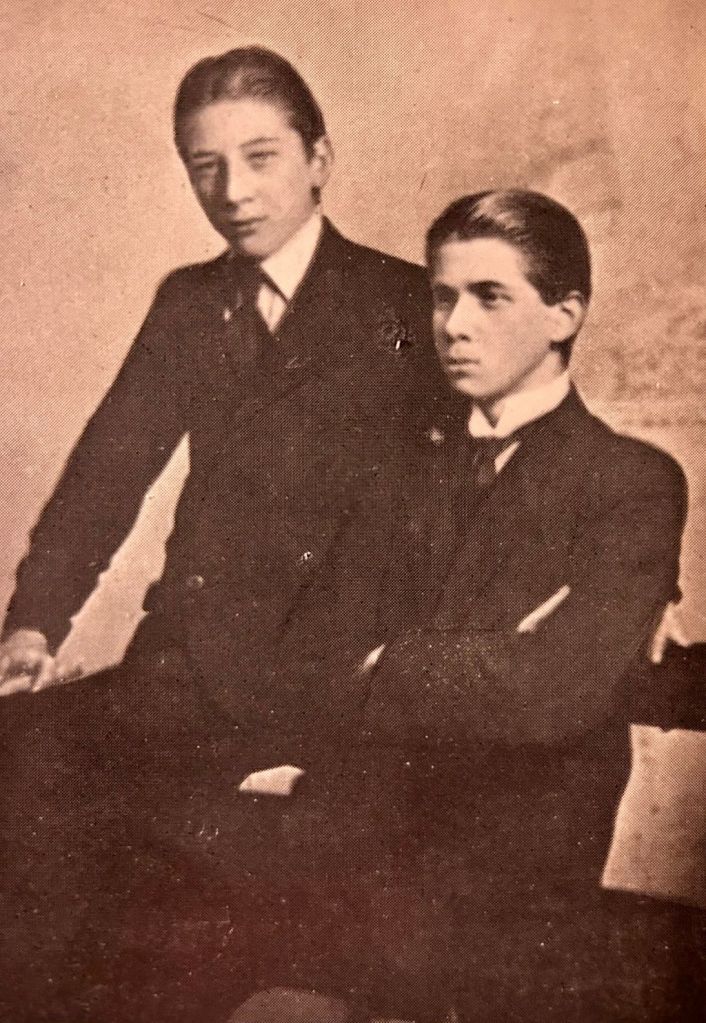
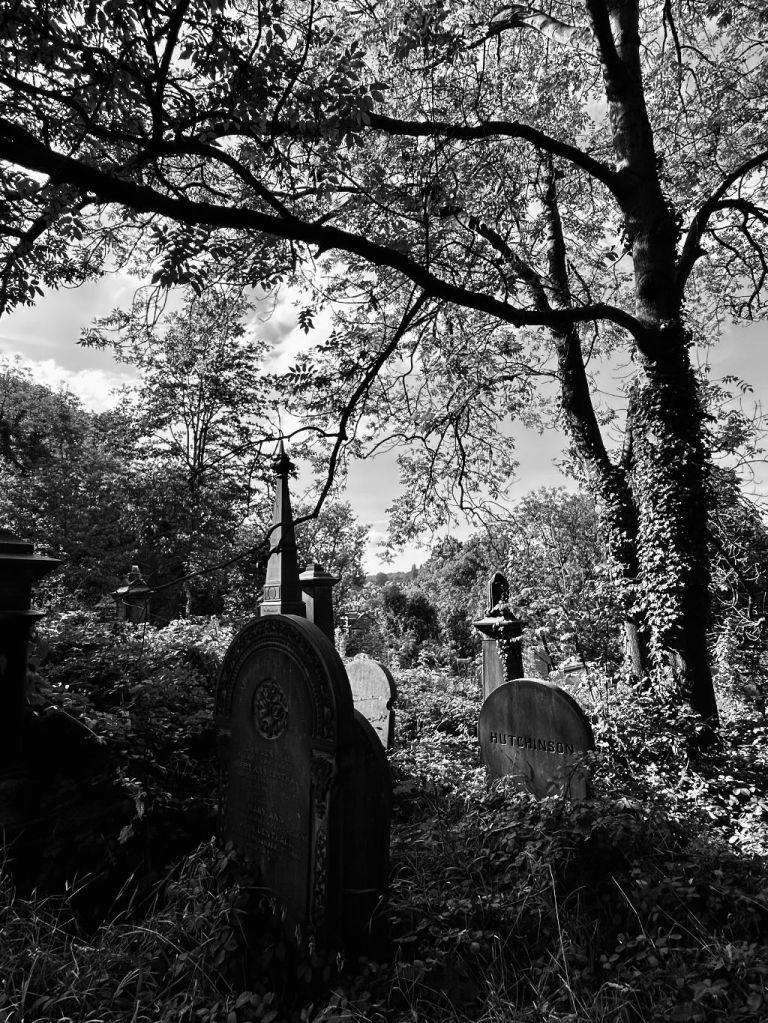
I’m on good terms with William and Julian Percy. We’ve had an intimate relationship these past four years. I was fourteen when I found them. It was a spring day, and I took a shortcut through the cemetery when I wasn’t supposed to. My mother had said it was out of bounds. Bad things happened to boys who wandered here, but she never said what these bad things were. As a child I imagined dead people crawling through the undergrowth, walking amongst graves, hiding behind crumbling monuments, ready to pounce on little boys. As I got older, I realised it wasn’t the dead that I needed to be afraid of, but the living.
I’ve come to believe that William and Julian called me that day. Voices from beyond urging me to leave the rough path and clamber over graves and through waist-deep brambles and nettles until I was lost. The sun shone and birds sang a ripe chorus. Amidst this secrecy was the long forgotten grave of William and Julian Percy who beckoned me to sit on the warmth of their heated stone.
I read the carved inscription: –
Here lies William Percy 1900 – 1918. Also, Julian Percy 1901 – 1918
“The sorrow we felt we cannot explain,
The ache in our hearts
Will always remain.”
I realised that they had been brothers, but only recently did I understand that they had been victims of that Great War.
I used to think that their bodies lay side by side, but the narrow tomb wouldn’t have allowed that. They were undoubtedly on top of each other, their brotherly bodies had rotted until they became one, their skeletal remains intwined.
These boys had been loved, mourned, and eventually forgotten. Nature had claimed their bodies as well as their final resting place.
The grave had sunk, and small holes had appeared where the stone had shifted. I peered into the blackness hoping to see something. I reached inside but they were merely hollows where I would later hide cans of Stella and packets of Marlboro Gold.
I came here daily and talked to William and Julian. I shared my secrets and thoughts, and told them about my small world. They always spoke back to me.
They didn’t mind me coming because they liked me and I they.
I don’t see them as skeletons anymore. They are handsome young boys who gave their lives for their country. They remain out of sight during the day, waiting for me to visit, and when darkness falls and owls call from the trees, they come out and roam amongst their friends.
They were musical. William played the cornet and Julian was expert at the violin, and their instruments were buried with them. Was this true? I like to think so. I’ve played them the music I listen to – Bring Me the Horizon, YUNGBLUD and The Reytons – and they smile at the Yorkshire accents because it reminds them of people they once knew.
They didn’t mind that long hot summer when I sunbathed naked on top of them and drank a full bottle of wine I’d stolen from the corner shop and fell asleep until I burned red.
They liked it when I read the opening paragraph of a cool book I found in Oxfam.
“Last night, I fell out with Amy when she caught me sucking her boyfriend under the table of some stinking Euro-pop club in not so gay Paris. She’d been going out with him for five days and claimed he was straight. But as soon as I clocked how much eyeliner he had on, I told her the only place he was going was straight to a gay bar.”
They’d both laughed and made me recite the whole book over the next few days.
Today, they want to have a serious conversation.
“We’ve really enjoyed your visits,” said William.
“It’s been lovely to talk to someone after a hundred years,” interrupted Julian.
“Yes,” said William, “But the time has come when you will no longer be able to come and talk to us.”
“What do you mean?”
“What we’re saying,” said Julian, “is that today is the anniversary of our deaths, and we realise that we might have misled you into thinking that we were soldiers who died at war.”
“But that wasn’t the case,” said William. “Yes, we both served our country and were scarred but came home unharmed.”
“I don’t understand.”
“Remember when you came to us a few years ago and spoke about a pandemic and you were forced to stay at home for months?”
“Lockdown,” I agreed.
“But you still came to see us every day,” Julian commented, “And we didn’t feel it was the right time to tell you the truth about how we died.”
“How did you die?”
“Well,” continued William, “we both died of influenza, a dreadful disease that one of us picked up in France.”
“The Spanish flu?”
“That’s what they called it,” said Julian, “and it was an unpleasant experience that turned into pneumonia, and ultimately our deaths.”
“Julian got it first and I sat beside his bed while he slipped away, and then I became ill and by the end of the day had surrendered to it as well. We had each other, but our parents were heartbroken.”
“You see why we didn’t want to frighten you before?” asked Julian.
“That’s so sad,” I told them, “But I’ll keep visiting.”
“Yes, you can visit, and I hope that you shall, but I’m afraid that we won’t be able to speak with you.”
“Whyever not?”
“As the oldest, I was eighteen years old when I died. How old are you now?”
“I’m eighteen, almost nineteen.”
“And come tomorrow you will have lived a longer life than I did, and that means that our ability to talk must come to an end.”
“But what about Julian? He was only seventeen.”
“Alas,” said Julian, “Brothers must stick together in life and in death and where my brother goes, I shall follow.”
“You’re both leaving?”
“We move on, somewhere else, but we shall occasionally return to see our final home. And you shall get on with your own life and in time will forget we ever existed.”
I left the cemetery. Angry, dejected, and sad. I never even said goodbe. And, as I crawled through the familiar undergrowth, the day darkened and spots of rain started to fall, and I swear that I could hear a tune somewhere behind me. It was played by a mournful trumpet and a sorrowful violin.
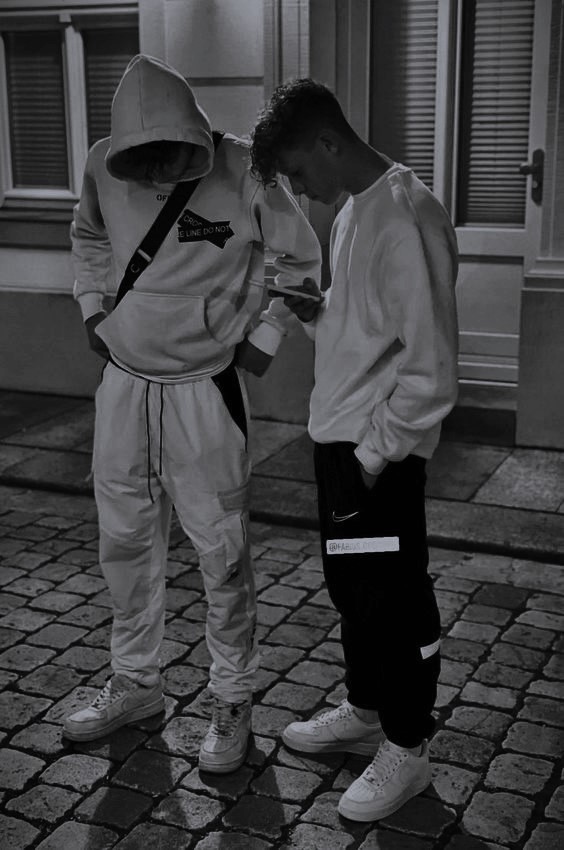
The boys with the bling. In you came, with your coloured VKs and a hint of nervousness in those childlike eyes. I watched because you might have been young lovers.
There are two personalities here. The one who likes to show off, and the sweet one who is content to sit and watch him.
The smaller boy dances, puffs on a vape, and makes ‘v’ signs to some gangster shit. His unobtrusive friend is made to take videos of him that will end up on Tik Tok. Then the extrovert shouts “Newcastle!” in a voice that cracks, and then I realise that the Magpies have stuck eight goals past United.
These are the boys.
The last of the many who celebrated into the night and one by one, they fell away, drunk, bleary-eyed, until only these two Geordie Angels remained.

Enthusiastic boys, unaware that they are being watched from a distance.
Energetic boys who don’t appreciate the luck they are blessed with.
Passionate boys who are not like the persona they project.
Naughty boys who talk like gangstas but are deep-down sensitive.
Fashionable boys with silver threads around their necks, who dress like they think they should, and not how they they would like to. Moschino, Hoodrich, North face, Stone Island.
Boys who stuff their hands down their underwear because they think it makes them hard. Boys who pretend their sweet smelling piss and cum fingers are guns.
Handsome boys who don’t understand that they are ancestral sons of Adonis who grew up on our council estates.
Boys who like boys, but must like girls, who are always fat girls.
We are envious, and we weep at the unfairness of it all.


There was a time not so long ago when I was alone. The apartment was mine only. It is big and lonely, not that I spend much time in it, but it’s a place where I can retreat.
That was also a time when I had more money. It’s easy to save money when you are living alone.
That changed the day Charlie from Paris arrived in his old Austin car. He needed somewhere to stay for a few weeks and everyone thought my big apartment was the solution.
I agreed and I gave him a room and bed, a door key, and the run of the place. Charlie liked it, and it was soon apparent that he had no intention of leaving.
A van appeared one sunny morning and a man said he’d got several boxes for me. Not for me, you understand. There were about fifteen neatly packaged crates, each containing books, DVDs, vinyl records, and lots of clothes.
Charlie spent hours unpacking his possessions and carefully placing them around his room.
The following week more boxes arrived containing canvases, paint brushes, sketch pads and more clothes.
Charlie had moved in, and I didn’t really mind.
“This apartment has character,’ he said. It does have a charm about it but he’s never offered to pay for his stay. Nor does he pay for the food that he eats.
Charlie’s way of saying thank you is to offer small gifts. A poem he’s written, a picture he’s painted and sometimes a book he’s seen and knows I will like.
It’s all quite nice really.
‘We are like a couple,” he once joked. Except that we aren’t because I continue my liaisons with other men, and Charlie keeps disappearing to London and Paris to visit galleries. I never ask him what else he gets up to.
He always comes back.
Most people think we are a couple, and that is a nice thought. They think our nights consist of sharing a bed and being lovers. We aren’t, but I’d like to think that one day we might be.
Am I jealous of Charlie? I’m beginning to realise that I am.
He’s announced that he’s going to Barcelona for a week in September. He showed me photos of the hotel he’s staying in. The Monument Hotel. Four stars and all that. I asked him how much it was costing and he said it was only €800 which sounded a lot. I checked out how much that would be in English pounds and it came to £700 which still sounded a lot.
“You don’t mind me going away?” Charlie asked.”I need a holiday.”
I wanted to say that I did mind. That I would like to go with him. That I need a holiday more than he does. That he can afford to go because he’s living for free. That I can’t afford to go because I pay for everything.
I said none of these things.
“It sounds wonderful,” I said. “I hope you have a lovely time.”

How can someone who says he is Polish be called Levi? What’s more you have more of a Yorkshire accent than I do. Yet you tell everyone that you are from Poland. The fact that you say it all the time suggests that you are probably lying, or at least living in some fantasyland.
When I first met you, you bounced. It was like you jumped from a distant place and landed right into my path. That boundless energy makes you bounce. Never standing still, jumping from one person to the next, and you tell each one that you’re Polish when you’re clearly not.
Last night I came across a chubby guy, early twenties, who had a broken arm. He stepped out from a dark doorway and caught me by surprise and I nearly punched him. He looked me up and down and I knew that somewhere about his person would be a knife.
It was a quiet backstreet, nobody around, but you bounced from nowhere. I was preparing to fight, and then you presented yourself as if it was the most natural thing to be there.
“You’re a fat pussy,” you told the lad.
“Shut the fuck up, Levi.”
“How did you break your arm, Szymon?”
“I broke it arm wrestling.”
“Leave my friend alone, Szymon.”
I looked at you. “Where did you come from?
“I followed you.”
The lad called Szymon looked uneasy. Two against one, and he had a broken arm.
“Why do you do this to me, Levi? I have never disrespected you. Why do I not disrespect you? Because you’ve never disrespected me before.”
“That’s not true Szymon. I’ve never liked you because you are a Polish cunt.”
“You disrespect a fellow countryman?”
“I disrespect those that threaten my friends.”
Szymon looked at me. “Spierdalaj! I will let you off this time.”
Szymon slipped back into the shadows and I was left looking at you with your cheeky grin and slightly protruding ears.
“Why did you follow me?” I asked.
“Walk with me,” you said. “There is something I want to ask you.”
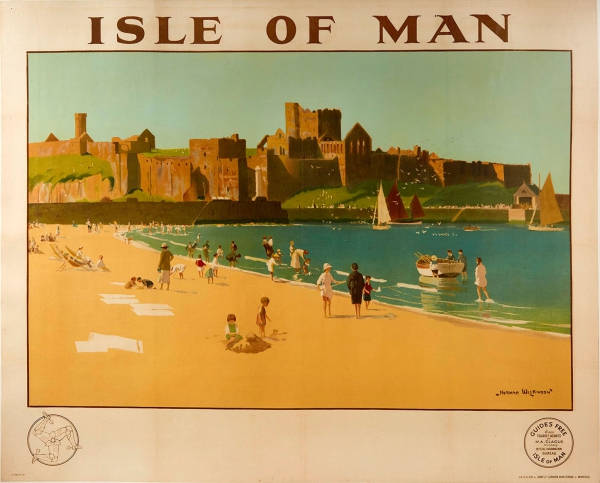
“The weather’s pretty shitty in the Isle of Man. It’s a fact,” said the young lad. “It always rains and is colder than the mainland.” He blames the Irish Sea. He’s having a good time away from home but finds the busy bars here claustrophobic. There is more room to breathe when you live on an island. When I ask why he’s here, he says he came to see Jeremy Corbyn at The Leadmill. I think, why the hell would you travel all this way to see Jeremy Corbyn? Is Corbyn a bloody singer now? Is that why he’s at The Leadmill? Get a life. The lad starts talking about politics which is unusual for someone so young. My eyes glaze over and my replies to his questions are predictable and uninteresting. I’m bored, and I wish he’d tell me how fantastic I am instead.
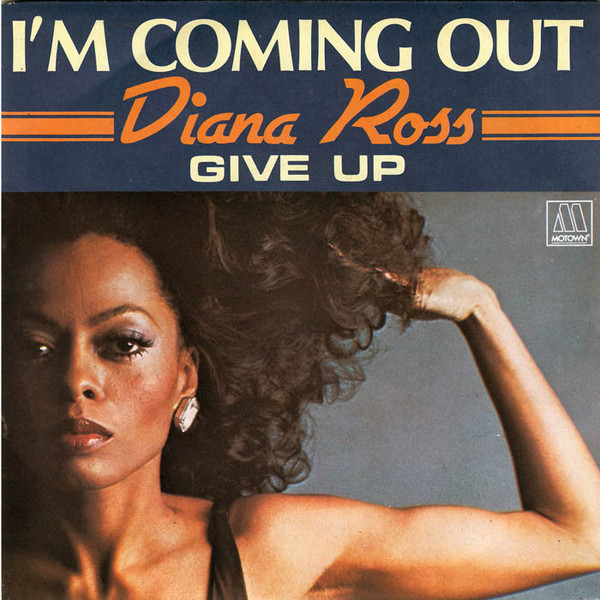
‘I’m Coming Out’. I think that the crashing drum beats at the beginning are bloody marvellous. I think that Nile Rodgers was pissed off that they remixed his song and that Diana Ross was a difficult bitch to work with. She didn’t realise that ‘I’m Coming Out’ was a gay thing. I think that it should have been sung by a man. Johnny Mathis? But he made an album with Chic in 1981 and it didn’t get released until 2017, so Nile Rodgers might have been pissed off with him too. He probably thought, fuck these big stars next time.

Last night, Jeff Buckley visited while I slept and he climbed into bed beside me. I told him that he was dead, and he whispered gently into my ear. “That’s for the best. If I was alive I’d be 57-years-old and you might not like me anymore.”
 Perfectly Hard and Glamorous