The people who excite me rarely seem interested in me, while those I feel nothing for often are. It’s a familiar paradox. Attraction doesn’t always align; sometimes it’s a mismatch of types, sometimes it’s the pull of emotional unavailability. I keep finding myself drawn to people who can’t—or won’t—choose me.
The sensible answer is obvious: stop chasing. Put that energy back into my own life instead of pursuing people who remain out of reach. Still, it’s irritating to realise that the very traits I possess—traits that don’t necessarily fit my own ideal—might be exactly what someone else has been looking for all along.
Harry Oldham is writing a novel based on his criminal and sordid past. To do so, he has returned to live at Park Hill, where he grew up, and the place that he once left behind. That was then and this is now, in which the old world collides with the new.(Parts 1 to 18 are available to read in the menu)
Perfectly Hard and Glamorous – Part 19
April 1984 When you look back over a life, there’s always a year that stands out. My annus mirabilis was 1984. Not that anything exceptional happened. But things were happy, and I was rolling in money.
It was also the year I turned eighteen.
Now I’m about to turn sixty, and it feels like a distant memory. Almost a life that belonged to someone else.
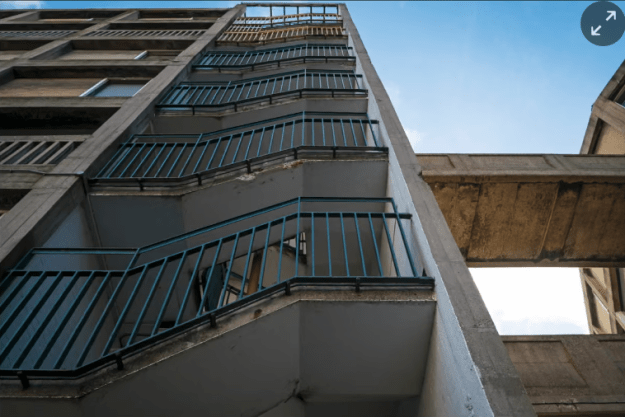
I remember one April night. The days were getting longer, and when darkness fell the sky above Park Hill was clear and moonlit, the air sharp with a chill. I leaned on the balcony rail and told myself something I had started to believe.
I was a male prostitute.
That didn’t bother me.
I thought about all the names people might have used to describe me. Queer. Faggot. Bender. Nancy boy. Shirt-lifter.
None of them applied.
Because I wasn’t any of those things.
I was straight.
Anyone could see it. I was a good-looking lad who could get any girl he wanted. That was obvious to everyone.
Especially Andy and Jack.
That year I’d become a bit of an enigma to them. I still hung around with them like I always had, but they didn’t know what I was really doing. None of us had jobs—we were living on the dole. Wasters, really. Nothing to do and nowhere to go. Boredom got us into trouble more often than not.
Our parents hated it.
But I didn’t care.
I didn’t need a job.
I always had money.
More than enough.
Andy and Jack couldn’t work it out. They didn’t understand how I could afford to go out most nights. What annoyed them even more was that I never invited them along.
We’d grown up together. We knew everything about each other.
Or at least they thought we did.
Andy took it the worst.
One night he punched me in the face. We were walking down the street when he suddenly turned and landed one on my chin. I charged at him and shoved him over a wall before Jack managed to drag us apart.
Later Andy said he didn’t know why he’d done it.
But I knew.
He could feel there was something about me he didn’t understand anymore.
Something I wasn’t telling him.
And there was Paolo.
I’d kept him away from Andy and Jack for a reason. If they ever met him, it would be game over.
Paolo was my work partner.
And because I kept telling myself I was straight, I hadn’t admitted something else.
He’d also become the person I cared about most.
Things had changed the year before. One side had been taken out… and those of us left were requisitioned by the survivors. Frank Smith had it all planned. Stage one complete. Now on to stage two of his masterplan.
The new world he dragged us into was worse than anything before.
But it paid.
Men didn’t just watch anymore—they wanted us. Big houses. Fancy mansions. Weekends filled with food, drink and sex.
A lot of sex.
And money.
So much bloody money we didn’t know what to do with it.
Sometimes it felt like we’d already sold everything there was to sell. Our innocence. Our dignity. Our bodies.
But every now and then we escaped from it.
One night Paolo curled up beside me in the back of a big Ford Granada and asked if he could stay at my place. His black curly hair brushed against my cheek, and I realised I liked it.
My parents were away visiting relatives in Skegness, and my younger brother Adam was off somewhere up north on a school trip.
There was no reason to say no.
Besides, I wanted him safe.
Photograph: David Sillitoe/Flickr
We got dropped off on Duke Street and walked in silence to my parents’ flat. Paolo had his coat wrapped tightly around him and a scarf pulled up around his neck so that he looked like one of those preppy American boys from the films.
I didn’t know much about the place where Paolo lived.
But when I opened the door to ours it smelt of burgers, chips and stale cigarettes.
I suddenly felt ashamed.
Paolo grabbed my hand like a frightened kid and let me pull him inside.
The flat was silent.
What we were doing felt wrong—but exciting at the same time. The same thrill I used to feel when the Geisha Boys broke into someone else’s place.
Except this time it was my home.
Paolo stayed close while I switched on the lights, hoping nothing embarrassing would reveal itself.
We were both bruised and exhausted. He asked if he could have a bath.
“I need to wash them off,” he said quietly.
The dirty old men.
I nodded.
He went into the bathroom and turned the hot tap full on. It ran loudly for a while before suddenly stopping.
“Harry?”
His voice echoed down the hall.
“Where are you? Come here.”
The door was unlocked. Paolo was sitting in the bath hugging his knees.
“Are you going to join me?”
I shook my head.
“Harry… I’d really like you to get in with me.”
So I undressed and climbed in.
It felt strange. We both knew every inch of each other’s bodies, but sitting there face to face suddenly felt awkward. I stretched my legs either side of him and he rested his elbow on my knee.
“The first time we met,” he said, “you hit me.”
I remembered.
“I didn’t know you, did I?”
“Would you ever hit me again?”
“No,” I said. “And now I’d hit anyone who hit you.”
Paolo smiled at that.
“I love you, Harry.”
I grimaced.
That was what Geisha Boys were supposed to do.
We slept together in my single bed that night. Nothing happened. He held me all night and I kept my arm around him. When he finally fell asleep, I rested my chin on his thick curly hair.
For a moment I felt something close to peace.
It didn’t last long.
The next day Andy called me a faggot.
He’d seen Paolo go into my flat.
“Who the fuck was that you took home?”
This time I hit him first.
I punched him so hard his nose burst and blood ran down his chin.
“You’re a cunt, Andy. That was my cousin.”
He didn’t believe a word of it.
“You’ve gone fucking weird,” he said.
Later Jack rang.
“Harry, you’ve busted Andy’s nose.”
“He called me a faggot,” I said. “And I ain’t no faggot, am I?”
“Nah,” Jack said. “I told him that. But he’s still pissed off with you.”
I couldn’t tell Jack the truth.
Mostly because I didn’t know it myself.
I wanted to say something else.
Do you remember Mr Johnson who taught us English? Let me tell you something, Jack. Last week he fucked me up the arse. Yeah. Our school teacher rammed me from behind.
But I ain’t no faggot.
But I couldn’t say that.
Could I?
I also remembered something else.
Years earlier we’d all been drunk at a party and ended up piled together on a sofa. We were messing around, laughing.
Then Andy and Jack kissed each other.
Properly.
Tongues and all.
That pissed me off. I stormed out and walked the streets for an hour because I was jealous.
But that didn’t mean anything.
Did it?
“A penny for your thoughts, love.”
I was sitting in June’s kitchen stirring a mug of tea far too many times.
“I’m a bit confused, June.”
“Is it Frank?” she asked.
“He’s the least of my problems.”
She smiled.
“So that means you’re thinking about Paolo.”
I gave her a look.
“Paolo’s a jewel,” she said. “And you, Harry, are a rough diamond. But when you put the two together something beautiful happens.”
“I ain’t queer, June.”
She didn’t argue.
“But you care about him,” she said gently. “And there’s a fine line between caring for someone and loving them.”
“It’s all a mess.”
“Is it?” she said softly. “I don’t see why.”
She leaned forward slightly.
“Paolo is a wonderful person. And I think—for the first time in your life—you’ve met someone who adores you exactly as you are.”
I looked down at my tea.
“Accept that,” she said. “Give him the chance.”
“And what happens then?”
June sighed.
“Harry… I don’t like what Frank’s doing to you both. I’ve told him so. But despite all that…”
She paused.
“I think something unexpected has happened.”
“What?”
“You’ve fallen in love with him.”
I laughed at that.
But June didn’t.
Frumpy old June—with a voice like an angel—had just told me the truth.
The thought had never even occurred to me. I genuinely just assumed he wasn’t interested. That was the simple explanation. I made a move, Oscar politely declined, and I retreated into my own embarrassment like a responsible adult.
But Alfie wouldn’t let it go.
“There’s a lot of energy around you,” he said. “It makes people feel exposed. They don’t always know how to handle it.”
I laughed it off at first. It sounded dramatic. But later I started replaying things.
I had been too focused on not humiliating myself to notice the details. The pause before he answered. The way he clenched his fists. The fact that he held eye contact just a second too long before looking away.
Alfie had noticed.
“There was interest,” he said carefully. “But when he realised it might actually become something real, he pulled back. Did you see him blush?”
I hadn’t. I’d been too busy overthinking my own tone of voice.
“He wasn’t rejecting you,” Alfie continued. “He was protecting himself.”
I don’t know. Maybe that’s giving him too much credit. Maybe it’s just a way of coping. But when I think about it now — the way he looked at me before he looked away — it didn’t feel cold. It felt cautious.
“He finds you intimidating,” Alfie added. “Magnetic. But intimidating.”
Mainly I strive to show by deed and word How great my love for you, how deep and strong; Daily you hear my heart’s one passionate song, And still pass on as though you had not heard; Your slightest smile, your gentlest glance can gird My suppliant life with joy that lingers long, – You touch my hand, and straight a gladsome throng Of hopes are born, and all my soul is stirred.
But ah, you do not understand nor see, And when my looks of my devotion tell You deem it but some pitiful wayward spell; Love comes not my interpreter to be, And in your eyes, because you love not me, My greatest fault is loving you too well!
From Love in Earnest – Sonnets, Ballades and Lyrics by J.G.F. Nicholson (1892)
Ignacio Martínez Moreno, in Uranian Poetry: The Homosocial and Homoerotic Paradox (2020), describes John Gambril (Francis) Nicholson as “a prisoner of his feelings, only able to express them through poetry.” Hopeless Love reveals a form of homoeroticism in which the lightest touch can unleash a flood of feeling—emotions that need not be reciprocated to ignite passion within the poetic voice.
Oh yes, I know this all too well.
I perceive beauty where others see none. I feel a desire that no one else seems able to recognise. He is the pearl concealed within a hard exterior. Through close proximity, a sense of deep familiarity takes hold, awakening attraction and affection that override his less generous qualities.
It is an obsessive infatuation, one in which reciprocation will never arrive—because he refuses, or is simply unable, to see the effect he has on me.
And no matter how hard I try… it is not recognised.
“A bore is someone who deprives you of solitude without providing you with company.” – Oscar Wilde
Why do people talk shit and think that I am interested? The problem is me. I sit and listen and do my best to look interested, but it gives them an excuse to come back and talk even more boring shit. I need to stop being a drip tray.
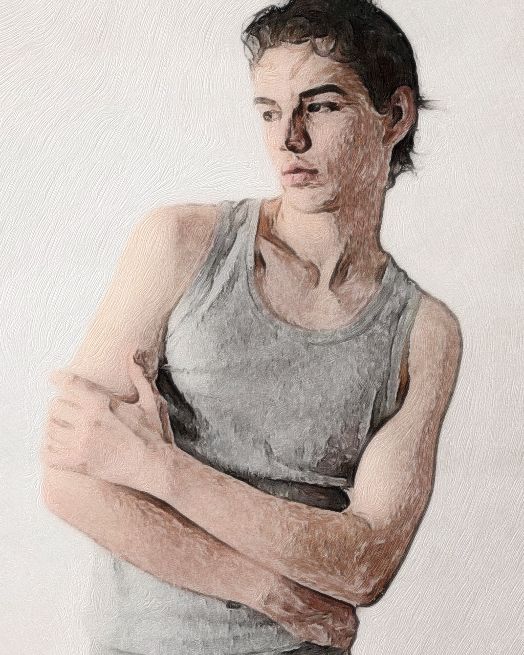
Steven Polaris Buitrago by Studio Pegasus and Eroticco in ‘Daring Pool Day’
“In my 20s a few days after I moved to LA. I met Josh. Someone who changed who I am today. Someone who changed my life. We both fell in love. He took me away from the nightlife and from the gay adult industry, I thought I was gonna get into. Josh was on top of my life from the day I met him. During those five years, Josh put me to college, took me on trips, took me to the doctor, and had my bad teeth fixed. He literally gives me all his 30s and I give him part of my 20s. It was beautiful and I learned so much from him. We spent five amazing years together but like everything, it had an end and we ended it. It was a beautiful breakup. It was mutual. And in some way healthy.”
When you look at boys, do you really look – do you look in detail? People see Bradley and assume that beauty must imply intelligence. It doesn’t. The truth is, he’s a bit of a himbo. There’s a Yorkshire saying for people like that: “thick as pig shit.” And Bradley, I suppose, fits it perfectly. He smiles – handsome, devilish – with a guileless sense of wonder. But how long can I keep swallowing my frustration? Physical attraction fades quickly, and I realise the only role he can play is arm candy: a beautiful body, empty-headed, ornamental.
A flicker of FOMO. A spoiled rich boy invites everyone to a birthday dinner, and I’m left out. I wasn’t meant to be there – and I wasn’t. Everyone’s buzzing, and no one gives a fuck whether I’m there or not. Still, life goes on. I grant myself a little grace, even if there isn’t much to give. Let them, I tell myself. Let them spend obscene amounts of money, drink too much, and throw it all up later. I’m in charge of my own happiness. I have a ‘wonder mind’. I buy prawn linguine, a tub of Ben & Jerry’s Chew Chew ice cream, and watch Fellini’s La Strada instead.
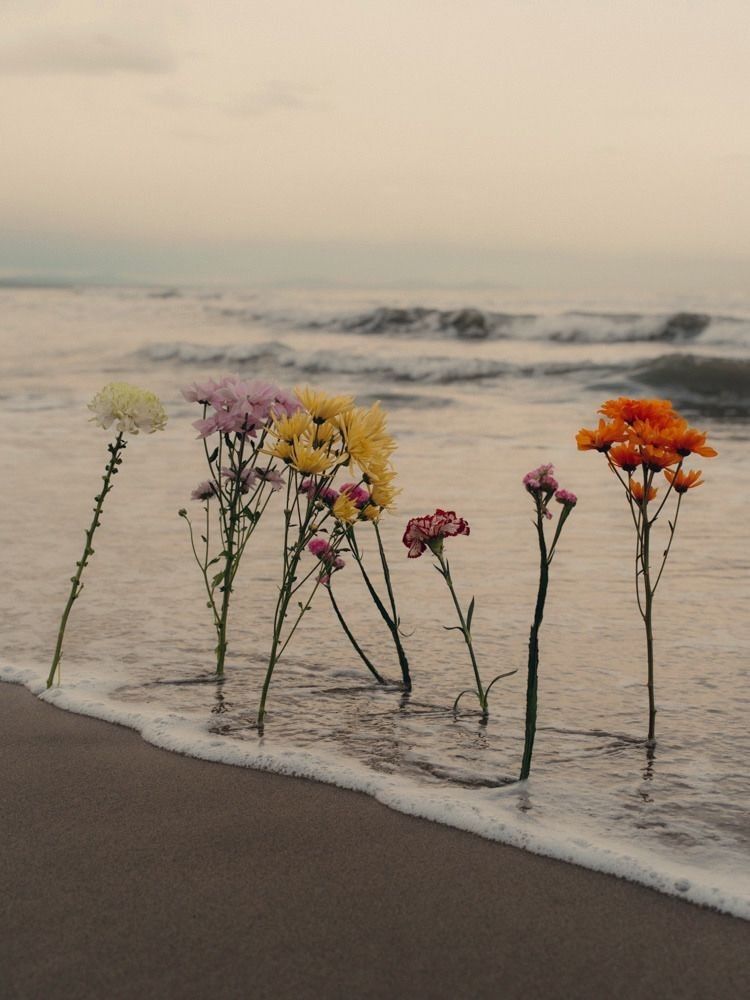
I placed the flowers in Robbie’s memory on the sand, arranging them slowly, as if touch still mattered. The tide crept in, cool around my ankles, withdrawing and returning with a rhythm that felt almost deliberate. This was a special place—not because it was beautiful, but because it had once borne the weight of our closeness, and even now seemed to breathe with it.
“Bambino carissimo: – Will you come and stay with me in Florence? A revederci carino.”
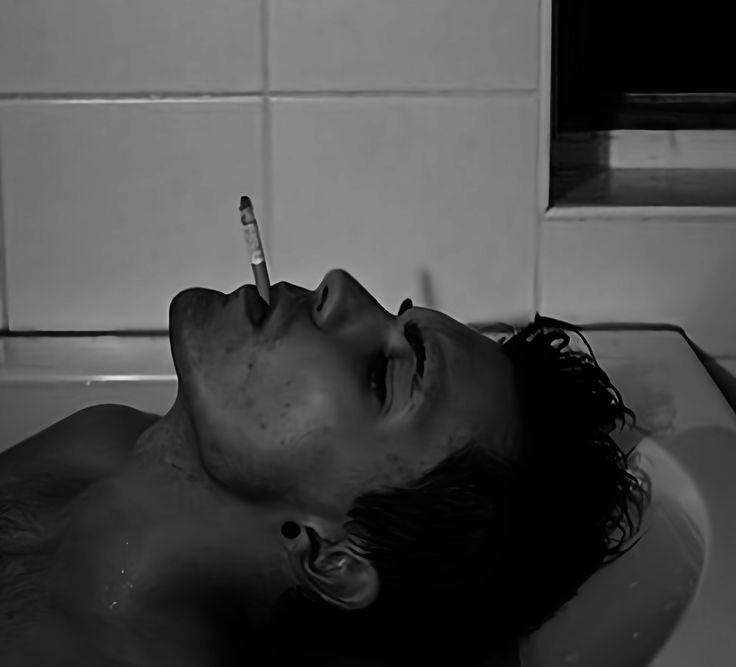
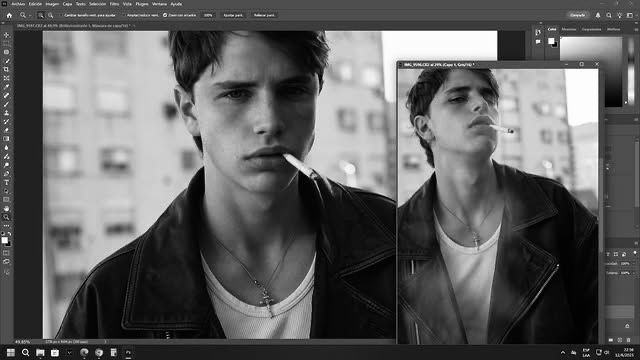
Players I send thee cigarettes for thy delight. Smoke my belov’d and think awhile of one Who thinks and dreams of thee from sun to sun Longing to have thee, lov’d one, in his sight; To hold to his thy lissom body tight; To press thy lips and, pressing, to surprise Thy soul and his together in thine eyes … If this be wrong, no love on earth is right!



 Perfectly Hard and Glamorous