
Undercurrents
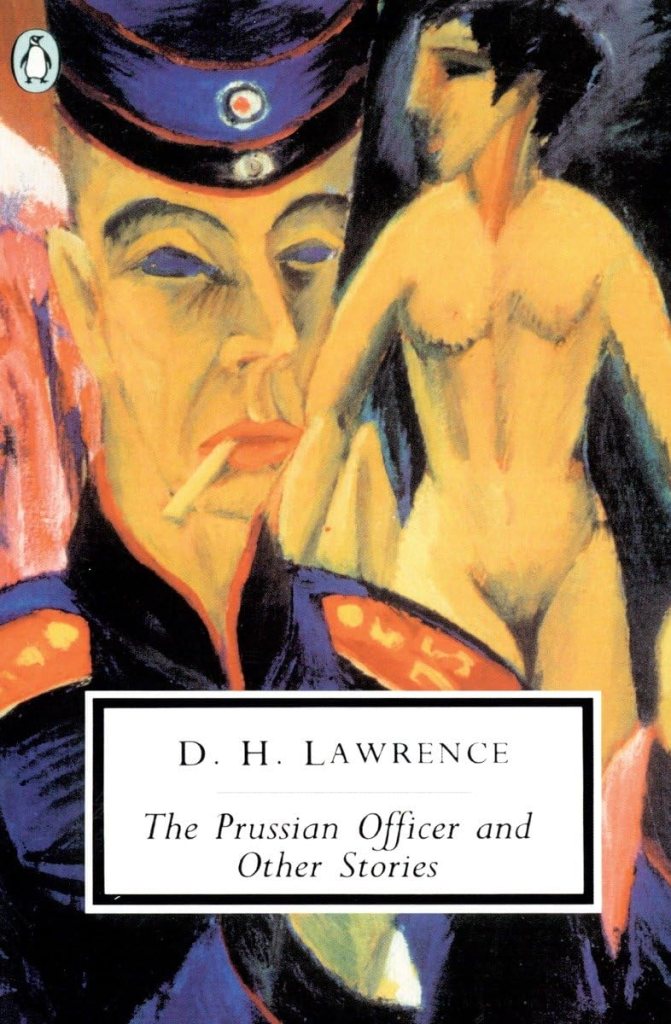
I’ve just read my first bit of Dirty Bertie — the name critics rather unkindly gave D.H. Lawrence because of the sex in his writing. The Prussian Officer is a psychological short story, first published in 1914, and what a little beast of a story it is.
The Captain is a forty-year-old aristocratic Prussian officer, a Junker who’s lost his inheritance gambling and is now stuck in a loveless, rigid military life. A man simmering with tensions he can’t quite acknowledge, including, it seems, a repressed desire for his handsome young orderly.
Schöner is twenty-two, from a much simpler background, full of physical life, and with a young woman waiting for him back home.
The Captain can’t deal with whatever it is he feels for the young man, so he does what men like him often do: turns it into cruelty. He piles on the punishing duties, tries to keep Schöner away from his private life, and makes the young soldier’s life a misery.
Those dozy Edwardians seem to have concentrated on the physical violence, largely missing — or choosing to ignore — the story’s intensely queer subtext. Lawrence’s literary peers, and later critics, were rather more alert to just how provocative it was.
And it all ends rather dramatically.
There’s an interesting little story behind the book, too. Lawrence originally published it in magazines under the title Honour and Arms. But as a collection was being prepared for publication in November 1914, war broke out. With anti-German feeling sweeping Britain, Lawrence’s editor, Edward Garnett, changed the title to The Prussian Officer and Other Stories without asking him.
Sales were painfully slow. So slow, in fact, that copies printed in 1914 were still being bound and sold, complete with leftover advertising pages, as late as August 1918.
And yet Lawrence himself maintained that it was the best short story he ever wrote. I can see why it stayed with him.
Hustler
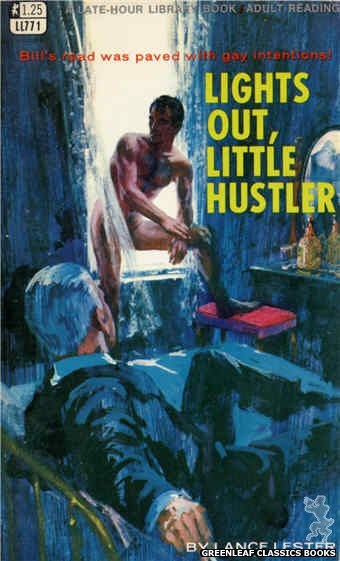
Another book has passed into my hands. Lights Out, Little Hustler, written by Lance Lester, a pen name used by George Davies, was published in 1968. I have a real affection for these gritty little pulp fiction books, with their garish covers that leave precious little to the imagination.
According to the Vintage Greenleaf Classics site:
“Gay pulp of this period relied on sensational titles and noir-inflected framing to survive distribution. Hustlers, sailors, drifters, and night people populated these books not simply for shock value, but because they mirrored the margins where queer life was most visible—and most vulnerable. Readers understood the code: beneath the moral tension and lurid language were recognizable social worlds, rules, and survival strategies.”
It’s a reminder that these books were more than just lurid entertainment. Published against a backdrop of censorship and hostility towards homosexuality, they offered glimpses of lives that mainstream publishing was often reluctant to acknowledge.
Davies rarely wrote under his own name, working instead through a collection of pseudonyms that included Lance Lester, Clay Caldwell, O. R. Wells and Thumper Johnson. His most notorious work was the 1968 gay sleaze novel Fruit of the Loon, published under the wonderfully cheeky name Ricardo Armory. It was an audacious and highly successful parody of Richard Amory’s hugely popular gay pastoral trilogy, Song of the Loon. The irony? Both the original books and Davies’s parody were published by the same company, Greenleaf Classics. One can only imagine the mischief involved.
The cover artwork is by Robert Bonfils, an artist with a rather unexpected background. He studied at the Kansas City Art Institute alongside artists such as Jackson Pollock, under the tutelage of Thomas Hart Benton. After serving in the Second World War, he moved into commercial advertising before becoming the principal illustrator and art director for Earl Kemp’s Greenleaf Classics.
Throughout the 1960s and ’70s, Bonfils painted hundreds of colourful, playful and often provocative covers for adult paperback novels. His work was unsigned, and his identity remained a mystery to collectors until his distinctive style was formally attributed to him in the mid-1980s.
I love the curious history behind these books almost as much as the books themselves. Beneath the lurid titles and outrageous covers lies a little piece of queer publishing history, produced in a world where desire had to find its own language, its own codes, and sometimes its own very colourful disguise.
Saint
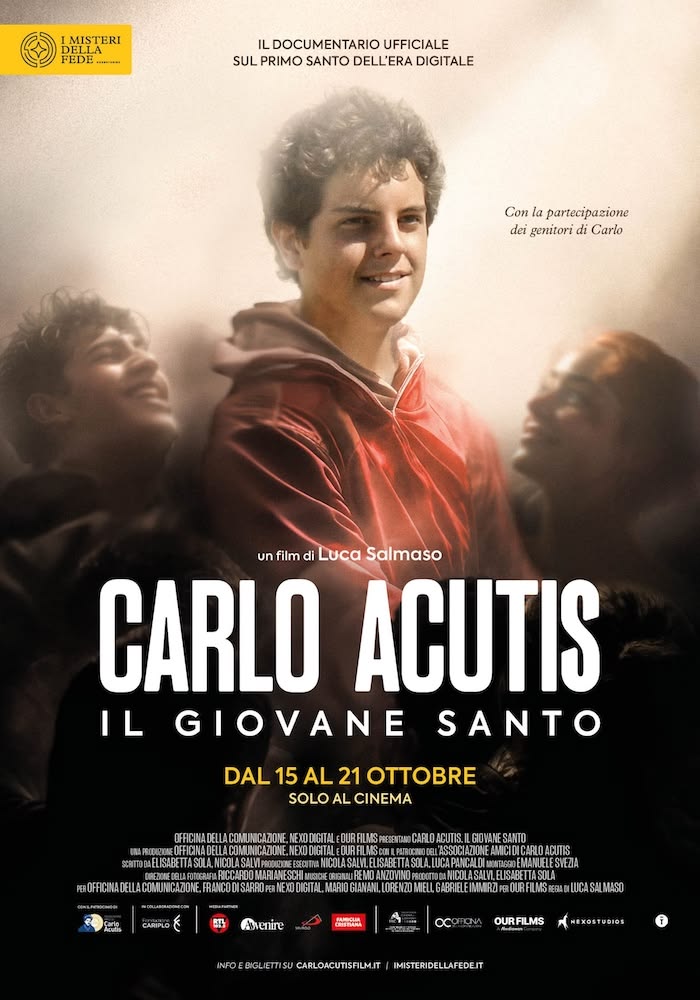
A new Italian documentary showing in cinemas.
Carlo Acutis – first saint of the digital age. An avid gamer who limited himself to just one hour of video games per week as a self-imposed penance. He is buried in Assisi wearing casual clothes, including jeans and Nike sneakers. The Vatican made an exception to archive his emails and digital hard drive files rather than relying solely on handwritten letters. I hope this is true.
Prayer
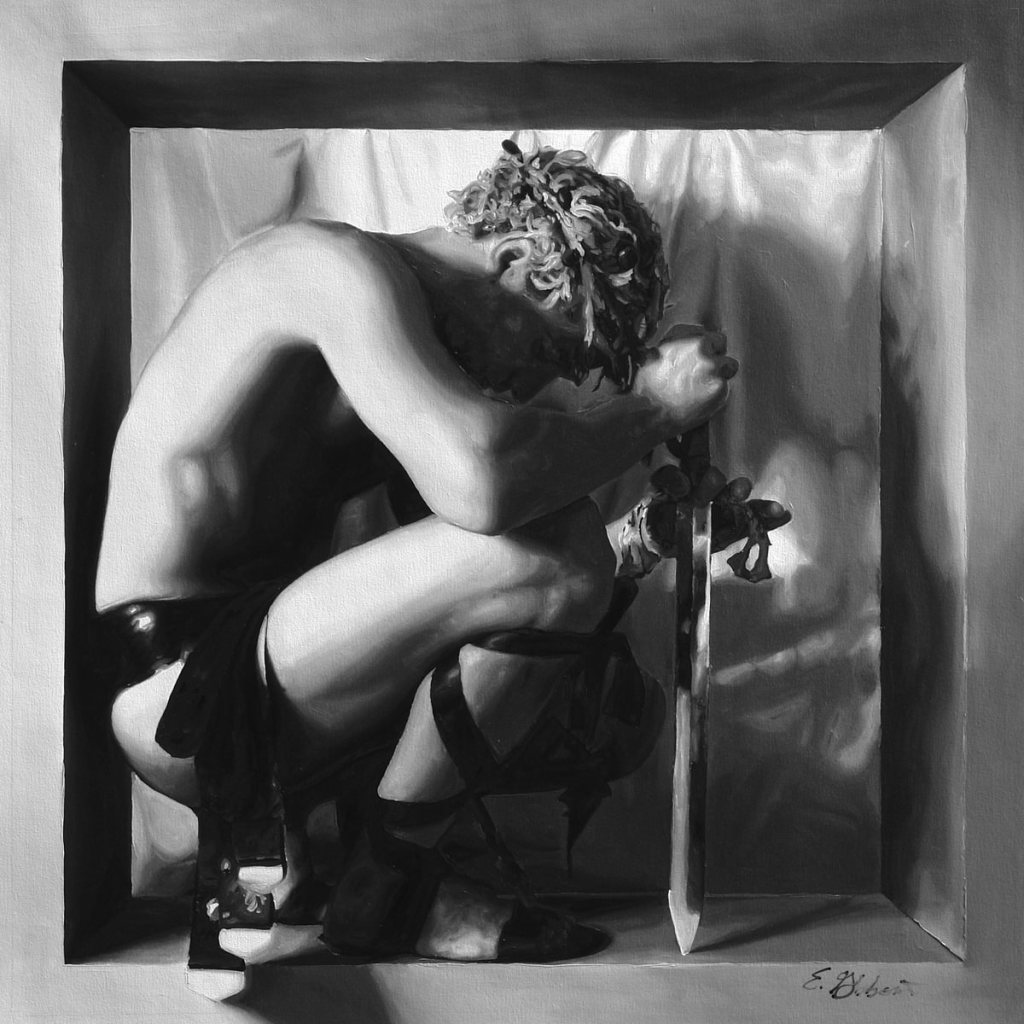
Something about this photo makes my nether regions flutter. I’m only human.
Prayer, by Eric Gibbons, featured in 100 Artists of the Male Figure and Oil Paintings (2011).
Gibbons is an American artist, author and educator, best known for his Box Series of monochromatic oil paintings of the male figure. Photography is part of his wider artistic practice, but it’s these paintings that have earned him international recognition.
The Box Series comprises more than 100 works, placing classically rendered figures in stark, minimalist, box-like spaces. There’s something rather compelling about the simplicity: the restricted space, the absence of colour, the precision of the human form. Some figures meet our gaze head-on; others turn away, retreating into themselves. Either way, there’s a tension that’s hard to ignore.
The inspiration came in 2004, when Gibbons travelled to Paris and spent days studying classical art at the Louvre. Michelangelo, Ingres and Jacques-Louis David all left their mark on his artistic vision, and you can see that reverence for the male form running through his work.
His paintings have been exhibited in Paris, London, New York and Los Angeles. One even found its way into the Obama White House art collection.
But back to Prayer. I could talk about the classical influences, the composition and the treatment of the male figure. And I will, if you insist.
For now, though, I think we know what caught my eye.
On the Cute and the Willing