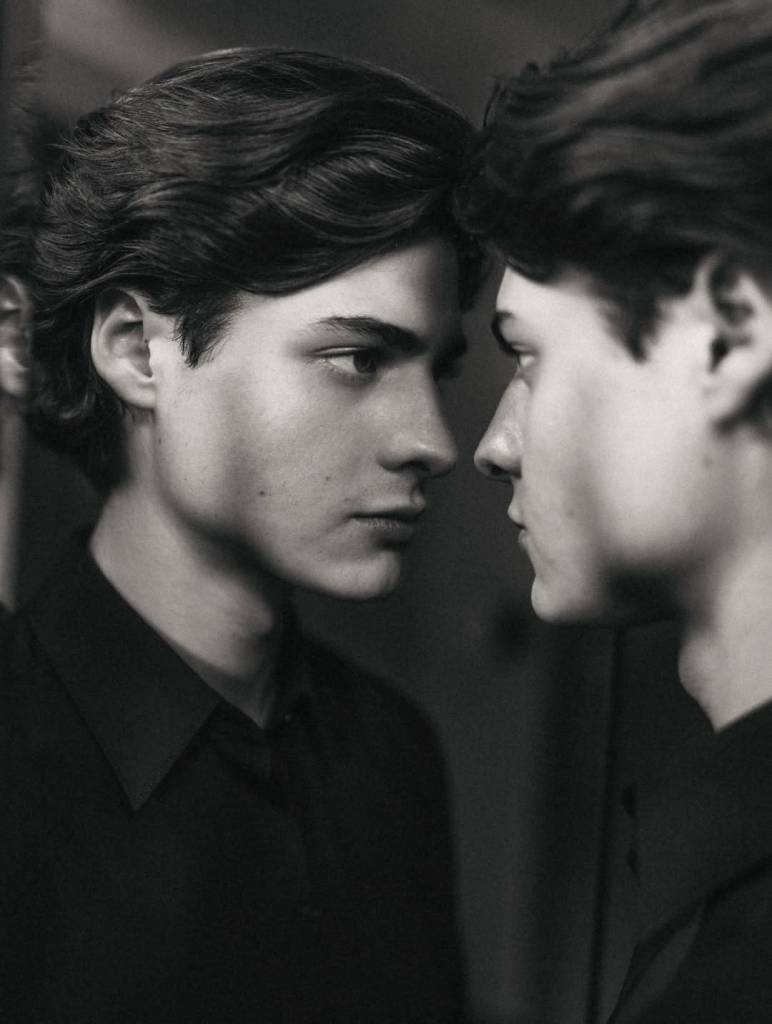

From an uncertain beginning to the bright lights of Spanish cinema, the unexpected rise of Milo Quifes
Milo Quifes had no professional acting experience, an unusually varied life behind him, and absolutely no reason to expect that he would suddenly become one of the most talked-about young faces in Spanish cinema. Yet, almost overnight, that’s precisely what has happened.
It’s the sort of fortunate twist of fate that feels a little too magical, dramatic or downright blessed to be true.
Although I have an inkling that his looks might have had something to do with it.
Quifes has become internationally known for his role in this year’s La bola negra, a remarkable triptych that moves through nearly a century of Spanish history, telling three interconnected stories of gay men in 1932, 1937 and 2017. The film draws inspiration from an unfinished four-page play of the same name by Federico García Lorca, alongside Alberto Conejero’s play La piedra oscura.
Quifes plays Carlos, the central character in Lorca’s unfinished work. Set in Granada in 1932, Carlos is a privileged young man who, under pressure from his father, seeks admission to the city’s casino. His application is rejected by the club’s board because he is gay, setting in motion a personal crisis that becomes the starting point for his story.
The film has attracted attention for its subject matter, but there has been another talking point surrounding its directors, Javier Calvo and Javier Ambrossi, collectively known as Los Javis. The pair ended their 13-year romantic relationship during filming, although they have maintained their close creative partnership. Inevitably, the internet did what the internet does and began speculating that one of them had fallen for their new leading man. It’s an easy enough theory to entertain, given Quifes’s considerable charms, but apparently there was no truth to it.
And considerable charms he certainly has.
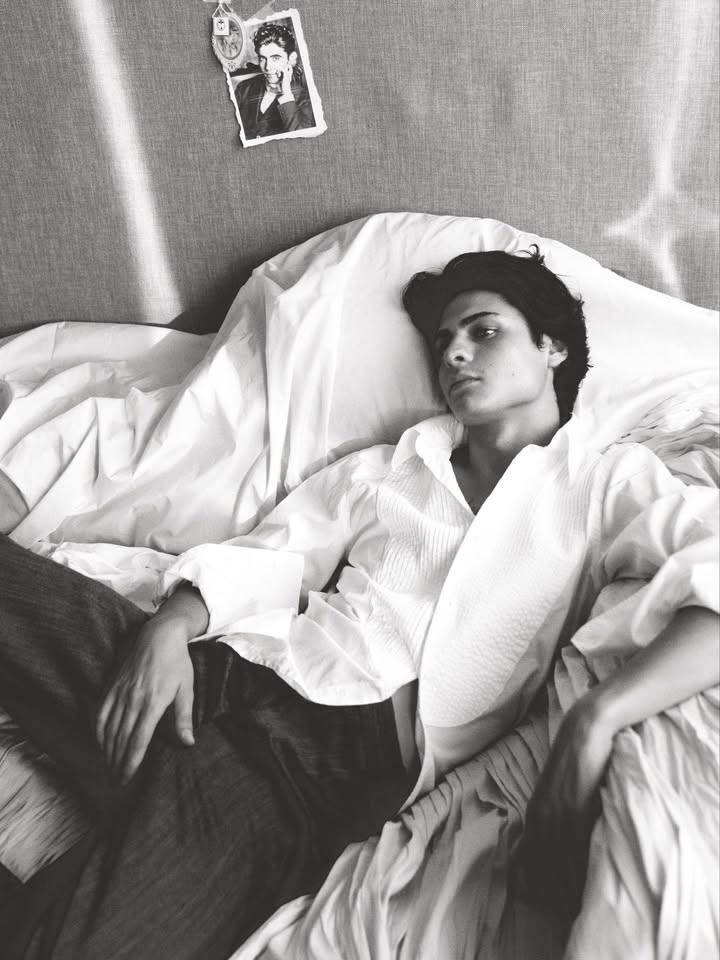
There’s something rather appealing about Milo Quifes that goes beyond the usual business of being a handsome young actor. His features have a delicacy and almost classical quality, with expressive eyes and a face that seems equally suited to a period painting or a contemporary fashion campaign. He’s handsome without being conventionally macho, and there’s a certain softness to his appearance that I suspect is part of his appeal to both women and men. For a gay audience, at least, he’s rather difficult not to look at.
Born in Palos de la Frontera in 2001, Quifes is now 25, although his route to the screen has been anything but conventional. Before acting came along, he had accumulated quite a collection of experiences.
“I’ve studied biology, cleaned darkrooms, worked as a waiter, receptionist…” he told Spanish newspaper El País. “And also an altar boy, a nazareno (a hooded participant in Holy Week processions) and even a camp counselor with my El Rocío brotherhood.”
It’s quite a list, and perhaps part of what makes him interesting. There’s something more substantial behind the pretty face.
His family moved to Seville when he was 12, and he subsequently lost his grandfather, with whom he had a particularly close relationship, to cancer. Quifes has spoken candidly about the complicated feelings surrounding his grandfather’s death.
“I am troubled by the fact I wasn’t honest with him, but I am also grateful that he died then,” he told El País. “I don’t know that my grandfather would have accepted me if he knew I was gay.”
His parents separated, and his teenage years became increasingly unsettled. There were parties, drinking, smoking and brushes with the police. He studied away from home for a while, but eventually abandoned his degree course and returned to Seville, where he began writing Ultravioleta, a love story about two boys whose frustrations and difficulties reflected something of his own experience.
He has also spoken about the difficulties he experienced growing up and finding his place socially.
“I’m bad at connecting with people. At school, I was a bit weird. I tried to mix with the boys but couldn’t, and when I found my place with the girls, I felt unhappy because I wanted to be with the boys.”
It’s a revealing admission, and one that gives a little more context to the young man we now see confidently occupying the screen. His journey towards accepting himself hasn’t necessarily been straightforward.
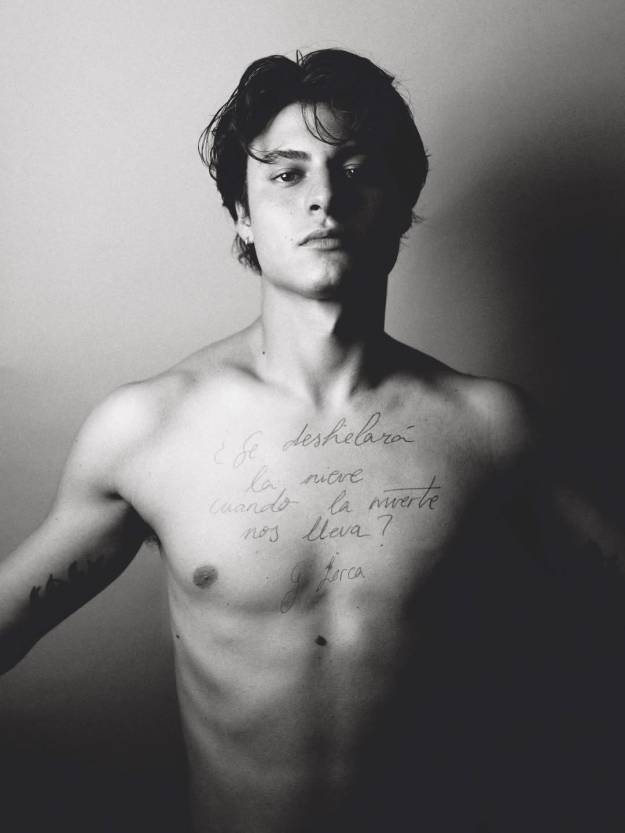
Having saved some money, Quifes eventually moved to Madrid, but his anxiety became increasingly difficult to manage, at one point leaving him virtually confined to his home.
Then came the phone call that changed things.
A friend sent him a casting notice for La bola negra. Quifes assumed he was auditioning for the role of an extra. Instead, after several auditions over a period of two months, he found himself being offered one of the leading roles.
Co-director Javier Ambrossi was immediately taken with him.
“When I saw him I knew,” he said. “His fragility, his eyes, his classic looks. When we met him, I only remember his hand trembling. He was shaking so much … I told him to relax. But he kept shaking. Milo was suddenly Carlos in front of the casino board.”
It was an especially poignant moment for Quifes, whose former drama teacher at school in Seville had once told him he would never become an actor.
“I covered my face because I was about to burst into tears. It was a very strange moment in my life, with happiness, personal growth, and imposter syndrome all mixed together. But I felt grateful and emotional. I have to admit it was one of the most beautiful moments of my life.”
Not a bad outcome for someone who thought he was going to be an extra.
There is now rather more to Milo Quifes’s professional life than one successful film. He’s studying creative writing, working on his second novel, and has landed another leading role in the television series Crimen en España (Crime in Spain). He’s also signed with Next Management in Madrid as a fashion model, which seems an entirely natural extension of his growing public profile. His appearances during the promotion of La bola negra have already attracted attention for their stylish, understated approach to fashion.
Actor, writer and model, then. Not bad for someone who only recently found himself in front of a film camera.
And Quifes appears to have no intention of hiding who he is. He’s spoken openly about being gay and about the difficulties of navigating relationships and friendships in a society where so much has historically had to remain unspoken.
“We’ve always had to hide in order to interact with one another, whether sexually, or as friends.”
It’s a sentiment that feels particularly relevant to the film that brought him to our attention, but perhaps also to the young man himself.
I rather like the fact that Milo Quifes hasn’t arrived in cinema as a ready-made star. He’s arrived with a little uncertainty, a complicated past, an interest in writing and, if I’m being entirely honest, a face that the camera seems to have fallen in love with.
Whether he becomes a major figure in Spanish cinema remains to be seen. But there’s something about him that makes me want to follow what happens next. And I suspect I’m not the only one.