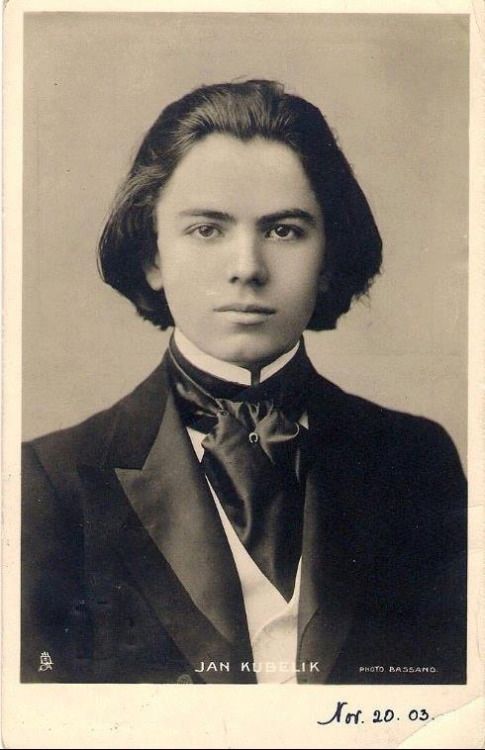
When musical genius met matinee-idol good looks
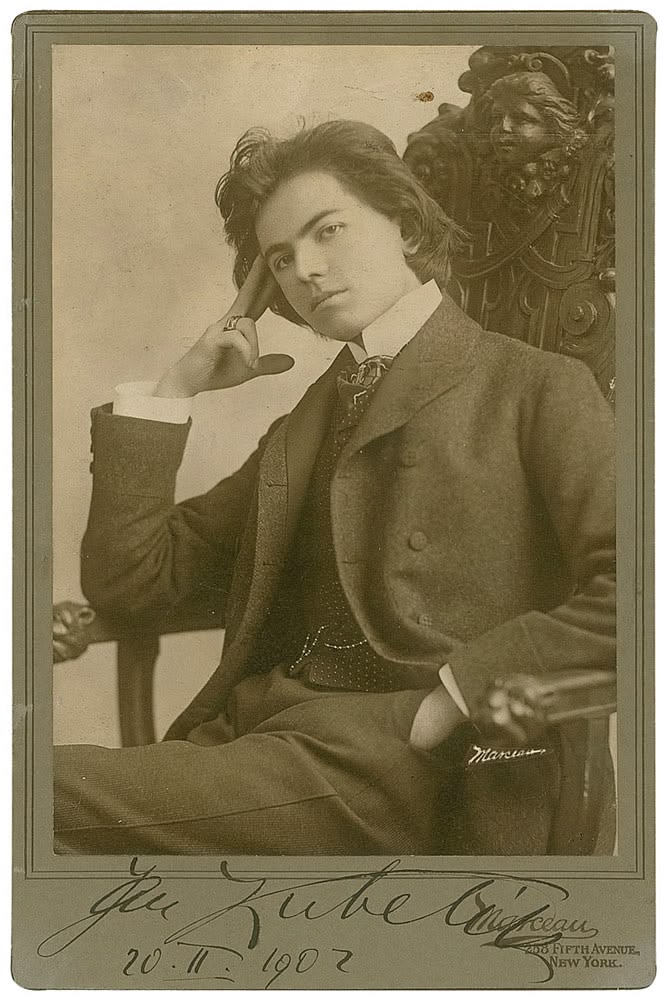
Unless you’re a classical music enthusiast, the name Jan Kubelik (1880–1940) may mean very little to you. Search Spotify, however, and you’ll find a handful of crackly recordings made between 1902 and 1913: pioneering performances prized for their impeccable intonation and astonishing technical mastery.
Bloody hell! What a handsome young man!
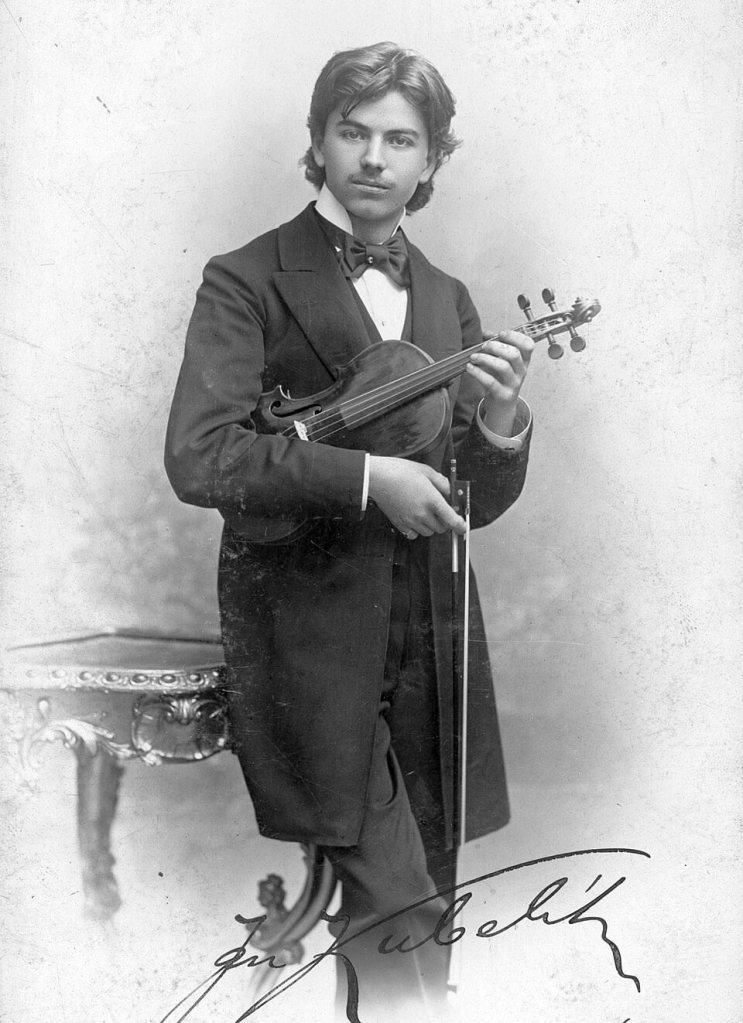
Born in Michle, Bohemia, Kubelik was the son of a poor market gardener who taught him to play the violin and insisted that he practise for ten hours a day, until his fingers bled.
He put that violin to good use.
Kubelik graduated from the Prague Conservatoire and, at eighteen, made his concert debut in Vienna, provoking scenes of public hysteria. “In the Middle Ages,” a critic reportedly wrote, “Kubelik would have been burnt alive as a sorcerer.”
He took the musical world by storm, becoming the pin-up boy of the violin. Women swooned at the sight of him. Hearts fluttered. Men, I suspect, were rather less willing to admit that theirs did too.
In 1903, Kubelik married Countess Anna Julie Marie Széll von Bessenyö. They had eight children: five daughters who became violinists and three sons, among them the future conductor Rafael Kubelik.
For four decades, Kubelik was at the top of his game, earning millions and spending them almost as quickly. In 1904, he bought Zámek Býchory and its estate in Bohemia, encompassing five villages and extensive wooded and cultivated land. He also amassed a collection of fine violins. His favourite was a Stradivarius made in 1715, which he called Emperor. It had once belonged to George Haddock, a prominent nineteenth-century English violinist, teacher and collector.
Kubelik undertook more than thirty tours of Britain and America during his career, and his hands were reportedly insured for a million dollars. Not a bad arrangement for a pair of hands that could make a violin sing.
In 1905, while Kubelik was performing in England, a young Hindu medical student who had adopted the name Charles Dawson heard him play and announced that he would never leave the master’s side. Abandoning his medical studies, Dawson travelled wherever Kubelik went, becoming his personal assistant, bodyguard and guardian of his multimillion-dollar collection of precious violins.
Those of us with a certain mindset might raise an eyebrow at such devotion. There is, however, nothing to suggest that their relationship was anything other than professional. We can leave the speculation where it belongs: in the imagination.
There is another lovely story involving a young prodigy called David Paget, reportedly discovered on the streets of London by the Daily Mirror. Kubelik took the boy to Bond Street and bought him an expensive French Berton violin, made in 1880, which had once belonged to the Duchess of Angoulême. One imagines that such generosity must have seemed almost as extraordinary as Kubelik’s playing.
In 1921, Kubelik was a passenger aboard the Jan Breydel, an Ostend mail boat that collided with a Norwegian freighter in fog off the Goodwin Sands and sank.
“I felt calm,” Kubelik recalled. “Something told me nothing was going to happen to me. I did not think of myself. I thought of my violin. A man can move for himself, a violin cannot.”
He hurried to his cabin and fitted a life belt to his beloved instrument.
You have to admire his priorities.
Dawson, meanwhile, remained devoted to Kubelik, even when the violinist’s fortunes began to collapse. In 1929, Kubelik bought Schloss Rotenturm, a castle in Austria, only to become embroiled in a ruinous legal battle with its former owner. The purchase proved disastrous. Declared bankrupt, he lost Rotenturm and his summer residence at Abbazia, and was forced to spend the remainder of his life touring to earn a living.
By then, the world had moved on. Kubelik’s star had faded; so, inevitably, had the youthful beauty that had once sent audiences into raptures. The boyish face and luxuriant hair belonged to another era. He died of pancreatic cancer in Prague in 1940, when the city was under Nazi occupation. His funeral was not permitted.
It is a cruelly diminished ending for a man who had once seemed almost invincible: a virtuoso whose playing could provoke hysteria, whose hands were worth a fortune, and whose face had made him the heart-throb of the concert hall.
Yet those old recordings remain. The sound may crackle and hiss, but beneath the surface noise there is still the extraordinary musician: the precision, the command, the audacity. And somewhere in those recordings, if you listen closely enough, you might catch a glimpse of the young man who once set the musical world alight.
Though, if I’m honest, I suspect some of us might be looking at the photographs rather longer than we spend listening.