
“Paolo went to your country to die, and now, Harry, you have come to his country, where you will also die.” Harry arrives at the small Italian town of Montescaglioso, where it is time to make peace with the person he once loved. The final part of an unlikely story. (Parts 1 to 24 are available to read in the menu)
Perfectly Hard and Glamorous – Part 25
April 2026
The clock struck twelve at the Chiesa di San Rocco in Piazza Roma. The warmth from the Easter sun was unfamiliar, but as shadows crept from the old buildings and advanced towards the monument, the coolness of the spring afternoon would follow, and remind us that where we came from didn’t matter. One place could be much the same as another.
Piazza Roma was mostly deserted except for a handful of pedestrians who emerged from between these crumbling buildings and went about their business. The peace was only shattered by the noise of a scooter which entered from Corsa della Repubblica. On it, a ragazzo, wearing short sleeves and crash helmet, noticed me standing alone, revved its engine, and circled several times around me. All the time he watched, as there would be other people watching too.
High above the square, on top of an unlikely building, was a webcam; its five cameras pointing in different directions. Somebody in a cramped New York apartment or a hotel room in Bali, was able to see what was happening in sleepy Montescaglioso. The views were familiar. I looked at them every day, and now, I was also one of the strangers on the screen.
The ragazzo eventually pulled up beside me and cut the engine. He removed his crash helmet and revealed himself to be in his late teens, with black curly hair and neat stubble on his chin. “Sei inglese?” he asked. “Sì, io sono,” I replied. “Then you must be Harry,” he said with broken English.
He introduced himself as Tino and retrieved a second crash helmet from the sottosella. “Put this on,” he advised, “and get on the back.” I did as I was told and placed my arms around his waist. The engine kicked into life, and he sped off down Via Cavour; through cobblestone lanes that twisted and turned, both sides lined with old houses painted in shades of pink and yellow that the southern sun had slowly faded.
The farther we rode out of town, the wider the roads became, and the houses grew larger and newer. When we reached the petrol station at Strada Provinciale, Tino swung right and came to a stop beneath huge Italian cypresses leading to the gates. We dismounted, and I took in the panoramic views of the surrounding Basilicata. I noticed that the area below the cemetery had been used as a dumping ground for builders’ waste from the construction sites we had passed. Tino opened the sottosella, deposited both helmets, and retrieved a plastic bag.
“Paolo went to your country to die,” said Tino. “And now, Harry, you have come to his country, where you will also die.” An exchange of the dead. I was the lad from the working classes who had sunk to the bottom before being gifted a chance to rise again. I was about to confront my past again.
Tino took me into the Cimitero Comunale and along corridors of loculi, multi-storey rows of concrete vaults stacked several levels high. The sight was striking; each grave was decorated with vases of fresh flowers. It was a Catholic tradition, an artistic expression, and a practical solution to space limitations. Italian culture maintained a strong, ongoing connection with the dead.
“My family were upset when you asked to visit,” Tino told me as we walked along. “The older ones are still angry and did not want you to come. But it was the younger ones who were able to change their minds.”
“Please thank them for doing so.”
“They call you the ‘English Boy’—the one who came from the projects. Our elders believe that Uncle Paolo did something gravely wrong, and that you were the cause of it. It is the only way they can forgive him. Blame you. Maybe the younger members of the family have more compassion and understanding, and we are more interested in seeing the boy who became the source of such hatred.”
The boy he referred to was no longer a boy. I was now in my sixties and had waited far too long to come here. Tino looked at me, and I could not help noticing his delicate brown eyes, which seemed to be searching for answers.
“I am older than Uncle Paolo was when he died. He will remain a boy forever. In the same way, you have not aged either, Harry. You are still the boy who was responsible for sending him to his tragic death. It is the boy that people will condemn.”
Like Paolo’s family, I had also believed that Paolo had taken his own life. The shame of being arrested and exposed as a homosexual had been too much. But Frank Smith had taken forty years to tell me otherwise: that Andy, my best friend, had blamed Paolo for coming between us—for ruining my life—and had sought revenge by sending him to a horrific death from the top of an abandoned factory.
It had taken me twelve months to process that news. Those last seconds, when Paolo knew that he was going to die. What had been going through his mind? Those intense emotions—fear, love, regret. Had Paolo thought about me in those last moments?
I was about to tell Tino the truth but didn’t get the chance. He had stopped in front of a small, rectangular niche on the bottom row and pointed.
I noticed the flowers first—chrysanthemums, alongside a mix of vibrant and white blooms, carefully arranged in small glass vases. There were also tulips, symbolising the freshness of spring, new beginnings, and hope.
And I saw Paolo again—for the first time in forty-one years.
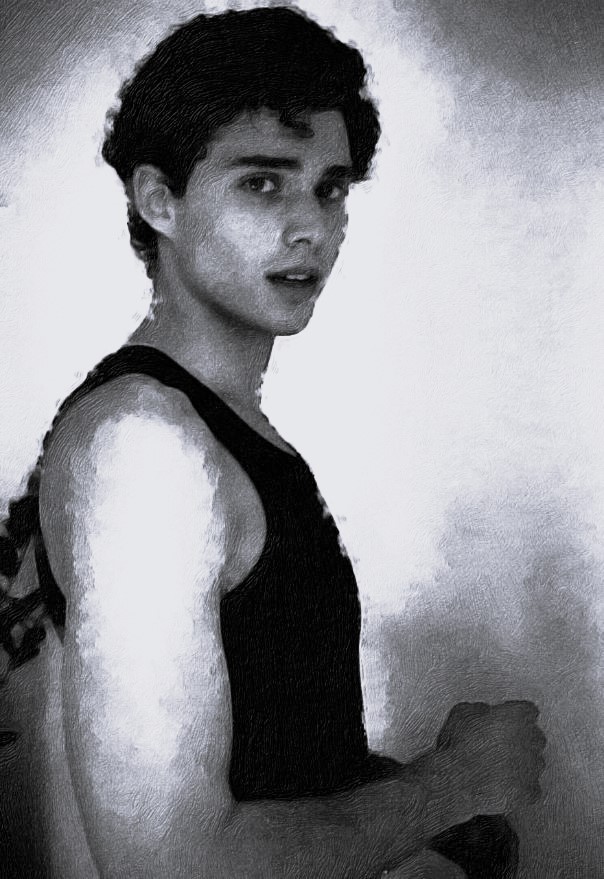
There was a black-and-white photograph: a headshot of him looking at the camera, that nervous expression, expressive eyes, thick black hair with the same curl that always fell across his forehead, and a half-smile. Paolo was looking at me. A look of surprise. I had finally come to see him. The years of regret washed away, and we were back together again. I saw him smiling. “I loved you, Harry, but I was taken away. The years were long, but you found me again. Ti amo, Harry.”
It was a moment where grief, memory, and love converged.
Tino reached into the plastic bag and handed me a white rose to place in front of the photograph.
“I shall leave you to make your peace,” he said, and slipped away to a bench at the end of the avenue.
I put my hand on the marble slab that had been used to seal the tomb. It felt warm in the afternoon sun. I traced the inscription with my finger—Paolo Antonio Moretti—Amato da tutti coloro che lo conoscevano—beautifully carved in italics by an Italian craftsman.
“Well… Paolo. Here I am. I never imagined that I would speak to you again. The last time I saw you was at that big house, when we were all arrested. My last recollection is of you looking terrified and shouting my name. I’ve replayed that moment every day for over forty years. Shouting my name because you were scared, and I couldn’t do anything. Do you know how painful that memory has been?
“I tried to speak in the days afterwards, but everyone hated me and wouldn’t let me anywhere near you. They said that I had corrupted you. I suppose your parents were trying to protect you… and they told me that you didn’t want to see me. That hurt, and I’ve tried to come to terms with it ever since, but I never believed it.
“And then you were gone. Forever. Do you know how that felt? The realisation that you love somebody so much, but can never see, touch, or love them… ever again. It was the most painful thing that ever happened to me.”
A tiny sparrow landed on the ground beside me. In Italian folklore, these are seen as a sign from the dead, and it hopped around my feet before flying up onto Paolo’s grave.
“Last year I saw Frank Smith. He told me that you didn’t commit suicide. That was a relief to me—for a while, anyway—but then I found out that it was Andy who killed you. It meant that your parents were right to blame me. My best friend killed you because he was jealous of us. That is something your family needs to know.
“What happened afterwards? I went to pieces. I nicked a car and drove to London, where I stayed for years. I worked as a rent boy and then became a writer. Can you imagine that? A small-time shit from Park Hill who couldn’t string a sentence together. But I’ve written books that proved I could do something with my life. I also met a guy called Scott, who I thought I loved, but now I realise that I probably didn’t.
“I went back to Sheffield—to Park Hill—which had completely changed and wrote about our past. It is the most successful book I’ve written. Everyone thinks it is fiction… but everything in it was true. About growing up, the Geisha Boys, meeting you, loving you, and the things we did.
“But I had to leave again. I didn’t belong there anymore. Many ghosts were laid to rest, but I couldn’t exorcise the memories.
“And now I’m here in Montescaglioso, where I can stay close to you. I’ve brought Tom with me and we’re buying an apartment on Viale Europa, not far from here. It’s modest, but for someone who lived at Park Hill, it will herald a new start.
“Tom is Jack’s youngest son and was a bit of a tearaway—a bit like I was. But he’s attached himself to me and will look after me as I grow older. Growing old is something you won’t know about, but it’s very overrated.
“And I met Jack again. I needed to know that he had forgiven me, but it turned out that he wanted my forgiveness too. The tragedy is that we wasted years feeling guilty. Both of us were afraid to make contact.
“Most importantly, I needed his blessing about Tom, and do you know what he said? When we were teenagers, he thought there was something different about me, but couldn’t pin it down. When it all came out into the open, he expected me to make a move on him. If I had, he said that he wouldn’t have said no. That floored me. He gave me his blessing about Tom because he knew that I’d turned his life around.”
Tino was approaching, and the small sparrow flitted between the flowers with a burst of energy. I stopped talking but couldn’t leave it like that.
“I must go now, but I shall return soon. Ti amo, Paolo.”
“I heard what you were saying to Uncle Paolo,” Tino said. “Did you love him as much as you say you did?”
“I did,” I confessed, “and it was a relationship that should never have happened. Did you know that the first night that I met Paolo, I punched him in the face… and immediately regretted it. He was incredibly sweet and beautiful. I wish you could have met him.”
“And this Tom that you spoke about—he has come to Montescaglioso with you?”
“Another unlikely relationship. Tom is much younger than me, and the story is far too complicated to explain. But he is a link between the past and the present.”
Tom was waiting for me when I returned to Piazza Roma. He smiled—a dazzling grin that showed his face had already tanned under the Italian sun. I explained that Tino had promised to visit us at the new apartment and that he had also asked for a copy of Perfectly Hard and Glamorous.
“But the book is in English,” he replied.
“I know,” I said, “but he wants it because that book is part of his family history.”
And that is the end of this long story.
The journey from a bleak northern city that had little going for it in the 1980s to the present, in a small Italian town that nobody has heard of. Tino was right when he suggested that Paolo had travelled to another country to die, and that I had done the same. And that is what will happen.
We are both happy here and will never leave.
Sometimes, when I stand on the balcony of our new apartment at Viale Europa and look at the house across the street, I imagine that I am seeing Park Hill again. And then the laundry tries to break free with the help of the strong wind that blows from the distant olive groves and wheat fields, and the memories evaporate.
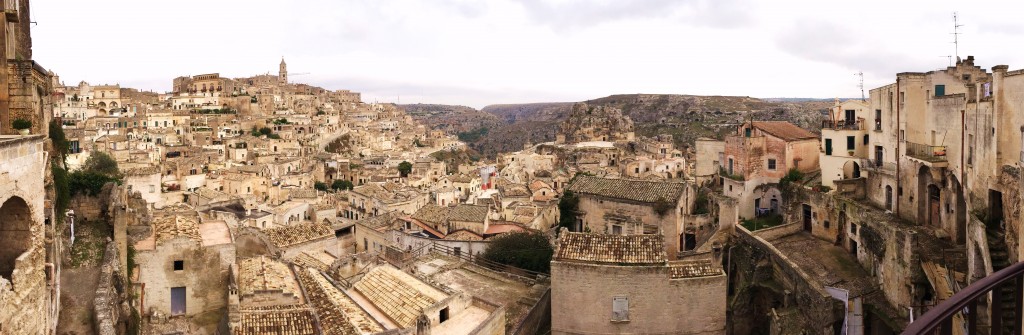
I watch people going about their business—the animated, loud conversations, the frequent gesticulation, and that strong personal style. Both the young and the old, slipping into cafés, shops, and gelaterie. Walking between sun-drenched, ochre-washed buildings and piazzas, with the noise of Vespas weaving through the narrow streets. They are blissfully unaware of that sensory blend of ancient history and modern life; unaware that historic architecture is now adorned with contemporary graffiti.
The Italians are wonderful people.
I also think about everyone who shaped that journey: those who are dead—my parents, my best friend Andy, whom I may never forgive, and Paolo, whom I visit every week. I even think about Frank Smith and Billy Mason. Then there is the living—Jack, who will make regular visits to Italy and remind me that I was once a Geisha Boy, who swore, fought, and offered my body to anyone who wanted it; and Tom, who one day will replace Paolo as the love of my life.
 Perfectly Hard and Glamorous