
“Man is least himself when he talks in his own person. Give him a mask, and he will tell you the truth”
Words by Oscar Wilde in his 1891 essay The Critic as Artist.

“Man is least himself when he talks in his own person. Give him a mask, and he will tell you the truth”
Words by Oscar Wilde in his 1891 essay The Critic as Artist.
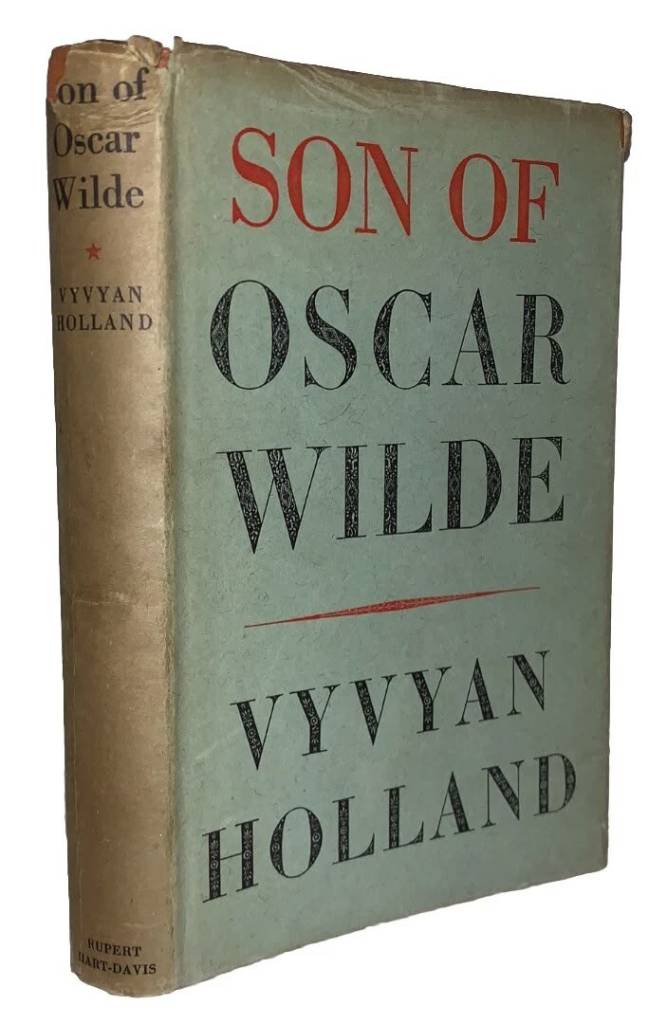
“The self-righteousness of that age was really camouflage to disguise its own hypocrisy, and the people who were loudest in their condemnation of my father were often those whose own lives could least bear investigation.”
– Vyvyan Holland writing in Son of Oscar Wilde. Published by Rupert Hart-Davis (1954)
And I can’t help thinking that the same still applies…

Love, I adore the contours of thy shape,
Thine exquisite breasts and arms adorable;
The wonders of thine heavenly throat compel
Such fire of love as even my dreams escape:
I love thee as the sea-foam loves the cape,
Or as the shore the sea’s enchanting spell:
In sweets the blossoms of thy mouth excel
The tenderest bloom of peach or purple grape.
I love thee, sweet! Kiss me again, again!
Thy kisses soothe me, as tired earth the rain;
Between thine arms I find mine only bliss;
Ah let me in thy bosom still enjoy
Oblivion of the past, divinest boy,
And the dull ennui of a woman’s kiss!
From ‘Caprices: Poems by Theodore Wratislaw’ (London: Gay and Bird, 1893)
No mystery about what’s going on here.
When someone at the Pall Mall Gazette got an early look at Caprices, they immediately picked up on the vibe — To a Sicilian Boy and L’Eternal Feminin were clearly written with a Uranian (homoerotic) theme. The staffer freaked out and threatened bad reviews unless those poems were cut. The publisher caved and swapped them for two safer options, Paradox and At Midnight.
But nobody seemed to notice the poems quietly dedicated to Oscar Wilde and Lord Alfred Douglas. That particular scandal was still waiting in the wings.
To a Sicilian Boy eventually found its way into Charles Kains Jackson’s The Artist and the Journal of Home Culture, a more open-minded publication of the time.
Theodore William Graf Wratislaw (1871–1933) — yes, he claimed to be a Count thanks to his grandfather, who basically declared himself one — was born in Rugby. These days, almost no one remembers him, but he wrote about 160 poems, most during the so-called “naughty nineties.” His work popped up in Love’s Memorial, Some Verses, The Yellow Book, and The Strand Magazine. He’s even rumoured to have inspired Max Beerbohm’s character Enoch Soames.
At some point, Wratislaw swapped the pen for a government desk job — which he famously called “penal servitude.” He married three times, but people still speculated about his sexuality, and To a Sicilian Boy didn’t exactly hide the clues. The timing’s telling: Wilde’s trial happened in 1895, and that same August, Wratislaw quietly joined the Civil Service. Draw your own conclusions.
 Perfectly Hard and Glamorous