
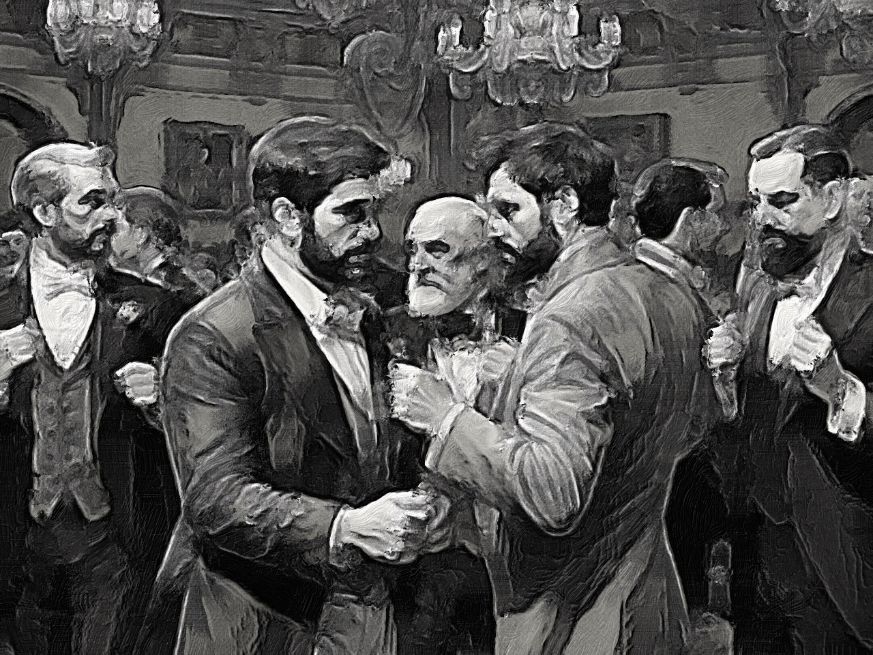
I was dancing with ghosts. Men who lived from the reign of Queen Victoria, through Edward VII, to King George V. A few lived beyond. They were spectral figures circling me, wavering, and waiting for a response. Watchful. Whispering. Lingering. For the most part, they were happy that I was there, but a few eyed me with caution. They lived in a time when it was wiser to trust nobody.
More and more joined the dance. Coming out of doors that had long closed, from dark corners, and miserable places to where they were banished.
Each told me their name, some I knew, but most were unfamiliar, and frowned at my ignorance. There were those whose names I recognised, but not the men they belonged to. But there were so many that I would not remember everyone, and I resorted to recording names in a notebook. I wrote frantically, eager to please, careful not to miss anyone.
A long list of dead people, some of whom were friends, acquaintances, and some who were strangers to one another. They danced because they were connected – names intrinsically linked – but they might not have known it. They had gone into my notebook because they shared something in common.
When they lived I did not exist. I came much later, born into a kinder world.
The passage of time puts me at an advantage. A century later, it is easy for me to see how they lived, what achievements came their way, if at all, and how they were remembered, for better or worse. The links are in the chain – who was attached to who?
 Perfectly Hard and Glamorous