
La Ville dont le prince est un enfant: Raymond Carrance (1967)
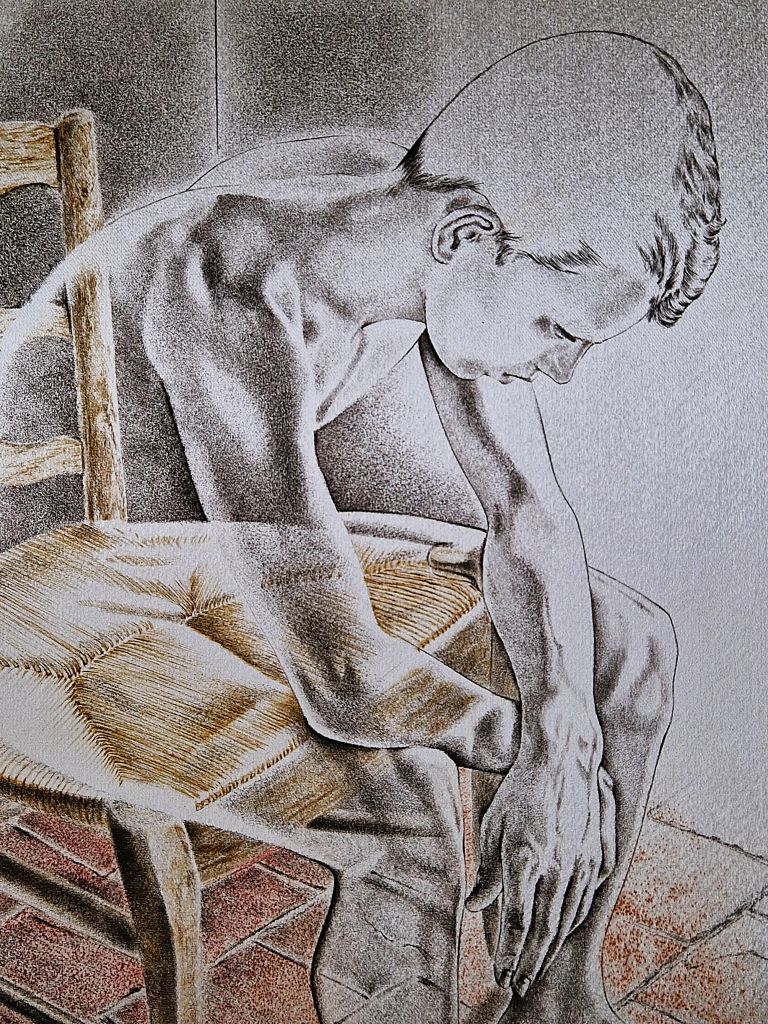
Raymond Carrance, working under the name Czanara, created a quietly intriguing body of homoerotic work during the 1950s and ’60s.
Much of it was private: drawings, engravings and photographs of male youth, sensuality and those strange, dreamlike worlds where beauty and desire tend to get a little blurred.
Carrance (1921–1998) was hardly a one-subject artist, though. He produced elaborate etchings and lithographs for works by Jules Renard and Cyrano de Bergerac, as well as illustrating a 1951 play by Henry de Montherlant, La Ville dont le Prince est un Enfant — The City Whose Prince is a Child.
And this is where things get interesting.
Montherlant’s play is set in a strict Catholic boys’ school before the Second World War. At its centre are André Sevrais, an older pupil; Serge Souplier, the younger boy with whom he forms an intense friendship; and the Abbé de Pradts, a school prefect whose feelings towards Souplier become increasingly complicated.
Friendship. Possession. Jealousy. Authority. Desire.
All the things a Catholic boys’ school presumably hoped to keep out of sight.
Carrance illustrated a 1967 edition of the play with a series of delicate, highly charged images. Knowing something of his private work as Czanara, the choice feels less than accidental.
The title itself comes from Ecclesiastes: “Woe to thee, O land, when thy king is a child.”
A rather ominous little biblical quotation for a book about boys, priests, desire and forbidden attachments.
And Carrance seems to have understood exactly how much could be said without saying very much at all.

