My friend Blake can see dead people. He tells me I am surrounded by two of them. They watch me. They follow me. They talk to me. But only Blake can hear what they say. He says he knows all my secrets because they tell him.
There is John, a great-great uncle, who died long before I was born. He found me when I was a small boy and has kept me from danger. I amuse him. He regrets that he lived his life at the wrong time and was deprived of the life I lead. But he says I lived his life for him.
There is a teenage boy, and he is called Anthony. We met once, but I can’t remember him. Barely an hour after we talked, he died from a heart condition. That’s tragic. He told Blake he became my guardian angel because I was the last person he spoke to. He liked me. And he is happy that I have lived a longer life.
One day I will die, and I will meet John for the first time, and because age means nothing Anthony will become my eternal lover.
It was true. We had good times. My first girlfriend. We were young. Then you talked about engagement, and I was confused and uncomfortable. Our relationship was a falsehood, because I was in love with your 17-year-old brother, and he was with me. I had to be ruthless and I told you I didn’t want to see you anymore. That was forty years ago, and you never knew the reason why.
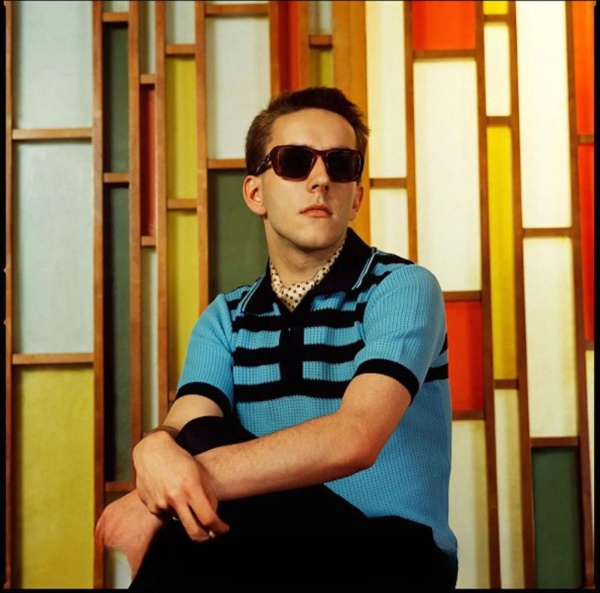
A book that will never be published. I’m not a good writer, and I write to entertain myself. But somebody asked if Harry, from Perfectly Hard and Glamorous, is based on a real person, and I had to come clean.
He is called Harry, but where does his character came from? He is a combination of lots of people I’ve known, but he is also me.
The stories he tells are a lot of the things that happened to me. And underneath that rough image, there is a sensitivity that is really based on the quiet shy boy I once was and probably still am.
This idiosyncrasy surfaces in Harry at an early age and reveals a jealousy when he can’t have the things he wants. As I’ve got older, this unfortunate part of my psyche sometimes gets too much to bear, and on occasions has resulted in a destructive outcome. This failing is also part of Harry’s anima and he eventually turns his back on those people he cares about most.
I’ve never been violent or dishonest but sometimes wished I had. It just wasn’t part of my upbringing. And so, Harry makes up for it, as do Andy and Jack, with their brutal style of living. But Harry is distinctive from the rest.
In one of the chapters somebody says that if there were three bad boys then Harry is the best of the bunch. He has a conscience, but once that’s out of the way, anything can happen.
There is a tendency for people to make assumptions about Andy, Jack and Harry.
They see themselves in all three boys and even in some of the peripheral characters. But I stayed clear of real names and have deliberately mixed up their personalities to disguise the obvious. And the decades have allowed me to introduce people to one another when in reality they’ve never met.
There is another part to this adventure and it involves the plot line.
In between writing there is a need to earn money. This involves spending hours stood doing nothing, and hours can pass without anything to do. This is where my iPhone comes into its own.
Most of the plot has been created when most of you are tucked up in bed. Ideas reveal themselves at the most inappropriate times, and this when I start typing notes on my phone.
As always, I continue to write anonymously but should anybody ask who I am, I shall say that ‘My name is Harry.’
The story so far. Harry Oldham is an author whose last book bombed. He has been encouraged to return to Sheffield and write about his past. His agent finds him an apartment not realising that it takes Harry closer to his shocking past than she realises. Will his readers want to know the type of person he used to be? (Parts 1-5 are available to read in the menu)
Part 6
I had a shower this morning and came out smelling of pomegranate and passion fruit. I put on a fluffy white bath robe and sat in front of the window drinking Honeybush coffee that came from Kenya. It tasted of nutmeg, blackcurrant, and chocolate. I had no idea what pomegranate or passion fruit was supposed to smell like, and only the label told me that I was tasting nutmeg, blackcurrant, and chocolate.
I looked at a city bathed in winter sunshine, a city in which most people were younger than me, and one that had no idea who I was anymore. That might change when my novel was published. But I knew it was a moment of self-importance because people from Sheffield never read my books. Elsewhere, people did read them, but would they want to read about Sheffield?
I thought about the book, the one without a title, which had no plot, shape or form. It sat on my laptop and rambled along, the words appearing where reminiscences took me, and only the encouragement of Meghan, my agent, compelled me to go on.
The book would need a lot of editing. By me. And then by Julien, my thirty-something editor, who was French, and understood the English language better than me. I imagined him tut-tutting and drawing big red lines across its pages and saying that he didn’t understand what people in this northern city were supposed to be saying.
“Who are these strange people, Harry? They are floopy. I do not like them. People will not like them. This book will not end up on the shelves of Foyles on Charing Cross Road but will find its place at The Works.”
Julien called all my characters ‘floopy’ because I didn’t know what it meant. Neither did he, but he liked the word. I once slept with Julien in a moment of drunken foolishness, and he said that I was ‘floopy’ which I took to mean ‘floppy.’
My phone rang, and I could see that it was my brother Adam, who I’d not spoken to for months. I ignored the call because the smell of pomegranate and passion fruit, ‘floopy’ people, and books, had reminded me of something that took place one night, about forty years ago.
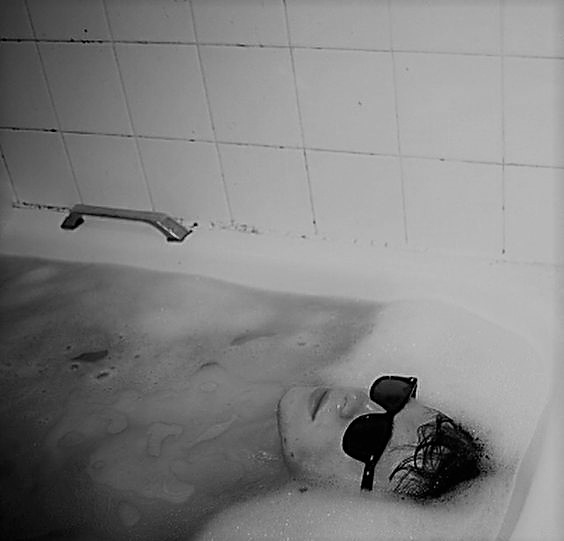
We never had a shower but had a bath. That was the luxury my parents found when they first moved to Park Hill in the sixties. It had once been white, like the toilet pedestal and sink, but years of grime and vigorous scrubbing with Vim had stained it grey.
The bathroom was my favourite place. It was where I could lock the door and lay in the bath and be safe. I was naked, vulnerable, but I didn’t have to look over my shoulder because that single bolt on that flimsy plywood door, which always stuck, kept the world outside.
But bath times had to be planned, once or twice a week, when the electric immersion heater was switched on an hour before filling it up with hot water and pouring too much of Adam’s Bubble Bath – Matey makes bath time fun – from a bottle that looked like a cheery sailor. I would stay in the bath reading nicked copies of Shoot! magazine until the pages got wet and damp, or Adam shouted through the door to say that he needed a shit.
But one night somebody got me out of there, and I realised that anybody could get me if they wanted to.
Bathtub Boy/Pinterest
***
In 1981, the police came looking for us. That was nothing new, but we were kids, and normally they had no serious interest in us. This time it was different.
My mum banged on the door and told me to get out of the bath because a policeman wanted to speak to me. “Bollocks!” She told me to come straightaway.
I wrapped one of mum’s best Brentford Nylon towels around my waist and dripped water through the flat and into the lounge. I stood facing a policeman that I’d never seen before, and he had the advantage over me.
He was unconventional. He wore a leather jacket that smelled of petunia and was unshaven. He turned out to be detective sergeant Frank Smith, and he was a bastard.
“Harry Oldham. You’re taller than I expected.”
I shrugged and grabbed the towel to make sure it didn’t fall to the floor
“I’ve just visited your mates, and they told me some very interesting things.”
He was clever, and knew it was better to get each of us on our own, and he was also a liar.
“They both said that you participated in an arson attack at Manor Library. All I want is for you to admit to starting the fire.”
“It’s news to me. Why are you trying to pin it on us?”
“Not us. I’m talking about you. Let’s just say that your name cropped up in our enquiries.”
My Dad butted in. “Harry, tell the truth.”
“I’m telling the truth. I don’t know anything about it.”
Frank Smith stared. Mum wandered into the kitchen. Dad was angry.
“For God’s sake Harry. We’re sick and tired of this. You and those lads cause nothing but trouble.”
“We haven’t broken in and we haven’t started any fires.”
“I don’t believe you Harry,” said Smith. “And it makes me sad to think that young tearaways grow up to be criminals.”
He never took his eyes off me, and I thought I might be blushing. My towel was now in danger of falling to the floor. I looked at the carpet and noticed the colours in it for the first time.
“You see,” he continued. “There are three problems here. They’re called Andy, Jack, and Harry, and these three problems are becoming one big one. Now Andy and Jack are telling me that you tried to burn the library down.”
I didn’t say anything. Dad slumped into his armchair and glared.
They wanted to pin the arson attack on me. I hadn’t done it, neither had Andy or Jack, and if I had, they’d never have grassed.
We knew who’d started the fire, and Frank Smith knew that we knew, and was waiting for one of us to slip up. And then he played his trump card.
“It’s not only about three shitty kids trying to burn down a library. It’s also about violence and shoplifting, not to mention robbery.” He paused. “What do you know about a break in at the Link?”
He had me.
Let me tell you about that night at the Link, one of four pubs at Park Hill.
It was midweek and we’d been hanging around outside. We’d been drinking beer from the off-licence and were drunk. Andy was drunker than the rest of us and slurred his speech. Alcohol made him brave, and he suggested breaking in and stealing cigarettes.
We broke into one of the garages, found a crowbar, waited until the pub closed, and watched the last piss-head stragglers and staff go home.
In the early hours of the morning, we smashed the window and climbed inside. Jack wrenched the machine off the wall and carried it outside towards the station. We smashed the metal casing and were in luck. We stashed the fags in a carrier bag and Andy hid them under his bed because his mother never cleaned. We sold them over the next few weeks and made a lot of money.
I thought about this while I tried to think of an answer, but it turned out I didn’t need one.
“Mr Oldham. Would you join your wife in the kitchen while I have a quiet word with Harry on his own?”
Frank Smith waited until my wasted father had left.
“Harold. You’re a bad liar. I can see that.”
“I’m called Harry.”
“O, Harry, thou hast robbed thee of your youth! While you live, tell truth, and shame the devil! Their lives not three good men unhanged in England, and one of them is fat and grows old.”
“What the fuck are you on about?”
“I’m a literary man. A bit like you.”
Years later, I understood where the words came from but not in that order, and I realised that he had been clever to think of them the way he had.
“Fuck off!”
He came over and stood directly in front of me. We were the same height and he looked me straight in the eyes. His breath smelt of whisky.
“I shall leave you now. But we will talk again.”
“I doubt it.”
“Oh yes. We shall be in touch one way or another.”
He patted my damp hair and ran his finger down my chest and stomach. He stopped when his finger reached the towel and hooked it around as if ready to yank it away. I trembled, and thought of Andy and Jack, and wished they were there.
“I believe that I have the measure of you.”
“Can I get dressed?”
He stepped back and smiled.
“I have a use for you, and when you’re useful, anything bad that you’ve done tends to go away.”
“You have nothing on me,” I said.
“If I don’t, then I’ll make it my business to make sure that I do.”
***
It turned out that Frank Smith had never visited Jack or Andy. Nor did I see him for another year until I had turned sixteen. In the meantime, we robbed and fought and left school with nothing except a fierce reputation.
And then one night, we were covered in blood after fighting a posh boy in Crazy Daisy and were running towards Park Hill, not knowing that we’d become Geisha Boys.
Park Hill/Kennedy Drake Art Studio/The Rise and Fall of Public Space/Instagram/2022
When I am old, I will still remember that summer. There hasn’t been one like it since, and never will be. It wasn’t the blue skies, the endless days of sun, or even the brightness of the sea. I shall remember it because of you.
I was seventeen, and you taught me to surf. And we spent a fortnight together getting wet and lounging on the beach.
I shall remember looking at you as I lay on the sand.
The crooked smile and shining eyes. That toned body and browned tan of twenty-one summers. The way the saltwater made your hair thick and wavy. And the sand, that stuck to your damp legs.
We told each other our secrets, but I couldn’t tell you the one I really wanted to reveal.
And I shall remember the trepidation of counting down the days to when I had to leave.
As each summer passes, I see you in mind’s eye, exactly as you were, all those years ago.
Mateo, he was the gift of God, complained that his good looks and recognition meant that he couldn’t live the life he wanted. He wanted to be ordinary again. I recognised that dark mood and told him that at that moment he looked nothing special. He asked me what I meant. I said that his hair was a mess, that he needed to shave, and should take a shower. Stay like that and come with me to the supermercado and not one person will look twice. Mateo said it was the nicest thing anybody had ever said to him.
I remembered a room. It was a room I’d forgotten about, but one I once loved. And I reminisced because I heard a song by Arctic Monkeys called There’d Better Be a Mirrorball.
“So can we please be absolutely sure that there’s a mirrorball.”
This room had been in a big Victorian house, the kind that might have been built for a wealthy industrialist, a doctor, or a prosperous shopkeeper.
This house was now home to my best mate Jimmy whose family had removed old fancies and squeezed its offspring into every nook and cranny. He slept with his brother in the attic where God-faring servants had once lived.
This special room, the one I suddenly remembered, was downstairs, and there must have been a window, but I cannot recall ever seeing one. It wasn’t a large room; it would have once been the dining room, but now the family ate at the kitchen table.
Once upon a time, a piano might have stood against the wall, Henry Hall records might have been played on a phonogram, and where a frightened family might have listened to the wireless while bombs exploded in the valley below.
That was all in the past.
A snooker table stood where a polished dining table had been, a table with matching carved chairs, and where grace would have been spoken before each meal. But I never saw a game of snooker played.
Above it, the chandelier had been swapped for that evocative mirrorball, onto which disco lights shone and cast a cataclysm of colour around the room and into every corner. It was bright and beautiful, but when the party stopped, you might have called it a dark and gloomy room.
Most fascinating were its walls and ceiling; the arsenic flavoured Lincrusta had gone, the over-elaborate plasterwork had survived, but now painted in a garish colour.
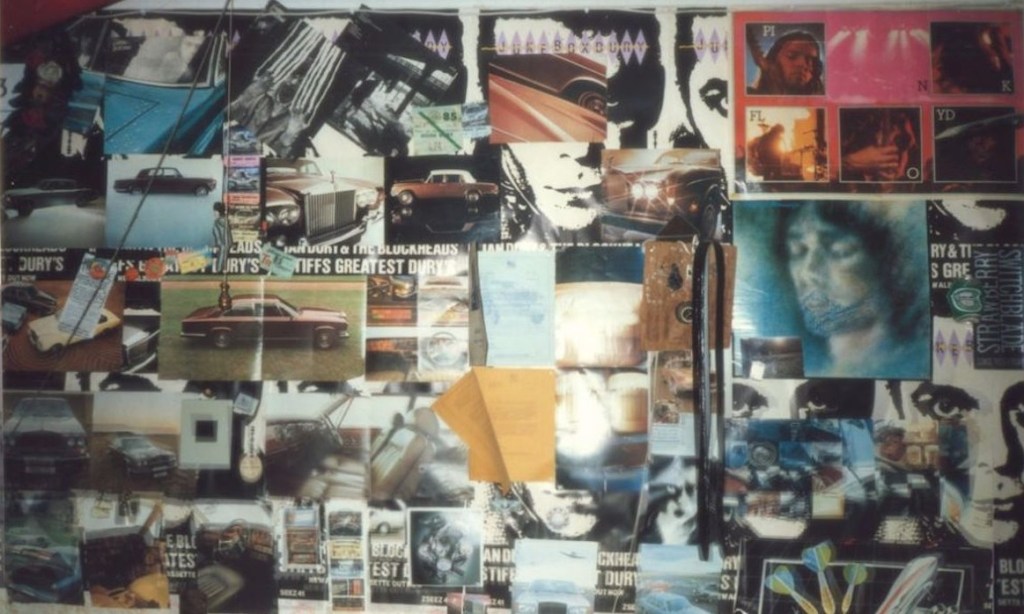
But this was a room where you read the walls; every inch had been covered in poster pin-ups, glossy magazine pages, picture record sleeves, and mementos from summer holidays. The transformation had begun in the seventies, and the eighties had introduced New Romantics to Punks.
And music thundered from a costly hi-fi system: Bananarama, Fun Boy Three, Spandau Ballet, Culture Club, Dexy’s Midnight Runners (always Come On, Eileen) and boy pin-ups like Paul Young, Howard Jones and Nik Kershaw. I don’t remember seeing any girls.
In mind’s eye, I am sober while looking at this room, but I never really saw it when I wasn’t drunk. Because it was to this house that we came when Broomhill’s pubs had closed, and where Jimmy’s family gathered, where cousins and friends migrated, and fortunate neighbours called late on Saturday night. It was where your glass was never empty, always topped up with indescribable spirits from the continent.
And the parties flowed from room to room, but it was in the shadows of the mirrorball where youngsters gathered. We sat on a battered old sofa that would be worth thousands now, or on mismatched armchairs with their stuffing hanging out. We spilt drinks on the green baize and listened to records that Jimmy had bought, the sleeves quickly discarded, because he’d stuck them to the wall with Sellotape.
But we never smoked and didn’t take drugs.
In the early hours of the morning, when most on this stylish street were asleep, the gathering would dwindle, but not before its guests took an age to leave. And Jimmy’s mother, called Enid, would tell me to stay the night.
I slept in my boxer shorts in one of three single beds in that attic. It was the bed in the middle because Jimmy and his older brother, John, who was partly deaf, slept either side, and I would lay thinking that I was in love with both.
The next day I was always first up, and in the same clothes I wore the night before, I would go down to the kitchen where Enid was preparing Sunday dinner and she’d make me a mug of tea and ask me to stay because she knew I loved her onion sauce.
Like the sorrowful tone of that Arctic Monkeys song, it came to an end, and that’s probably why I thought of that room and its mirrorball.
I also think of a sour-faced girl, who also fell in love with Jimmy, and stole him away. She once looked at me and her expression said, “I won, you lost.”
“Don’t get emotional, that ain’t like you. Yesterday still leaking through the roof. But that’s nothing new.”
Pablo. You told me that was your name. Somebody told me that you were a ballet dancer, and that kind of did it for me.
You are always alone. But last night, you stood beside me and smoked a cigarette.
I glanced, and you smiled. You glanced, and I smiled.
And then you said I was hot, which is something all Europeans say when trying to chat British lads up. And, I said something typically English, that you were hot too. And we both laughed.
We chatted about drunk people and how they amused us.
You asked me when I finished work, and I told you six in the morning, and you looked disappointed. You finished your cigarette and walked back inside
And then it turned out you weren’t a ballet dancer but worked six days a week in a Polish bakery, and every time I’ve seen you since, you ignore me.
Where did those days go? Those days when we were gorgeous models from another era. People envied us, and we didn’t care. We were young and immature and didn’t realise that it was just a transient existence.
Somewhere along the way, when we were too busy to notice, nor cared, the God of Time changed the record speed from 33⅓ to 45rpm and we didn’t realise until it was too late.
One day, we looked at one another and thought that each was less attractive, worn-down, and fatter. It applied to everyone, except me, because in my head I was still twenty-something.
Until that morning when I looked in the bathroom mirror and saw somebody that I didn’t know, somebody I didn’t like, somebody who had become old. I accepted it but couldn’t look myself in the eye anymore.
And then someone who was once better looking than you, so much slicker, goes and dies.
“Though we had our fling, I just never would suspect a thing, Till that little bell began to ring.”
That chasmic flaw is about to break. When things are going well, I need to press that self-destruct button and obliterate everything that’s good. It might be something to do with family, friends, or career. But worst of all it happens when I’m in a good relationship. I panic. I react. I self-destroy. And then, when the pieces shatter across the floor, I can start again.







 Perfectly Hard and Glamorous