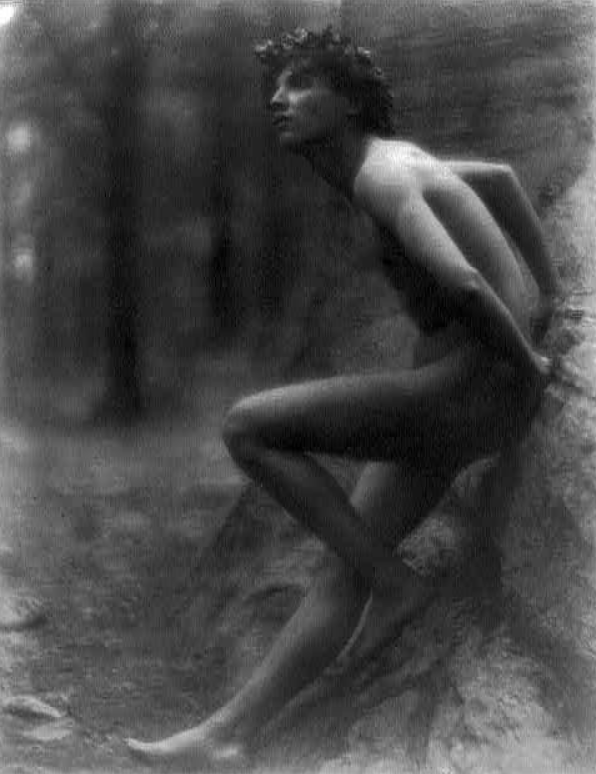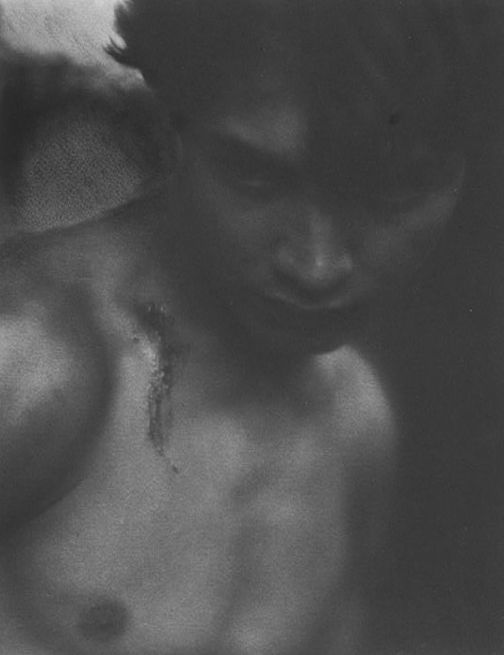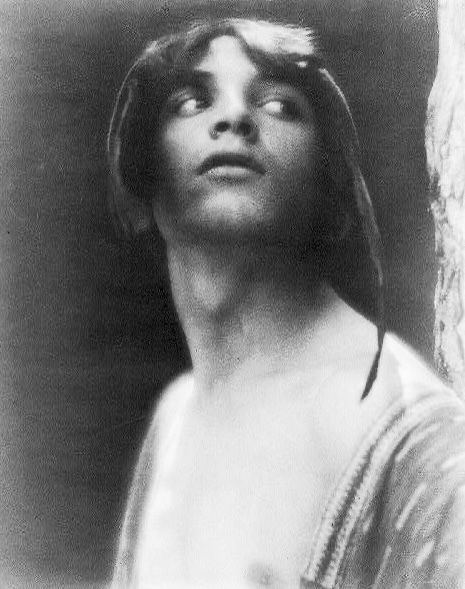
Nicola Giancola, F. Holland Day, and the mystery of male beauty.
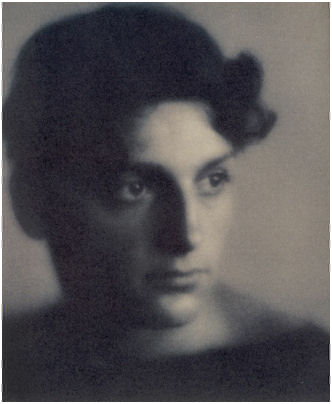
Every old photograph asks the same questions. Who was this person? What did they fear? Whom did they love? What became of them? Every photograph is a small time capsule, preserving not just a face or a fleeting moment, but the enduring mystery of another human life.
When those photographs depict men, they often reveal something else: a world of relaxed intimacy and easy physical affection that feels startlingly unfamiliar today. Their expressions are open, their body language unguarded. To modern eyes, conditioned to read male beauty through the lens of sexuality, many of these images can appear strikingly, even unmistakably, gay.
Yet what draws us back to them is not simply curiosity. It is a curious blend of nostalgia, discovery, and recognition. They remind us that the language of masculinity has never been fixed, and that photographs can preserve not only people, but forgotten ways of being.
Few stories illustrate this better than that of Nicola Giancola (1886–1956).
It began when a friend sent me an old photograph he’d found online.
Giancola possessed a striking beauty that transcended the faded monochrome of the photograph. There was something in his gaze—confident yet vulnerable—that refused to remain trapped in the past. I wanted to know who he was.
The internet offered fragments: a handful of facts, a scattering of images, and tantalising references to Giancola’s connection with the American photographer Frederick Holland Day. But fragments were not enough. I wanted to turn fading photographs into a living man—to give substance to a ghost and answer questions that time had left forever unanswered. Every old photograph promises a story; the challenge is discovering how much of it can still be told.
Nicola Giancola was born in Campobasso, Italy, in 1886. His was a story shared by countless Italian families of the period.
Following Italian unification in 1861, the Molise region was devastated by chronic rural poverty, crippling taxation, and the decline of traditional agriculture. People left southern Italy in search of opportunity, many of them crossing the Atlantic to begin new lives in America.
Giancola was still a child when his family settled in the immigrant neighbourhoods of Chelsea, near Boston, Massachusetts. Like many boys of his generation, he contributed to the family income from an early age, working the streets as a shoeshine boy among the city’s growing Italian community.
His fortunes changed when he encountered Frederick Holland Day (1864–1933). Born into wealth and free from financial constraint, Day was a publisher, patron, and pioneering photographer who regarded photography not as mere documentation but as a legitimate form of fine art.
Exactly where the two first met remains uncertain, although the most plausible explanation lies in Day’s work at the Parmenter Street Mission in Boston’s North End, where he was closely involved with the Sunday School. One biographer memorably described him as the “Pied Piper of Parmenter Street.” He became mentor, benefactor, and friend to many underprivileged immigrant boys, often paying for their education and supporting them financially. He referred to them as his ‘Parmenter St. cherubs’.
Giancola, a gifted young artist whose striking good looks undoubtedly caught Day’s attention, soon became one of his favourites. Day financed his studies at the Eric Pape School of Art, paid for English lessons, and later used his influence to secure him work as a commercial artist.
Beginning in 1898, Day spent his summers at Little Good Harbor, his retreat near Five Islands, Maine. It became a haven for artists, writers, and the young men he had taken under his wing, including Giancola. They spent their days boating, swimming, reading, and playing board games, far removed from the crowded streets of Boston. Everyone wore identical sailor suits—a deliberate attempt by Day to erase outward distinctions of class and privilege and create a sense of equality among his companions.
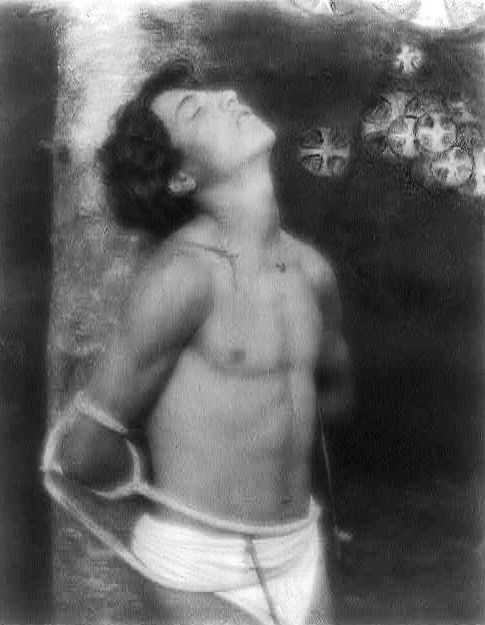
Frederick Holland Day’s sexuality has long been the subject of debate. His photographs of the male nude, together with the surviving evidence of his friendships and correspondence, have persuaded many historians that Day was homosexual, although definitive proof remains elusive. His close friend and business partner Herbert Copeland is widely believed to have been homosexual. Day’s extensive photography of adolescent boys would undoubtedly invite suspicion today, yet at the turn of the twentieth century it was widely understood within the conventions of artistic classicism rather than viewed through a modern lens.
Whether Giancola posed for Day as a child is something we will probably never know. In 1904, a fire destroyed around two thousand of Day’s prints and negatives, taking many possible answers with it.
One revealing anecdote survives from Giancola’s youth. His mother reportedly disliked the attention her son received from Day and Copeland and disapproved of him sitting for the two men. Greeting Copeland one day, she remarked coolly, “It’s very good of you, Mr Copeland, to take such an interest in my son.” Before Copeland could reply, the self-assured boy interjected, “Nobody can help taking an interest in me, can they, Mr Copeland?” Whether apocryphal or not, the story suggests a young man who was already aware of the power of his own beauty.
Day’s photography was painstakingly theatrical. He constructed elaborate settings, dressed his models in carefully chosen costumes, and manipulated his negatives to create soft, dreamlike images that blurred the boundary between photography and painting. Religious narratives, classical mythology, and scenes from history provided the inspiration, with friends, acquaintances, and often Day himself transformed into idealised figures from another age.
As Giancola entered adulthood, he became the model for some of Day’s most celebrated photographs. Made on the Ames Estate at North Easton, Massachusetts, the images combine classical symbolism, religious imagery, and varying degrees of nudity. To many modern viewers they possess an unmistakable erotic charge.
In her biography F. Holland Day, Pam Roberts goes further, suggesting that Giancola may have been more than simply Day’s favourite model. She observes that there is “a far stronger homoerotic element in almost all the photographs for which Giancola is the model than in Day’s other male nudes.”
The surviving correspondence between the two men offers tantalising, though inconclusive, hints of emotional intimacy. In one letter Giancola wrote:
“I will never forget the day we were out to Brockton, how happy I was… I thought the world was mine. When both of us were walking arm in arm… what Paradise it was! Tell me, Mr Day, do you not remember the happy times we had there?”
I have read the letter dozens of times and still cannot decide what it reveals. It may be no more than the heartfelt gratitude of a young man whose life had been transformed. Or perhaps there is something else beneath the surface. Like the photographs themselves, the words resist certainty.
The romantic ambiguity becomes even more complicated when the story continues. In 1910, Giancola married Mary Gertrude Conroy, with whom he would have seven children.
It is difficult not to wonder whether Giancola understood exactly how much Day admired him. Day had financed his education, paid him to model, and repeatedly supported him financially. Surviving correspondence suggests that Giancola frequently appealed to his benefactor for money, including one request for a loan of five hundred dollars to pursue a wealthy woman in New York. Day obliged, continuing to assist him for several years.
The two men appear to have remained in contact until the 1920s, after which the trail grows cold.
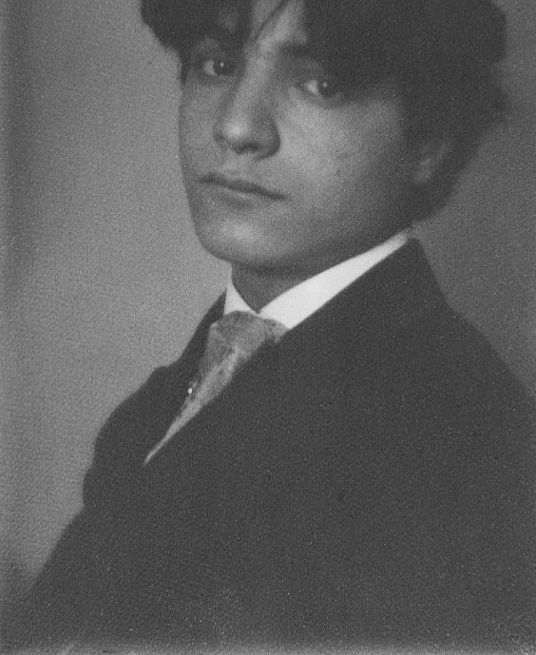
Giancola established himself as a successful commercial artist, working for several New York advertising agencies while living in Rockville Centre and later the Bronx. Alongside his commercial work he developed a reputation as a landscape painter, exhibiting at Babcock Galleries in 1926.
His career later took him to Brazil before he eventually settled with his family in New Canaan, Connecticut. During the 1950s the Giancolas moved once more, this time to Clearwater, Florida, where his paintings were exhibited at the J. Arlos Ogg Studios.
Nicola Giancola died suddenly in 1956 at the age of seventy. Yet more than a century after Frederick Holland Day first turned his camera towards him, it is those haunting photographs—not the paintings, the advertisements, or the ordinary milestones of his life—that continue to keep his memory alive.
We began with an old photograph of a stranger. By the end of the search he is no longer quite a stranger—but neither is he entirely knowable. That, perhaps, is the true power of old photographs. They preserve not certainty, but possibility.