
Beauty, booze, broken hearts and a bloody goodbye
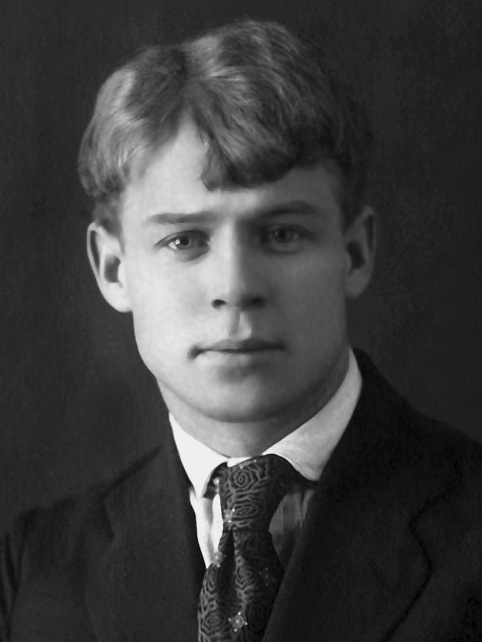
“I’ve been in love with Sergei Yesenin ever since I had a Russian literature class and he died in 1925.”
A comment posted by somebody who sympathised with my strange new-found love for Lord Byron.
I’d never heard of Sergei Yesenin. But, inquisitive mind that I am, I had to find out who he was.
Sergei Yesenin (1895–1925) was a Russian poet and literary rogue. These days, he is something of a cult hero.
He wrote hundreds of poems, from lyrical verses inspired by Russian folk traditions and rural life to longer, more ambitious works. But, if I’m honest, he’s probably more interesting for the life he led than for his poetry.
There’s a quote attributed to him:
It’s always the good feel rotten. Pleasure’s for those who are bad.
It seems to sum up his chaotic Bohemian lifestyle, his alcoholism, public outbursts and brief, passionate relationships with women.
Born into a peasant family, Yesenin initially wrote nostalgically about the Russian countryside. But the world he celebrated was disappearing, swept aside by revolution, industrialisation and the changing face of Russia.
He welcomed the Bolshevik Revolution of 1917, believing it would empower the peasantry, but soon became disillusioned with the new regime. His increasingly erratic behaviour and criticism of Soviet life made him an awkward figure for the authorities, including Leon Trotsky, who was openly critical of him.
Yesenin married four times, with plenty of other women in between. Relationships overlapped, promises were made and abandoned, and chaos was never far away.
It isn’t hard to see why women (and, no doubt, men as well) fell for him.
His most famous marriage was to the American dancer Isadora Duncan. She spoke little Russian; he spoke no English. Somehow, they managed to make themselves understood — including during their spectacular public screaming matches.
They travelled across Europe and America, where Yesenin’s drunken escapades and violent outbursts made headlines. His alcoholism spiralled, and reports of cocaine use added to the picture of a man seemingly determined to destroy himself. Luxury hotel rooms and expensive restaurants became the settings for his increasingly notorious behaviour.
The marriage lasted barely a year.
There were also bar fights, public brawling, drunken insults and frequent brushes with the police. Yesenin was, in short, that literary bad boy.
By the age of thirty, he was in serious trouble. He suffered a mental breakdown and spent time in a psychiatric clinic.
Then he checked himself out and travelled to Leningrad, where he booked into the Angleterre Hotel.
According to the familiar account of his death, he found no ink in his room, cut his wrists and wrote an eight-line farewell poem in his own blood. He then hanged himself, reportedly from a heating pipe, although accounts of the precise circumstances differ.
The poem is known as Goodbye, my friend, goodbye. Its final lines have been translated in various ways:
Do not grieve or knit your brows —
In this life there’s nothing new in dying.
But nor, of course, is living any newer.
Even his death seemed to belong to the drama of his life. His suicide was followed by a wave of copycat deaths among admirers, cementing his reputation as a tragic literary figure.
And yet, almost a century later, Yesenin refuses to disappear.
A considerable body of speculation, along with a 2005 television miniseries, has kept alive the theory that he was murdered by the secret police and that his suicide was staged.
But would the authorities really have gone to the trouble of composing an eloquent farewell poem in his blood?
I doubt it.
There’s one final twist to the story. Yesenin had a son, Alexander, with the poet and translator Nadezhda Volpin. Born in 1924, Alexander Yesenin-Volpin went on to become a mathematician, logician, poet and prominent Soviet dissident. He later emigrated to the United States and became an important figure in the Soviet human rights movement.
Father and son never met.
Which seems a rather sad ending to the story of a man who spent his life making such a spectacular noise.

