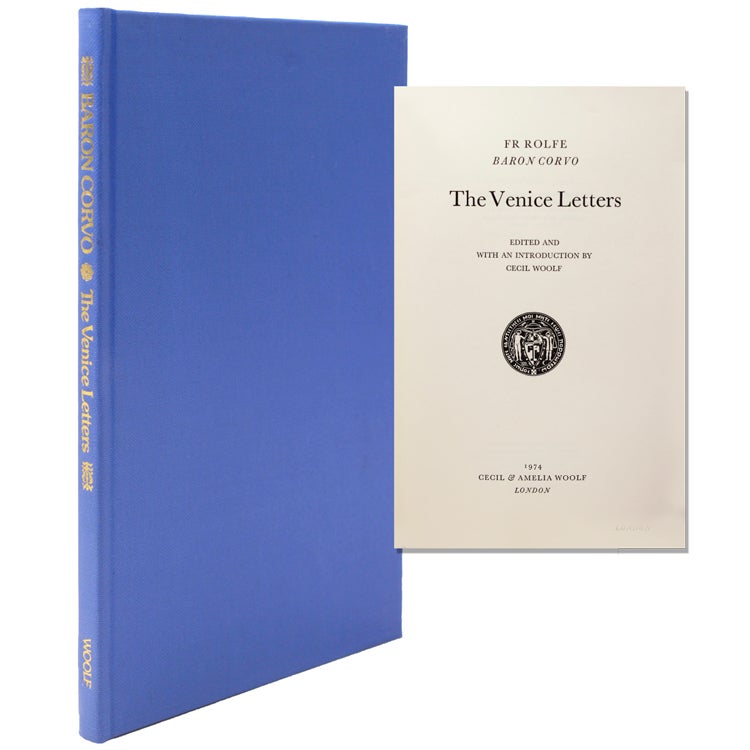
Baron Corvo, the Venetian lagoon, and a rather specific artistic brief
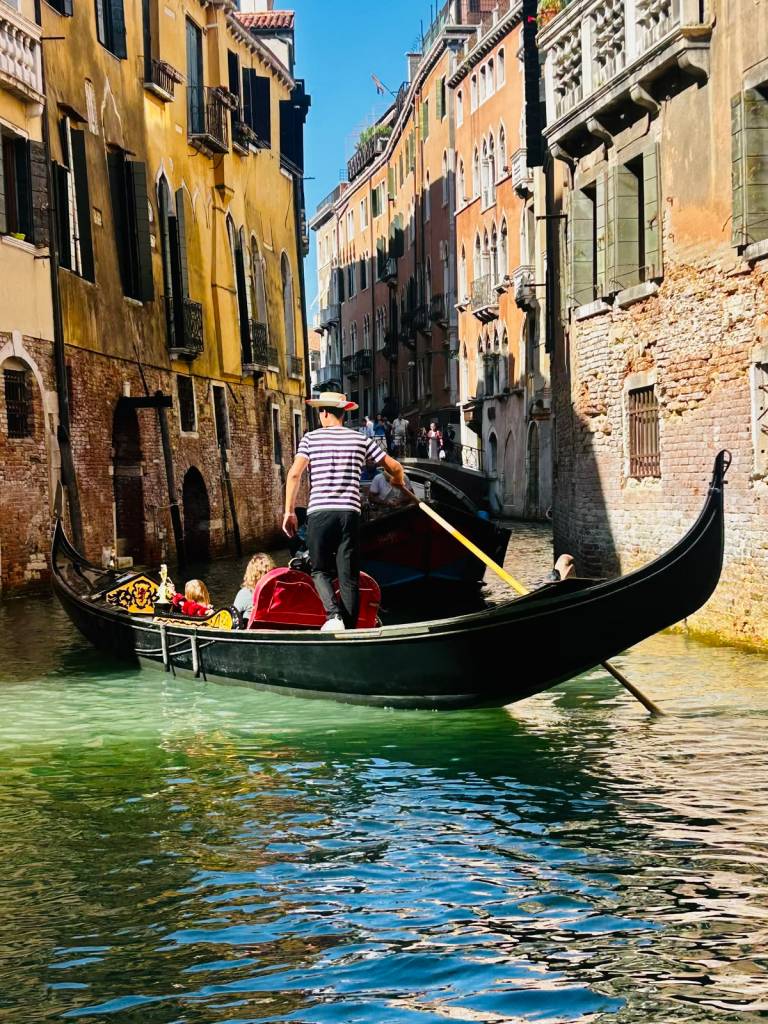
Quite what painter Henry Scott Tuke (1858–1929) would have made of the letters Frederick Rolfe (1860–1913), better known as Baron Corvo, sent to his wealthy British benefactor Charles Masson Fox (1866–1935), is anybody’s guess.
Written in Venice in 1909–1910, these letters are a glorious mixture of literary gossip, artistic criticism, financial desperation and homoerotic obsession. Tuke crops up during Rolfe’s often contentious discussions about mutual acquaintances within the “Uranian” literary and artistic subculture — that rather extraordinary network of Victorian and Edwardian writers and artists united by an idealised romantic interest in adolescent boys.
Rolfe, Fox and Tuke moved through overlapping circles, alongside figures such as John Gambril Nicholson and Horatio Brown. Rolfe was particularly interested in Tuke’s artistic success and, rather cheekily, in what he thought Tuke ought to be painting.
And here he really gets going:
“One thing that the world wants is some Tuke pictures of the Venetian lagoon and some Tuke pictures of mediaeval gondoglieri poised on poppe in Venetian canals.The only Venetian (Italian) worth talking about who paints it is Giuseppe Miti-Zanetti, who uses a process of his own, neither oil nor water, which certainly is wonderful, but purely architectural and atmospheric and generally nocturnal. Which signifies that a painter like Tuke would have a free field here: for there is not a single painter of young Venetians poised, (‘poise’ is the unique characteristic) poised on lofty poops, out on the wide lagoon, at white dawn, when the whole world gleams with the candid iridescence of mother of pearl, glowing white flesh with green-blue eyes and shining hair poised in white air trembling like song in white light reflected in white smooth sea – of young Venetians poised on lofty poops out on the wide lagoon, at high noon, when all the world which is not brilliant is blue, glowing young litheness with its sumptuous breast poised in air like showers of acquamarines on a sapphire sea with shadows of lapislazuli under a monstrous dome of turquoise – of young Venetians poised on lofty poops out on the wide lagoon, at sunset, glowing magnificent young strength dominantly illumined, poised in an atmosphere of lavender and heliotrope in tremendous stretches of sea and sky all cut out of jewels, limitless amethyst and far-reaching turquoise, or, all burnished copper splashed with emeralds and streaked with blue, the insistent blue of borage. No one does these things: no one sees them, but me. But Tuke is the only man alive who can do them; and he has not seen them. And who but Tuke could do real mediaeval gondoglieri in long fantastically striped hosen of silk, proud in the pomp of brocade, poised on lofty poops in the luminous shade of some small canal by some wonderful old water-gate like the Casa Agnusdei, or that of the Casa Amore degli Amici, or the one of the Calle Tedeum? No one. And he does not. It is dismal.”
There is something wonderfully unhinged about this. Rolfe is essentially telling Tuke, through Fox, that he has completely misunderstood the possibilities of Venice.
The letters were written while Rolfe was in severe financial distress and functioned, in part, as begging letters. Alongside his literary work on The Desire and Pursuit of the Whole, he filled Fox in on his daily life, his infatuations with Venetian gondoliers and youths, and whatever else happened to be occupying his rather fevered imagination. The two men also exchanged stories and photographs of male nudes.
Rolfe apparently instructed Fox to burn the Venice Letters after reading them. Thankfully for us, Fox ignored him.
Because of their explicit content, the letters remained suppressed for decades before eventually being published by Cecil Woolf in the late twentieth century. They now provide a fascinating — and occasionally rather eye-popping — primary source for understanding Rolfe, his Venetian obsessions and the wider artistic world in which Henry Scott Tuke was also moving.
As for Tuke, I suspect he would have preferred to keep a respectable distance from the infamous Baron Corvo.
Tuke lived his life with discretion, and history has generally been kind to him.
Rolfe?
Not so much.