Rawly talented. Jeff Buckley. Photographed by Merri Cyr
Something strange had happened beforehand. A young guy sold me my cinema ticket. Soft features, dark curls, expressive eyes. Soft-spoken. All the time he smiled as though sharing a secret only he understood.
There were other staff around, but when I bought a coffee he served me again. He looked astonishingly vulnerable when he realised he’d screwed up making my hazelnut coffee. And then he scanned my ticket when I headed into the screening.
He might have been Jeff Buckley, if only he’d known who he was.
The cinema was empty, as though this showing were meant for my eyes alone—someone who only discovered him after he was already dead. That strange, almost mystical aura: the romantic legend whose story remains unfinished. It’s Never Over, Jeff Buckley.
A Pre-Raphaelite look—with scratchy stubble—and the whisper of a small child that could rise suddenly into a soaring falsetto, almost devotional. Was there ever anyone who captivated me so completely?
I heard the murmur of Cinema Boy: “The face that once commanded admiration and became a ruin, a tragic testament to a sad end.” That someone so beautiful would go swimming and never come back. My heart insists it was intentional.
One album—both his coming-out and his epitaph. One of the greatest albums ever recorded.
Six days. That’s all it took. A body decomposing, bloating. Skin that once felt so good to touch became pruned, pale and waterlogged—brownish, yellowish, ugly. Corpse wax. A moral fable in which the loss of physical perfection mirrors the decay of the soul.
The film ended. And Cinema Boy—who was probably called Will, or Aaron—came into the cinema to clear up after me.
He was still smiling to himself.
It’s Never Over: Jeff Buckley, a 2025 feature-length documentary directed by Amy Berg (known for Deliver Us From Evil and Janis: Little Girl Blue). It is the first comprehensive documentary authorised by the Jeff Buckley Estate.
Jeffrey Scott Buckley. Guardian angel. Born: Anaheim, California (1966). Died: Memphis, Tennessee (1997), aged 30.
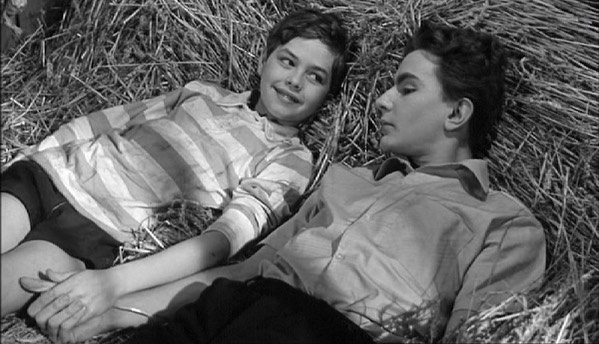
Image: Les amitiés particulières (1964). Directed by Jean Delannoy
It was the last night of our short seaside holiday and Charlie decided that it would be a good idea to stream a movie. He spent well over an hour flicking through Netflix and Prime Video until my patience finally ran out.
“Charlie, we will soon have spent as long looking for a movie than it would to watch one.” He stopped flicking. “Then I shall choose this one, and if you do not like it, I shall not be held responsible,” he said petulantly.
The movie he chose was in black and white and called This Special Friendship. It soon became apparent that it was old (1964), and in French, which delighted Charlie, but the English subtitles would soon annoy him, while I would be annoyed with Charlie for moaning about them.
“It is called Les amitiés particulières, which means ‘special friendships’, but the English cannot translate it correctly,” he told me. “The synopsis is simple. It is set in the rigid atmosphere of a Jesuit boarding school and is a tender relationship between a 14-year-old upperclassman and a 12-year-old boy, who is the object of his desire.” Charlie’s expertise had come after consulting his iPhone.
The movie seemed harmless enough, and because it was made in the 1960s was tame when compared to boy-love movies of today, but after only a few minutes Charlie tutted with disdain. “The character of Georges is supposed to be 14 years old,” he said, “but he looks like he is older than me.” I later found out that the actor, Francis Lacombrade, according to one source, had been 21, but others stated that he had been 17.
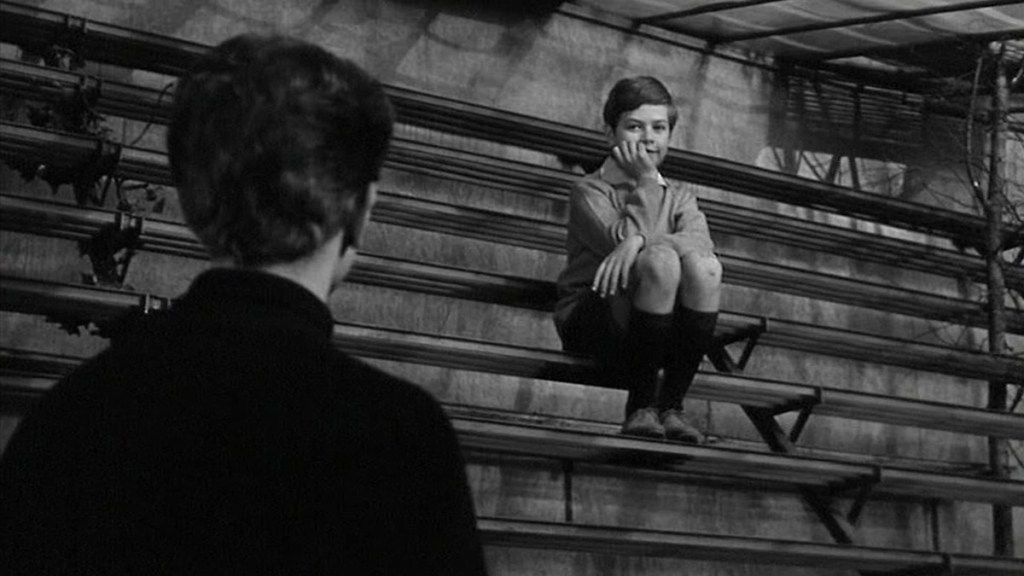
Charlie’s derision intensified when the object of his desire appeared for the first time. He was a small cupid-faced boy carrying a lamb which we presumed was meant to be the symbolism of Jesus Christ as the Lamb of God. “Bordel de merde! Please tell me that this boy isn’t going to be his lover.” His fears proved to be correct, and I agreed that the age difference was disturbing.
He was called Alexandre, who turned out to be a bit of a cock-tease for Georges, but the romance mainly involved love letters passed between the two of them. The relationship is destroyed by a priest’s will to protect them from homosexuality. “We know why he did that,” said Charlie knowingly. “That priest wanted his wicked way with the little boy.” That wasn’t the case, but there were no happy endings, because heartbroken Alexandre jumped to his death from a moving train.
“The movie was good,” Charlie said afterwards, “but I found it troubling.” I agreed and began my own internet search to see what people thought about it. I was surprised to find that modern-day audiences seem unperturbed by the subject matter but could see that the Catholic Church had tried unsuccessfully to get it banned on its release.
Charlie disappeared into the kitchen while I fell down a rabbit hole as I dug deeper into the movie’s background. When he returned with two mugs of tea I told him my findings.
“I’ve found things that might upset you even more.”
“What do you mean?”
“The movie is based on a book written by a French author called Roger Peyrefitte and is said to be autobiographical because he had a similar romance, and the younger boy committed suicide.” My pronunciation was poor, and it came out as Pay-ri-fit.
Charlie corrected me. “Pey-ri-fee.” He stretched on the leather sofa and mulled over my new-found knowledge.
“But there is more,” I said, scrolling down the page of a French literary site. “Peyrefitte visited the movie set and fell in love with a 12-year-old boy who played a small part as a choir boy. They had a relationship, and the boy became his personal secretary and was eventually adopted by him.”
“It is Greek love,” Charlie frowned. “Erastes and Eromenos. What happened to them?”
“The boy was called Alain-Philippe Malagnac d’Argens de Villèle.” My English pronunciation left a lot to be desired, but Charlie looked at me as though I had said something significant.
“Alain-Philippe Malagnac?”
“I suppose so.”
“It cannot be the same person,” he cried, “but my father once knew somebody with that name.”
I continued reading.
“Malagnac became proprietor of Le Club Colony in Paris and briefly managed French singer Sylvie Vertan but it almost bankrupted Peyrefitte and forced him to sell artworks and erotic antiques.”
“The Alaine-Philippe Malagnac that my father knew was married to Amanda Leah, who he believes to really be a man, but a gay icon. He died in a fire near the Alpilles Mountains.”
I saved my pièce de résistance until last.
“Malagnac married Amanda Lear in 1979. She was close friends with Salvador Dali, who disapproved of the marriage.”
Charlie smiled triumphantly. “That is incredible. I cannot wait to tell my father, but what shall I say?” He began fiddling inside his shorts, something he tended to do when he mulled things over. At last, he came to a decision. “I will not say anything because he will become worried that I might also be seduced by an older man.”
I smiled. “I think it is most likely to be the other way around.”
Image: Les amitiés particulières (1964). Directed by Jean Delannoy



 Perfectly Hard and Glamorous